As wars and geopolitical tensions increasingly intersect, how close is the world to a much larger conflict?
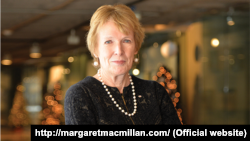
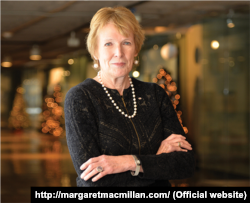
Canadian historian Margaret MacMillan, an emeritus professor of international history at Oxford University and author of several books on war and international relations, spoke to RFE/RL’s Georgian Service about what is at stake in Ukraine, the risks of escalation, the future of Russian President Vladimir Putin’s regime, NATO’s vulnerabilities, and how smaller powers can navigate an increasingly unstable world order.
RFE/RL: The war in Ukraine is now in its fifth year -- more than enough time for us to distill what it is about and what is at stake. And yet there still seems to be an absence of consensus, a common understanding of what exactly is at stake in its outcome. What do you think hinges on it?
Margaret MacMillan: I think people in Ukraine are very clear what hinges on it. You are facing an existential struggle, which was not your fault, whatever people will say. The false stories that are being put about and the lies that are being told, unfortunately, are being believed by some people. But it is such a clear case of unprovoked aggression against the will of the people who live in Ukraine.
As for the outcomes, I think if Russia gets away with it, the worst-case scenario would be Russia forcing Ukraine into some sort of dependency. It would be very bad for the rest of Europe. And indeed, it would be bad for the world. Because, at the moment, Russia is behaving like a rogue state, which is prepared to use any means, both subversive, asymmetric war, plus outright war. It will be enormously destabilizing for Europe. But I think it will be very worrying for the rest of the world as well. The more Russia triumphs, the worse it will be for the rest of the world, but particularly for Europe.
If there is some sort of agreement that leaves an independent Ukraine, then I think it's a real problem for Russia, because what Russia has done is create a very powerful military rival right next door to it. And that is not what Russia wanted. And Russia itself has been seriously weakened and has become much more dependent on China.
So, from Russia's point of view, an outcome that leaves Ukraine independent and leaves Russia itself in considerable chaos and more dependent on China is a very bad one, but it may have no choice. Ukraine has shown itself to be enormously adaptable, and the combination of high-tech, of flexibility, of wartime experience is absolutely extraordinary. It has become a major military power, and this is something the Russians have created for themselves.
RFE/RL: In your recent opinion piece in The New York Times -- A New World Order Is Coming. We Aren’t Ready. -- you warned that we might be teetering precariously close to World War III. You write: “A world war is not inevitable, but the threat of a catastrophic conflict between big and well-armed powers is closer than it has been for decades.” What do you think is the likelihood of that scenario actually materializing?
MacMillan: I think some of it hinges on plans and what people intend to do, but, I mean, when I've looked at how wars break out, they often break out by accident. I think the First World War, which is the one I know best, I think a lot of the people involved in making the decision didn't want a war, but they got themselves into a position where they felt they couldn't back down, and that's always dangerous.
President Putin is very difficult to understand because he's so isolated. And he seems to be more and more isolated, which is always a dangerous sign."
And public opinion can often add pressure to this. If you don't do what the public wants, and the public sometimes wants war, then, of course, as a government, you run the risk of being overthrown.
And so, I think what worries me most is the possibility of accident, and it worries me that the wars are getting interconnected. The war in the Middle East is connected to the war in Ukraine. It's connected through resources, for example. It's connected through weapons. It's connected through intelligence, and you've had Iran, for example, helping Russia, and Ukraine helping the Gulf states.
So, these wars are now becoming interconnected, so the danger is that a larger multilateral conflict breaking out in one part might lead to conflict in other parts. I mean, I hope I'm wrong, but we often think that wars are sort of carefully planned, and it's all under control, and we know that sometimes it isn't. And so that worries me.
RFE/RL: Regarding the public opinion aspect that you mentioned: Which public, or rather which nation, right now would be demanding war of its leadership? Do you have anyone in mind?
MacMillan: It could come between India and Pakistan. Relations are bad. They go up and down, but there have been incidents along the common border. There have been statements. They're both very well armed.
I think there is a possibility of danger there. It's not great at the moment, but I think we cannot not think of it. There is also the possibility of conflict between India and China, again, where relations have not been great and there have been clashes along the common border in the high mountains.
Again, I think there's a possibility of a clash over Taiwan. If, for example, there's an awful lot of activity in the waters around Taiwan, as I say, accidents can happen. What if, by mistake, I mean, there was an incident last summer, where an American destroyer was nearly hit by a Chinese naval vessel.
So, what if they had hit [each other], or what if, by accident, someone shoots down someone else's planes? That's when public opinion can demand revenge, and I think it can become difficult.

RFE/RL: In addition to that World War III scenario, you also talk about the possibility of some leaders and governments being toppled as a result of current developments. Speaking of possible revolutions or governments being toppled, that possibility has long been speculated about when it comes to Russia…
MacMillan: I think more and more Russians are feeling the effects of the war in spite of the attempts of the government to shield it from them. But whether that will translate into something more open, I think, is difficult.
But the thing with the fall of regimes is that they often look strong until suddenly they're not. And they can often fall very quickly.
I think, that China may act as some sort of restraint. The Chinese are not pleased with the way this has gone, I think. It's not what they want."
But, I mean, from my perspective, President Putin is very difficult to understand because he's so isolated. And he seems to be more and more isolated, which is always a dangerous sign. He's surrounded by people who tell him what he wants to hear. And his judgement may be getting worse and worse. And at a certain point, it may be that the military think he's made a mess of the war. You know, are they likely to do something? Or the oligarchs, are they likely to do something? But then what do you do? And who will lead it? I mean, I think the opposition has been pretty much divided. But, you know, it's very, very difficult to predict. I mean, the Kaiser's regime looked pretty strong until 1918. And then suddenly it wasn't anymore. So, I don't think we can tell. But defeat in war can often bring about revolution at home.
RFE/RL: If we were to invoke historical analogies from Russia's past, this is particularly intriguing because we don't see any Bolshevik-style leaders in exile -- or even a False Dmitry (a 17th-century pretender to the Russian throne) emerging from anywhere…
MacMillan: No, no, you can't at the moment. But I think with someone in President Putin's position, if he shows any signs of faltering, it will be dangerous. What really struck me in the Prigozhin mutiny (the June 2023 rebellion led by Wagner mercenary chief Yevgeny Prigozhin) was that when he and his troops marched on Moscow, nobody stopped them. You know, they went through towns where there were armed forces. There was no attempt to stop them. And so it may be that once it begins to topple, people simply abandon the regime.
RFE/RL: You mentioned Putin's deteriorating judgement. European intelligence services increasingly appear concerned that he might go further, whether through a conventional attack or some form of hybrid military action against a NATO member or neighboring country. How likely do you think that is? And if that were to happen, what would be the likely response from the West?
MacMillan: He's been more and more provocative lately, hasn't he? He's pushing the limits, and he's also been doing this asymmetric war. There was this incident in Leipzig (German authorities have blamed Russia for an attempted August drone attack involving explosives at Leipzig/Halle Airport], and the drones flying over the border, and the bombing of the train line the other day (a September 13 Russian drone strike on a passenger train in Ukraine near the Polish border). So, he's definitely pushing…. I think he's unlikely to try a full-scale invasion. But who knows? A lot of people didn't think he'd try anything with Ukraine. But I think the European response, unfortunately, may not be unified.
I think the states that are on the front lines, like Poland and the Baltic states, have no illusions about Russia and what Russia's likely to do. But I think the recent election results in Germany are very concerning because the [far-right Alternative For Germany party] seems, at the moment, at least from the statements of its leaders, to be pro-Russian. The French? Who knows? Italy, [Italian Prime Minister Giorgia] Meloni is anti-Russian. But whether there'll be a unified response is, I think, unlikely. And as for the United States, a lot is going to hinge on the midterms and who controls Congress.
RFE/RL: Would Putin need a full-scale invasion to test NATO or even push it into an existential crisis? If he did something that falls just short of a full-scale invasion, say, in the Baltics, what would the British and the French do? And if he did so under the premise of nuclear blackmail, would they say, “OK, we are going all in for Estonia and Lithuania”?
MacMillan: Well, the answer is confused. We have a new government in Britain, or a new prime minister. It's not clear what he would do. We have an election coming up in France, and the prospect of Marine Le Pen as president of France, who has been very sympathetic to Russia, has taken financial support from Russia, does not encourage me to think that France under such a government would do anything very much.
[Putin] has already tried things in the Baltic, and he may try again. He may try, I suppose, what he tried in the 2014 invasion, the little green men scenario (the term used for unmarked Russian troops deployed during Russia's 2014 seizure of Crimea from Ukraine). Nobody believes his denials, but he makes them.
We have to hope, I think, that China may act as some sort of restraint. The Chinese are not pleased with the way this has gone, I think. It's not what they want.
And they have always had quite a lot of oil from the Gulf. They depend a lot on oil from the Gulf, as well as on food shipments, fertilizers, and so on from Ukraine. So, I think the Chinese may act as a restraint.
RFE/RL: You write about this new order, or rather new disorder that -- as you put it -- is upon us. What does this new world disorder, this new era, that we seem to be entering, spell for the meek of this world?
MacMillan: Well, I guess we all have a choice of submitting and trying to find a protector -- what political scientists call bandwagoning. You look for the nearest tough guy in the neighborhood and put yourself under his protection. And we know that doesn't work very well because then you get exploited and you get kicked around. And so there's that. Or you try and do something about it. You try and band together with other like-minded nations. And that's what our [Canadian Prime Minister Mark] Carney is talking about, that we need to work together collectively.
The Tavberidze Interviews
Since the beginning of Russia's full-scale invasion of Ukraine in February 2022, Vazha Tavberidze of RFE/RL's Georgian Service has been interviewing diplomats, military experts, and academics who hold a wide spectrum of opinions about the war's course, causes, and effects. To read all of his interviews, click here.
Collectively, the European Union is the third-biggest economy in the world, I think, after China and the United States. Collectively, it has tremendous technology, military potential, economic force. And if Canada, Australia, Japan, South Korea, and other like-minded countries would join in, it would be a very formidable force indeed.
I don't suggest that the other countries would become integrated into the European Union, but I think the European Union, or Europe, if you want to put it more broadly, and other like-minded countries could work together on a number of limited things, perhaps, things that lead to greater stability.
The alternative which Trump and others talk about, and I think [Chinese President] Xi Jinping and Putin would probably see it the same way, is a system of spheres of influence. He sees the Western Hemisphere, from Greenland to Canada down through Latin America, as being dominated by the United States, China dominating East Asia, Russia perhaps dominating Eurasia. And spheres of influence sound really neat. Each looks after its own neighborhood.
In fact, they're really unstable because there are always clashes on the borders between the spheres, so that you've got clashes between Austria-Hungary and Russia before the First World War as they quarreled, among other things, over parts of Ukraine and tried to subvert each other in the borderlands. And so, I think they are unstable, and those within them are often resentful and rebellious and will resist eventually.