

Accessibility links

Breaking News

Meet Russia's New Prime Minister, An 'Enforcer Who Knows Where The Bodies Are Buried'

Mikhail Mishustin made a name for himself at Russia's tax service.

Russian President Vladimir Putin's new prime minister, Mikhail Mishustin, has a reputation for getting things done.

During his near-decade long tenure at the helm of Russia's tax service -- whose army of roughly 150,000 employees oversees tax compliance and collections -- Mishustin tripled the amount of money his agency delivers to the budget.

Coming during a period of slow economic growth amid sanctions and falling oil prices, those results earned him accolades from the government and made him a logical choice to replace Prime Minister Dmitry Medvedev, who announced on January 15 that his government would resign.

As social unrest grew over low living standards, Medvedev's government struggled to carry out Putin's ambitious National Projects, a $400 billion spending program that seeks to boost economic growth. The Medvedev government also failed to meet Putin's May 2018 decrees to increase wages to specific levels for many state workers.

"After years of focusing on over-insurance, including due to the risk of further sanctions, the Russian authorities need to focus on domestic issues such as growth and better provision of public services," Elina Ribakova, deputy chief economist at the Institute of International Finance overseeing Russia, told RFE/RL. "An effective manager is needed to make sure that the National Projects move forward and contribute to these objectives."

However, Mishustin -- whom Russian state television called the "special force of the government's financial policy," a reference to the tax service's law enforcement powers -- may also be an ideal choice to keep the restless factions within the elite under control, analysts said.

Putin's January 15 announcement of a revamping of the country's constitution prompted Medvedev's resignation -- which many analysts describe as a "sacking" by Putin. These developments will create some winners and losers within that elite.

"All of what we have seen [on January 15] suggests that what the Kremlin is most worried about is not the relationship with the population. It is getting the relationship with the elite right and keeping the elite in line and under control," said Sam Greene, director of the Russia Institute at King's College London.

"So, having somebody who is an enforcer -- who is coming from a tax-police background where they know where the bodies are buried -- is probably a more useful person to have around," Greene said.

Third PM Change

Putin has sought to promote a sense of government stability during his 20 years at the nation's helm, only changing the government mid-cycle on two previous occasions.

Putin fired Mikhail Kasyanov in February 2004 right before his reelection bid, replacing him with Mikhail Fradkov, a career bureaucrat. Fradkov "resigned" in 2007 ahead of parliamentary and presidential elections, replaced by Viktor Zubkov. 

Both Fradkov and Zubkov had worked for the nation's tax service. Fradkov had at one point headed the tax police, a feared agency. Zubkov had been a deputy tax minister responsible for the northwest region. He later ran the agency combating money laundering.  

Greene said this shared background among Mishustin, Fradkov, and Zubkov was not a coincidence. 

Mishustin also shares another commonality with those two men, analysts say. He is someone with seemingly no political ambition, and who -- despite his powerful position -- is not viewed as a successor when Putin's term ends in 2024. 

"Mishustin does not have any political experience or popularity with the electorate and is not part of Putin's inner circle," said Tatiana Stanovaya, a political analyst. He is a "placeholder," she said. 

The composition of Mishustin's cabinet is unlikely to change much from Medvedev's with the key economic and power ministers to keep their positions, such as Finance Minister Anton Siluanov and Economy Minister Maksim Oreshkin, predicted Vladmir Tikhomirov, the chief economist at Moscow-based brokerage BCS Global Markets. 

Digital Tax Man

Russia had struggled for years, especially during the 1990s, to combat widespread tax evasion, a crime which one analyst called a "source of pride" among the nation’s companies and citizens. Wealthy Russians and companies have used offshores to hide money from the tax authorities.

A large fraction of the economy had remained in the shadows with Russia losing as much as 1 trillion rubles ($16.2 billion) a year in tax revenues, then-Central Banker Sergei Ignatyev said in 2013.

The 53-year-old Mishustin has deployed the latest technologies to cut fraud and evasion and boost receipts in the process. 

The tax service's expansive headquarters northwest of Moscow -- in a former military town -- is now filled with data servers and IT specialists, making it resemble a technology company as much as a government agency.

The tax service collected 21.3 trillion rubles ($345 billion) in 2018, roughly triple the amount it brought in when he took over in 2010, according to TASS. Mishustin told Putin in November during a meeting in the Kremlin that 2019 tax revenues were running about 8 percent higher than the previous year.

The surge in tax receipts has far exceeded the growth in economic activity over the past decade, helping the government plug holes as the economy slumped amid sanctions and falling oil prices.

Russia's tax service now uses real-time data to track value-added tax (VAT) payments. As a result, the gap between expected value-added tax receipts and actual receipts shrank to less than 1 percent from more than 10 percent just five years ago, Mishustin said in November.

The number of tax inspections at companies -- once a notorious problem that stymied investment -- fell by 85 percent over Mishustin's near decade at the helm, according to Vedomsti.

Alexis Rodzianko, the chairman of the American Chamber of Commerce in Moscow, told RFE/RL, that he has received "generally positive feedback" on the tax service under Mishustin.

"Efficiency of collection is up and feedback from members is that professionalism is better," Rodzianko said.  "Also, our experience with the tax foreign advisory council is positive. Over the past year and a half, the quality of dialogue was good and constructive."

Mishustin's agency launched online personal tax accounts for individuals and companies and an app for self-employed people, simplifying the process of filing taxes. 

Medvedev, Former President In Putin's Shadow, Resigns As Prime Minister

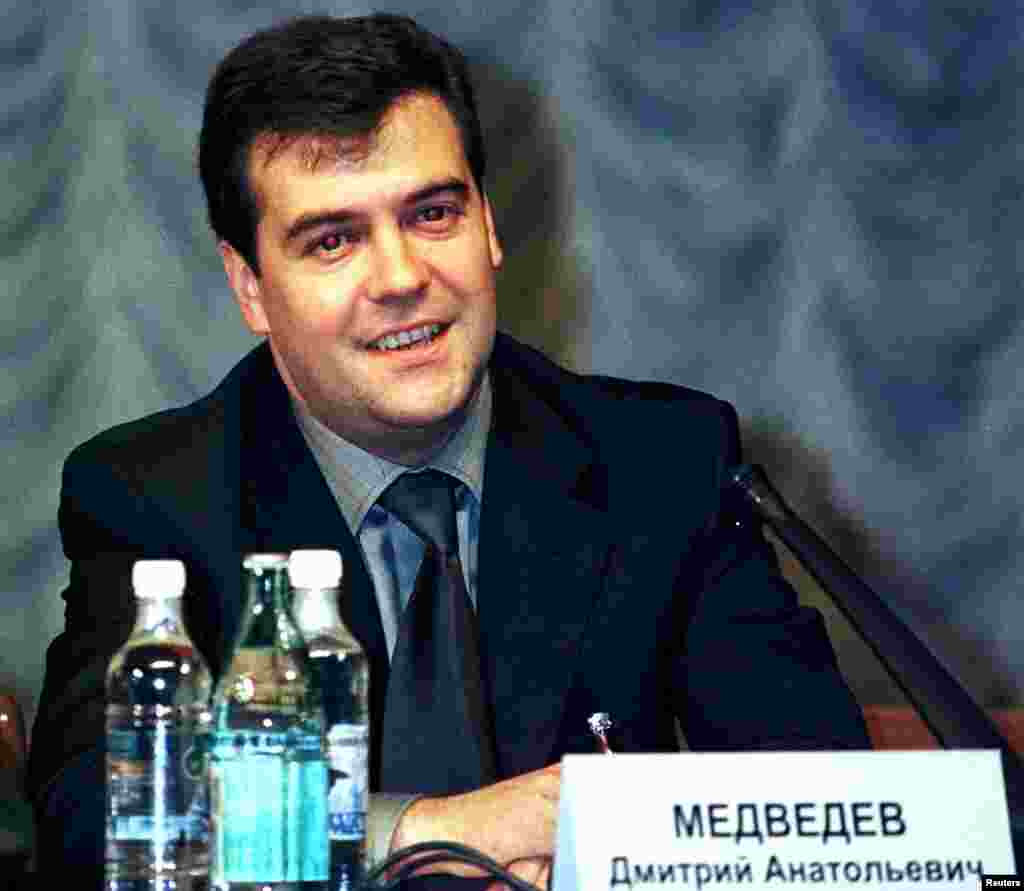
An undated photo shows the young Dmitry Medvedev. He was born in 1965 in St. Petersburg, then known as Leningrad, where he studied and taught law.
1/19 An undated photo shows the young Dmitry Medvedev. He was born in 1965 in St. Petersburg, then known as Leningrad, where he studied and taught law.
Dmitry Medvedev resigned as Russian prime minister on January 15, shortly after President Vladimir Putin announced broad changes to the constitution in his annual state-of-the-nation speech. Medvedev had also served as Russian president, but was widely considered to be part of a "ruling tandem" with Putin.
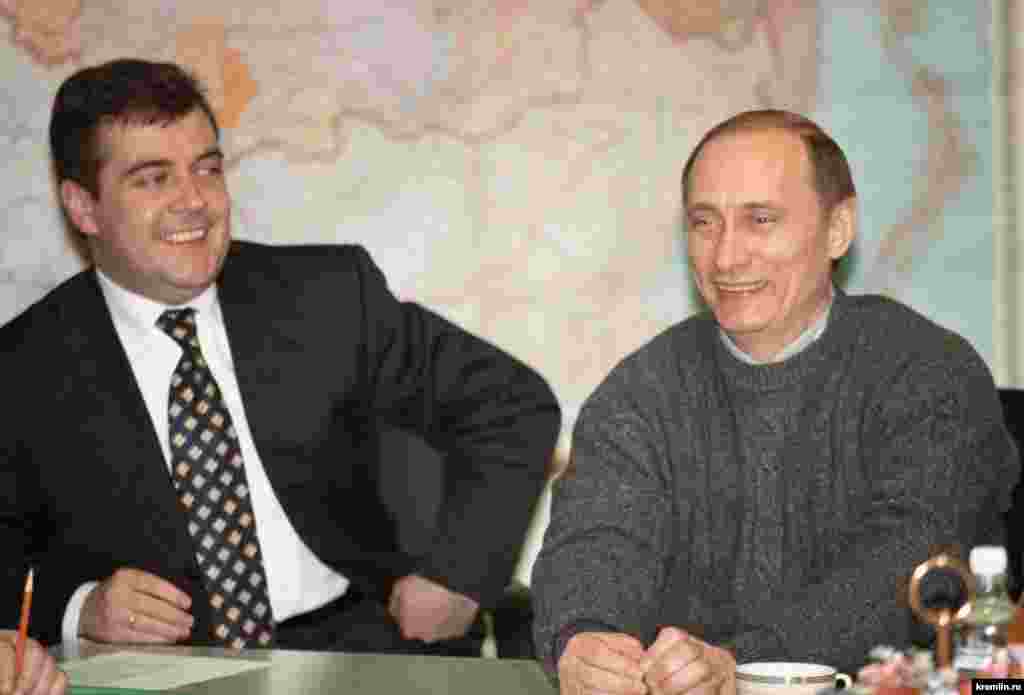
Medvedev moved into politics in the 1990s in the city government of St. Petersburg, where he worked closely with Putin, pictured here on March 26, 2000. Putin appointed Medvedev to a senior position in Moscow in 1999 when he became prime minister under Boris Yeltsin, then named Medvedev to lead his first presidential campaign the following year. 
2/19 Medvedev moved into politics in the 1990s in the city government of St. Petersburg, where he worked closely with Putin, pictured here on March 26, 2000. Putin appointed Medvedev to a senior position in Moscow in 1999 when he became prime minister under Boris Yeltsin, then named Medvedev to lead his first presidential campaign the following year. 
Dmitry Medvedev resigned as Russian prime minister on January 15, shortly after President Vladimir Putin announced broad changes to the constitution in his annual state-of-the-nation speech. Medvedev had also served as Russian president, but was widely considered to be part of a "ruling tandem" with Putin.
Medvedev, then the acting deputy head of Russia's presidential administration, attends a Gazprom general meeting on June 30, 2000. He was chairman of the gas monopoly's board of directors for several years. 
3/19 Medvedev, then the acting deputy head of Russia's presidential administration, attends a Gazprom general meeting on June 30, 2000. He was chairman of the gas monopoly's board of directors for several years. 
Dmitry Medvedev resigned as Russian prime minister on January 15, shortly after President Vladimir Putin announced broad changes to the constitution in his annual state-of-the-nation speech. Medvedev had also served as Russian president, but was widely considered to be part of a "ruling tandem" with Putin.
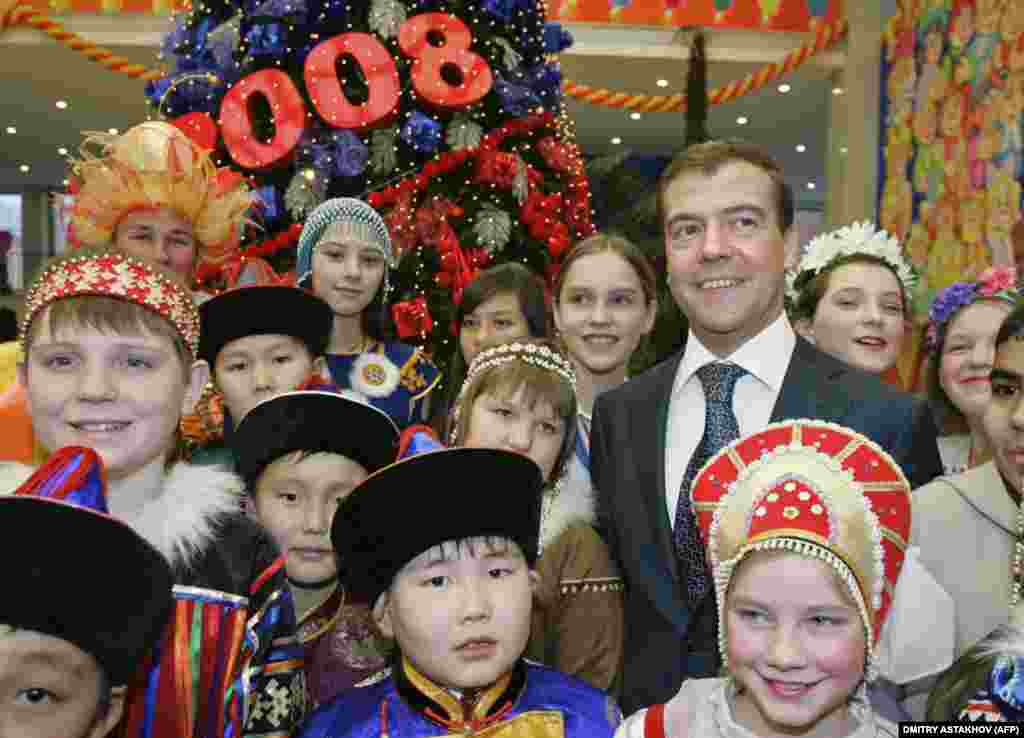
In 2005, Putin appointed Medvedev first deputy prime minister, giving him the power to implement large domestic projects. In this 2007 photo, Medvedev smiles at the All-Russian New Year's Party at the Kremlin. 
4/19 In 2005, Putin appointed Medvedev first deputy prime minister, giving him the power to implement large domestic projects. In this 2007 photo, Medvedev smiles at the All-Russian New Year's Party at the Kremlin. 
Dmitry Medvedev resigned as Russian prime minister on January 15, shortly after President Vladimir Putin announced broad changes to the constitution in his annual state-of-the-nation speech. Medvedev had also served as Russian president, but was widely considered to be part of a "ruling tandem" with Putin.
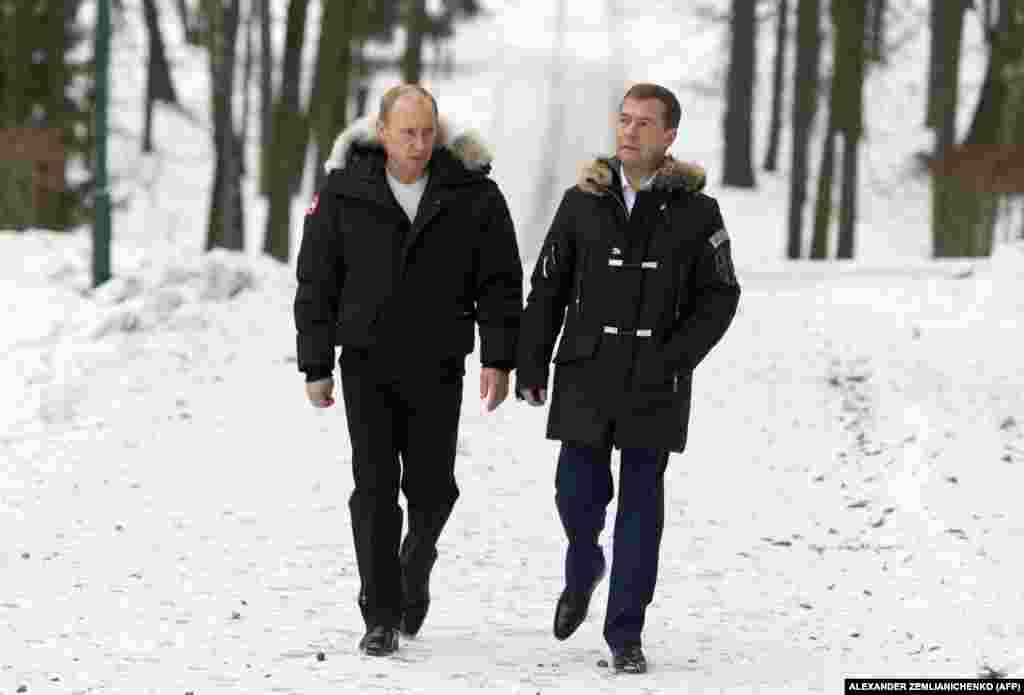
Putin and Medvedev walk outside Moscow on February 29, 2008. When a two-term limit prevented Putin from running for president again in 2008, he named Medvedev, then first deputy prime minister, as his preferred successor.
5/19 Putin and Medvedev walk outside Moscow on February 29, 2008. When a two-term limit prevented Putin from running for president again in 2008, he named Medvedev, then first deputy prime minister, as his preferred successor.
Dmitry Medvedev resigned as Russian prime minister on January 15, shortly after President Vladimir Putin announced broad changes to the constitution in his annual state-of-the-nation speech. Medvedev had also served as Russian president, but was widely considered to be part of a "ruling tandem" with Putin.
Dmitry Medvedev is sworn in as Russian president in the Kremlin throne room on May 7, 2008.&nbsp;The following day, Medvedev appointed Putin prime minister, as he had promised to do during the election campaign. The pair were sometimes referred to in the press as a &quot;ruling tandem.&quot;&nbsp;<br />
&nbsp;
6/19 Dmitry Medvedev is sworn in as Russian president in the Kremlin throne room on May 7, 2008. The following day, Medvedev appointed Putin prime minister, as he had promised to do during the election campaign. The pair were sometimes referred to in the press as a "ruling tandem." 
 
Dmitry Medvedev resigned as Russian prime minister on January 15, shortly after President Vladimir Putin announced broad changes to the constitution in his annual state-of-the-nation speech. Medvedev had also served as Russian president, but was widely considered to be part of a "ruling tandem" with Putin.
Medvedev talks with his Belarusian counterpart, Alyaksandr Lukashenka, at a meeting in St. Petersburg of leaders of ex-Soviet states on June 6, 2008.
7/19 Medvedev talks with his Belarusian counterpart, Alyaksandr Lukashenka, at a meeting in St. Petersburg of leaders of ex-Soviet states on June 6, 2008.
Dmitry Medvedev resigned as Russian prime minister on January 15, shortly after President Vladimir Putin announced broad changes to the constitution in his annual state-of-the-nation speech. Medvedev had also served as Russian president, but was widely considered to be part of a "ruling tandem" with Putin.
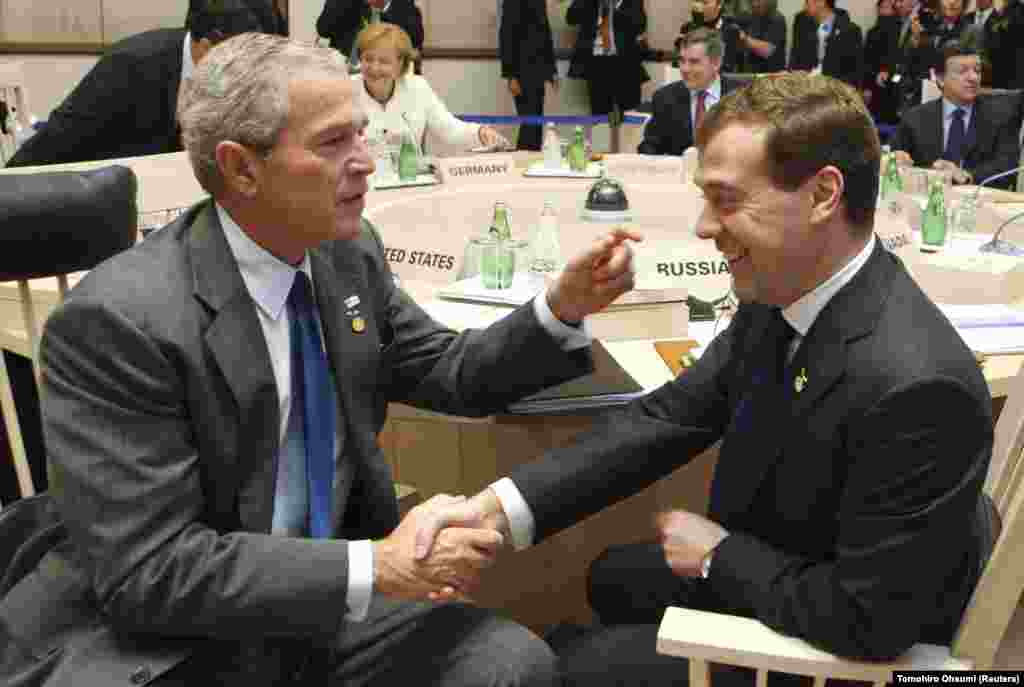
The Russian president meets with U.S. President George W. Bush before the start of a Group of Eight (G8) working session in northern Japan on July 8, 2008. Medvedev cultivated a more pro-Western image than his predecessor, and made gestures toward cracking down on corruption.&nbsp;
8/19 The Russian president meets with U.S. President George W. Bush before the start of a Group of Eight (G8) working session in northern Japan on July 8, 2008. Medvedev cultivated a more pro-Western image than his predecessor, and made gestures toward cracking down on corruption. 
Dmitry Medvedev resigned as Russian prime minister on January 15, shortly after President Vladimir Putin announced broad changes to the constitution in his annual state-of-the-nation speech. Medvedev had also served as Russian president, but was widely considered to be part of a "ruling tandem" with Putin.
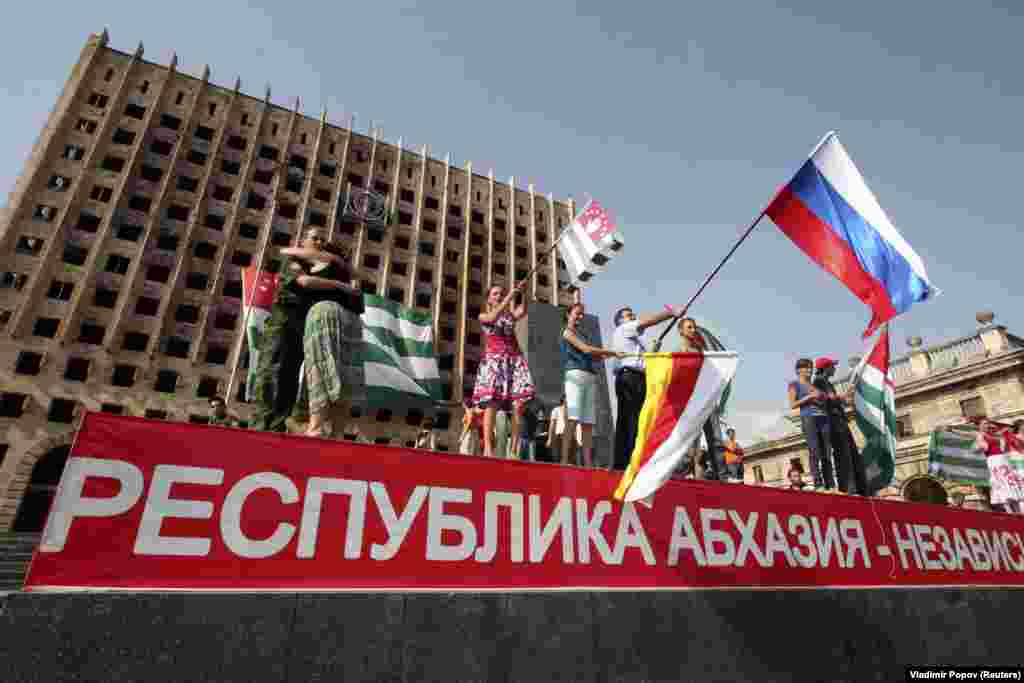
In the first major crisis of Medvedev&#39;s presidency, Russia fought a five-day war with Georgia over the breakaway Georgian territories of Abkhazia and South Ossetia. In this photo from August 26, 2008, people in Sukhumi wave flags as they celebrate Moscow&#39;s recognition of the territories as independent states.&nbsp;
9/19 In the first major crisis of Medvedev's presidency, Russia fought a five-day war with Georgia over the breakaway Georgian territories of Abkhazia and South Ossetia. In this photo from August 26, 2008, people in Sukhumi wave flags as they celebrate Moscow's recognition of the territories as independent states. 
Dmitry Medvedev resigned as Russian prime minister on January 15, shortly after President Vladimir Putin announced broad changes to the constitution in his annual state-of-the-nation speech. Medvedev had also served as Russian president, but was widely considered to be part of a "ruling tandem" with Putin.
On September 23, 2008, Medvedev poses with reindeer herders in the town of Kanchalan in Russia&#39;s Chukotka region.
10/19 On September 23, 2008, Medvedev poses with reindeer herders in the town of Kanchalan in Russia's Chukotka region.
Dmitry Medvedev resigned as Russian prime minister on January 15, shortly after President Vladimir Putin announced broad changes to the constitution in his annual state-of-the-nation speech. Medvedev had also served as Russian president, but was widely considered to be part of a "ruling tandem" with Putin.
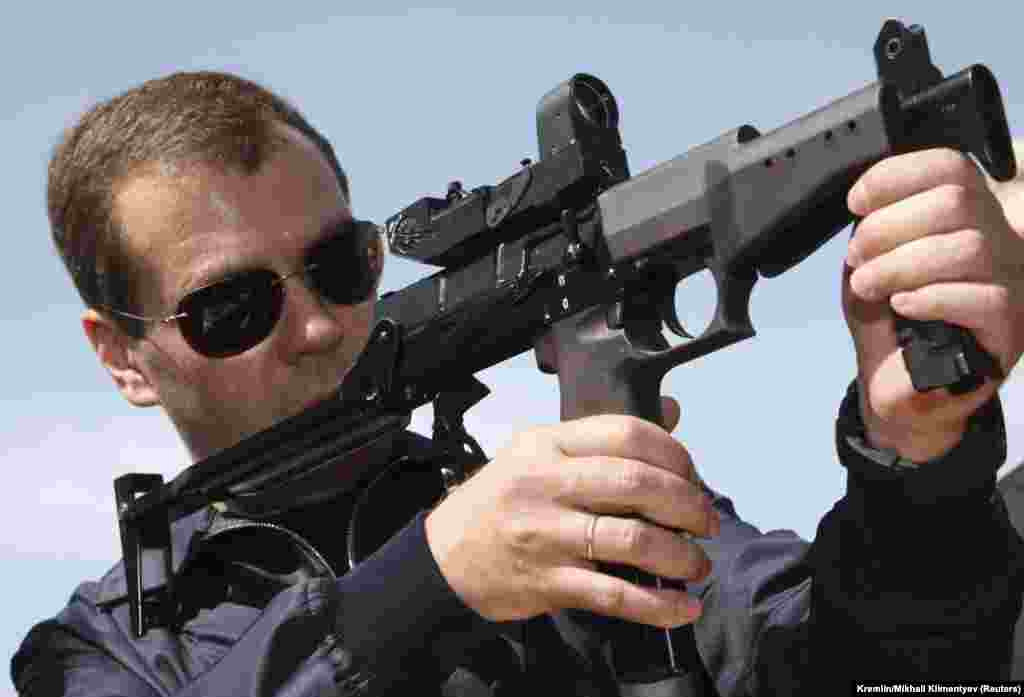
In another photo opportunity, Medvedev takes aim as he visits the Federal Security Service (FSB) Special Task Center in Russia&#39;s southern region of Daghestan on June 9, 2009.
11/19 In another photo opportunity, Medvedev takes aim as he visits the Federal Security Service (FSB) Special Task Center in Russia's southern region of Daghestan on June 9, 2009.
Dmitry Medvedev resigned as Russian prime minister on January 15, shortly after President Vladimir Putin announced broad changes to the constitution in his annual state-of-the-nation speech. Medvedev had also served as Russian president, but was widely considered to be part of a "ruling tandem" with Putin.
A matryoshka or Russian nesting doll at a market in St. Petersburg shows Putin lurking behind Medvedev.&nbsp;
12/19 A matryoshka or Russian nesting doll at a market in St. Petersburg shows Putin lurking behind Medvedev. 
Dmitry Medvedev resigned as Russian prime minister on January 15, shortly after President Vladimir Putin announced broad changes to the constitution in his annual state-of-the-nation speech. Medvedev had also served as Russian president, but was widely considered to be part of a "ruling tandem" with Putin.
The two leaders take a fishing trip together on the Volga River in Russia&#39;s Astrakhan region on August 16, 2011. Ahead of the presidential election in 2012, Medvedev said he would step aside to allow Putin to become United Russia&#39;s candidate. Putin won the election and returned to the presidency on May 7, 2012, naming Medvedev as prime minister the same day.&nbsp;
13/19 The two leaders take a fishing trip together on the Volga River in Russia's Astrakhan region on August 16, 2011. Ahead of the presidential election in 2012, Medvedev said he would step aside to allow Putin to become United Russia's candidate. Putin won the election and returned to the presidency on May 7, 2012, naming Medvedev as prime minister the same day. 
Dmitry Medvedev resigned as Russian prime minister on January 15, shortly after President Vladimir Putin announced broad changes to the constitution in his annual state-of-the-nation speech. Medvedev had also served as Russian president, but was widely considered to be part of a "ruling tandem" with Putin.
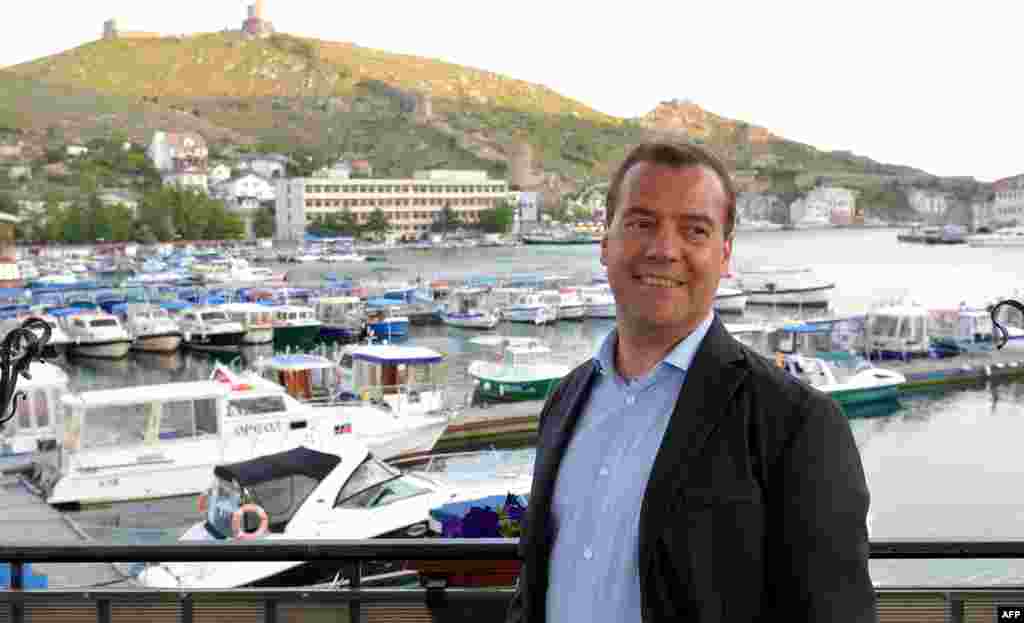
Medvedev, again prime minister, visits the Crimean port of Sevastopol on May 25, 2014. He was the first Russian leader to visit the Crimean Peninsula after it was annexed by Russia in March 2014.&nbsp;
14/19 Medvedev, again prime minister, visits the Crimean port of Sevastopol on May 25, 2014. He was the first Russian leader to visit the Crimean Peninsula after it was annexed by Russia in March 2014. 
Dmitry Medvedev resigned as Russian prime minister on January 15, shortly after President Vladimir Putin announced broad changes to the constitution in his annual state-of-the-nation speech. Medvedev had also served as Russian president, but was widely considered to be part of a "ruling tandem" with Putin.
People play with a toy duck, adopted as a symbol of Medvedev&#39;s alleged wealth, during an anti-corruption rally in St. Petersburg on June 12, 2017. Medvedev became a target of anti-corruption protesters after a video released by opposition leader Aleksei Navalny purported to show his extravagant properties featuring helipads, a ski slope, and a house for ducks.&nbsp;<br />
&nbsp;
15/19 People play with a toy duck, adopted as a symbol of Medvedev's alleged wealth, during an anti-corruption rally in St. Petersburg on June 12, 2017. Medvedev became a target of anti-corruption protesters after a video released by opposition leader Aleksei Navalny purported to show his extravagant properties featuring helipads, a ski slope, and a house for ducks. 
 
Dmitry Medvedev resigned as Russian prime minister on January 15, shortly after President Vladimir Putin announced broad changes to the constitution in his annual state-of-the-nation speech. Medvedev had also served as Russian president, but was widely considered to be part of a "ruling tandem" with Putin.
At a September 2, 2018, protest against a proposed increase to the retirement age, an activist&#39;s sign shows Putin, Medvedev, and Finance Minister Anton Siluanov with the slogan &quot;They lie to us.&quot;&nbsp;
16/19 At a September 2, 2018, protest against a proposed increase to the retirement age, an activist's sign shows Putin, Medvedev, and Finance Minister Anton Siluanov with the slogan "They lie to us." 
Dmitry Medvedev resigned as Russian prime minister on January 15, shortly after President Vladimir Putin announced broad changes to the constitution in his annual state-of-the-nation speech. Medvedev had also served as Russian president, but was widely considered to be part of a "ruling tandem" with Putin.
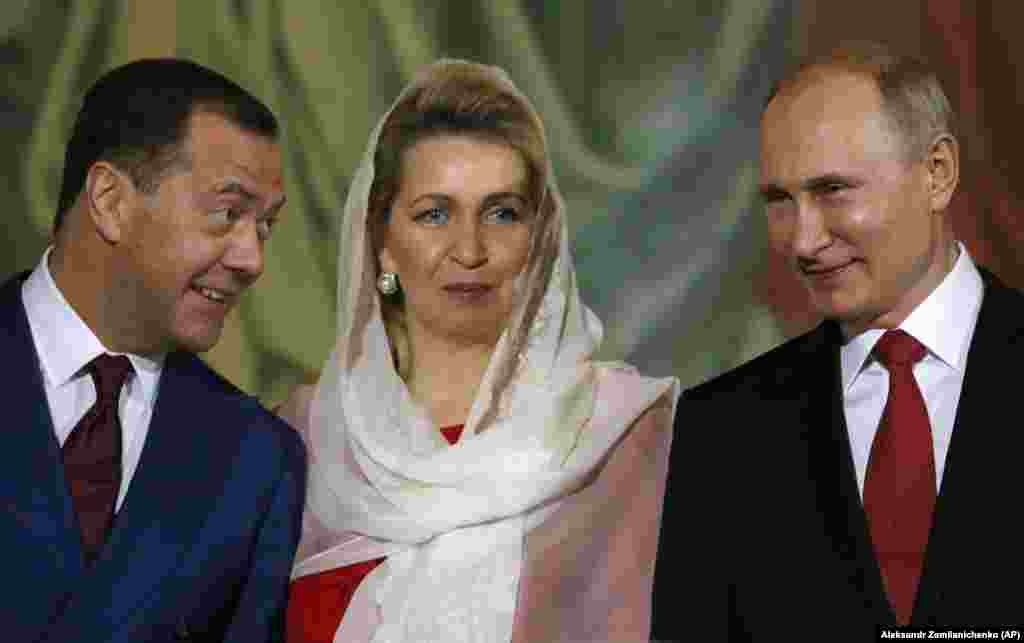
Medvedev and his wife Svetlana attend Easter services alongside President Putin at the Christ the Savior Cathedral in Moscow on April 8, 2018.
17/19 Medvedev and his wife Svetlana attend Easter services alongside President Putin at the Christ the Savior Cathedral in Moscow on April 8, 2018.
Dmitry Medvedev resigned as Russian prime minister on January 15, shortly after President Vladimir Putin announced broad changes to the constitution in his annual state-of-the-nation speech. Medvedev had also served as Russian president, but was widely considered to be part of a "ruling tandem" with Putin.
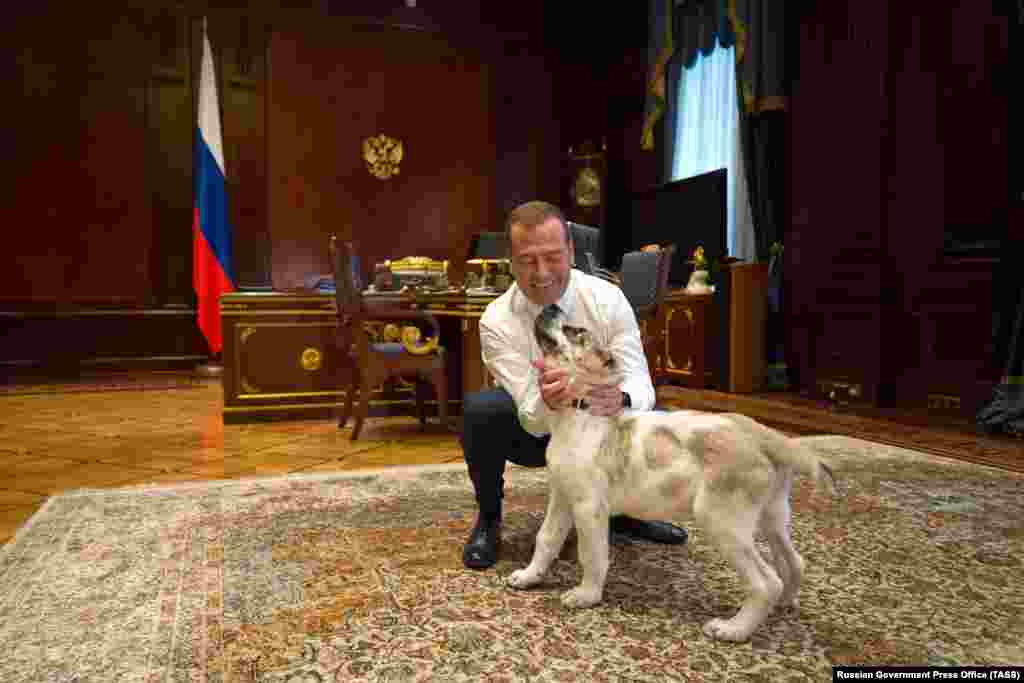
Medvedev plays with a Turkmen shepherd dog, known as an Alabai, that he received as a gift from&nbsp;Turkmen President Gurbanguly Berdymukhammedov on July 17, 2019.
18/19 Medvedev plays with a Turkmen shepherd dog, known as an Alabai, that he received as a gift from Turkmen President Gurbanguly Berdymukhammedov on July 17, 2019.
Dmitry Medvedev resigned as Russian prime minister on January 15, shortly after President Vladimir Putin announced broad changes to the constitution in his annual state-of-the-nation speech. Medvedev had also served as Russian president, but was widely considered to be part of a "ruling tandem" with Putin.
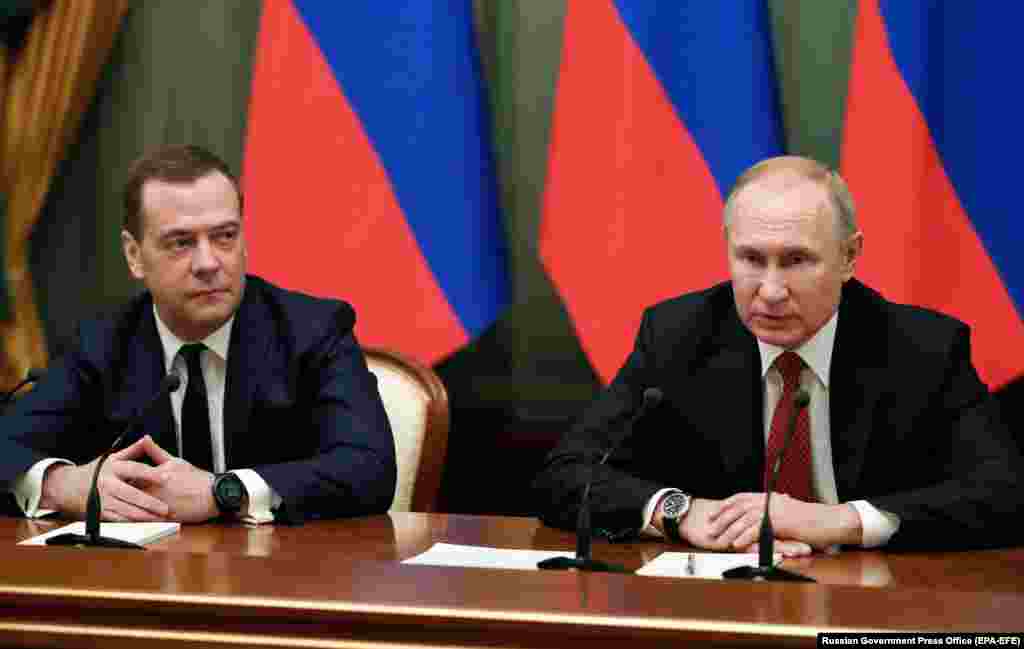
Putin and Medvedev meet with members of the government in Moscow on January 15, 2020.&nbsp;Putin used his annual state-of-the-nation speech to call for a referendum on substantial constitutional amendments that would strengthen parliament&#39;s powers before his term ends in 2024. Hours later, Medvedev and his cabinet resigned.
19/19 Putin and Medvedev meet with members of the government in Moscow on January 15, 2020. Putin used his annual state-of-the-nation speech to call for a referendum on substantial constitutional amendments that would strengthen parliament's powers before his term ends in 2024. Hours later, Medvedev and his cabinet resigned.
Dmitry Medvedev resigned as Russian prime minister on January 15, shortly after President Vladimir Putin announced broad changes to the constitution in his annual state-of-the-nation speech. Medvedev had also served as Russian president, but was widely considered to be part of a "ruling tandem" with Putin.
Previous slide
Next slide

Under his tenure, the agency has also rolled out online registers that send data on each transaction to the tax service nearly instantly.

"With the help of the new prime minister, Putin will now build the country similar to the federal tax service -- control and accounting, law enforcement actions where they are needed plus digitalization of the whole country," Russian political analyst Andrei Kolesnikov wrote in a January 15 commentary.

  • 16x9 Image

    Todd Prince

    Todd Prince is a senior correspondent for RFE/RL based in Washington, D.C. He lived in Russia from 1999 to 2016, working as a reporter for Bloomberg News and an investment adviser for Merrill Lynch. He has traveled extensively around Russia, Ukraine, and Central Asia.

This item is part of
XS
SM
MD
LG