WATCH: Iconic Bosnian City Holds First Local Polls In 12 Years
Dominant nationalist Bosniak and Croat parties emerged with the most votes in the first local elections in 12 years in Bosnia-Herzegovina's ethnically divided city of Mostar, according to preliminary results from the December 20 vote.
But smaller political parties, including the multiethnic BH Bloc, also gained seats in the 35-member city council, giving them a potential kingmaker role in determining the next mayor, who must gain two-thirds majority support.
Turnout was 55 percent in the vote held under the shadow of the coronavirus pandemic and health protocols.
Known for its Ottoman-era architecture and picturesque bridge spanning the Neretva River, Mostar’s population of 100,000 is largely divided between mostly Catholic Bosnian Croats in its west and predominately Muslim Bosniaks in its east.
Bosnia's Croats and Bosniaks were allied against ethnic Serbs during much of the 1992-95 Bosnian War, but the two communities also fought fierce battles over Mostar.
Bridging The Divide? Local Elections In Mostar Aim To End Years Of Impasse
1/13This is Mostar, a city in southern Bosnia famous for its stone bridge (center right) across the Neretva River.
After 12 years of dysfunctional democracy, Bosnia-Herzegovina’s iconic city of Mostar is preparing for local elections.
Show moreShow less
3/13A viewpoint above Mostar dominated by a 33-meter high cross.
Since the end of the conflict in 1994, Mostar has been divided with Croats mostly living on the west side of the Neretva River (left side of photo) and Bosniaks to the east.
After 12 years of dysfunctional democracy, Bosnia-Herzegovina’s iconic city of Mostar is preparing for local elections.
Show moreShow less
4/13A political poster for upcoming elections in Mostar’s city center.
Mostar is due to hold municipal elections on December 20 after more than 12 years of political impasse that left the city without a functioning local council.
After 12 years of dysfunctional democracy, Bosnia-Herzegovina’s iconic city of Mostar is preparing for local elections.
Show moreShow less
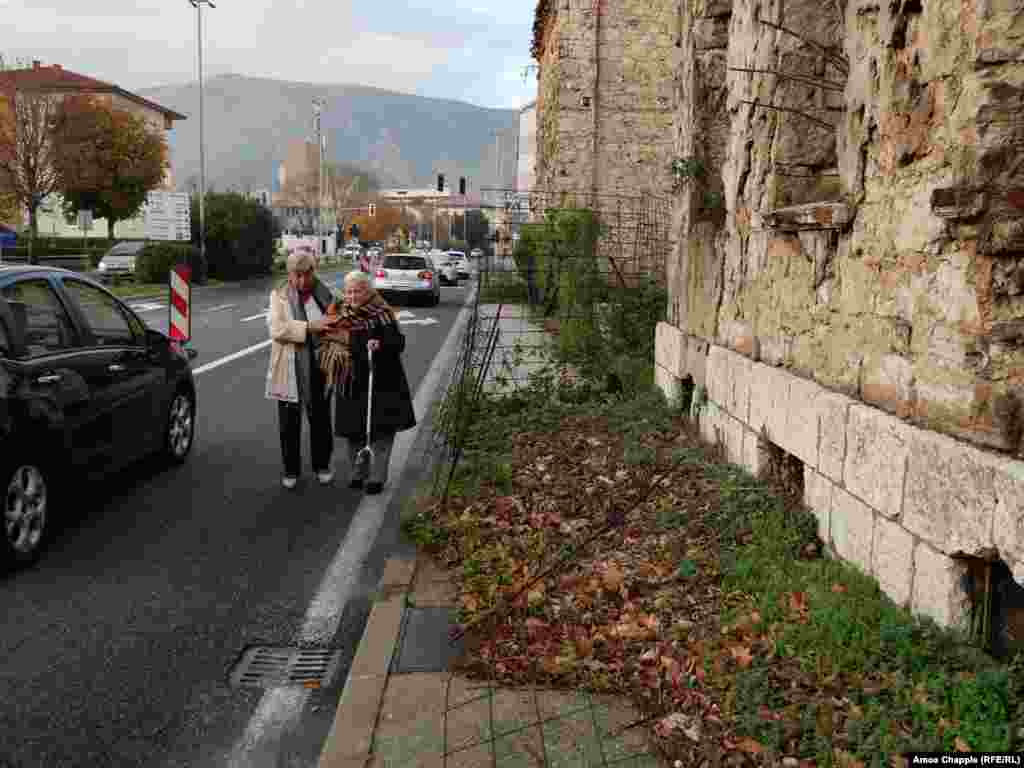
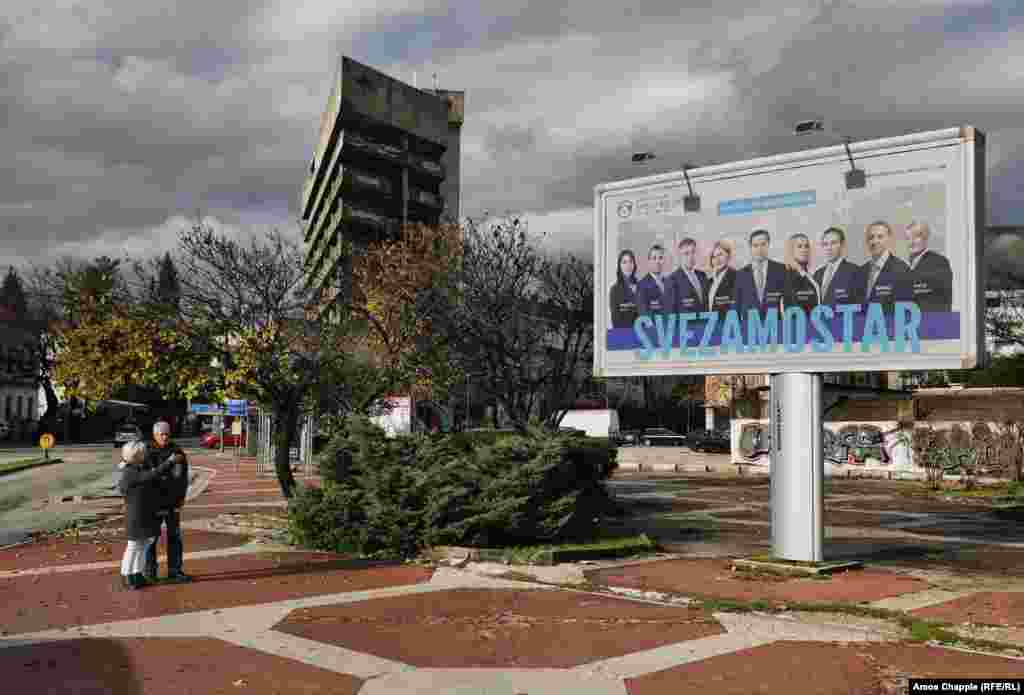
5/13An elderly couple stop to discuss a political poster in central Mostar.
The breakdown of democracy -- largely due to Bosnia’s complex postwar governing system, a ruling from Bosnia’s Constitutional Court, and political impasse between Bosnian-Croat and Bosniak parties -- has left Mostar’s mayor holding onto the office as “interim mayor” long after his original mandate expired in 2012.
After 12 years of dysfunctional democracy, Bosnia-Herzegovina’s iconic city of Mostar is preparing for local elections.
Show moreShow less
6/13A woman in Mostar’s Bosniak suburbs bakes rolled Burek, a traditional filled pastry.
Irman, a worker in central Mostar, told RFE/RL he was “excited” to be able to vote in local elections for the first time in more than a decade. He says the most pressing issue after improving the economy is to combat nationalism: “We can’t work on the other side of the city. You might get a simple job as a waiter, but for a better job a lot of the bigger companies want to know if you are Muslim or Croat.”
After 12 years of dysfunctional democracy, Bosnia-Herzegovina’s iconic city of Mostar is preparing for local elections.
Show moreShow less
8/13A stone at the entrance to Mostar’s iconic Old Bridge references the year when the 16th-century Ottoman structure was destroyed by Croatian fighters. The bridge was rebuilt in the 2000s.
After 12 years of dysfunctional democracy, Bosnia-Herzegovina’s iconic city of Mostar is preparing for local elections.
Show moreShow less
9/13Emina Voloder, a candidate in the upcoming elections, says she decided to enter politics for the first time because of the real-world consequences she witnessed from Mostar’s political stagnation.
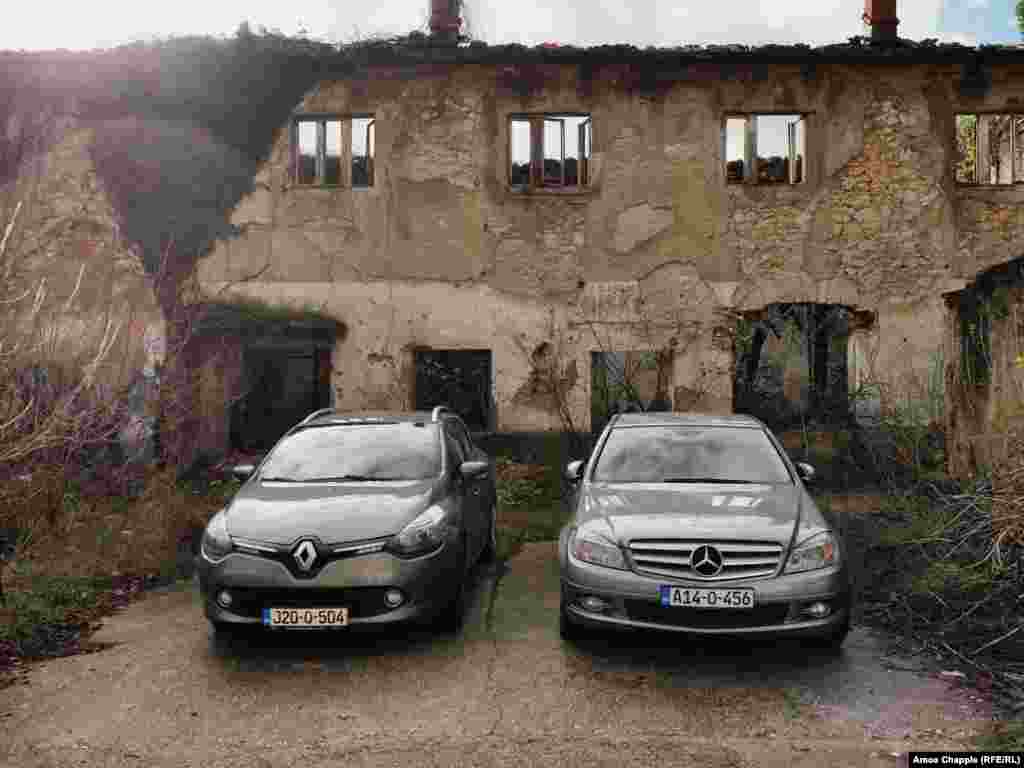
“I left to study in Sarajevo for six years, and when I came back nothing had changed. There are still the same buildings ruined by the war. Last year the rubbish wasn’t being collected and was just piling up on the street.” A dentist by trade, she says: “Just a few people [in local government] are spending the money that belongs to everyone.”
After 12 years of dysfunctional democracy, Bosnia-Herzegovina’s iconic city of Mostar is preparing for local elections.
Show moreShow less
12/13Shuttered stalls next to Mostar’s old bridge in the early afternoon. The graffiti says "Of all my quirks, I most despise indifference."
Bosnia’s new government will also be tasked with fixing the enormous damage done to Mostar’s once bustling tourist trade as a result of the COVID pandemic.
After 12 years of dysfunctional democracy, Bosnia-Herzegovina’s iconic city of Mostar is preparing for local elections.
Show moreShow less
13/13An empty tourist area next to Mostar’s famous bridge.
Enisa Basic, who runs a historic cafe next to the bridge, told RFE/RL her business employed 10 staff last year when it was thriving. She says the lack of tourism due to the pandemic has forced her to fire all of them. She is cautiously optimistic that the winners of the upcoming elections will help businesses like hers survive: “This is a very good city, but the people who have run it just put the money in their own pockets. They don’t care about regular people like me. After the elections, we hope things will change for the better.”
After 12 years of dysfunctional democracy, Bosnia-Herzegovina’s iconic city of Mostar is preparing for local elections.
Show moreShow less
Previous slide
Next slide
Mostar has not held municipal polls since 2008 because of the authorities' failure to enforce a 2010 ruling by Bosnia's Constitutional Court that said the city's power-sharing structure was unconstitutional and needed reform.
In the absence of elections, the dominant ethnic parties, the Bosniak Party of Democratic Action (SDA) and the Croatian Democratic Union (HDZ), have ruled their areas like fiefdoms with separate utilities, postal companies, universities, and hospitals.
Ljubo Beslic, of the HDZ, has served as mayor of Mostar without a mandate and little oversight since his term expired in 2013, while services for the city’s residents have deteriorated.
The long-delayed vote came after the SDA and HDZ in June reached agreement on a new statute for the city.
The deadlock was resolved after the European Court of Human Rights in 2019 condemned Bosnia for its failure to change its election law and enable municipal elections in Mostar.
In that case, the court ruled in favor of Mostar teacher and politician Irma Baralija, who had argued in a lawsuit that the legal issue prevented her from voting or running in a municipal election.
The voters chose 35 city councilors from six ethnically based electoral units and a central city zone.
The election commission presented preliminary results only for the central zone, but the results were expected to hold across the city.
With reporting by RFE/RL's Balkan Service, AP, and Reuters
RFE/RL journalists report the news in 24 languages in 18 countries where a free press is banned by the government or not fully established. We provide what many people cannot get locally: uncensored news, responsible discussion, and open debate.






![<a href="https://www.instagram.com/emina.voloder/?hl=en" target="_blank">Emina Voloder</a>, a candidate in the upcoming elections, says she decided to enter politics for the first time because of the real-world consequences she witnessed from Mostar’s political stagnation.<br />
<br />
“I left to study in Sarajevo for six years, and when I came back nothing had changed. There are still the same buildings ruined by the war. Last year the rubbish wasn’t being collected and was just piling up on the street.” A dentist by trade, she says: “Just a few people [in local government] are spending the money that belongs to everyone.”](https://gdb.rferl.org/3ff9a709-f443-42ab-8c04-392cb4c8b630_w1024_q10_s.jpg)