

Accessibility links

Breaking News

Netherlands, Denmark To Give Ukraine F-16 Fighter Jets In Crucial Win For Kyiv

Updated
Training has reportedly begun for Ukrainians to fly F-16s, but it could take six months or longer to also train engineers and mechanics to repair them.

The Netherlands and Denmark have said they will give F-16 fighter jets to Ukraine once certain “conditions” have been met, a long-awaited development that will help Kyiv fill a crucial hole in its defense capabilities.

Russia has used its more advanced and more numerous jets to repeatedly bomb Ukrainian cities, slow its counteroffensive, and threaten its ships exporting grain crucial to its economic survival, making Kyiv’s acquisition of modern U.S. jets a key ingredient to its successful defense of the country.

"Today we can announce that the Netherlands and Denmark commit to the transfer of F-16 aircraft to Ukraine and the Ukrainian Air Force, in close cooperation with the United States and other partners once the conditions for such a transfer have been met," Dutch Prime Minister Mark Rutte said on August 20 at Eindhoven air force base with Ukrainian President Volodymyr Zelenskiy at his side.

Rutte said that the Netherlands has 42 F-16s available but did not state whether all or just some would be given to Ukraine. Zelenskiy called the deal a "breakthrough agreement." Later in the day, Denmark said it would give 19 of the U.S.-made jets to Ukraine.

Ukraine inherited an aging fleet of Soviet MiG and Sukhoi jets that lack the strike depth and technology of modern Russian jets, putting Kyiv at a significant disadvantage in the war. Ukraine also has a much smaller fleet than Russia.

The more advanced F-16s would allow Ukrainian pilots to strike deep into Russian controlled areas and with great accuracy, intercept missiles that have terrorized Ukraine cities, and take on Russian jets that threaten its shipping lanes.

U.S. intelligence leaked earlier this year indicated that Ukraine had lost 60 of 145 jets in its fleet. Ukraine has never officially disclosed its losses. The deals announced August 20 imply that Ukraine could receive as many as 61 of the F-16s.

The Royal United Services Institute (RUSI), a U.K. defense and security think tank, said in a report last year that the F-16's advanced capabilities mean that "even a small number of Western fighters could have a major deterrent effect" on Russia's "cautious" pilots.

However, the aircraft are unlikely to arrive in time to help Ukraine's military with its current counteroffensive, which is going slower than anticipated in part because its ground forces do not have much air support.

For more than a year, Kyiv had been urging the administration of U.S. President Joe Biden to give it F-16 fighters or allow NATO members to transfer them. Washington had balked, fearing such deliveries could provoke Moscow or that Ukraine might use them to strike Russian territory.

Earlier this year, the Biden administration acquiesced to the jet transfers amid domestic and allied pressure, repeating a pattern of stalling on advanced weapons systems before giving in.

Ukraine is two months into a major counteroffensive to retake land in the east and the south. While Ukraine has regained some territory and, more importantly, degraded Russia’s defenses, it has suffered significant personnel and equipment losses.

U.S. military experts say Ukraine is forced to conduct an improbable task -- carry out a counteroffensive without air superiority -- something the United States would never do.

IN PHOTOS: Kyiv's forces continue their struggle to break through Russia's multilayered defenses in Ukraine's Donetsk region.

On The Front Line: Ukraine's Counteroffensive Yields Small Gains

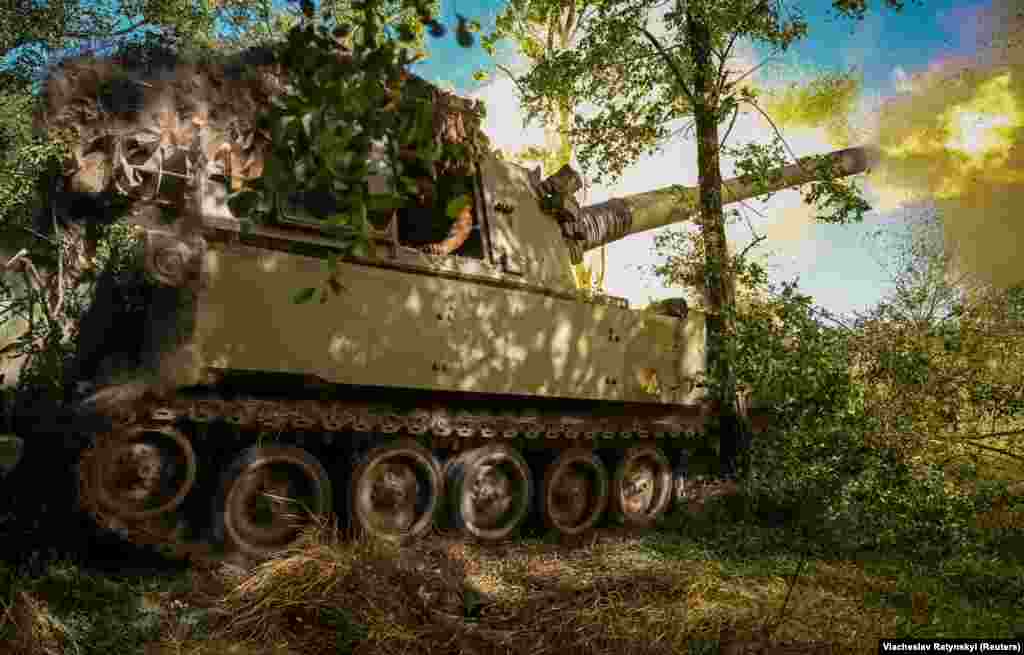
Ukrainian soldiers fire a self-propelled howitzer toward Russian positions at the front line in the Donetsk region on August 9.<br />
<br />
After months of preparations and resupply -- with as many as nine newly constituted, NATO-trained armored brigades -- Ukraine&#39;s counteroffensive to&nbsp;break through Russia&#39;s multilayered defenses is going slowly.
1/11 Ukrainian soldiers fire a self-propelled howitzer toward Russian positions at the front line in the Donetsk region on August 9.

After months of preparations and resupply -- with as many as nine newly constituted, NATO-trained armored brigades -- Ukraine's counteroffensive to break through Russia's multilayered defenses is going slowly.
Kyiv's forces continue their struggle to break through Russia's multilayered defenses in Ukraine's Donetsk region.
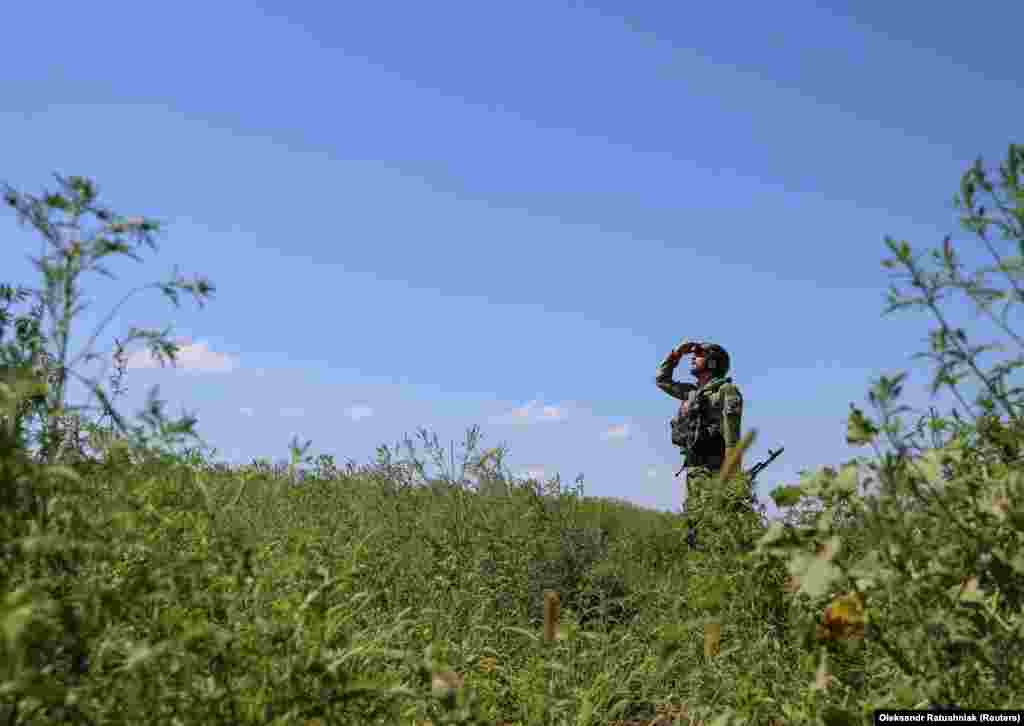
A Ukrainian air-defense soldier scans the sky for Russian drones at the front line.<br />
<br />
The size and complexity of Russian defenses across southern and eastern Ukraine have proven formidable.
2/11 A Ukrainian air-defense soldier scans the sky for Russian drones at the front line.

The size and complexity of Russian defenses across southern and eastern Ukraine have proven formidable.
Kyiv's forces continue their struggle to break through Russia's multilayered defenses in Ukraine's Donetsk region.
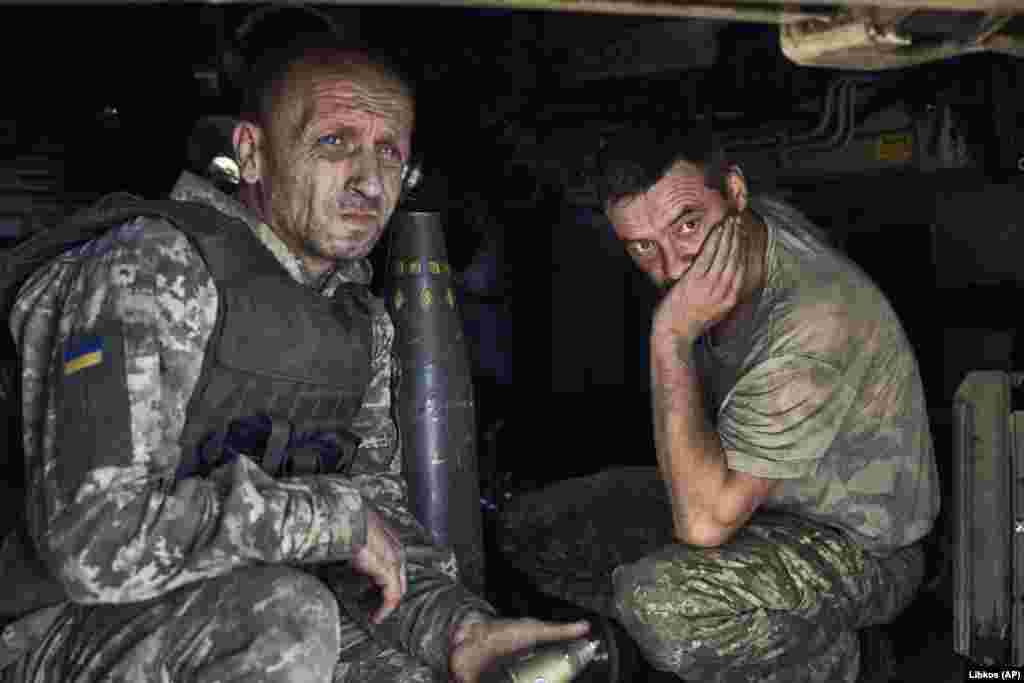
Ukrainian soldiers wait inside a self-propelled howitzer.
3/11 Ukrainian soldiers wait inside a self-propelled howitzer.
Kyiv's forces continue their struggle to break through Russia's multilayered defenses in Ukraine's Donetsk region.
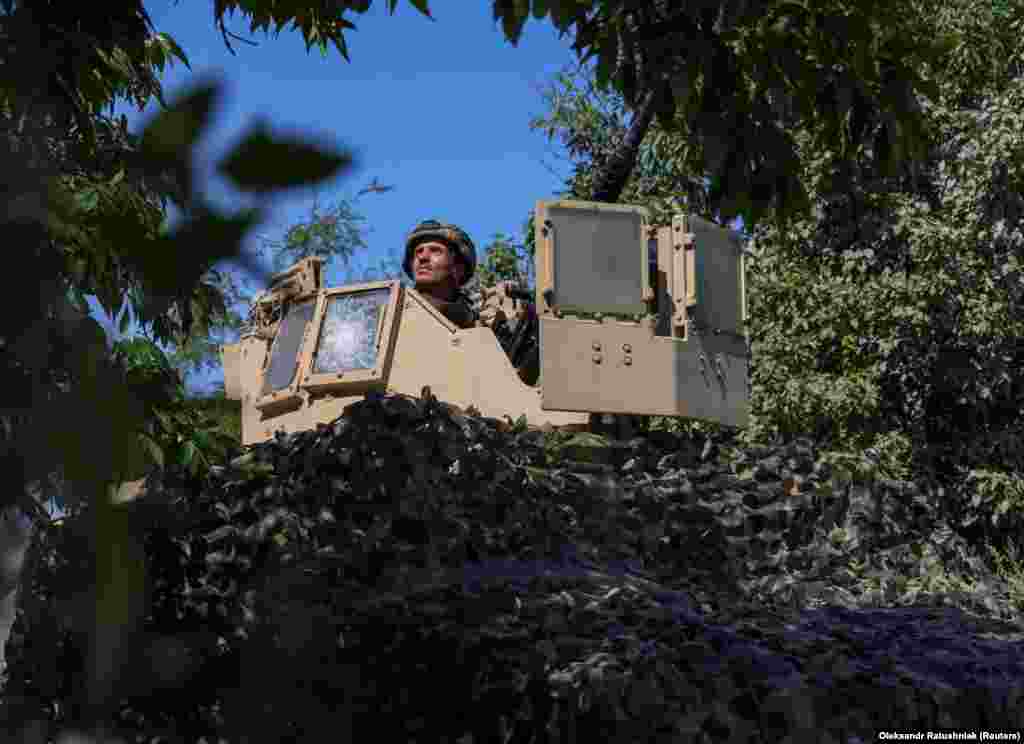
A camouflaged Ukrainian air-defense unit hidden among the trees keeps watch.<br />
<br />
&nbsp;
4/11 A camouflaged Ukrainian air-defense unit hidden among the trees keeps watch.

 
Kyiv's forces continue their struggle to break through Russia's multilayered defenses in Ukraine's Donetsk region.
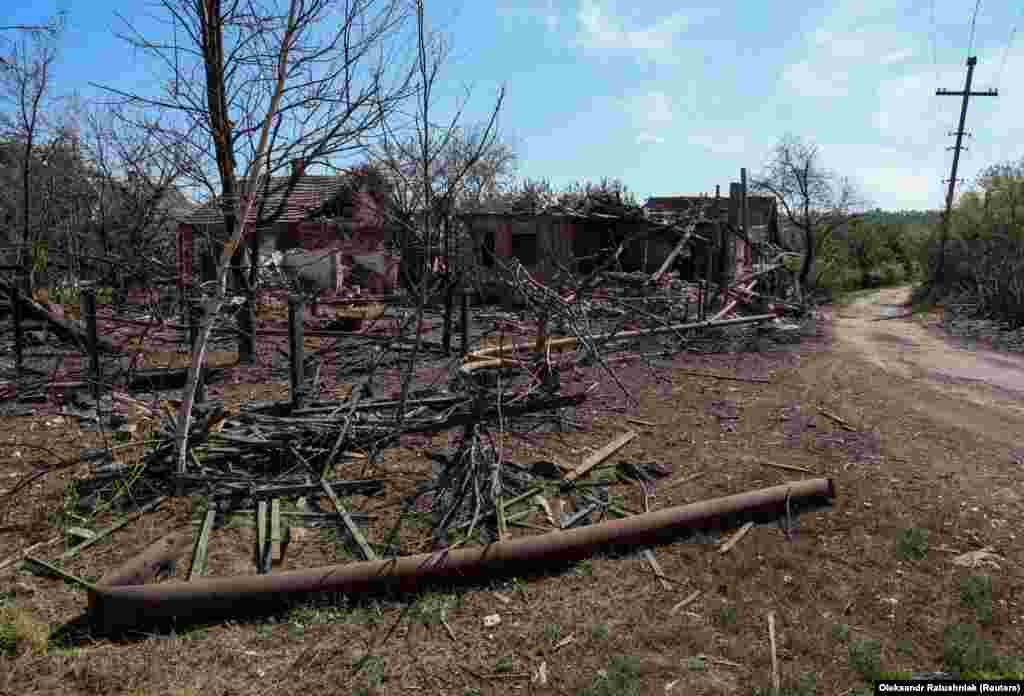
A view of the shattered Ukrainian town of New York, which lies some 35 kilometers to the north of the Russian-held city of Donetsk.<br />
<br />
Kyiv&#39;s troops took a series of villages south of Velyka Novosilka and seized high ground around Bakhmut, both north of the city and also to its south, near the village of Klishchiyivka.
5/11 A view of the shattered Ukrainian town of New York, which lies some 35 kilometers to the north of the Russian-held city of Donetsk.

Kyiv's troops took a series of villages south of Velyka Novosilka and seized high ground around Bakhmut, both north of the city and also to its south, near the village of Klishchiyivka.
Kyiv's forces continue their struggle to break through Russia's multilayered defenses in Ukraine's Donetsk region.
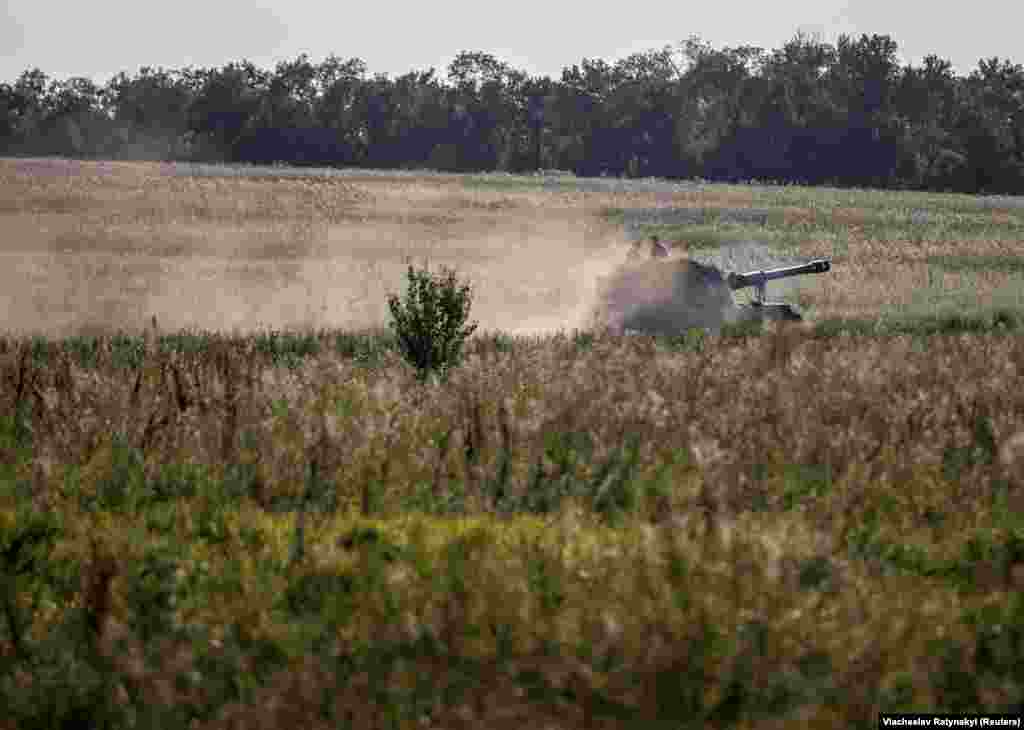
A Ukrainian M109 self-propelled howitzer roars through farmland in the Donetsk region on August 7.<br />
<br />
In the Zaporizhzhya region, Kyiv&#39;s forces ran into what experts described as a meat-grinder of Russian fortifications -- layers of trenches, minefields, barbed wire, anti-tank defenses, pillboxes -- that forced Ukrainian units into narrow strips of land where they were punished by Russian artillery.
6/11 A Ukrainian M109 self-propelled howitzer roars through farmland in the Donetsk region on August 7.

In the Zaporizhzhya region, Kyiv's forces ran into what experts described as a meat-grinder of Russian fortifications -- layers of trenches, minefields, barbed wire, anti-tank defenses, pillboxes -- that forced Ukrainian units into narrow strips of land where they were punished by Russian artillery.
Kyiv's forces continue their struggle to break through Russia's multilayered defenses in Ukraine's Donetsk region.
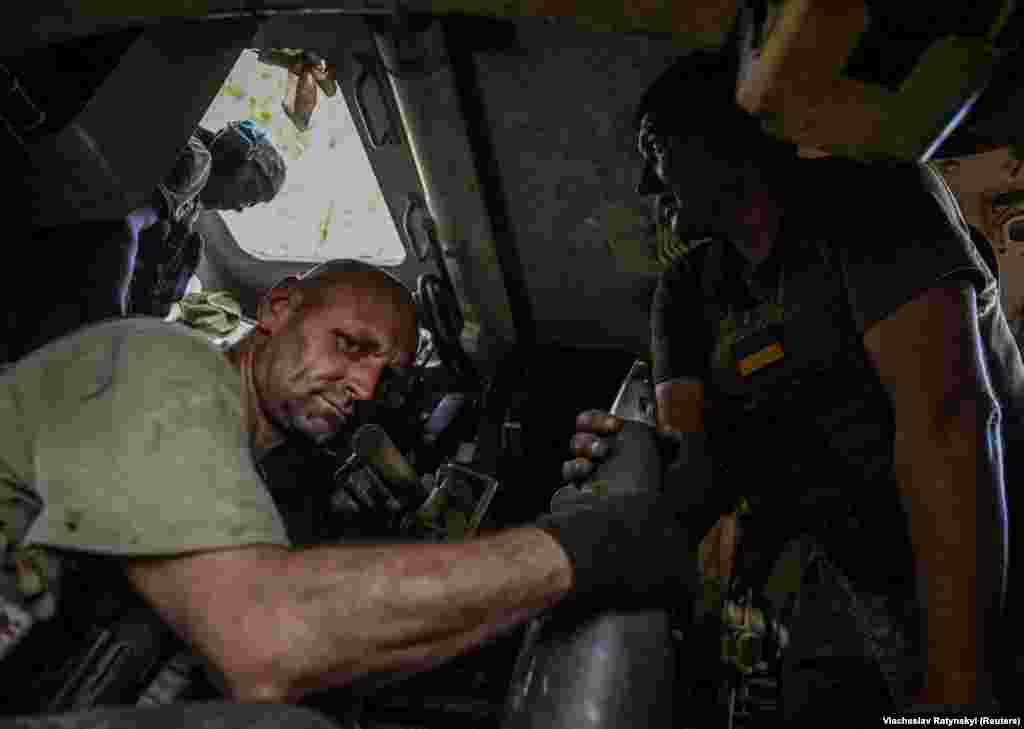
Ukrainian soldiers load 155-mm shells into a M109 self-propelled howitzer.<br />
<br />
The defenses have been dubbed &quot;Surovikin lines,&quot; named after Russian General Sergei Surovikin, who briefly commanded Moscow&#39;s forces that invaded Ukraine until he was demoted in January.
7/11 Ukrainian soldiers load 155-mm shells into a M109 self-propelled howitzer.

The defenses have been dubbed "Surovikin lines," named after Russian General Sergei Surovikin, who briefly commanded Moscow's forces that invaded Ukraine until he was demoted in January.
Kyiv's forces continue their struggle to break through Russia's multilayered defenses in Ukraine's Donetsk region.
<div>Ukrainian soldiers fire a M109 self-propelled howitzer toward Russian positions.<br />
<br />
At a speech in Washington on June 30, the chairman of the U.S. joint chiefs of staff&nbsp;<strong><a href="https://www.c-span.org/video/?529060-1/joint-chiefs-staff-chair-career-military-strategy" target="_blank">defended&nbsp;</a></strong>Ukraine&#39;s progress. &quot;That it&#39;s going slower than people predicted doesn&#39;t surprise me at all,&quot; General Mark Milley said.&nbsp;</div>
8/11
Ukrainian soldiers fire a M109 self-propelled howitzer toward Russian positions.

At a speech in Washington on June 30, the chairman of the U.S. joint chiefs of staff defended Ukraine's progress. "That it's going slower than people predicted doesn't surprise me at all," General Mark Milley said. 
Kyiv's forces continue their struggle to break through Russia's multilayered defenses in Ukraine's Donetsk region.
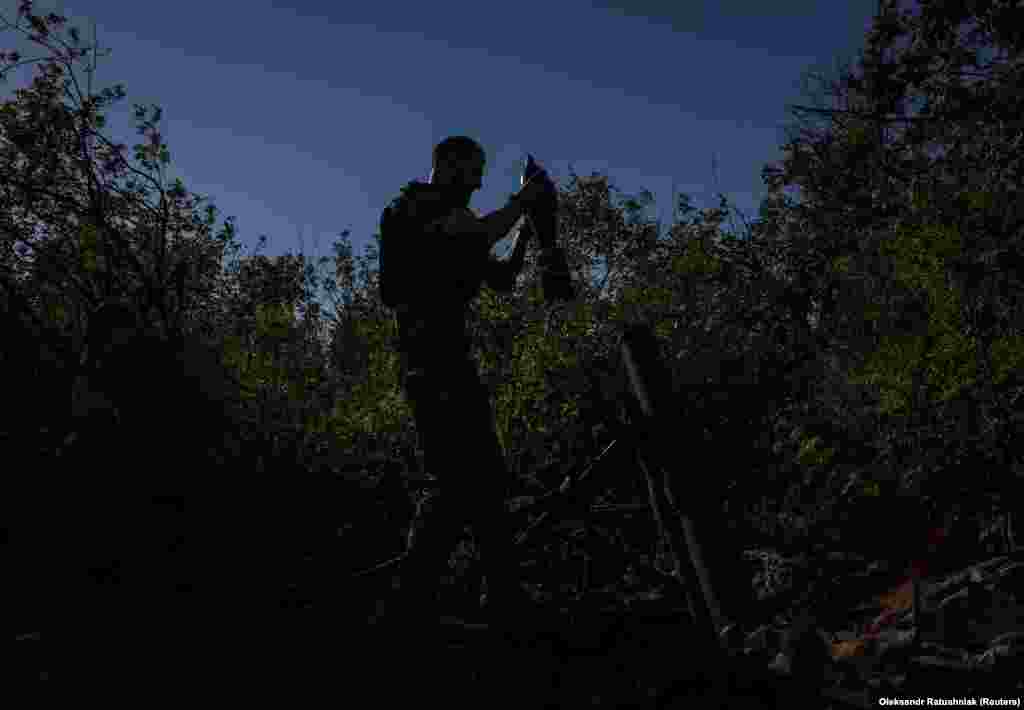
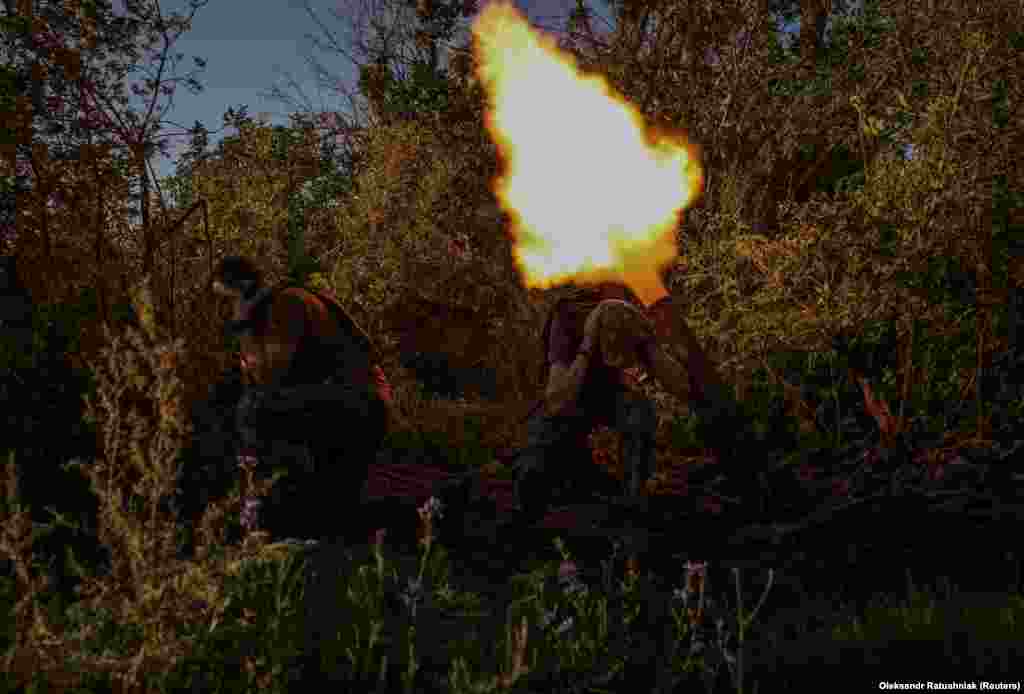
A Ukrainian soldier prepares to fire a mortar onto Russian positions near the city of Bakhmut on August 7.<br />
<br />
&nbsp;
9/11 A Ukrainian soldier prepares to fire a mortar onto Russian positions near the city of Bakhmut on August 7.

 
Kyiv's forces continue their struggle to break through Russia's multilayered defenses in Ukraine's Donetsk region.
&quot;It&#39;s going to be very difficult, very long, and it&#39;s going to be very, very bloody, and no one should have any illusions about any of that,&quot;&nbsp;Milley said.&nbsp;
10/11 "It's going to be very difficult, very long, and it's going to be very, very bloody, and no one should have any illusions about any of that," Milley said. 
Kyiv's forces continue their struggle to break through Russia's multilayered defenses in Ukraine's Donetsk region.
Smoke rises over a sunflower field on the front line on August 9.
11/11 Smoke rises over a sunflower field on the front line on August 9.
Kyiv's forces continue their struggle to break through Russia's multilayered defenses in Ukraine's Donetsk region.
Previous slide
Next slide

Zelenskiy flew to the Netherlands on August 20 to jointly announce the deal before continuing on to Denmark later in the day. The two NATO member states have led international efforts to train Ukrainian pilots for F-16s.

Ukrainian Defense Minister Oleksiy Reznikov said on August 19 that training had begun for Ukrainians to fly F-16s but added it would take at least six months to also train engineers and mechanics to repair them.

Training will take place in Denmark and Romania, officials from a coalition of 11 nations have said.

Ukraine, which expects several dozens of pilots to be trained, said last week it did not expect to be able to use F-16s this autumn or winter.

Experts say Russian President Vladimir Putin shows no signs of halting his invasion despite its failure to date and expect the war to drag well into next year, meaning the F-16s are likely to be deployed in battle.

With reporting by Reuters
  • 16x9 Image

    RFE/RL

    RFE/RL journalists report the news in 24 languages in 18 countries where a free press is banned by the government or not fully established. We provide what many people cannot get locally: uncensored news, responsible discussion, and open debate.

This item is part of
XS
SM
MD
LG