




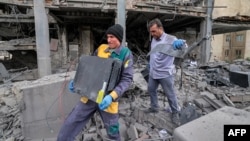
US President Donald Trump said he wants to "take the oil in Iran" and perhaps seize Kharg Island, while at the same time insisting Washington is doing "extremely well" in negotiations with Iran and that he is "pretty sure" a peace deal will be reached "soon."
The mixing of threats and the possibility of a peace deal with Tehran came in an interview published late on March 29 by the Financial Times and in remarks an hour later to the press aboard Air Force One.
To reporters, Trump hailed progress in talks with Iran, saying they were being held directly and indirectly with "reasonable" leaders and asserted Tehran was partially opening the crucial Strait of Hormuz, the waterway through which some 20 percent of the world's oil and natural gas supplies pass.
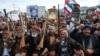
He didn't elaborate on what he called direct talks with Iran, whose leaders deny negotiations are taking place. Tehran has said it received, reviewed, and rejected a 15-point US peace plan that was delivered through Pakistani emissaries.
Trump said: "We are doing extremely well in that negotiation. But you never know with Iran because we negotiate with them and then we always have to blow them up...whether it's with B52 bombers" or by having torn up the 2015 nuclear deal that Tehran signed with world powers, including the United States, Russia, and China.
"I think we will make a deal with them. Pretty sure. But it's possible we won't," he told reporters. "But we've had regime change already. [The Iranian] regime was decimated, destroyed. They're all dead."
He said, without being specific, that the current leaders have been "very reasonable."
"I do see a deal in Iran. Could be soon," he said.
'Preference' Is To Take Iran's Oil
In the FT interview, Trump said that his "preference would be to take the oil," likening the situation to that of Venezuela, where he said he intends to take control of the country's oil industry "indefinitely" after US forces captured leader Nicolas Maduro in January.
"To be honest with you, my favorite thing is to take the oil in Iran, but some stupid people back in the US say: 'Why are you doing that?' But they're stupid people," Trump was quoted by the FT as saying.
"Maybe we take Kharg Island, maybe we don't. We have a lot of options," Trump said, referring to the hub where most of Iran's oil is exported.
"It would also mean we had to be there [in Kharg Island] for a while," he said "I don't think they have any defense. We could take it very easily."
Trump has imposed an April 6 deadline for Iran to open the Strait of Hormuz and accept a deal ending the war or face US strikes on its power plants.
Pakistan Seeks To Host Talks
Earlier in the day, Pakistan said it was looking to hold direct peace talks in Islamabad this week, but the violence in the Middle East and harsh rhetoric between Washington and Tehran showed no signs of letting up.
"Pakistan will be honored to host and facilitate meaningful talks between the two sides in the coming days, for a comprehensive and lasting settlement of the ongoing conflict," Pakistani Foreign Minister Ishaq Dar said following a March 29 meeting of the region's top diplomats.
Washington and Tehran did not comment on the proposed peace talks as the casualties and damages in the Middle East continued to rise. In a new development over the weekend, Iran-backed Houthi rebels in Yemen entered the fray, launching missiles toward Israel, including a third salvo early on March 30.
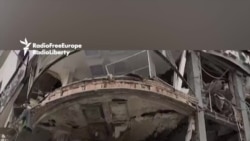

The developments come as thousands more US Marines arrived in the region, as Washington continued laying the groundwork for a possible land invasion of Iran, though US officials said no decisions have been made whether to invade.
With the US-Israeli war with Iran in its fifth week, Iran's powerful parliament speaker, Mohammad Baqer Qalibaf -- seen as a possible contender to lead the country after US-Israeli air strikes killed its leadership -- accused the United States of "secretly" planning a ground attack despite talking about peace.
"We are certain we can punish America and make it regret ever considering an attack on Iran," he said.
Iran late on March 29 launched a missile strike that injured at least 11 people in the desert city of Beersheba, Israeli authorities said. In one strike, a large fire broke out at a chemical plant on the outskirts of the city.
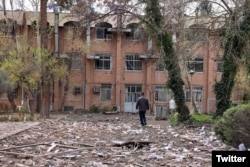
The Israeli military, in its "24-hour recap," said it had launched more than 140 air strikes on central and western Iran, including Tehran, over the 24 hours through the evening of March 29. It said ballistic missile launch sites and storage facilities, among other targets, were hit.
The International Atomic Energy Agency (IAEA) said on March 29 that Iran's heavy-water reactor at Khondab, near the city of Arak, which Tehran reported had been attacked on March 27, has suffered severe damage and is no longer operational.
The Israeli military had said it struck the facility, officially known as the Khondab Heavy Water Research Reactor. The site has been previously hit in an Israeli air strike during the 12-day war in June 2025.
The reactor is part of a sprawling nuclear complex in central Iran that includes heavy-water production facilities, which allow Iran to use natural uranium as fuel without the need for high-level enrichment.
Tehran Power Outages
Israel's military also said it carried out new strikes against sites linked to Iran's regime figures, but it did not provide specifics.
Iran's Energy Ministry said US and Israeli strikes late on March 29 targeted power supply facilities in the capital, Tehran, leading to outages in several districts.
Meanwhile, Israeli Prime Minister Benjamin Netanyahu said he has instructed the army to advance further into southern Lebanon to expand what he called the "existing security strip."
Netanyahu said the goal was to prevent the threat posed by Iran-backed Hezbollah -- deemed a terrorist organization by Israel and the United States -- and the firing of rockets from the area.
"We are determined to fundamentally change the situation" in southern Lebanon, he said.

