




News
- By RFE/RL
Pandora Papers Expose Secret Wealth, Dealings Of Aliyev, Zelenskiy, Putin, Other World Leaders
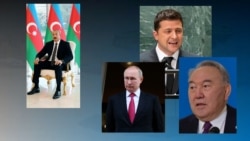
A massive new leak of financial documents has exposed how the presidents of Azerbaijan and Ukraine, as well as hundreds of other politicians and billionaires around the world, are linked with companies that use offshore tax havens to hide wealth.
The files from offshore companies, dubbed the Pandora Papers, involve some 35 current and former leaders and more than 300 officials.
The findings of an examination of the files -- the largest organized by the International Consortium of Investigative Journalists (ICIJ) -- were released on October 3.
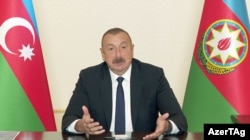
The investigation found that the family of Azerbaijan's President Ilham Aliyev and their close associates have secretly been involved in property deals in Britain, almost entirely in London, worth nearly $700 million, using offshore companies, according to the Organized Crime and Corruption Reporting Project (OCCRP), which is part of the ICIJ consortium.
Most of these properties were purchased in cash.
The files show how the Aliyevs, long accused of corruption in the South Caucasus country, bought a total of 17 properties, the BBC reported.
Aliyev’s son, Heydar, owned four buildings in London’s Mayfair district when he was just 11 years old.
A $44.7 million block was bought by a front company owned by a family friend of the president in 2009 and was transferred one month later to Heydar.
Aliyev’s administration did not respond to requests for comment on the allegations, nor did members of his family.
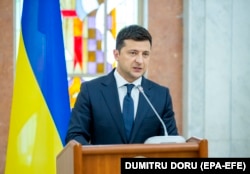
The secret records also show that Ukraine's President Volodymyr Zelenskiy and his close circle were the beneficiaries of a network of offshore companies, including some that owned expensive property in London, the OCCRP reported.
It said Zelenskiy and his partners in a television production company, Kvartal 95, set up a network of offshore firms dating back to at least 2012. Among other things, the offshore firms were used by Zelenskiy's associates to purchase three prime properties in the center of the British capital.
The documents also show that just before he was elected in 2019 on a wave of public anger against the country’s political class, Zelenskiy transferred his stake in a secret offshore company to his business partner, who later became his top presidential aide.
And an arrangement was soon made that would allow the offshore firm to keep paying dividends to a company that now belongs to Zelenskiy's wife.
A spokesman for Zelenskiy declined to comment.

According to the OCCRP, other leaked offshore documents show that the “unofficial third wife” of Kazakhstan’s former President Nursultan Nazarbaev received $30 million, apparently for “almost nothing.”
The payment to Asel Qurmanbaeva followed a number of share transfers involving six offshore companies, almost all registered in the British Virgin Islands, a notorious haven for offshore secrecy, the investigative journalism group said.
The payment was structured as a sale, in which Qurmanbaeva gave up her stake in a company that appeared to do no business. She received the money two months after the 2010 death of a man rumored to be Nazarbaev’s confidant, an oligarch named Vladimir Ni, from a company taken over by his daughter.
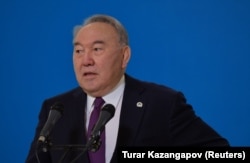
Nazarbaev did not respond to requests for comment on the claims.
The leaks also link Russian President Vladimir Putin to secret assets in Monaco.
The Washington Post, which is part of the investigative consortium, reported on the case of Svetlana Krivonogikh, a Russian woman who it said became the owner of a Monaco apartment through an offshore company incorporated on the Caribbean island of Tortola in April 2003, just weeks after she gave birth to a girl.
She was at the time in a secret, years-long relationship with Putin, the U.S. newspaper said, citing Russian investigative outlet Proekt.
They are using those offshore accounts, those offshore trusts, to buy hundreds of millions of dollars of property in other countries, and to enrich their own families, at the expense of their citizens."-- Fergus Shiel, International Consortium of Investigative Journalists
Krivonogikh and her 18-year-old daughter and the Kremlin did not respond to requests for comment.
Kremlin spokesman Dmitry Peskov on October 4 dismissed revelations leaked in the Pandora Papers as "a set of largely unsubstantiated claims."
In Pakistan, members of Prime Minister Imran Khan's inner circle, including cabinet ministers and their families, secretly own companies and trusts holding millions of dollars, the BBC reported.
The files also expose the offshore dealings of Jordan’s King Abdullah II, Czech Prime Minister Andrej Babis, and former British Prime Minister Tony Blair, and detail the financial activities of more than 130 billionaires from Russia, the United States, Turkey, and other nations.
Many of the transactions in the documents involve no legal wrongdoing, but Fergus Shiel of the ICIJ said the leak documents show “the reality of what offshore companies can offer to help people hide dodgy cash or avoid tax."
"They are using those offshore accounts, those offshore trusts, to buy hundreds of millions of dollars of property in other countries, and to enrich their own families, at the expense of their citizens," he added.
The publishing of the Pandora Papers comes five years after the explosive Panama Papers investigation in 2016.
State Department spokesman Ned Price told journalists at a regular briefing on October 4 that the United States is reviewing the Pandora Papers' findings, but is not in a position to comment on specifics.
The ICIJ obtained the trove of nearly 12 million confidential files from 14 financial services companies in countries such as the British Virgin Islands, Panama, Belize, Cyprus, the United Arab Emirates, Singapore, and Switzerland that set up shell companies and other nooks for clients.
A team of more than 600 journalists from 150 news outlets spent two years sifting through them, tracking down sources, and digging into court files and other public records from dozens of countries.

More News
Iranian Activist Gets Back Passport, Phone After Confiscated Upon Arrival From Germany
Iranian activist Parastoo Forouhar has confirmed to RFE/RL the return of her passport and electronic devices, which were confiscated when she arrived at Tehran airport from Germany last week for a trip to commemorate the anniversary of the death of her parents, who were both vocal critics of Iran's religious leadership.
Forouhar arrived in Tehran on November 15 for the 25th anniversary of the deaths of her parents, Dariush and Parvaneh Forouhar, two political activists who were stabbed to death in their Tehran home on November 21, 1998.
The death of Forouhar's parents was part of a series of extrajudicial killings of dissidents and intellectuals that later came to be known as the "Chain Murders of Iran."
The individuals who confessed to the murders were affiliated with the Intelligence Ministry and admitted that the murders were termed a "physical elimination" of the dissidents as directed by the ministry.
The authorities said the agents responsible for the killings had acted "arbitrarily" but an investigative journalist and activists have suggested that senior officials authorized the killings.
In an interview with Radio Farda, Forouhar said she had never received any official instruction prohibiting her from holding an annual memorial for her parents. No reason was given for the seizure of her passport and phone.
However, she noted that there have been insinuations of "misuse" concerning the memorial ceremonies, rhetoric she said she had faced for the past 25 years. In recent years, she added, the authorities had hindered commemorations by blocking streets leading to their home and trying to intimidate those participating in the ceremony.
Written by Ardeshir Tayebi based on an original story in Persian by RFE/RL's Radio Farda
Russian Human Rights Council Member Calls Incarceration Of Anti-War Artist Skochilenko 'Deadly Dangerous'
A member of Russia's presidential Council for Human Rights says the incarceration of Russian artist Aleksandra Skochilenko for using price tags in a supermarket to distribute anti-war messages could be "deadly dangerous" to the 33-year-old.
Yeva Merkachyova said conditions in the prison where Skochilenko is expected to serve her seven-year sentence will be "much more serious" for Skochilenko, who has several medical conditions, including a congenital heart defect, bipolar disorder, intolerance to gluten, and post-traumatic stress disorder.
Merkachyova said people with conditions such as gluten intolerance face problems with food in Russia's prisons, which have a single canteen for everyone.
“I believe that, in general, her stay in prison is mortally dangerous for her. I’m not even talking about the 'etap' -- the period when a person is transferred, which can definitely last more than one day. It can last for weeks," Merkachyova was quoted by RIA Novosti on November 19 as saying.
The so-called etap is a process that involves trains with caged compartments specifically designed for prisoners, who are provided with little fresh air, no showers, and only limited access to food or a toilet.
The transfers can take days, weeks, or even months as the trains stop and convicts spend time in transit prisons. Convicts almost always face humiliation, beatings, and sometimes even death at the hands of their guards.
Another member of the Council for Human Rights, Aleksandr Brod, was also quoted by RIA Novosti on November 19 as saying that he had asked Russian Ombudswoman Tatyana Moskalkova to secure proper food for Skochilenko in custody.
A day earlier, more than 100 Russian doctors signed an open letter to President Vladimir Putin calling for Skochilenko's release, stressing that her actions did not violate Russian law.
A court in St. Petersburg on November 16 sentenced Skochilenko to prison after finding her guilty of "distributing false information about the Russian armed forces," under Article 207.3 of the Criminal Code, which was railroaded through parliament and signed by Putin in a single day last year.
Skochilenko was arrested in April 2022 after she replaced five price tags in a supermarket with pieces of paper containing what investigators called "knowingly false information about the use of the Russian armed forces."
In her final testimony hours before the verdict and sentence were handed down, Skochilenko reiterated that her actions in the supermarket were meant to promote peace.
- By RFE/RL
Russia Bans Entry To Moldovan Officials As Tensions Rise
The Russian Foreign Ministry said on November 20 that it summoned Moldovan Ambassador Lilian Darii to inform him that "a number of Moldovan officials were banned from entering the Russian Federation" in an "asymmetrical" response to Moldova's move to block several Russian websites. "A strong protest was expressed to the Moldovan side in connection with ongoing politically motivated persecution of media in the Russian language in Moldova," the ministry said in a statement. Chisinau blocked access to the websites of major Russian news media on October 30, accusing them of taking part in an information war against Moldova.
Iranian Mother's 13-Year Sentence For Protesting Son's Death During Unrest Confirmed
An Iranian appeals court has upheld a 13-year prison sentence handed to Mahsa Yazdani, the mother of a young man killed during the last year's nationwide unrest, after being convicted on charges including "propaganda against the system" and "insulting the leader" for comments she made on social media over the killing of her son by government forces.
Meisam Mousavi, Yazdani’s lawyer, confirmed that the sentence was communicated to his client on November 19.
The sentence underscores the Iranian regime's unrelenting stance against criticism related to the protests, which erupted following the death of Mahsa Amini in September 2022. Amini's death, under disputed circumstances while in police custody, sparked widespread outrage and demonstrations against the government's policies, particularly those concerning women's rights and overall freedoms.
Yazdani's son, Mohammad Javad Zahedi, was 20 years old when he was fatally shot by government forces in the northern city of Sari. Following his death, Yazdani expressed her grief on social media, writing, "I am broken, this loss has driven me insane, a curse on the entire regime."
Zahedi was one of hundreds of casualties during protests that erupted following the death of Amini, a 22-year-old woman who had been detained for an alleged head-scarf violation. The Human Rights Activists News Agency says more than 500 people have been killed during the unrest, including 71 minors, as security forces try to stifle widespread dissent.
Tensions between the government and the families of those killed or arrested in the nationwide protests have been on the rise in recent weeks after the first anniversary of the deaths of many protesters, as well as Amini.
The government has been accused of stepping up the pressure on the victims' families through collective arrests and the summoning of grieving families by security agencies with the aim of keeping them from commemorating the deaths of their loved ones, which the government fears will trigger more unrest.
The treatment of the victims' graves has added to the families' anguish. Gravesites, including that of Amini, have been repeatedly vandalized, an act that further highlights the government's attempts to suppress dissent and control the narrative surrounding the protests.
International human rights organizations, including Amnesty International, have condemned Iran's actions.
Diana Eltahawy, Amnesty International's deputy director for the Middle East and North Africa, criticized the Iranian authorities' efforts to obstruct justice and exacerbate the suffering of the families of the deceased, describing their actions as having "no bounds."
Written by Ardeshir Tayebi based on an original story in Persian by RFE/RL's Radio Farda
- By Reuters
Finnish President Says Impossible To Return Asylum Seekers To Russia
Finnish President Sauli Niinisto said on November 20 that it had become impossible to return asylum seekers who did not meet the criteria for protection, and that this had to be taken into account when policies are set. Over 500 asylum seekers, mostly from Yemen, Somalia, Syria, and Iraq, arrived in Finland via Russia during the past two weeks, leading Helsinki to shut half its border crossings and accuse Moscow of funneling migrants to its border. Niinisto called for a European Union-wide solution to stop uncontrollable entry to the passport-free area.
- By AP
Report: Online Abuse Of Politically Active Afghan Women Tripled After Taliban Takeover
Online abuse and hate speech targeting politically active women in Afghanistan has significantly increased since the Taliban took over the country in August 2021, according to a report released on November 20 by a U.K.-based rights group. Afghan Witness, an open-source project run by the nonprofit Center for Information Resilience, says it found that abusive posts tripled, a 217 percent increase, between June-December 2021 and the same period of 2022. The report said the team of investigators "collected and analyzed over 78,000 posts" written in Dari and Pashto directed at "almost 100 accounts of politically active Afghan women."
Protesters Block Major Border Crossing Between Afghanistan And Pakistan
Protesters in Pakistan have blocked a major border crossing with neighboring Afghanistan to protest against Islamabad's refusal to allow document-free travel, which has hit traders and the local economy on both sides hard.
Late on November 19, protesters in Chaman, a border town in Pakistan's southwestern Balochistan Province, blocked the gate connecting the town to Spin Boldak, a town in the southern Afghan province of Kandahar.
Speaking to RFE/RL's Radio Mashaal on November 20, Ghousullah Lagharee, the leader of a monthlong sit-in protest in Chaman, said the action would continue until Islamabad rescinds its decision to only allow people with valid travel documents to cross the border.
"We will continue this blocked until the government accepts our demands [to resume passport-free travel]," he said.
"We will announce further steps as this is blocked and the ongoing strike [in Chaman] continues," he added.
WATCH: Pakistani demonstrators also slammed the government's crackdown on undocumented Afghan nationals.
Last month, Pakistan unilaterally ended the century-old "Easement Rights," an arrangement that allowed members of some communities straddling the 19th-century Durand Line border to cross freely.
In Chaman, free movement across the border helped most residents earn a living by moving goods between the neighboring countries. Members of the Achakzai and Noorzai Pashtun tribes make up most residents on both sides of the border in the desolate desert region.
"The government restrictions have killed our livelihoods and made our people jobless," said Faiz Mohammad, a local union leader in Chaman.
He said that at least 20,000 families in Chaman alone depended on document-free travel to trade with Afghanistan.
Attaullah, another leader of the protesters in Chaman, said they had been meeting senior civil and military officials in Balochistan's capital, Quetta, and were now seeking an audience with senior government leaders in Islamabad.
"We hope to have our first meeting with them today or tomorrow," he told Radio Mashaal on November 20.
Pakistani officials insist cross-border movement has to be regulated to improve security and control smuggling in the country.
Islamabad has blamed Afghanistan's Taliban rulers for failing to prevent Tehrik-e Taliban Pakistan (TTP), which they say is a Taliban ally and shelters in Afghanistan, from launching attacks inside Pakistan and then retreating back across the border.
On November 8, caretaker Pakistani Prime Minister Anwar ul-Haq Kakar said terrorist attacks inside the country had increased by 60 percent since the Taliban returned to power in Afghanistan in August 2021. Since then, some 2,300 people have been killed in these attacks.
In early October, Islamabad announced November 1 as a deadline for more than 1.7 million "undocumented foreigners" to leave the country. In a nationwide crackdown after the expiry of the deadline, Pakistani police arrested thousands of Afghans and deported them.
Pakistani authorities said on November 20 that more than 400,000 Afghans had crossed into Afghanistan from Pakistan during the crackdown on migrants.
But in Chaman, protesters are adamant that they will not allow Islamabad to invoke security fears or budget woes to wipe out their livelihoods.
"Our people have awakened. Anybody who is thinking about laying a brick on the border must think hard first," Lagharee told Radio Azadi.
Mother, Neighbor Detained In Kazakhstan After 7-Year-Old Girl's Body Found
Police in the northern Kazakh region of Pavlodar said on November 20 that the mother and her neighbor had been detained after search groups had found 7-year-old Milana Davydova dead a day earlier. The girl went missing in the village of Besqaugha on November 17. Police said the mother confessed that her daughter died after she hit her head with her hand, while the neighbor confessed to helping the woman hide the body at a site 250 meters from her house. If convicted, the two face up to 20 years in prison each. An investigation is under way. To read the original story by RFE/RL's Kazakh Service, click here.
Relatives Locate Tajik Opposition Journalist's Brother In Detention Center In Khujand
Asliddin Sharipov, the brother of the director of an opposition online television station, has been located in a detention center in Tajikistan’s northern city of Khujand weeks after he was extradited from Russia.
Sharipov's relatives told RFE/RL over the weekend that a lawyer was allowed to visit Sharipov last week for the first time since he was deported to the tightly controlled former Soviet republic in early October.
According to the relatives, they have yet to be allowed to visit Sharipov.
On October 30, the Norwegian Helsinki Committee urged Tajik authorities to disclose Sharipov's exact whereabouts.
Sharipov's brother, Shavkat Muhammadi, who is the director of the opposition Payom online TV channel and currently resides in the European Union, told RFE/RL earlier that Tajik officials had refused to provide information about Sharipov's whereabouts.
Police in the Russian city of Yekaterinburg arrested Sharipov in September 2022 and extradited him to Tajikistan on October 1, 2023.
Tajik authorities have not commented on the situation around Sharipov.
Shavkat Muhammadi told the Norwegian Helsinki Committee he is convinced that Tajik authorities are persecuting his brother as a means to put pressure on him in retaliation for criticism of the government aired on Payom.net, the Tajik independent media outlet he leads in exile.
Sharipov’s lawyer in Russia, Nina Chetverikova, has said her client is wanted in Tajikistan for allegedly cooperating with a banned group and for promoting its activities online.
If convicted, Sharipov faces up to eight years in prison.
Dozens of Tajik opposition figures and activists living abroad are wanted by the Tajik authorities on charges of terrorism and extremism.
President Emomali Rahmon, who has run the Central Asian nation for almost 30 years, has been criticized by international human rights groups over his administration's disregard for independent media, religious freedoms, civil society, and political pluralism.
Head Of Ukrainian Agency Suspected Of Graft Fired
The Ukrainian government on November 20 dismissed the chief of the country's State Service of Special Communications and Information Protection, Yuriy Shchyhol, and informed him that he was a suspect in an investigation into the embezzlement of 62 million hryvnyas ($1.72 million). Ukraine's Specialized Anti-Corruption Prosecutor's Office and the National Anti-Corruption Bureau (NABU) said in a statement that Shchyhol was one of six suspects in the investigation of the purchase of information systems intended for the creation of a network of protected data registers in 2021. To read the original story by RFE/RL's Ukrainian Service, click here.
Baku Detains Another Karabakh-Armenian Accused Of 1992 Massacre
Azerbaijan's State Security Service (DTX) said on November 20 that it detained another ethnic Armenian from Nagorno-Karabakh, Rashid Beglarian, accusing him of atrocities against Azerbaijani civilians during the war over the then-breakaway region in 1992. According to DTX, Beglarian was charged with illegal freedom deprivation, torture, violating the laws of war, organizing illegal armed groups, and illegal border crossing. Less than two weeks earlier, Vagif Khachatrian, also an ethnic Armenian from Karabakh, was handed 15 years in prison in Baku on charges of genocide and forced deportation of civilians in 1991, which he vehemently denied. To read the original story by RFE/RL's Azerbaijani Service, click here.
Kazakh Prosecutor Seeks 12 Years For Opposition Politician On Bribery Charge
The prosecutor in a high-profile trial asked a Kazakh court to convict and sentence Nurzhan Altaev, the leader of Kazakhstan's unregistered El Tiregi (People's Pillar) party, to 12 years in prison for taking a bribe, a charge the former lawmaker vehemently denies as politically motivated. Altaev, who quit the ruling Amanat party in 2021 and has accused the Justice Ministry of refusing to register his party, was arrested in June and went on trial last month. In April, a court in Astana sentenced Altaev to 15 days in jail on a charge of violating regulations for holding public gatherings. To read the original story by RFE/RL's Kazakh Service, click here.
Former Wagner Mercenaries Detained In Daghestan On Kidnapping Charge
Two former Wagner mercenaries recruited from penal colonies who recently returned from the war in Ukraine were detained in Russia's North Caucasus region of Daghestan on a charge of kidnapping a businessman for ransom, local media reports said on November 20. The two men, identified as Bashir A. and Magomed P., are accused of abducting businessman Abdulbasir B. and releasing him after receiving 31.5 million rubles ($349,300) as a ransom. The number of crimes committed by former Wagner recruits has been on the rise after contracts for the former prisoners started expiring and they began returning home from Ukraine. To read the original story by RFE/RL's Caucasus.Realities, click here.
Azerbaijani Journalist Detained On Unspecified Charges
Zibeyda Sadiqova, the lawyer of Ulvi Hasanli, the director of the Abzas Media new website, said on November 20 that her client has been detained by Baku police on unknown charges. Earlier in the day, Abzas Media's chief editor, Sevinc Vaqifqizi, said Hasanli went missing after he left home early in the day for the airport, as he planned to travel abroad. Vaqifqizi suggested that Hasanli might have been arrested for his journalistic activities. Abzas Media's recent investigative reports have focused on businesses owned by relatives of the South Caucasus nation's top officials. To read the original story by RFE/RL's Azerbaijani Service, click here.
Stoltenberg Says NATO Reviewing Making Peacekeeping Increase In Balkans Permanent
NATO Secretary-General Jens Stoltenberg has said the alliance is considering making permanent an increase in its military presence in Kosovo that came after violence erupted in northern Kosovo in September.
NATO announced an increase in its KFOR peacekeeping force days after a shoot-out on September 24 in Banjska, which left a Kosovar police officer and three of the attackers dead.
The increase showed how seriously the alliance took the violence, Stoltenberg said on November 20 at a joint news conference in Pristina with Kosovar President Vjosa Osmani.
"We are now reviewing whether we should have a more permanent increase to ensure that this doesn't spiral out of control and create a new violent conflict in Kosovo or the wider region," Stoltenberg said.
Tens of thousands of ethnic Serbs who live in northern Kosovo do not recognize central Kosovar institutions, and they have often clashed with Kosovar police and international peacekeepers. In May, violence erupted when Kosovar authorities tried to install mayors in some Serb-majority towns.
NATO reinforced KFOR, which normally has a troop strength of 4,500, by several hundred troops, sending additional forces from Britain and Romania. The current review includes peacekeeping forces in Bosnia-Herzegovina, where Stoltenberg started a tour of the Western Balkans earlier on November 20.
He said those responsible for the attack on September 24 must face justice and he will convey this message during meetings scheduled to take place on November 21 in Belgrade.
"In September we saw a serious outbreak of violence in northern Kosovo, which raised concerns that a wider conflict could return to the Western Balkans," he said, noting the violence in May in which 93 KFOR troops were injured, some seriously.
"Such violent attacks are unacceptable. Those responsible must face justice," he said.
Stoltenberg arrived in Pristina from Sarajevo, where he warned about "secessionist and divisive rhetoric" sweeping across Bosnia and signs of "malign foreign interference," namely from Russia.
The NATO chief said the allies "strongly support the sovereignty and territorial integrity" of Bosnia amid growing concerns that Moscow is trying to bring instability to the region in an attempt to help shift attention away from its full-scale invasion of Ukraine.
Moscow's interference "threatens to undermine stability and weaken reforms," he said.
Since being ravaged by a civil war three decades ago during the breakup of the former Yugoslavia, Bosnia has struggled to overcome ethnic divisions. NATO played a major role in ending the 1992-95 Bosnian War and implementing a U.S.-sponsored peace plan that partitioned the country between a Serbian entity -- Republika Srpska -- and the Bosniak-Croat federation connected by a weak central government.
Bosnia's stability has been further shaken in recent months by Republika Srpska President Milorad Dodik, who increasingly has pursued nationalist and secessionist policies while seeking closer ties with Serbia and Russia.
"All political leaders must work to preserve unity, build national institutions, and achieve reconciliation. This is crucial for the stability and the security of the country," Stoltenberg said.
"NATO has been committed to Bosnia-Herzegovina for many years. Your security matters for the Western Balkans region and it matters for Europe," he added.
NATO invited Bosnia to join the Membership Action Plan in 2010. Though this is a first step toward admission to NATO, it does not prejudge any decision on future membership.
"We must reach political consensus and through dialogue get to stances of great importance for Bosnia when it comes to its cooperation with NATO," said the chairwoman of the Council of Ministers of Bosnia, Borjana Kristo after meeting with Stoltenberg.
After scheduled stops in Serbia and North Macedonia on November 21, Stoltenberg is to participate in a meeting with the leaders of NATO members Albania, Croatia, Montenegro, North Macedonia, and Slovenia on November 22.
With reporting by Reuters
Noted Russian Rights Activist Nina Katerli Dies At 89
Boris Vishnevsky, a municipal lawmaker in Russia's second-largest city, St. Petersburg, said on November 20 that well-known rights activist Nina Katerli has died at the age of 89. Katerli defended several high-profile persons at politically motivated trials, including Mikhail Khodorkovsky and other former leaders of the Yukos oil company in the early 2000s. Katerli was a grandmother of theater director Yevgenia Berkovich, who is currently in pretrial detention on charges of justifying terrorism in the production of a play about Russian women who married Muslim men and moved to Syria. Berkovich maintains her innocence. To read the original story by RFE/RL's North.Realities, click here.
Former Governor Of Siberian Region Of Kemerovo Dies At 79
The governor of the Siberian region of Kemerovo, Sergei Tsivilyov, said on November 20 that his predecessor, who led the coal-rich region for more than 20 years, Aman (aka Amangeldi) Tuleyev, has died at the age of 79. The cause of death was not given. Tuleyev stepped down in 2018 amid rallies demanding his resignation following a fire in a shopping center in the region's capital, Kemerovo, that killed 60 people, including 37 children. Turkmenistan-born Tuleyev, who is of Kazakh-Tatar origin, ran for president of Russia in 1991 and 2000, coming fourth in both polls. To read the original story by RFE/RL's Russian Service, click here.
Candidate Linked To Controversial Businessman Wins Mayor Of Moldova's Second City
Alexandr Petkov, the candidate of Our Party, a political grouping established by controversial businessman Renato Usatii, has won the runoff election for mayor in Balti, Moldova's second-largest city. Petkov defeated Maxim Morosan, from the Moscow-backed Socialist Party, garnering alomost 60 percent of the vote. Results after the second round of local elections on November 19 showed the ruling Action and Solidarity Party of Western-backed President Maia Sandu has suffered a setback in urban centers, losing the mayorship in all of Moldova's 11 municipalities, including the capital, Chisinau. To read the original story by RFE/RL's Moldovan Service, click here.
Russia Adds Jamala, Popular Ukrainian Singer Of Crimean Tatar Origin, To Its Wanted List
The Russian Interior Ministry's registry of wanted persons on November 20 shows that popular Ukrainian singer Susana Dzhamaladinova, who is also known as Jamala and is of Crimean Tatar origin, was added to the list in mid-October on a charge of distributing "fake" information about Russia's armed forces involved in Moscow's ongoing invasion of Ukraine, Mediazona reported. Earlier this month, a Russian court issued a warrant for Jamala's arrest, Mediazona says. In 2016, Jamala won the Eurovision song contest for performing a ballad that described the brutal 1944 Soviet deportation of Crimean Tatars from Crimea to Central Asia. To read the original story by RFE/RL's Crimea.Realities, click here.
Kyrgyz Court Releases Kadyrov Critic, But Orders His Deportation
BISHKEK -- A court in Bishkek has ruled that Russian citizen Mansur Movlayev, an outspoken critic of the authoritarian ruler of Russia's North Caucasus region of Chechnya, Ramzan Kadyrov, who was sentenced in Kyrgyzstan earlier in October to six months in prison for illegal border-crossing, must be released but that his deportation order to Russia remains in force.
Movlayev's lawyer, Bakyt Avtandil, told RFE/RL on November 20 that his client left the Birinchi Mai district court's premises a free man and "nobody came up to him regarding his pending deportation." He added that the court said Movlayev had served his six-month sentence because time spent in pretrial detention counts double.
Movlayev, a native of Chechnya, is wanted in Russia on extremism charges that he rejects as politically motivated.
The Kyrgyz State Committee of National Security (UKMK) said in August that its officers had detained Movlayev in a counterterrorist operation, stressing that the 28-year-old Chechen activist is "a follower of radical Islam" with links to terrorist groups in the Middle East.
In 2020, Movlayev was sentenced to three years in prison on illegal drugs charges that he vehemently rejected as politically motivated, calling the case against him retaliation by Chechen officials for his criticism of Kadyrov and his government.
In 2022, Movlayev was granted an early release, but then detained again.
Noted Chechen opposition bloggers Ibragim and Baisangur Yangulbayev said at the time that Movlayev managed to escape and fled Russia for Kyrgyzstan in 2022, where he planned to get assistance from international rights groups to travel to the European Union for safety reasons.
Kadyrov, who has ruled Chechnya since 2007 with a cult of personality around him, is frequently accused by Russian and international human rights groups of overseeing grave abuses, including abductions, torture, extrajudicial killings, and targeting the LGBT community.
Kremlin critics say Russian President Vladimir Putin has turned a blind eye to the abuses because he relies on the former rebel commander to control separatist sentiment and violence in Chechnya.
- By Reuters
Hungary Erects Billboards Vilifying EU's Von Der Leyen
Hungary's ruling party unveiled billboards vilifying European Commission President Ursula Von der Leyen on November 20, the first time it has made her a personal target in a campaign similar to one against her predecessor that angered Brussels. The billboards, erected overnight to launch a campaign for next June's European parliamentary elections, depict Von der Leyen alongside Alex Soros, the son of liberal Hungarian-born financier George Soros, a perennial target of hostility from Prime Minister Viktor Orban's Fidesz Party. The slogan reads: "Let's not dance to their tunes."
U.S. To Send $100 Million In Arms To Ukraine, As Pentagon Chief Pledges Support 'For Long Haul'
Washington announced a package of weapons and equipment to support Ukraine as Defense Secretary Lloyd Austin told President Volodymyr Zelenskiy that the United States was in "for the long haul" in its support for Ukraine as it continues to battle Russian troops.
The package provides up to $100 million of arms and equipment authorized under previously directed drawdowns, Secretary of State Antony Blinken said in a statement. The package includes High-Mobility Artillery Rocket Systems (HIMARS) and additional ammunition.
The assistance "will help meet Ukraine's immediate battlefield needs as it fights to retake its sovereign territory," Blinken said, adding that it was critical for Congress to take action by passing President Joe Biden's request for additional funding for Ukraine.
Austin arrived earlier in the day in Kyiv on an unannounced visit in a show of support for Ukraine amid concerns of a "war fatigue" among Ukraine's Western allies, especially in the United States -- Ukraine's main provider of military and financial aid.
"The message that I bring you today, Mr. President, is that the United States of America is with you, we will remain with you for the long haul," Austin told Zelenskiy after the meeting.
Live Briefing: Russia's Invasion Of Ukraine
RFE/RL's Live Briefing gives you all of the latest developments on Russia's full-scale invasion, Kyiv's counteroffensive, Western military aid, global reaction, and the plight of civilians. For all of RFE/RL's coverage of the war in Ukraine, click here.
"I was honored to meet with President Zelenskiy in Kyiv today to reaffirm the United States' steadfast support for Ukraine. We, along with our allies and partners, will continue to support Ukraine's urgent battlefield needs and long-term defense requirements, Austin said in a separate message on X, formerly known as Twitter.
Zelenskiy highlighted the visit as "a very important signal for Ukraine" and said, "we count on your support."
Zelenskiy's office said he thanked the U.S. government and pointed out the importance of the visit of the delegation ahead of the November 22 meeting of the Ramstein group, formally known as the Contact Group on Defense of Ukraine.
The meeting emphasized the urgency of continuing the uninterrupted supply of all the necessary weapons and ammunition by the allies, Zelenskiy's office said. The president also emphasized the need to strengthen Ukraine's capabilities ahead of winter.
The visit was Austin's second to Ukraine. He arrived in Kyiv by train from Poland with a delegation that included U.S. Army General Christopher Cavoli, supreme commander of allied forces in Europe. The U.S. officials also met with Defense Minister Rustem Umerov and Chief of Staff General Valeriy Zaluzhniy.
Washington has given tens of billions of dollars in military and other aid to Ukraine since the start of Russia's unprovoked invasion in February last year.
The U.S. government has reiterated many times that it will stand with Kyiv for as long as it takes. However, there has been growing concern about Washington's continued assistance amid opposition from some hard-line Republicans in Congress.
Further financial assistance for Ukraine was left out of a temporary bill approved by Congress last week to avert a U.S. government shutdown.
The Pentagon said in a statement that Austin's visit was meant to "reinforce the staunch support of the United States for Ukraine's fight for freedom."
"The discussions will focus on further bolstering the strategic partnership between the United States and Ukraine, to include ensuring Ukraine's armed forces have the battlefield capabilities they need for both the winter and to defend their country against future Russian threats, the Pentagon statement said.
"He will also underscore the continued U.S. commitment to providing Ukraine with the security assistance it needs to defend itself from Russian aggression, while also discussing a long-term vision for Ukraine's future force," it said.
Austin's visit to Kyiv comes ahead of a meeting later this week of the Ukraine Defense Contact Group, also known as the Ramstein format, which consists of some 50 countries that back Kyiv in its war against Russia.
In Ukraine, Russian shelling of civilian-populated areas killed at least three people on November 20, regional officials said.
Serhiy Lysak, the governor of the Dnipropetrovsk region, said on Telegram that an 83-year-old woman was killed by Russian artillery strikes in Nikopol and a 53-year-old man was wounded.
Two civilians were killed when Russian troops shelled Kherson early on November 20, the head of the southern Ukrainian city's military administration, Roman Mrochko, reported.
Regional Governor Oleksandr Prokudin said on Telegram that two drivers were killed when Russian troops fired at the parking lot of a private transport company in Kherson.
Prokudin earlier on November 20 said that overnight shelling of residential areas of the region wounded six people, including one child.
With reporting by AFP
- By Current Time
Woman Detained For Allegedly Setting Fire To Enlistment Office In Russia's Kaliningrad
A woman was detained in Russia's western Kaliningrad exclave on suspicion of attempting to set an enlistment center on fire, regional authorities reported. The incident occurred on November 19, the spokesman for the regional government, Dmitry Lyskov said, without revealing the woman's identity. Telegram channel Incident-Sovetsk published a video purportedly showing a woman throwing a Molotov cocktail into a building, filming the fire on her phone, then running away. The channel said the woman worked as a cook at a local kindergarten. Arson attacks on military enlistment offices have become frequent since the start of Russia’s full-scale invasion of Ukraine. To read the original story by Current Time, click here.
- By AFP
Putin To Participate In Virtual G20 Meeting On November 22 After Skipping Live Summit
Russian President Vladimir Putin will participate in a virtual meeting of G20 leaders on November 22 after again skipping the annual in-person summit in India in September, Russian state television reported. Putin has not attended the annual G20 meeting in person since launching his unprovoked invasion of Ukraine in February 2022. The November 22 virtual meeting will seek to build on the outcomes of the September meeting, Indian Prime Minister Narendra Modi said in a statement on November 18. India is the current chair of the G20.
Dozens Gather In Siberian City To Speak Out Against Legislation Curtailing Protests
Dozens of Russians gathered in the Siberian city of Novosibirsk on November 19 to protest against a local government initiative that would ban protests in most city locations. Novosibirsk Governor Andrei Travnikov, who heads the regional pro-Kremlin United Russia party, claimed the initiative is designed to protect the rights and freedoms of residents. Opponents say Travnikov, who serves at the behest of Russian President Vladimir Putin, wants to limit protests ahead of the 2024 Russian presidential election to make himself look good in the eyes of the Kremlin. Opponents say they expect the United Russia-controlled Novosibirsk parliament to approve the ban. To read the original story by RFE/RL's Siberia.Realities, click here.
Editors' Picks
Top Trending
In Western Ukraine, Ethnic Hungarians Refuse To Play 'Hostage' To Hungary's EU Policy
2Ukraine Presses Drive On East Bank Of Dnieper As Russian Drones Target Infrastructure
3Russian Doctors Urge Putin To Release Woman Imprisoned For Price Tag Anti-War Protest
4Ukraine Attributes Destruction Of Russian Ships To Innovative Use Of Drones
5The Moscow Times, Noted For Its English Coverage Of Russia, Is Declared 'Foreign Agent'
6Ukraine Reports Progress Securing Dnieper River Beachheads
7Ukraine Aid Window 'Closing' As U.S. Congress Drags Feet On New Package
8Ukraine Says It Has Established 'Several Bridgeheads' Along East Bank Of Dnieper River
9Can An Ex-Minister's Arrest In His Wife's Brutal Killing Finally Bring Protections To Kazakh Women?
10'Five Tiny Pieces Of Paper': St. Petersburg Artist Sasha Skochilenko's Defiant Final Words In Court
Subscribe