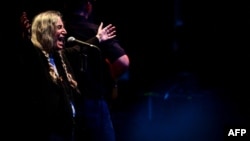
PRAGUE –- American singer, poet, and activist Patti Smith has voiced support for Radio Free Europe/Radio Liberty (RFE/RL), calling attention to the importance of independent journalism and warning of funding threats under the current US administration.
During a concert on July 19 in Prague, where RFE/RL is based, the iconic 78-year-old paused before launching into her protest anthem People Have The Power to dedicate the song “to Steve, and everyone at Radio Free Europe,” referring to RFE/RL President Stephen Capus.
Smith, one of the original voices during the birth of New York's punk rock scene in the mid 1970s, praised the work of RFE/RL and "many important public institutions," highlighting their role in sharing "important information to the people in rural communities all over the the world,” and lamenting that they are “being defunded by the present administration in my country.”
"We have to keep fighting, we have to help one another," she added.
The comments by the woman known as the "high priestess of punk" who has long fused art with activism, were met with loud applause from the Prague audience, many of whom are familiar with RFE/RL’s historic and ongoing presence in the region.
Based in the Czech capital since 1995, RFE/RL broadcasts independent news in 27 languages to countries where a free press is banned or not fully established.
'The Spirit Of Freedom:' 75 Years Of Radio Free Europe
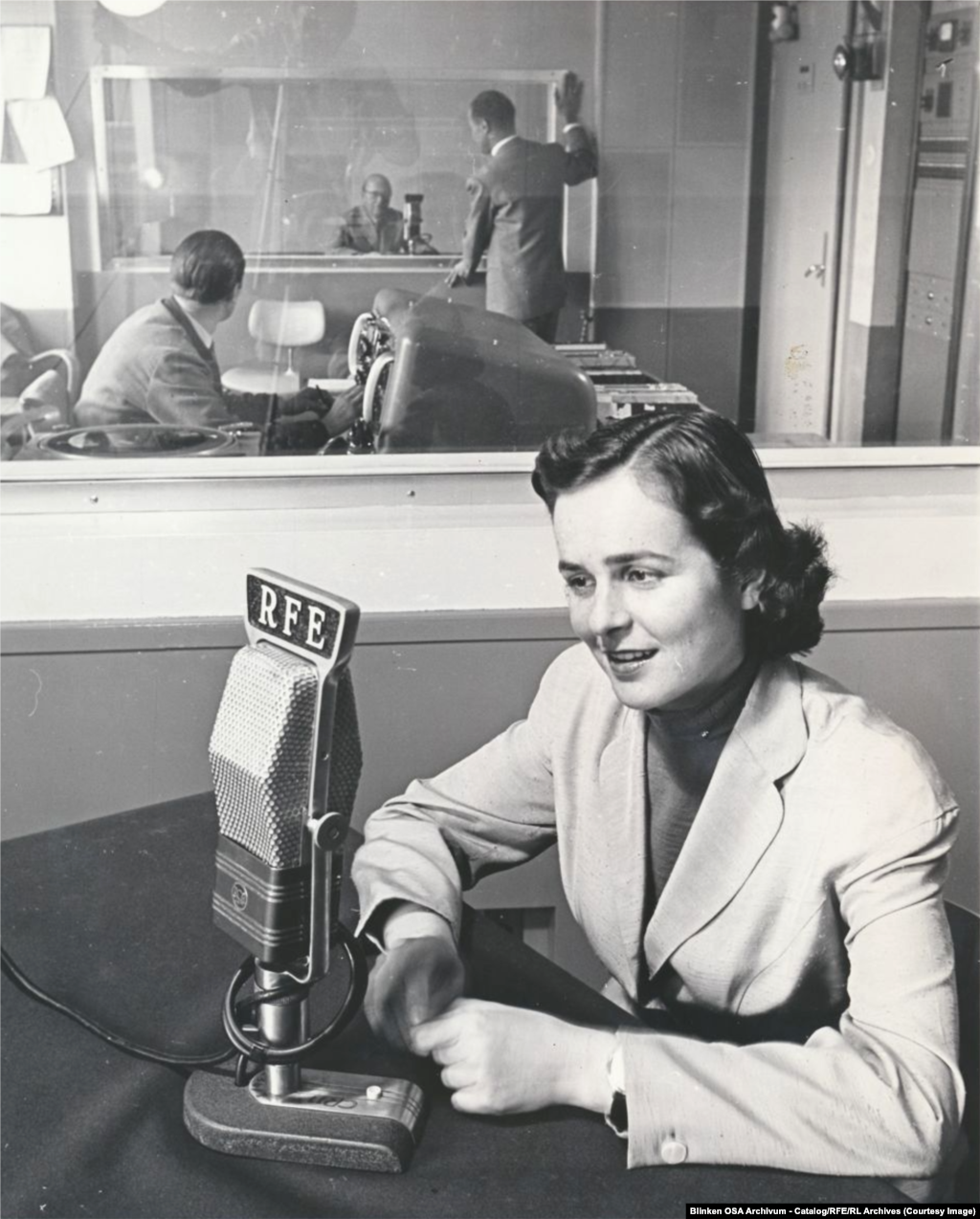
1/19A Hungarian presenter in a Radio Free Europe (RFE) office in Munich, West Germany, in 1955.
The American radio had begun broadcasting five years earlier, on July 4, 1950.
From the front lines of the Cold War to the trenches of Ukraine, archival photos tell the story of Radio Free Europe, which began broadcasts on US Independence Day, 75 years ago.
Show moreShow less
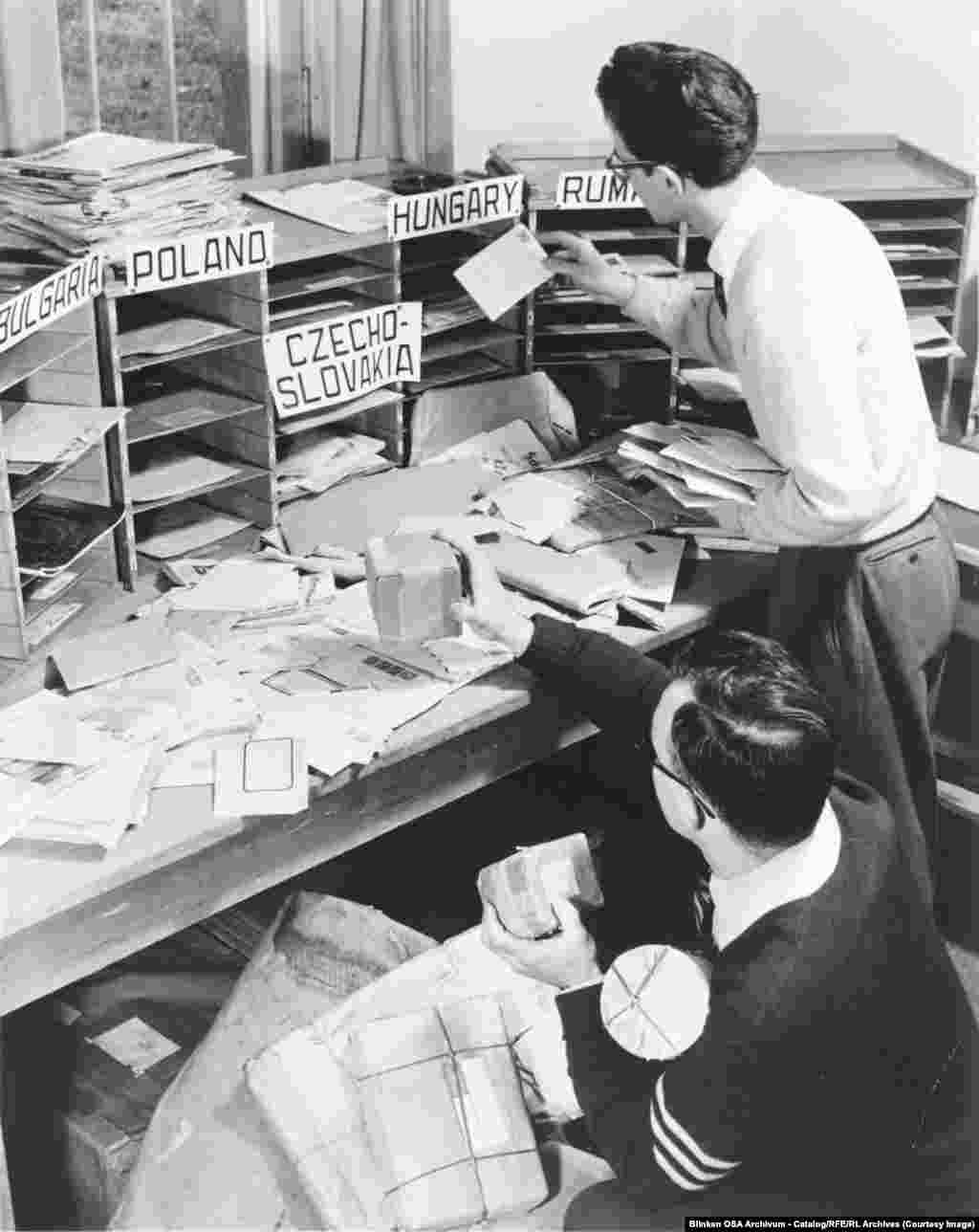
2/19RFE workers in the Munich headquarters sort through mail received from broadcast countries.
RFE was set up with the stated aimof “keeping alive the spirit of freedom in the hearts and minds of captive people” living under communism in Eastern Europe.
From the front lines of the Cold War to the trenches of Ukraine, archival photos tell the story of Radio Free Europe, which began broadcasts on US Independence Day, 75 years ago.
Show moreShow less
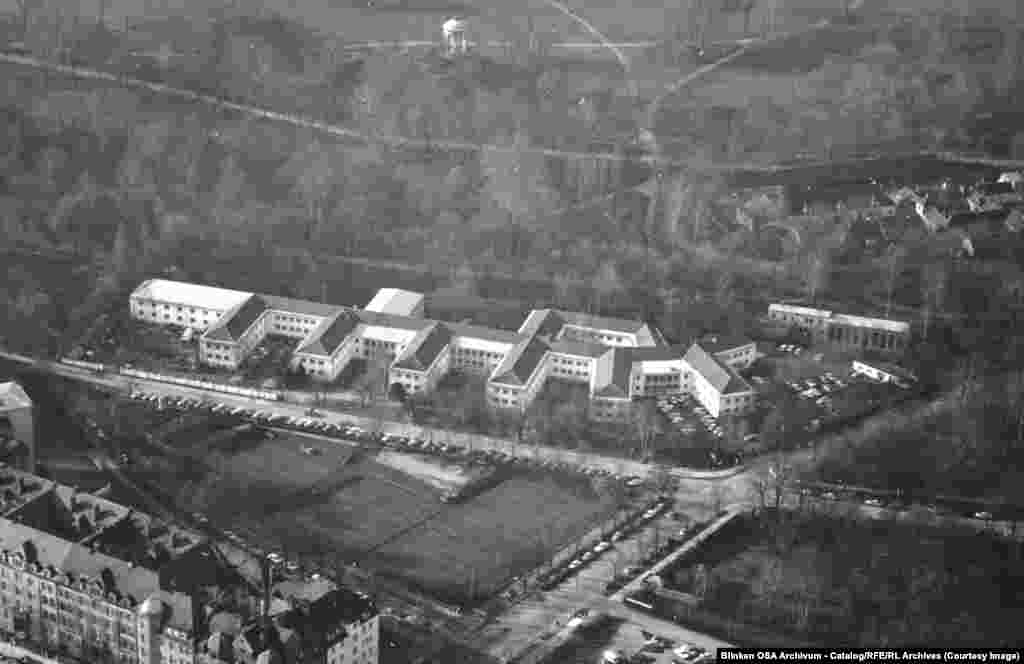
3/19RFE was headquartered inside this complex alongside Munich’s English Garden park.
With RFE targeting communist European states, Radio Liberty (RL), a sister entity, was founded to transmit into the Soviet Union in 1953.
From the front lines of the Cold War to the trenches of Ukraine, archival photos tell the story of Radio Free Europe, which began broadcasts on US Independence Day, 75 years ago.
Show moreShow less
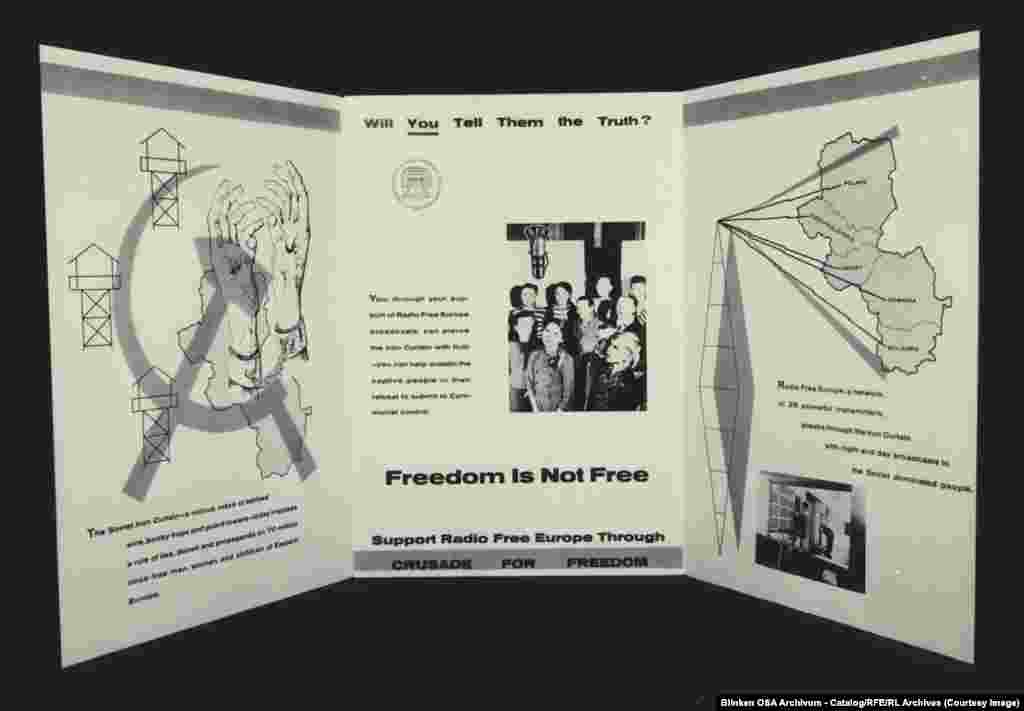
4/19A brochure calling for donations to support the operation of RFE.
A portion of RFE’s funding came from donations but the bulk of the operationwas secretly funded by the CIA. This subterfuge allowedfor RFE to be ‘bare-fisted and hard-hitting,” unhindered by awkward diplomatic considerations of openly state-funded broadcasters.
From the front lines of the Cold War to the trenches of Ukraine, archival photos tell the story of Radio Free Europe, which began broadcasts on US Independence Day, 75 years ago.
Show moreShow less
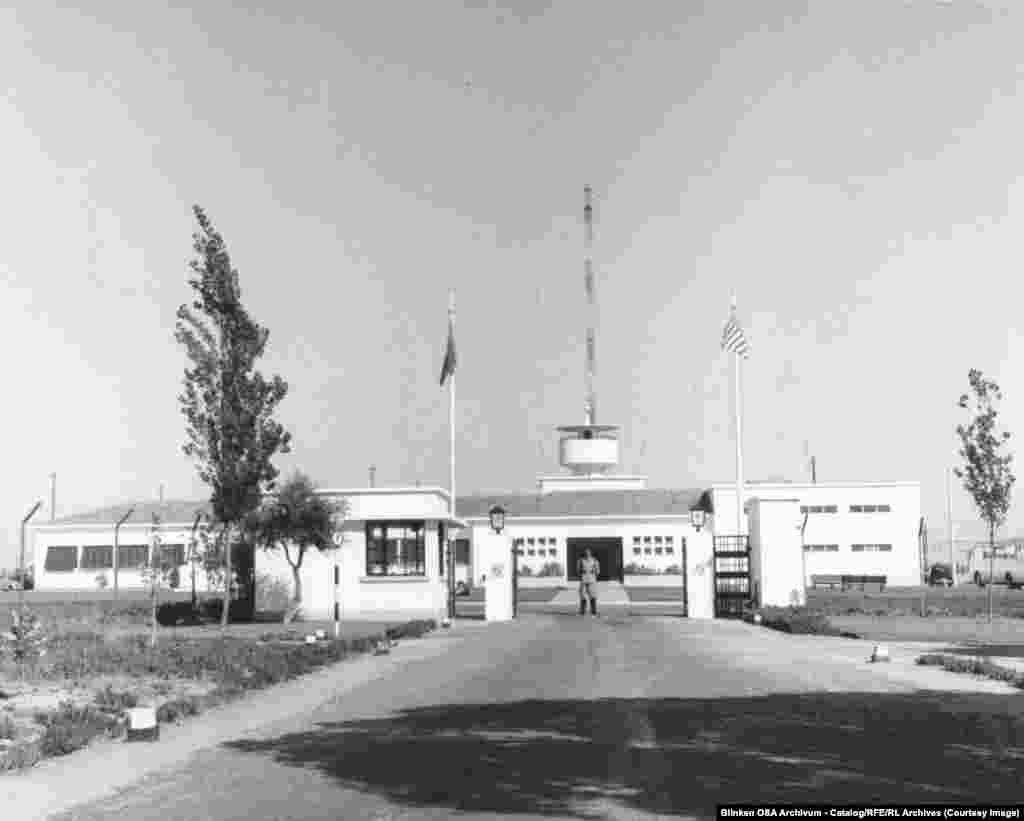
5/19Radio Free Europe’s main transmitting station at Gloria, near Lisbon, Portugal.
RFE and Radio Liberty used powerful short-wave transmitters in Germany, Spain, and Portugal that could “bounce” signals off the atmosphere to reach target countries in Eastern Europe and the USSR. Radio Liberty operated a transmission facility in Taiwan that directed broadcasts into deepest Siberia.
From the front lines of the Cold War to the trenches of Ukraine, archival photos tell the story of Radio Free Europe, which began broadcasts on US Independence Day, 75 years ago.
Show moreShow less
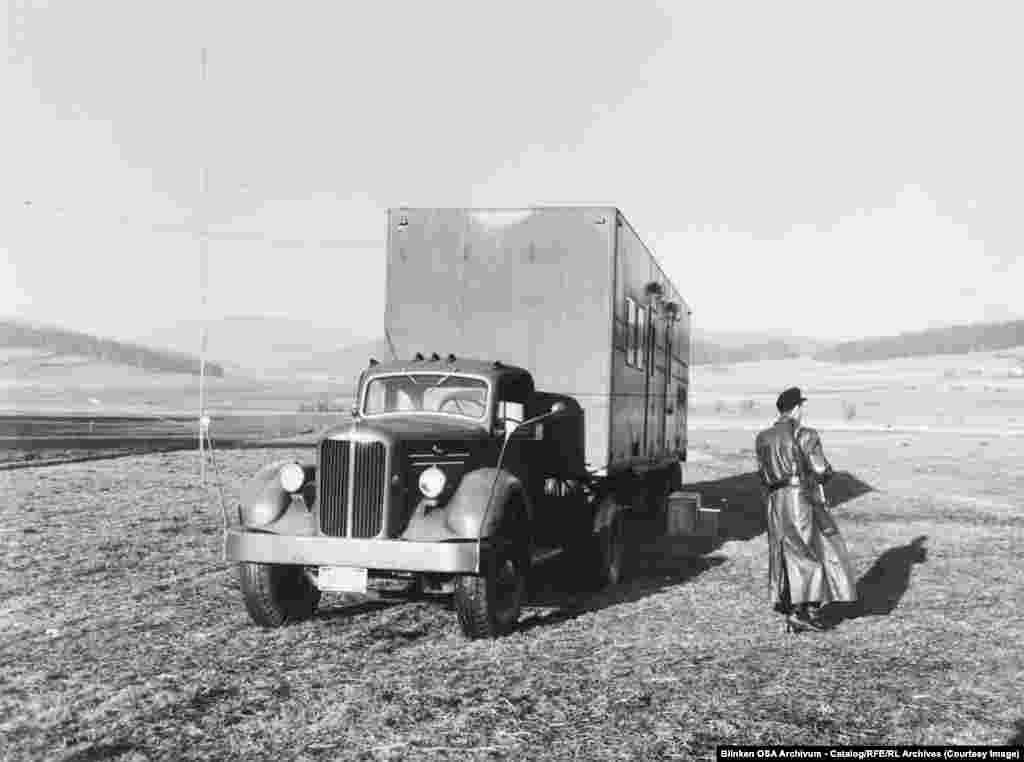
6/19An armed guard patrols a medium-wave radio transmitter truck in West Germany, near the border with Czechoslovakia, in 1955.
As communist states moved to jam RFE and Radio Liberty’s broadcasts, Radio Free Europe deployed dozens of mobile transmitter stations, such as the one seen above, which could operate close to the Iron Curtain.
From the front lines of the Cold War to the trenches of Ukraine, archival photos tell the story of Radio Free Europe, which began broadcasts on US Independence Day, 75 years ago.
Show moreShow less
7/19Hungarians surround a toppled statue of Josef Stalin amid the 1956 revolution.
In 1956, RFE came under fire for broadcasts that many perceived as encouraging Hungary’s anti-communist uprising. The revolution was crushed by the Soviet military, killing thousands. In a look-back on RFE’s 1956 broadcasts to Hungary, which included some technical advice on keeping revolutionary momentum rolling, one former RFE director concluded “it is never [the radio’s] function to tell people what they should do -- and least of all under conditions of violent upheaval.”
From the front lines of the Cold War to the trenches of Ukraine, archival photos tell the story of Radio Free Europe, which began broadcasts on US Independence Day, 75 years ago.
Show moreShow less
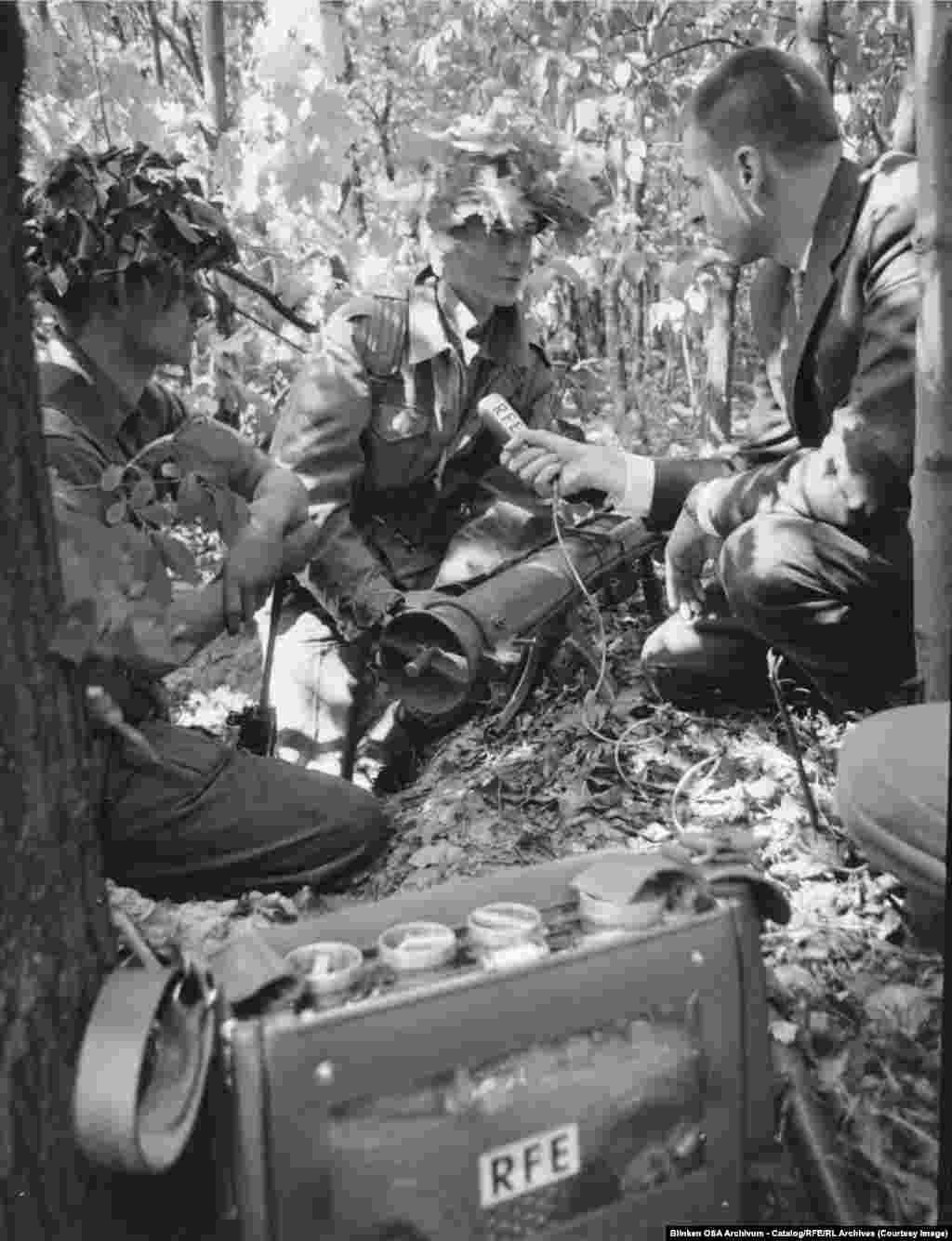
8/19Radio Free Europe's Berlin correspondent Tom Bodin talks with a US soldier during a joint Anglo-American training exercise in West Berlin's Grunewald forest in 1964.
Radio was seen as an ideal medium for reaching populations living under repressive regimes, in part because it left no incriminating trace. Listeners could tune into a broadcast then simply twist the dial to another frequency.
From the front lines of the Cold War to the trenches of Ukraine, archival photos tell the story of Radio Free Europe, which began broadcasts on US Independence Day, 75 years ago.
Show moreShow less
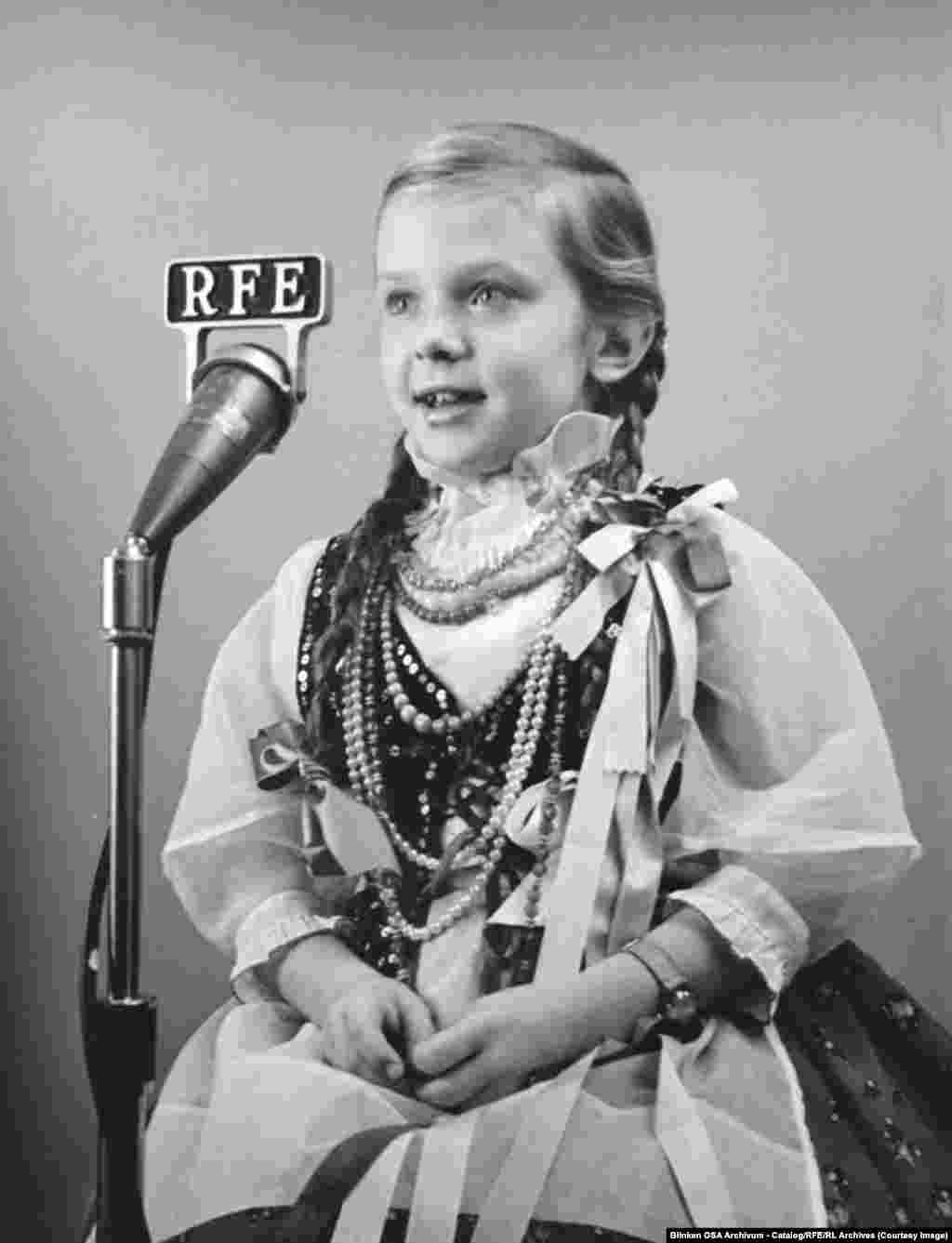
9/19A Polish girl records a message to her countrymen and women living under communism.
As well as reporting the news, RFE and RL kept audiences entertained with the latest music and cultural programs in the languages of the target audiences.
From the front lines of the Cold War to the trenches of Ukraine, archival photos tell the story of Radio Free Europe, which began broadcasts on US Independence Day, 75 years ago.
Show moreShow less
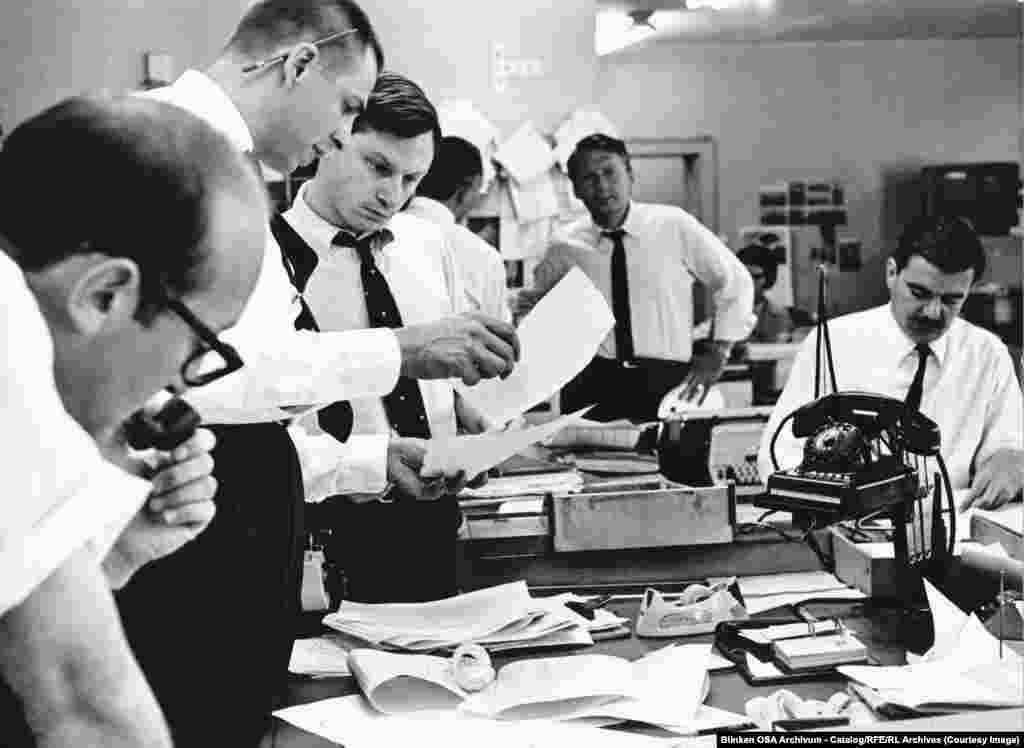
10/19Editors at work in RFE's newsroom in Munich in 1967.
In 1967, the CIA’s funding of RFE was revealed and the radio later began receiving its budget directly from the US Congress. The radio was seen as vital tool for fighting a war of ideas between communist regimes and Western democracies.
From the front lines of the Cold War to the trenches of Ukraine, archival photos tell the story of Radio Free Europe, which began broadcasts on US Independence Day, 75 years ago.
Show moreShow less
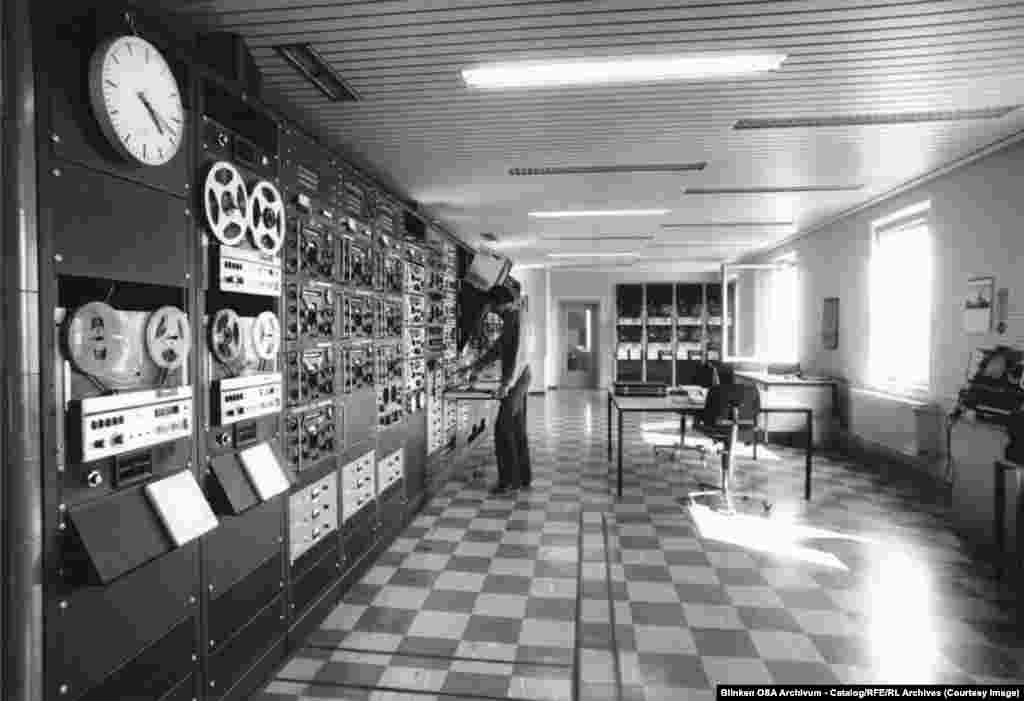
11/19The monitoring station in Munich, where broadcasts from communist countries were recorded and reviewed by radio staff.
From the front lines of the Cold War to the trenches of Ukraine, archival photos tell the story of Radio Free Europe, which began broadcasts on US Independence Day, 75 years ago.
Show moreShow less
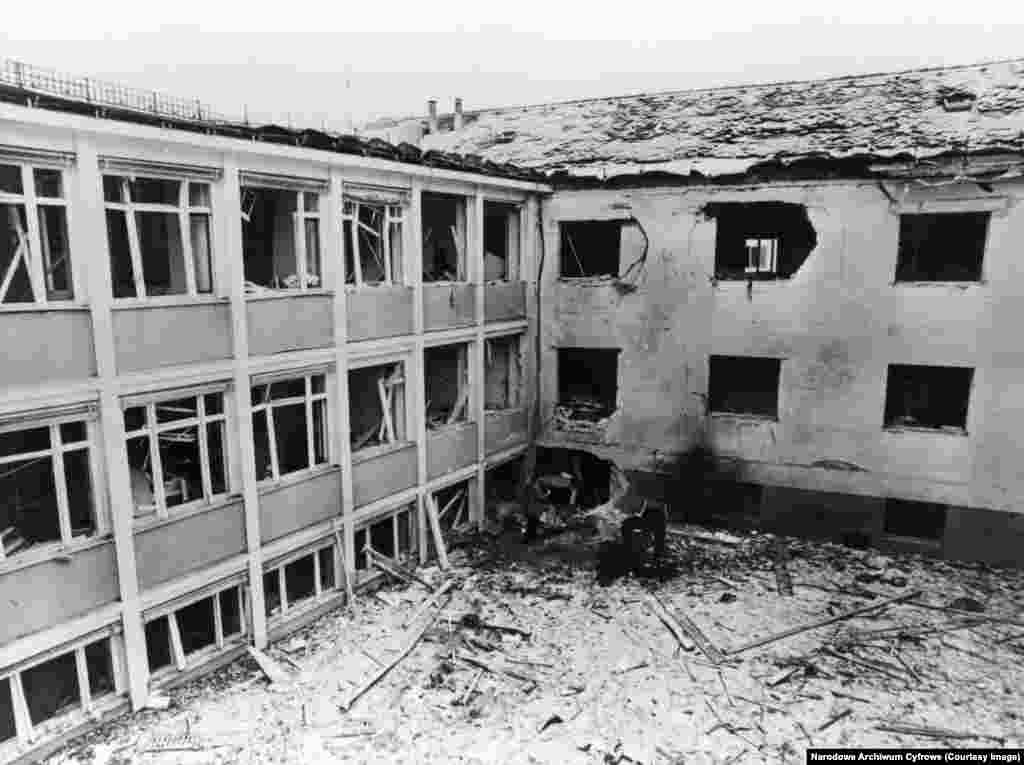
12/19The scene of a bomb blast at RFE/RL's offices in Munich in February 1981.
The effectiveness of RFE/RL was evidenced by multiple attacks on its staff and facilities. In 1981, a bombing reportedly paid for by Romania’s communist ruler, Nicolae Ceausescu, and arranged by Ilich Ramirez Sanchez, the notorious Venezuelan Marxist militant known as “Carlos the Jackal,” shattered a corner of RFE/RL’s Munich headquarters, injuring several staff inside. (Photo courtesy of Richard H. Cummings / RFE/RL)
From the front lines of the Cold War to the trenches of Ukraine, archival photos tell the story of Radio Free Europe, which began broadcasts on US Independence Day, 75 years ago.
Show moreShow less
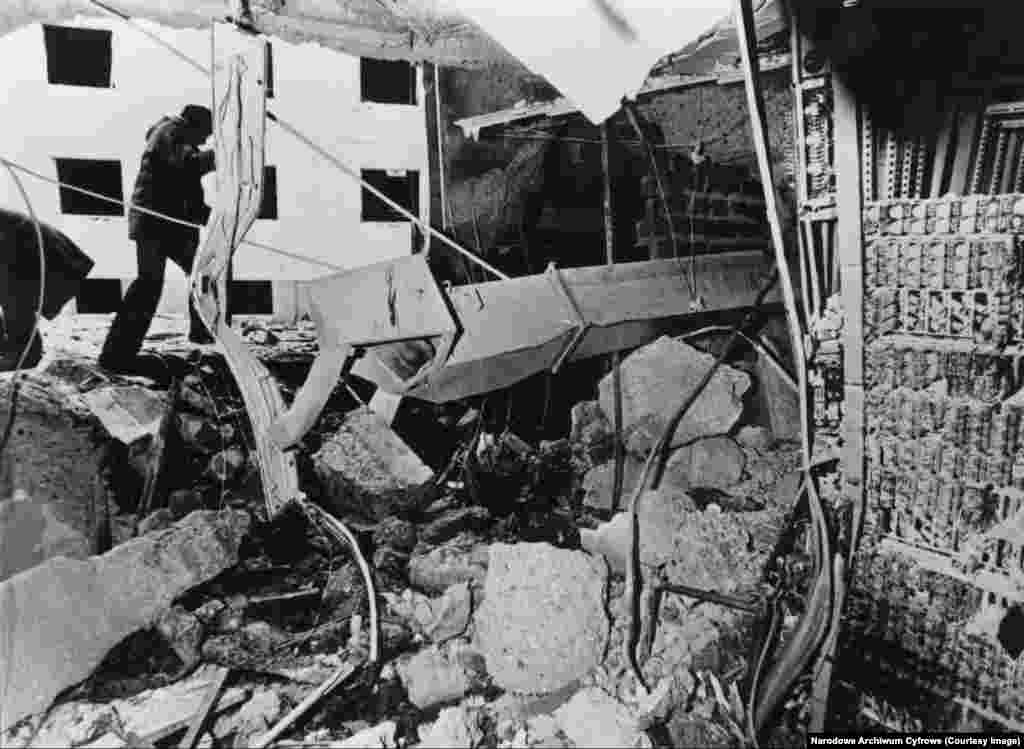
13/19The aftermath of the 1981 blast at RFE/RL’s Munich headquarters.
Patrick Moore was a senior analyst at RFE/RL and arrived at the scene of the blast soon after it took place. “The smell of destruction was everywhere,” he recalled in an email. He says many RFE/RL staff had suspected such an attack on the then loosely guarded building was likely. “This was the Cold War, and we were on the front line,” he says.
From the front lines of the Cold War to the trenches of Ukraine, archival photos tell the story of Radio Free Europe, which began broadcasts on US Independence Day, 75 years ago.
Show moreShow less
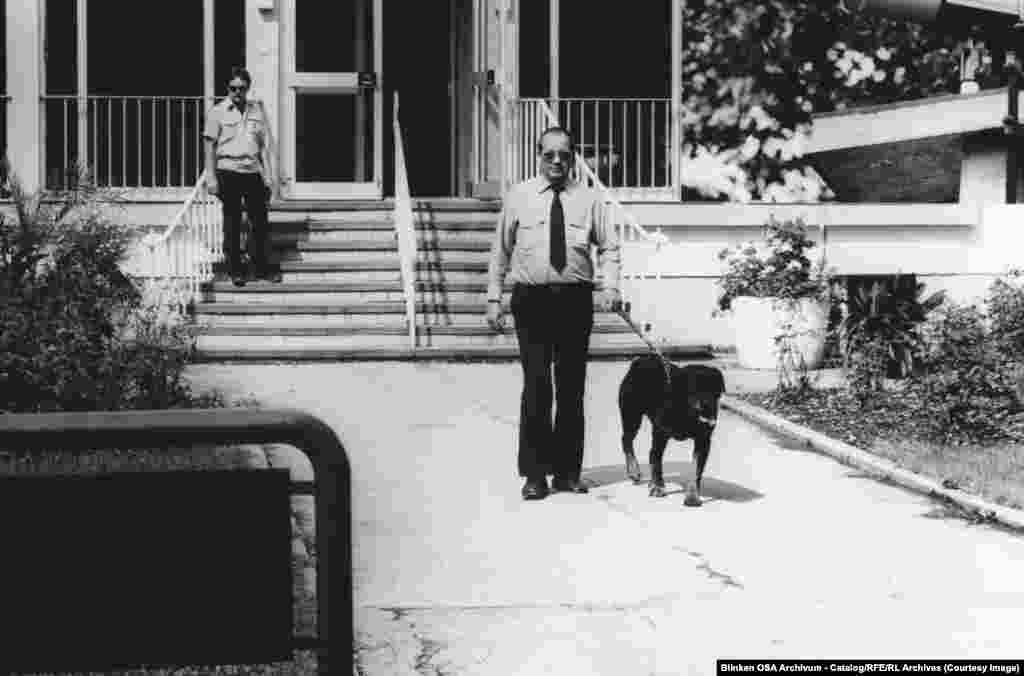
14/19Security at the Munich headquarters in 1982.
Individual journalists and contributors were also targets of communist spooks that haunted Western Europe. Bulgarian Georgi Markov, who had presented a biting series of reports about life under communism for Radio Free Europe was killed by a pellet of ricin poison in London in 1978.
From the front lines of the Cold War to the trenches of Ukraine, archival photos tell the story of Radio Free Europe, which began broadcasts on US Independence Day, 75 years ago.
Show moreShow less
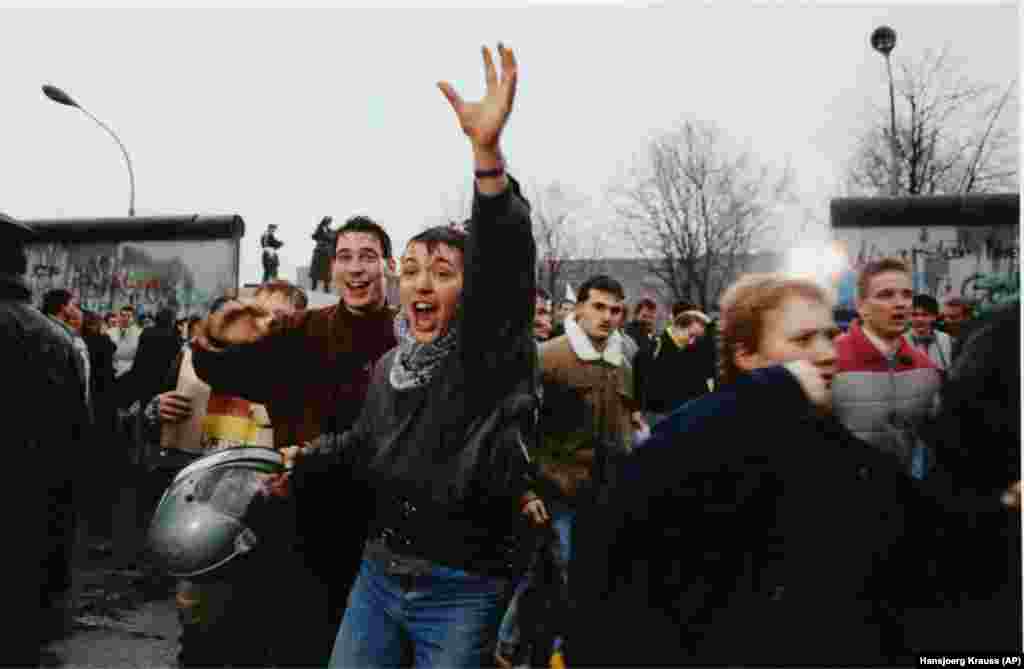
15/19Young East Berliners celebrate as they enter the West through an opening in the Berlin Wall in December 1989.
After the Berlin Wall fell and one after another of Europe’s communist regimes collapsed, RFE/RL had its budget slashed by nearly two thirds amid debate over the radio's future.
From the front lines of the Cold War to the trenches of Ukraine, archival photos tell the story of Radio Free Europe, which began broadcasts on US Independence Day, 75 years ago.
Show moreShow less
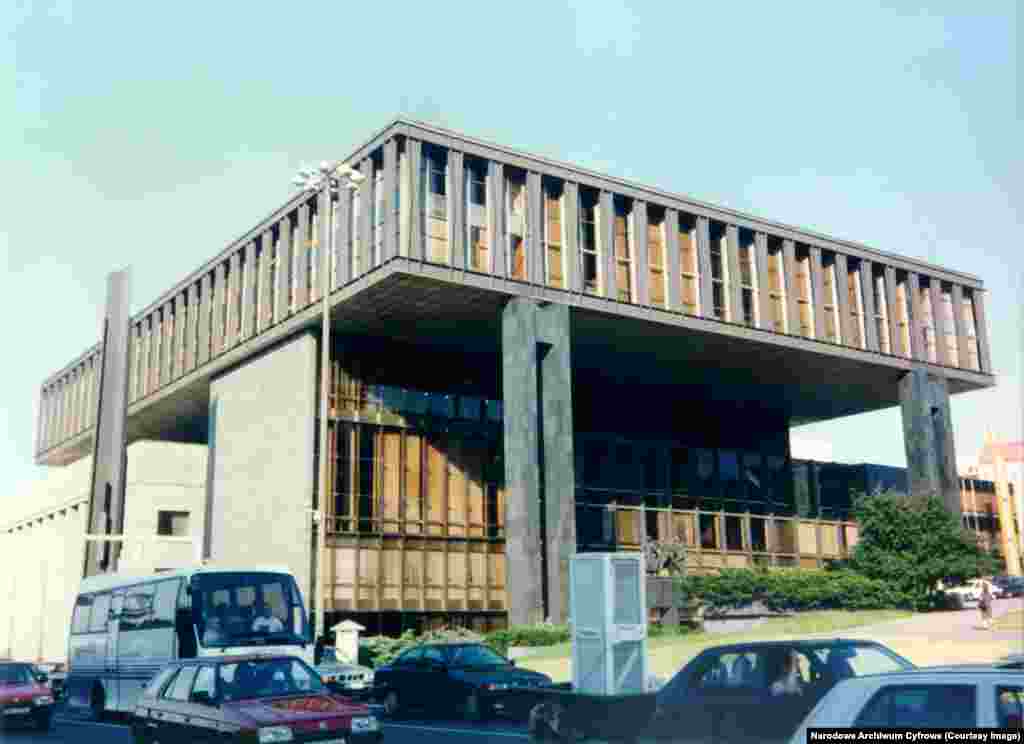
16/19The building in central Prague that served as the headquarters for RFE/RL.
In 1995, RFE/RL relocated to Prague where Czech President Vaclav Havel offered the broadcasterthe former Czechoslovak communist parliament building in the city center for a nominal rent. In 2009 the operation moved to a purpose-built facility outside the center.
From the front lines of the Cold War to the trenches of Ukraine, archival photos tell the story of Radio Free Europe, which began broadcasts on US Independence Day, 75 years ago.
Show moreShow less
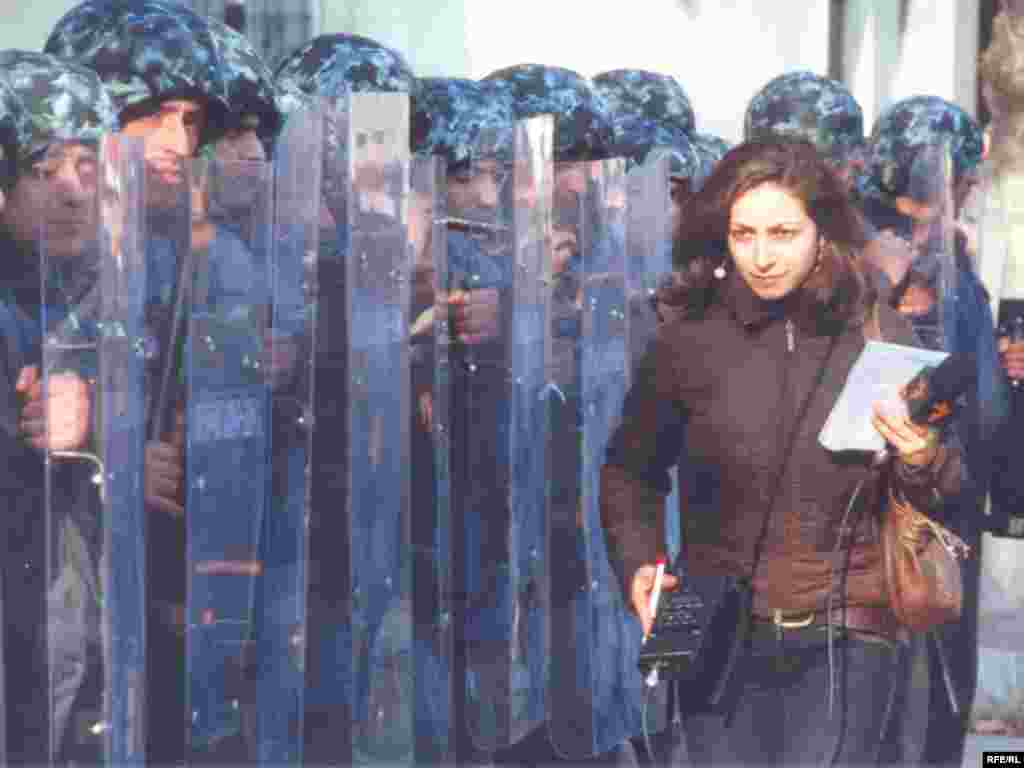
17/19RFE/RL's Armenian Service correspondent Ruzanna Stepanian covers a standoff between police and demonstrators in Yerevan.
Since the collapse of communism in Europe, RFE/RL has closed several language services, including those broadcasting to Poland, the former Czechoslovakia, and the Baltic States, while opening others, including in the Balkans and Iran.
From the front lines of the Cold War to the trenches of Ukraine, archival photos tell the story of Radio Free Europe, which began broadcasts on US Independence Day, 75 years ago.
Show moreShow less
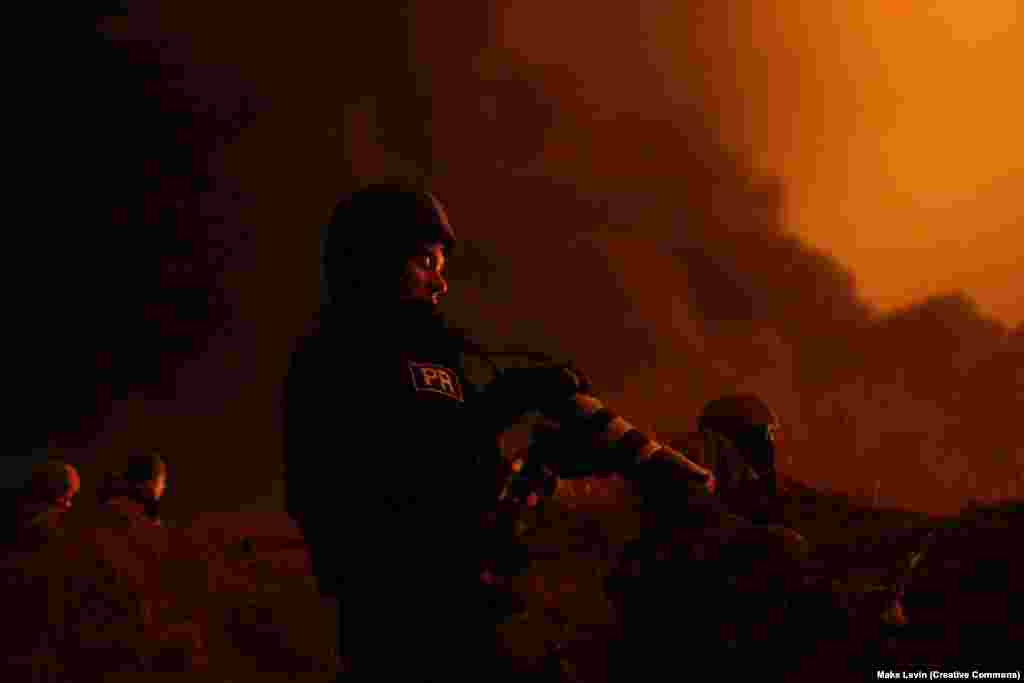
18/19RFE/RL visual journalist Maryan Kushnir filming near Kyiv during the first week of Russia's full-scale invasion of Ukraine in 2022.
Amid Russia's war on Ukraine, RFE/RL has provided intensive on-the-ground reporting of the invasion. Today, RFE/RL is a major international media organization, reporting in countries where "a free press is either banned by authoritarian governments or not fully established."
From the front lines of the Cold War to the trenches of Ukraine, archival photos tell the story of Radio Free Europe, which began broadcasts on US Independence Day, 75 years ago.
Show moreShow less
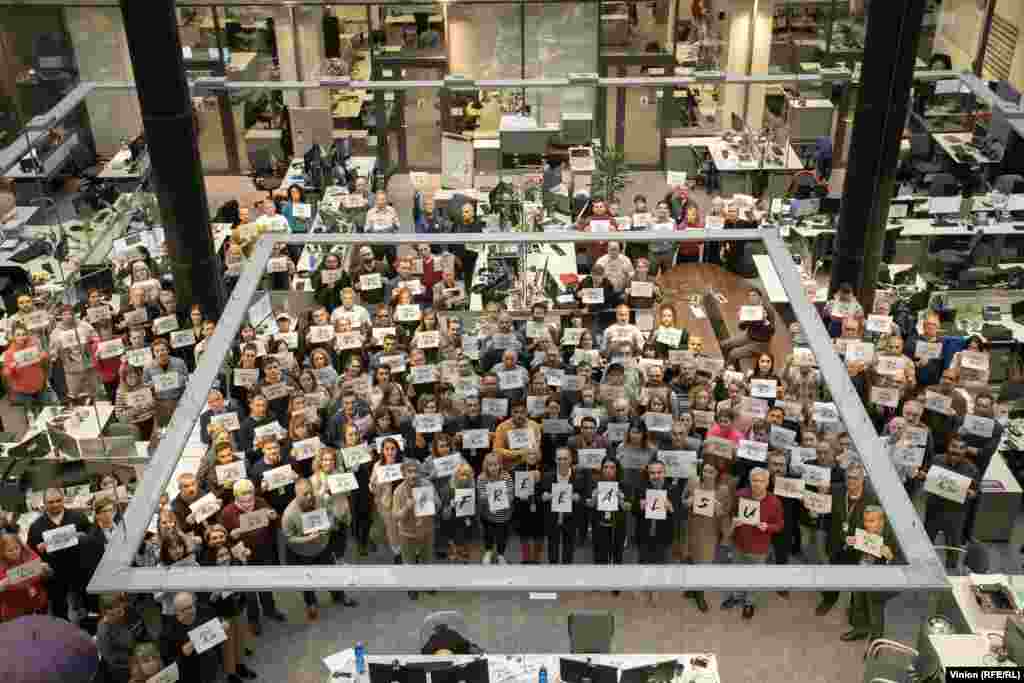
19/19RFE/RL staff in the current Prague headquarters campaign for the release of their colleague Alsu Kurmasheva from a Russian prison in 2023.
Seventy-five years on from its founding, RFE/RL is currently fighting White House efforts to shut down the organization.
From the front lines of the Cold War to the trenches of Ukraine, archival photos tell the story of Radio Free Europe, which began broadcasts on US Independence Day, 75 years ago.
Show moreShow less
Previous slide
Next slide
Smith's Prague tribute comes at a moment when the future of US-funded international broadcasters, including RFE/RL, is uncertain amid proposed budget cuts and shifting political priorities in Washington.
RFE/RL, along with other government-funded broadcasters, such as Voice of America, Radio Free Asia, the Office of Cuba Broadcasting (Radio Marti), and Middle East Broadcasting Networks, have come under dire circumstances since US President Donald Trump signed an executive order that gutted the US Agency for Global Media (USAGM).
The USAGM is an independent government agency that oversees several US-funded broadcasters, which together distribute news and information in almost 50 languages to some 361 million people each week.
The threat to the broadcaster's funding has sparked a wave of global support from media watchdogs, analysts, and democracy advocates, as well as the audiences in the 23 countries that make up RFE/RL's coverage region.
Smith herself is not the first prominent musical artist to have spoken out in defense of RFE/RL.
Earlier this year, the band R.E.M. reissued their debut song Radio Free Europe to mark World Press Freedom Day and highlight the organization’s work in support of independent journalism and truth in places where it is most under threat.
“Whether it’s music or a free press –- censorship anywhere is a threat to the truth everywhere," lead singer Michael Stipe said at the time, adding that the band were "sending a shout-out to the brave journalists at Radio Free Europe.”
Stipe's comments were echoed by the band's bassist. Mike Mills, who called RFE/RL the "OG" [original gangster] of pro-democracy broadcasting.
“Radio Free Europe’s journalists have been pissing off dictators for 75 years," he said. "You know you’re doing your job when you make the right enemies."
RFE/RL journalists report the news in 24 languages in 18 countries where a free press is banned by the government or not fully established. We provide what many people cannot get locally: uncensored news, responsible discussion, and open debate.





![Hungarians surround a toppled statue of Josef Stalin amid the 1956 revolution.<br><br>In 1956, RFE came under fire for broadcasts that many <a href="https://www.jstor.org/stable/24915109?read-now=1&seq=29#page_scan_tab_contents" target="_self"><strong>perceived as encouraging</strong></a> Hungary’s anti-communist uprising. The revolution was crushed by the Soviet military, killing thousands. In a look-back on RFE’s 1956 broadcasts to Hungary, which included some <a href="https://www.jstor.org/stable/24915109?read-now=1&seq=29#page_scan_tab_contents"><strong>technical advice </strong></a>on keeping revolutionary momentum rolling, one former RFE director <a href="https://www.wilsoncenter.org/sites/default/files/media/documents/publication/happ.op-3.pdf"><strong>concluded</strong></a> “it is never [the radio’s] function to tell people what they should do -- and least of all under conditions of violent upheaval.”](https://gdb.rferl.org/FE8C5DBB-32B3-4269-9A01-29D1D113894F_w1024_q10_s.jpg)