


Accessibility links

Breaking News

Romania Investigating Charges Of Police Violence At Protests

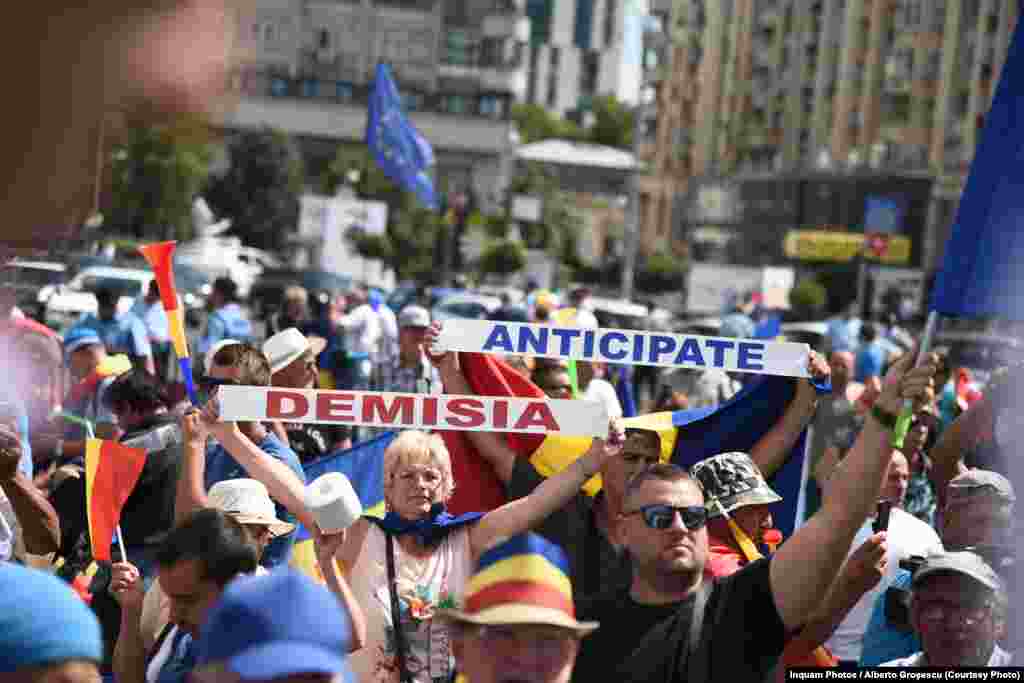
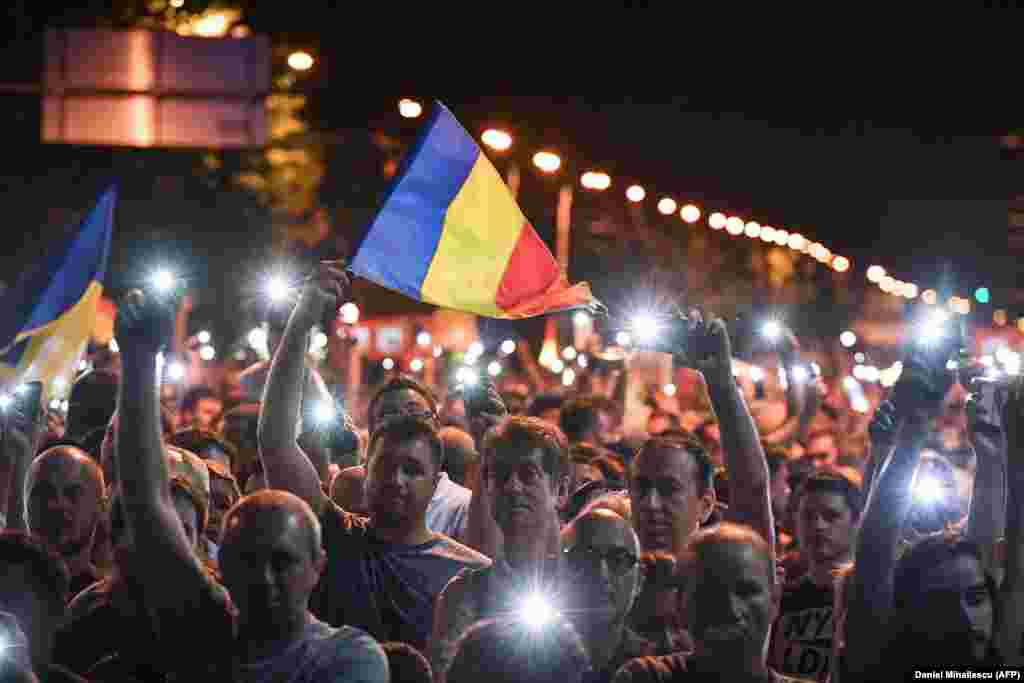
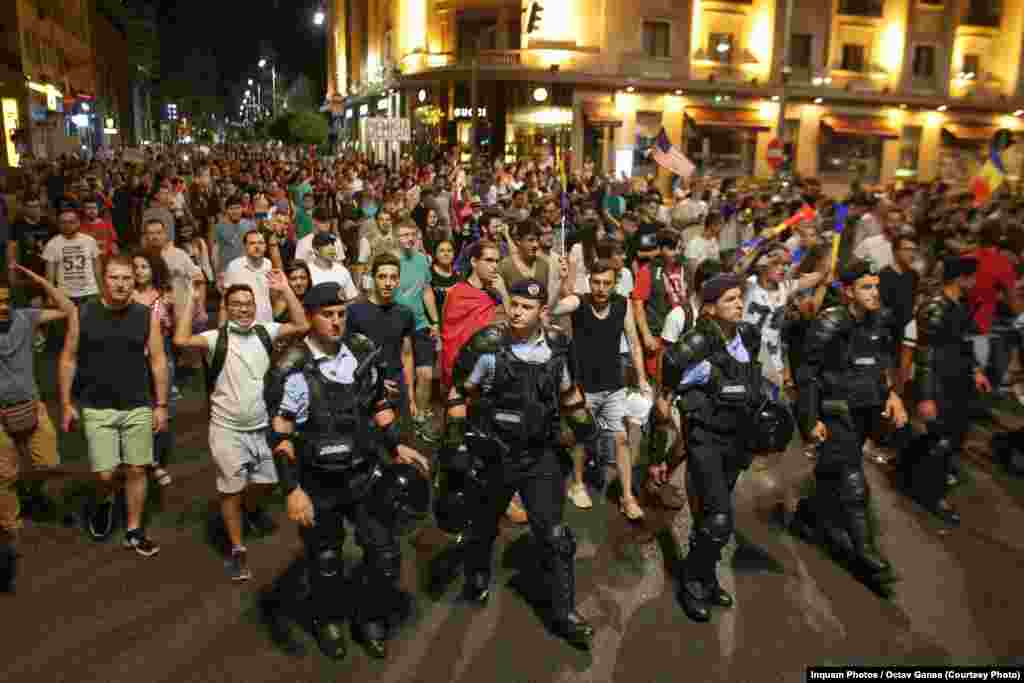
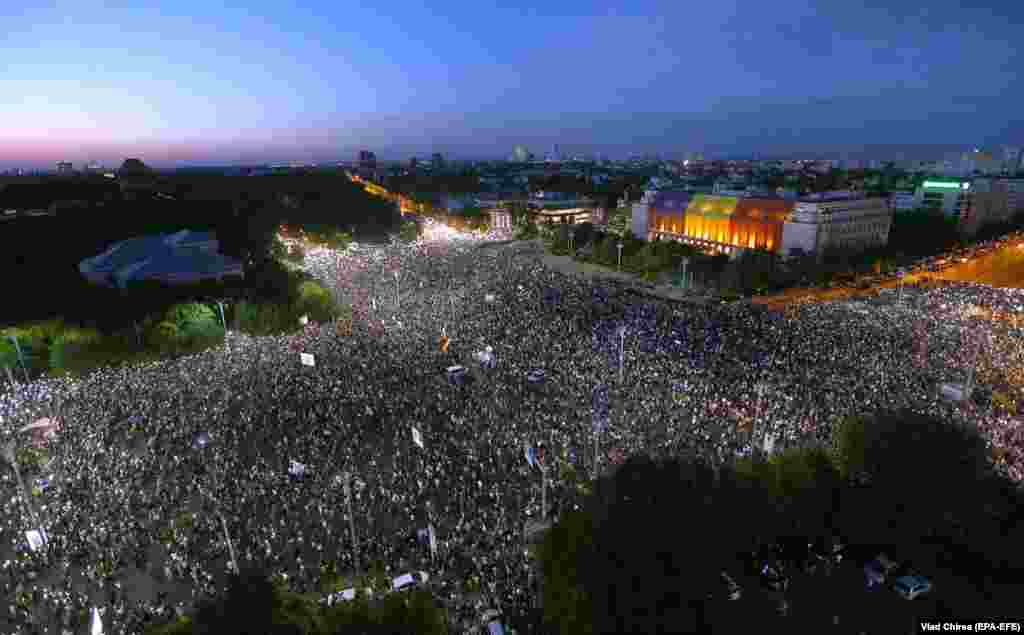
Protesters march through central Bucharest on August 12, the third consecutive night of antigovernment demonstrations in Romania.
1/14 Protesters march through central Bucharest on August 12, the third consecutive night of antigovernment demonstrations in Romania.
Central Bucharest was thronged with protesters for a third night on August 12, with thousands of people expressing anger at the government over corruption and a perceived effort by the ruling party to decriminalize official wrongdoing. The demonstrations were bolstered by diaspora Romanians who have returned to their homeland to demand the government's resignation.
On August 10, crowds estimated at between 30,000 and 80,000 gathered in front of Romania's government building in the capital. Large protests were also reported over the weekend in other major cities, including Timisoara, Cluj-Napoca, Brasov, and Sibiu.
2/14 On August 10, crowds estimated at between 30,000 and 80,000 gathered in front of Romania's government building in the capital. Large protests were also reported over the weekend in other major cities, including Timisoara, Cluj-Napoca, Brasov, and Sibiu.
Central Bucharest was thronged with protesters for a third night on August 12, with thousands of people expressing anger at the government over corruption and a perceived effort by the ruling party to decriminalize official wrongdoing. The demonstrations were bolstered by diaspora Romanians who have returned to their homeland to demand the government's resignation.
The crowds rallied after calls went out over social media for "all Romanians [to] come to Bucharest!"
3/14 The crowds rallied after calls went out over social media for "all Romanians [to] come to Bucharest!"
Central Bucharest was thronged with protesters for a third night on August 12, with thousands of people expressing anger at the government over corruption and a perceived effort by the ruling party to decriminalize official wrongdoing. The demonstrations were bolstered by diaspora Romanians who have returned to their homeland to demand the government's resignation.
The demonstrators called for Romania's Social Democrat-led government to resign, in part over the ruling coalition's dismissal of the head of the anticorruption agency and its moves to change laws in a way that critics say will make corruption more difficult to prosecute.
4/14 The demonstrators called for Romania's Social Democrat-led government to resign, in part over the ruling coalition's dismissal of the head of the anticorruption agency and its moves to change laws in a way that critics say will make corruption more difficult to prosecute.
Central Bucharest was thronged with protesters for a third night on August 12, with thousands of people expressing anger at the government over corruption and a perceived effort by the ruling party to decriminalize official wrongdoing. The demonstrations were bolstered by diaspora Romanians who have returned to their homeland to demand the government's resignation.
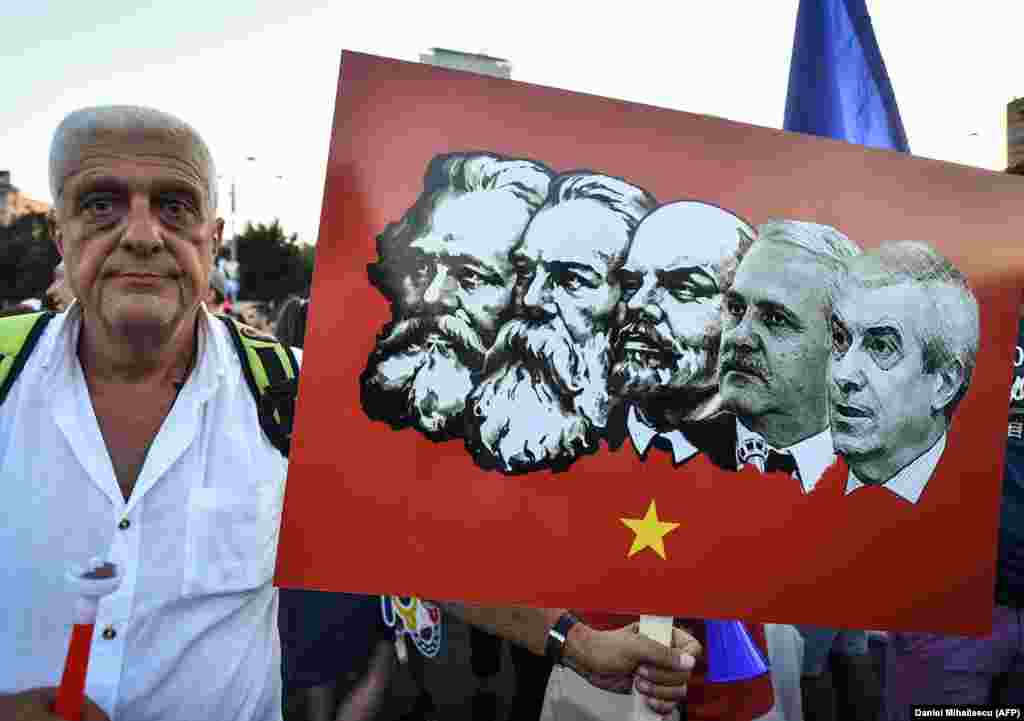
A protester holds a placard depicting Romania's leftist Social Democratic Party leaders in a lineup of Communist icons.
5/14 A protester holds a placard depicting Romania's leftist Social Democratic Party leaders in a lineup of Communist icons.
Central Bucharest was thronged with protesters for a third night on August 12, with thousands of people expressing anger at the government over corruption and a perceived effort by the ruling party to decriminalize official wrongdoing. The demonstrations were bolstered by diaspora Romanians who have returned to their homeland to demand the government's resignation.
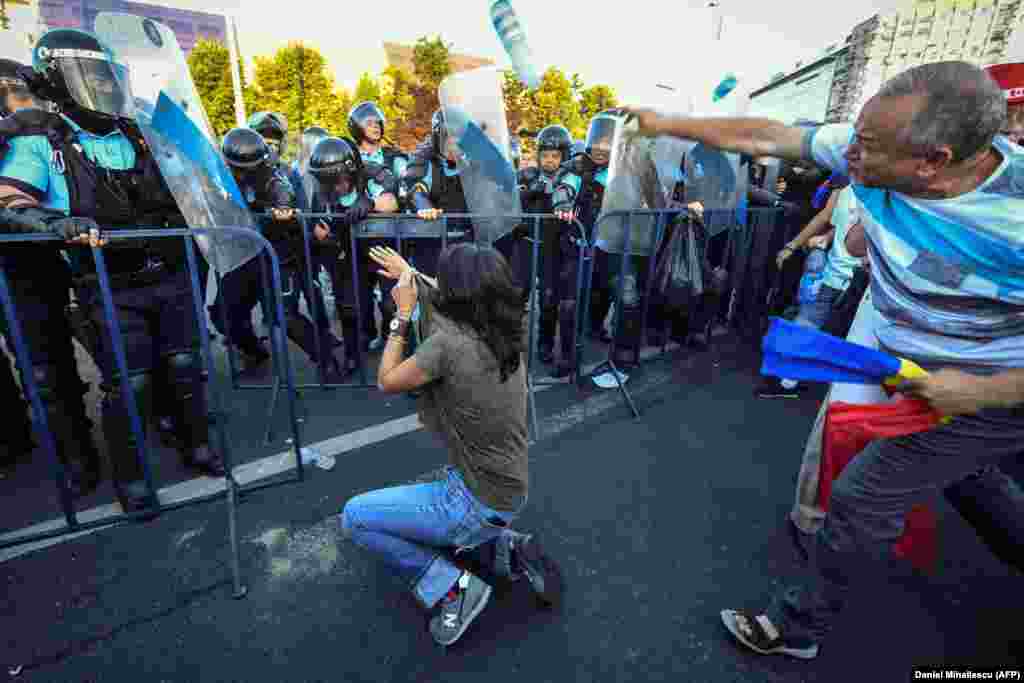
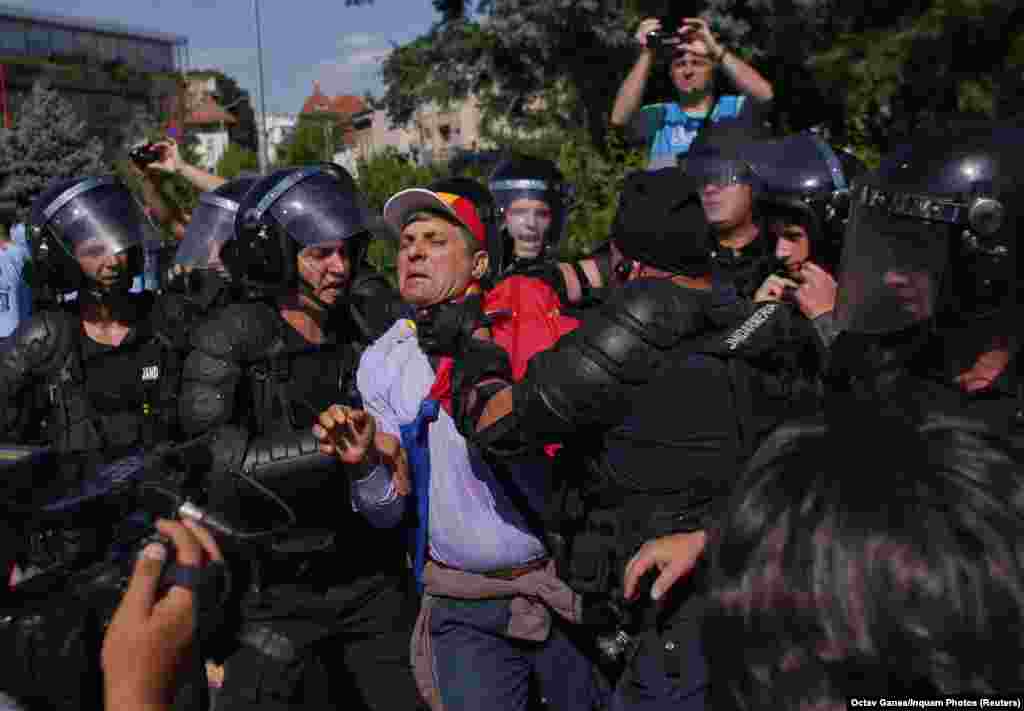
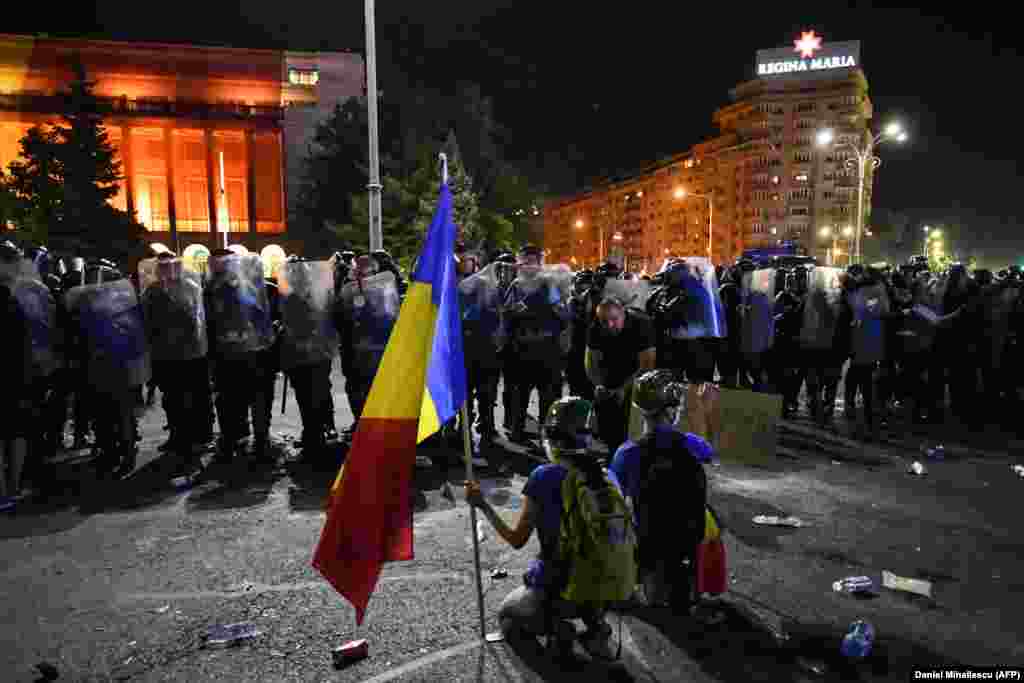
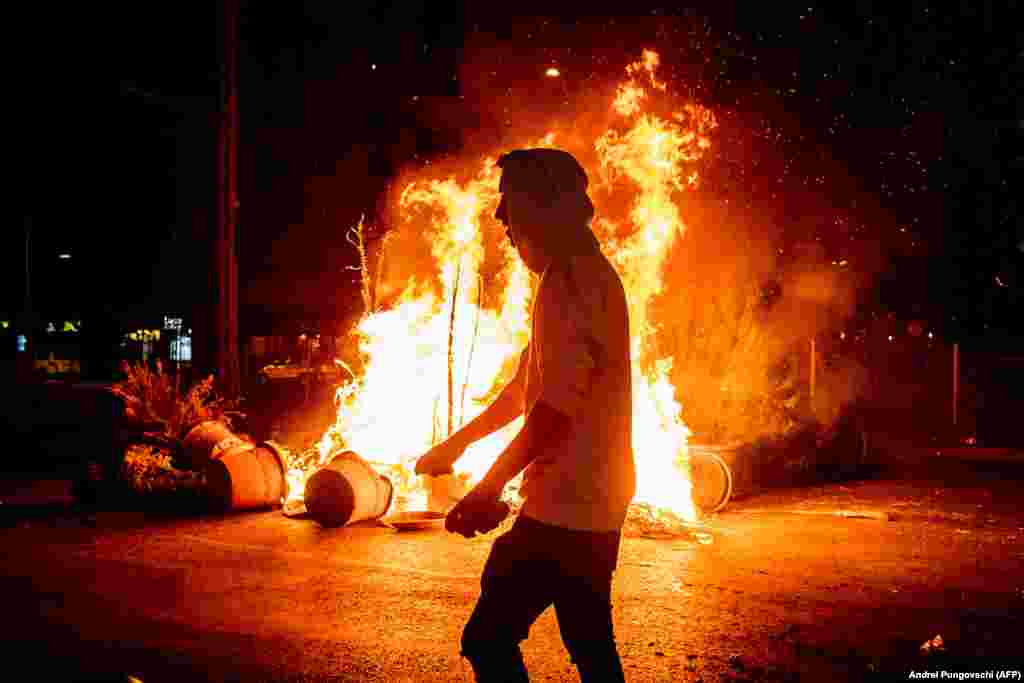
Violence broke out between protesters and a ring of riot police guarding the government building on August 10.
6/14 Violence broke out between protesters and a ring of riot police guarding the government building on August 10.
Central Bucharest was thronged with protesters for a third night on August 12, with thousands of people expressing anger at the government over corruption and a perceived effort by the ruling party to decriminalize official wrongdoing. The demonstrations were bolstered by diaspora Romanians who have returned to their homeland to demand the government's resignation.
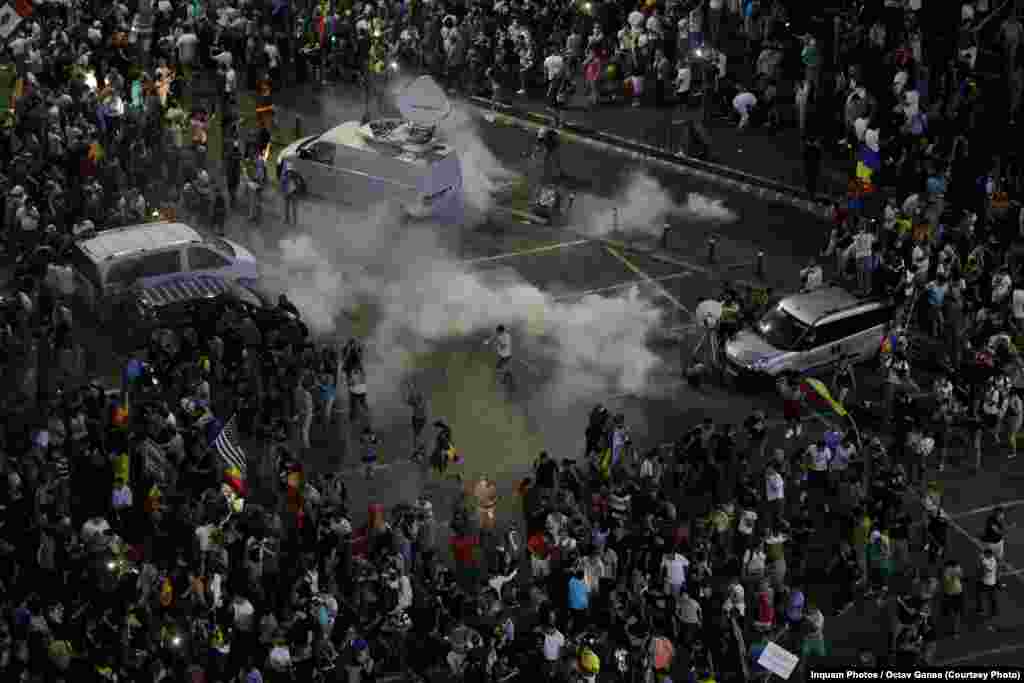
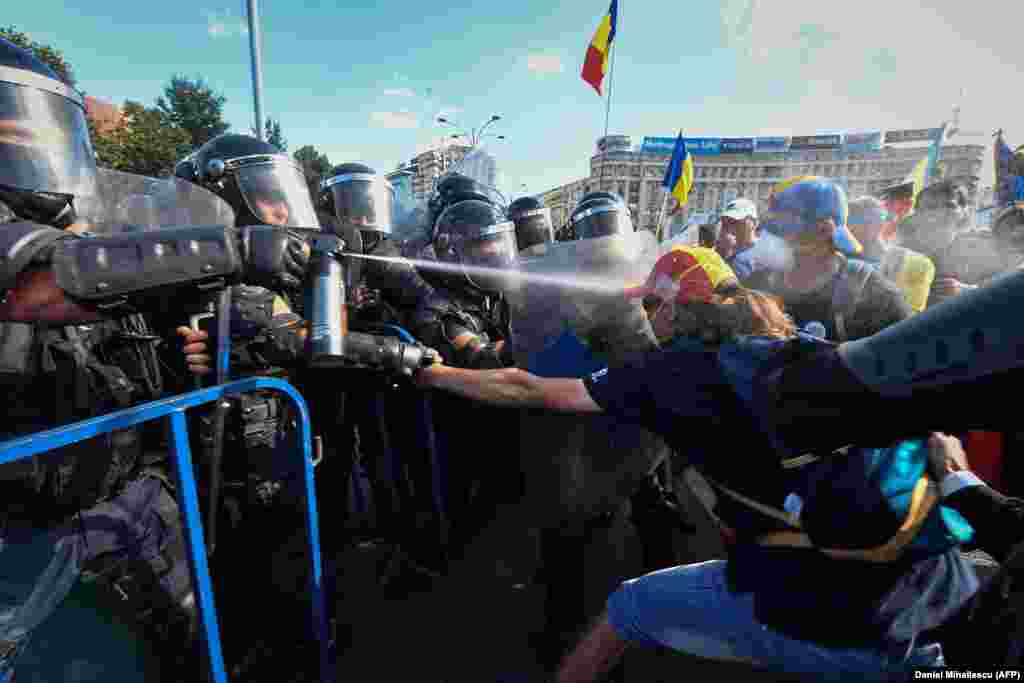
Some in the crowd threw rocks and other projectiles at police, while police used pepper spray, water cannons, and tear gas against the crowd.
7/14 Some in the crowd threw rocks and other projectiles at police, while police used pepper spray, water cannons, and tear gas against the crowd.
Central Bucharest was thronged with protesters for a third night on August 12, with thousands of people expressing anger at the government over corruption and a perceived effort by the ruling party to decriminalize official wrongdoing. The demonstrations were bolstered by diaspora Romanians who have returned to their homeland to demand the government's resignation.
Romanian authorities say 440 people, including two dozen riot police, received medical treatment after the clashes.
8/14 Romanian authorities say 440 people, including two dozen riot police, received medical treatment after the clashes.
Central Bucharest was thronged with protesters for a third night on August 12, with thousands of people expressing anger at the government over corruption and a perceived effort by the ruling party to decriminalize official wrongdoing. The demonstrations were bolstered by diaspora Romanians who have returned to their homeland to demand the government's resignation.
A jet of chemical spray catches a protester on August 10. 
9/14 A jet of chemical spray catches a protester on August 10. 
Central Bucharest was thronged with protesters for a third night on August 12, with thousands of people expressing anger at the government over corruption and a perceived effort by the ruling party to decriminalize official wrongdoing. The demonstrations were bolstered by diaspora Romanians who have returned to their homeland to demand the government's resignation.
On August 11, a second night of protests followed as President Klaus Iohannis condemned as "disproportionate" the use of force by security forces during the clashes of August 10. 
10/14 On August 11, a second night of protests followed as President Klaus Iohannis condemned as "disproportionate" the use of force by security forces during the clashes of August 10. 
Central Bucharest was thronged with protesters for a third night on August 12, with thousands of people expressing anger at the government over corruption and a perceived effort by the ruling party to decriminalize official wrongdoing. The demonstrations were bolstered by diaspora Romanians who have returned to their homeland to demand the government's resignation.
Police denied using excessive force, while Romania's interior minister said riot police had intervened against "hooligans who had attacked the state's authority."
11/14 Police denied using excessive force, while Romania's interior minister said riot police had intervened against "hooligans who had attacked the state's authority."
Central Bucharest was thronged with protesters for a third night on August 12, with thousands of people expressing anger at the government over corruption and a perceived effort by the ruling party to decriminalize official wrongdoing. The demonstrations were bolstered by diaspora Romanians who have returned to their homeland to demand the government's resignation.
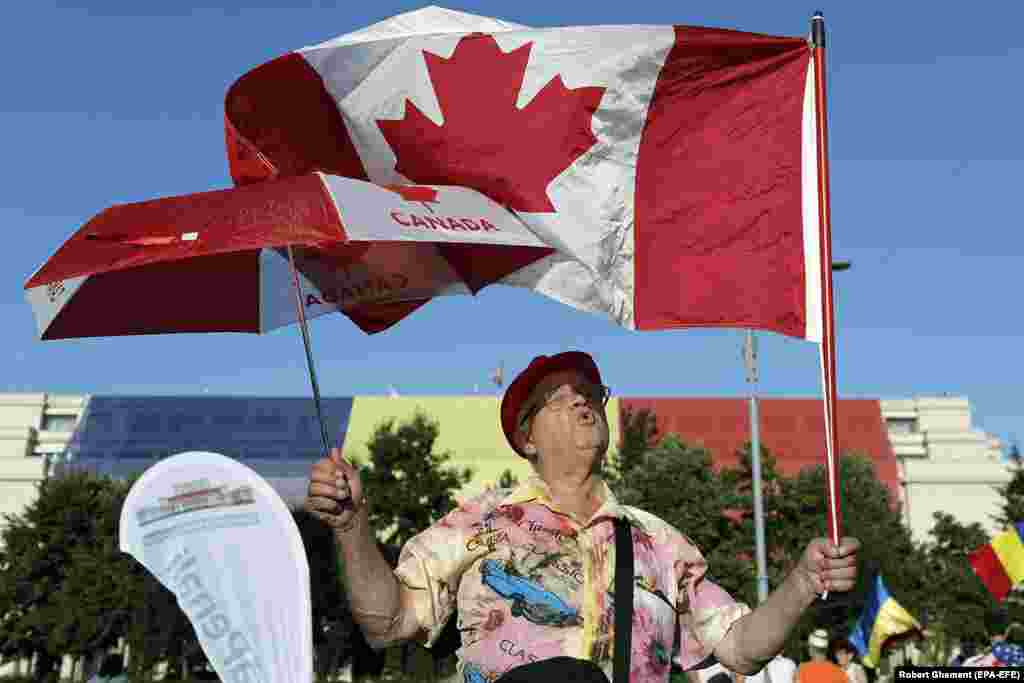
A protester waves a Canadian flag on August 12, as a third night of protests began. The protests have been dubbed the "diaspora protests" due to the number of Romanians who traveled home from abroad to take part in the demonstrations.
12/14 A protester waves a Canadian flag on August 12, as a third night of protests began. The protests have been dubbed the "diaspora protests" due to the number of Romanians who traveled home from abroad to take part in the demonstrations.
Central Bucharest was thronged with protesters for a third night on August 12, with thousands of people expressing anger at the government over corruption and a perceived effort by the ruling party to decriminalize official wrongdoing. The demonstrations were bolstered by diaspora Romanians who have returned to their homeland to demand the government's resignation.
An estimated 3 million Romanians live abroad, largely due to corruption and poor prospects in their home country.
13/14 An estimated 3 million Romanians live abroad, largely due to corruption and poor prospects in their home country.
Central Bucharest was thronged with protesters for a third night on August 12, with thousands of people expressing anger at the government over corruption and a perceived effort by the ruling party to decriminalize official wrongdoing. The demonstrations were bolstered by diaspora Romanians who have returned to their homeland to demand the government's resignation.
One protester told Reuters that he left Romania for Italy 15 years ago "to give my children a better life, which was not possible here then," adding, "Unfortunately it is still not possible; the people who govern us are not qualified and they are corrupt."
14/14 One protester told Reuters that he left Romania for Italy 15 years ago "to give my children a better life, which was not possible here then," adding, "Unfortunately it is still not possible; the people who govern us are not qualified and they are corrupt."
Central Bucharest was thronged with protesters for a third night on August 12, with thousands of people expressing anger at the government over corruption and a perceived effort by the ruling party to decriminalize official wrongdoing. The demonstrations were bolstered by diaspora Romanians who have returned to their homeland to demand the government's resignation.
Previous slide
Next slide

Romania has opened an investigation into alleged police violence at a mass protest against the government last week that left hundreds of people injured, prosecutors said as protests continued for a fourth day on August 13.

As many as 80,000 people -- many of them Romanians living abroad who had returned home for the protests -- demonstrated late on August 10 in Bucharest, accusing the government of corruption and urging it to resign.

To disperse the crowd, police used water cannons, tear gas, pepper spray, and batons, leaving more than 450 people injured, including 30 police, and around 30 arrested. The incident prompted widespread criticism both in Romania and from the European Union.

"Until now we have received about 30 complaints, and my colleagues are interviewing those who were injured," military prosecutor Ionel Corbu said on August 13, adding that "all those suspected to have acted against the law" will be questioned.
Romanian Protest Turns Violent After Police Scuffle With Protesters
please wait

No media source currently available

0:00 0:01:31 0:00

Prosecutors will also analyze videos of the security forces interacting with the media and demonstrators, some of which were posted on social media showing violence at the end of the protests on August 13.

Smaller, more peaceful demonstrations were held on August 11 and 12 in cities around Romania, and the protests continued for a fourth straight day on August 13, with around 2,000 people rallying in the center of Bucharest.

Police have said they responded to the protests last week in a "gradual and proportionate" manner and blamed the violence on what they said were dozens of hooligans who tried to break the police cordon in Bucharest and threw rocks and water bottles at security forces.

'Inconceivable In A European State'

Romania's center-right President Klaus Iohannis, a critic of the leftwing government, in a televised message on August 13 again condemned "the brutal intervention of the police."

"To attack innocent people, journalists, women, and children, is inconceivable in a European state," said Iohannis.

Austrian Chancellor Sebastian Kurz, whose country currently holds the EU rotating presidency, also criticized the clashes, in which a cameraman for Austria's public broadcaster was injured.

Monica Macovei, a former Romanian justice minister and member of the European Parliament, also decried the violence on August 13 and called for an investigation in a statement quoted by Hotnews.ro.

"A state battering its citizens is a criminal state and a dictatorship. Prosecutors need to investigate impartially and swiftly, and sue all the culprits," she said.

EU Justice Commissioner Vera Jourova urged the Romanian government on August 13 to rethink recent changes to the justice system that led to the widespread protests.

Protesters have cited recently passed legislation, which decriminalized some graft violations by politicians.

In a piece in the German newspaper Die Welt, Jourova said the legislation threatens the independence of judges and limits the authority of state prosecutors, thereby undermining public confidence in the justice system.

Romania has seen frequent protests against corruption in the last year and a half, though violence has been rare.

In the last 15 years, around four million Romanians -- many citing government corruption and a lack of economic opportunity -- have left the country to live elsewhere in the EU.

With reporting by dpa, AFP, and RFE/RL's Moldovan Service
  • 16x9 Image

    RFE/RL

    RFE/RL journalists report the news in 24 languages in 18 countries where a free press is banned by the government or not fully established. We provide what many people cannot get locally: uncensored news, responsible discussion, and open debate.

This item is part of
XS
SM
MD
LG