




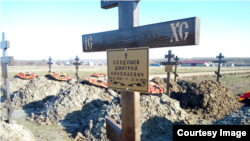
The casualty count in the Kremlin’s war against Ukraine could reach 2 million by spring, with nearly 1.2 million Russian forces killed, wounded, or missing -- including some 325,000 dead -- since Moscow launched the full-scale invasion in February 2022, the Center for Strategic and International Studies (CSIS) said in a report published late last month.
Contrary to Russian President Vladimir Putin’s frequent expressions of confidence, CSIS said “the data suggests that Russia is hardly winning” and its forces are advancing extremely slowly. With growth flagging and technological innovation stagnating, meanwhile, “Russia is becoming a second- or third-rate economic power” as the war rages on, it said.

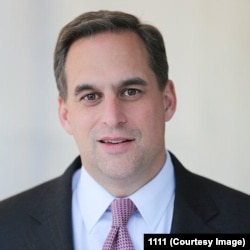
Ramazan Alpaut of RFE/RL’s Tatar-Bashkir Service spoke with Seth G. Jones, president of the Defense and Security Department and Harold Brown Chair at CSIS, on February 5. In the past, Jones held positions in the Office of the Secretary of Defense and US Special Operations Command.
RFE/RL: I noticed in the study where you state that Russia has lost 325,000 killed, you don’t use the word "identified" or "confirmed." Does this figure represent a final number or is it an estimate?
Seth G. Jones: What we have done is estimated the number of both Russian casualties, which includes wounded, missing, and killed…. And what we have done is estimated based on a pretty significant methodology that there have been about 275,000 to 325,000 Russians killed in the war in Ukraine. We’ve also assessed Ukrainian casualties as well, so not just on the Russian side.
RFE/RL: RFE/RL's Tatar-Bashkir Service has documented over 49,000 confirmed fatalities among Russians from the Volga region alone since the start of the full-scale invasion, while the BBC reports total Russian deaths at over 165,000. Your estimates are nearly twice as high. Why is there such a gap?
Jones: Well, I think the challenge ends up being that there are a number of organizations that are only looking at confirmed fatalities, so they may be looking at graveyards and cemeteries in Russia or confirmed names at hospitals. The reality for those of us that have been in the military sphere and have done estimates is there are a range of reasons that government entities will try to hide these numbers.
So one of the things we have done is conduct a range of discussions with government and intelligence services from over a dozen countries, from Poland and the Baltic states to Finland, the British, the Americans, in addition to other sources of data to get much closer estimates. I think that probably a reason why some of those estimates are so low is frankly because the Kremlin has made every effort to hide the actual number of fatalities.
RFE/RL: You estimate that Ukrainian forces have suffered between 100,000 and 140,000 fatalities, while Ukrainian President Volodymyr Zelenskyy cites 55,000 officially confirmed deaths, noting that many soldiers are missing in action. How do you explain this difference and how do your estimates relate to the figures provided by the Ukrainian government?
Jones: Again, I think that talking about fatality and casualty numbers is very sensitive for governments that are involved in it in the middle of a war. I would just say that what we have done is…first of all, been to Ukraine and talked with folks inside the Ukrainian government, as well as a number of government agencies from across Europe and the US that are operating in Ukraine…. We use the same methodology for the estimates of Russian fatalities and broader casualties as we did with Ukrainians.
RFE/RL: Data on identified Russian fatalities show a disproportionate number of deaths from Russia’s ethnic republics like Bashkortostan and Tatarstan. What factors might explain this pattern?
Jones: Well, there are a couple things. One is money. I think there have been quite large sums that the Russian government has been willing to provide to soldiers and families of soldiers, including if they’re killed. And in some of those regions, we see large numbers in the Far East and in the North Caucasus of individuals that have been killed or wounded in the war in Ukraine. I think, you know, money is attractive to those regions within Russia that are poorer.
There’s a second reason, which is largely political, which is Vladimir Putin’s most important political areas tend to be such cities as Moscow and St. Petersburg. You don’t see those sorts of numbers of Russians killed or wounded from those regions. I think it’s just more politically sensitive.
So there’s probably an economic reason for the large number that we’re seeing from the Far East and North Caucasus and other areas, but there’s also a political reason in the sense that it looks like the Kremlin assesses that those individuals are more expendable for the Russian state politically than losing men…from very politically important cities and regions.
RFE/RL: RFE/RL's Tatar-Bashkir Service found that in the Volga region, where Tatarstan and Bashkortostan are located, one in every 150 men aged 18 to 66 has died in the war.
You write that Russian forces have gained less than 1.5 percent of Ukrainian territory since the start of 2024, while suffering significant human losses and inflicting substantial economic damage on Russia. I was reminded of a documentary…about the capture of the Reichstag in 1945. The film shows the enormous…human cost the Soviet army paid during the siege. Does the Soviet strategy of achieving objectives at any cost, regardless of casualties, remain relevant to the way the Russian army operates today?
Jones: Well, it is a brutal way of fighting. You know, what’s interesting is if one looks at World War II. In that war, Nazi Germany invaded the Soviet Union. So that was a life-or-death struggle. And when you look at the Red Army advances even during that war, if you start with the German invasion of the Soviet Union during Operation Barbarossa and then you fast forward to when the Red Army was in Berlin, Germany, at the end of the war, it took 1,394 days for the Red Army to reach Berlin against a very competent…German army [and] air force.
If you start with the Russian full-scale invasion of Ukraine in February 2022 and you fast forward the same number of days, 1,394, you get a very different picture. The Russians have only made it to Pokrovsk. I mean, it would almost be faster for a snail during that same time period to have moved from where the lines were in January 2024 to where they were in January 2026.
They're historically slow numbers -- actually slower than any major offensive campaign that we looked at over the last century. And I think the fact that this is not a war of survival, this is a war of choice, means that I think these are senseless casualties that the Russians are suffering right now. This is a war of choice for Vladimir Putin and the Kremlin, not a war of necessity.
RFE/RL: You write that President Putin’s primary objective is to bring Ukraine back to Russia’s sphere of influence. Does this mean that any peace deal is ultimately futile, given that Ukraine seeks to remain a sovereign state?
Jones: I do think it means that any peace settlement that is achieved -- or cease-fire -- in 2026, for example, has to be looked at both in the short term and the long term. In the short term, I think it is possible with some trades of territory that there could be a pause of fighting for now. Both sides are tired, both sides have massive blood and treasure -- economic costs because of the four years of war.

But every indication from what President Putin has both said and written is that he considers Ukraine in Russia’s sphere of influence. What that suggests is that as long as Kyiv is closely aligned with Europe and the West in general, not Moscow, that I think the Russians will continue in some fashion to undermine Ukrainian sovereignty using a combination of conventional military and gray zone activity in Ukraine. So I do not believe, with those Putin objectives, that this war is anywhere close to being over.
RFE/RL: Does that mean it’s impossible to reach a peace deal without defeating Russia?
Jones: I think it is difficult right now to…reach a permanent peace deal. I don’t think a defeat of Russia itself is the only possibility. I think a future deterrence of Russia is also possible. What that would look like is a temporary pause in the fighting, but where there is a major Ukrainian buildup of forces with help from European and other countries that would make it very difficult and very costly for Russia to try to invade again in the future.
RFE/RL: In your study, you also focus on the economic consequences of the war, noting that Russia’s manufacturing is shrinking, foreign investment is limited, access to international markets is closed, and the country lags far behind in high-tech and AI development. Does this mean that Russia is falling irreversibly behind?
Jones: Well, what it means is that Russia is a second or third-tier economic power. Russia is no longer a major power in the economic sphere. It certainly has oil and gas and some other goods that it can export, but I think what we found is a very bleak near-term outlook for the Russian economy in just basic areas of productivity….
And…if you look at President Putin’s comments over the years, he has wanted Russia to be a leader in artificial intelligence. If you look at almost any major indicator of where Russia sits in artificial intelligence, it is near dead last in the artificial intelligence programs that are being produced…. Even in technology itself, if you look at the top 100 technology companies in the world, Russia has zero, none…. It is falling so far behind in technology that it will be very difficult in the near term to catch up.
RFE/RL: Given that Russia’s ethnic republics account for a disproportionate share of identified war fatalities and are also bearing the brunt of growing budget deficits, could this lead to the consolidation of regional elites and an increase in centrifugal or anticenter sentiments?
Jones: It is possible that there will be increasing, growing disillusionment with President Putin and the Kremlin. When one looks at the impact of the war, there is a disproportionate effect in terms of soldiers that have been killed and casualties from the outer regions of Russia. Secondarily, it’s those regions that are also feeling the economic effect of now four years of war.
So this could lead to greater political unhappiness with both the economic situation and the military implications of the war. And I would just emphasize that this is a war of choice, it is not a war of need. Russia did not need to invade Ukraine, it chose to do that. And I think as we have seen, the Russian military has performed worse than any major military we looked at in the last century. It’s time to stop. It’s time for that suffering of the Russian population to end.
This interview has been edited for length and clarity.