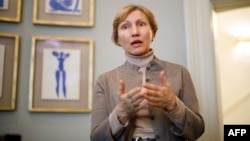
Marina Litvinenko talks to members of the media during the press launch of an opera on her late husband's life in London in February 2020.
On November 23, 2006, former Russian Federal Security Service (FSB) officer and fierce Kremlin critic Aleksandr Litvinenko died in a London hospital of radiation poisoning, more than three weeks after he fell suddenly and violently ill. Litvinenko's death sent the life of his widow, Marina Litvinenko, in a completely new direction: For 15 years, she has dedicated herself to the fight to establish justice in her husband's case.
"I found myself between two walls," she told Current Time in an interview in London earlier this month. "One was Russia, which didn't want to investigate. And the other was Britain, which had no interest in that either."
Many in the British establishment were reluctant to rock the boat with Russia, particularly in view of the massive sums of money that Russians were pouring into London.
Yet she has never considered giving up.
"I guess the main difference between me and other people is that my glass is always half full,” Litvinenko told RFE/RL in a separate interview in September.
“Gradually, I believe, the things that I do and those that people who are living in Russia and who are continuing to struggle are doing will bear fruit – even though people tell me now that it is pointless."
One of the main fruits of her yearslong struggle came on September 21 when the European Court of Human Rights ruled that Russia was responsible for Litvinenko's "assassination." The court said it was "beyond reasonable doubt" that Litvinenko was killed by former KGB agent Andrei Lugovoi -- now a member of the lower house of Russia's parliament -- and Russian businessman Dmitry Kovtun. Investigators have found that the two men arranged for Litvinenko to drink tea laced with polonium-210 -- a rare, highly radioactive isotope – and that they themselves left a trail of radiation across London.
"There is a strong prima facie case that, in poisoning Mr. Litvinenko, Mr. Lugovoi and Mr. Kovtun had been acting as agents of the Russian state," the court ruled. The court found it highly unlikely that the men could have acquired polonium without the help of the Russian government.
"The acknowledgment of the Russian government's guilt is, of course, the main victory," Marina Litvinenko said at the time.
Despite the evidence, Lugovoi, Kovtun, and the Russian government have denied involvement.
'Ahead Of His Time'
Aleksandr Litvinenko, who was 43 when he died, publicly claimed in 1998 that his FSB superiors had ordered him to murder Russian oligarch Boris Berezovsky. He fled to Britain in 2000 and was granted political asylum. During his time there, he accused the FSB of organizing a series of deadly explosions in Russian apartment buildings in 1999 as part of an effort to bring Vladimir Putin to power.
He also accused Putin of ordering the murder of investigative journalist Anna Politkovskaya, who was shot dead in Moscow less than a month before Litvinenko was poisoned.
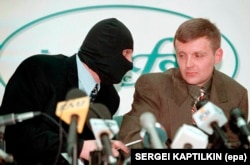
Aleksandr Litvinenko (right) and a colleague wearing a mask to protect his identity are seen at a 1998 press conference in which rebel FSB officers demanded an end to state corruption.
"Aleksandr was ahead of his time," his widow told Current Time, the Russian-language network run by RFE/RL in cooperation with VOA. "He was the first to warn us of the regime evolving in Russia. Or, more accurately, the regime that had always been there because the Soviet security services were never overhauled. The system that had been developing in the Soviet Union for decades had not only been preserved but had formed the foundation of a more horrible system."
On his deathbed, Litvinenko repeatedly accused Putin, himself a KGB officer in the Soviet era, of ordering his murder.
In Photos: The Case Of Aleksandr Litvinenko, The Poisoned Kremlin Critic
1/17A picture of former Russian security agent Aleksandr Litvinenko is pinned to flowers outside University College Hospital in central London on November 23, 2007.
Litvinenko, 43, fell ill on November 1, 2006, after he drank tea that was poisoned with polonium-210, a rare, highly radioactive isotope. He died on November 23, 2006, in the hospital.
Former Russian security agent-turned-Kremlin critic Aleksandr Litvinenko died 15 years ago in London after being poisoned with highly radioactive polonium-210. He had fled to Britain in 2000 after publicly accusing the Federal Security Service of plotting to kill oligarch Boris Berezovsky.
Show moreShow less
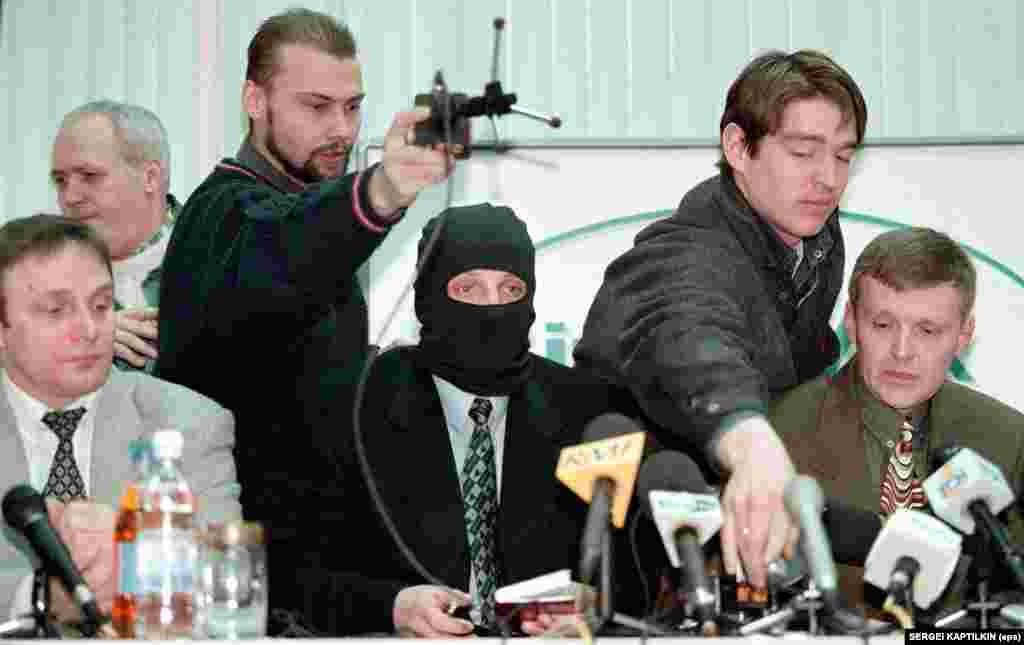
2/17Journalists prepare microphones for a press conference by officers of the Russian Federal Security Service (FSB) at the Interfax news agency in Moscow on November 17, 1998. Former agent Mikhail Trepashkin (seated left), a colleague wearing a mask to protect his identity (center), and Litvinenko (right) accused their FSB commanding officers of ordering kidnappings and assassinations, including an attempt to kill billionaire businessman and power broker Boris Berezovsky.
Former Russian security agent-turned-Kremlin critic Aleksandr Litvinenko died 15 years ago in London after being poisoned with highly radioactive polonium-210. He had fled to Britain in 2000 after publicly accusing the Federal Security Service of plotting to kill oligarch Boris Berezovsky.
Show moreShow less
3/17Litvinenko poses with his book, Blowing Up Russia: Terror From Within, at his home in London in May 2002. In the book, he accused the Russian secret services of staging the Russian apartment bombings in 1999 and other acts of terrorism in an effort to bring Vladimir Putin to power.
Litvinenko fled Russia in 1999 after revealing an alleged plan by the FSB to kill tycoon Boris Berezovsky.
Former Russian security agent-turned-Kremlin critic Aleksandr Litvinenko died 15 years ago in London after being poisoned with highly radioactive polonium-210. He had fled to Britain in 2000 after publicly accusing the Federal Security Service of plotting to kill oligarch Boris Berezovsky.
Show moreShow less
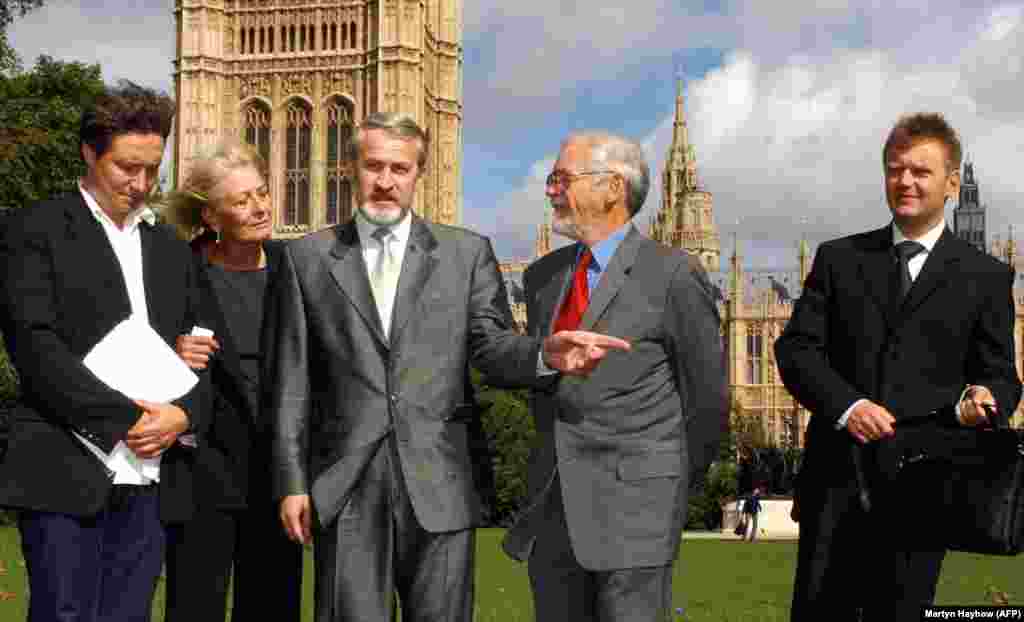
4/17Litvinenko (right) is pictured outside Britain's House of Lords on September 14, 2004, after a press conference calling for international help to resolve the Chechnya conflict. He joined (left to right) filmmaker Andrei Nekrasov; actress and human rights campaigner Vanessa Redgrave; Akhmed Zakayev, a leading Chechen separatist granted asylum in Britain; and Lord Rea, a friend of Litvinenko and director of the Save Chechnya campaign.
Former Russian security agent-turned-Kremlin critic Aleksandr Litvinenko died 15 years ago in London after being poisoned with highly radioactive polonium-210. He had fled to Britain in 2000 after publicly accusing the Federal Security Service of plotting to kill oligarch Boris Berezovsky.
Show moreShow less
5/17Police cordons are erected outside Litvinenko's home in north London on November 27, 2006, after his death.
Former Russian security agent-turned-Kremlin critic Aleksandr Litvinenko died 15 years ago in London after being poisoned with highly radioactive polonium-210. He had fled to Britain in 2000 after publicly accusing the Federal Security Service of plotting to kill oligarch Boris Berezovsky.
Show moreShow less
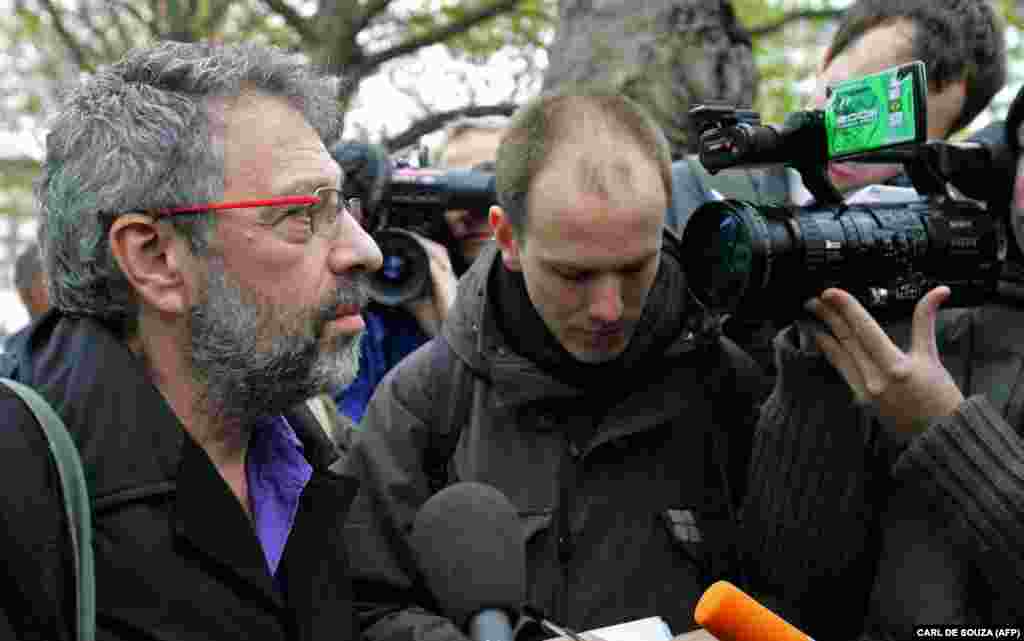
6/17Alex Goldfarb (left), a close friend of Litvinenko's, is interviewed by the media as he arrives at University College Hospital in central London on November 20, 2006. Litvinenko dictated a statement two days before his death, which was read out by Goldfarb.
Former Russian security agent-turned-Kremlin critic Aleksandr Litvinenko died 15 years ago in London after being poisoned with highly radioactive polonium-210. He had fled to Britain in 2000 after publicly accusing the Federal Security Service of plotting to kill oligarch Boris Berezovsky.
Show moreShow less
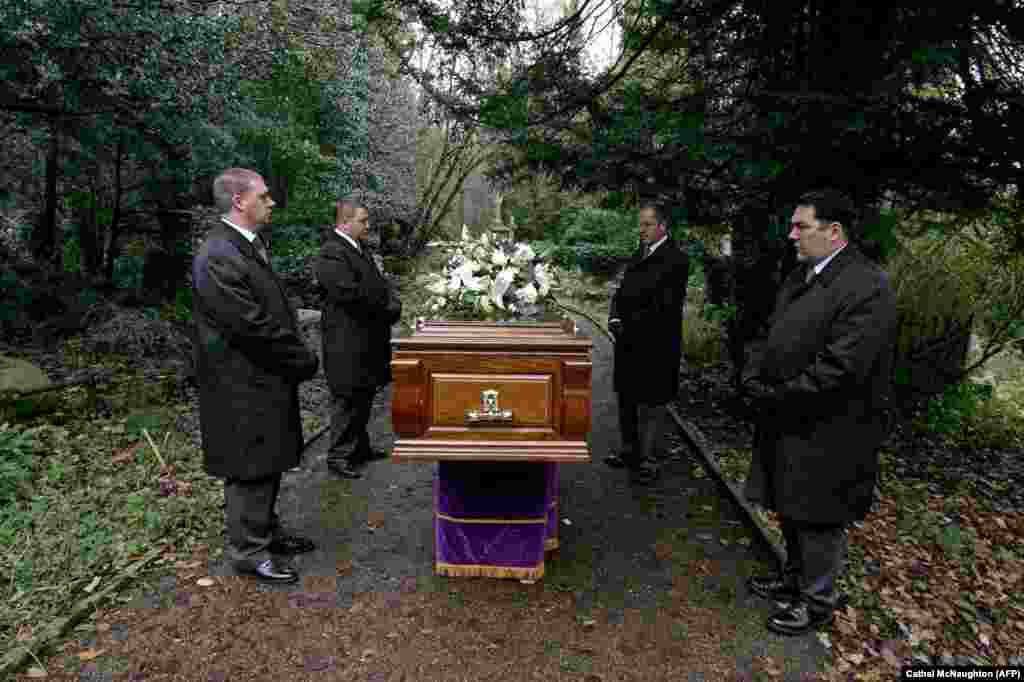
7/17Litvinenko's casket is prepared for burial at Highgate Cemetery in north London on December 7, 2006.
Former Russian security agent-turned-Kremlin critic Aleksandr Litvinenko died 15 years ago in London after being poisoned with highly radioactive polonium-210. He had fled to Britain in 2000 after publicly accusing the Federal Security Service of plotting to kill oligarch Boris Berezovsky.
Show moreShow less
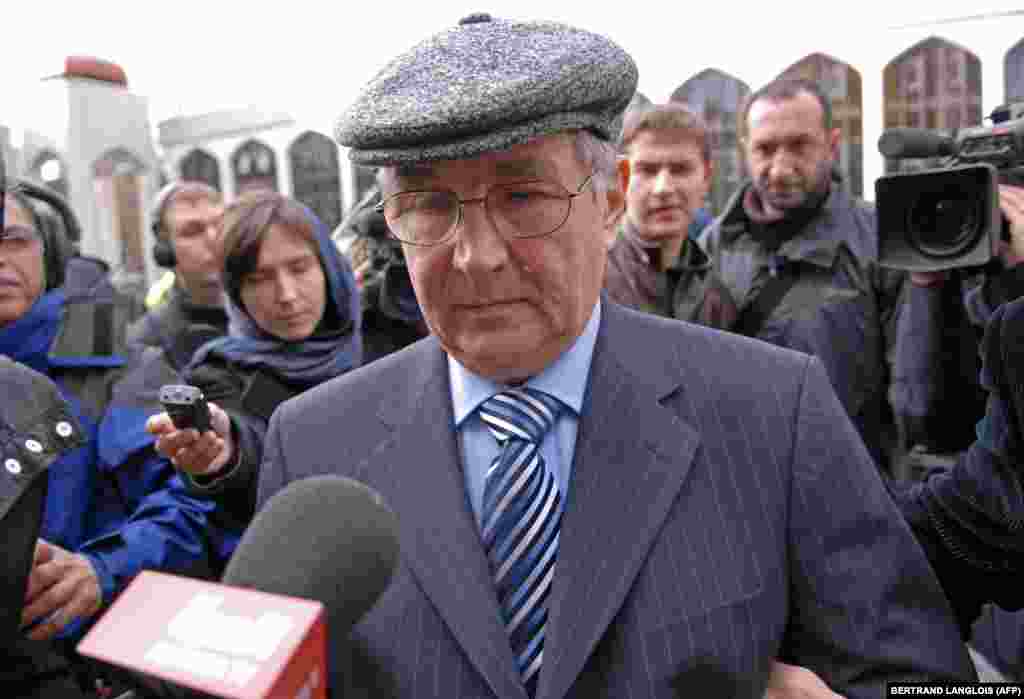
8/17Litvinenko's father, Walter, arrives at Regents Park Mosque on December 7, 2006. Family and friends paid their respects to the former Russian agent during a memorial at the London mosque two weeks after his death.
Former Russian security agent-turned-Kremlin critic Aleksandr Litvinenko died 15 years ago in London after being poisoned with highly radioactive polonium-210. He had fled to Britain in 2000 after publicly accusing the Federal Security Service of plotting to kill oligarch Boris Berezovsky.
Show moreShow less
9/17Copies of Death Of A Dissident by Alex Goldfarb and Marina Litvinenko are displayed at a press conference to launch the book at the Foreign Press Association in London on June 19, 2007. During the press conference, Litvinenko's widow spoke of her health concerns and the ongoing case to find the person who poisoned her husband.
Former Russian security agent-turned-Kremlin critic Aleksandr Litvinenko died 15 years ago in London after being poisoned with highly radioactive polonium-210. He had fled to Britain in 2000 after publicly accusing the Federal Security Service of plotting to kill oligarch Boris Berezovsky.
Show moreShow less
10/17Andrei Lugovoi (left), a former KGB officer, and his associate Dmitry Kovtun, attend a news conference in Moscow on November 1, 2007. A British inquiry concluded in 2016 that Russian President Vladimir Putin probably approved an intelligence operation to kill Litvinenko. It identified Lugovoi, now a Russian lawmaker, and Kovtun as the primary suspects.
Former Russian security agent-turned-Kremlin critic Aleksandr Litvinenko died 15 years ago in London after being poisoned with highly radioactive polonium-210. He had fled to Britain in 2000 after publicly accusing the Federal Security Service of plotting to kill oligarch Boris Berezovsky.
Show moreShow less
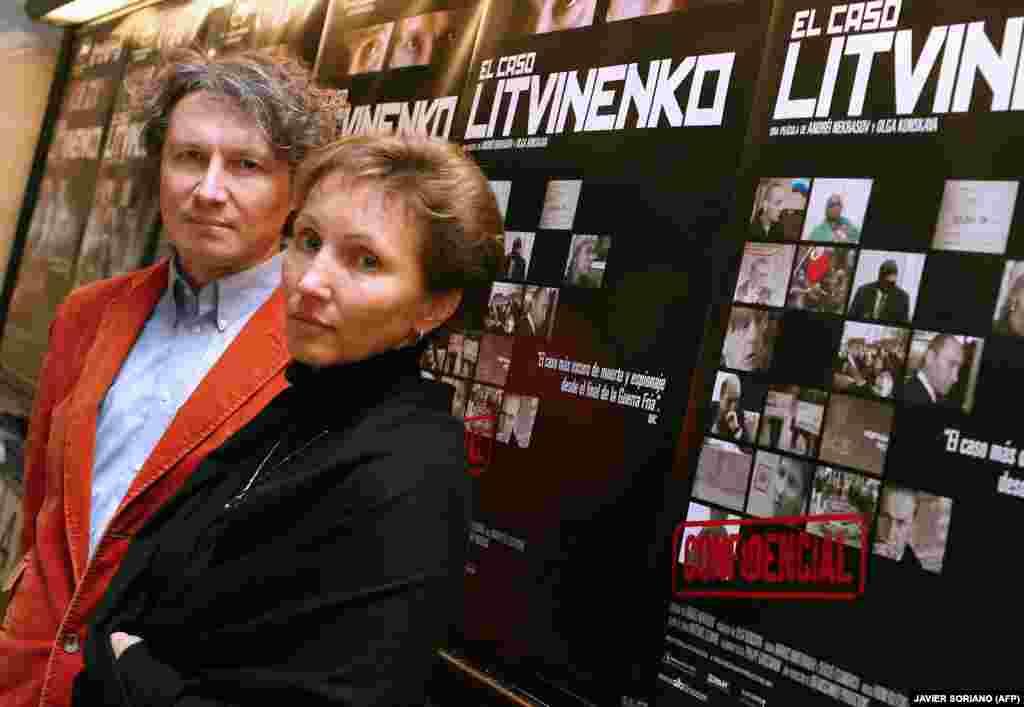
11/17Marina Litvinenko (right) and Russian director Andrei Nekrasov attend the screening of the film Rebellion: The Litvinenko Case in Madrid on December 20, 2007.
Former Russian security agent-turned-Kremlin critic Aleksandr Litvinenko died 15 years ago in London after being poisoned with highly radioactive polonium-210. He had fled to Britain in 2000 after publicly accusing the Federal Security Service of plotting to kill oligarch Boris Berezovsky.
Show moreShow less
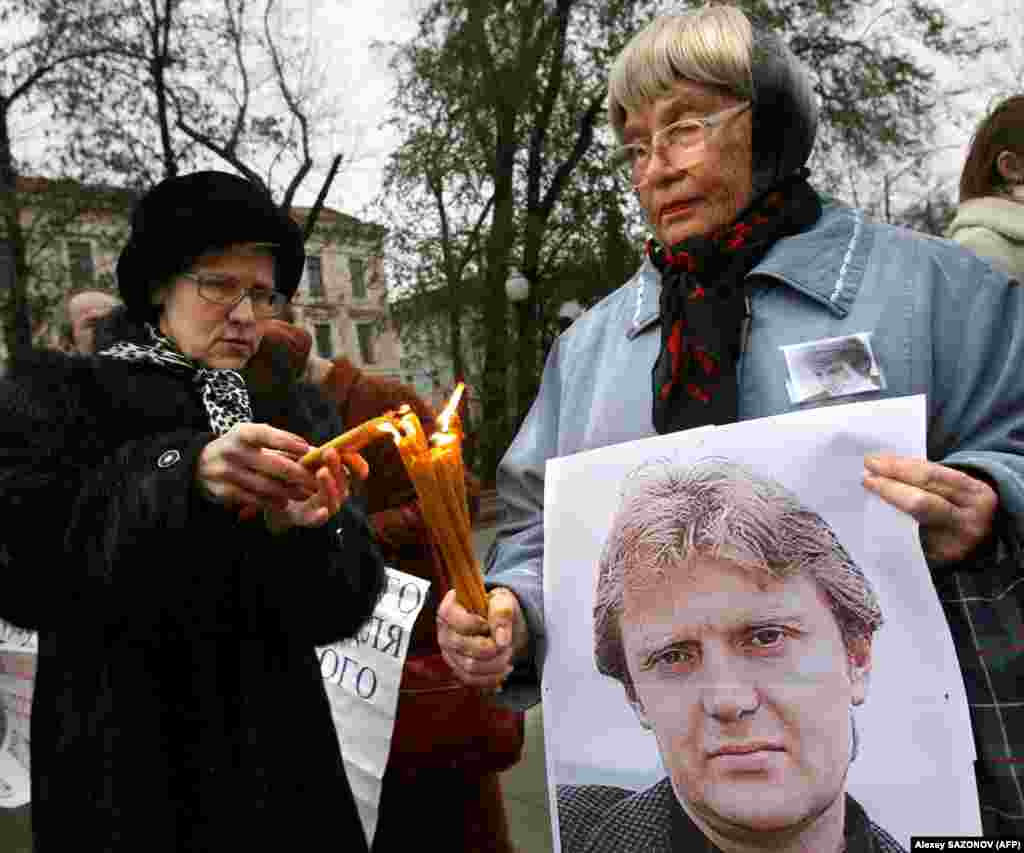
12/17Women hold a poster of Litvinenko and light candles during a Moscow memorial on November 22, 2008.
Former Russian security agent-turned-Kremlin critic Aleksandr Litvinenko died 15 years ago in London after being poisoned with highly radioactive polonium-210. He had fled to Britain in 2000 after publicly accusing the Federal Security Service of plotting to kill oligarch Boris Berezovsky.
Show moreShow less
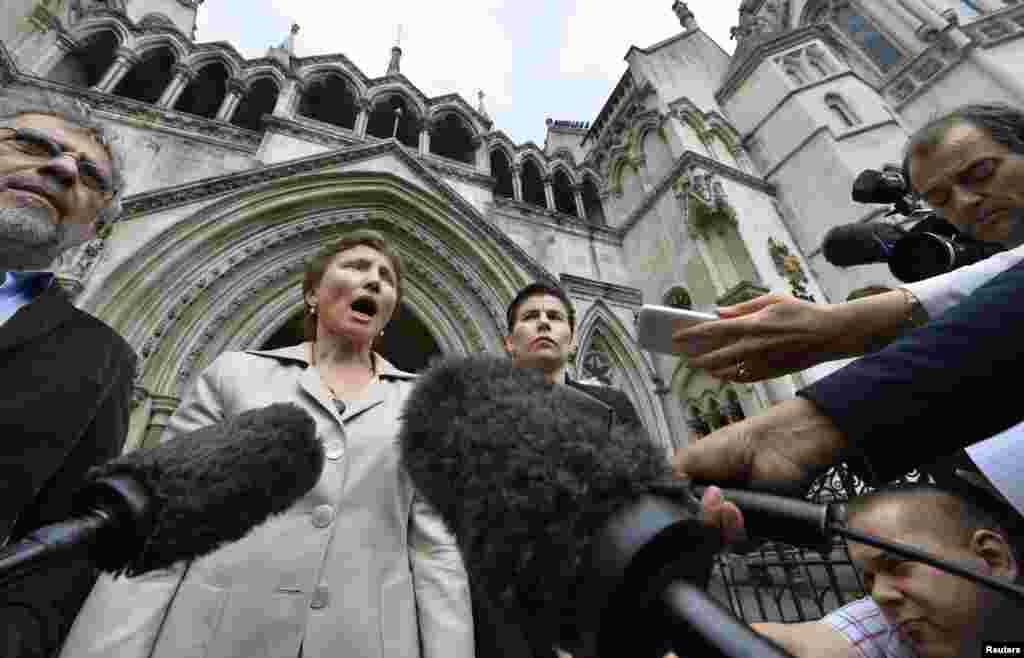
13/17Marina Litvinenko speaks to the media as she leaves the High Court in London on July 12, 2013, amid calls for a public inquiry into her husband's death.
Former Russian security agent-turned-Kremlin critic Aleksandr Litvinenko died 15 years ago in London after being poisoned with highly radioactive polonium-210. He had fled to Britain in 2000 after publicly accusing the Federal Security Service of plotting to kill oligarch Boris Berezovsky.
Show moreShow less
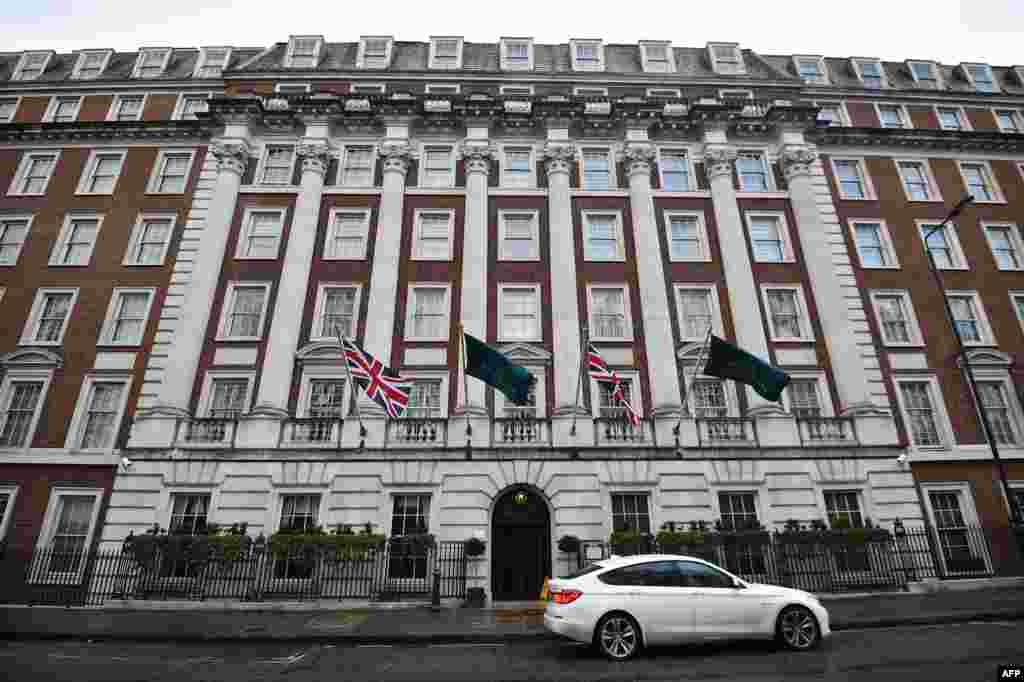
14/17London's Millennium Hotel, where Litvinenko was allegedly poisoned. An inquiry into the radiation poisoning of the former Russian agent opened on January 27, 2015.
Former Russian security agent-turned-Kremlin critic Aleksandr Litvinenko died 15 years ago in London after being poisoned with highly radioactive polonium-210. He had fled to Britain in 2000 after publicly accusing the Federal Security Service of plotting to kill oligarch Boris Berezovsky.
Show moreShow less
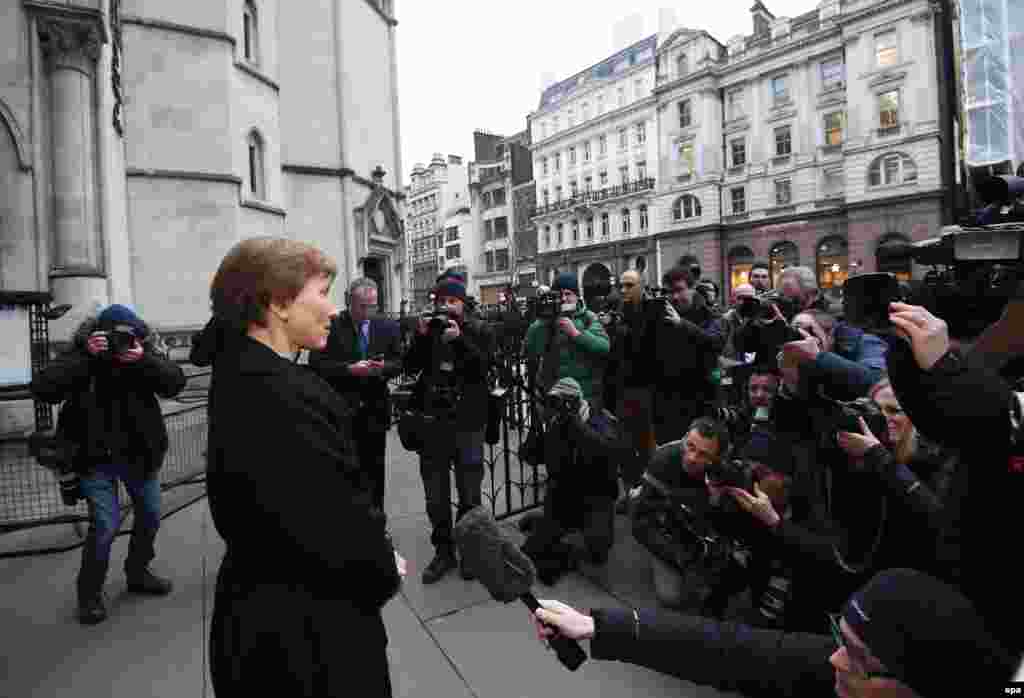
15/17Marina Litvinenko makes a statement outside the High Court in central London on January 21, 2016, after findings from a public inquiry into the killing of her husband were released by a British judge.
Former Russian security agent-turned-Kremlin critic Aleksandr Litvinenko died 15 years ago in London after being poisoned with highly radioactive polonium-210. He had fled to Britain in 2000 after publicly accusing the Federal Security Service of plotting to kill oligarch Boris Berezovsky.
Show moreShow less
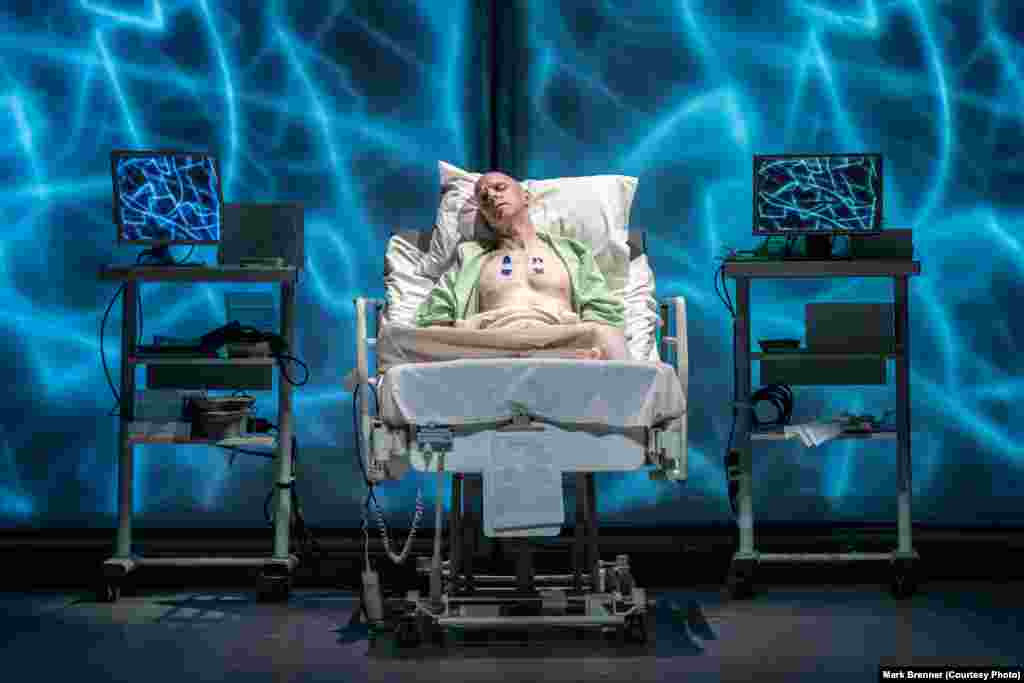
16/17Adrian Dwyer portrays Litvinenko in the British performance of The Life And Death Of Aleksandr Litvinenko at the Grange Park Opera in Surrey on February 2020.
Former Russian security agent-turned-Kremlin critic Aleksandr Litvinenko died 15 years ago in London after being poisoned with highly radioactive polonium-210. He had fled to Britain in 2000 after publicly accusing the Federal Security Service of plotting to kill oligarch Boris Berezovsky.
Show moreShow less
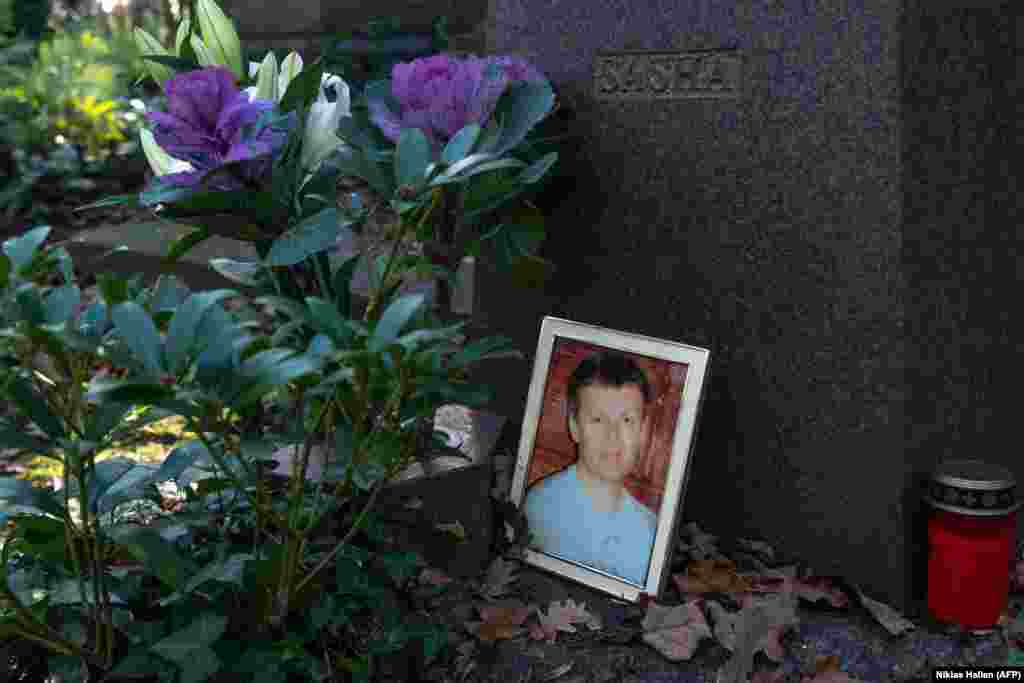
17/17A photograph sits beside Aleksandr Litvinenko's gravestone in Highgate Cemetery in North London.
Former Russian security agent-turned-Kremlin critic Aleksandr Litvinenko died 15 years ago in London after being poisoned with highly radioactive polonium-210. He had fled to Britain in 2000 after publicly accusing the Federal Security Service of plotting to kill oligarch Boris Berezovsky.
Show moreShow less
Previous slide
Next slide
The case that the Strasbourg court decided in September was initially filed by Marina Litvinenko in 2007, just months after her husband's death.
"Time passed," she recalled. "Correspondence with Russia began. They did everything they could to muddy up the situation. They demanded papers from us. They sent their own papers…. So it dragged on and the case only came before the court last year."
In its ruling, the Strasbourg court criticized Russia for not investigating the case properly and not sharing its findings with the court.
"I think it is very important to a lot of people to understand that, if things don't work out immediately, don't despair," Litvinenko said. "Don't quit. Keep the faith. Particularly if your case is just. You are obligated to achieve that justice."
After years of lobbying, Litvinenko won the right for a U.K. coroner's inquest into her husband's death in 2011. That inquest was delayed for years, but finally convened in January 2015.
The following year, the inquest ruled that Lugovoi and Kovtun had carried out the killing, "probably" acting under the orders of the FSB with the approval of Putin and then-FSB Director Nikolai Patrushev, now the secretary of the presidential Security Council. The Strasbourg court largely based its ruling on the findings of the U.K. inquest.
'The Accusations Will Be Heard'
Marina Litvinenko has also worked hard to keep her husband's name and image in the public eye. She has cooperated with Guardian journalist Luke Harding in his nonfiction study of the case, A Very Expensive Poison: The Definitive Story Of The Murder Of Litvinenko And Russia's War With The West. That book was turned into a play, also called A Very Expensive Poison, by Lucy Prebble that premiered in 2019. Anthony Bolton and Kit Hesketh-Harvey in July premiered an opera called The Life And Death Of Alexander Litvinenko.
Such efforts, she argued, constantly remind the world of her husband's case and of the accusations against Putin.
"Every time he appears on stage -- when the play is performed or in the opera or in the film that is going to be made -- every time, these accusations against Putin will be heard."
"The crimes that the Russian state is committing against people and against other countries will never be forgotten," she added.
The Strasbourg ruling does not mark the end of her quest, Litvinenko said. Her pursuit of justice for her husband will continue.
"I always say that this is a love story," she said. "It’s that simple.”
Written by Robert Coalson based on reporting by Dariya Ali-zade and Shahida Rusekas