




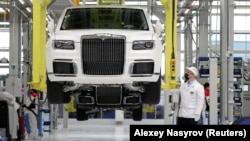
At first glance, Russia’s jobless rate just doesn’t seem to make sense.
Western nations have imposed sweeping financial and technological sanctions on Russia, battering a range of economic sectors from auto production and information technology to travel and pushing the nation into recession.

At the same time, a slew of Western companies employing hundreds and in some cases thousands of Russian citizens have pulled out to protest the invasion of Ukraine.
Despite the severe economic headwinds, Russian unemployment fell to a post-Soviet low of just 3.9 percent in May – far below the European Union average and not far above the U.S. figure of 3.6 percent -- and remained at the same level in June.
Given the ample evidence that President Vladimir Putin’s government has falsified election results, fudged COVID figures, and withheld casualty counts from its war against Ukraine, one might assume that when it comes to the Russian unemployment rate, there’s substantial overlap between lies and statistics.
But while few experts believe the official Russian jobless figures are watertight, many say the main explanation for the low rate is not dubious statistics.
Instead, they argue, it’s a combination of downward demographic trends, a government with a long-standing preference for cutting hours or wages over jobs -- in part to keep politically risky unemployment in check -- and extensive experience in handling economic upheaval.
The mass exodus of working-age people from Russia following the invasion of Ukraine in February, the large proportion of vulnerable jobs held by Central Asian migrants, and growing demand for bodies for the war -- in which the lower Western estimates of Russian deaths exceed 15,000 -- are also playing a significant role in keeping unemployment down.

Job losses are expected to increase starting in the autumn as seasonal work in agriculture, construction, and tourism dries up and the sanctions-stoked recession grinds deeper.
But they are still forecast to end the year lower than in many European countries and remain stable next year as these trends continue to play out.
“The fact is that the Kremlin, employers, and people are well used to economic crisis,” Chris Weafer, founder of the consultancy group Macro-Advisory, told RFE/RL.
“There is a well-developed system of employment and social supports which is again kicking in” and keeping unemployment low, he said.
Resource-rich Russia experienced a big economic boom during Putin’s first two terms in office from 2000 to 2008, fueled by high world oil and gas prices.
Since then, the country has faced four periods of economic turbulence resulting from a series of triggers: the global financial crisis of 2008-2009; the first round of Western sanctions over Russia’s aggression against Ukraine in 2014, as well as a sharp drop in energy prices; the COVID pandemic in 2020; and the large-scale invasion of Ukraine on February 24.
With each shock, the government has gained experience in tackling problems with potential political ramifications, including unemployment. The state authorities are laser-focused on protecting jobs to maintain social stability, especially in the nation’s far-flung towns dominated by a single employer or a handful of enterprises, Weafer said.
“The Kremlin has always feared unemployment in the regions and had always moved quickly to protect jobs and subsidize employers,” he said.
Sanctions Shock
Western nations largely cut off Russia from their financial markets and technology sectors following the invasion of Ukraine, crippling some companies -- at least initially -- that depended on imports for production.
Russia’s auto industry, which employs hundreds of thousands of people, including workers at supply companies, screeched nearly to a halt in May due to the Western export ban on parts, with production falling more than 90 percent.
In an August 15 interview with the government newspaper Rossiiskaya Gazeta, Labor Minister Anton Kotyakov said the government immediately took action to help companies as they search for new suppliers, including offering debt restructuring, the deferral of budgetary payments, and sectoral support programs.
How high the jobless rate goes will depend on how quickly Russian companies can find alternatives to Western-supplied goods and Western markets, he said.
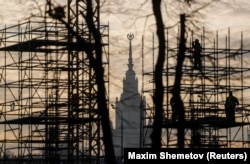
The government is subsidizing companies to hire vulnerable people, helping relocate workers from struggling companies to healthy companies, and increasing training programs, Kotyakov said, and working groups at the federal and regional levels are held weekly to discuss the labor situation.
“This is manual control [of the economy], but when there is a component of uncertainty, it is necessary,” he said, adding that the government had enhanced its ability to closely monitor sectors and regions during the COVID crisis, when high unemployment was also a threat.
Meanwhile, the state has also been seeking to manage the effects of the exodus of foreign companies with large local workforces to ensure minimal job losses. It has created obstacles to discourage those firms from laying off workers, and many -- citing concerns for their Russian employees -- have continued to pay those workers even as they wrap up their operations.
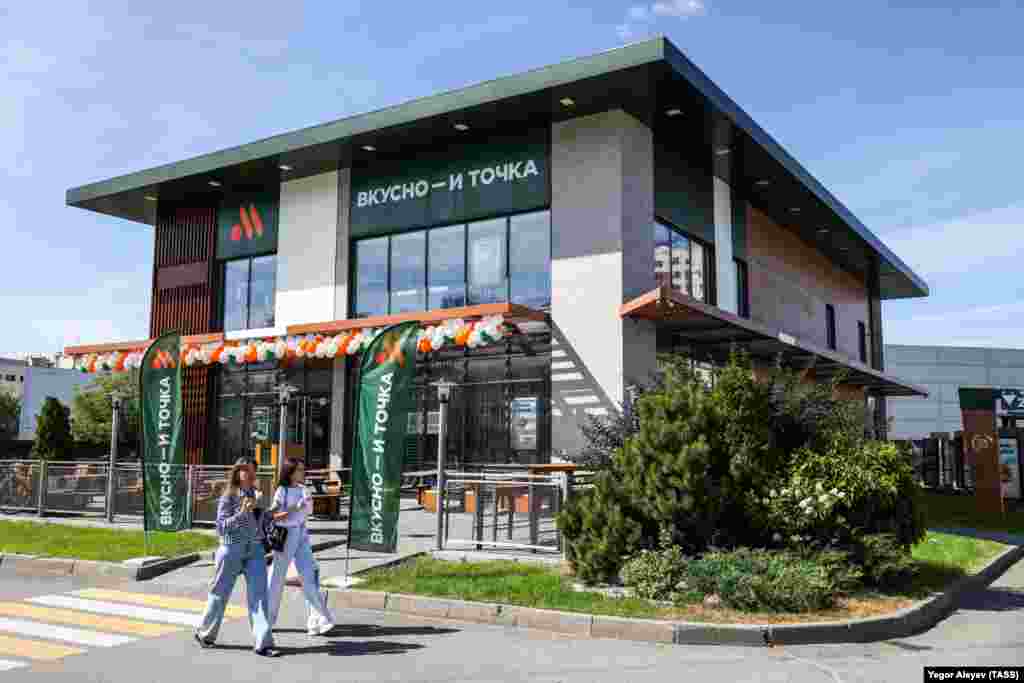
U.S.-based McDonald’s, which had 62,000 employees in Russia, sold its business to a Siberian entrepreneur with a clause stipulating that the new owner should keep workers on similar terms for at least two years.
“If McDonald’s ever wants to return to Russia, it will be helped and welcomed because it left properly and that principally means it protected jobs,” Weafer said.
Déjà Food: Russia's Replica Restaurant Brands


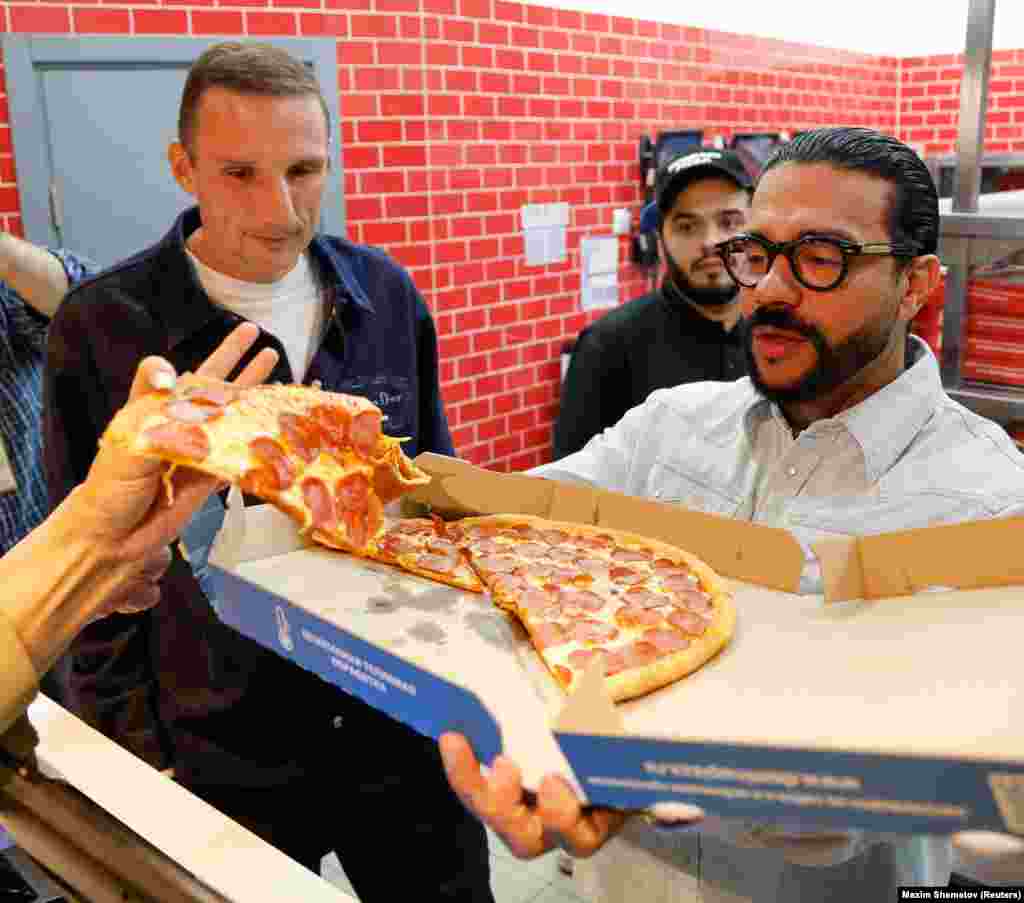



![Pinsky claimed to journalists at the Stars Coffee opening in Moscow that "people's perceptions may be different, but if you compare, then you won't find anything in common [with the Starbucks logo] apart from the circle."](https://gdb.rferl.org/01320000-0aff-0242-0e64-08da81de8411_w1024_q10_s.jpg)


In a June report, the Center for Strategic Research, a Moscow-based public policy think tank, estimated that 350,000 people – or about 0.5 percent of all workers – were employed at foreign firms that had either halted or curtailed their operations in Russia.
“Foreign business directly accounts for 2 to 3 percent of jobs in the Russian economy and, in fact, is not a critically important employer on a national scale,” it said in the report.
Economists now expect Russian unemployment to end the year at 5.6 percent, down from an earlier forecast of 6.5 percent, according to a survey conducted by the nation’s central bank in July.
Economy Minister Maksim Reshetnikov warned against “dramatizing” the expected increase in unemployment later this year, saying the “situation is controllable.”
His ministry now forecasts energy export revenue to surge by $100 billion this year, giving the government greater power to help companies cope with sanctions.
Demographic Decline
While a low unemployment rate is good for the government, the figures are underpinned by bad news for Russia: Buttressing all of the state’s efforts to keep people at work is a negative demographic trend that has only been deepened by the war.
Russia has a working-age population of roughly 75 million people, about 3 million of whom are currently unemployed. But its labor force is decreasing by between 500,000 to one million a year as the number of people retiring outpaces those entering the job market, experts estimate.
That phenomenon is largely due to a sharp decline in births in the 1990s and early 2000s, triggered in part by the economic upheaval that accompanied and followed the Soviet Union’s collapse. Quite simply, fewer people means fewer jobless people.
“The adverse demographic trend, with fewer new entrants into the labor force, indeed plays a big role in the general tightness of the Russian labor market,” Tatiana Orlova, an analyst at Oxford Economics, told RFE/RL.
Russia is also losing a growing number of working-age people to emigration amid a widening crackdown on political freedoms and a gloomy outlook for economic growth.
Emigration has only accelerated in the wake of the invasion of Ukraine.
In late March, the Russian Association for Electronic Communications estimated that as many as 70,000 IT workers fled the country in the month following the invasion. It warned that another 100,000 could follow in their tracks.

To stem the outflow of skilled workers, Putin signed several economic measures, including a three-year tax holiday and subsidized loans for IT companies. He has also approved subsidized mortgages for IT workers and granted a waiver from army service to all tech experts of draft age.
Another aspect of the Russian labor market that is preventing a jump in official unemployment is the widespread use of Central Asian migrants. They serve as a kind of pressure valve for the Russian labor market -- when times are tough, they are among the first to lose their jobs.
“The migrants don’t go on the unemployment register. They go home,” Weafer said.

Russia has as many as 10 million migrant workers, accounting for nearly one in eight workers, Weafer said.
Many of them are employed in construction, transport, and retail -- sectors that tend to get hit hard when the economy contracts.
Company Towns
Russia’s invasion of Ukraine is also taking tens of thousands of citizens, mostly men, out of the labor market, including from regions where unemployment has traditionally been high, such as the North Caucasus.
Orlova said Russia’s economy is characterized by an uneven distribution of unemployment levels, with city job markets strong and regions like the North Caucasus suffering.
Russia’s economy is also characterized by large state -- or state-friendly -- ownership and a plethora of one-company towns that influence employment trends.
About 40 percent of Russians are employed by the state, state-owned companies, or private companies whose owners have close government ties -- all reluctant to cut headcount in tough times. The same holds for owners of enterprises that dominate “monocities,” where a single company is the main source of jobs.
“In the monocities, where a large plant is the biggest employer, the plant’s owners will think twice before laying off workers. They might reduce working hours or cut wages, but layoffs will be frowned upon” by the government, Orlova said.
When a crisis passes, employers have to restore previous salaries and make up for lost wages, Weafer said.
“Everybody accepts the system,” he said.
But it is not just government pressure that makes private owners reluctant to cut headcount: The lack of skilled workers is a major factor.
If a company lets skilled workers go in tough times, it may not be able to get them back when the economy picks up, Weafer said.
“Russia does not have an unemployment problem, it has a worker-shortage problem, a skills-shortage problem,” he added.