Accessibility links

Breaking News

Biden Says Deeply Concerned By Navalny Jailing As Senators Introduce Sanctions Bill

Updated
Marco Rubio, one of the senators who introduced the draft bill, said he was "standing with the Russian people" following the "outrageous sentencing" of Aleksei Navalny. (file photo)

President Joe Biden called the jailing of Russian opposition leader Aleksei Navalny a “matter of deep concern” to the United States and its allies as a bipartisan group of senators introduced legislation to sanctions officials complicit in his poisoning.

“Mr. Navalny, like all Russian citizens, is entitled to his rights under the Russian constitution. He’s been targeted for exposing corruption. He should be released immediately and without condition,” Biden said February 4 in his first foreign policy speech since taking office last month.

A Moscow court on February 2 sentenced Navalny to nearly three years in prison for violating the terms of parole while in Germany where he was recovering from nerve-agent poisoning that he and supporters say was ordered by Russian President Vladimir Putin.

Biden said the United States “will not hesitate to raise the cost on Russia” for its “aggressive actions,” including the poisoning its own citizens.

A day earlier, a bipartisan group of U.S. senators introduced legislation to impose fresh targeted sanctions on Russian officials found to be complicit in the poisoning of opposition leader Aleksei Navalny.

Backing the legislation -- known as Holding Russia Accountable for Malign Activities Act -- were Marco Rubio (Republican-Florida), Chris Coons (Democrat-Delaware), Ben Cardin (Democrat-Maryland), Mitt Romney (Republican-Utah), Chris Van-Hollen (Democrat-Maryland), and Dick Durbin (Democrat-Illinois).

Rubio called Navalny’s sentencing “outrageous” and said the legislation “will impose a cost on Putin, and his thugs, for their corruption and targeting of opponents.”

The bill directs the administration to determine if the Kremlin has violated U.S. laws prohibiting the use of chemical and biological weapons.

Navalny fell ill in Siberia in late August and was put in an induced coma and evacuated to Berlin. Within days, German doctors and military scientists determined that he had been targeted with a substance related to Novichok, a powerful military-grade nerve agent first developed by the Soviet Union.

The Organization for the Prohibition of Chemical Weapons (OPCW) confirmed blood and urine samples from Navalny contained a chemical agent from the banned Novichok group.

Separately, Senator Roger Wicker (Republican-Mississippi) and Cardin on February 3 introduced legislation to widen the scope of U.S. sanctions against individuals who commit human rights violations and corruption to include their immediate family members.

The Global Magnitsky Human Rights Accountability Reauthorization Act -- named after Sergei Magnitsky, the Moscow lawyer who died in Russian police custody in 2009 while investigating high-level corruption -- would also repeal its 2023 "sunset clause," keeping the sanctions intact indefinitely.

Since the passage of the Global Magnitsky Act in 2016, the United States has placed sanctions on 244 individuals from 33 countries under the law, including many from Russia. The act has angered the Kremlin, which lobbied for its repeal.

Human Rights First, an independent advocacy group, called the Magnitsky Act "a powerful and effective foreign policy tool" and said the reauthoritization "is a step in the right direction."

Nemtsov Assassination

The Holding Russia Accountable bill also requires a report on the assassination of Russian opposition politician Boris Nemtsov, who was shot dead at close range on the Bolshoi Moskvoretsky Bridge, near the Kremlin in central Moscow, on February 27, 2015.

In June 2017, a Russian court sentenced a former Chechen battalion leader Zaur Dadayev to 20 years in prison for killing Nemtsov.

Four other Chechens were found guilty of involvement in the killing and sentenced to prison terms ranging from 11 to 19 years.

Critics, including relatives and colleagues of Nemtsov, say Russian authorities failed to determine who ordered the killing.

The Holding Russia Accountable legislation is similar to an earlier effort by nearly the same group of senators in October.

In a statement announcing the bill, Coon said that Putin's government "has a long and sordid history of using murder and attempted murder to silence Russian citizens at home and abroad" who call out abuses by the Kremlin.

The senator also denounced the police crackdown on citizens who peacefully took to the streets to show their support for Navalny.

"Instead of listening to their real grievances, Putin's security forces have responded with unbridled brutality and arrested thousands," he said.

More than 11,000 people across Russia have been detained since January 23 for taking part in protests to support Navalny, according to the independent monitoring group OVD-Info. The protests have been some of the largest in the past decade.

Russian Police Crack Down On Protests After Navalny Sentencing
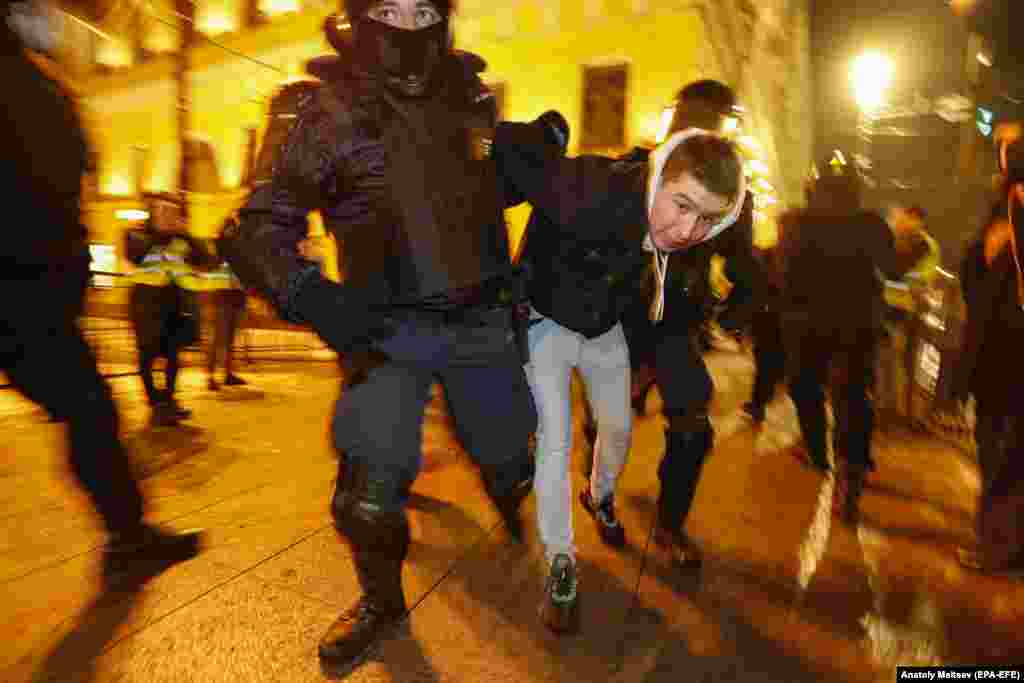
Police detain a man in St. Petersburg.
1/18 Police detain a man in St. Petersburg.
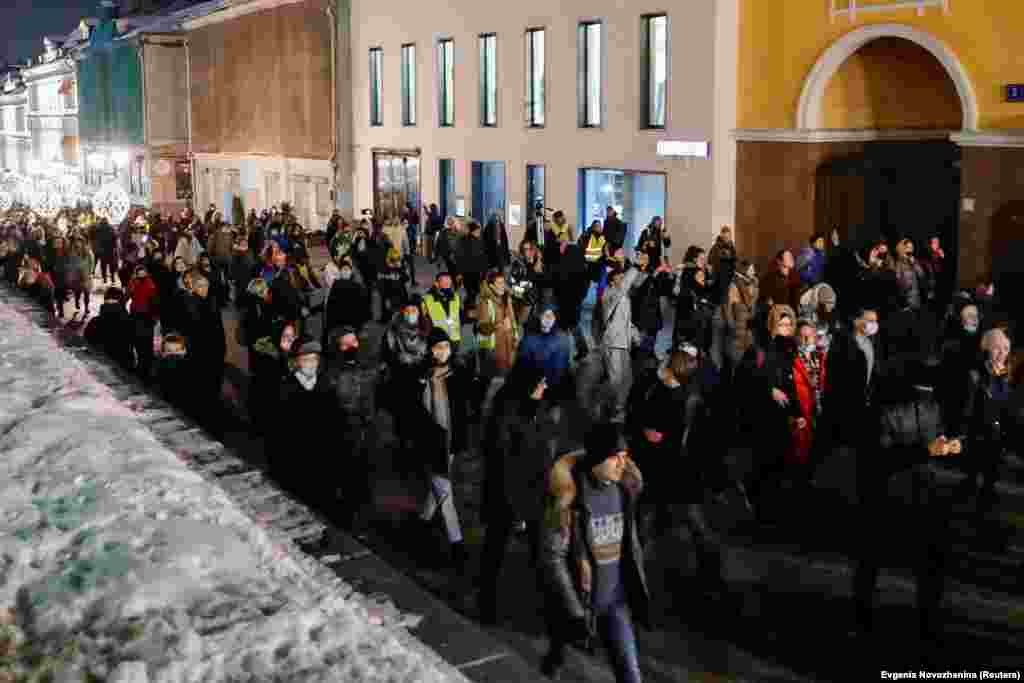
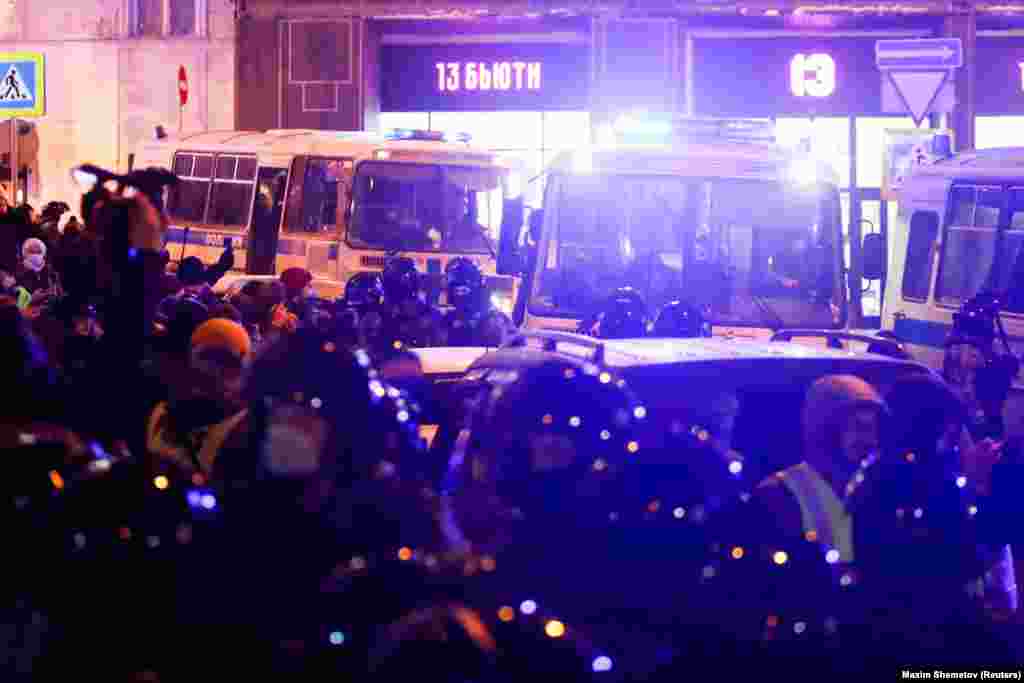
Thousands of Russians took to the streets to protest the sentencing of opposition leader Aleksei Navalny to a prison term of nearly three years on February 2. Russian security forces cracked down hard, detaining more than 1,400 of them, according to independent monitoring group OVD-Info.
Protesters march in Moscow on February 2, calling for the release of Navalny.
2/18 Protesters march in Moscow on February 2, calling for the release of Navalny.
Thousands of Russians took to the streets to protest the sentencing of opposition leader Aleksei Navalny to a prison term of nearly three years on February 2. Russian security forces cracked down hard, detaining more than 1,400 of them, according to independent monitoring group OVD-Info.
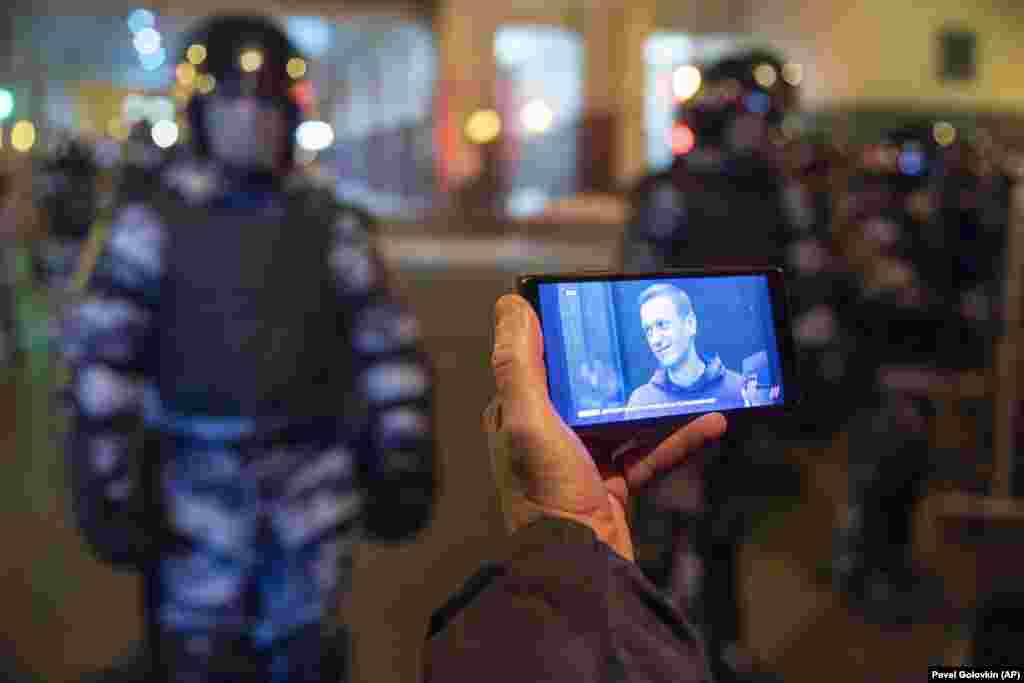
A journalist watches a livestream of the Navalny sentencing hearing as National Guard soldiers stand in front of the court in Moscow. The court converted a years-old suspended sentence to a prison term for a financial-crime conviction widely seen as politically motivated.
3/18 A journalist watches a livestream of the Navalny sentencing hearing as National Guard soldiers stand in front of the court in Moscow. The court converted a years-old suspended sentence to a prison term for a financial-crime conviction widely seen as politically motivated.
Thousands of Russians took to the streets to protest the sentencing of opposition leader Aleksei Navalny to a prison term of nearly three years on February 2. Russian security forces cracked down hard, detaining more than 1,400 of them, according to independent monitoring group OVD-Info.
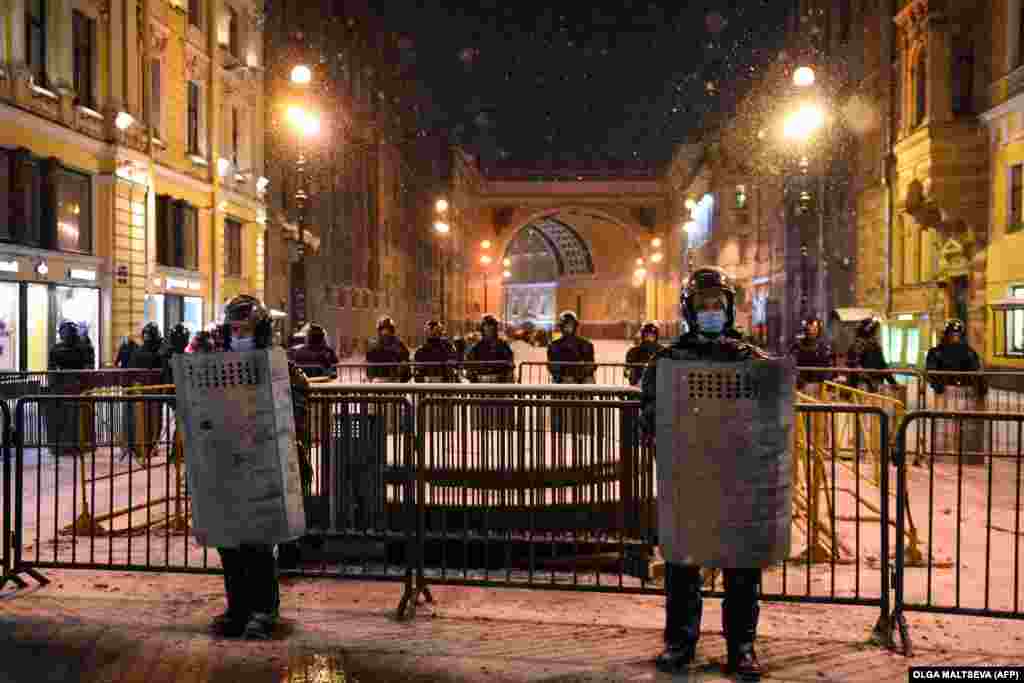
Law enforcement officers deploy in downtown St. Petersburg.
4/18 Law enforcement officers deploy in downtown St. Petersburg.
Thousands of Russians took to the streets to protest the sentencing of opposition leader Aleksei Navalny to a prison term of nearly three years on February 2. Russian security forces cracked down hard, detaining more than 1,400 of them, according to independent monitoring group OVD-Info.
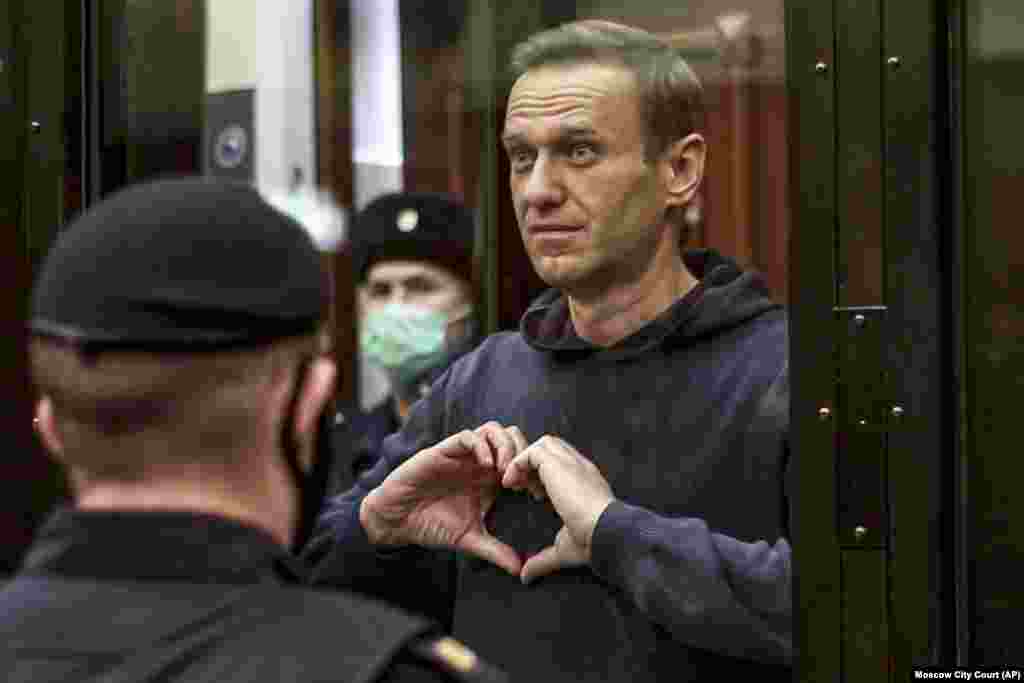
Navalny makes a heart symbol for his wife, Yulia, while standing in a cell during his Moscow court hearing on February 2.
5/18 Navalny makes a heart symbol for his wife, Yulia, while standing in a cell during his Moscow court hearing on February 2.
Thousands of Russians took to the streets to protest the sentencing of opposition leader Aleksei Navalny to a prison term of nearly three years on February 2. Russian security forces cracked down hard, detaining more than 1,400 of them, according to independent monitoring group OVD-Info.
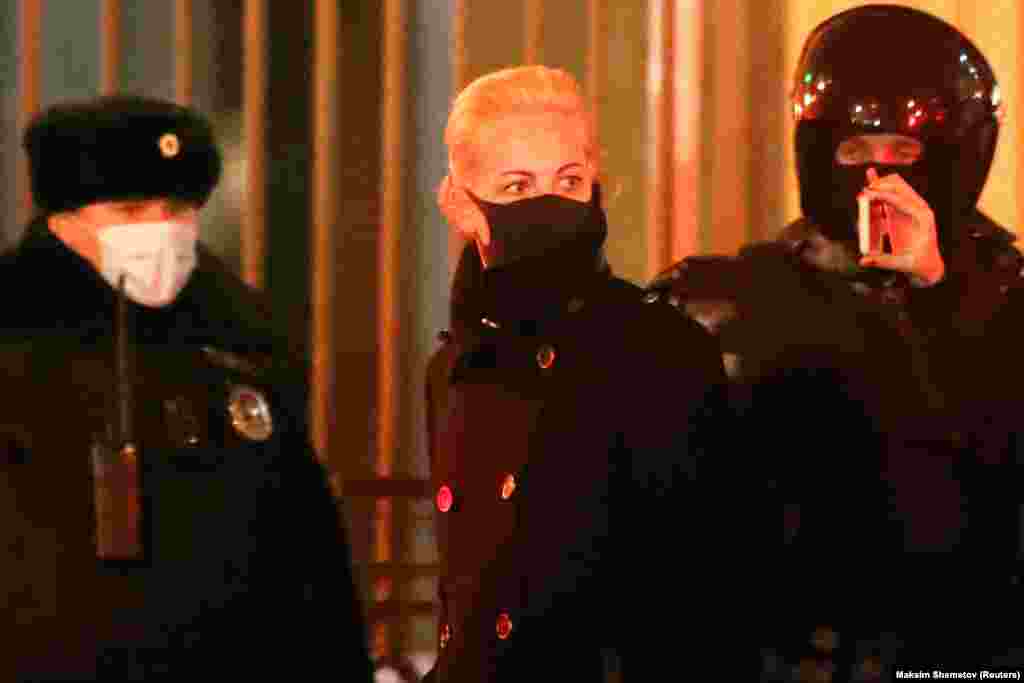
Yulia Navalnaya walks out of the Moscow court after it sentenced her husband to prison.
6/18 Yulia Navalnaya walks out of the Moscow court after it sentenced her husband to prison.
Thousands of Russians took to the streets to protest the sentencing of opposition leader Aleksei Navalny to a prison term of nearly three years on February 2. Russian security forces cracked down hard, detaining more than 1,400 of them, according to independent monitoring group OVD-Info.
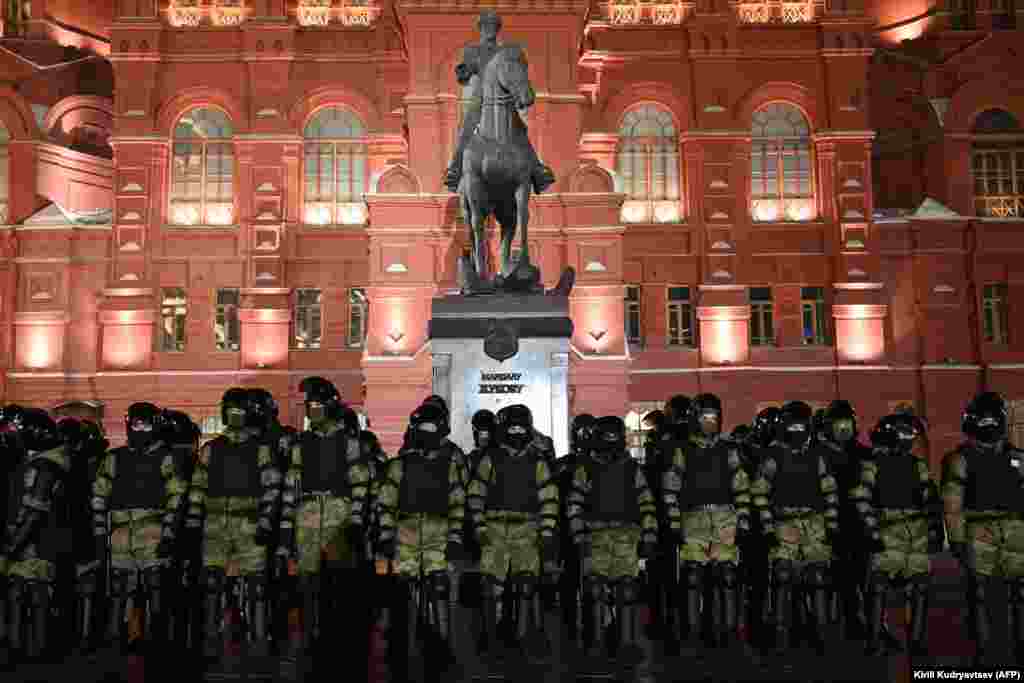
Security forces stand guard in front of a monument to Soviet Marshal Georgy Zhukov outside Red Square in Moscow.
7/18 Security forces stand guard in front of a monument to Soviet Marshal Georgy Zhukov outside Red Square in Moscow.
Thousands of Russians took to the streets to protest the sentencing of opposition leader Aleksei Navalny to a prison term of nearly three years on February 2. Russian security forces cracked down hard, detaining more than 1,400 of them, according to independent monitoring group OVD-Info.
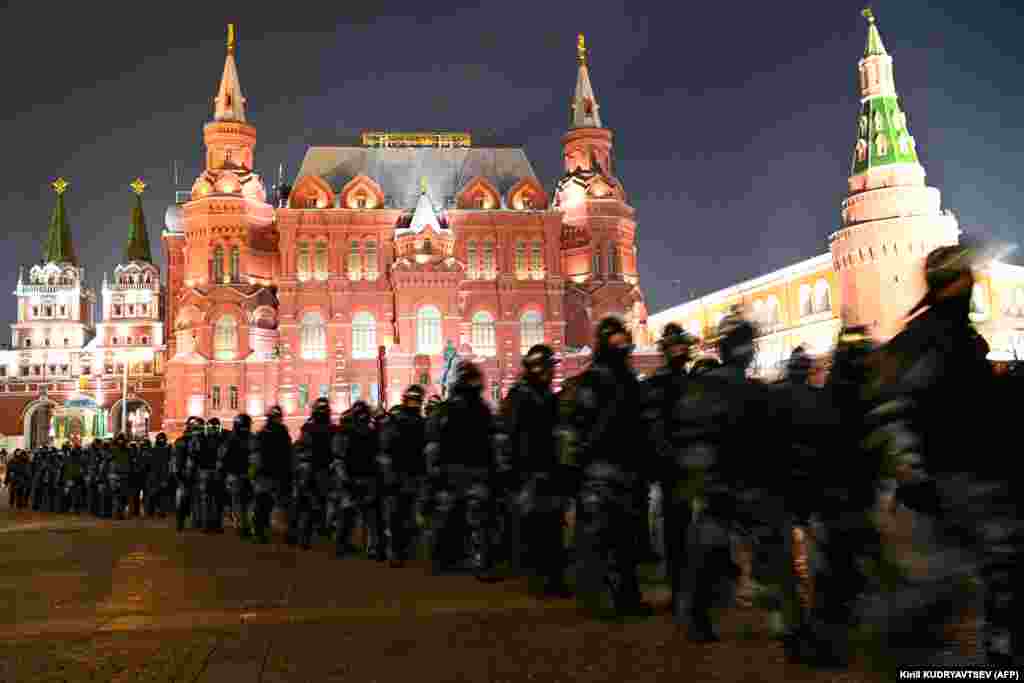
Security forces march through Moscow's Manezh Square.
8/18 Security forces march through Moscow's Manezh Square.
Thousands of Russians took to the streets to protest the sentencing of opposition leader Aleksei Navalny to a prison term of nearly three years on February 2. Russian security forces cracked down hard, detaining more than 1,400 of them, according to independent monitoring group OVD-Info.
Police violently detain a man on Red Square in Moscow.
9/18 Police violently detain a man on Red Square in Moscow.
Thousands of Russians took to the streets to protest the sentencing of opposition leader Aleksei Navalny to a prison term of nearly three years on February 2. Russian security forces cracked down hard, detaining more than 1,400 of them, according to independent monitoring group OVD-Info.
Police flood the streets in Moscow.
10/18 Police flood the streets in Moscow.
Thousands of Russians took to the streets to protest the sentencing of opposition leader Aleksei Navalny to a prison term of nearly three years on February 2. Russian security forces cracked down hard, detaining more than 1,400 of them, according to independent monitoring group OVD-Info.
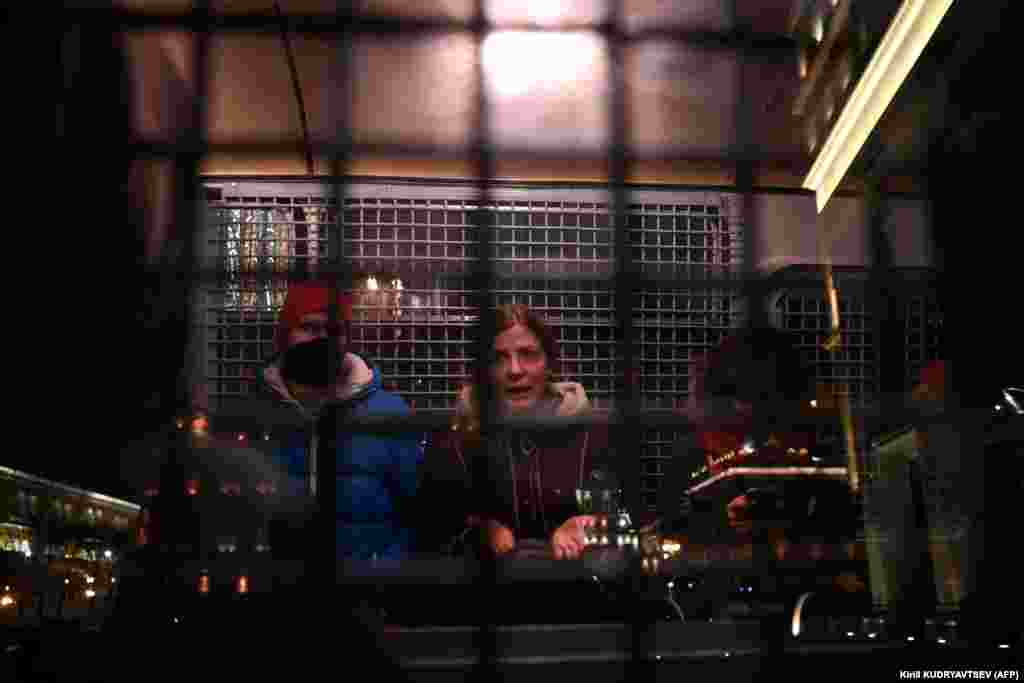
Detainees are held in a police van in downtown Moscow on February 2.
11/18 Detainees are held in a police van in downtown Moscow on February 2.
Thousands of Russians took to the streets to protest the sentencing of opposition leader Aleksei Navalny to a prison term of nearly three years on February 2. Russian security forces cracked down hard, detaining more than 1,400 of them, according to independent monitoring group OVD-Info.
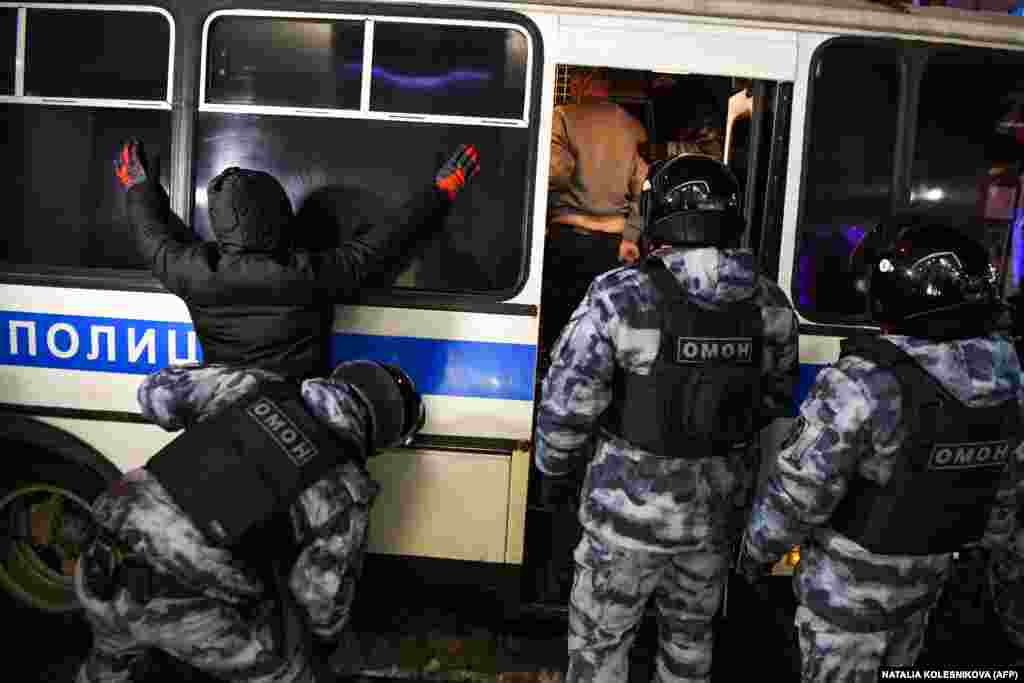
A police officer searches a detainee in downtown Moscow early on February 3.
12/18 A police officer searches a detainee in downtown Moscow early on February 3.
Thousands of Russians took to the streets to protest the sentencing of opposition leader Aleksei Navalny to a prison term of nearly three years on February 2. Russian security forces cracked down hard, detaining more than 1,400 of them, according to independent monitoring group OVD-Info.
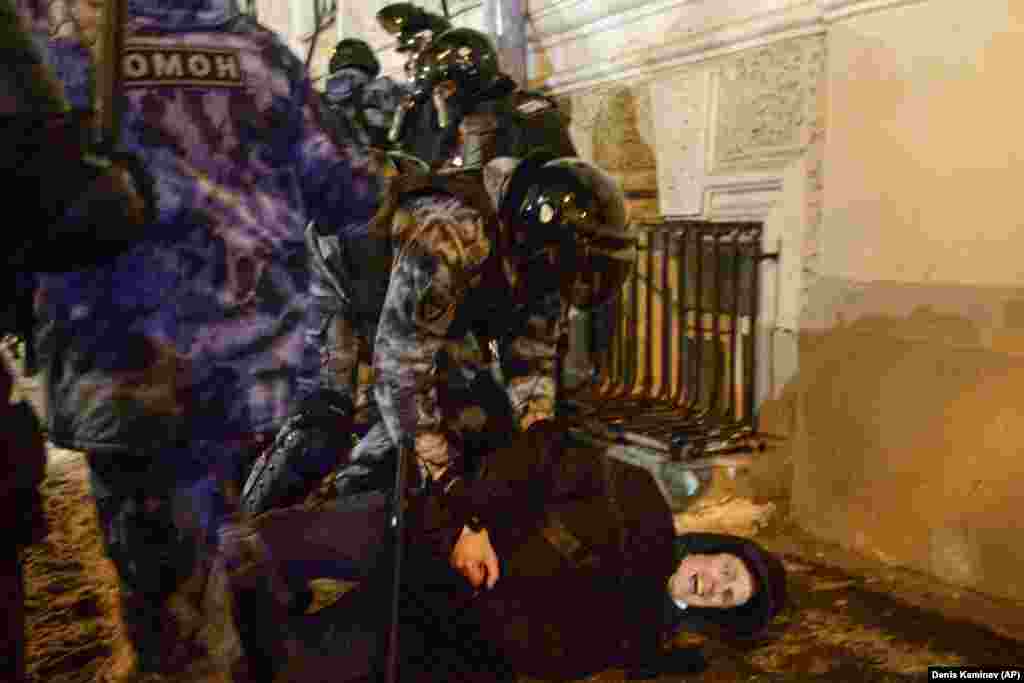
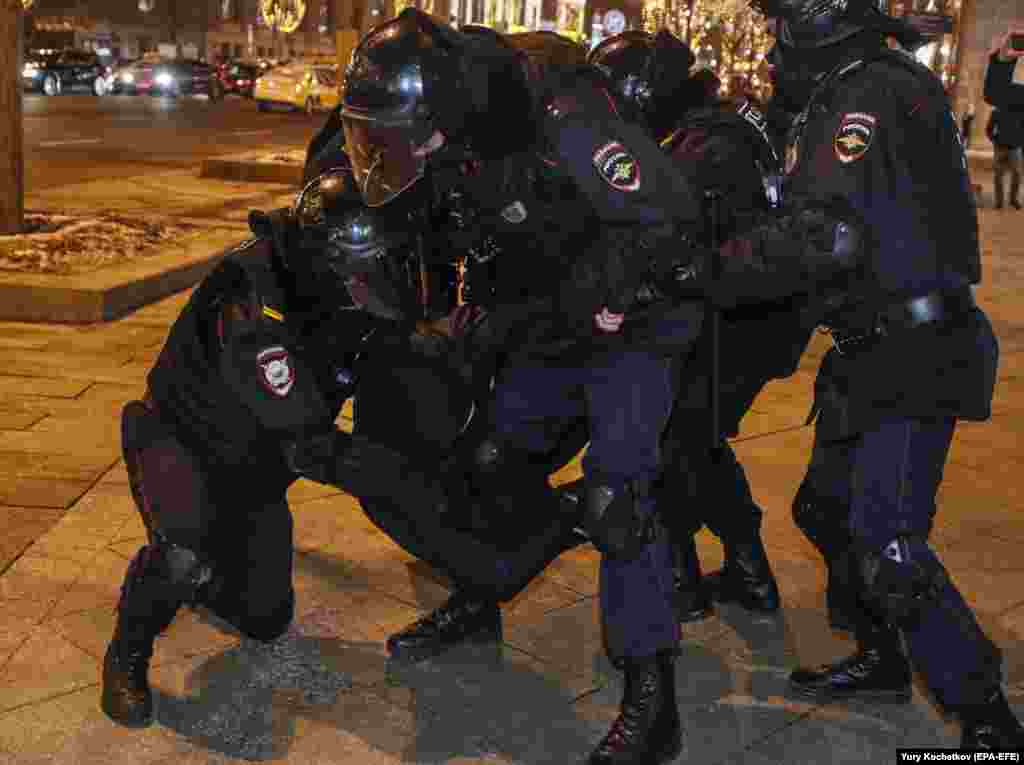
Riot police violently detain a Navalny supporter in Moscow.
13/18 Riot police violently detain a Navalny supporter in Moscow.
Thousands of Russians took to the streets to protest the sentencing of opposition leader Aleksei Navalny to a prison term of nearly three years on February 2. Russian security forces cracked down hard, detaining more than 1,400 of them, according to independent monitoring group OVD-Info.
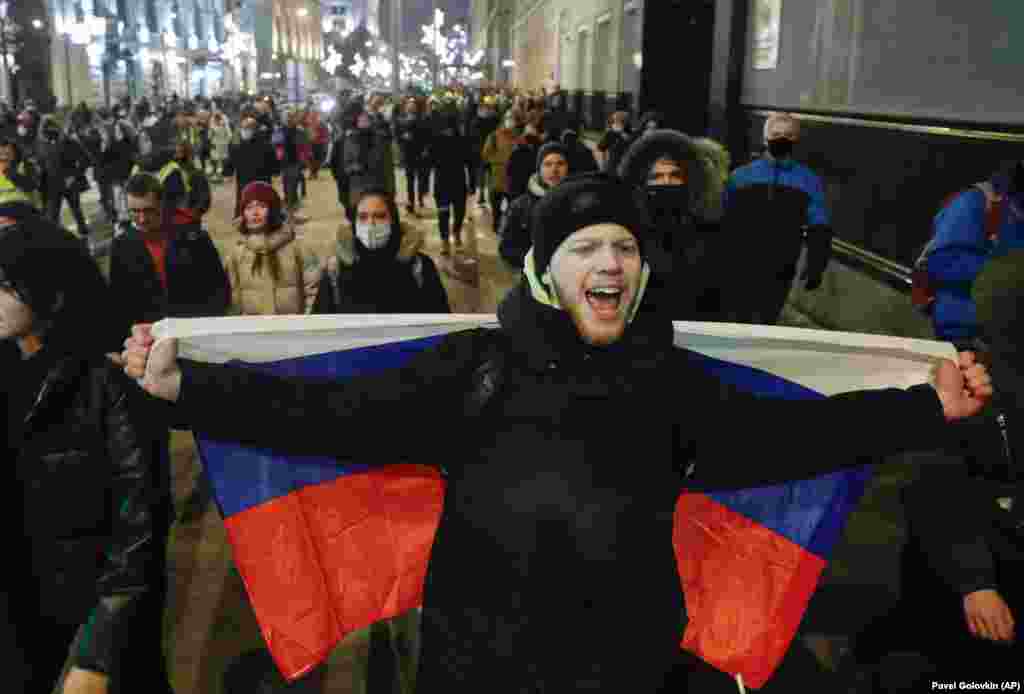
A man drapes a Russian flag across his back as he marches through Moscow in support of Navalny.
14/18 A man drapes a Russian flag across his back as he marches through Moscow in support of Navalny.
Thousands of Russians took to the streets to protest the sentencing of opposition leader Aleksei Navalny to a prison term of nearly three years on February 2. Russian security forces cracked down hard, detaining more than 1,400 of them, according to independent monitoring group OVD-Info.
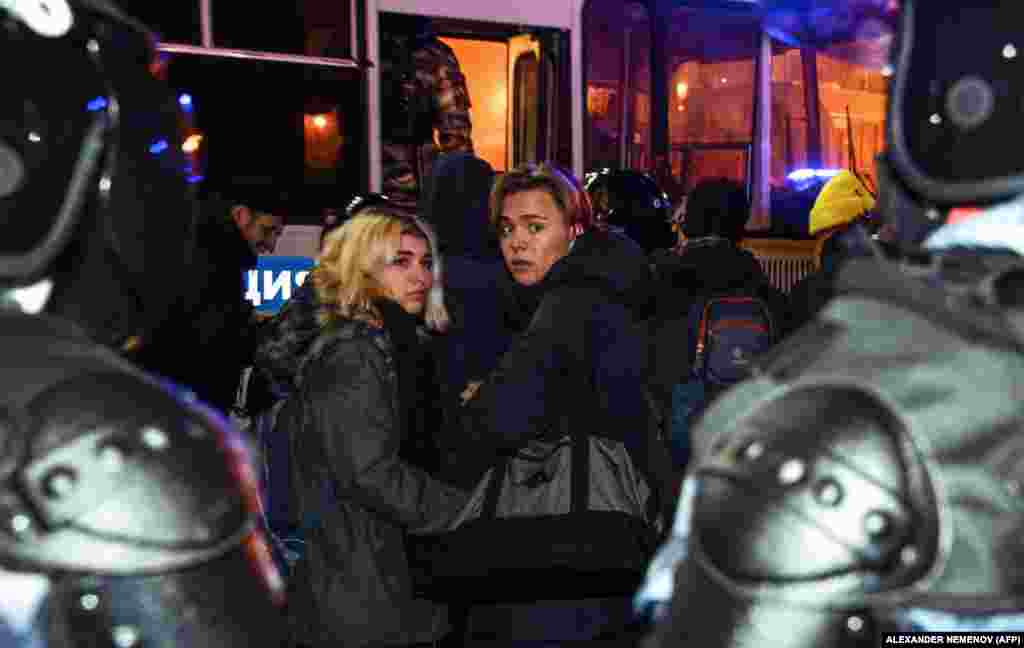
Detainees are herded onto buses in Moscow.
15/18 Detainees are herded onto buses in Moscow.
Thousands of Russians took to the streets to protest the sentencing of opposition leader Aleksei Navalny to a prison term of nearly three years on February 2. Russian security forces cracked down hard, detaining more than 1,400 of them, according to independent monitoring group OVD-Info.
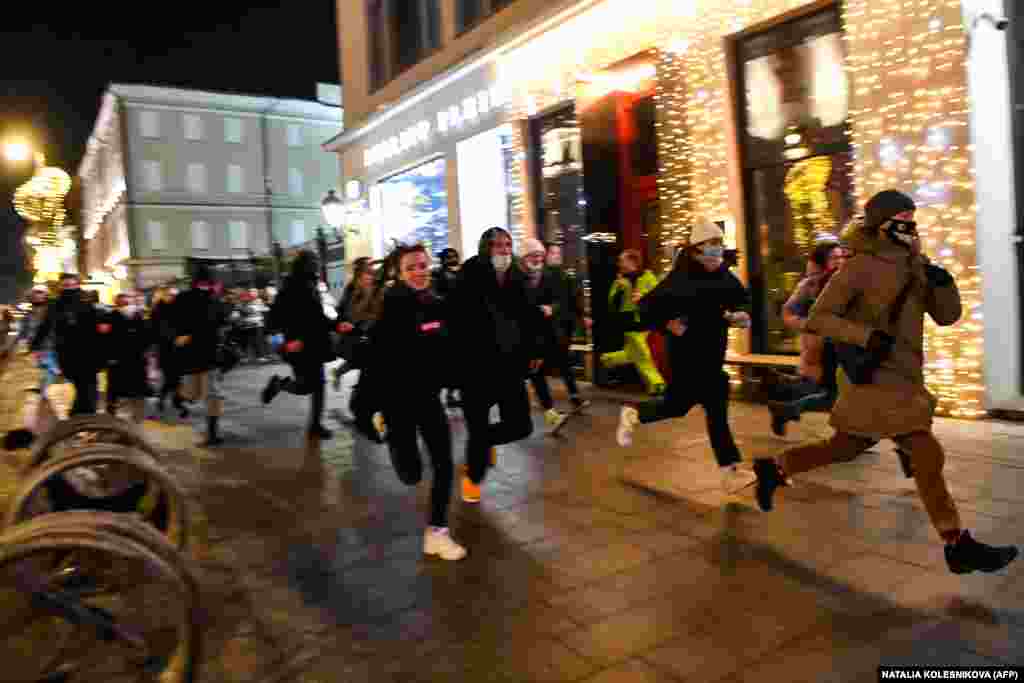
People run from security forces in Moscow early on February 3.
16/18 People run from security forces in Moscow early on February 3.
Thousands of Russians took to the streets to protest the sentencing of opposition leader Aleksei Navalny to a prison term of nearly three years on February 2. Russian security forces cracked down hard, detaining more than 1,400 of them, according to independent monitoring group OVD-Info.
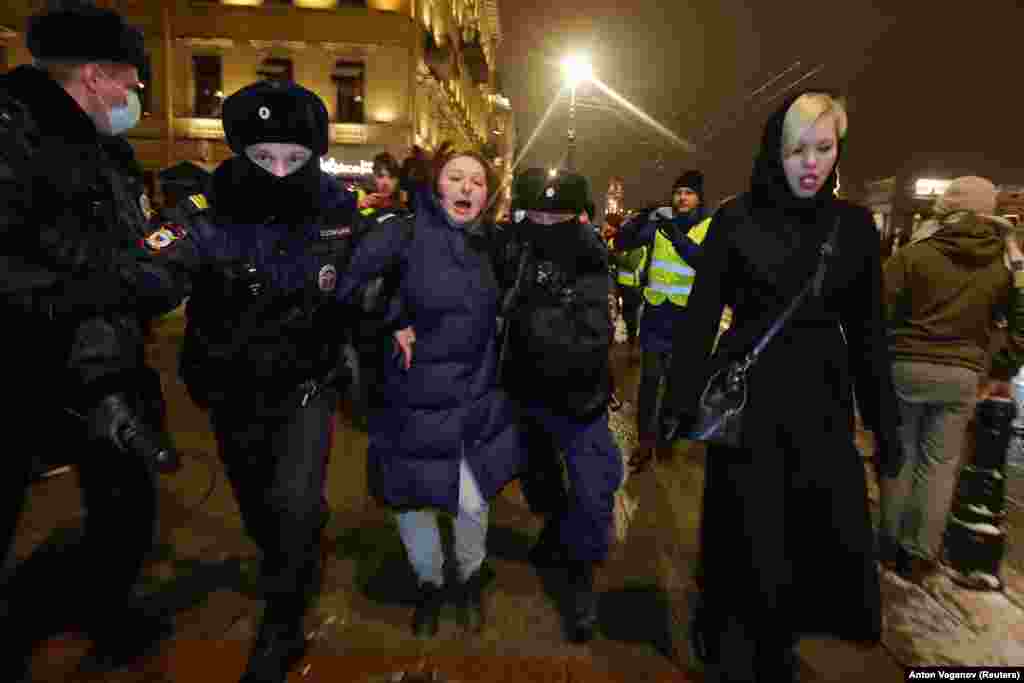
A woman is detained in St. Petersburg on February 2.
17/18 A woman is detained in St. Petersburg on February 2.
Thousands of Russians took to the streets to protest the sentencing of opposition leader Aleksei Navalny to a prison term of nearly three years on February 2. Russian security forces cracked down hard, detaining more than 1,400 of them, according to independent monitoring group OVD-Info.
Detainees are taken away in Moscow.
18/18 Detainees are taken away in Moscow.
Thousands of Russians took to the streets to protest the sentencing of opposition leader Aleksei Navalny to a prison term of nearly three years on February 2. Russian security forces cracked down hard, detaining more than 1,400 of them, according to independent monitoring group OVD-Info.
Previous slide
Next slide

Romney described the Navalny trial as a "sham" and said that "strong leaders do not have to jail their adversaries to maintain power."

The senator from Utah said the United States must hold Putin's government accountable for its "shameless attempt to silence the voice of the Russian people fighting against corruption and for freedom and truth."

Their bill would block any U.S. assets the perpetrators have, prevent them from doing business with U.S. persons, and stop them from receiving a U.S. visa.

While viewed as an important political statement, analysts say the sanctions against individual officials will have little to no impact on Russia.

In recent years, as relations with the West worsened, Russia passed laws banning some officials, including members of the security services, from owning foreign assets -- such as property or bank accounts -- to prevent them from being compromised by such sanctions.

However, as Moscow steps up what officials call "malign activities," pressure is growing to impose tougher penalties, such as imposing sanctions on Kremlin-friendly oligarchs, government debt, banks, and banning the sale of a wider range of U.S. technology to the country, all of which could have a more noticeable impact on the Russian economy.

But Biden made clear he wouldn’t stick with his predecessor’s policy of failing to speak out publicly on malign Russian actions and imposing costs immediately.

“The days of the United States rolling over in the face of Russia's aggressive actions -- interfering with our elections, cyber attacks, poisoning its citizens -- are over,” he said.

With reporting by Reuters
  • 16x9 Image

    RFE/RL

    RFE/RL journalists report the news in 24 languages in 18 countries where a free press is banned by the government or not fully established. We provide what many people cannot get locally: uncensored news, responsible discussion, and open debate.

This item is part of
XS
SM
MD
LG