In its two decades of existence, "Novaya gazeta" has often come under intense pressure as a result of its steadfast commitment to investigative reporting.
Few Russian newspapers have faced as much adversity as “Novaya gazeta.”
Best known for its hard-hitting investigative reports on government corruption and rights abuses in the North Caucasus, the newspaper has come under intense government pressure in its two decades of existence.
It has battled several high-profile lawsuits, suffered serious financial woes in the mid-1990s, and its website has been hit by a series of crippling cyberattacks.
In a country rated as one of the world’s most-dangerous places for journalists, its reporting has earned international accolades but has also put its reporters in considerable danger.
No publication in Russia has had as many of its journalists killed as “Novaya gazeta,” including its star reporter Anna Politkovskaya.
At times, the opposition-leaning newspaper has seemed on the brink of closure. But two decades after its creation, “Novaya gazeta” is still a fixture on the Russian media landscape.
“The people working here uphold certain political, moral, and human values,” says the paper’s deputy editor, Vitaly Yaroshevsky. “This is what has enabled us to survive even in the toughest of times. The newspaper also learned to defend itself and its people. Despite the terrible losses, the killing of six of our colleagues, we learned to counter the authorities, unfair courts, and threats.”
PHOTO GALLERY: 'Novaya Gazeta' -- Still Going Strong After 20 Years
Working For Novaya Gazeta Puts Its Journalists In The Crosshairs
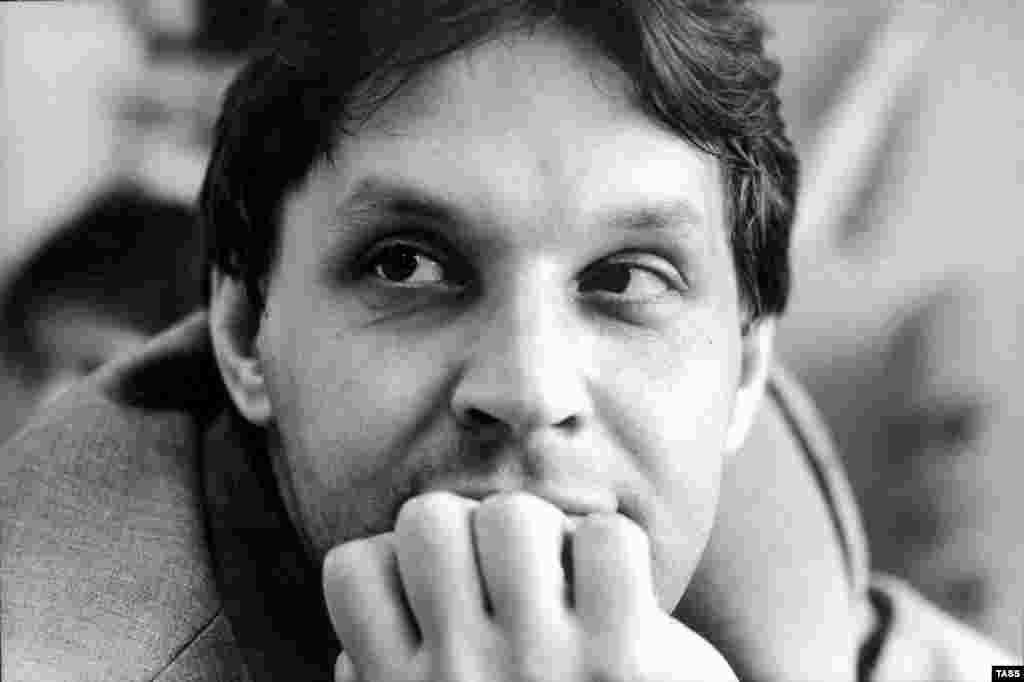
1/10In July 2000, Novaya gazeta editor Igor Domnikov died months after being attacked in the entrance to his Moscow apartment building by an assailant who struck him on the head repeatedly with a heavy object.
Domnikov covered culture and education issues. His colleagues say his killer may have mistaken him for another Novaya gazeta reporter who had been threatened after investigating corruption in the oil industry. The two reporters lived in the same building.
Russia’s Novaya gazeta, best known for its investigative reports on corruption and rights abuses, was founded in 1993. In a country ranked as one of the world’s most dangerous places for journalists, its reporting has earned international accolades but has also put its reporters in considerable danger. Six of the publication's journalists or contributors have been killed since 2000 and others attacked.
Show moreShow less
2/10Novaya gazeta editor Yuri Shchekochikhin died in 2003 of a mysterious illness that was widely suspected to be the result of radioactive poisoning. He had been investigating the possible involvement of the Russian security services in a series of apartment bombings in Moscow and other cities in 1999.
Russia’s Novaya gazeta, best known for its investigative reports on corruption and rights abuses, was founded in 1993. In a country ranked as one of the world’s most dangerous places for journalists, its reporting has earned international accolades but has also put its reporters in considerable danger. Six of the publication's journalists or contributors have been killed since 2000 and others attacked.
Show moreShow less
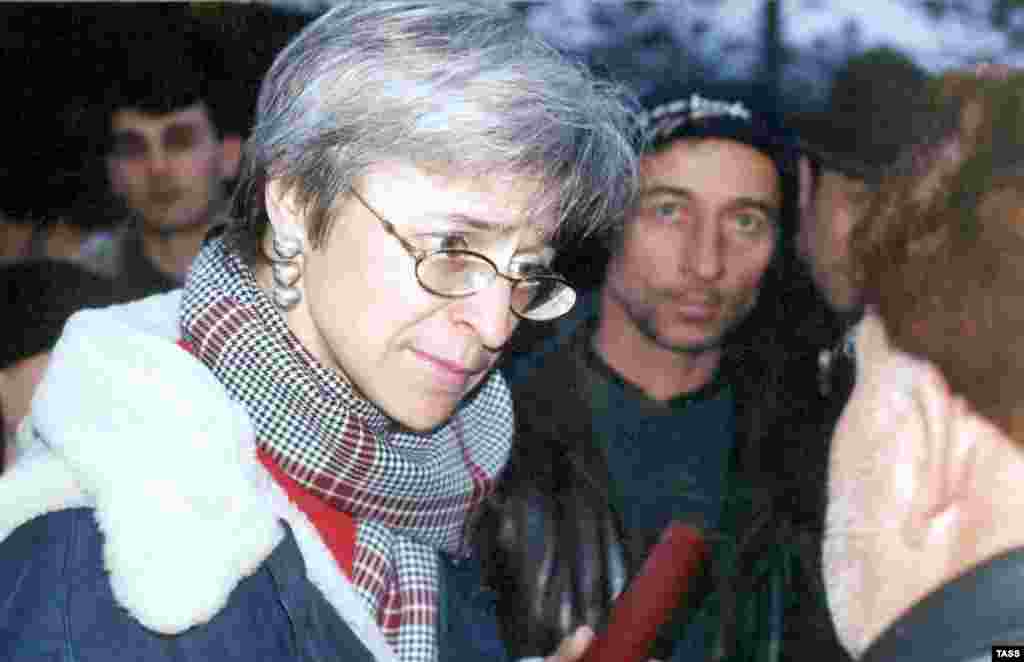
3/10Novaya gazeta investigative reporter Anna Politkovskaya was shot dead in the elevator of her apartment block in central Moscow on October 7, 2006. She was a critic of Russian President Vladimir Putin whose reporting exposed high-level corruption in Russia and rights abuses in the North Caucasus republic of Chechnya. (ITAR-TASS)
Russia’s Novaya gazeta, best known for its investigative reports on corruption and rights abuses, was founded in 1993. In a country ranked as one of the world’s most dangerous places for journalists, its reporting has earned international accolades but has also put its reporters in considerable danger. Six of the publication's journalists or contributors have been killed since 2000 and others attacked.
Show moreShow less
4/10Novaya gazeta reporter Anastasia Baburova (left) and Russian human rights lawyer Stanislav Markelov were both shot and killed in January 2009 as they left a news conference in Moscow.
Markelov and Baburova had exposed some of the most notorious cases of abuses by the Russian Army in Chechnya.
Russia’s Novaya gazeta, best known for its investigative reports on corruption and rights abuses, was founded in 1993. In a country ranked as one of the world’s most dangerous places for journalists, its reporting has earned international accolades but has also put its reporters in considerable danger. Six of the publication's journalists or contributors have been killed since 2000 and others attacked.
Show moreShow less
5/10Award-winning journalist and human rights activist Natalia Estemirova, a frequent contributor to Novaya gazeta, was abducted in Grozny in July 2009 and found shot dead hours later. At the time, she was said to have been working on "extremely sensitive" cases of human rights abuses in Chechnya.
Russia’s Novaya gazeta, best known for its investigative reports on corruption and rights abuses, was founded in 1993. In a country ranked as one of the world’s most dangerous places for journalists, its reporting has earned international accolades but has also put its reporters in considerable danger. Six of the publication's journalists or contributors have been killed since 2000 and others attacked.
Show moreShow less
6/10The home and car of correspondent Yulia Latynina were sprinkled with unknown chemicals in 2017. That same year, the newspaper received a letter with an unknown white powder inside, which later was shown to be harmless.
Russia’s Novaya gazeta, best known for its investigative reports on corruption and rights abuses, was founded in 1993. In a country ranked as one of the world’s most dangerous places for journalists, its reporting has earned international accolades but has also put its reporters in considerable danger. Six of the publication's journalists or contributors have been killed since 2000 and others attacked.
Show moreShow less
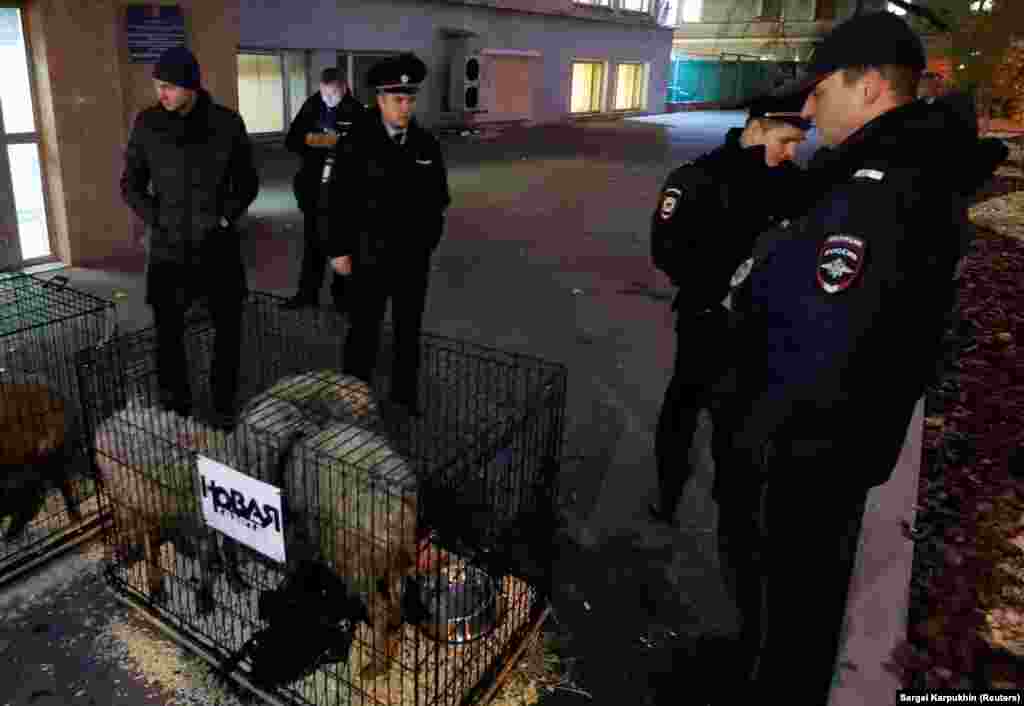
7/10In October 2018, unknown people brought three cages with sheep wearing vests with the inscription PRESS on them near the offices of Novaya gazeta in Moscow.
Russia’s Novaya gazeta, best known for its investigative reports on corruption and rights abuses, was founded in 1993. In a country ranked as one of the world’s most dangerous places for journalists, its reporting has earned international accolades but has also put its reporters in considerable danger. Six of the publication's journalists or contributors have been killed since 2000 and others attacked.
Show moreShow less
8/10A sheep's head was also found near the office with a note threatening all reporters at the newspaper.
Russia’s Novaya gazeta, best known for its investigative reports on corruption and rights abuses, was founded in 1993. In a country ranked as one of the world’s most dangerous places for journalists, its reporting has earned international accolades but has also put its reporters in considerable danger. Six of the publication's journalists or contributors have been killed since 2000 and others attacked.
Show moreShow less
9/10In October 2018, unknown individuals threw a funeral wreath in front of the newspaper’s building with notes threatening correspondent Denis Korotkov. A funeral wreath was also sent to the journalist's home with a note calling him “a traitor."
Korotkov had just published an article quoting a purported security aide of Kremlin friendly Russian businessman Yevgeny Prigozhin as saying that Prigozhin was involved in several attacks against his opponents, including at least one killing.
Unknown persons also left a basket containing a severed ram's head and red carnations at the newspaper’s office with a note, saying, "To Novaya gazeta's chief editor with greetings to you and Korotkov."
Russia’s Novaya gazeta, best known for its investigative reports on corruption and rights abuses, was founded in 1993. In a country ranked as one of the world’s most dangerous places for journalists, its reporting has earned international accolades but has also put its reporters in considerable danger. Six of the publication's journalists or contributors have been killed since 2000 and others attacked.
Show moreShow less
10/10A security guard stands at the entrance to the Novaya gazeta offices in Moscow on March 15, 2021. The newspaper said a security camera had recorded an unknown person spraying the office entrance with an unknown liquid. A strong chemical odor swept through the building similar to that smelled in the attack against Latynina.
Russia’s Novaya gazeta, best known for its investigative reports on corruption and rights abuses, was founded in 1993. In a country ranked as one of the world’s most dangerous places for journalists, its reporting has earned international accolades but has also put its reporters in considerable danger. Six of the publication's journalists or contributors have been killed since 2000 and others attacked.
Show moreShow less
Previous slide
Next slide
The newspaper was launched on April 1, 1993 by a group of journalists who left the daily “Komsomolskaya pravda” in protest of its Kremlin-friendly editorial line.
Former Soviet President Mikhail Gorbachev used some of the money he received for his 1990 Nobel Peace Prize to help set up the paper and purchase its first computers.
He currently owns a 10-percent share in the newspaper. Another 39 percent of shares belong to businessman Aleksandr Lebedev, with the remaining 51 percent controlled by the newspaper’s staff.
‘Less Boisterous, More Thorough’
As Kremlin pressure on the media intensified with Vladimir Putin’s rise to power, “Novaya gazeta” consolidated its reputation as one of Russia’s few truly independent media outlets.
According to Yaroshevsky, the newspaper has raised its profile further in recent years.
“I would say it has become less boisterous,” he says. “It is more thorough, more restrained, more analytical, deeper than it used to be. Talented, prominent authors have joined the newspaper. And, of course, it has become skilled at using new technologies. We now have a strong website that is growing by the day. We also now have new genres such as video reports.”
“Novaya gazeta” has focused much of its efforts on uncovering instances of rights violations or government corruption and abuse of power.
It has also conducted in-depth investigations into the biggest scandals to rock Russia over the past two decades, including the bombing of Moscow apartment blocks in 1999, which sparked the second war in Chechnya, the Dubrovka and the Beslan hostage tragedies, as well as the rape and murder of a Chechen girl by Russian Colonel Yuri Budanov.
Unsurprisingly, its reporting has drawn the ire of authorities and resulted in a handful of lawsuits.
Journalists and freelance contributors have also been the subject of countless death threats.
Several have been assaulted and six have been killed -- Politkovskaya, who was gunned down in 2006; Yuri Shchekochikhin, who died from a mysterious illness widely suspected to be the result of radioactive poisoning; Sveta Olyuk, killed in 2006; and freelance journalist Anastasia Baburova, who was shot dead in 2009 together with human rights lawyer Stanislav Markelov as they left a news conference in Moscow; and rights campaigner Natalya Estemirova, kidnapped in Chechnya and killed in 2009.
Nonetheless, Yaroshevsky is still confident about “Novaya gazeta's" future.
“There are many threats, many risks, little money,” he says. “But this is a rather standard situation for Russian newspapers that refuse to bow down. I consider our future with serenity because our newspaper has developed an extraordinary knack for survival. Besides, things have been a lot worse. The situation is not very good, of course, but it’s not catastrophic either.”