

Attack On Kharkiv Town Injures More Than 40 As Russia Accuses Ukraine Of Drone Attack Near Moscow
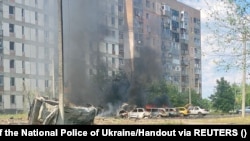
Cars burn at the site of a Russian military strike in the town of Pervomayskiy, Kharkiv region, Ukraine, on July 4.
More than 40 people, including 12 children, were injured on July 4 in a Russian strike on the town of Pervomayskiy in the eastern Kharkiv region, Ukrainian officials said, as the Ukrainian military reported continued heavy fighting in the Donetsk region.
Kharkiv regional Governor Oleh Synyehubov said on Telegram that the shelling took place around 1:35 p.m. local time, setting several cars on fire and blowing out the windows of residential buildings.
Synyehubov said 43 people were injured in the missile attack. The Ukrainian Interior Ministry said the number of injured was 41, including 12 children.
A 10-month-old boy and a 1-year-old child are among the injured, Synyehubov said.
The Interior Ministry said the 10-month-old was admitted to the intensive-care unit and his condition has stabilized. The other children suffered minor shrapnel injuries, bruises, and scratches, and all have been medically treated, the ministry said.
The strike hit a parking lot outside the residential building in the town of Pervomayskiy, which is relatively far from current hot spots in the Donbas region.
Eight high-rise buildings and eight cars were damaged as a result of the rocket attack, the Interior Ministry said.
Andriy Yermak, President Volodymyr Zelenskiy's chief of staff, also commented on the attack, saying the Russians fired "a high-explosive shell."
Both Synyehubov and Yermak posted photos on Telegram of what they said showed some of the destruction caused, including images of burned cars lying on their sides or upside down, apparently from the impact.
Elsewhere in Ukraine, General Oleksandr Tarnavskiy, the head of Ukraine's southern command, said Ukrainian troops knocked out the enemy from a number of positions.
"The defense forces are advancing in the [southern] direction," Tarnavskiy said on Telegram. "Units of missile troops and artillery performed 1,283 fire missions during the day."
He said the fighting took out three companies of Russian troops -- killed or wounded -- and equipment, including two tanks and anti-aircraft missiles.
The claims could not be independently verified.
The General Staff of Ukraine's military early on July 4 reported heavy fighting in the Bakhmut, Lyman, Avdiyivka, and Maryinka areas in Donetsk. It said there had been a total of 40 combat clashes during the previous 24 hours.
WATCH: RFE/RL's Maryan Kushnir spent a day with members of Ukraine's 47th Separate Mechanized Brigade on the front line in the Zaporizhzhya region.
There was also heavy fighting in the Berdyansk and Melitopol directions, where Ukrainian forces were advancing, Ukraine's military leadership said.
The Ukrainian military also said that Russian forces during the day on July 3 carried out 56 air strikes and 77 attacks from rocket salvo systems, adding that the attacks had killed and injured an unspecified number of civilians.
The report came as Russia accused Ukraine of launching a drone attack on Moscow and the surrounding areas that resulted in the temporary restriction of landings and takeoffs at the capital’s Vnukovo airport.
The Russian Defense Ministry said it repelled an attack from five Ukrainian drones in Moscow and a nearby region.
Air defenses destroyed four of the drones, and the fifth was intercepted and fell, the ministry said in a statement.
There were no casualties or damage as result of the "terrorist attack," the ministry said.
The attack is the latest in a series of recent drone attacks, including one on the Kremlin in May and others on Russian towns near the border with Ukraine.
The Russian Foreign Ministry said such attacks would not be possible without the help provided to Kyiv by the United States and NATO allies.
Russian Roulette: Elderly Residents Brave Shelling And Death In Ukraine's East
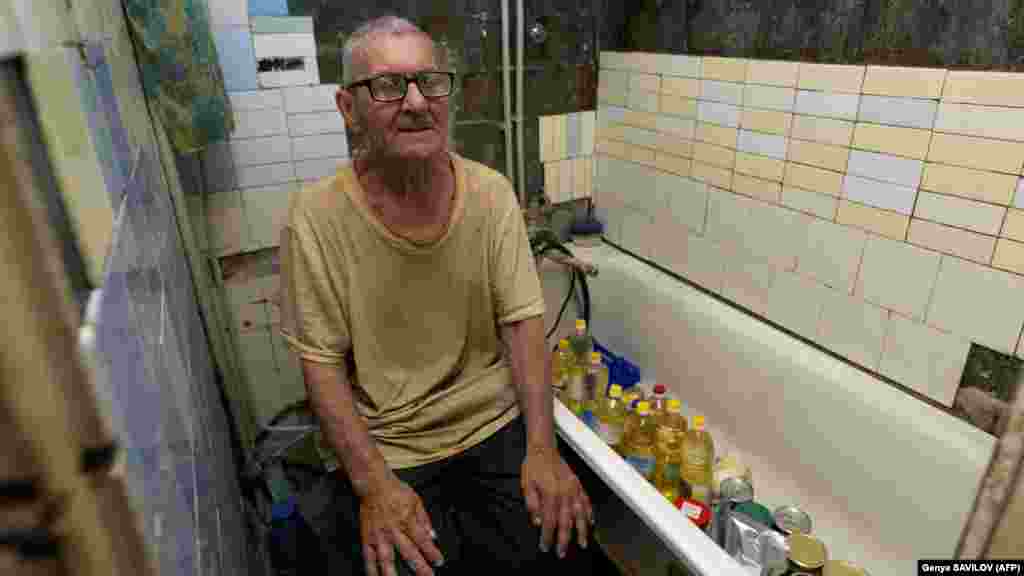
1/10Viktor Grozdov, 77, sits in the bathroom of his damaged home on June 28 in the eastern Ukrainian town of Avdiyivka. The bathroom has become his refuge when the artillery shells rain down.
A suburb of the city of Donetsk, Avdiyivka is shelled up to 30 times a day. "In the last four months or so, there hasn't been a day without aerial or rocket strikes," the head of the military administration, Vitaliy Barabash, told AFP.
In the eastern Ukrainian town of Avdiyivka, elderly residents risk serious injury or death to stay in their homes. Russian-backed separatists began shelling the city in 2014, and it continues to be targeted amid Moscow's full-scale invasion. The elderly make up nearly 60 percent of those who remain.
2/10Despite having no intact buildings or functioning utilities, the frontline town of Avdiyivka is home to 1,719 residents. "Around 60 percent are people aged 65 and over," Barabash said.
In the eastern Ukrainian town of Avdiyivka, elderly residents risk serious injury or death to stay in their homes. Russian-backed separatists began shelling the city in 2014, and it continues to be targeted amid Moscow's full-scale invasion. The elderly make up nearly 60 percent of those who remain.
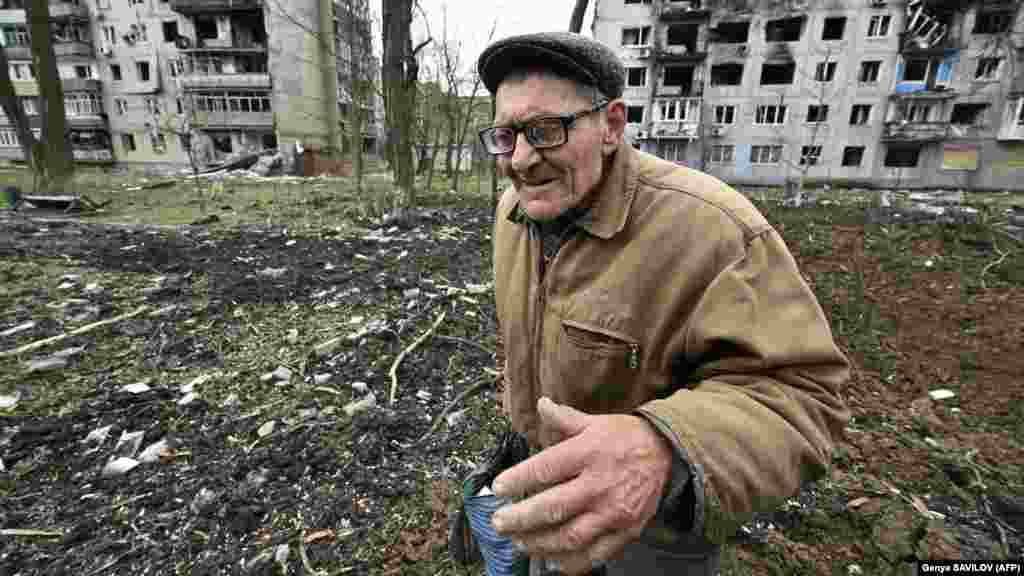
3/10Grozdov is one of the residents who chose to remain in the burnt-out shell of the former town. AFP journalists first met him on April 4 (pictured) after they found him lying at the bottom of a crater. With his poor eyesight, he had fallen in while gathering food that had spilled out of his bag and was unable to climb out.
In the eastern Ukrainian town of Avdiyivka, elderly residents risk serious injury or death to stay in their homes. Russian-backed separatists began shelling the city in 2014, and it continues to be targeted amid Moscow's full-scale invasion. The elderly make up nearly 60 percent of those who remain.
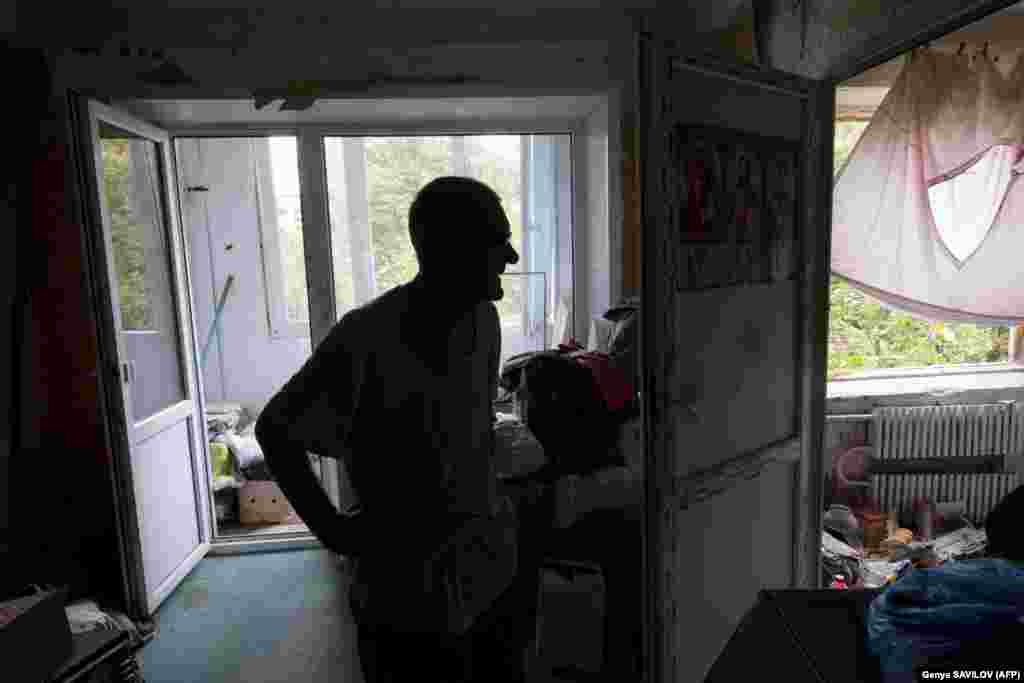
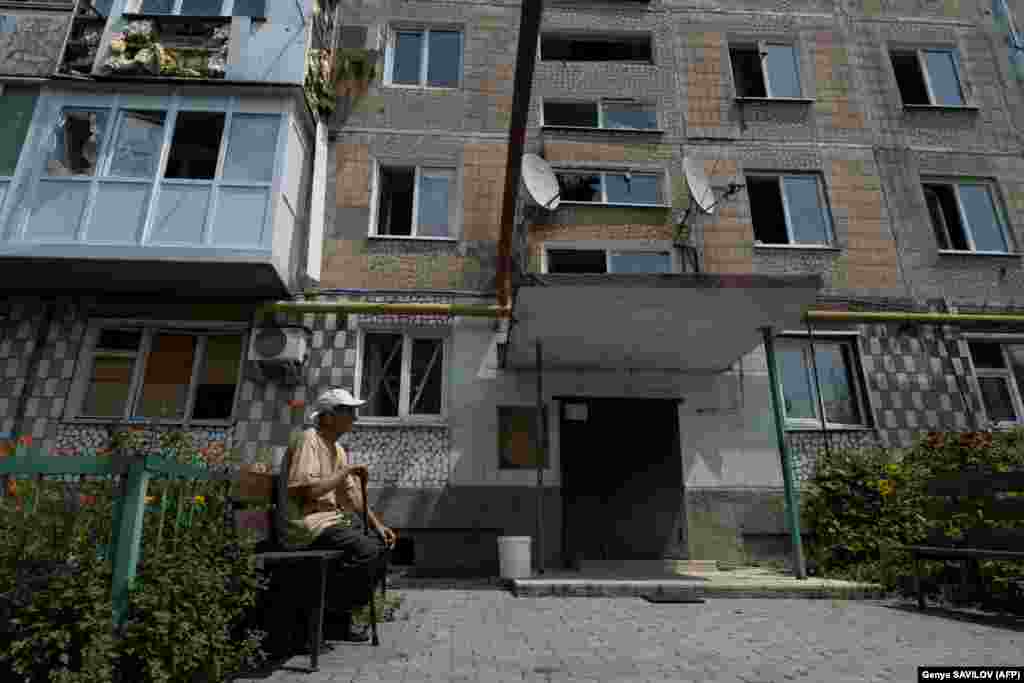
4/10Journalists went back to Avdiyivka to check in on the pensioner. They found him living in his shattered apartment without windows. "My soul is at home; it's not trying to leave. I'm not anxious; I've become calm," Grozdov said.
In the eastern Ukrainian town of Avdiyivka, elderly residents risk serious injury or death to stay in their homes. Russian-backed separatists began shelling the city in 2014, and it continues to be targeted amid Moscow's full-scale invasion. The elderly make up nearly 60 percent of those who remain.
5/10With no electricity or water, Grozdov relies on a camping stove and supplies provided by volunteer to survive. He refuses to leave his home and the town where his wife and son are buried.
In the eastern Ukrainian town of Avdiyivka, elderly residents risk serious injury or death to stay in their homes. Russian-backed separatists began shelling the city in 2014, and it continues to be targeted amid Moscow's full-scale invasion. The elderly make up nearly 60 percent of those who remain.
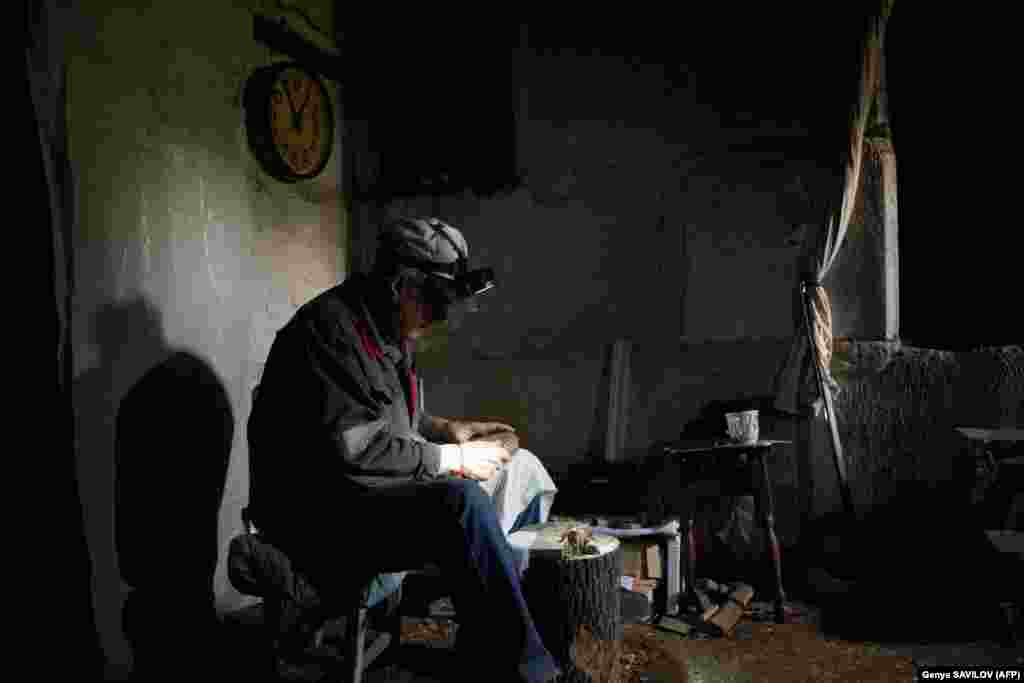
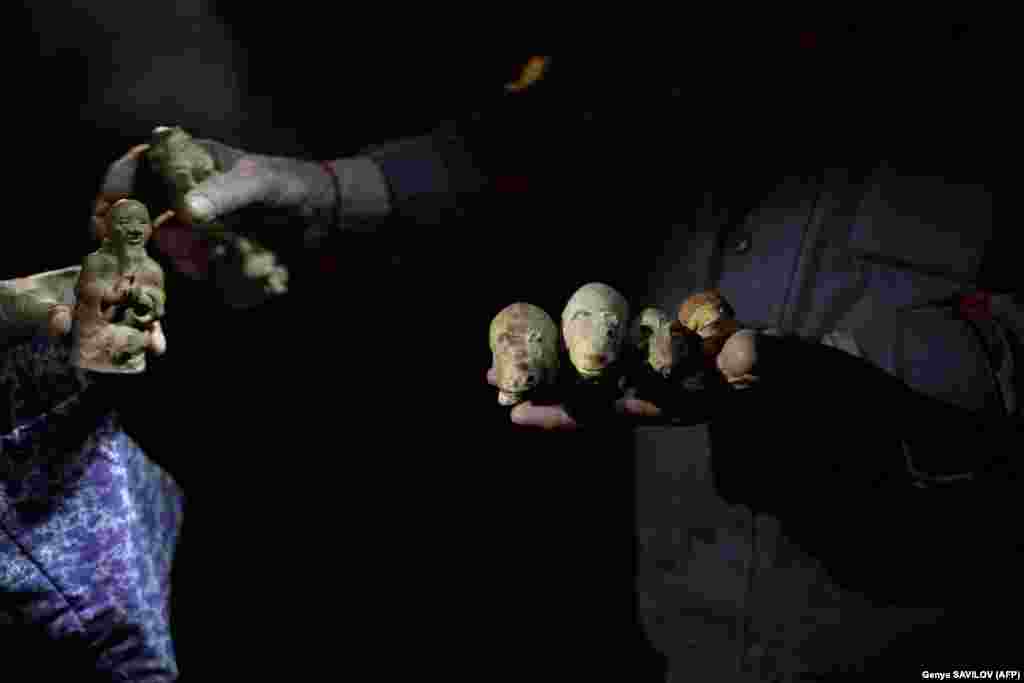
6/10Grozdov's neighbor, 63-year-old Vitaliy Zemin, sits in the cellar, where he lives with his wife. He spends much of his time carving wooden animals while wearing a head torch.
In the eastern Ukrainian town of Avdiyivka, elderly residents risk serious injury or death to stay in their homes. Russian-backed separatists began shelling the city in 2014, and it continues to be targeted amid Moscow's full-scale invasion. The elderly make up nearly 60 percent of those who remain.
7/10"It distracts you from the thoughts a person has all the time: about people, about Ukraine, about why there isn't any peace," Zemin said.
In the eastern Ukrainian town of Avdiyivka, elderly residents risk serious injury or death to stay in their homes. Russian-backed separatists began shelling the city in 2014, and it continues to be targeted amid Moscow's full-scale invasion. The elderly make up nearly 60 percent of those who remain.
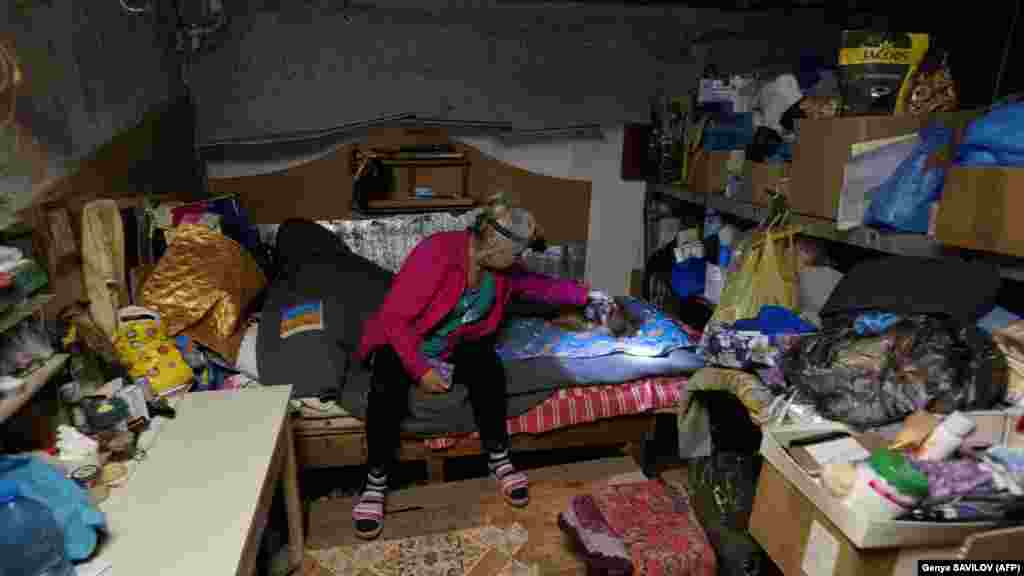
8/10A woman who did not wish to provide her name pets a dog in the cold, dark cellar where she lives.
In the eastern Ukrainian town of Avdiyivka, elderly residents risk serious injury or death to stay in their homes. Russian-backed separatists began shelling the city in 2014, and it continues to be targeted amid Moscow's full-scale invasion. The elderly make up nearly 60 percent of those who remain.
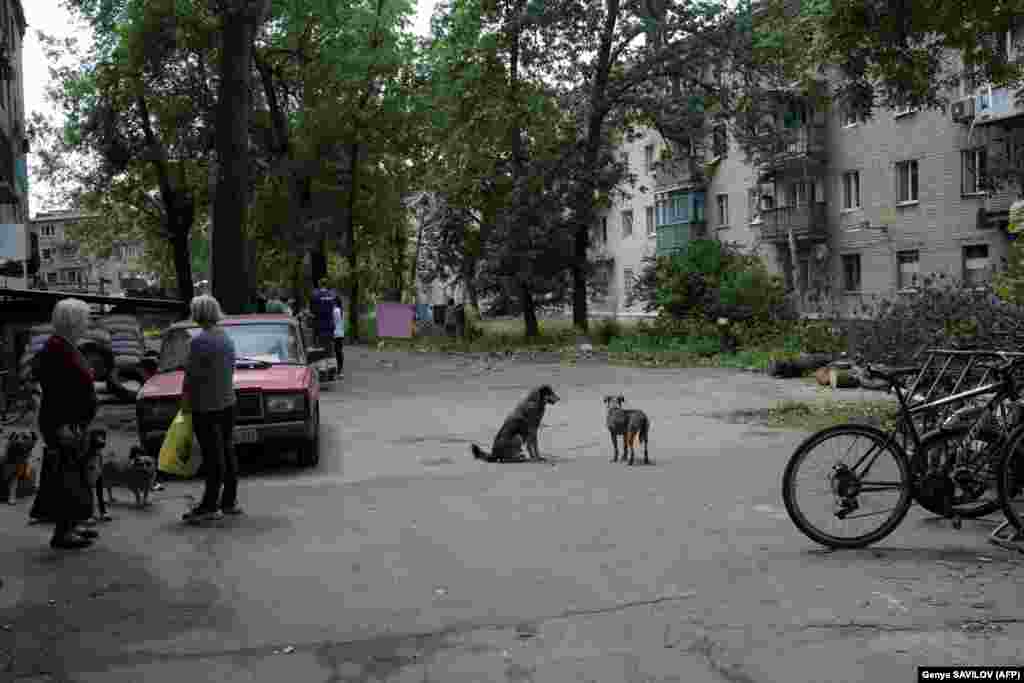
9/10Local residents gather next to a shelter run by volunteers where they receive food and hot drinks. The can also use the Internet, watch TV, and charge their devices. But the shelter's water supply, which was opened in March, has been fouled up with mud, meaning the washing machines and showers are no longer usable.
In the eastern Ukrainian town of Avdiyivka, elderly residents risk serious injury or death to stay in their homes. Russian-backed separatists began shelling the city in 2014, and it continues to be targeted amid Moscow's full-scale invasion. The elderly make up nearly 60 percent of those who remain.
10/10Despite the hardships, Grozdov refuses to leave his home. "Whatever happens, I won't go anywhere now," he said.
In the eastern Ukrainian town of Avdiyivka, elderly residents risk serious injury or death to stay in their homes. Russian-backed separatists began shelling the city in 2014, and it continues to be targeted amid Moscow's full-scale invasion. The elderly make up nearly 60 percent of those who remain.
Previous slide
Next slide
The spokesman of Ukraine's Main Intelligence Directorate (HUR), Andriy Yusov, commented on the drone attack on Moscow.
"If we talk about Moscow, we traditionally do not comment on it. But it happens. If the Russian 45th brigade of special forces is engaged in sabotage in the Ukrainian rear, then this means that something can fly to Moscow," he said on national television.
The drone attack was the first known assault on the Russian capital since an abortive mutiny launched 11 days ago by mercenary chief Yevgeny Prigozhin, who released an audio message on Telegram on July 3 expressing gratitude to those who supported him and his group in their short-lived mutiny.
Prigozhin said he ordered his group to stop its advance in order to prevent a civil war. He and hundreds of his armed Wagner fighters led a brief uprising on June 24 that captured the southern Russian city of Rostov-on-Don and threatened to carry out a march against Moscow.
The crisis was defused after Prigozhin accepted a deal that would allow him to go into exile in Belarus and give his men the choice of joining him there or be integrated into the Russian military.

RFE/RL's Ukrainian Service has seen its audience grow significantly since Russia's full-scale invasion in February 2022 and is among the most cited media outlets in the country. Its bold, in-depth reporting from the front lines has won many accolades and awards. Its comprehensive coverage also includes award-winning reporting by the Donbas.Realities and Crimea.Realities projects and the Schemes investigative unit.