


WATCH: Trump, In VOA Interview, Says Kim 'Loves His People'
U.S. President Donald Trump has said that North Korean leader Kim Jong Un is committed to the complete denuclearization of the Korean Peninsula, promising swift progress to curb a growing threat while warning Pyongyang that sanctions will only be lifted "when we know the nukes are no longer a factor."
Trump, speaking after a landmark summit with Kim on June 12 in Singapore, said that both leaders were "prepared to start a new history and write a new chapter between our nations."
"[Kim] reaffirmed his unwavering commitment to the complete denuclearization of the Korean Peninsula," Trump told a news conference after the summit -- the first meeting between a sitting U.S. president and a leader of isolated, tightly controlled North Korea.
Trump said that the denuclearization process would start "very quickly" and that Kim had told him a North Korean missile testing site "is going to be destroyed very soon." But neither Trump nor a joint statement he signed with Kim contained dates or details, prompting observers to question whether the unprecedented talks will be followed by tangible progress in curbing Pyongyang's nuclear weapons capabilities.
The United States and North Korea have interpreted the term "denuclearization" in different ways in the past, with Washington's definition referring to ridding Pyongyang of its nuclear arsenal and North Korea framing it as an end to the perceived U.S. ability to strike it with nuclear weapons from afar and to the protective U.S. "nuclear umbrella" over South Korea and Japan.
In an apparent concession, Trump said he would be "stopping the war games" together with South Korea, apparently referring to joint military exercises that have been criticized by North Korea, Russia, and China. Trump called the drills "provocative and inappropriate," adding that he ultimately wants to "bring our soldiers home" -- a reference to some 25,000 U.S. troops stationed in South Korea.
But in an interview with Voice of America, Trump indicated the troops will remain for the foreseeable future and said he did not discuss the issue with Kim.
"Yeah, they are going to stay. We didn't even discuss that, that wasn't discussed," Trump told VOA. He added, "We are going to get out of the war games that cost so much money," saying that "we won't do that [continue with military exercises] as long as we are negotiating in good faith."
South Korea's presidential office said it would seek clarification of "the precise meaning or intentions" of Trump's remarks on the exercises and troops.
PHOTO GALLERY: North Korea's Road To The Nuclear Club (CLICK TO VIEW)
North Korea's Road To The Nuclear Club
1/20Open hostilities between the United States and North Korea date back to 1950, when war erupted on the Korean peninsula against the backdrop of a growing Cold War between the United States and the Soviet Union, which along with China came to North Korea's aid.
U.S. President Donald Trump and North Korean leader Kim Jong Un were convening in Singapore for a historic summit to discuss security disputes, Pyongyang's nuclear-weapons program, and the six-decade-old division of the Korean Peninsula. So how did we get here?
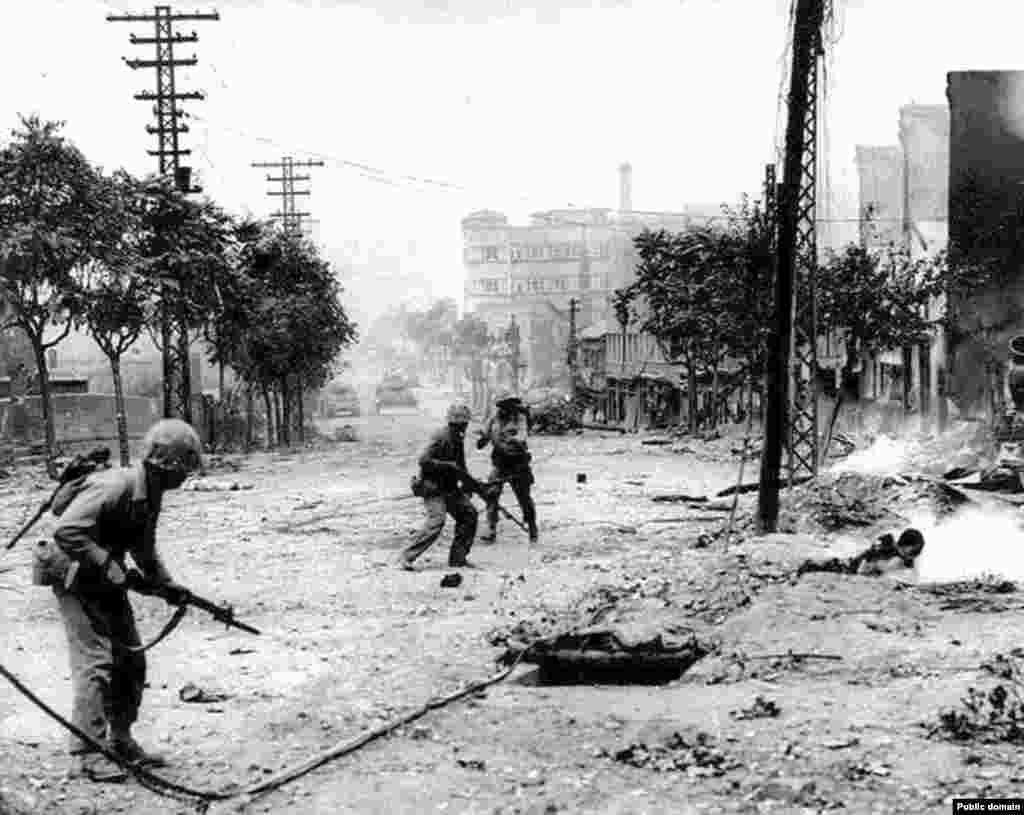
2/20U.S. marines during a street-battle in Seoul in 1950. The conflict began after communist North Korea invaded the south, and U.S. forces led a UN-backed effort to support South Korea.
U.S. President Donald Trump and North Korean leader Kim Jong Un were convening in Singapore for a historic summit to discuss security disputes, Pyongyang's nuclear-weapons program, and the six-decade-old division of the Korean Peninsula. So how did we get here?
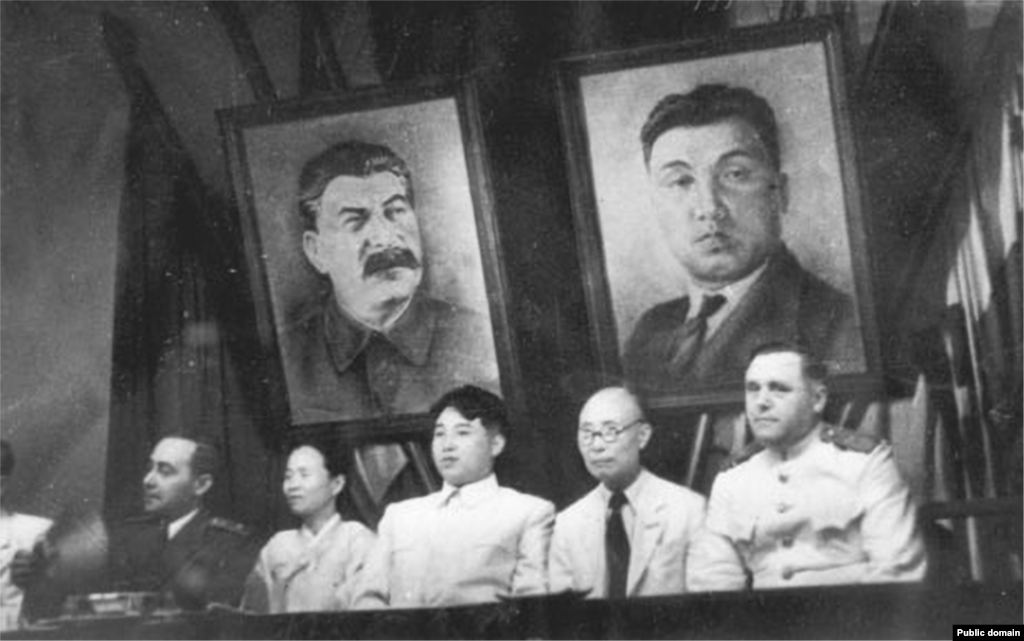
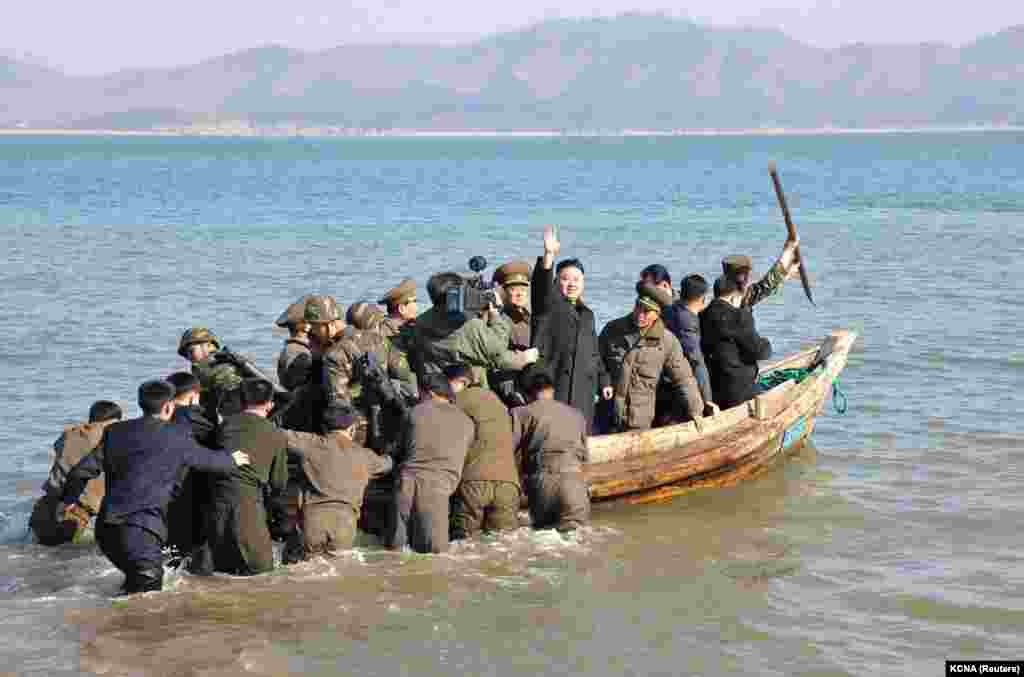
3/20When the Korean War ended in a stalemate and with Soviet-backed Kim Il Sung (center) in charge, the “Hermit Kingdom” pursued a policy of “all-fortressization,” prioritizing military development over popular well-being.
U.S. President Donald Trump and North Korean leader Kim Jong Un were convening in Singapore for a historic summit to discuss security disputes, Pyongyang's nuclear-weapons program, and the six-decade-old division of the Korean Peninsula. So how did we get here?
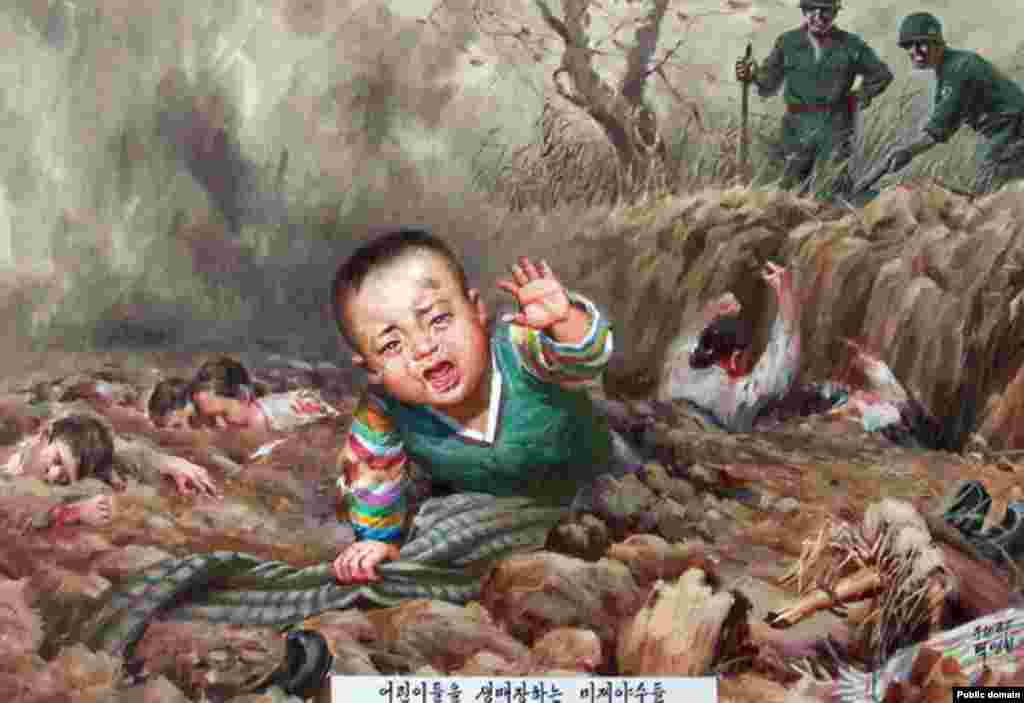
4/20The North Korean regime justified the race toward military might by portraying (through propaganda like this painting) a brutish America as a lurking threat.
U.S. President Donald Trump and North Korean leader Kim Jong Un were convening in Singapore for a historic summit to discuss security disputes, Pyongyang's nuclear-weapons program, and the six-decade-old division of the Korean Peninsula. So how did we get here?
5/20After the death of Kim Il Sung in 1994, his son Kim Jong Il (pictured, right) took over a regime that was a menace mostly to its own people. But the situation was about to become more dangerous.
U.S. President Donald Trump and North Korean leader Kim Jong Un were convening in Singapore for a historic summit to discuss security disputes, Pyongyang's nuclear-weapons program, and the six-decade-old division of the Korean Peninsula. So how did we get here?
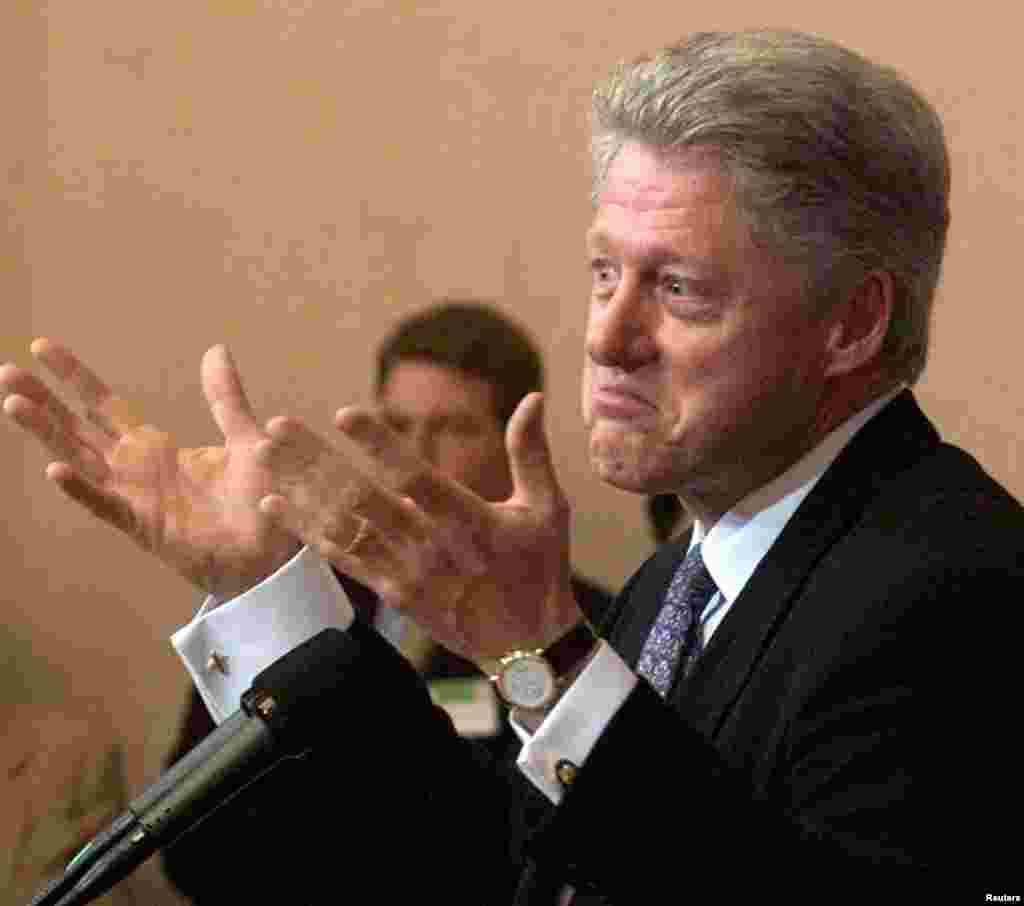
6/20U.S. President Bill Clinton reacts to a question after discussing reports that North Korea had developed a secret underground nuclear complex.
U.S. President Donald Trump and North Korean leader Kim Jong Un were convening in Singapore for a historic summit to discuss security disputes, Pyongyang's nuclear-weapons program, and the six-decade-old division of the Korean Peninsula. So how did we get here?
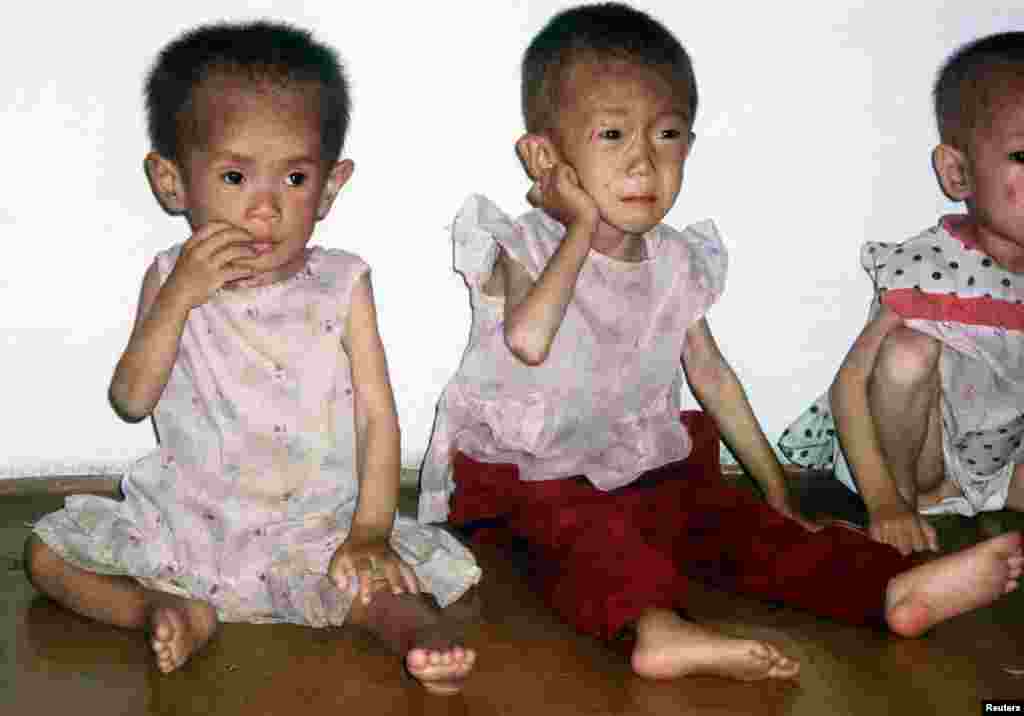
7/20Throughout the '90s, even as famine racked the country, North Korea’s secret, and vastly expensive, nuclear-weapons program was developing apace.
U.S. President Donald Trump and North Korean leader Kim Jong Un were convening in Singapore for a historic summit to discuss security disputes, Pyongyang's nuclear-weapons program, and the six-decade-old division of the Korean Peninsula. So how did we get here?
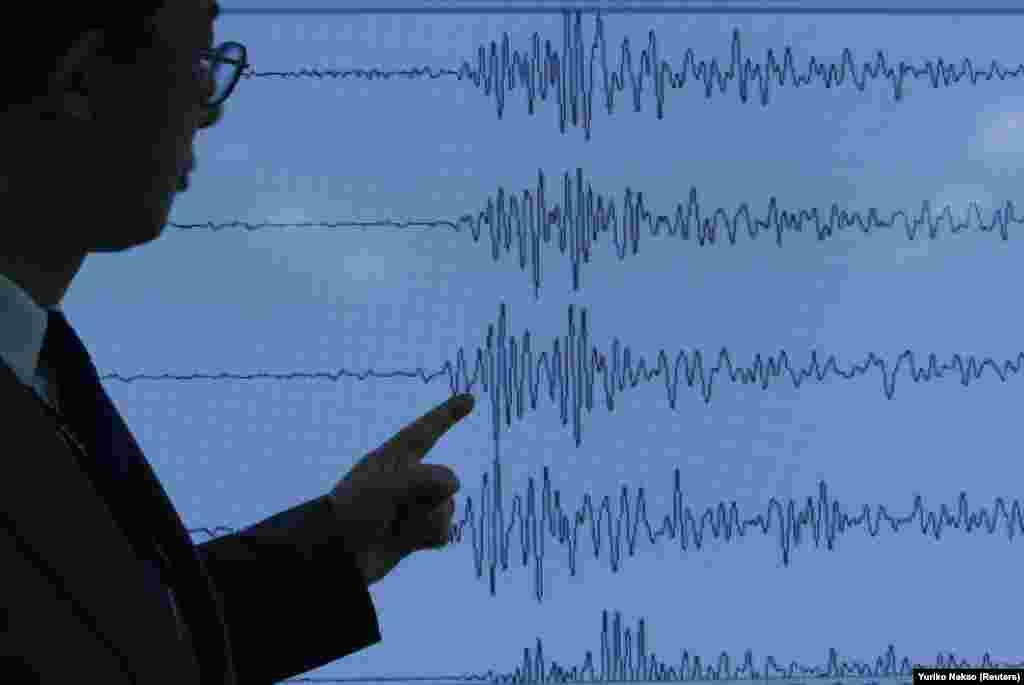
8/20Then, in 2006, North Korea gave China 20 minutes' warning before detonating its first underground nuclear weapon.
U.S. President Donald Trump and North Korean leader Kim Jong Un were convening in Singapore for a historic summit to discuss security disputes, Pyongyang's nuclear-weapons program, and the six-decade-old division of the Korean Peninsula. So how did we get here?
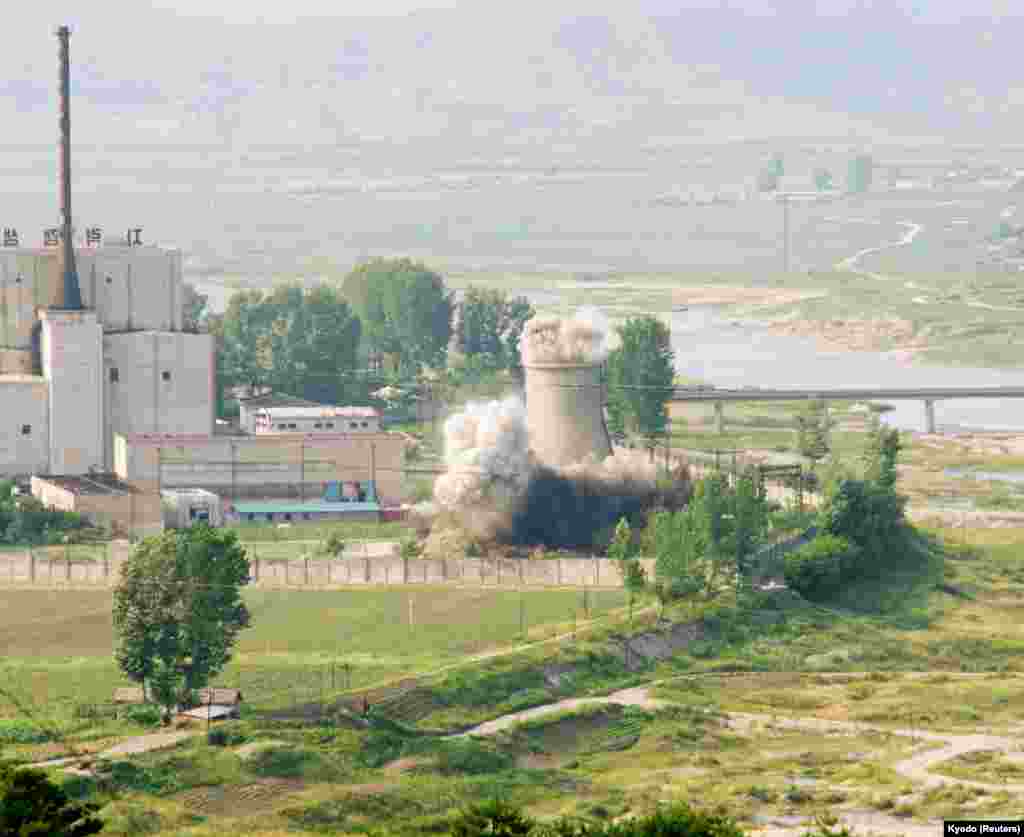
9/20Despite negotiating several acts of apparent “good faith,” like this demolition of a cooling tower at a plutonium-producing reactor in 2008, the international community seemed unable to stop North Korea’s development of nuclear weapons and the ballistic missiles needed to carry them.
U.S. President Donald Trump and North Korean leader Kim Jong Un were convening in Singapore for a historic summit to discuss security disputes, Pyongyang's nuclear-weapons program, and the six-decade-old division of the Korean Peninsula. So how did we get here?
11/20...but son and successor Kim Jong Un reportedly kept the communist country firmly on course for its goal of a long-range, nuclear-capable missile.
U.S. President Donald Trump and North Korean leader Kim Jong Un were convening in Singapore for a historic summit to discuss security disputes, Pyongyang's nuclear-weapons program, and the six-decade-old division of the Korean Peninsula. So how did we get here?
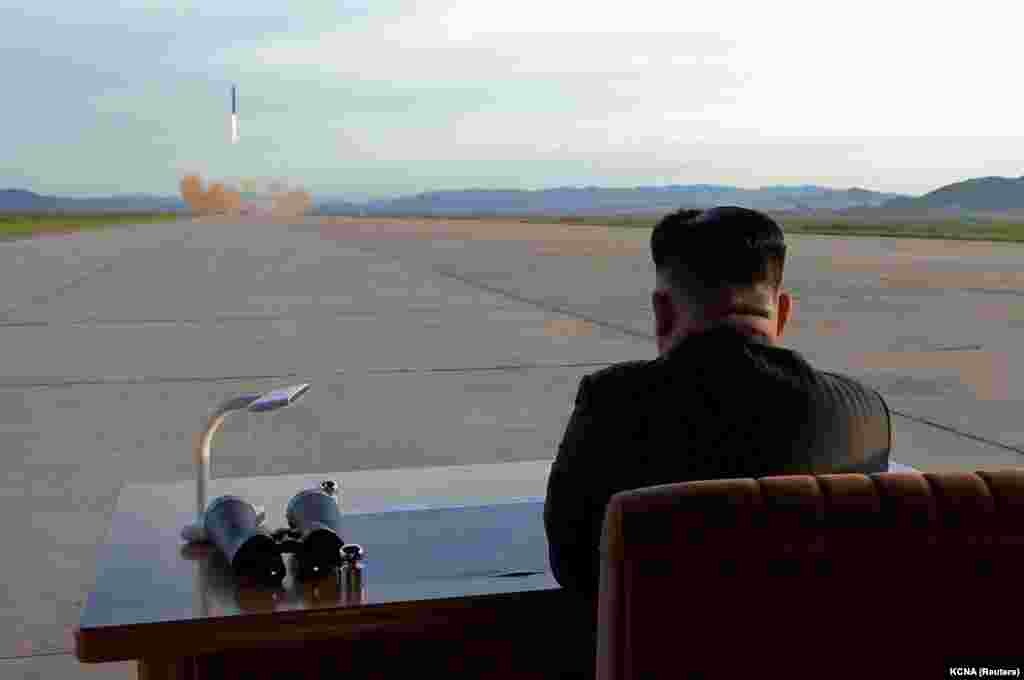
12/20In 2017, a flurry of successful missile tests sparked the ire of new U.S. President Donald Trump.
U.S. President Donald Trump and North Korean leader Kim Jong Un were convening in Singapore for a historic summit to discuss security disputes, Pyongyang's nuclear-weapons program, and the six-decade-old division of the Korean Peninsula. So how did we get here?
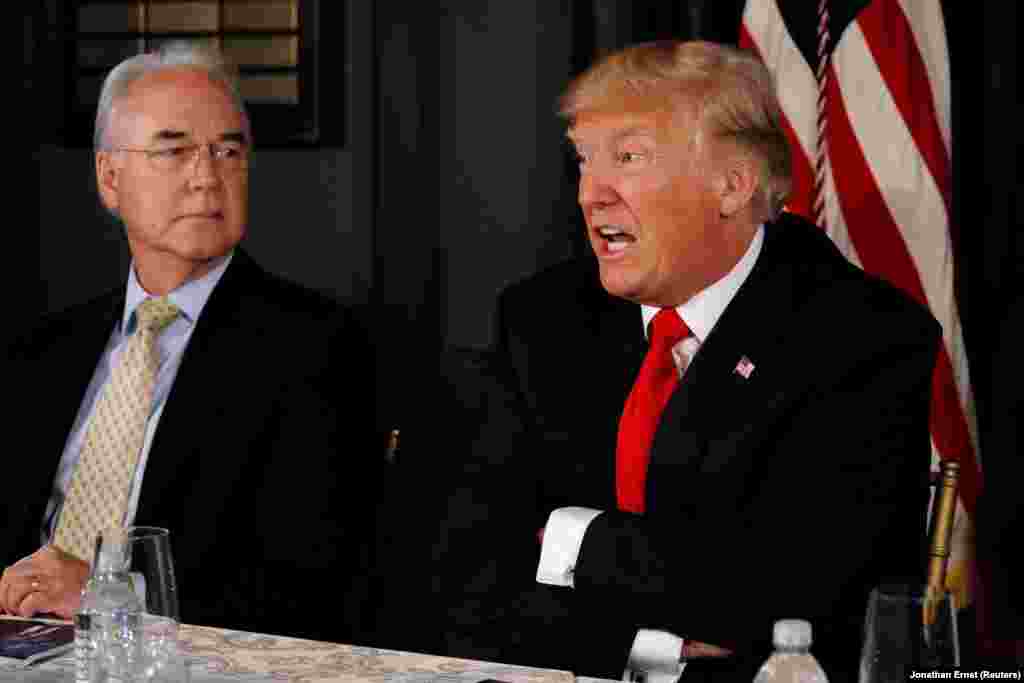
13/20In August, Trump vowed "fire and fury like the world has never seen" if Kim continued to threaten the United States.
U.S. President Donald Trump and North Korean leader Kim Jong Un were convening in Singapore for a historic summit to discuss security disputes, Pyongyang's nuclear-weapons program, and the six-decade-old division of the Korean Peninsula. So how did we get here?
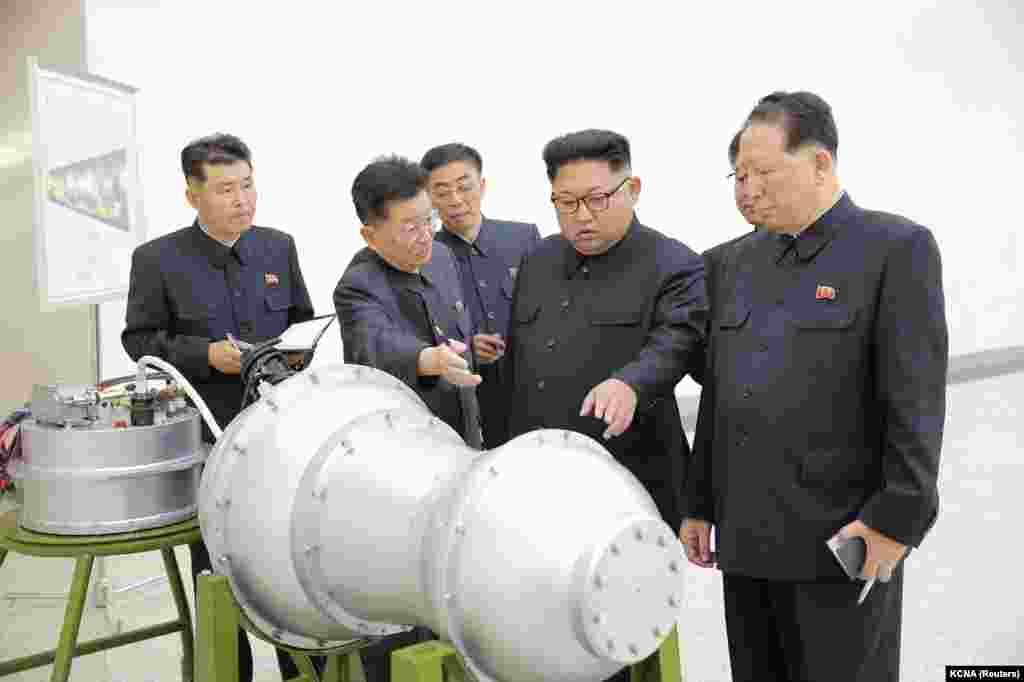
14/20
Kim inspecting what North Korean media claimed was a hydrogen bomb small enough to be slotted into an intercontinental ballistic missile (ICBM). The North Korean leader doubled down, responding to Trump's challenge by threatening U.S. territory (Guam) with “an enveloping fire.”
U.S. President Donald Trump and North Korean leader Kim Jong Un were convening in Singapore for a historic summit to discuss security disputes, Pyongyang's nuclear-weapons program, and the six-decade-old division of the Korean Peninsula. So how did we get here?
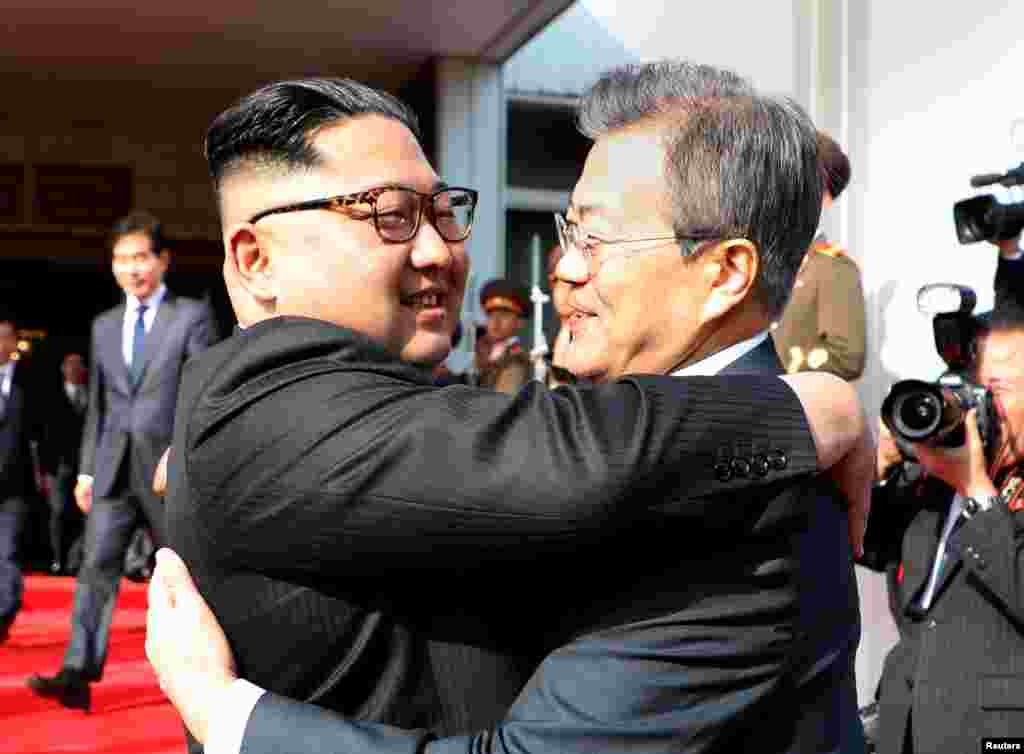
15/20Then, in moves that took the world by surprise, Kim met with South Korean President Moon Jae-in...
U.S. President Donald Trump and North Korean leader Kim Jong Un were convening in Singapore for a historic summit to discuss security disputes, Pyongyang's nuclear-weapons program, and the six-decade-old division of the Korean Peninsula. So how did we get here?
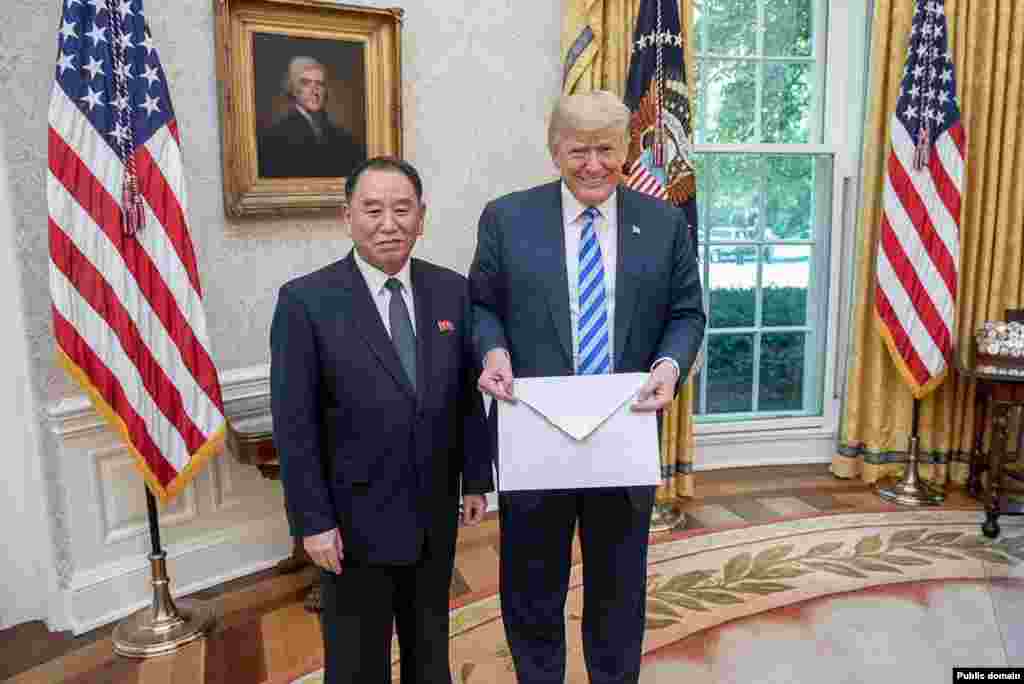
17/20...extended an invitation (though an envoy) to meet with Trump...
U.S. President Donald Trump and North Korean leader Kim Jong Un were convening in Singapore for a historic summit to discuss security disputes, Pyongyang's nuclear-weapons program, and the six-decade-old division of the Korean Peninsula. So how did we get here?
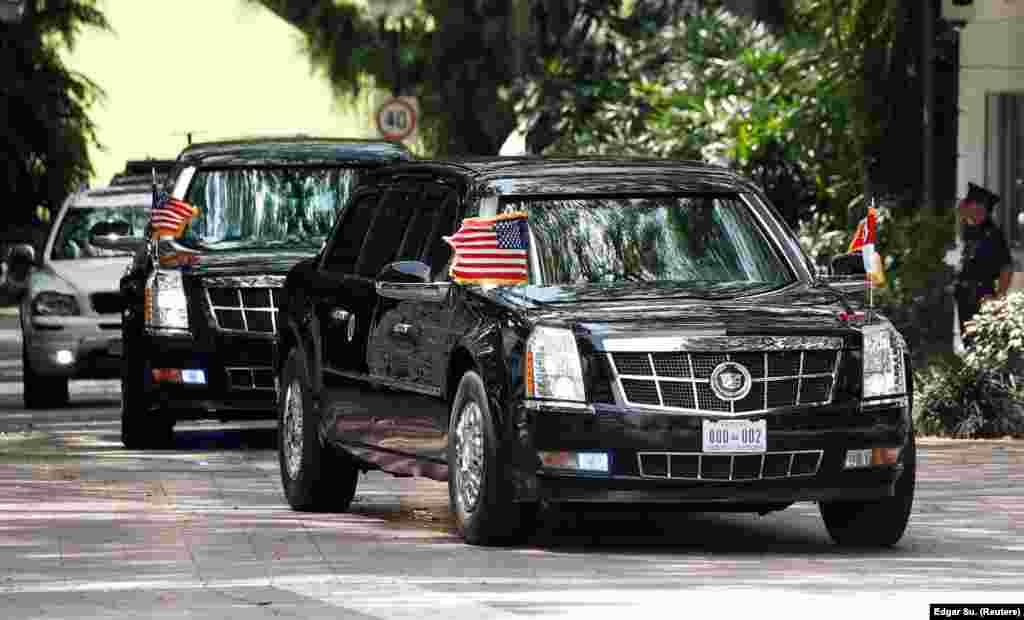
19/20The U.S. president's motorcade rolling through central Singapore on June 11. Trump indicated the meeting might only be the start of a process to denuclearize the Korean Peninsula.
U.S. President Donald Trump and North Korean leader Kim Jong Un were convening in Singapore for a historic summit to discuss security disputes, Pyongyang's nuclear-weapons program, and the six-decade-old division of the Korean Peninsula. So how did we get here?
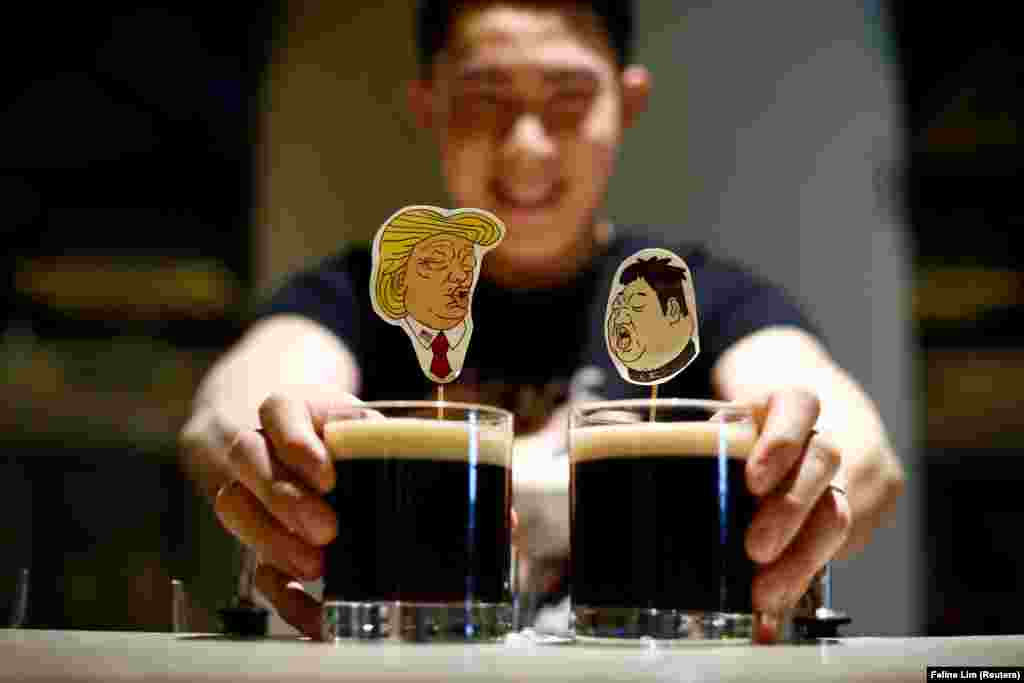
20/20But most people hope the meeting will bring at least improved relations and de-escalation, or maybe -- as this Singapore bar-owner has called his new cocktail -- a bromance.
U.S. President Donald Trump and North Korean leader Kim Jong Un were convening in Singapore for a historic summit to discuss security disputes, Pyongyang's nuclear-weapons program, and the six-decade-old division of the Korean Peninsula. So how did we get here?
Previous slide
Next slide
After the summit, which Trump called a "tremendous success," the two leaders signed a document in which Trump pledged "security guarantees" to Pyongyang while Kim reiterated his commitment to the "complete denuclearization of the Korean Peninsula."
In the document, which largely reiterates previous public statements without offering specifics, Trump and Kim pledged to "build a lasting and stable peace regime" on the Korean Peninsula and to repatriate the remains of prisoners of war and those missing in action during the 1950-53 Korean War.
The document makes no mention of any move to end the technical state of warfare that persists between the United States and North Korea some 65 years after the conflict, which ended with a truce but no peace treaty.
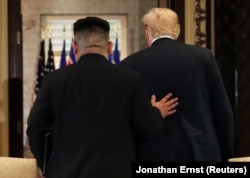
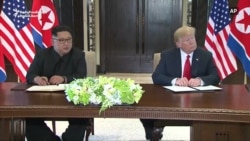
U.S. President Donald Trump (right) and North Korea's leader Kim Jong Un leave after signing documents that acknowledge the progress of the talks and pledge to keep momentum going, after their summit in Singapore on June 12.
But Trump, asked about it at the news conference, said: "Now we can have hope that it will soon end. And it will. It will soon end."
The document also does not mention any discussion about human rights in North Korea, a country known for its abysmal violations of even basic human rights.
In comments that seemed certain to draw criticism from activists who had urged him to press Kim on human rights, Trump told VOA that Kim "loves his people, loves his country."
He said he realized that the North Korean leader is a "rough guy" but that "he's doing what he's seen done" in the past in his country, where his father and grandfather were autocratic rulers before him.
But Trump said at the news conference that the issue of human rights "was discussed" with Kim, albeit briefly, and will be approached more specifically in the future.
The signing ceremony followed a series of meetings at a luxury hotel on Singapore's Sentosa island, including a 45-minute face-to-face meeting between Trump and Kim and broader talks between their delegations.
Tensions between the United States and North Korea escalated last year after Pyongyang tested several ballistic missiles and performed a nuclear test, while Kim and Trump traded threats and insults.
But at the beginning of this year Kim launched an unexpected diplomatic offensive, which included the North's attendance at the 2018 Winter Olympics in South Korea.
Trump on June 1 said he would hold a summit with Kim on June 12 in Singapore. Trump had originally agreed to the summit, then called it off before reviving it again.
As the two leaders wrapped up their summit, Kim told reporters that the two "decided to leave the past behind and the world will see a major change."
Trump said he and Kim "have developed a very special bond" during their day together.
He and Kim "got along very well," Trump told VOA. "I think he liked me and I like him."
At the end of their 45-minute meeting, Trump said the summit had gone "better than anybody could have expected" and called it a "tremendous success."
After the two leaders met, they had another bilateral meeting with their staff that lasted about an hour and a half before they proceeded to lunch together at the luxury resort on Singapore's Sentosa Island.
The document signed by Trump and Kim says the United States and North Korea "commit to hold follow-on negotiations" led by U.S. Secretary of State Mike Pompeo and an unnamed high-level North Korean official "at the earliest possible date."
Pompeo had signaled on June 11 that the Trump administration did not expect an immediate breakthrough at the Trump-Kim meeting, but rather hoped it would create an opening for more extended negotiations.
Pompeo said the summit should set the framework for "the hard work that will follow," stating that North Korea must move toward complete, verifiable, and irreversible denuclearization.
The European Union praised the meeting, which EU foreign-policy chief Federica Mogherini called "a crucial and necessary step to build upon the positive developments achieved in inter-Korean relations and on the peninsula so far."
Moscow "can only welcome the fact that an important step forward has been made," Russian Deputy Foreign Minister Sergei Ryabkov said. "Of course the devil is in the details, and we have yet to delve into specifics."
Ryabkov said that Moscow was willing to assist in implementing the deal and hopes that six-party talks involving the two Koreas, the United States, Russia, Japan, and China will be revived at some point.
In a separate statement, the Russian Foreign Ministry praised Trump's move to end military exercises with South Korea, saying it was needed to put an end to "provocative" actions and to ease tensions on the peninsula.
In reaction to the summit, China suggested that the UN should consider suspending or lifting sanctions against North Korea.
"Sanctions are not an end," Chinese Foreign Ministry spokesman Geng Shuang said at a daily briefing in Beijing. "We believe the Security Council should make efforts to support the diplomatic efforts at the present time."
But Trump, in his interview with VOA, reiterated his statement from the news conference that sanctions won't be lifted before results are seen.
"Again, without the rhetoric and without the sanctions -- the sanctions were very important -- the sanctions are going to remain on until such time as we see, you know, this is going to happen," Trump told VOA.
Meanwhile, Iran warned North Korea not to trust Trump, who withdrew the United States last month from a 2015 deal between Tehran and global powers over Iran's nuclear program and reimposed sanctions.
"We don't know what type of person the North Korean leader is negotiating with. It is not clear that he would not cancel the agreement before returning back home," Iranian government spokesman Mohammad Baqer Nobakht said.

RFE/RL journalists report the news in 24 languages in 18 countries where a free press is banned by the government or not fully established. We provide what many people cannot get locally: uncensored news, responsible discussion, and open debate.