



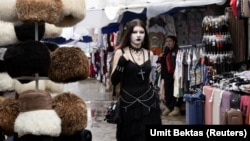

Soon before she arrived in Turkmenistan in early 2026, Canadian traveler Elyse Williams received a warning from her tour company not to venture far from her hotel in the authoritarian country and to avoid taking photos while alone on the streets.
The reality when she arrived was far less regimented than expected. “As you can see by my pictures, it was clearly not the case [that photography was highly restricted]” she told RFE/RL. “I felt very free to take many pictures in lots of different places.”
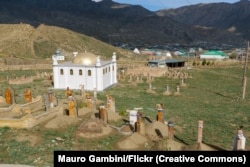
Tour agencies who organize trips to Turkmenistan also describe a recent loosening in official attitudes towards foreign visitors.
“We have certainly noticed a change,” Dylan Harris, the head of British tour company Lupine Travel, told RFE/RL. “Visas have started to be issued quicker than they have been in the past, plus we haven't had any rejections at all within the past 12 months.”
The tour organizer says visa applications have been streamlined by a new online process, but he believes the drop in rejections, “seems highly likely to be linked to what appears to be a decision to start opening up the country more.”
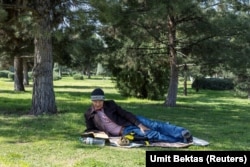
Since the collapse of the Soviet Union, Turkmenistan became notorious among travelers as the most repressive and difficult former Soviet state to visit. Travelers have described arbitrary rejections of visa applications along with severe restrictions on photography and movement for those who made it inside the country.
A French documentary crew posing as tourists before the recent “thaw” were given a chilling insight into the authoritarian nature of the country after a man made a video of himself smiling as he insulted the French journalists in Turkmen. The same local, who is allegedly linked to the country’s security apparatus, had posted videos threatening a cash reward for anyone who could “silence” a prominent female dissident who lives in Turkey.
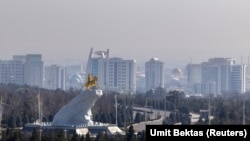
The apparent shift in official attitudes to tourism began in early 2025 when an electronic visa system was introduced, and highlighted by an April 2026 conference in Ashgabat focused on “strengthening Turkmenistan’s presence on the international tourism map.”
In the wake of the Ashgabat event, some Western journalists have filed glowing reports from inside the country. In early April, popular British YouTuber Benjamin Rich posted a freewheeling video viewed by millions in which he was at one point left alone to explore the dive bars of Ashgabat.
But locals say Ashgabat's shift in attitudes to outsiders has not extended to its own citizens.
“Nothing has changed for better in the lives of ordinary people," a resident of the eastern province of Lebap told RFE/RL’s Turkmen Service.
“The Internet is strictly controlled in Turkmenistan, all independent news sites are blocked, and people can’t freely express their grievances on social media," added the local, whose name could not be revealed for security reasons.
In late 2025 a Turkmen blogger disappeared, then died mysteriously after criticizing meat prices in the country. The case occurred as Turkmen authorities were staging a crackdown on critical voices in the country.
Meanwhile, both locals and tourism industry insiders say the thaw towards travelers in Turkmenistan are not yet causing a spike in foreign visitors.
A resident in Ashgabat told RFE/RL’s Turkmen Service he has difficulty remembering the last time he saw a foreigner on the street.
“Before 2017 you could encounter foreign businesspeople, investors or expats, or bump into foreign tourists on Ashgabat streets. But now foreign businesspeople or tourists can rarely be seen in Turkmenistan,” said the man, whose name can also not be revealed.
Harris says there has not been any recent spike in interest in the country, though he says bookings have stayed “at steadily high numbers,” since the country reopened its borders in the wake of the COVID-19 pandemic in 2023.

