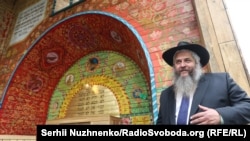
The newly inaugurated wooden synagogue is decorated with patterns and texts of prayers that recreate the traditional interiors of ancient synagogues in western Ukraine.
Ukraine has unveiled a synagogue on the site commemorating Babyn Yar, one of the biggest massacres of Jews during World War II.
"The symbolic synagogue is a big step toward restoring the memory of all those who died in this place," Prime Minister Denys Shmyhal said during a ceremony on May 14.
The wooden synagogue, which is constructed like a pop-up book, is decorated with patterns and texts of prayers that recreate the traditional interiors of ancient synagogues in western Ukraine. The unveiling coincided with commemorations of Ukraine's inaugural Day of Remembrance for Ukrainians who helped save Jews during World War II.
About 34,000 Jewish men, women and children were killed at the Babyn Yar ravine on the outskirts of Kyiv on September 29-30, 1941, soon after the Nazis occupied the city. In the following months more than 100,000 people, including Ukrainian nationalists, Roma, Jews, and Soviet prisoners of war were killed at the site.
'Still Much To Say': Remembering The Massacre At Babyn Yar
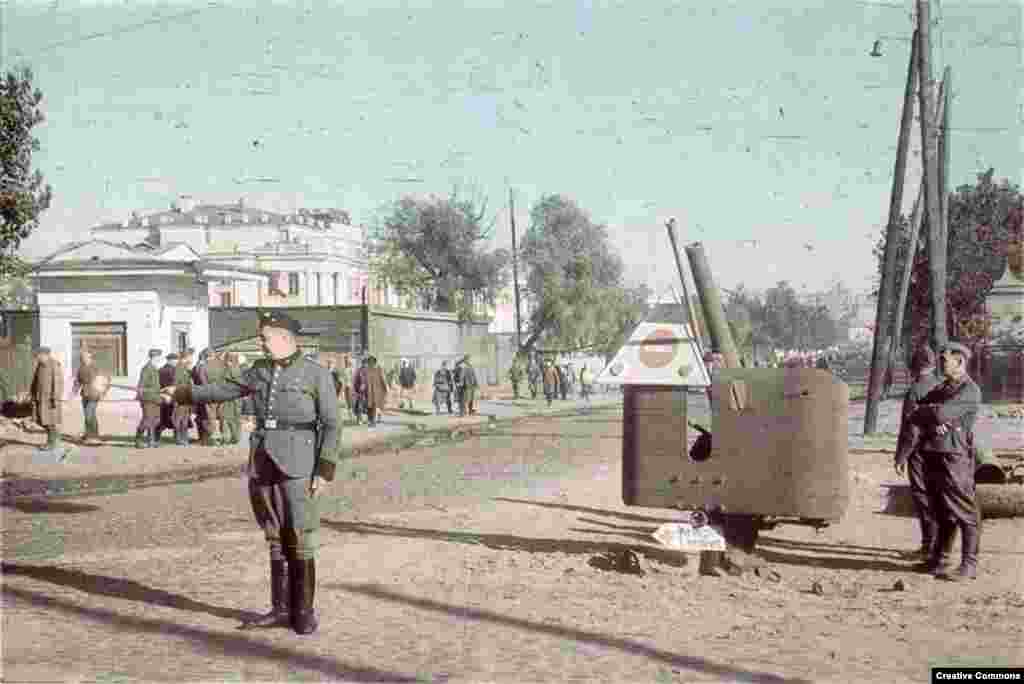
1/14A Nazi sentry in Kyiv on September 19, 1941. In June of that year, after two years of neutrality between Germany and the Soviet Union, Nazi forces launched a surprise attack on the U.S.S.R. Within weeks, Nazi forces had overrun eastern Poland and other Soviet-occupied territories, as well as much of the Ukrainian S.S.R. and other Soviet republics.
In the autumn of 1941, one the gravest atrocities of the 20th century unfolded in a ragged ravine on the outskirts of Nazi-occupied Kyiv.
Show moreShow less
2/14A Jewish man in western Ukraine being attacked by a mob next to a bust of Lenin. After occupying Nazi forces opened Soviet secret police prisons, atrocities carried out under Stalin were laid bare and exploited by Nazi propagandists, who fueled anti-Semitism by highlighting the Jewish backgrounds of some early Soviet leaders.
In the autumn of 1941, one the gravest atrocities of the 20th century unfolded in a ragged ravine on the outskirts of Nazi-occupied Kyiv.
Show moreShow less
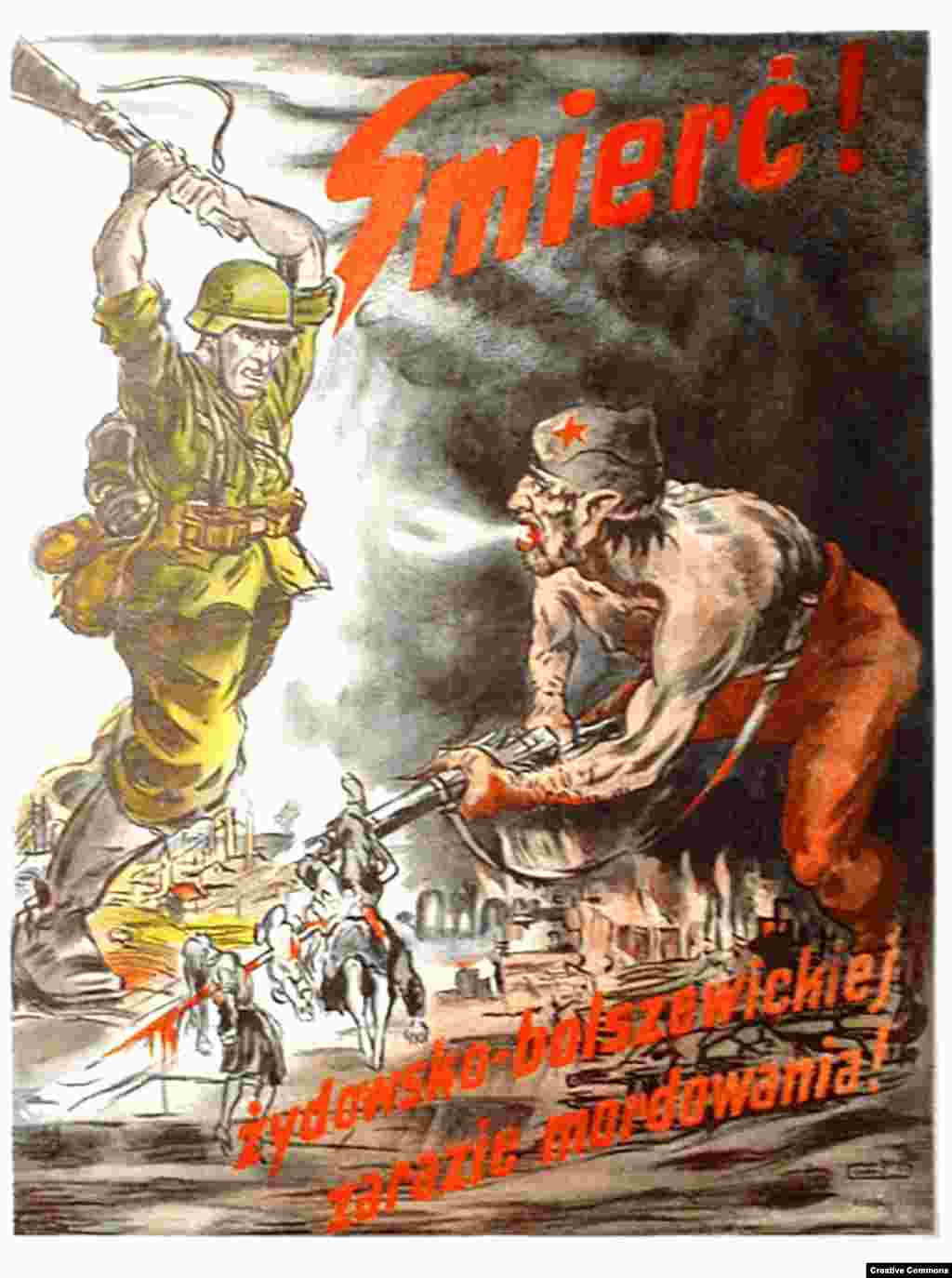
3/14A Nazi propaganda poster declaring "death to the Jewish-Bolshevik pestilence of murdering." As well as executions at the hands of the Soviet secret police, millions of Ukrainians had died under Stalin in a man-made famine. Nazi propaganda linking Jews with Soviet rule fed the beliefs of some elements of the Ukrainian nationalist movement in a region with a history of anti-Semitic violence.
In the autumn of 1941, one the gravest atrocities of the 20th century unfolded in a ragged ravine on the outskirts of Nazi-occupied Kyiv.
Show moreShow less
4/14With the active encouragement of the Nazis, horror is unleashed on the Jewish population of the Soviet Ukraine and territories that had been occupied by Soviet forces. This woman is fleeing from a mob in Lviv, a Polish city overtaken by Soviet and then Nazi forces that is today part of western Ukraine -- in June or July 1941. Thousands of Jews were tormented and murdered by mobs of locals during a series of pogroms in Central and Eastern Europe.
In the autumn of 1941, one the gravest atrocities of the 20th century unfolded in a ragged ravine on the outskirts of Nazi-occupied Kyiv.
Show moreShow less
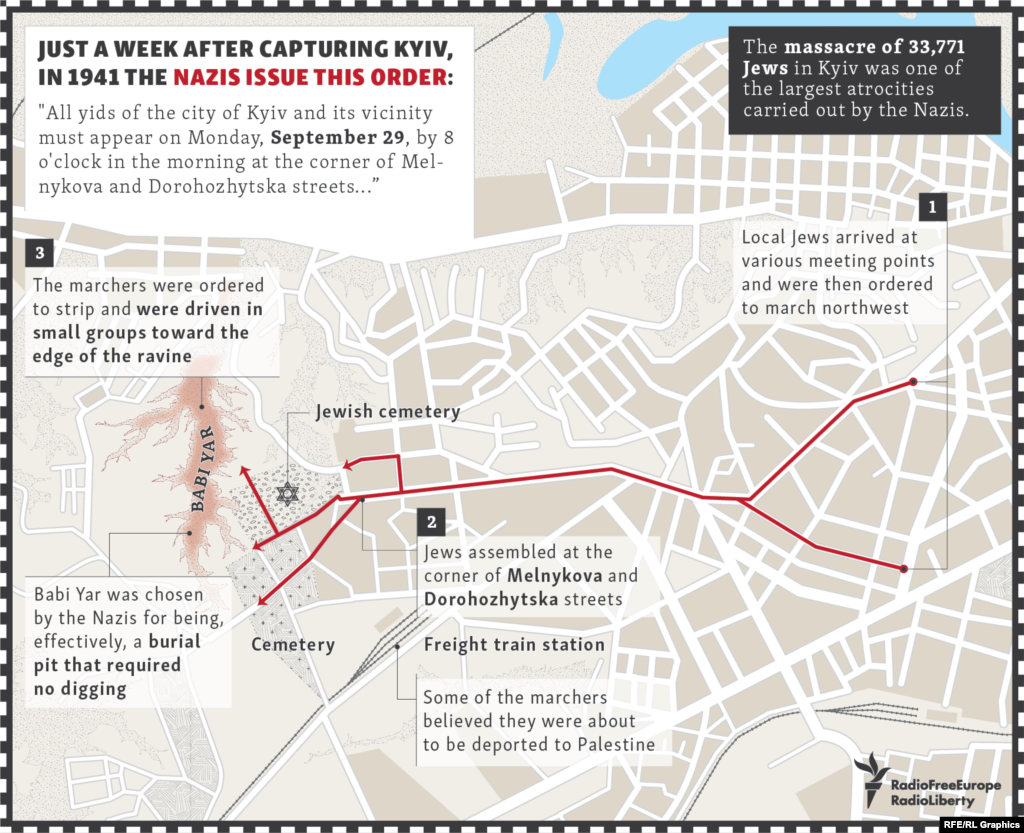
5/14In Kyiv, time bombs left by retreating Soviet forces exploded, killing several Nazis. A survivor of Babyn Yar recalled that "of course, the Jews were blamed for it. [We] were to blame for everything." On September 26, just a week after capturing Kyiv, the Nazis issued this order, using the derogatory term "yids" for Jews.
"All yidsof the city of Kyiv and its vicinity must appear on Monday, September 29, by 8 o'clock in the morning at the corner of Melnikova and Dorohozhytska streets (near the Viiskove cemetery). Bring documents, money and valuables, and also warm clothing, linens, etc. Any yidswho do not follow this order and are found elsewhere will be shot."
In the autumn of 1941, one the gravest atrocities of the 20th century unfolded in a ragged ravine on the outskirts of Nazi-occupied Kyiv.
Show moreShow less
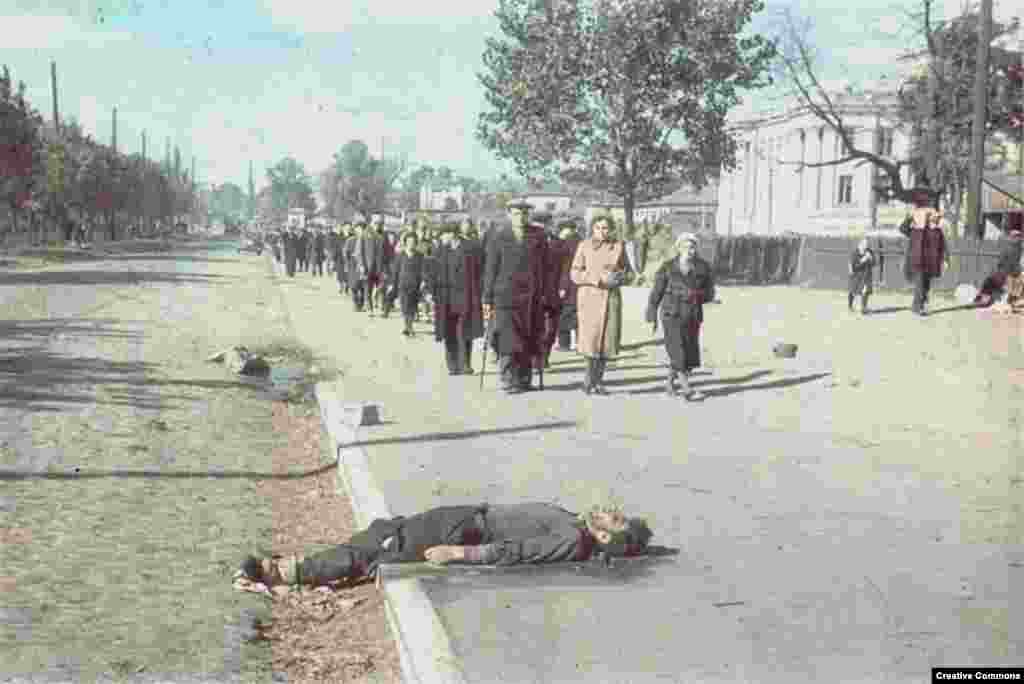
6/14As demanded by the orders published in Ukrainian, Russian, and German, some 30,000 Jews from Kyiv and the vicinity arrived on September 29 at various meeting points in the city center. They were then marched northwest to the edge of town to a large ravine known as Babyn Yar or "Old Woman's Ravine." Some of the marchers, nearing a railway yard alongside Babyn Yar, believed they were about to be deported to Palestine.
In the autumn of 1941, one the gravest atrocities of the 20th century unfolded in a ragged ravine on the outskirts of Nazi-occupied Kyiv.
Show moreShow less
7/14After two years of neutral relations between Nazi Germany and the U.S.S.R., and with information tightly controlled by Soviet media, the Jews of Kyiv have little understanding of the danger they are in.
In the autumn of 1941, one the gravest atrocities of the 20th century unfolded in a ragged ravine on the outskirts of Nazi-occupied Kyiv.
Show moreShow less
9/14Some of the child victims of the massacre at Babyn Yar. Left to right: Anna Glinberg, Malvina and Polina Babat, and Velvele Valentin Pinkert. One survivor who recalled the events decades later said some locals who had sought to bid farewell to their Jewish neighbors before their "deportation" were also shot dead once they reached the ravine. "It was nothing for [the Nazis] to kill people."
In the autumn of 1941, one the gravest atrocities of the 20th century unfolded in a ragged ravine on the outskirts of Nazi-occupied Kyiv.
Show moreShow less
10/14Soviet prisoners of war in the ravine after the massacre. Babyn Yar continued to be used by the Nazis as a killing site for Soviet POWs, Roma, and other "undesirables."
In the autumn of 1941, one the gravest atrocities of the 20th century unfolded in a ragged ravine on the outskirts of Nazi-occupied Kyiv.
Show moreShow less
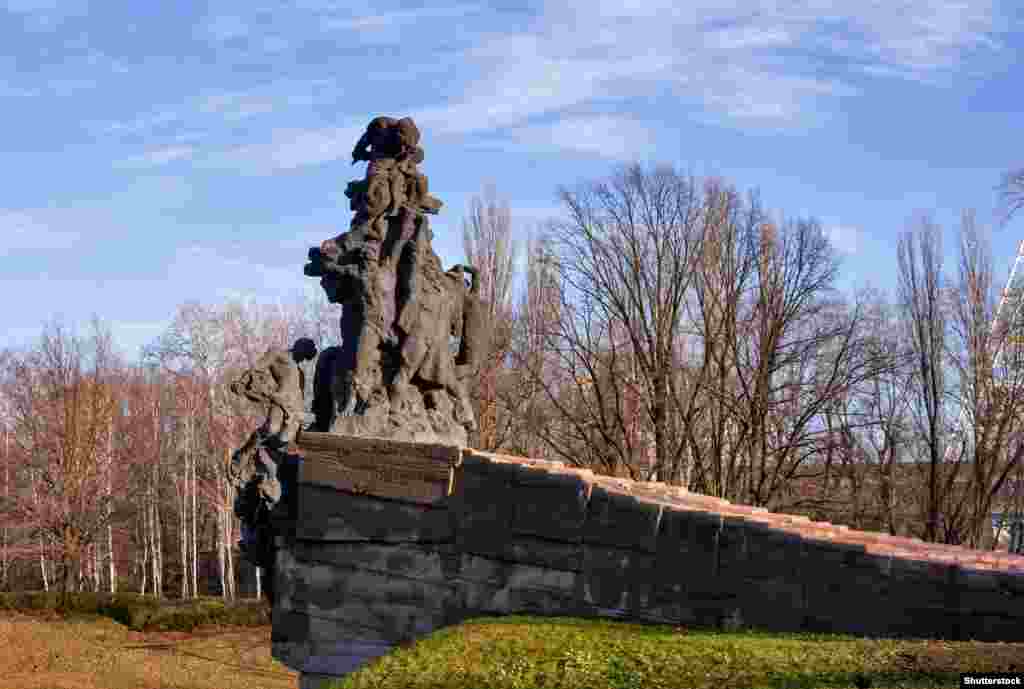
11/14For more than three decades after the war, the events at Babyn Yar receive little official recognition, although in the 1960s Jewish activists began gathering without permission at the site to keep the memory of what happened there alive. In 1976, this memorial commemorating all victims of the Nazi regime at Babyn Yar was erected, without making specific mention of the Jewish victims. The central figure of the monument is a Soviet soldier.
In the autumn of 1941, one the gravest atrocities of the 20th century unfolded in a ragged ravine on the outskirts of Nazi-occupied Kyiv.
Show moreShow less
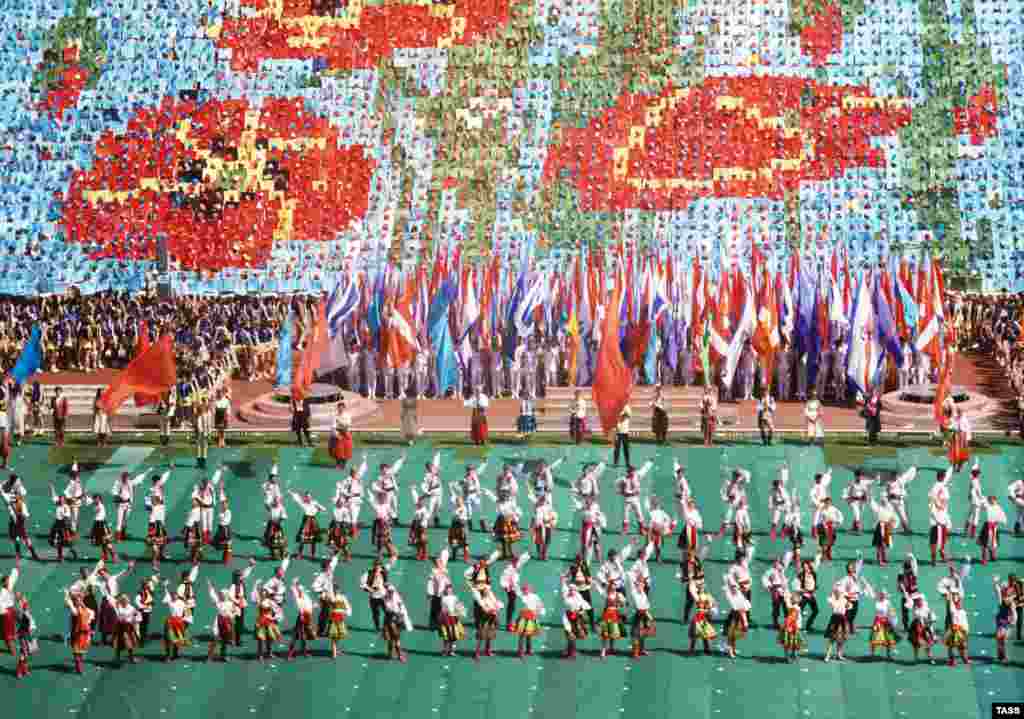
12/14A celebration in Kyiv on May 9, 1985, marking the anniversary of victory over the Nazis. For the authorities of Soviet Ukraine, the events at Babyn Yar were seen through the prism of wholesale Soviet suffering under the Nazis.
In the autumn of 1941, one the gravest atrocities of the 20th century unfolded in a ragged ravine on the outskirts of Nazi-occupied Kyiv.
Show moreShow less
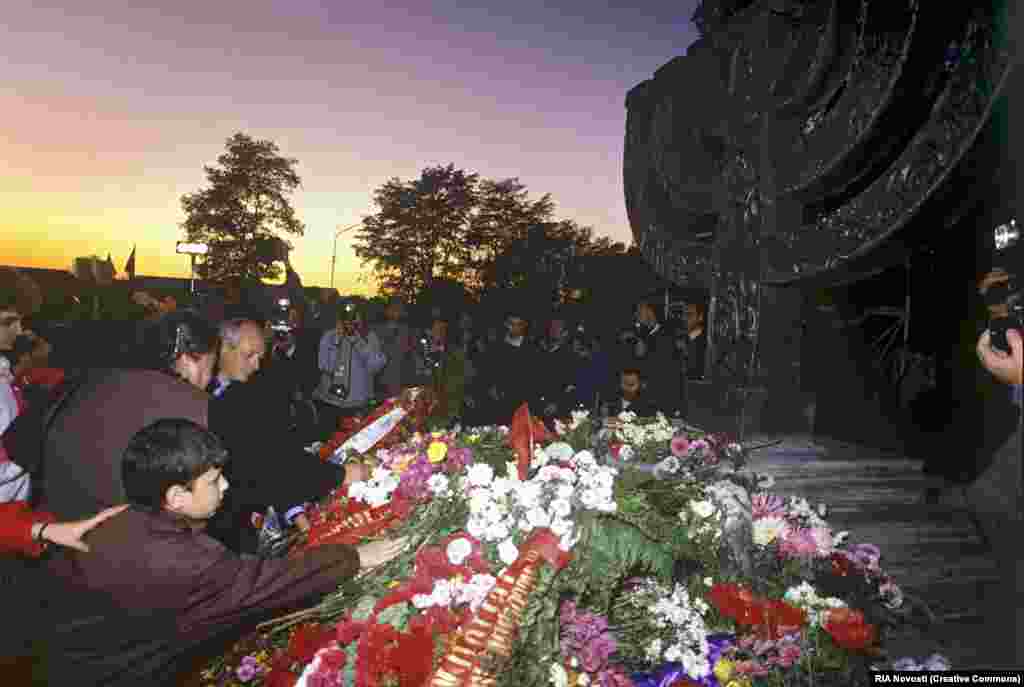
13/14Fifty years after the massacre, after Ukraine gained independence from the U.S.S.R. in 1991, a separate memorial dedicated to the Jewish victims of the atrocity was unveiled on the site. A crowd of hundreds gathered for the unveiling of the menorah-shaped monument.
In the autumn of 1941, one the gravest atrocities of the 20th century unfolded in a ragged ravine on the outskirts of Nazi-occupied Kyiv.
Show moreShow less
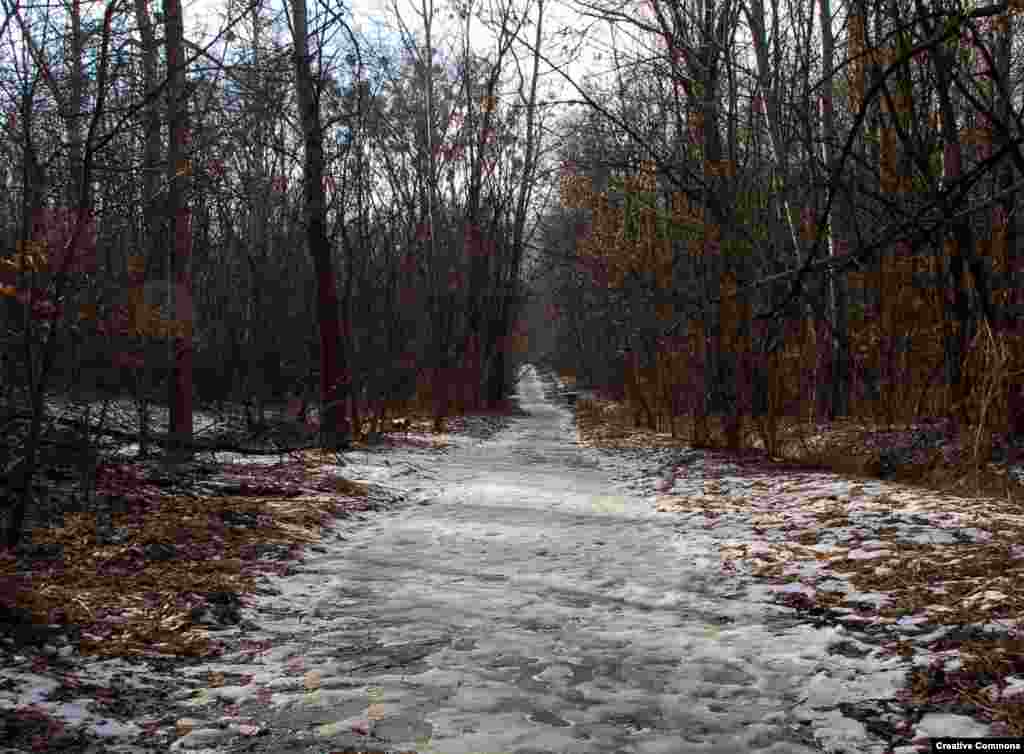
14/14The menorah monument to Babyn Yar is located today in a quiet park dotted with strolling couples and friends riding bicycles under a canopy of trees.
"There are events, tragedies, the enormity of which make all words futile and of which silence tells incomparably more -- the awesome silence of thousands of people. Perhaps we, too, should keep silent and only meditate. But silence says a lot only when everything that could have been said has already been said. If there is still much to say, or if nothing has yet been said, then silence becomes a partner to falsehood and enslavement. We must, therefore, speak -- and to speak whenever we can, taking advantage of all opportunities, for they come so infrequently."
-- Address made at Babyn Yar by Ukrainian writer Ivan Dzuiba in 1966
In the autumn of 1941, one the gravest atrocities of the 20th century unfolded in a ragged ravine on the outskirts of Nazi-occupied Kyiv.
Show moreShow less
Previous slide
Next slide
After World War II, the site was used as a landfill and lagoon. The unveiling of the synagogue is part of the recent effort to shed more light on the massacre.
A monument was built on the site in the 1970s, but it was dedicated only to Soviet victims. Following the fall of the Soviet Union, a sculpture in the shape of a menorah was erected nearby.
The Babyn Yar Holocaust Memorial Center, which was behind the effort to install the temporary synagogue, has plans to build a major memorial at the site.








![In Kyiv, time bombs left by retreating Soviet forces exploded, killing several Nazis. A survivor of Babyn Yar recalled that "of course, the Jews were blamed for it. [We] were to blame for everything." On September 26, just a week after capturing Kyiv, the Nazis issued this order, using the derogatory term "yids" for Jews.<br />
<br />
<em>"All yids<span style="font-size: 12.5px;"> </span>of the city of Kyiv and its vicinity must appear on Monday, September 29, by 8 o'clock in the morning at the corner of Melnikova and Dorohozhytska streets (near the Viiskove cemetery). Bring documents, money and valuables, and also warm clothing, linens, etc. Any yids<span style="font-size: 12.5px;"> </span>who do not follow this order and are found elsewhere will be shot."</em><br />
](https://gdb.rferl.org/90cb1308-cf7f-4697-a4d5-7f097e5b5689_w1024_q10_s.jpg)
![Some of the child victims of the massacre at Babyn Yar. Left to right: Anna Glinberg, Malvina and Polina Babat, and Velvele Valentin Pinkert. One survivor who recalled the events decades later said some locals who had sought to bid farewell to their Jewish neighbors before their "deportation" <strong><a href="https://youtu.be/7f7aQ_UJER0?t=370" target="_blank">were also shot dead</a></strong> once they reached the ravine. "It was nothing for [the Nazis] to kill people."](https://gdb.rferl.org/7a28bd3a-24ec-44c9-8766-8baad5202685_w1024_q10_s.jpg)