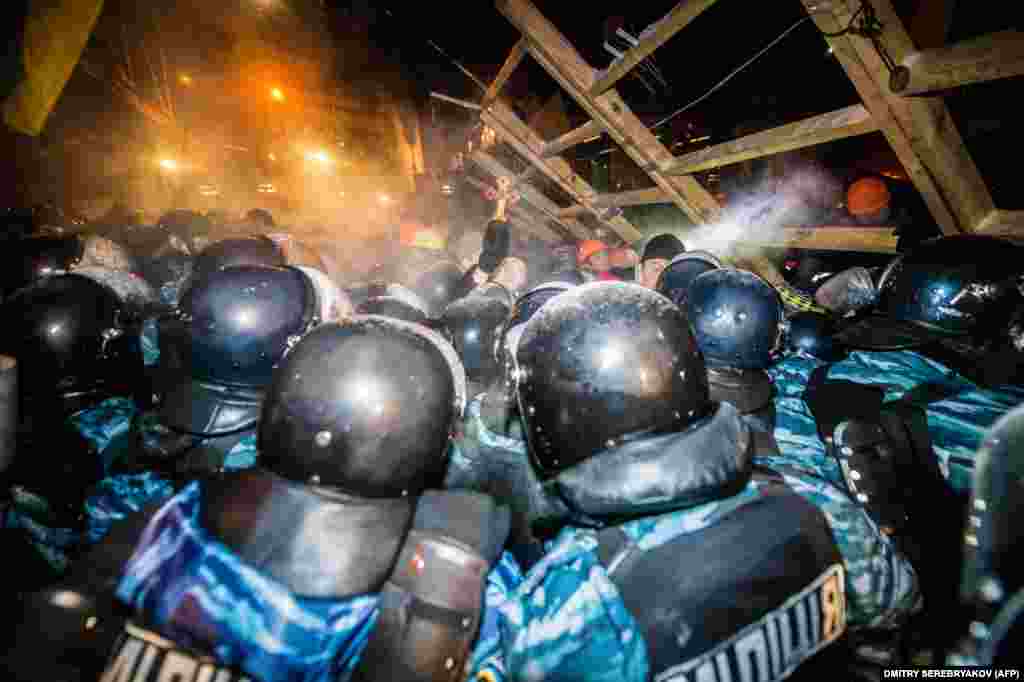
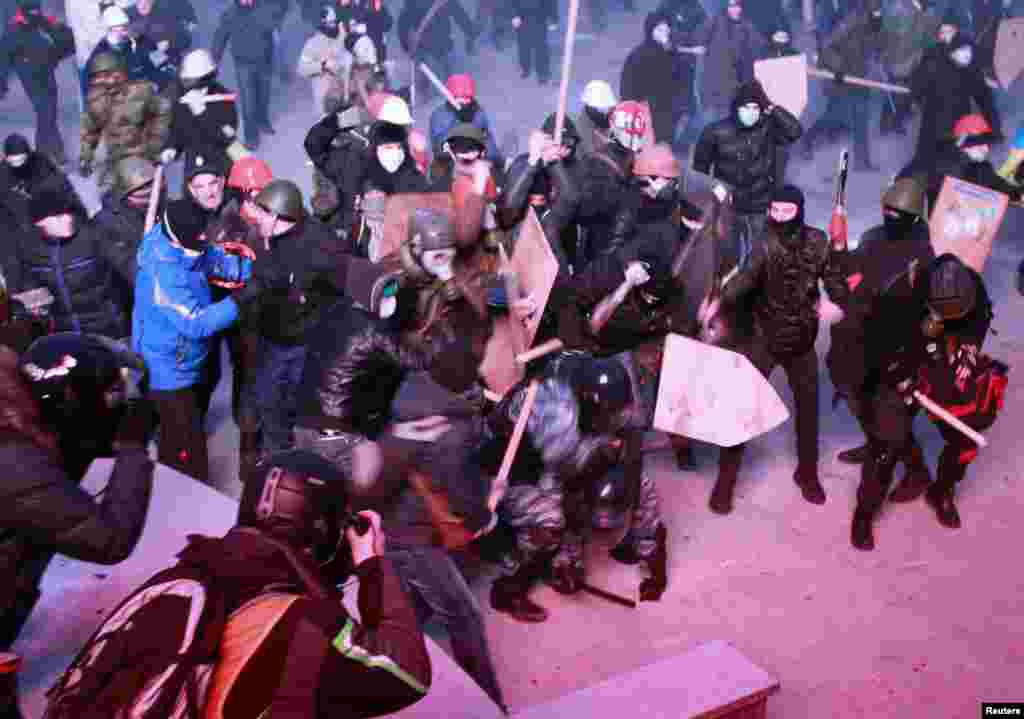
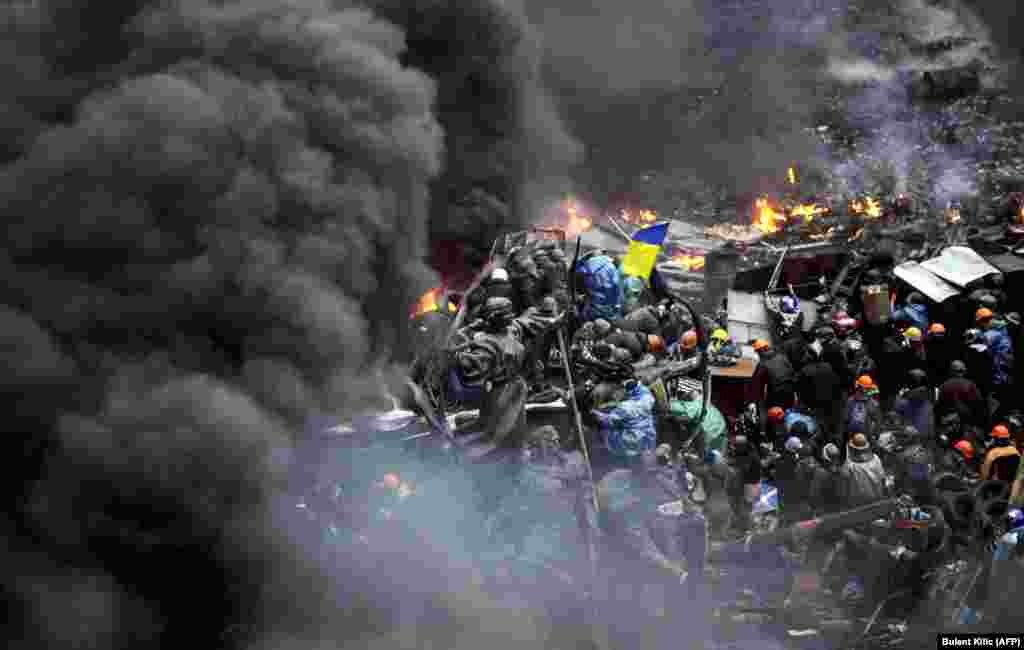
Scores of people were killed in violence that erupted during the Euromaidan protests in 2014. (file photo)
Amnesty International says the Ukrainian criminal justice system has "resisted and obstructed justice" when dealing with the human rights violations committed by police during the Euromaidan protests five years ago.
Colm O Cuanachain, senior director at the office of the London-based group's secretary-general, made the comment on February 19, which marked the fifth anniversary of the protest movement's worst day of violence.
"Five years is a long time to wait when it comes to justice, and for most victims who suffered at the hands of Ukrainian police, justice is still not even in sight," he said during a trip to Kyiv.
In February 2014, Moscow-friendly President Viktor Yanukovych was pushed from power following months of massive protests known as the Euromaidan and fled to Russia.
More than 100 people were killed and 2,500 injured in clashes with security forces, some of them shot dead by snipers.
The death toll included at least 13 police officers, according to Ukrainian authorities.
The Evolution Of Euromaidan
1/21Protesters hold Ukrainian and European Union flags during a rally to support European integration in central Kyiv on November 21, 2013.
Euromaidan -- the name given to the pro-European protests in Ukraine's capital, Kyiv -- started late on November 21, 2013, when up to 2,000 protesters gathered on the city's central Maidan Nezalezhnosti (Independence Square). The movement, sparked by President Viktor Yanukovych's abrupt decision to abandon talks on a pact on closer relations with the European Union, started peacefully, but did not end that way. The violence started with the government's crackdown on protesters overnight on November 30. Months later, Yanukovych would flee the country and around 100 protesters would be dead.
Show moreShow less
2/21A protester on Kyiv's Independence Square on November 24, 2013, the biggest protest rally in Ukraine's capital since the 2004 Orange Revolution. The opposition called the rally after President Viktor Yanukovych's government reversed a plan to sign a historic deal deepening ties with the EU, in a U-turn critics said was forced by the Kremlin.
Euromaidan -- the name given to the pro-European protests in Ukraine's capital, Kyiv -- started late on November 21, 2013, when up to 2,000 protesters gathered on the city's central Maidan Nezalezhnosti (Independence Square). The movement, sparked by President Viktor Yanukovych's abrupt decision to abandon talks on a pact on closer relations with the European Union, started peacefully, but did not end that way. The violence started with the government's crackdown on protesters overnight on November 30. Months later, Yanukovych would flee the country and around 100 protesters would be dead.
Show moreShow less
3/21At about 4.30 a.m. on November 30, soldiers of the Berkut riot-police unit violently dispersed Euromaidan activists who had stayed on Independence Square for the night.
Euromaidan -- the name given to the pro-European protests in Ukraine's capital, Kyiv -- started late on November 21, 2013, when up to 2,000 protesters gathered on the city's central Maidan Nezalezhnosti (Independence Square). The movement, sparked by President Viktor Yanukovych's abrupt decision to abandon talks on a pact on closer relations with the European Union, started peacefully, but did not end that way. The violence started with the government's crackdown on protesters overnight on November 30. Months later, Yanukovych would flee the country and around 100 protesters would be dead.
Show moreShow less
4/21The violent dispersal of protests by the Berkut sparked riots the following day in Kyiv. On December 1, protesters reoccupied the square and further clashes with the authorities and political ultimatums by the opposition ensued for the rest of the month.
Euromaidan -- the name given to the pro-European protests in Ukraine's capital, Kyiv -- started late on November 21, 2013, when up to 2,000 protesters gathered on the city's central Maidan Nezalezhnosti (Independence Square). The movement, sparked by President Viktor Yanukovych's abrupt decision to abandon talks on a pact on closer relations with the European Union, started peacefully, but did not end that way. The violence started with the government's crackdown on protesters overnight on November 30. Months later, Yanukovych would flee the country and around 100 protesters would be dead.
Show moreShow less
5/21Protesters clash with police during the storming of the presidential office in Kyiv during a mass opposition rally on December 1, 2013.
Euromaidan -- the name given to the pro-European protests in Ukraine's capital, Kyiv -- started late on November 21, 2013, when up to 2,000 protesters gathered on the city's central Maidan Nezalezhnosti (Independence Square). The movement, sparked by President Viktor Yanukovych's abrupt decision to abandon talks on a pact on closer relations with the European Union, started peacefully, but did not end that way. The violence started with the government's crackdown on protesters overnight on November 30. Months later, Yanukovych would flee the country and around 100 protesters would be dead.
Show moreShow less
6/21Euromaidan protesters gather in central Kyiv on December 8.
Euromaidan -- the name given to the pro-European protests in Ukraine's capital, Kyiv -- started late on November 21, 2013, when up to 2,000 protesters gathered on the city's central Maidan Nezalezhnosti (Independence Square). The movement, sparked by President Viktor Yanukovych's abrupt decision to abandon talks on a pact on closer relations with the European Union, started peacefully, but did not end that way. The violence started with the government's crackdown on protesters overnight on November 30. Months later, Yanukovych would flee the country and around 100 protesters would be dead.
Show moreShow less
7/21Pro-European protesters sleep inside Kyiv City Hall on December 7, 2013. Thousands of protesters gathered in Kyiv to demand the government's resignation and early elections. They blocked the cabinet of ministers' building and occupied a labor-union building and the city administration, where they had hoisted the EU flag a day earlier.
Euromaidan -- the name given to the pro-European protests in Ukraine's capital, Kyiv -- started late on November 21, 2013, when up to 2,000 protesters gathered on the city's central Maidan Nezalezhnosti (Independence Square). The movement, sparked by President Viktor Yanukovych's abrupt decision to abandon talks on a pact on closer relations with the European Union, started peacefully, but did not end that way. The violence started with the government's crackdown on protesters overnight on November 30. Months later, Yanukovych would flee the country and around 100 protesters would be dead.
Show moreShow less
8/21People surround a statue of Soviet state founder Vladimir Lenin, which was toppled by protesters during a rally organized by supporters of EU integration in Kyiv on December 8, 2013.
Euromaidan -- the name given to the pro-European protests in Ukraine's capital, Kyiv -- started late on November 21, 2013, when up to 2,000 protesters gathered on the city's central Maidan Nezalezhnosti (Independence Square). The movement, sparked by President Viktor Yanukovych's abrupt decision to abandon talks on a pact on closer relations with the European Union, started peacefully, but did not end that way. The violence started with the government's crackdown on protesters overnight on November 30. Months later, Yanukovych would flee the country and around 100 protesters would be dead.
Show moreShow less
9/21Pro-European protesters stand on a barricade built to block the way to Independence Square in Kyiv on December 9.
Euromaidan -- the name given to the pro-European protests in Ukraine's capital, Kyiv -- started late on November 21, 2013, when up to 2,000 protesters gathered on the city's central Maidan Nezalezhnosti (Independence Square). The movement, sparked by President Viktor Yanukovych's abrupt decision to abandon talks on a pact on closer relations with the European Union, started peacefully, but did not end that way. The violence started with the government's crackdown on protesters overnight on November 30. Months later, Yanukovych would flee the country and around 100 protesters would be dead.
Show moreShow less
10/21Riot police storm a barricade held by protesters on Independence Square in Kyiv late on December 11, 2013. The demonstrators defiantly refused to leave and resisted the police in a tense standoff. Berkut riot police and Interior Ministry special forces moved against the protesters at around 2 a.m. in a move that prompted U.S. Secretary of State John Kerry to express "disgust" over the crackdown.
Euromaidan -- the name given to the pro-European protests in Ukraine's capital, Kyiv -- started late on November 21, 2013, when up to 2,000 protesters gathered on the city's central Maidan Nezalezhnosti (Independence Square). The movement, sparked by President Viktor Yanukovych's abrupt decision to abandon talks on a pact on closer relations with the European Union, started peacefully, but did not end that way. The violence started with the government's crackdown on protesters overnight on November 30. Months later, Yanukovych would flee the country and around 100 protesters would be dead.
Show moreShow less
11/21Ukrainian opposition leaders Arseniy Yatsenyuk and Vitali Klitschko speak to protesters in Independence Square on December 29, 2013.
Euromaidan -- the name given to the pro-European protests in Ukraine's capital, Kyiv -- started late on November 21, 2013, when up to 2,000 protesters gathered on the city's central Maidan Nezalezhnosti (Independence Square). The movement, sparked by President Viktor Yanukovych's abrupt decision to abandon talks on a pact on closer relations with the European Union, started peacefully, but did not end that way. The violence started with the government's crackdown on protesters overnight on November 30. Months later, Yanukovych would flee the country and around 100 protesters would be dead.
Show moreShow less
12/21Pro-European protesters take part in New Year celebrations on Independence Square in central Kyiv on January 1, 2014.
Euromaidan -- the name given to the pro-European protests in Ukraine's capital, Kyiv -- started late on November 21, 2013, when up to 2,000 protesters gathered on the city's central Maidan Nezalezhnosti (Independence Square). The movement, sparked by President Viktor Yanukovych's abrupt decision to abandon talks on a pact on closer relations with the European Union, started peacefully, but did not end that way. The violence started with the government's crackdown on protesters overnight on November 30. Months later, Yanukovych would flee the country and around 100 protesters would be dead.
Show moreShow less
13/21The Ukrainian parliament votes for antiprotest laws, which themselves sparked a fresh wave of protests on January 16, 2014.
Euromaidan -- the name given to the pro-European protests in Ukraine's capital, Kyiv -- started late on November 21, 2013, when up to 2,000 protesters gathered on the city's central Maidan Nezalezhnosti (Independence Square). The movement, sparked by President Viktor Yanukovych's abrupt decision to abandon talks on a pact on closer relations with the European Union, started peacefully, but did not end that way. The violence started with the government's crackdown on protesters overnight on November 30. Months later, Yanukovych would flee the country and around 100 protesters would be dead.
Show moreShow less
14/21Pro-EU protesters clash with Ukrainian riot police during a rally near government administration buildings in Kyiv on January 19, 2014. Protesters attacked riot police with sticks and tried to overturn a bus blocking their path to parliament, as up to 100,000 Ukrainians massed in defiance of sweeping new laws aimed at stamping out antigovernment demonstrations.
Euromaidan -- the name given to the pro-European protests in Ukraine's capital, Kyiv -- started late on November 21, 2013, when up to 2,000 protesters gathered on the city's central Maidan Nezalezhnosti (Independence Square). The movement, sparked by President Viktor Yanukovych's abrupt decision to abandon talks on a pact on closer relations with the European Union, started peacefully, but did not end that way. The violence started with the government's crackdown on protesters overnight on November 30. Months later, Yanukovych would flee the country and around 100 protesters would be dead.
Show moreShow less
15/21Protesters clash with riot police in downtown Kyiv on January 22, 2014.
Euromaidan -- the name given to the pro-European protests in Ukraine's capital, Kyiv -- started late on November 21, 2013, when up to 2,000 protesters gathered on the city's central Maidan Nezalezhnosti (Independence Square). The movement, sparked by President Viktor Yanukovych's abrupt decision to abandon talks on a pact on closer relations with the European Union, started peacefully, but did not end that way. The violence started with the government's crackdown on protesters overnight on November 30. Months later, Yanukovych would flee the country and around 100 protesters would be dead.
Show moreShow less
16/21People gather at the the site of clashes between pro-European protesters and riot police in Kyiv on January 23.
Euromaidan -- the name given to the pro-European protests in Ukraine's capital, Kyiv -- started late on November 21, 2013, when up to 2,000 protesters gathered on the city's central Maidan Nezalezhnosti (Independence Square). The movement, sparked by President Viktor Yanukovych's abrupt decision to abandon talks on a pact on closer relations with the European Union, started peacefully, but did not end that way. The violence started with the government's crackdown on protesters overnight on November 30. Months later, Yanukovych would flee the country and around 100 protesters would be dead.
Show moreShow less
17/21Tents of antigovernment protesters are seen in Independence Square in temperatures of around minus 19 degrees Celsius in central Kyiv on January 30.
Euromaidan -- the name given to the pro-European protests in Ukraine's capital, Kyiv -- started late on November 21, 2013, when up to 2,000 protesters gathered on the city's central Maidan Nezalezhnosti (Independence Square). The movement, sparked by President Viktor Yanukovych's abrupt decision to abandon talks on a pact on closer relations with the European Union, started peacefully, but did not end that way. The violence started with the government's crackdown on protesters overnight on November 30. Months later, Yanukovych would flee the country and around 100 protesters would be dead.
Show moreShow less
18/21A still photo from a video by RFE/RL's Ukrainian Service shows Ukrainian security personnel with a Kalashnikov assault rifle and sniper rifle in a confrontation with protesters in Kyiv on February 20, 2014. Dozens of protesters are believed to have been killed by gunfire on this day.
Euromaidan -- the name given to the pro-European protests in Ukraine's capital, Kyiv -- started late on November 21, 2013, when up to 2,000 protesters gathered on the city's central Maidan Nezalezhnosti (Independence Square). The movement, sparked by President Viktor Yanukovych's abrupt decision to abandon talks on a pact on closer relations with the European Union, started peacefully, but did not end that way. The violence started with the government's crackdown on protesters overnight on November 30. Months later, Yanukovych would flee the country and around 100 protesters would be dead.
Show moreShow less
19/21Protesters stand behind burning barricades during a face-off against police in Kyiv on February 20.
Euromaidan -- the name given to the pro-European protests in Ukraine's capital, Kyiv -- started late on November 21, 2013, when up to 2,000 protesters gathered on the city's central Maidan Nezalezhnosti (Independence Square). The movement, sparked by President Viktor Yanukovych's abrupt decision to abandon talks on a pact on closer relations with the European Union, started peacefully, but did not end that way. The violence started with the government's crackdown on protesters overnight on November 30. Months later, Yanukovych would flee the country and around 100 protesters would be dead.
Show moreShow less
20/21Protesters catch fire as they stand behind burning barricades during clashes with police in Kyiv on February 20. Numbers vary, but Euromaidan activists say around 100 protesters were killed in total during the antigovernment protests.
Euromaidan -- the name given to the pro-European protests in Ukraine's capital, Kyiv -- started late on November 21, 2013, when up to 2,000 protesters gathered on the city's central Maidan Nezalezhnosti (Independence Square). The movement, sparked by President Viktor Yanukovych's abrupt decision to abandon talks on a pact on closer relations with the European Union, started peacefully, but did not end that way. The violence started with the government's crackdown on protesters overnight on November 30. Months later, Yanukovych would flee the country and around 100 protesters would be dead.
Show moreShow less
21/21Pictures of people who were killed during the winter protests are attached to a bridge as municipal workers clean up a barricade on Independence Square in Kyiv on August 11, 2014. The downtown area of the Ukrainian capital was reopened after citizens had cleaned up the central streets two days previously.
Euromaidan -- the name given to the pro-European protests in Ukraine's capital, Kyiv -- started late on November 21, 2013, when up to 2,000 protesters gathered on the city's central Maidan Nezalezhnosti (Independence Square). The movement, sparked by President Viktor Yanukovych's abrupt decision to abandon talks on a pact on closer relations with the European Union, started peacefully, but did not end that way. The violence started with the government's crackdown on protesters overnight on November 30. Months later, Yanukovych would flee the country and around 100 protesters would be dead.
Show moreShow less
Previous slide
Next slide
As of the end of 2018, the Ukrainian Prosecutor-General’s Office had identified 441 suspects, most of them former law enforcement officers, according to Amnesty.
The rights watchdog said that the cases of 288 individuals had been sent to court, 52 of them resulting in court decisions.
Out of 48 convictions, "only nine custodial sentences were handed down," it added, and not one of those jailed was a former police officer.
"Promises were made, strong words were said by the post-Yanukovych authorities, but time and facts speak volumes," Cuanachain said. "Until all those responsible, including those in command, are brought to account there can be no sense of justice.”
Following Yanukovych's downfall, Russia seized and annexed Ukraine's Crimea region in March 2014.
Moscow is also supporting separatists in eastern Ukraine in a conflict that has killed more than 10,300 people since April 2014.
RFE/RL journalists report the news in 24 languages in 18 countries where a free press is banned by the government or not fully established. We provide what many people cannot get locally: uncensored news, responsible discussion, and open debate.