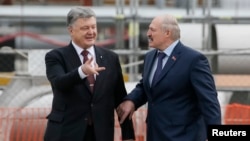
The presidents of Ukraine, Petro Poroshenko (left), and Belarus, Alyaksandr Lukashenka, attend a commemoration ceremony marking the anniversary of the nuclear disaster at the Chernobyl nuclear power plant in Ukraine on April 26.
Ukrainian President Petro Poroshenko has compared the April 26, 1986 Chernobyl nuclear disaster with the ongoing crisis in Ukraine's east, adding that "Russia is conducting an undeclared war against his country."
Poroshenko spoke at the defunct nuclear power plant, where he and Belarusian President Alyaksandr Lukashenka lamented the "unhealing wound" inflicted by the Soviet-era accident 31 years ago and commemorated its victims.
"We again have buried thousands of people. Again we have hundreds of thousands of displaced people," Poroshenko said, referring to the conflict with Russia-backed separatists that has killed more than 9,900 people in eastern Ukraine since 2014.
"I am confident that together, we will defeat that demon as well," he said.
Lukashenka voiced solidarity, saying that "Belarusians are and will always be your reliable friends" -- a tacit reassurance that while Belarus is Russia's ally, it is also wary of Moscow and does not support Russia's infringements on Ukraine's territorial integrity.
Reactor No. 4 at the power plant north of Kyiv, in then-Soviet Ukraine exploded at 1:23 a.m. on April 26, 1986, after a safety test went wrong.
About 30 people died in the immediate aftermath and thousands more are feared to have died in the years that followed from the effects of the disaster, which spread radiation across parts of Ukraine, Belarus, Russia, and large swaths of Europe.
1/12Ivleva says she was able to enter the fourth reactor thanks to physicists she befriended. It wasn't about pulling connections, she says. "Connections and friendship are two different things."
In 1990, photographer Viktoria Ivleva became the first journalist known to have entered the fourth block of the Chernobyl nuclear reactor in Soviet Ukraine, where a deadly explosion and fire on April 26, 1986, triggered the world's worst civilian nuclear accident and sent a radioactive cloud drifting across the Soviet Union and Europe. In an interview with RFE/RL's Belarus Service, Ivleva recalls how she managed to sneak into the destroyed reactor with the help of some scientists in 1990 and discusses the eerie ambience there.
Show moreShow less
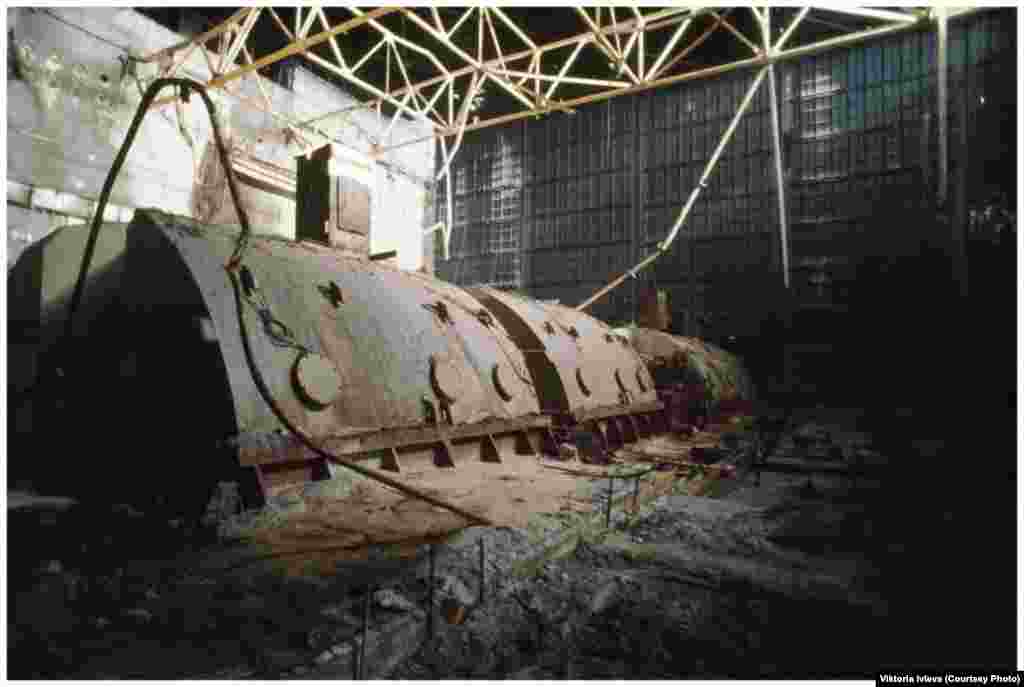
2/12A destroyed machinery hall bears witness to the nuclear accident four years earlier. "I think Chernobyl played a very important role in the future of the Soviet Union," Ivleva says. "This tragedy greatly influenced [then-Soviet leader Mikhail] Gorbachev and his attitude toward the union."
In 1990, photographer Viktoria Ivleva became the first journalist known to have entered the fourth block of the Chernobyl nuclear reactor in Soviet Ukraine, where a deadly explosion and fire on April 26, 1986, triggered the world's worst civilian nuclear accident and sent a radioactive cloud drifting across the Soviet Union and Europe. In an interview with RFE/RL's Belarus Service, Ivleva recalls how she managed to sneak into the destroyed reactor with the help of some scientists in 1990 and discusses the eerie ambience there.
Show moreShow less
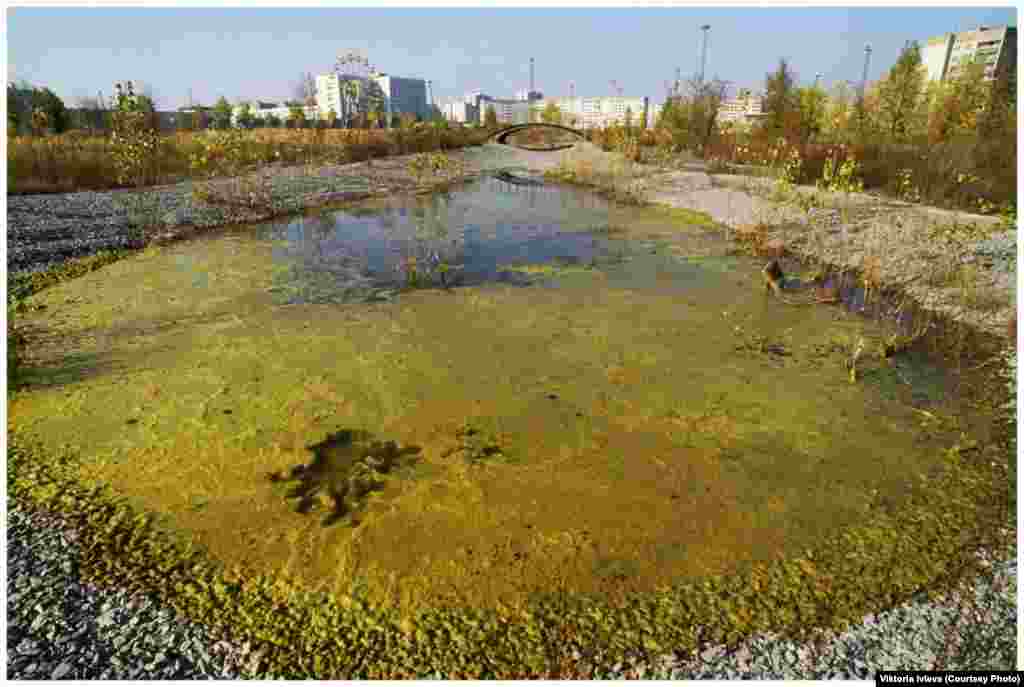
3/12"This was final proof that nature lives by its own laws, and that a cloud does not stop at the border," she says.
In 1990, photographer Viktoria Ivleva became the first journalist known to have entered the fourth block of the Chernobyl nuclear reactor in Soviet Ukraine, where a deadly explosion and fire on April 26, 1986, triggered the world's worst civilian nuclear accident and sent a radioactive cloud drifting across the Soviet Union and Europe. In an interview with RFE/RL's Belarus Service, Ivleva recalls how she managed to sneak into the destroyed reactor with the help of some scientists in 1990 and discusses the eerie ambience there.
Show moreShow less
4/12A destroyed machinery hall. Ivleva says she did not sense any fear while shooting inside the reactor. "I felt nothing but curiosity."
In 1990, photographer Viktoria Ivleva became the first journalist known to have entered the fourth block of the Chernobyl nuclear reactor in Soviet Ukraine, where a deadly explosion and fire on April 26, 1986, triggered the world's worst civilian nuclear accident and sent a radioactive cloud drifting across the Soviet Union and Europe. In an interview with RFE/RL's Belarus Service, Ivleva recalls how she managed to sneak into the destroyed reactor with the help of some scientists in 1990 and discusses the eerie ambience there.
Show moreShow less
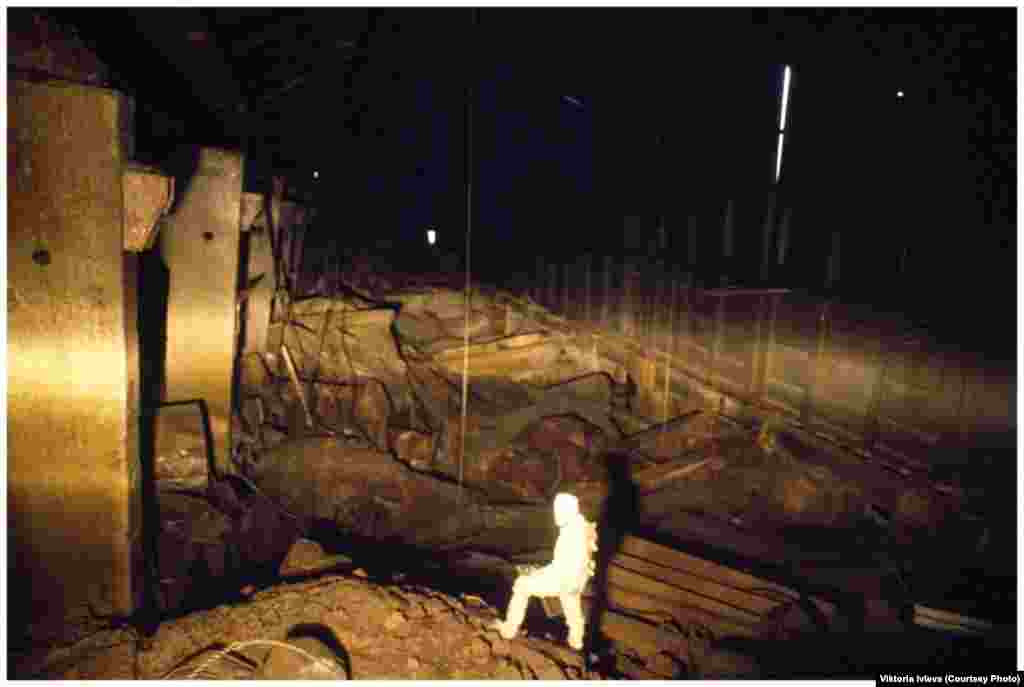
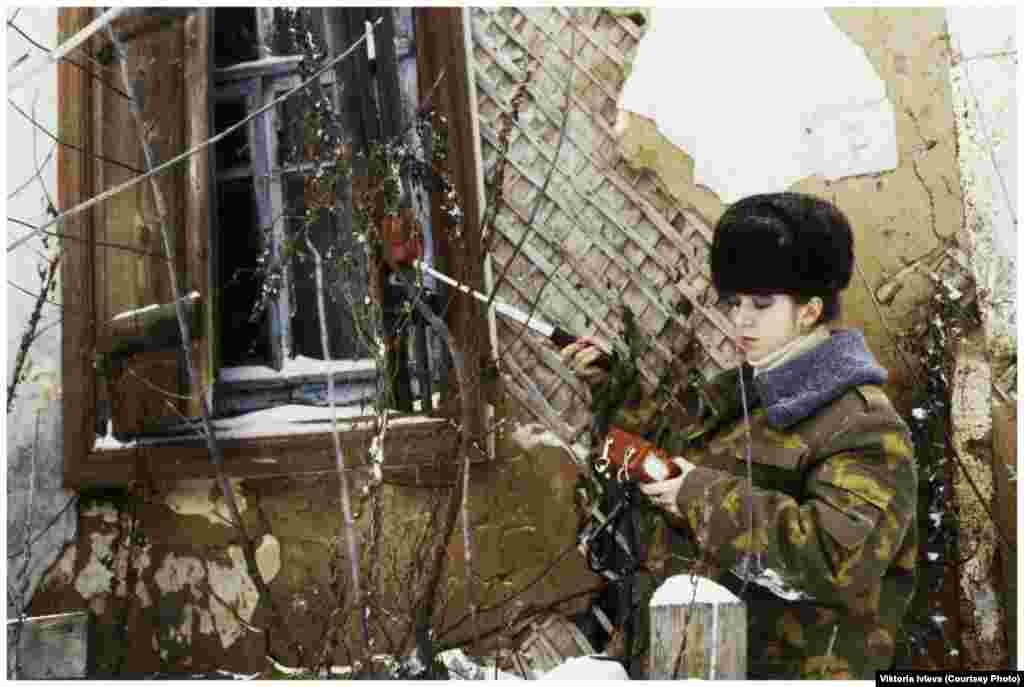
5/12Ivleva says, however, that she was aware of the risks. "I knew that I was embarking on a very dangerous affair, where everything around you speaks of danger. ... I understood that this was not the most beautiful place on Earth."
In 1990, photographer Viktoria Ivleva became the first journalist known to have entered the fourth block of the Chernobyl nuclear reactor in Soviet Ukraine, where a deadly explosion and fire on April 26, 1986, triggered the world's worst civilian nuclear accident and sent a radioactive cloud drifting across the Soviet Union and Europe. In an interview with RFE/RL's Belarus Service, Ivleva recalls how she managed to sneak into the destroyed reactor with the help of some scientists in 1990 and discusses the eerie ambience there.
Show moreShow less
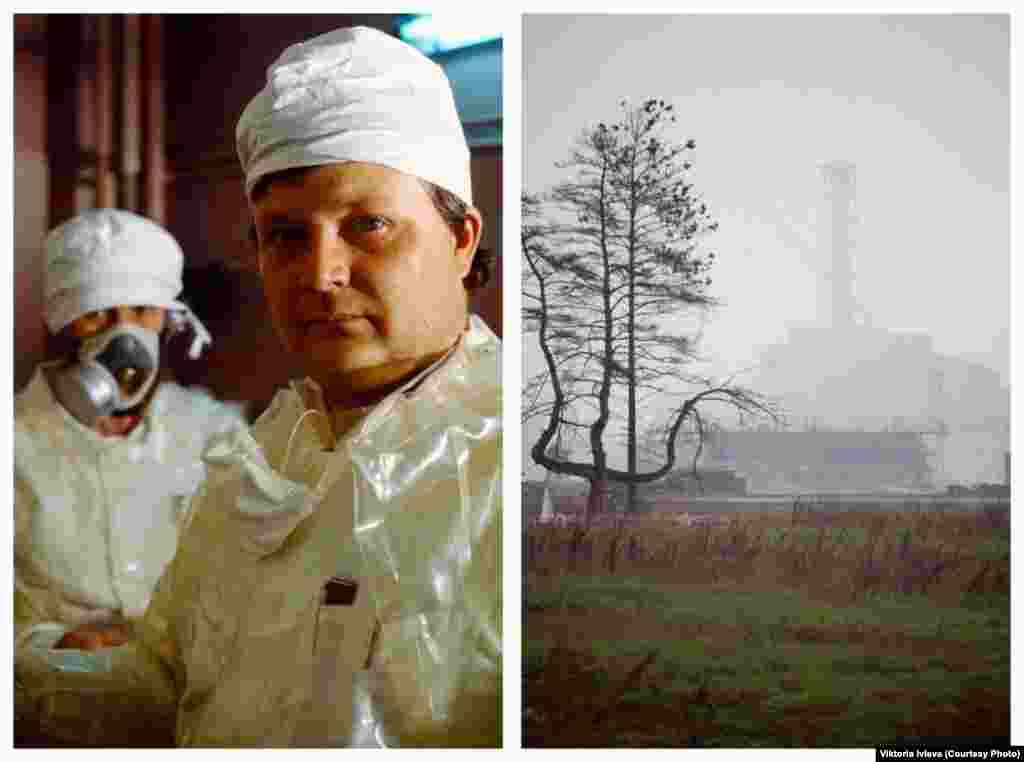
6/12Scientists in special protective clothing (left) and a mutated pine tree against the backdrop of the nuclear plant. "I was with people who knew very well how and where to go to minimize the danger," Ivleva says. "It was infinitely interesting, since no journalists had been given access before."
In 1990, photographer Viktoria Ivleva became the first journalist known to have entered the fourth block of the Chernobyl nuclear reactor in Soviet Ukraine, where a deadly explosion and fire on April 26, 1986, triggered the world's worst civilian nuclear accident and sent a radioactive cloud drifting across the Soviet Union and Europe. In an interview with RFE/RL's Belarus Service, Ivleva recalls how she managed to sneak into the destroyed reactor with the help of some scientists in 1990 and discusses the eerie ambience there.
Show moreShow less
7/12A destroyed machinery hall. "I was dressed in special clothes, which made it very difficult to move. Rubber boots, special gloves, the plastic suit. It was not a tour."
In 1990, photographer Viktoria Ivleva became the first journalist known to have entered the fourth block of the Chernobyl nuclear reactor in Soviet Ukraine, where a deadly explosion and fire on April 26, 1986, triggered the world's worst civilian nuclear accident and sent a radioactive cloud drifting across the Soviet Union and Europe. In an interview with RFE/RL's Belarus Service, Ivleva recalls how she managed to sneak into the destroyed reactor with the help of some scientists in 1990 and discusses the eerie ambience there.
Show moreShow less
8/12Speaking to The New York Times in 1991, five years after the accident, Ivleva said of the men working inside the reactor when she was shooting photographs: "The guys are my friends now, and I look at them and think, 'Oh God, I will soon see them in a coffin.'"
In 1990, photographer Viktoria Ivleva became the first journalist known to have entered the fourth block of the Chernobyl nuclear reactor in Soviet Ukraine, where a deadly explosion and fire on April 26, 1986, triggered the world's worst civilian nuclear accident and sent a radioactive cloud drifting across the Soviet Union and Europe. In an interview with RFE/RL's Belarus Service, Ivleva recalls how she managed to sneak into the destroyed reactor with the help of some scientists in 1990 and discusses the eerie ambience there.
Show moreShow less
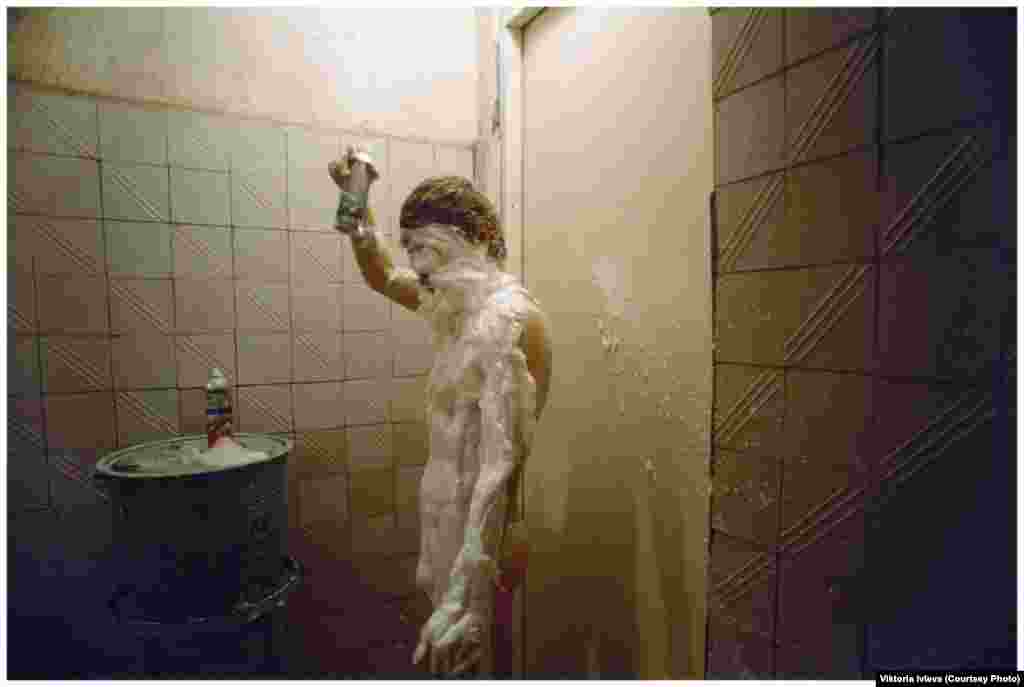
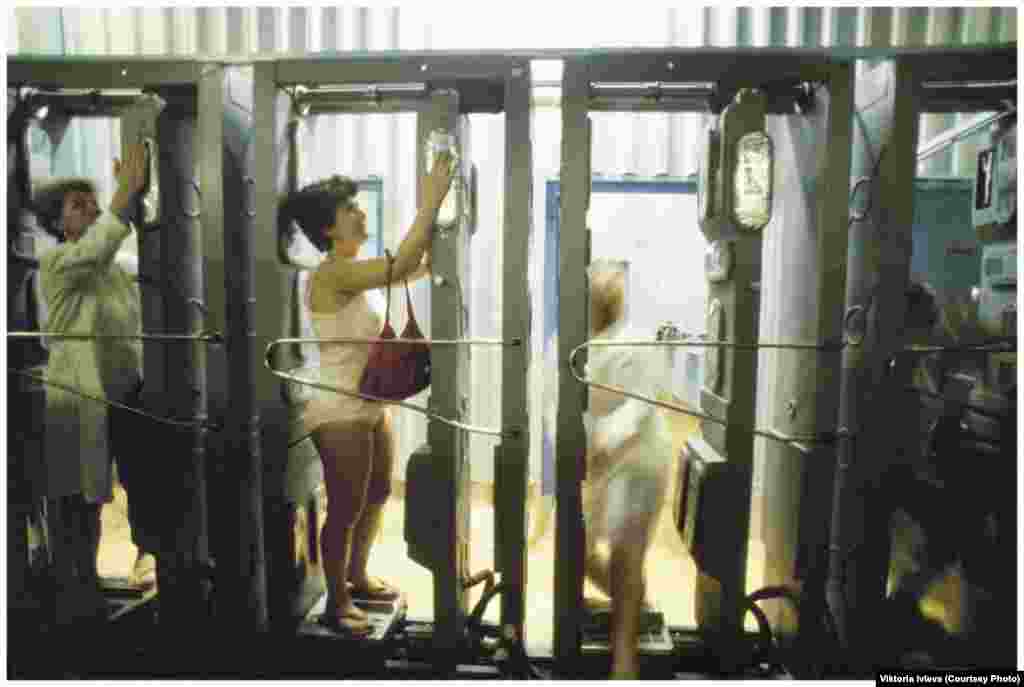
9/12Workers at still functioning units of the power plant are measured for radiation. Ivleva's work inside the fourth reactor at Chernobyl earned her a World Press Photo award in 1992 in the Science and Technology category.
In 1990, photographer Viktoria Ivleva became the first journalist known to have entered the fourth block of the Chernobyl nuclear reactor in Soviet Ukraine, where a deadly explosion and fire on April 26, 1986, triggered the world's worst civilian nuclear accident and sent a radioactive cloud drifting across the Soviet Union and Europe. In an interview with RFE/RL's Belarus Service, Ivleva recalls how she managed to sneak into the destroyed reactor with the help of some scientists in 1990 and discusses the eerie ambience there.
Show moreShow less
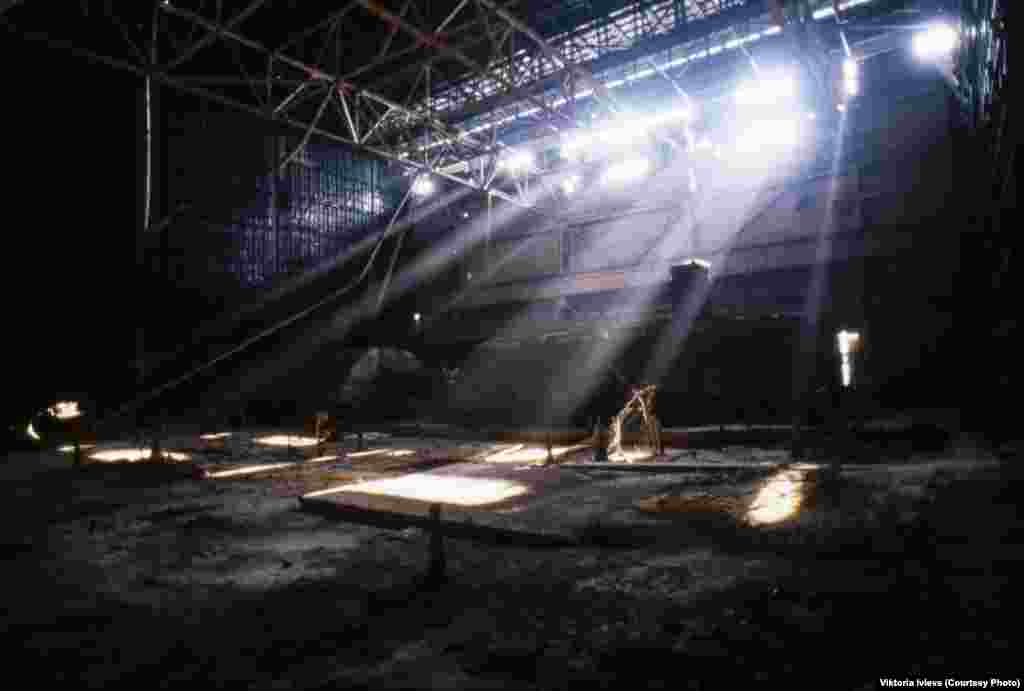
10/12In an essay published last year on the 30th anniversary of the Chernobyl disaster, Ivleva recalled seeing sunbeams streaming through a hole in the sarcophagus encasing the fourth reactor. "The tiny dust particles dancing in these rays transformed this apocalypse into this kind of strange, theatrical beauty," she says. "Never in my life have I witnessed a scene so beautiful and so deadly."
In 1990, photographer Viktoria Ivleva became the first journalist known to have entered the fourth block of the Chernobyl nuclear reactor in Soviet Ukraine, where a deadly explosion and fire on April 26, 1986, triggered the world's worst civilian nuclear accident and sent a radioactive cloud drifting across the Soviet Union and Europe. In an interview with RFE/RL's Belarus Service, Ivleva recalls how she managed to sneak into the destroyed reactor with the help of some scientists in 1990 and discusses the eerie ambience there.
Show moreShow less
11/12"Because the security guards knew the guys by face, they let all of us in without really paying attention," Ivleva wrote in her essay last year.
In 1990, photographer Viktoria Ivleva became the first journalist known to have entered the fourth block of the Chernobyl nuclear reactor in Soviet Ukraine, where a deadly explosion and fire on April 26, 1986, triggered the world's worst civilian nuclear accident and sent a radioactive cloud drifting across the Soviet Union and Europe. In an interview with RFE/RL's Belarus Service, Ivleva recalls how she managed to sneak into the destroyed reactor with the help of some scientists in 1990 and discusses the eerie ambience there.
Show moreShow less
12/12Ivleva noted in her essay that while her photographs from the reactor were published all over the world, only a few were published in the Soviet Union -- in a photography magazine and some black-and-white images in the newspaper Novaya Gazeta. "I am happy that the time has come to publish them all," she wrote.
In 1990, photographer Viktoria Ivleva became the first journalist known to have entered the fourth block of the Chernobyl nuclear reactor in Soviet Ukraine, where a deadly explosion and fire on April 26, 1986, triggered the world's worst civilian nuclear accident and sent a radioactive cloud drifting across the Soviet Union and Europe. In an interview with RFE/RL's Belarus Service, Ivleva recalls how she managed to sneak into the destroyed reactor with the help of some scientists in 1990 and discusses the eerie ambience there.
Show moreShow less
Previous slide
Next slide
The precise number of victims and extent of the damage remains the subject of debate, in part because the Soviet authorities took days to publicly acknowledge the disaster and kept information hidden.
Last year, the crumbling "sarcophagus" used to contain radiation from the smoldering reactor at the time was replaced with a 2.3-billion-dollar metal dome in a bid to stop future leaks. More than 200 tons of uranium remain buried inside.
Two years before the Soviet Union withdrew its troops from Afghanistan following a losing war of occupation, the Chernobyl disaster was in retrospect another sign of the weaknesses of the communist giant that collapsed in 1991.
Poroshenko called it "an unhealing wound that we live with as a people."
"Perhaps more than anyone else, the Chernobyl tragedy affected our Belarusian brothers," he said, referring to the fact that winds blew radiation northward into Belarus, where some its strongest effects were felt.
"Both Belarusians and Ukrainians know that the Chernobyl catastrophe knows no borders," Lukashenka said.
Ukrainian Prime Minister Volodymyr Hroysman paid tribute to the Chernobyl "liquidators" -- emergency workers, state employees, and others sent into clean up after the disaster with little or no preparation, protective gear, or information about the gruesome dangers they faced.
"Thank you to the heroes who, at the expense of their own lives and health, protected us from the horrible consequences of this tragedy," Hroysman wrote on Facebook.
Meanwhile, some 400 protesters marched in Minsk on April 26 to protest the construction of a nuclear power plant in the Ostrovets district of the western Hrodno region, RFE/RL's Belarus Service reported.
The first unit of the plant, being built in conjunction with Russia's Atomstroyexport, is due to be finished in 2019.
RFE/RL journalists report the news in 24 languages in 18 countries where a free press is banned by the government or not fully established. We provide what many people cannot get locally: uncensored news, responsible discussion, and open debate.






![A destroyed machinery hall bears witness to the nuclear accident four years earlier. <span style="font-size: 1em;">"I think Chernobyl played a very important role in the future of the Soviet Union," Ivleva says. "This tragedy greatly influenced [then-Soviet leader Mikhail] Gorbachev and his attitude toward the union."</span>
<p align="left"> </p>](https://gdb.rferl.org/87904447-10ad-471d-89b1-75fb348653ae_w1024_q10_s.jpg)