




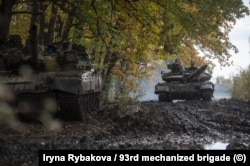
NEAR DOBROPILLYA, Ukraine -- The spring fields and rutted forest roads north of Pokrovsk are still muddy, caking boots, wheels, weapons, and ammunition boxes with waterlogged earth that makes everything heavier and slows everything down.
For Ukrainians and Russians alike.
If you're racing to get bottled water and gasoline to soldiers hunkered down in foxholes and trenches, you have to use all-terrain vehicles.
"The quad bike is more maneuverable; it has a better all-around view, and you can dismount faster if necessary. It'll go where regular cars just skid out,"said a soldier with the 152nd Separate Jaeger Brigade, a Ukrainian light infantry unit. He gave only his call sign, "Bars," in accordance with military restrictions.
"We tried to deliver parcels with [armored vehicles], but you can't always reach the deployment site. You might run into a mine or a [drone] will hit you," the soldier told RFE/RL's Donbas.Realities.
This is the advent of the fifth fighting season for Ukraine in its defense against a bigger, better armed Russian military.
This spring is different, however.
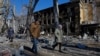
"Right now the general situation for the Ukrainians seems to be better than it has been in several years, though several significant dangers remain," said Pasi Paroinen, a military analyst with Black Bird Group, a Finnish research organization.
In mid-May, Ukrainian forces clawed back more territory from Russian troops than they lost, according to battlefield experts and military analysts -- for the second time this year, in fact.
The gains are incremental and far from a tipping point for the war. Some of them can be attributed how the shifts are calculated; due to changes in tactics and technology, analysts say it's nearly impossible to identify a clear front line where you can measure territory gained or lost.
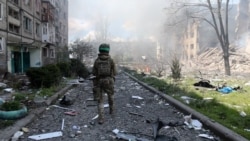

Overall, however, according to DeepState, Russian advances have all but stalled as of mid-May -- in fact, they've lost ground, a net loss of territory, according to the monitoring group, which has ties to Ukraine's military. The findings echo that of the US-based Institute for the Study of War.
"The tide has not yet fully shifted in favor of Ukraine, nor is it likely that Ukrainians will be able to launch any sort of major counteroffensives any time soon," Paroinen said. "But Russia is struggling to advance, and the war is currently likely trending toward a -- temporary? -- stalemate."
"This month has changed the dynamics in our favor, in favor of Ukraine," President Volodymyr Zelenskyy claimed on May 19. "We are holding our positions more, inflicting more damage."
'The Trend Lines Are Bad For Ukraine'
As the weather improves, the ground hardens and foliage expands -- giving soldiers cover from drones -- the tempo of fighting ticks upward. Ukrainian, Russian, and Western observers say this year is turning out no different in that regard.
The proliferation of drones, drone defense, and new drone innovations means there is no front line anymore, experts say. Instead there is something called the "kill zone," a gray-area swath of territory stretching to the rear where soldiers and supply lines are constantly at risk.
During counterattacks reported in late January and February, Ukrainian forces netted about 37 square kilometers, mainly near the town of Hulyaypolye. Russian troops partially reversed those gains.
In the beginning of May, meanwhile, Ukrainian troops eked out battlefield gains in the eastern Kharkiv region, near Kupyansk, a city Ukraine took back from Russia initially in late 2022, then lost control of, and recaptured last year. On May 15, Ukrainian forces captured Odradne, a Kharkiv region village north of Kupyansk, according to Ukrainian and Russian war bloggers.
The last time Ukraine saw any substantial recapture of territory came in late 2022, in two counteroffensives in the Kharkiv and Kherson regions.

"In reality, the initiative is still largely on the Russians' side, even though they are struggling to move forward," Paroinen said. "The following summer months will likely show more clearly if the Russian forces are truly bogged down for good or if they are able to restore at least some level of momentum."
For much of the war, Russia has powered forward by brute force with a conveyer-belt of men drawn from a far larger population sent to the front. Many of those recruits end up in frontal infantry "meat-grinder" attacks, rushing Ukraine's defensive lines, trying to overwhelm them.
The result has been eye-watering casualty rates.
The Economist magazine estimated between 280,000 and 518,000 Russian soldiers have been killed and total casualties between 1.1 million and 1.5 million. A joint estimate by Mediazona and Meduza put the Russian military dead at around 352,000 as of the end of 2025.
'Extremely Costly'
In its annual report released last month, the Dutch military intelligence agency put Russia's death toll at more than 500,000, with permanent losses -- dead and seriously wounded -- at 1.2 million.
Also in April, Ukraine's defense minister said the goal was to kill or maim more Russian troops than are being currently recruited: about 35,000 a month.
"We are making every meter of Ukrainian land extremely costly for the enemy," Mykhaylo Fedorov said.
Ukraine, which has a population about one-third the size of Russia's, hasn't fared better, however.
The Dutch agency estimated about 500,000 permanent losses for Ukraine, which echoes that of the Washington-based Center for Strategic and International Studies: 500,000 to 600,000 total Ukrainian casualties -- killed, wounded, and missing -- and as many as 140,000 dead as of the end of 2025.
The trend lines are bad for Ukraine, Dutch officials said, "because, unlike Russia, it is unable or barely able to replenish the losses."
From Kupyansk South
While Kupyansk has been a bright spot for Ukraine along the nearly 1,100-kilometer line of contact, the area around the Donetsk region cities of Kramatorsk and Slovyansk -- known to Ukrainians as the fortress belt --- has been more problematic.
Russian officials have made clear that capturing the two cities is a priority, either by force or by diplomacy. Since the start of the year, Russian forces have inched toward Kostyantynivka, a city along a railway spur about 30 kilometers south of Kramatorsk.
Kostyantynivka is likely to be "the battle" of this summer, Paroinen said, and he predicted Russia would capture it by the summer's end. The city's capture, however, "is unlikely to result in any sort of local collapse for the Ukrainians.”
Lyman, which was the target of a failed Russian effort in March, is also at risk, mainly due to exhausted Ukrainian units defending the city, he said.
To the southwest of Lyman, about 200 kilometers, Russians troops have pushed toward Hulyaypole, moving west toward the larger junction of Orikhiv, albeit at a glacial pace.

Is Diplomacy Dead?
The inability of Russian forces to achieve one of the Kremlin's main strategic goals, namely capturing the entirety of Ukraine's Donetsk region, means the Kremlin has hedged its bets with diplomacy.
Russian envoys have met repeatedly with White House counterparts over the 16 months since US President Donald Trump took office for a second time. The lead US envoy, Steve Witkoff, has met Putin eight times.
But the US-backed efforts are dormant, for the moment, if not on life support. The Trump administration is distracted by the Iran war, as both Russian and Ukrainian officials have complained, a conflict in its third month with a shaky cease-fire in place and no real end in sight.
Ukraine has also pressed its advantage off the battlefield, using its drone arsenal to hit Russian oil refineries, export terminals, and other targets deep inside of Russia. The effort appears to have rattled the Kremlin, which was forced to scale back the annual Victory Day parade as a result.
"The war is increasingly unpopular in Russia, and Russia is likely to face increasing challenges with financing the war and keeping the flow of manpower steady," Paroinen said. "Ukraine, on the other hand, is intensifying its strikes against Russian energy infrastructure and battlefield logistics while constructing seemingly endless kilometers of obstacle belts behind the front lines."
"It's about showing ordinary residents of Moscow that the war is not just something on YouTube, not just something on television," Ivan Stupak, a former Ukrainian intelligence officer who is now an expert at the Kyiv-based Institute for the Future, told Current Time. "And now Moscow is truly beginning to feel all the realities of war."