



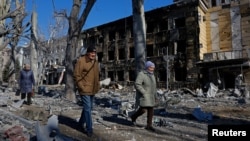
The Russian attack began in the early hours of March 19, in the leafless tree lines and meadows east and southeast of Lyman: swarms of motorcycles, all-terrain vehicles, and buggies; more than two dozen armored vehicles, hundreds of soldiers, and buzzing drones overhead.
The four-hour attack pushed at seven locations near the Ukrainian city and featured a larger mechanized assault along with so-called infiltration tactics, where lightly armed soldiers try to race past Ukrainian defenses and drones, then dig in and hold on for reinforcements.
According to the Ukraine's Third Army Corps, one of its most battle-hardened fighting units, it was "a large-scale failure." Ukraine's top military officer, General Oleksandr Syrskiy, claimed nearly 5,000 Russian soldiers died between March 18 and 19.
"This is the so-called blitzkrieg attempt: to quickly break through positions, get to the rear and then destroy our defensive lines," said Captain Oleksandr Borodin, a spokesman for the Third Corps.
"It's tough for me to talk strategically about the entire front line. But for us this was the first assault of this sort in over a year," he told RFE/RL's Donbas.Realities.
It's impossible to confirm the specific claims of the Third Corps unit; neither Russia's military nor pro-Kremlin Telegram war bloggers have commented. Open-source researchers have confirmed the broad contours of the attack near Lyman.
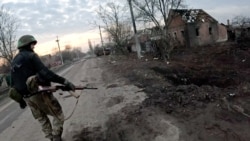

It's also unclear whether the assault is the opening foray of a broader Russian spring offensive. Ukrainian civilian and military officials, and outside experts, have mixed conclusions on the question.
One thing is certain: Five springs in, Russia's war against Ukraine rages on.
"The Russians are following the same blueprint as last year," said Konrad Muzyka, a Polish military analyst with Rochan Consulting who traveled to forward positions in Ukraine earlier this month. They "conduct mechanized assaults and see if they work out. They usually don't, almost often they don't, and they move back into infiltration tactics."
"We are expecting to see an increase in Russian ground activity from late March onward, and it will probably increase even further once leaves start popping up on the trees," he said.
"The tempo of combat operations on the front is indeed accelerating due to improving weather conditions," said Viktor Kevlyuk, a military expert with the Center for Defense Strategies, a Kyiv think tank, "primarily the hardening of the ground, better visibility for drones, and the ability to use heavy equipment."
In a video address on March 22, Ukrainian President Volodymyr Zelenskyy said more than 8,000 Russian troops were killed or seriously wounded in the preceding week.
Aside from the battlefield, Russia and Ukraine have markedly escalated their air war against one another in recent days, trading nightly blows with scores of drones -- and Russian missiles -- fired at targets.
A Russian aerial assault on March 24-25 was one of the largest since the start of the all-out invasion in February 2022, Ukrainian authorities said , with nearly 1,000 drones fired in a 24-hour period.
The Guns Of April
For both Russia and Ukraine, warmer spring weather makes it easier to move on the ground. The earth firms up for heavy and light vehicles. Clement weather is better for drone flying, and it's harder for infantry units to hide without tree cover and underbrush.
It also comes as US-brokered peace talks have stalled after months of bilateral and trilateral meetings between Russia, Ukraine, and US negotiators. Observers blame Russia's unyielding demands -- which include Ukraine's withdrawal from the parts of the Donetsk region it still holds -- as well as the US administration's war with Iran, which is now in its fourth week and only intensifying.
The Iran war is welcome in Moscow because it has driven up global energy prices, and Russia has largely funded its four-year assault with oil and gas revenues.

Western sanctions have bitten into that cash flow, but the Middle East tensions have since doubled the value of Moscow's exports to an average $270 million a day, according to Bloomberg -- the most Russia has earned from oil exports since just after the 2022 invasion.
It's also welcome for the Kremlin because US weapons supplies have been central to Ukraine's ability to stay in the fight with Russia, and Washington is now drawing down its arsenals, including Patriot missile defenses, which Ukraine needs desperately.
Over the course of an unusually bitter winter, Russia waged a monthslong drone-and-missile campaign targeting Ukraine's energy infrastructure -- power plants, heating plants, transmission grids, substations -- to try and demoralize an already exhausted populace.
On the battlefield, Ukraine's smaller forces -- exhausted, undermanned and underequipped -- continue to hold the bigger, better equipped Russia army to just incremental gains measured in meters, not kilometers.
Ukraine also managed to eke out gains in several locations over the winter, though the advances are too small to result in any decisive change in momentum, analysts said.
In one operation near the Zaporizhzhya region town of Hulyaypole in late January, Muzyka said, Ukrainian forces were able to move more quickly, targeting Russian UAV drone crews and limit Russians' ISR capability in intelligence, surveillance, and reconnaissance.

"The Ukrainians used a mix of UAV strikes and artillery strikes [and] had a very good understanding of where the Russian UAV crews were. They were able to either kill them, destroy them, or deploy UAVs to keep them in the dugouts, the trenches, unable to move," he said.
Some of the Ukrainian success is also due to Russian troops in February losing access to Starlink, after owner Elon Musk heeded Ukrainian requests to cut off unauthorized terminals widely used by Moscow's forces. The satellite Internet network has been essential not only for communication but also guidance systems for drones.
Lyman, the city that was the focus of the March 19 attack, is located just 30 kilometers northeast of Slovyansk, one of two so-called fortress cities that sit at the heart of Ukraine's defense of the Donetsk region.
The Kremlin has demanded Ukraine give up the remaining territory of the Donetsk region, including Slovyansk and Kramatorsk. Ukraine has refused, fearing in part that Russian control over the two cities would pave the way for a new assault in the future, even after the end of this war.
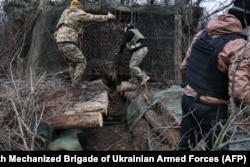
In the latest round of bilateral talks on March 21-22, US negotiators reportedly pressured Ukraine to agree to withdraw its forces entirely from Donetsk, Ukrainskaya Pravda cited unnamed officials as saying. In a subsequent interview with Reuters, Zelenskyy said the United States was linking the provision of security guarantees to a withdrawal.
The uptick in Russian operations in recent weeks does in fact mean the start of a spring offensive, argued Roman Mykula, co-founder of Deep State, an open-source tracking group with links to the Ukrainian military: near Kostyantynivka, near Hulyaypole, and near Pokrovsk.
The March 19 assault on Lyman, he said, "was a big attempt of Russian motorcyclists to push the front, to attack. But most of them were killed. And the Russians don't have any successes there."
The Lyman assault was one of the largest attacks in the last year along that stretch of the front line, Kevlyuk said. It does not constitute the start of a spring offensive, he said; that will come in probably in May, and the Russians will be shifting forces around in the coming weeks in preparation.
Russian forces have "fallen behind schedule in forming starting positions for the summer offensive campaign this year and [they are] therefore rushing in a frantic manner," he said.