




WASHINGTON -- The United States has announced an additional $1.8 billion in humanitarian assistance for UN-led relief operations worldwide, including continued support for Ukraine.
Speaking at a May 14 briefing organized by the State Department’s Foreign Press Center, senior US and UN officials said the new package builds on a December 2025 “Humanitarian Reset” agreement between Washington and the UN Office for the Coordination of Humanitarian Affairs (OCHA), bringing total US support under the framework to $3.8 billion across 21 crisis-hit countries.
US Ambassador to the UN Mike Waltz said the latest contribution would both “save more lives around the world” and advance reforms aimed at improving “efficiency, accountability, and lasting impact.”
The funding will support OCHA’s country-based pooled funds and highly targeted emergency assistance programs in countries including Ukraine, Sudan, Syria, Haiti, Lebanon, and Venezuela.
UN Secretary-General Antonio Guterres welcomed the announcement, saying the contribution would help aid agencies “reach millions of people in the most urgent crises with lifesaving support.”
UN Convoy Attack
The announcement came as OCHA chief Tom Fletcher revealed that a UN humanitarian convoy in Ukraine had been attacked overnight in what he described as a possible “targeted attack.”
“Our people were very, very lucky to escape with their lives,” Fletcher said, adding that the UN was “furious” and would demand “full investigations and accountability.”
Ukrainian President Volodymyr Zelenskyy wrote on X on May 14 that Russia attacked the vehicle with first-person-view drones.
The attack cast a sharp spotlight on the urgency of humanitarian operations in Ukraine as the new US funding package was unveiled.
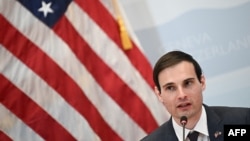
Senior US official Jeremy Lewin, under secretary of state for foreign assistance, humanitarian affairs, and religious freedom, told RFE/RL that Ukraine would receive additional support under the latest tranche of funding.
“Ukraine was in our first tranche [of US aid], and will receive additional funding in this tranche as well,” Lewin said.
He described the war as “one of the most brutal and senseless wars in human history,” while arguing that humanitarian relief alone could not solve the crisis.
“The situation in Ukraine cannot get better until the war ends,” he said, adding that President Donald Trump continued to push for peace negotiations and cease-fire efforts.
Lewin also noted that European allies had increased their share of humanitarian support for Ukraine, while the US remained heavily engaged in relief operations.
Funding Freeze
US officials used the announcement to defend sweeping reforms introduced under the Trump administration’s humanitarian assistance strategy. In 2025, the administration froze and sharply cut US foreign aid, dismantling much of USAID, which handled most humanitarian and development programs.
The Trump administration criticized USAID programs as inefficient and misaligned with US interests, while critics argued these moves created a global humanitarian crisis.
According to the State Department, the first $2 billion allocated under the “Humanitarian Reset” framework reached 21.1 million people in less than four months.
Officials said 92 percent of the funding was directed toward the world’s most severe humanitarian emergencies -- categorized as “Level 4 and 5” crises -- which they described as the highest concentration of high-priority aid ever achieved by a major donor.
The administration also touted faster disbursement times, lower administrative costs, and tougher anti-fraud oversight measures.
“OCHA has brought down the overhead costs considerably compared with the other models we’ve used in the past,” Lewin said, adding that the UN agency had cut funding-delivery times in half compared with previous systems.
'Crisis Of Accountability And Trust'
Fletcher acknowledged that the humanitarian sector had faced a “crisis of accountability and trust” but argued that the reforms were already delivering results.
“We are going for radical transparency with this program,” he said. “We want people to crawl over the facts and figures, to interrogate us.”
The UN humanitarian chief said the funding had already delivered tangible results worldwide. Fletcher said the earlier US contribution helped deliver food assistance to more than 6 million people, safe water access to more than 10 million people, treatment for severe malnutrition to more than 550,000 children, and support for hundreds of health facilities and local aid organizations worldwide.
He stressed that women and girls remained a major focus of the response, particularly survivors of sexual violence in conflict zones.
The latest US package comes as humanitarian agencies warn of widening global needs amid conflicts in Ukraine, Gaza, Sudan, and elsewhere.
Fletcher said the UN hopes to reach 87 million people this year if it can raise $23 billion in total humanitarian funding globally.
“The good news today,” he said, “is that millions of those people will receive lifesaving support that they otherwise would not have received.”

