




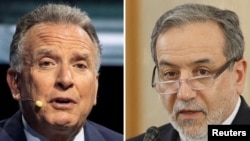
US envoy Steve Witkoff met with Israeli officials for more than three hours on February 3, two days before a key meeting in Istanbul with Iranian Foreign Minister Abbas Araqchi in an attempt to jumpstart negotiations on Tehran’s nuclear program and tamp down fears of a new war in the Middle East.
Witkoff met with Israeli Prime Minister Benjamin Netanyahu and other senior Israeli officials, who have been pushing for any deal with Iran to include removing any enriched uranium from Iran along with a halt to all enrichment processing, as well as putting an end to Iran’s financing of its regional proxies and limits to its ballistic missile program.
"Ahead of Envoy Witkoff's departure to meet with a representative of Iran, the Prime Minister [Netanyahu] clarified his position that Iran has proven time and again that its promises cannot be relied upon," Netanyahu said in a post on X.

US President Donald Trump told reporters at the White House that "Iran would like to negotiate and we'll see if something can be done. We are negotiating with them now."
Iranian President Masud Pezeshkian said in post on X on February 3 that he had instructed Foreign Minister Abbas Araqchi "based on the principles of dignity, wisdom, and expediency within the framework of national interests."
Intense Shuttle Diplomacy
Pezeshkian has issued warnings recently that any diplomatic success with Washington hinges on an end to threats, a reference to the current buildup of US military might in Middle East waters.
He added that progress in talks could be made “provided that there is an appropriate atmosphere free from threats and unreasonable expectations.”
The Istanbul talks follow an intense week of shuttle diplomacy: Iran's security chief Ali Larijani met with Russian President Vladimir Putin in Moscow on January 30, while Araqchi traveled to Turkey to consult with President Recep Tayyip Erdogan and Foreign Minister Hakan Fidan.
At the same time, the US military has deployed a naval strike group, led by the USS Abraham Lincoln aircraft carrier, off the coast of Iran in response to Tehran’s deadly crackdown on unrest sparked by the country’s deteriorating living conditions.

Late last month, Trump announced that a "massive armada" was moving toward Iran, warning it could act with "speed and fury" if necessary, while expressing hope for a "fair deal" that would leave Iran without nuclear weapons.
Some in Iran have suggested a potential deal would see Iran's stockpile of highly enriched uranium -- reportedly buried underground following US strikes last June -- transferred to another country.
Because of cuts to Internet service in Iran, it is difficult to assess the number of protesters who have been killed during the mass demonstrations, which appear to have eased in recent days.
The US-based rights organization HRANA, whose figures RFE/RL has been regularly citing since the violent crackdown began in Iran in December 2025, says its confirmed death toll, including security forces, is now 6,854, while the number of fatalities still under investigation is 11,280. More than 50,000 people have been arrested.
Some estimates by officials quoted off the record by various media outlets put the death toll at several times higher.

