


Accessibility links

Breaking News

Anger Grows In Iran Over Lack Of Accountability In Ukrainian Plane Tragedy

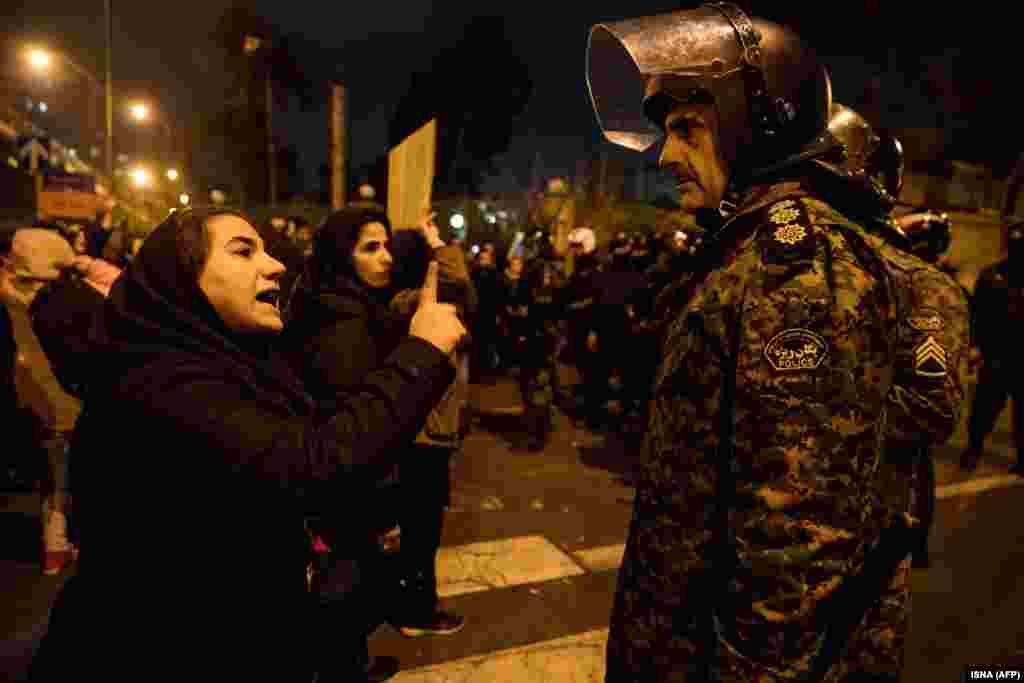
A woman attending a candlelight vigil in memory of the victims of the plane crash confronts a policeman following the gathering in front of  Amir Kabir University in Tehran on January 11.
A woman attending a candlelight vigil in memory of the victims of the plane crash confronts a policeman following the gathering in front of Amir Kabir University in Tehran on January 11.

Only days after large crowds of Iranians demonstrated national unity while mourning the assassination of the country's top military leader in a U.S. drone strike, anti-government protests have erupted on the streets of Tehran and several other cities.

The protesters are angry over the establishment's mishandling of the deadly downing of a Ukrainian passenger jet on January 8 by the Islamic Revolutionary Guards Corps (IRGC) in what is seen as a display of incompetency and recklessness by the country's leaders.

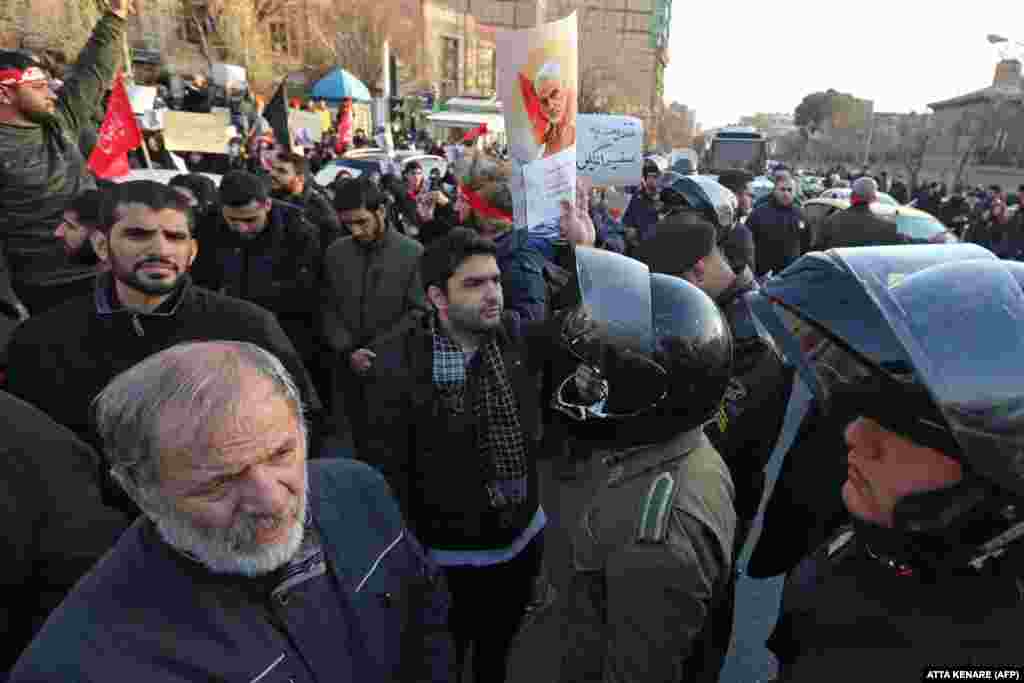
Thousands of protesters, including many students, chanted against the clerical establishment over the weekend and into January 13, with many calling for the resignation of the country's top authority, Ayatollah Ali Khamenei.

"Clerics get lost" was one refrain heard at the protests. Others called Qasem Soleimani, the IRGC commander killed in the U.S. strike and widely praised as a national hero by the state, "a murderer."
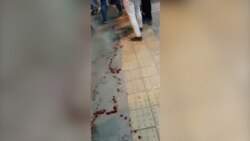
Iranian Anti-Government  Protests Continue Amid Reports Of Gunfire
please wait

No media source currently available

0:00 0:02:01 0:00

It was Iran's delayed admission of guilt for the plane's downing -- three days after the tragedy -- and what was seen by many as an attempt to cover up the real cause of the crash that has aroused public fury and a revival of the grievances that resulted in waves of anti-establishment protests in past months, including in November, when hundreds were killed in a violent state crackdown on rallies against large increases in gas prices.

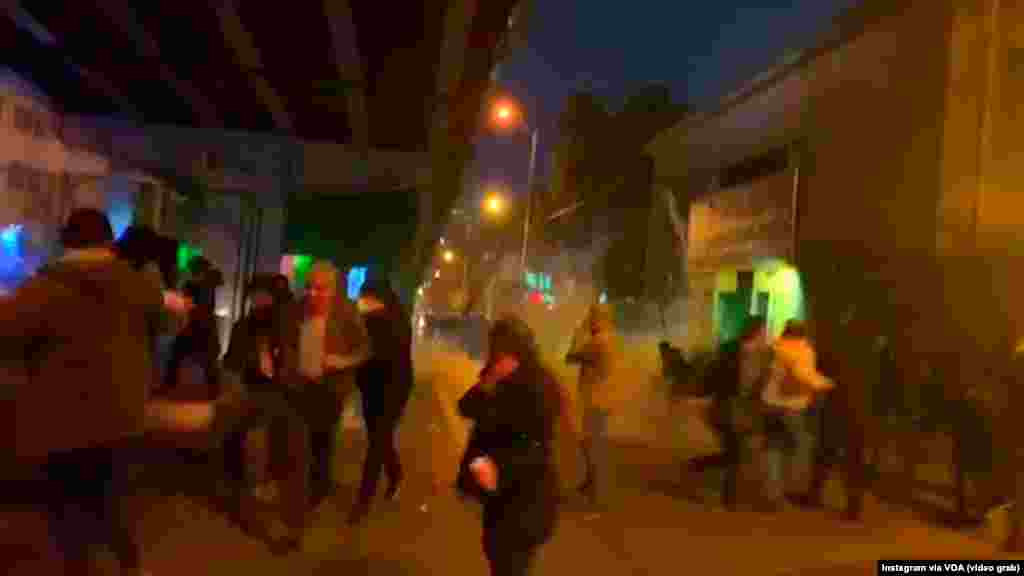
In the past two days there have been photos and video from the protests showing wounded people being carried away and blood on the ground. In some videos, gunshots can be heard and tear gas is being fired, although the police have denied shooting at protesters.

U.S. President Donald Trump tweeted to Iranian leaders: "Don't kill your protesters."

The demonstrators in Tehran and cities including Isfahan, Shiraz, and Babol were also upset by what they see as a cover-up, including Iran's lack of cooperation with Ukrainian investigators and the bulldozing of the disaster site, which led to international ridicule.

The protests come amid a faltering economy due to crippling U.S. economic sanctions that have contributed to the fall of the national currency, the rial.

"We're seeing society bursting [in anger], particularly students, against lies and the humiliation of the nation," Paris-based Iranian analyst Reza Alijani told RFE/RL.

Iranian Protests Continue After Tehran Admits Shooting Down Passenger Plane

Anti-government protesters at Tehran's Sharif University on January 13, with demonstrators chanting slogans against the Iranian leadership, according to social-media posts.
1/19 Anti-government protesters at Tehran's Sharif University on January 13, with demonstrators chanting slogans against the Iranian leadership, according to social-media posts.
For a third consecutive day, anti-government protests have broken out in Iran after the country's military admitted it had mistakenly shot down a Ukrainian passenger jet killing all 176 people aboard.
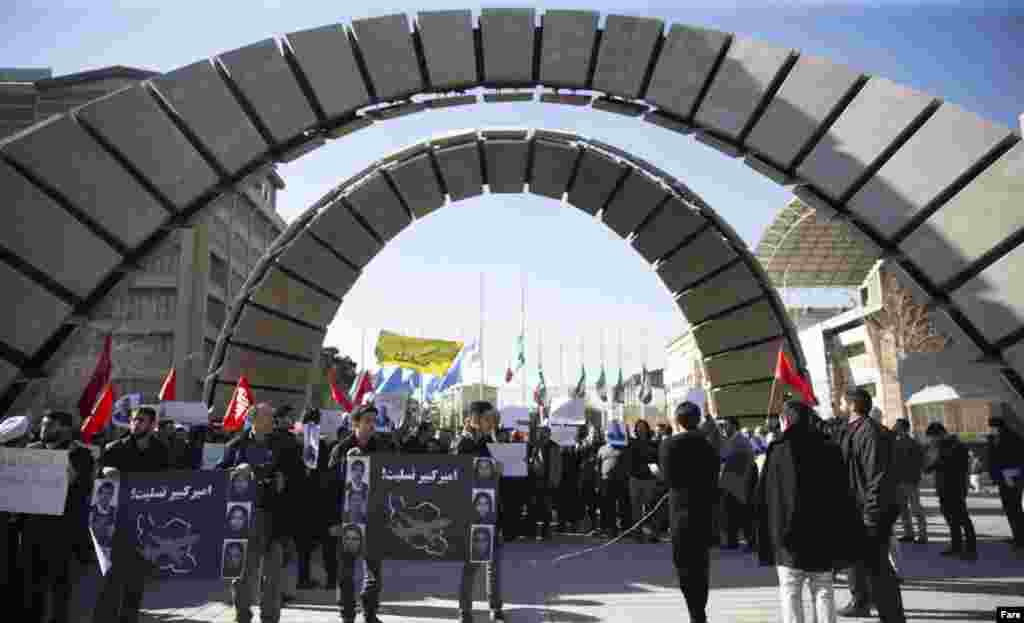
Iranian students at Amir Kabir University on January 12 carried banners expressing condolences for the victims of Ukraine International Airlines Flight PS752. Iran's military said the passenger jet was shot down "unintentionally" by its air-defense forces, which were on high alert following an Iranian ballistic-missile attack a few hours earlier against U.S. forces in Iraq.
2/19 Iranian students at Amir Kabir University on January 12 carried banners expressing condolences for the victims of Ukraine International Airlines Flight PS752. Iran's military said the passenger jet was shot down "unintentionally" by its air-defense forces, which were on high alert following an Iranian ballistic-missile attack a few hours earlier against U.S. forces in Iraq.
For a third consecutive day, anti-government protests have broken out in Iran after the country's military admitted it had mistakenly shot down a Ukrainian passenger jet killing all 176 people aboard.
Protesters avoided stepping on the U.S. and Israeli flags while gathering at Beheshti University campus on January 12. Just nine days earlier, other angry crowds were seen burning those flags after Iranian military commander Qasem Soleimani was assassinated by a U.S. drone strike in Iraq. 
3/19 Protesters avoided stepping on the U.S. and Israeli flags while gathering at Beheshti University campus on January 12. Just nine days earlier, other angry crowds were seen burning those flags after Iranian military commander Qasem Soleimani was assassinated by a U.S. drone strike in Iraq. 
For a third consecutive day, anti-government protests have broken out in Iran after the country's military admitted it had mistakenly shot down a Ukrainian passenger jet killing all 176 people aboard.
A protester kicks a poster of slain Iranian military commander Qasem Soleimani in Tehran on January 12.
4/19 A protester kicks a poster of slain Iranian military commander Qasem Soleimani in Tehran on January 12.
For a third consecutive day, anti-government protests have broken out in Iran after the country's military admitted it had mistakenly shot down a Ukrainian passenger jet killing all 176 people aboard.
Security forces stand guard in front of the British Embassy in the Iranian capital, Tehran, on January 12. The British ambassador was briefly arrested for allegedly attending an illegal demonstration.
5/19 Security forces stand guard in front of the British Embassy in the Iranian capital, Tehran, on January 12. The British ambassador was briefly arrested for allegedly attending an illegal demonstration.
For a third consecutive day, anti-government protests have broken out in Iran after the country's military admitted it had mistakenly shot down a Ukrainian passenger jet killing all 176 people aboard.
Iranian demonstrators hold posters bearing the image of slain military commander Qasem Soleimani in front of the British Embassy in Tehran on January 12. About 200 protesters chanted "Death to Britain" as they rallied outside the mission. The day before, British Ambassador Rob Macaire was briefly arrested for attending a memorial for the victims of Ukraine International Airlines Flight PS752.
6/19 Iranian demonstrators hold posters bearing the image of slain military commander Qasem Soleimani in front of the British Embassy in Tehran on January 12. About 200 protesters chanted "Death to Britain" as they rallied outside the mission. The day before, British Ambassador Rob Macaire was briefly arrested for attending a memorial for the victims of Ukraine International Airlines Flight PS752.
For a third consecutive day, anti-government protests have broken out in Iran after the country's military admitted it had mistakenly shot down a Ukrainian passenger jet killing all 176 people aboard.
Protesters gather in front of the Ostad Moein subway station on January 12. Anti-government slogans targeting Iran's conservative-clerical establishment could be heard.
7/19 Protesters gather in front of the Ostad Moein subway station on January 12. Anti-government slogans targeting Iran's conservative-clerical establishment could be heard.
For a third consecutive day, anti-government protests have broken out in Iran after the country's military admitted it had mistakenly shot down a Ukrainian passenger jet killing all 176 people aboard.
Iranian riot police used tear gas on anti-government demonstrators on January 11 in Tehran. Images of earlier rallies appeared to show police and security forces firing live ammunition to disperse demonstrators. Authorities denied that police had opened fire.
8/19 Iranian riot police used tear gas on anti-government demonstrators on January 11 in Tehran. Images of earlier rallies appeared to show police and security forces firing live ammunition to disperse demonstrators. Authorities denied that police had opened fire.
For a third consecutive day, anti-government protests have broken out in Iran after the country's military admitted it had mistakenly shot down a Ukrainian passenger jet killing all 176 people aboard.
Protesters at Amir Kabir University in Tehran on January 11 were heard chanting, "Our leader is ignorant and a source of shame."
9/19 Protesters at Amir Kabir University in Tehran on January 11 were heard chanting, "Our leader is ignorant and a source of shame."
For a third consecutive day, anti-government protests have broken out in Iran after the country's military admitted it had mistakenly shot down a Ukrainian passenger jet killing all 176 people aboard.
A woman attending a candlelight vigil for the victims of the Ukrainian airliner crash talks to a policeman on January 11 at Tehran's Amir Kabir University.
10/19 A woman attending a candlelight vigil for the victims of the Ukrainian airliner crash talks to a policeman on January 11 at Tehran's Amir Kabir University.
For a third consecutive day, anti-government protests have broken out in Iran after the country's military admitted it had mistakenly shot down a Ukrainian passenger jet killing all 176 people aboard.
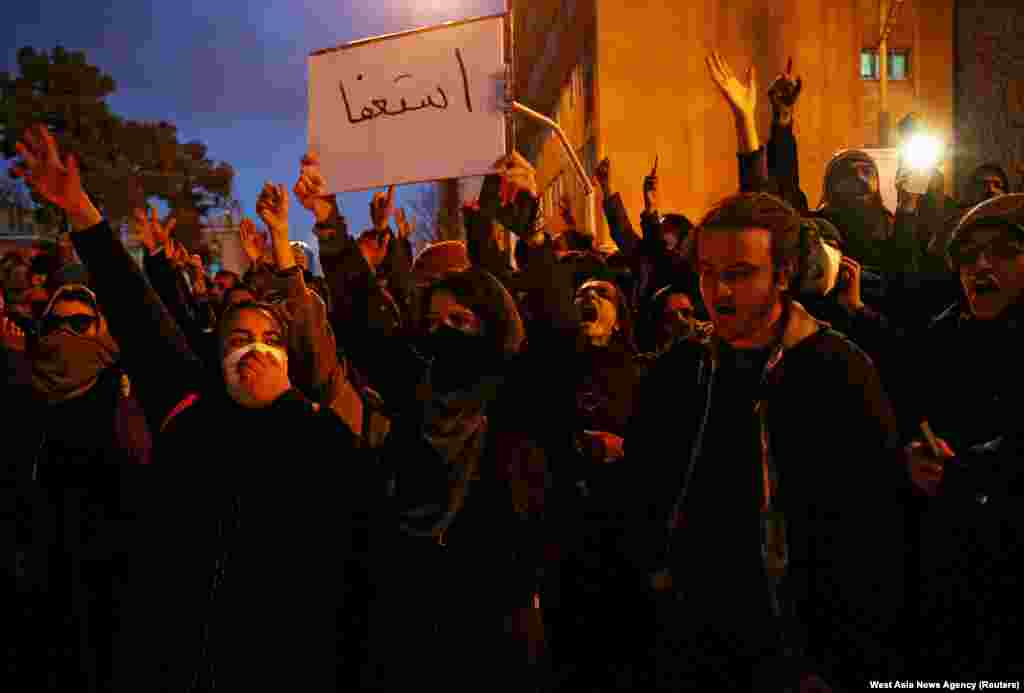
Iranian students demonstrate following a tribute to the victims of Ukraine International Airlines Flight PS752 in front of Amir Kabir University in Tehran on January 11.
11/19 Iranian students demonstrate following a tribute to the victims of Ukraine International Airlines Flight PS752 in front of Amir Kabir University in Tehran on January 11.
For a third consecutive day, anti-government protests have broken out in Iran after the country's military admitted it had mistakenly shot down a Ukrainian passenger jet killing all 176 people aboard.
Iranian students chant anti-government slogans as they demonstrate in front of Amir Kabir University in Tehran, on January 11. "Commander in chief [Supreme Leader Ayatollah Ali Khamenei] resign, resign!"
12/19 Iranian students chant anti-government slogans as they demonstrate in front of Amir Kabir University in Tehran, on January 11. "Commander in chief [Supreme Leader Ayatollah Ali Khamenei] resign, resign!"
For a third consecutive day, anti-government protests have broken out in Iran after the country's military admitted it had mistakenly shot down a Ukrainian passenger jet killing all 176 people aboard.
Protesters gather in front of Sharif University in Tehran on January 11. Iranian media reported that 14 of the Ukrainian plane victims were graduates of the university.
13/19 Protesters gather in front of Sharif University in Tehran on January 11. Iranian media reported that 14 of the Ukrainian plane victims were graduates of the university.
For a third consecutive day, anti-government protests have broken out in Iran after the country's military admitted it had mistakenly shot down a Ukrainian passenger jet killing all 176 people aboard.
A memorial vigil in the Iranian city of Sari on January 11.
14/19 A memorial vigil in the Iranian city of Sari on January 11.
For a third consecutive day, anti-government protests have broken out in Iran after the country's military admitted it had mistakenly shot down a Ukrainian passenger jet killing all 176 people aboard.
A woman holds a picture of newlyweds Arash Pourzarabi and Pouneh Gourji at a Tehran vigil on January 11. Both were graduate students studying computer science at the University of Alberta, and were coming back to Edmonton, Canada after celebrating their wedding in Iran.
15/19 A woman holds a picture of newlyweds Arash Pourzarabi and Pouneh Gourji at a Tehran vigil on January 11. Both were graduate students studying computer science at the University of Alberta, and were coming back to Edmonton, Canada after celebrating their wedding in Iran.
For a third consecutive day, anti-government protests have broken out in Iran after the country's military admitted it had mistakenly shot down a Ukrainian passenger jet killing all 176 people aboard.
A woman holds a message to Iranian leaders with the word "resign" at a vigil for the victims of the air tragedy in Tehran on January 11.
16/19 A woman holds a message to Iranian leaders with the word "resign" at a vigil for the victims of the air tragedy in Tehran on January 11.
For a third consecutive day, anti-government protests have broken out in Iran after the country's military admitted it had mistakenly shot down a Ukrainian passenger jet killing all 176 people aboard.
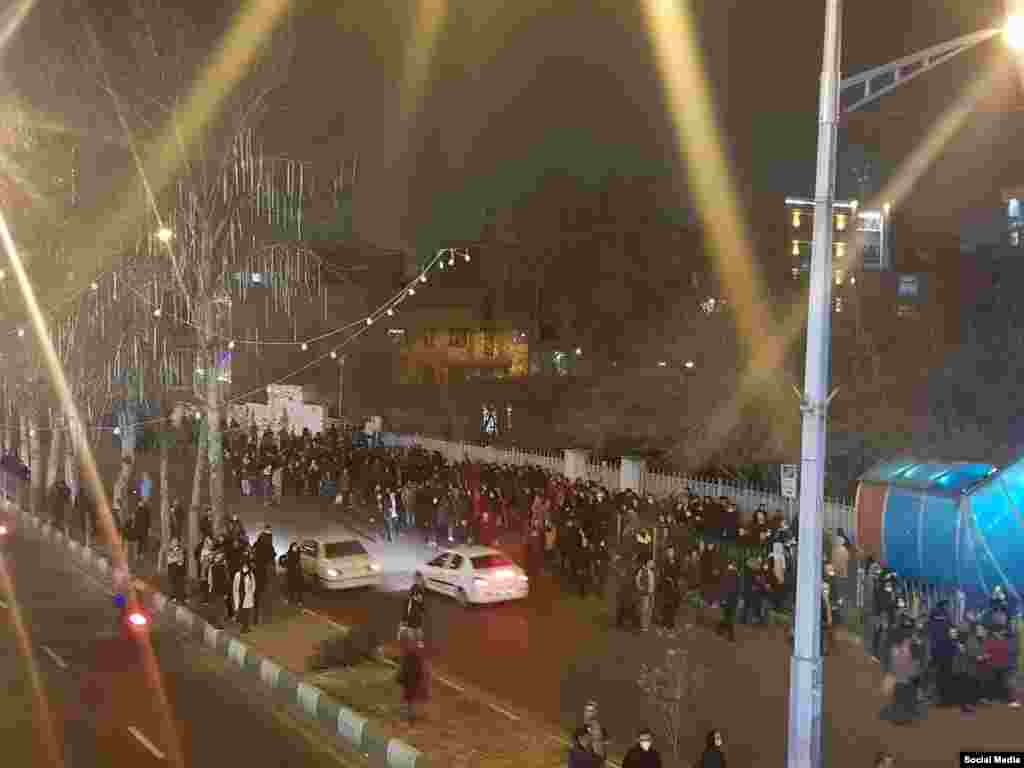
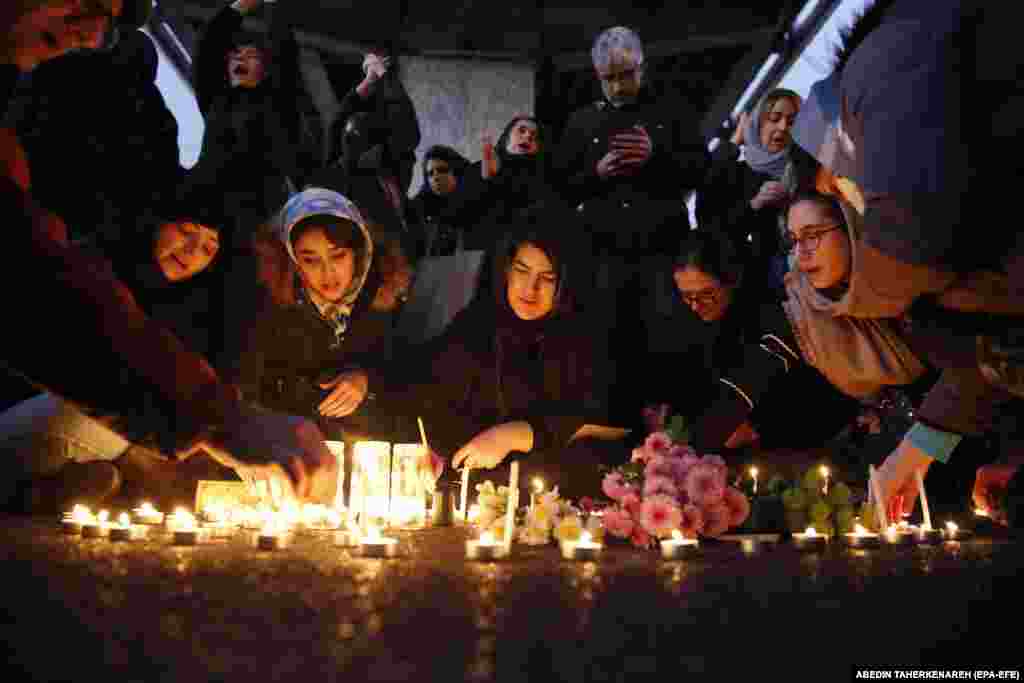
Iranians light candles for all 176 victims of Ukraine International Airlines Flight PS752 during protests in front of Amir Kabir University in Tehran on January 11. The passenger jet was carrying 82 Iranians, 57 Canadians, 11 Ukrainians, 10 Swedes, 10 Afghans, three Germans, and three Britons.
17/19 Iranians light candles for all 176 victims of Ukraine International Airlines Flight PS752 during protests in front of Amir Kabir University in Tehran on January 11. The passenger jet was carrying 82 Iranians, 57 Canadians, 11 Ukrainians, 10 Swedes, 10 Afghans, three Germans, and three Britons.
For a third consecutive day, anti-government protests have broken out in Iran after the country's military admitted it had mistakenly shot down a Ukrainian passenger jet killing all 176 people aboard.
Riot police gather at Amir Kabir University in Tehran on January 11.
18/19 Riot police gather at Amir Kabir University in Tehran on January 11.
For a third consecutive day, anti-government protests have broken out in Iran after the country's military admitted it had mistakenly shot down a Ukrainian passenger jet killing all 176 people aboard.
Protesters rally at Amir Kabir University in Tehran on January 11.
19/19 Protesters rally at Amir Kabir University in Tehran on January 11.
For a third consecutive day, anti-government protests have broken out in Iran after the country's military admitted it had mistakenly shot down a Ukrainian passenger jet killing all 176 people aboard.
Previous slide
Next slide

Mostafa Tajzadeh, an acting interior minister under reformist former President Mohammad Khatami, suggested he was also shocked over the level of deceit by the government. "I must admit I couldn't believe all the lies, secrecy, and deceit in the Islamic republic. Why and how did we reach this point?" he said on Twitter.

Speaking on January 13, government spokesman Ali Rabiei denied that the state concealed facts and misled the public, while acknowledging the public had lost trust in it.

He noted the plane was downed just a few hours after Iran had fired more than a dozen ballistic missiles at two U.S. bases in retaliation for Soleimani's killing, and suggested the high tension between Washington and Tehran played a role.

"All armed forces were on high alert and this was the reason for the tragic mistake and the accident," Rabiei was quoted as saying by state media.

'A Swamp Of Distrust'

Despite such comments, criticism over the handling of the disaster has continued, including by hard-liners such as the editor in chief of the IRGC-affiliated Tasnim news agency, who said Iran's PR fiasco was as bad as the catastrophe itself. "Officials who misled the media are guilty too," Kian Abdollahi said on Twitter, adding that "We are all ashamed before the people."

In the past two days, IRGC commander Hossein Salami and the commander of the IRGC's Aerospace Force, Amirali Hajizadeh, have publicly accepted blame and apologized for bringing the plane down and killing all 176 people aboard, mostly Iranians.

But rumors that several officials would submit their resignations over the event were quickly dismissed by state-controlled TV on January 12, resulting in criticism within the media.

"Just as the right of the people to protest is only acknowledged in interviews and on paper, the resignation or dismissal of officials due to inefficacy or negligence is only on paper and in the real world even reports about it are denied within a fraction of a second," the popular news site Tabnak wrote.

It added that while the resignation of officials was seen as a "weakness" in Iran, such a measure would demonstrate "accountability" at a time when public trust has been badly shaken due to the attempts to mislead Iranians and the international community.

"It's like falling into a swamp...the reason is that Khamenei believes acknowledging any criticism is weakness; he doesn't want to apologize, and he doesn't seem to realize that he's falling into a swamp of distrust," Alijani said.

"They're claiming that Khamenei had not been informed [about the missile strike] for 48 hours, but those who know Khamenei realize it's not possible that he wasn't aware," he added.

'No Life Left In Me'

Amid the uproar, dozens of film directors, artists, and cartoonists said they will not participate in the country's prestigious Fajr festival scheduled for April.

"The only way out of the current situation is a crucial decision and straight talking by authorities with the people," the cartoonists said in a statement, while calling on the authorities to announce the cause of the tragedy and put those responsible on trial, while also holding "grand" funerals for the victims and declaring days of public mourning, as was done for Soleimani.

Prominent filmmaker Massoud Kimiaei said he's pulling his movie out of the Fajr festival to express his condolences to the "many people [who died] who were travelers."

For his part, pop singer Alireza Assar said in an Instagram video to his more than 110,000 followers that he was cancelling a Tehran concert due to the "bitter incidents" in the country since November that "have made all of us sad and left us in mourning."

"The reality is that there's no life in me left to sing during these days," he said on Instagram on January 13.
  • 16x9 Image

    Golnaz Esfandiari

    Golnaz Esfandiari is managing editor of RFE/RL's Radio Farda, which breaks through government censorship to deliver accurate news and provide a platform for informed discussion and debate to audiences in Iran. She has reported from Afghanistan and Haiti and is one of the authors of The Farda Briefing newsletter. Her work has been cited by The New Yorker, The New York Times, The Washington Post, and other major publications. Born and raised in Tehran, she is fluent in Persian, French, English, and Czech.

This item is part of
XS
SM
MD
LG