



Afghanistan
The Azadi Briefing: Iran And Pakistan Plan To Deport Millions Of Undocumented Afghan Migrants
Welcome to The Azadi Briefing, an RFE/RL newsletter that unpacks the key issues in Afghanistan. To subscribe, click here.
I'm Abubakar Siddique, a senior correspondent at RFE/RL's Radio Azadi. Here's what I've been tracking and what I'm keeping an eye on in the days ahead.
The Key Issue
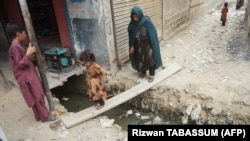
Iran and Pakistan have announced separate plans to forcefully deport millions of undocumented Afghan refugees and migrants.
Iranian Interior Minister Ahmad Vahidi said on September 27 that 5 million Afghans who he said were living “illegally” in the Islamic republic will be deported.
Vahidi said the authorities were “close to implementing the plan,” although he did not provide further details.
Imran, an Afghan living in Iran’s southwestern city of Shiraz, told Radio Azadi that the authorities were already “gathering Afghans from cities irrespective of whether they have legal documents or not."
Meanwhile, Pakistani Foreign Minster Jalil Abbas Jilani said on September 28 that Islamabad plans to deport over 1 million Afghans who do not have valid residency documents.
Even before their announcements, Tehran and Islamabad have detained and deported thousands of undocumented Afghans in recent years.
Iran and Pakistan have hosted millions of Afghan refugees since the Soviet invasion of Afghanistan in 1979. The Taliban’s seizure of power in 2021 fueled another exodus, with an estimated 3.6 million Afghans fleeing their homeland. Around 70 percent of them escaped to Iran, according to the United Nations.
Why It's Important: The forced deportations of millions of impoverished Afghans is likely to further aggravate the devastating humanitarian crisis in Afghanistan, where millions are on the verge of starvation.
The Taliban government is unlikely to be able to absorb millions of returning refugees and migrants.
The forced deportations of Afghan migrants, many of whom send remittances back to their families, is also likely to cause a financial shock to many households.
Some Afghans, including journalists, activists, and members of the former Afghan government and security forces, could face reprisals from the Taliban if they return to their homeland.
Iran and Pakistan’s plans to deport undocumented Afghans come amid their worsening ties with the Taliban.
Taliban fighters have been engaged in separate deadly border clashes with Iranian and Pakistani forces in recent months. Islamabad has accused the Taliban of harboring anti-Pakistan militants, while Tehran has sparred with the Taliban over cross-border water resources.
What's Next: The UN has called for all returns to Afghanistan to be voluntary and urged neighboring countries to offer protection to Afghans seeking security.
But with Iran and Pakistan grappling with economic crises -- and as tensions with the Taliban escalate -- both countries appear unlikely to continue hosting millions of Afghans.
What To Keep An Eye On
Russia appears to have signaled a renewed interest in Afghanistan.
Russian President Vladimir Putin’s special envoy for Afghanistan, Zamir Kabulov, called on the Taliban to form an “ethnopolitical inclusive government" in Kabul, in a move that he said could lead to Moscow potentially recognizing the Taliban government.
Kabulov’s comments came ahead of the meeting of the so-called Moscow Format, a regional forum on Afghanistan, on September 29. Launched in 2017, the format brings together regional powers and Afghanistan’s neighbors with the stated aim of bringing peace to Afghanistan.
Why It's Important: By hosting the regional conference, Moscow could be signaling its desire to be a player in Afghanistan.
Last month, Moscow hosted Ahmad Massud, the exiled leader of the National Resistant Front of Afghanistan (NRF), an anti-Taliban armed group.
The NRF is the largest group fighting the Taliban but has struggled to attract foreign support. Massud’s visit was seen as an effort to win support for the NRF and pressure the Taliban.
Washington has categorically ruled out support for a new armed conflict in Afghanistan.
That's all from me for now. Don't forget to send me any questions, comments, or tips that you have.
Until next time,
Abubakar Siddique
If you enjoyed this briefing and don't want to miss the next edition, subscribe here. It will be sent to your inbox every Friday.

More News
- By AP
Afghan Women Fear Going Out Alone Due To Taliban Decrees On Clothing, Male Guardians, UN Says
Afghan women feel scared or unsafe leaving their home alone because of Taliban decrees and enforcement campaigns on clothing and male guardians, according to a report from the UN Mission in Afghanistan. The report was issued days before a UN-convened meeting in the Qatari capital Doha, where member states and special envoys to Afghanistan are expected to discuss engagement with the Taliban. The Taliban have barred women from most areas of public life and stopped girls from going to school beyond the sixth grade as part of harsh measures they imposed after taking power in 2021.
The Azadi Briefing: Why Does The Taliban Oppose Appointment Of A UN Special Envoy To Afghanistan?
Welcome to The Azadi Briefing, an RFE/RL newsletter that unpacks the key issues in Afghanistan. To subscribe, click here.
I'm Abubakar Siddique, senior correspondent at RFE/RL's Radio Azadi. Here's what I've been tracking and what I'm keeping an eye on in the days ahead.
The Key Issue
The United Nations is convening a major international meeting on Afghanistan in the Persian Gulf state of Qatar on February 18-19.
The possible appointment of a special UN envoy to Afghanistan will be one of the key issues discussed at the meeting, which will bring together the special representatives for Afghanistan from various countries.
But the Taliban has opposed the appointment of an envoy, an international interlocutor who would be tasked with promoting dialogue between the extremist group and exiled opposition political figures.
After seizing power in 2021, the Taliban has monopolized power and sidelined many ethnic and political groups as well as women. The Taliban's theocratic government remains unrecognized internationally and appears to have little support among Afghans.
Why It's Important: An intra-Afghan process that would lead to a power-sharing agreement among rival Afghan groups is seen as the best way to reach a lasting peace in the war-torn country.
The Taliban's failure to agree to the appointment of a UN special envoy could undermine reconciliation efforts.
"The Taliban thinks that it is not necessary to have a political dialogue with people who have left the country," Tariq Farhadi, an Afghan political analyst based in Europe, told RFE/RL's Radio Azadi.
Many of the leaders of the former internationally recognized Afghan government went into exile after the Taliban takeover.
The Taliban has said the appointment of a UN envoy is unnecessary because the United Nations Assistance Mission in Afghanistan (UNAMA), which primarily coordinates humanitarian and development efforts, is already present in the country.
"I don't think that's correct," former British diplomat Sir Nicholas Kay told Radio Azadi, adding that the task of a special envoy will be to promote dialogue among Afghans and "dedicate themselves to that diplomatic international task."
What's Next: Given the Taliban's opposition to a political dialogue and its insistence on imposing its harsh rule through brute force, most of the international community is likely to support the appointment of a special envoy.
But such a move could prompt the Taliban to stop engaging with the United Nations and the international community, which would likely entrench Afghanistan's international pariah status under Taliban rule.
What To Keep An Eye On
Iran has said it is building a 74-kilometer-long "physical barrier" along its long border with Afghanistan.
Kiumars Heydari, head of Iran's regular army ground forces, said on February 10 that the aim was to "block a strip of the border with Afghanistan with physical barriers to limit traffic" on the porous frontier.
He said the project was "one of the most important" undertaken by the Iranian government and will be carried out in four phases.
The launch of the project comes after explosions claimed by the Islamic State (IS) extremist group killed more than 90 people in the southern city of Kerman on January 3, the deadliest attack in Iran in decades.
Tehran has not recognized the Taliban government. But it enjoys relatively good relations with the group, despite clashes over issues like cross-border water resources.
Senior Iranian officials have expressed concerns over security threats emanating from Afghanistan, where IS militants are active. The Taliban claims that the extremist group does not exist in Afghanistan.
Why It's Important: Iran is the second country -- after Pakistan -- that is attempting to build a barrier on the border with Afghanistan.
Iran's project is likely aimed at curbing the thousands of illegal Afghan migrants who cross into the Islamic republic every week. Many are fleeing their homeland to escape Taliban repression and the humanitarian and economic crises in Afghanistan.
On February 14, Taliban officials said that more than 25,000 Afghans had been forcefully expelled from Iran this month.
Tehran has vowed to expel the estimated 5 million Afghans it says are living "illegally" in Iran.
That's all from me for now. Don't forget to send me any questions, comments, or tips that you have.
Until next time,
Abubakar Siddique
If you enjoyed this briefing and don't want to miss the next edition, subscribe here. It will be sent to your inbox every Friday. You can always reach us at azadi.english@rferl.org.
Azerbaijani Envoy Hands Letter To Taliban On Opening Embassy In Kabul
Afghanistan's Taliban-led government says Azerbaijan has officially reopened its embassy in Kabul, following through on a pledge made last year.
A spokesman for the Taliban-led government's Foreign Ministry, Abdul Qahar Balkhi, wrote on X, formerly Twitter, on February 15 that Azerbaijani Ambassador to Afghanistan Ilham Mammadov arrived in the Afghan capital and handed an official letter on opening the oil-rich South Caucasus state's embassy in Kabul to Taliban Foreign Minister Amir Khan Muttaqi.
"This meeting discussed the beginning of diplomatic relations between Afghanistan and Azerbaijan, economic cooperation and many other issues," Balkhi wrote, adding that Muttaqi called the opening of the embassy and the sending of ambassador-level diplomats "an important development in bilateral relations."
Azerbaijani President Ilham Aliyev signed a law on opening an embassy in Kabul in January 2021. In July the same year, Mammadov was appointed the ambassador to Kabul.
In December, Azerbaijani Foreign Minister Ceyhun Bayramov said Azerbaijan would open its embassy in Kabul in 2024.
Azerbaijani armed forces took part in the international anti-terrorist operation in Afghanistan. They left the country along with the U.S.-led international forces in August 2021, after which the Taliban, which is internationally recognized as a terrorist organization, returned to power.
Mammadov's trip to Kabul comes three days before UN Secretary-General Antonio Guterres is expected to host an international meeting in Doha, Qatar, to discuss joint efforts to assist the people of Afghanistan.
The Taliban confirmed earlier this month that it had received an invitation to the meeting and was considering "meaningful participation" in it.
The Taliban takeover of Afghanistan drove millions into poverty and hunger after foreign aid stopped almost overnight.
Sanctions against the Taliban rulers, a halt on bank transfers, and frozen billions in Afghanistan's currency reserves have cut off access to global institutions and the outside money that supported the aid-dependent economy before the withdrawal of U.S. and NATO forces.
UN, EU Diplomats Discuss Afghanistan With Central Asian Officials Ahead Of International Conference
BISHKEK -- The UN secretary-general’s envoy for Afghanistan met on February 14 in Bishkek with EU and Central Asian officials to discuss joint efforts to assist people in Taliban-led Afghanistan ahead of a more formal international meeting scheduled to take place on February 18-19 in Doha, Qatar.
UN Special Representative for Afghanistan Roza Otunbaeva held talks with two European Union officials -- Special Representative for Central Asia Teri Hakala and Special Representative for Afghanistan Thomas Niklasson -- as well as officials from the five Central Asian states.
It was their fifth meeting to discuss relief efforts for Afghanistan, which has experienced a sharp drop in foreign aid since the Taliban regained power in 2021.
The Kyrgyz Foreign Ministry said in a statement that participants discussed current developments in the South Asian country and the UN-led process ahead of the Doha meeting that Taliban representatives have been invited to attend.
“An online exchange of views also took place with the UN Office on Drugs and Crime and the diplomatic missions of Central Asian countries based in Kabul,” the ministry’s statement said.
Niklasson told RFE/RL that the meeting was "rather informal," mostly to exchange opinions and analyses on the situation in Afghanistan to check "how we see development, challenges, and opportunities" there.
"This meeting came just a few days ahead of a meeting [on Afghanistan] in Doha [Qatar.] The purpose of this meeting was to compare notes and see that we have a lot in common," Niklasson said.
"We see a need to continue to engage Afghanistan, we see a need to continue to support the people of Afghanistan. At the same time, we see a number of challenges that makes it difficult to move beyond where we currently are," Niklasson added, citing security concerns, economic problems, and a poor human rights situation in Afghanistan under what he called "de facto" leadership.
UN Secretary-General Antonio Guterres will host the meeting in Doha, which is starting on February 18. Earlier this month, the Taliban confirmed that it had received an invitation to the meeting and was considering “meaningful participation” in it.
The Taliban takeover of Afghanistan in August 2021 drove millions into poverty and hunger after foreign aid stopped almost overnight. Sanctions against the Taliban rulers, a halt on bank transfers, and frozen billions in Afghanistan’s currency reserves have cut off access to global institutions and the outside money that supported the aid-dependent economy before the withdrawal of U.S. and NATO forces.
Human Rights Watch said in a report published on February 12 that the drop in foreign aid has heavily impacted that country's public health-care system, exacerbating "malnutrition and illnesses resulting from inadequate medical care."
EU Special Representatives Arrive In Bishkek To Participate In Afghanistan Talks
Two European Union officials -- Special Representative for Central Asia Teri Hakala and Special Representative for Afghanistan Thomas Niklasson -- arrived on February 13 in Bishkek, where they will participate in special talks with Central Asian officials on joint efforts to assist people in Afghanistan. The two EU representatives will also meet with representatives of Kyrgyzstan's government agencies and civil society. The visit takes place amid criticism by Western nations and rights groups of Kyrgyz authorities over an ongoing crackdown on independent media and democratic institutions. To read the original story by RFE/RL's Kyrgyz Service, click here.
- By RFE/RL
Afghan Health Care Hit By Drop In Foreign Aid, Taliban Rule, Says Rights Watchdog
A sharp drop in foreign aid to Afghanistan has heavily impacted that country's public health-care system, exacerbating "malnutrition and illnesses resulting from inadequate medical care," Human Rights Watch said in a new report published on February 12. HRW also said Taliban restrictions on women and girls have impeded access to health care, jeopardizing the right of millions of Afghans to medical services. The Taliban takeover of Afghanistan in August 2021 drove millions into poverty and hunger after foreign aid stopped almost overnight. Sanctions against the Taliban rulers, a halt on bank transfers, and frozen billions in Afghanistan’s currency reserves have cut off access to global institutions and the outside money that supported the aid-dependent economy before the withdrawal of U.S. and NATO forces.
- By AP
Two Afghans Detained At Guantanamo Bay For 14 Years Released By Oman, Taliban Says
Two Afghan prisoners who were held in U.S. custody for at least 14 years at the Guantanamo Bay detention center after 2002 were released from house arrest in Oman, a Taliban spokesman said on February 11. Abdul Zahir Saber and Abdul Karim were released as a result of the efforts made by Afghanistan, a Taliban Interior Ministry spokesman said. An official welcome ceremony is being organized in the capital, Kabul, for their return on February 12, the Taliban said. The two were held in Guantanamo until 2017, when they were transferred to Oman, where they spent the next seven years under house arrest, forbidden to travel.
Iranian Envoy To Kabul Sees Afghanistan As Part Of Tehran's 'Axis Of Resistance'
Iran's special envoy to Afghanistan and the head of its embassy in Kabul says Tehran includes the war-torn country as part of is "axis of resistance" -- a loose-knit network of Iranian-backed proxies and militant groups that aid it in opposing the West, Arab foes, and primarily Israel.
Active in the Gaza Strip, Lebanon, Iraq, Syria, and elsewhere, the network allows Iran to create chaos in enemy territory while maintaining a position of plausible deniability that it is directly involved.
Speaking on Tehran's Ofogh television network on February 6, Hassan Kazemi Qomi said that under the right conditions, more than one brigade of "martyrdom-seeking" forces could go to Gaza from Afghanistan to support Hamas, another member of the axis which has been designated as a terrorist organization by the United States and European Union.
Amid intense fighting between Hamas and Israel, Iran has been increasingly vocal about the prospect of additional firepower entering the fray to score a victory for the so-called "axis of resistance" against Israel.
"In what we see in Afghanistan today, it is apparent that Afghanistan is part of the 'axis of resistance.' If there is a situation and a necessity, more than one brigade of 'martyrdom-seeking' forces can go to Gaza in support of Gaza," Qomi said during the interview.
RFE/RL sought comments from officials of the Taliban-led government, but spokesman Zabihullah Mujahid did not respond to the inquiries.
"Martyrdom-seeking" forces often refer to those who carry out suicide attacks in Afghanistan and other countries. The Taliban, which used such forces in its nearly two-decade-long war against NATO-led forces and the security forces of the former republic, is known for this tactic.
Mujahid told RFE/RL’s Radio Azadi in January 2021 that a "martyrdom-seeking" battalion would be incorporated into the special forces of the Defense Ministry run by the Taliban.
Aziz Maarij, a former Afghan diplomat in Iran, said Qomi's statement may be an attempt by Iran to drag Afghanistan into its sphere by involving it in the Gaza conflict.
"The innocent Muslims being killed by Israeli oppression in Gaza is a tragedy, but this war is political, competitive, and proxy, in which Iran is involved. It seeks revenge against America and to challenge its rivals by dragging Afghanistan into these issues," Maarij told Radio Azadi.
While Qomi did not specify who or which group could send a "martyrdom-seeking" brigade to Gaza, Iran has been previously accused of sending Afghans to fight in its proxy wars.
Recently, some Iranian media reported the death of Seyed Hamzah Alavi, born in Afghanistan's Parwan Province and a veteran fighter of the Fatemiyoun Division in Syria.
The Fatemiyoun Division is considered a branch of Iran's Islamic Revolutionary Guards Corps' Quds Force, which has recruited thousands of Afghan citizens to fight in Syria.
Iran and Israel have been engaged in a yearslong shadow war. Tensions have been exacerbated by the ongoing conflict in the Gaza Strip between Israel and Hamas.
Written by Ardeshir Tayebi based on an original story in Dari by RFE/RL's Radio Azadi.
- By RFE/RL
Amnesty International Demands Release Of Afghan Educational Activists Held By Taliban
Amnesty International called on Afghanistan’s de facto Taliban rulers to free two activists working for the Fekre Behtar educational organization, who the rights group said were “arbitrarily arrested” in October 2023 in Kabul. Amnesty said that “Ahmad Fahim Azimi and Seddiqullah Afghan’s arrest and arbitrary detention are against international human rights law. They must be immediately and unconditionally released.” Amnesty said the men were falsely accused of assisting girls from the national robotic team to leave the country, inciting women protesters, and organizing protests. They have denied the allegations. After taking power in August 2021, the Taliban severely restricted the rights of women and girls, especially in educational matters.
The Azadi Briefing: China Upgrades Diplomatic Ties With The Taliban
Welcome to The Azadi Briefing, an RFE/RL newsletter that unpacks the key issues in Afghanistan. To subscribe, click here.
I'm Abubakar Siddique, senior correspondent at RFE/RL's Radio Azadi. Here's what I've been tracking and what I'm keeping an eye on in the days ahead.
The Key Issue
Chinese President Xi Jinping on January 30 formally accepted the credentials of the Taliban-appointed ambassador, becoming the first head of state to do so.
Chinese Foreign Ministry spokesperson Wang Wenbin clarified that the move did not mean Beijing officially recognized the Taliban government.
“Diplomatic recognition of the Afghan government will come naturally as the concerns of various parties are effectively addressed,” he said.
The Taliban, however, celebrated the move as a major diplomatic victory.
"China understands what the rest of the world needs to understand," chief Taliban spokesman Zabihullah Mujahid said, urging other countries to expand bilateral relations with his government.
Why It's Important: China’s move is a boost to the Taliban-led government, which has not been recognized by any country since the extremist group seized power in 2021.
Beijing’s expanding diplomatic ties with the Taliban government could prompt other countries in the region, including Iran and Russia, to follow suit.
Ibraheem Bahiss, an Afghanistan expert at the International Crisis Group, said Beijing’s decision suggested that the Taliban was making headway in its strategy to gain official recognition from regional countries.
Countries in the region are growing “more and more skeptical about the Western consensus that the Taliban should stay confined to pariah status on the world stage,” he wrote.
Najib Azad, an exiled former Afghan government official, said that without full diplomatic recognition from all five permanent United Nations Security Council members, Beijing’s move was meaningless.
“Until that time, it is only a PR opportunity for the Taliban to claim success,” he told Radio Azadi.
What's Next: A planned UN conference on Afghanistan later this month is expected to debate the question of Taliban recognition and engagement with the group.
The hard-line Islamist group faces major hurdles in gaining international recognition and legitimacy.
Many nations have tied recognition to the Taliban establishing an inclusive government, ensuring women’s rights, and breaking ties with extremist groups.
But the Taliban has refused to share power, severely eroded women's freedoms, and maintained links with extremist groups, according to experts.
What To Keep An Eye On
Afghanistan dropped 12 places in Transparency International’s global corruption rankings.
Afghanistan was ranked 162nd out of 180 countries in the 2023 Corruption Perception Index. Last year, the same index ranked it 150th. In 2021, under the Western-backed Afghan government, the country ranked 176th.
Mujahid, the Taliban spokesman, attempted to downplay Afghanistan’s significant drop in the rankings.
“The drop in ranking doesn’t mean that corruption has increased in Afghanistan,” he said. “But it is possible that other countries have become more transparent.”
Why It's Important: The ranking is a blow for the Taliban government, which has touted its fight against corruption as one of its major achievements.
But Afghanistan’s declining score suggests that corruption, which was endemic under the previous government, remains pervasive.
That's all from me for now. Don't forget to send me any questions, comments, or tips that you have. You can always reach us at azadi.english@rferl.org.
Until next time,
Abubakar Siddique
If you enjoyed this briefing and don't want to miss the next edition, subscribe here. It will be sent to your inbox every Friday. You can always reach us at azadi.english@rferl.org.
Wet Winter Weather Brings New Miseries To Vulnerable Afghans
Ongoing snowfall and rain that ended a long dry spell in Afghanistan are now bringing new problems to impoverished Afghans across the country as heating needs jump while humanitarian aid deliveries are impeded.
Since January 28, most of Afghanistan’s 34 provinces have experienced snowfall or rain.
While the precipitation has been widely welcomed because it will help avoid a much-feared drought, some of the most vulnerable Afghans are struggling in its aftermath.
Many citizens don't have the means to buy gas, coal, wood, or fuel to cook and heat their households. Those who live in remote regions also face humanitarian aid delays as the heavy snow makes roads impassable.
“People face serious problems after all the rain and snow,” Ali, a resident of the northern Balkh Province, told RFE/RL’s Radio Azadi.
“We don’t have any money and remain hungry," he added.
Khatira, a resident of the capital, Kabul, says her family is miserable because of a lack of heating in the cold winter.
"We cannot keep our children warm by giving them proper clothes or food this winter," she told Radio Azadi.
Some Afghans are unable to do their jobs because of the weather conditions, curtailing their already meager income.
"We don't even have a little food to survive because there is no work, and we are losing hope," Noor Agha, another Kabul resident, said.
Meanwhile, the UN World Food Program says the weather has cut 10 million people off from food aid in Afghanistan.
“Most of whom have to choose between feeding their children or keeping them warm,” the organization said on X, formerly called Twitter.
According to the UN, Afghanistan is expecting a further deterioration in food security by March. Some 15.8 million Afghans, or 36 percent of the total population of over 40 million, will require food aid by the spring.
According to the UN Office of Coordination of Humanitarian Affairs (UNOCHA), some 29.2 million Afghans out of a population of more than 40 million need humanitarian assistance.
The UN plans to reach 22.3 million of them with more than $3.2 billion in humanitarian funding.
'All Doors Are Closed' For Single And Unaccompanied Afghan Women Under The Taliban
Women have borne the brunt of the Taliban's repressive laws in Afghanistan, where the extremist group has imposed constraints on their appearances, freedom of movement, and right to work and study.
But women who are unmarried or do not have a "mahram," or male guardian, face even tougher restrictions and have been cut off from access to health care, banned from traveling long distances, and pressured to quit their jobs.
The Taliban's mahram rules prohibit women from leaving their home without a male chaperone, often a husband or a close relative such as a father, brother, or uncle.
Single and unaccompanied women, including an estimated 2 million widows, say they are essentially prisoners in their homes and unable to carry out the even the most basic of tasks.
Among them is Nadia, a divorced woman from the northern province of Kunduz. The mother of four has no surviving male relatives.
"These restrictions are stifling for women who now cannot do the simple things independently," Nadia told RFE/RL's Radio Azadi.
The 35-year-old said women also need to have a male escort to visit a doctor, go to government offices, or even rent a house.
She said she had to pay a man to be her chaperone in order to meet a realtor and sign a rental agreement.
Nadia also paid a man in her neighborhood around 1,000 afghanis, or $15, to accompany her to the local passport office. But the Taliban refused her passport application and ordered her to return with her father, who died years ago.
"Even visiting the doctor is becoming impossible," she said. "We can only plead [with the Taliban] or pray. All doors are closed to us."
Mahram Crackdown
Women who violate the Taliban's mahram requirements have been detained or arrested and are often released only after signing a pledge that they will not break the rules again in the future.
In its latest report, the UN mission in Afghanistan (UNAMA) said the Taliban's notorious religious police was enforcing the rules by carrying out inspections in public spaces, offices, and education facilities as well as setting up checkpoints in cities.
Released on January 22, the report said three female health-care workers were detained in October because they were traveling to work without a mahram.
In December, women without male chaperones were stopped from accessing health-care facilities in the southeastern province of Paktia, the report said.
And in the southern province of Kandahar, the Taliban visited a bus terminal and checked if women were traveling with a male relative, the report said.
In late 2021, the Taliban said women seeking to travel more than 72 kilometers should not be offered transport unless they were accompanied by a close male relative.
In another incident, the Taliban advised a woman to get married if she wanted to keep her job at a health-care facility, saying it was inappropriate for a single woman to work, the report said.
In a report issued on January 18, the United Nations Development Fund (UNDP) said the Taliban's restrictions on single and unaccompanied women has ensured that female-led households receive less income and food.
"Their share of employment has nearly halved, decreasing from 11 percent in 2022 to 6 percent" in 2023, the report said.
The report noted that female-headed households typically care for more children and get paid less for their work and consume lower quantities of food.
"Female-headed households have greater needs for humanitarian assistance and yet report more restrictions to accessing such assistance," the report said.
"Unaccompanied access by women to public places such as health facilities, water points, and markets has declined in the past two years," the report added.
'Deeply Insulting'
Parisa, an unmarried woman, takes care of her elderly parents in the northeastern province of Takhar.
With her father bedridden and her two brothers working in neighboring Iran, she has been forced to take care of the family's needs.
But she said she has been repeatedly harassed by the Taliban while trying to buy groceries in the local market, located some 10 kilometers away from her house.
"What can women do when men in their families are forced to leave the country for work?" she told Radio Azadi, giving only her first name for security reasons.
"I have no choice but to look after my family's basic needs. The Taliban's attitude is deeply insulting and extremely aggressive."
Parisa said she has pleaded with local Taliban leaders to relax the mahram requirements. But she said her efforts have been in vain.
"They start abusing and threatening us whenever we try to tell them that we have to leave our houses to meet our basic needs," she said.
Parasto, a resident of Kabul, said the Taliban's restrictions are preventing single women from seeking the limited health care that is available.
"The doctors in the hospitals and clinics are reluctant to see unaccompanied women," she told Radio Azadi.
Parasto said the Taliban's mounting restrictions on women, especially those who are unmarried or do not have a male guardian, have made life unbearable.
"Single women are trying to survive without rights and opportunities," she said.
Written by Abubakar Siddique in Prague based on reporting by Naqiba Barakzai, Abida Spozhmai, and Khujasta Kabiri of RFE/RL's Radio Azadi
China In Eurasia Briefing: The Red Sea Crisis And China's New Game In The Middle East
Listen to the Talking China In Eurasia podcast
Apple Podcasts | Spotify | Google | YouTube
Welcome back to the China In Eurasia Briefing, an RFE/RL newsletter tracking China's resurgent influence from Eastern Europe to Central Asia.
I'm RFE/RL correspondent Reid Standish and here's what I'm following right now.
As Huthi rebels continue their assault on commercial shipping in the Red Sea, the deepening crisis is posing a fresh test for China’s ambitions of becoming a power broker in the Middle East – and raising questions about whether Beijing can help bring the group to bay.
Finding Perspective: U.S. officials have been asking China to urge Tehran to rein in Iran-backed Huthis, but according to the Financial Times, American officials say that they have seen no signs of help.
Still, Washington keeps raising the issue. In weekend meetings with Chinese Foreign Minister Wang Yi in Bangkok, U.S. national-security adviser Jake Sullivan again asked Beijing to use its “substantial leverage with Iran” to play a “constructive role” in stopping the attacks.
Reuters, citing Iranian officials, reported on January 26 that Beijing urged Tehran at recent meetings to pressure the Huthis or risk jeopardizing business cooperation with China in the future.
There are plenty of reasons to believe that China would want to bring the attacks to an end. The Huthis have disrupted global shipping, stoking fears of global inflation and even more instability in the Middle East.
This also hurts China’s bottom line. The attacks are raising transport costs and jeopardizing the tens of billions of dollars that China has invested in nearby Egyptian ports.
Why It Matters: The current crisis raises some complex questions for China’s ambitions in the Middle East.
If China decides to pressure Iran, it’s unknown how much influence Tehran actually has over Yemen’s Huthis. Iran backs the group and supplies them with weapons, but it’s unclear if they can actually control and rein them in, as U.S. officials are calling for.
But the bigger question might be whether this calculation looks the same from Beijing.
China might be reluctant to get too involved and squander its political capital with Iran on trying to get the Huthis to stop their attacks, especially after the group has announced that it won’t attack Chinese ships transiting the Red Sea.
Beijing is also unlikely to want to bring an end to something that’s hurting America’s interests arguably more than its own at the moment.
U.S. officials say they’ll continue to talk with China about helping restore trade in the Red Sea, but Beijing might decide that it has more to gain by simply stepping back.
Three More Stories From Eurasia
1. ‘New Historical Heights’ For China And Uzbekistan
Uzbek President Shavkat Mirziyoev made a landmark three-day visit to Beijing, where he met with Xi, engaged with Chinese business leaders, and left with an officially upgraded relationship as the Central Asian leader increasingly looks to China for his economic future.
The Details: As I reported here, Mirziyoev left Uzbekistan looking to usher in a new era and returned with upgraded diplomatic ties as an “all-weather” partner with China.
The move to elevate to an “all-weather comprehensive strategic partnership” from a “comprehensive strategic partnership” doesn’t come with any formal benefits, but it’s a clear sign from Mirziyoev and Xi on where they want to take the relationship between their two countries.
Before going to China for the January 23-25 trip, Mirziyoev signed a letter praising China’s progress in fighting poverty and saying he wanted to develop a “new long-term agenda” with Beijing that will last for “decades.”
Beyond the diplomatic upgrade, China said it was ready to expand cooperation with Uzbekistan across the new energy vehicle industry chain, as well as in major projects such as photovoltaics, wind power, and hydropower.
Xi and Mirzoyoev also spoke about the long-discussed China-Kyrgyzstan-Uzbekistan railway, with the Chinese leader saying that work should begin as soon as possible, athough no specifics were offered and there are reportedly still key disputes over how the megaproject will be financed.
2. The Taliban’s New Man In Beijing
In a move that could lay the groundwork for more diplomatic engagement with China, Xi received diplomatic credentials from the Taliban’s new ambassador in Beijing on January 25.
What You Need To Know: Mawlawi Asadullah Bilal Karimi was accepted as part of a ceremony that also received the credential letters of 42 new envoys. Karimi was named as the new ambassador to Beijing on November 24 but has now formally been received by Xi, which is another installment in the slow boil toward recognition that’s under way.
No country formally recognizes the Taliban administration in Afghanistan, but China – along with other countries such as Pakistan, Russia, and Turkmenistan – have appointed their own envoys to Kabul and have maintained steady diplomatic engagement with the group since it returned to power in August 2021.
Formal diplomatic recognition for the Taliban still looks to be far off, but this move highlights China’s strategy of de-facto recognition that could see other countries following its lead, paving the way for formal ties down the line.
3. China’s Tightrope With Iran and Pakistan
Air strikes and diplomatic sparring between Iran and Pakistan raised difficult questions for China and its influence in the region, as I reported here.
Both Islamabad and Tehran have since moved to mend fences, with their foreign ministers holding talks on January 29. But the incident put the spotlight on what China would do if two of its closest partners entered into conflict against one another.
What It Means: The tit-for-tat strikes hit militant groups operating in each other’s territory. After a tough exchange, both countries quickly cooled their rhetoric – culminating in the recent talks held in Islamabad.
And while Beijing has lots to lose in the event of a wider conflict between two of its allies, it appeared to remain quiet, with only a formal offer to mediate if needed.
Abdul Basit, an associate research fellow at Singapore's S. Rajaratnam School of International Studies, told me this approach reflects how China “shies away from situations like this,” in part to protect its reputation in case it intervenes and then fails.
Michael Kugelman, the director of the Wilson Center's South Asia Institute, added that, despite Beijing’s cautious approach, China has shown a willingness to mediate when opportunity strikes, pointing to the deal it helped broker between Iran and Saudi Arabia in March.
“It looks like the Pakistanis and the Iranians had enough in their relationship to ease tensions themselves,” he told me. “So [Beijing] might be relieved now, but that doesn't mean they won't step up if needed.”
Across The Supercontinent
China’s Odd Moment: What do the fall of the Soviet Union and China's slowing economy have in common? The answer is more than you might think.
Listen to the latest episode of the Talking China In Eurasia podcast, where we explore how China's complicated relationship with the Soviet Union is shaping the country today.
Invite Sent. Now What? Ukraine has invited Xi to participate in a planned “peace summit” of world leaders in Switzerland, Reuters reported, in a gathering tied to the second anniversary of Russia’s invasion.
Blocked, But Why? China has suspended issuing visas to Lithuanian citizens. Foreign Minister Gabrielius Landsbergis confirmed the news and told Lithuanian journalists that “we have been informed about this. No further information has been provided.”
More Hydro Plans: Kyrgyzstan’s Ministry of Energy and the China National Electric Engineering Company signed a memorandum of cooperation on January 24 to build a cascade of power plants and a new thermal power plant.
One Thing To Watch
There’s no official word, but it’s looking like veteran diplomat Liu Jianchao is the leading contender to become China’s next foreign minister.
Wang Yi was reassigned to his old post after Qin Gang was abruptly removed as foreign minister last summer, and Wang is currently holding roles as both foreign minister and the more senior position of director of the Chinese Communist Party Central Committee Foreign Affairs Commission Office.
Liu has limited experience engaging with the West but served stints at the Communist Party’s anti-corruption watchdog and currently heads a party agency traditionally tasked with building ties with other communist states.
It also looks like he’s being groomed for the role. He recently completed a U.S. tour, where he met with top officials and business leaders, and has also made visits to the Middle East.
That’s all from me for now. Don’t forget to send me any questions, comments, or tips that you might have.
Until next time,
Reid Standish
If you enjoyed this briefing and don't want to miss the next edition, subscribe here. It will be sent to your inbox every other Wednesday.
- By RFE/RL
Corruption Watchdog Warns Of 'Troubling Picture' In Central Asia
Transparency International says its 2023 Corruption Perceptions Index (CPI) paints a "troubling picture" of Central Asia as the region struggles with "dysfunctional rule of law, rising authoritarianism, and systemic corruption."
The corruption watchdog released its annual survey on January 30, noting that the average score of 35 out of 100 makes it the second lowest-scoring region in the world, after the Middle East and North Africa region, with a score of 34.
"Widespread democratic backsliding and weakening justice systems are undermining control of corruption, as institutions like the police, prosecutors, and the courts are often unable to investigate and punish those who abuse their power," a report on the index said.
"Leaders urgently need to strengthen the rule of law, rights, and democracy, but many are systematically attacking them," it added.
Ranking at the bottom in the region, Azerbaijan (23), Tajikistan (20), and Turkmenistan (18) continue to struggle with "severe" corruption issues, Transparency International said. The three countries, along with Afghanistan (20), were in the bottom 36 of the 180 countries surveyed.
The report highlighted the deteriorating situation in Kyrgyzstan (26), which it says has turned from "a bastion of democracy with a vibrant civil society to a consolidated authoritarian regime that uses its justice system to target critics."
The report shows Kyrgyzstan's score going down by five points since 2020.
President Sadyr Japarov’s "repressive and authoritarian governing style defies legal procedures and constitutional norms [and] erodes civil liberties," it said.
"Undue influence on justice – coupled with the ineffective implementation of anti-corruption legislation – is undermining the rule of law and hindering the effective handling of corruption cases. This fosters a culture of impunity for abusers of power throughout the public sector," it added, noting a decline in government transparency and the prevention of journalists and the public from exposing wrongdoing are increasing corruption risks..
Transparency International pointed to Uzbekistan as a bright spot in the region, with the country's score having risen by 15 points over the past decade to 33, with the government being credited for taking key steps include the creation of an anti-corruption agency, strengthening legislation, and liberalizing the economy.
The CPI ranks 180 countries and territories around the globe by their perceived levels of public sector corruption, scoring on a scale of 0 (highly corrupt) to 100 (very clean).
Kim Jong Un's 'Infidel' Hairstyle A Fashion Sin Under New Taliban Rules
Afghan men have limited options when visiting the barbershop if they do not want to be accused of walking away looking like a trendy Westerner or a North Korean dictator.
No haircuts that make them look like an "infidel." No trimmed eyebrows. And no shaved faces or beards shorter than the optimal length.
Any of those styles are considered a fashion sin, according to a new six-point list of rules for barbers issued by the Taliban's Ministry for the Promotion of Virtue and the Prevention of Vice.
The issuance of the directives, initially denied by the ministry, were confirmed by a regional ministry official in the western province of Herat this week.
Azizul Rahman Mohajer said on January 23 that certain haircuts were too similar to what the "infidels in the West or North Korea" have.
Some among the younger generation in Afghanistan try to follow these styles, Mohajer said, prompting the delivery of the new rules for barbers to follow.
"If the style is according to our principles there is no problem," he said, stressing that if customers ask for trendy hairstyles or to have their beards cut, barbers should refuse them.
The directives appeared to single out hairstyles that might resemble that of North Korean dictator Kim Jong Un -- whose head is shaved on the sides and back, and topped with longer hair in a nod to the cut donned by his grandfather, Kim Il Sung, the founder of communist North Korea.
They were also reminiscent of orders issued under the previous Taliban government in power from 1996 to 2001, including "foreign haircuts" styled after the side-shaved, long-on-top hairdo popularized by American actor Leonardo DiCaprio in the film Titanic. Anything resembling the "Beatles cut," the iconic mop top worn by John, Paul, George, and Ringo during the British band's 1960s Beatlemania era, was also banned.
The latest rules say that beards should be no shorter than "one strand" and that men's eyebrows should not be trimmed. Barbers were also told not to have music playing in their shops, or to have any images that might advertise undesirable styles on display.
It was not clear if the new rules applied only in Herat or across the country.
Since seizing power in 2021, the Taliban has outlawed music and made clear that it considers the shaving or cutting of beards to be a violation of its strict interpretation of Islamic law and values.
Afghan barbers who spoke to RFE/RL's Radio Azadi expressed incredulity at the latest rules, with some questioning how the styles coming under scrutiny could be in violation of Islamic law and saying the order would harm their business.
"If you trim your beard...or wear Western-style clothes, how does that make you a nonbeliever?" asked one barber who spoke on condition of anonymity out of fear of retribution. "It doesn't make any difference."
"The Koran says that cleanliness is part of the faith, but that is not the case here," a youth from Herat Province who also spoke on condition of anonymity told Radio Azadi. "We understand that wearing a [long] beard is preferred, but it is not a sin [not to have one]."
Policing Appearances
The new rules for barbers are the latest attempt by the Taliban to police the appearances of Afghan men and women.
Since regaining power, the Taliban has ordered male government employees to grow beards and wear traditional attire or risk being fired. In some areas, men have been forced to attend prayers.
In some parts of Afghanistan, the Taliban has banned Western-style clothing, including jeans and suits.
The extremist group has also ordered male teachers and high-school students in some provinces to grow a beard, wear a turban or Islamic cap, and don the "pirhan tumban," the traditional baggy shirt and pants that is common in rural Afghanistan.
The militants have also imposed strict gender segregation in schools, universities, hospitals, government offices, and public transport.
Women have borne the brunt of the Taliban's attempts to police Afghans' appearances. The hard-line Islamist group has enforced strict dress and behavioral codes that require women to cover from head to toe and severely restricts their rights to move freely, work, or receive an education.
The Ministry for the Promotion of Virtue and the Prevention of Vice has frequently issued orders it has said are intended to help Afghans stay in compliance with what the Taliban considers Islamic law.
Written by Michael Scollon based on reporting by RFE/RL's Radio Azadi
The Azadi Briefing: Afghanistan's Warm Winter Triggers Warning Of Severe Drought
Welcome to The Azadi Briefing, an RFE/RL newsletter that unpacks the key issues in Afghanistan. To subscribe, click here.
I'm Abubakar Siddique, senior correspondent at RFE/RL's Radio Azadi. Here's what I've been tracking and what I'm keeping an eye on in the days ahead.
The Key Issue
The UN Office for the Coordination of Humanitarian Affairs (OCHA) has warned that an unseasonably dry and warm winter could have devastating consequences for Afghanistan.
“Without substantial snowfall soon, the country could experience a severe drought,” the agency said on January 23, adding that a lack of water could wreak havoc on rain-dependent crops and prevent pastures from recovering, prompting the rural population to move in search of water.
Afghan farmers said they are already feeling the devastating impact of drought.
“People are facing hunger and poverty. There is no work, and most have not cultivated their lands,” Farhad Gul, a farmer in the central province of Ghazni, told RFE/RL’s Radio Azadi. “Our cattle are hungry because there is no grass.”
During the past two decades, droughts have sporadically hit the mountainous country, where most of its population of 40 million needs humanitarian aid to survive, according to the UN.
Why It's Important: Drought is a major threat to the livelihoods of rural Afghans, many of whom depend on subsistence agriculture and raising livestock.
Parts of Afghanistan were already reeling from persistent drought before the winter. Decades of war, environmental degradation, and climate change have made the country increasingly vulnerable to drought, according to experts.
Severe droughts could exacerbate the devastating economic and humanitarian crises in Afghanistan, where millions are on the verge of starvation.
The lack of winter rain and snowfall could cause a food shortage, with Afghan farmers unable to cultivate spring crops. Their livestock, too, could be threatened by the lack of water.
This, in turn, could threaten the Afghan economy, which is “stabilizing at a very low level of activity” after shrinking 27 percent since 2020, according to the UN.
“For two successive years, 4 out of 5 households were impacted by drought and/or economic shocks,” the UN report said, adding that “69 percent of Afghans are subsistence insecure -- meaning they do not have adequate resources for basic subsistence living.”
What's Next: Amid the gloomy predictions, the United States Agency for International Development’s Famine Early Warning Systems Network has predicted rain and snowfall across the country in February.
While the rainfall is likely to be lower than during typical winters, it could provide relief to some of the most vulnerable Afghans.
What To Keep An Eye On
The Taliban has continued to wage a violent crackdown on independent media, forcing a growing number of journalists to abandon their professions.
"Before I was released, my family was forced to guarantee that I would no longer work with the international media,” an unnamed journalist recently released from Taliban detention told Radio Azadi.
"They slapped me, threatened me, and tied me up,” said another journalist who was also recently detained by the Taliban. "They told me: 'Don't dig around for the truth. Just take care of your family.'"
Both reporters talked on condition of anonymity due to fears of retribution.
Why It's Important: Since seizing power, the Taliban has imposed severe restrictions on the media and access to information, and increased detentions of reporters, activists, and other critics as part of its brutal crackdown on dissent.
That has forced hundreds of reporters and media workers to flee their homeland or abandon their professions.
That's all from me for now. Don't forget to send me any questions, comments, or tips that you have. You can always reach us at azadi.english@rferl.org.
Until next time,
Abubakar Siddique
If you enjoyed this briefing and don't want to miss the next edition, subscribe here. It will be sent to your inbox every Friday. You can always reach us at azadi.english@rferl.org.
Madrasahs Go Mainstream: Taliban To Grant University Degrees To Religious Students In New Blow To Secular Education
Since seizing power, the Taliban has appointed its foot soldiers, commanders, and leaders as ministers and the heads of state-run institutions in Afghanistan, including universities and hospitals.
The decision has triggered widespread criticism among Afghans, who have accused the Taliban of hiring unqualified and uneducated fighters and clerics to key positions in its government.
In a move that is seen as a response to that criticism, the extremist group announced on January 20 that it would be granting graduates of madrasahs, or Islamic seminaries, the equivalent of high school diplomas and university degrees.
Afghan academics and educators say the Taliban is trying to pave the way for its members and loyalists to dominate government ministries and institutions.
Since the Taliban regained power in 2021, thousands of civil servants who worked for the Western-backed Afghan government have remained on the payroll of the Taliban government. But many have been forced to sign pledges that they will adhere to Islamic Shari’a law or were subjected to a test that gauged their knowledge of Islam.
“The Taliban loyalists are being gifted bachelor’s and master’s degrees,” Jehandad Jehani, a former economics professor at Khost University in southeastern Afghanistan, told RFE/RL’s Radio Azadi.
"This step will deny jobs to [non-Talibs] in the government and public sector," Jehani said. "People pursued formal studies for decades to help equip themselves for specific roles."
The Taliban’s government is dominated by clerics and lacks management experience and expert knowledge, which analysts say has exacerbated the already dire humanitarian and economic crises in the country.
Overhauling The System
Under the previous Afghan government, madrasahs were often informal and offered religious instruction to children in mainly poor communities.
But since the Taliban takeover, the militants have overhauled the education system in Afghanistan. They have converted scores of secular schools, public universities, and vocational training centers into Islamic seminaries, leading to a surge in the number of madrasahs in the country.
The Islamist group has also vowed to change the national curriculum and build a vast network of madrasahs across the country’s 34 provinces.
Hundreds of university professors and schoolteachers have been fired from their positions or fled the country, while teenage girls and women have been banned from receiving an education.
Afghan educators say the Taliban is bent on rooting out all forms of the modern secular education that thrived in Afghanistan after the U.S.-led invasion in 2001 toppled the group’s first regime.
In its latest attempt to undermine secular education, the Taliban’s Ministry of Higher Education said on January 20 that it will grant the equivalent of high school diplomas as well as bachelor’s and master’s degrees to graduates of Taliban-run madrasahs.
The ministry said madrasah students who complete six years of education will get the equivalent of high school diplomas. Students who complete eight years of education will be granted a bachelor’s degree, while those with 11 years of religious education will be given a master’s degree after passing a test.
The move is likely to see tens of thousands of madrasah graduates receive formal qualifications, which are limited to Islamic subjects, including jurisprudence and Shari’a law.
The Taliban said it is currently administering exams across Afghanistan that will see some 50,000 madrasah students graduate with new diplomas and degrees.
“Now that they are equating the academic credentials of the madrasahs with those of the universities, it will render the latter irrelevant,” Noorullah Shad, a former university professor in Khost, told Radio Azadi.
“One can graduate from a madrasah in eight years, but it takes 16 years to finish [secular] school and get a bachelor’s degree from the university,” he added.
Asif Nang, a former Afghan education minister, said secular Afghan universities offered degrees in Islamic studies even before the Taliban takeover. But he said religious instruction has now overshadowed secular education.
He said the Taliban’s new decision is likely to pave the way for even more of its members to secure jobs in the government and state-run institutions.
Nang said the move is part of a broader effort by the Taliban to transform from a guerrilla insurgency into a functional government.
“The Taliban wants to transform its fighters from nonstate actors into state actors,” he said.
Written by Abubakar Siddique based on reporting by RFE/RL’s Radio Azadi.
Pakistan Reopens Key Border Crossing With Afghanistan
Pakistan on January 23 reopened the Torkham border crossing with Taliban-ruled Afghanistan, a critical access route for trade and transportation between the two countries, after a 10-day closure prompted by Islamabad's imposing of a requirement for passports and visas for Afghan drivers.
A Pakistani customs official in Torkham told RFE/RL's Radio Mashaal on condition of anonymity that the border was reopened at 10 a.m. local time, allowing the flow of trucks and people once again.
The move came after a meeting between Pakistani and Taliban officials on January 22 in Torkham during which the two sides agreed to reopen the crossing, the official said.
The Torkham border crossing links Pakistan's western Khyber Pakhtunkhwa Province to Nangarhar, an eastern Afghan province, through the historic Khyber Pass.
The Torkham closure on January 12 caused huge commercial losses to both countries, blocking the entry of hundreds of trucks carrying tens of tons of oranges and tangerines, according to Afghan trade officials.
lslamabad's move to impose tighter controls requiring drivers from both sides to have visas and passports -- documents many Afghans do not have -- came amid a deterioration of relations between the two neighbors, with Pakistan accusing the Taliban of allowing militants to stage attacks across the border from Afghan territory.
Since October, Pakistan has expelled more than a half-million undocumented Afghans over the Taliban's failure to rein in the Tehrik-e Taliban Pakistan (TTP), also known as the Pakistani Taliban.
Islamabad blames the group for escalating attacks on security forces and accuses the Taliban government of sheltering TTP militants.
Officials say TTP attacks have killed more than 2,000 Pakistanis since the Taliban's return to power in August 2021.
Pakistan says that more than 1.7 million undocumented Afghans reside on its territory.
With reporting by AFP
Afghan Journalist Detained In Taliban's Continued Crackdown On Independent Media
The Taliban has detained another Afghan journalist in the country's capital, Kabul, in a continuing crackdown on independent media in Afghanistan.
Media watchdog the Afghanistan Journalist Center (AFJC) said Taliban intelligence officers detained Ehsan Akbari, an Afghan reporter for Japan's Kyodo news agency.
"The arrest of this journalist shows that the ruling group is trying to suppress the media and freedom of expression," Samia Walizadeh, the head of the communications and litigation at AFJC, told RFE/RL's Radio Azadi on January 22.
The organization says the arrest violates the country's media law that was crafted by the previous, pro-Western Afghan republic.
After returning to power in August 2021, the Taliban suspended Afghanistan's constitution and most of the laws adopted over the two decades the militants were out of power. The hard-line Islamist group has issued a vague guideline for journalists, which requires them not to violate Afghan and Islamic values, since it came back to rule.
"We demand his immediate and unconditional release," the AFJC added in a statement.
The organization has demanded that the Taliban, and in particular its intelligence agency, "should respect the country's media law and end the process of suppressing journalists and free media."
Sayed Amir Akbari, a brother of the detained journalist, said that Ehsan Akbari was detained in the government's media and information center on January 17 after he was called there for questioning.
"The next morning, the Taliban intelligence officers took Ehsan Akbari to the news agency's office [in Kabul] and took away his laptop and camera," he told the AFJC.
He added that the militants forced him to call his family to hand over his mobile phone to Taliban officials when they arrived.
As per the Taliban's practice, the group has neither confirmed nor denied his arrest.
The detention of journalists has started to become more commonplace in Afghanistan.
On January 18, the Taliban detained journalists Jawad Rasouli and Abdul Haq Hamidi. Both worked for a local news agency, Gardesh-e Etilat.
They were released on January 20 after their families handed over an affidavit, which typically guarantees that they would not violate Taliban rules.
The AFJC said the Taliban arrested 61 journalists in 2023. While most were released after weeks or months of detentions, some were sentenced to lengthy prison terms.
Overall, the AFJC documented 168 cases of violence and intimidation against journalists during the past year, highlighting the extensive censorship the authoritarian rulers are exercising over the media.
- By AP
Taliban Enforcing Restrictions On Single, Unaccompanied Afghan Women, UN Says
The Taliban is restricting Afghan women's access to work, travel, and health care if they are unmarried or don't have a male guardian, according to a UN report published on January 22. There are no official laws about male guardianship in Afghanistan, but the Taliban has said women cannot move around or travel a certain distance without a man who is related to her by blood or marriage. The Taliban's chief spokesman, Zabihullah Mujahid, said the UN report was based mostly on misunderstandings and accused the mission of ignoring or criticizing Islamic law, or Shari'a.
Four Survivors Found After Rescuers Reach Remote Site Of Plane Crash In Northern Afghanistan
Four people survived the crash of a Moscow-bound chartered ambulance flight in a mountainous area of northeastern Afghanistan, according to the Russian aviation authority on January 21.
Six people were aboard the flight, and four of them were found alive with various injuries when rescuers reached the remote site of the crash, said Rosaviatsia, Russia's Federal Air Transport Agency in a statement quoted by TASS. It said the fate of the two other people was "being clarified."
The Russian-registered charter plane disappeared from radar screens on January 20, Rosaviatsia said. The ambulance flight originated in Thailand and made stops in India and Uzbekistan before crashing, Rosaviatsia said.
The four survivors were found by rescuers who reached the remote site of the crash on January 21, according to the Taliban-led government in Afghanistan. Two people died, according to provincial officials.
Zabihullah Mujahid, spokesman for the Taliban-led government, said the pilot of the plane, which Rosaviatsia said was a French-made Falcon 10 jet manufactured in 1978, was among the survivors.
The Afghan Islamic Press news agency quoted Zabihullah Amiri, head of the provincial information department, as saying the plane went down between the Karan wan Munjan and Zebak districts of Badakhshan Province.
Initial reports about the crash indicated that it was an Indian passenger plane, but the Indian Ministry of Aviation said the aircraft was neither scheduled nor chartered in India.
The flight was a private medical evacuation from Thailand's Pattaya, a popular tourist destination for Russians, TASS reported, citing the Russian Embassy in Bangkok.
"On board was a bedridden patient in serious condition, a Russian citizen, who was transported from one of the hospitals in Pattaya to Russia," the RIA news agency reported, citing a source at Thailand's Utapao International Airport.
With reporting by Reuters
Human Rights Advocates Worried Over Treatment Of Afghan Women Detained By Taliban
A women's rights advocate with Human Rights Watch (HRW) has expressed concern over the treatment of Afghan women activists currently held in Taliban detention.
Heather Barr, associate women's rights director at HRW, says the women detained by Afghanistan’s hard-line Islamist rulers are facing inappropriate treatment in prisons.
"I have documented that women face adverse prison conditions and denial of due process," Barr said on January 19.
"They also face torture and are being subjected to horrible preconditions before being released," she added.
In addition, Barr said the Taliban was forcing families of detained women activists who don't comply with the rules to hand over their property documents.
"Their families are threatened that if these women create problems again, their property will be confiscated, and their families will become homeless," she said.
Leila Basim, a member of the Spontaneous Movement of Afghan Women, said another member of the movement, Munizha Siddiqi, had been languishing in Taliban captivity since her arrest on September 24.
"During the past two months, her family tried very hard to meet her in Kabul’s Pul-e Charkhi prison," she told RFE/RL’s Radio Azadi.
Basim said that the family had agreed to all the Taliban's conditions, but Siddiqi is still being kept in prison.
"Every door they knock on is being shut to them, which is alarming," she said.
Zabihullah Mujahid, the spokesman of the Taliban government, did not respond to Radio Azadi's request for comment.
The Taliban government has neither confirmed nor denied the arrest of Siddiqi and other female campaigners. The number of women who are being held by the Taliban is unknown.
Since its return to power in August 2021, the Taliban has banned women from education, employment, and public life, with few exceptions, and since the beginning of this year, has arrested scores of women for allegedly violating its Islamic dress code.
The dress code and other regulations restricting women’s lives are based on the Taliban's strict interpretation of Islamic law.
The Azadi Briefing: The Taliban's War On Books
Welcome to The Azadi Briefing, an RFE/RL newsletter that unpacks the key issues in Afghanistan. To subscribe, click here.
I'm Abubakar Siddique, senior correspondent at RFE/RL's Radio Azadi. Here's what I've been tracking and what I'm keeping an eye on in the days ahead.
The Key Issue
The Taliban confiscated at least 50,000 books from publishing houses and bookshops in the Afghan capital this week.
Publishers and bookstore owners said the extremist group has also banned the sale and publication of more than 100 books. Many of the books were written or translated by Afghan authors in Dari and Pashto and focus specifically on the Taliban.
Atiqullah Azizi, a Taliban official, said the books were banned because they violated “national and Islamic values” or promoted disunity among Afghans.
The move has been criticized by authors and publishers, who said they will incur significant financial losses.
"With such restrictions, the Taliban want to impose their views on people," Mujib Rahimi, an author and former government spokesman whose three books have been banned, told RFE/RL’s Radio Azadi.
Afghan writer, Nazir Ahmad Shahar, said his book, Waziristan: The Last Refuge, which is about the history of the mountainous region in northwestern Pakistan, was also banned.
“The Taliban censors didn’t even read the books and banned them just by looking at the titles,” Shahar told Radio Azadi.
Why It's Important: The Taliban’s ban on and confiscation of books suggests the extremist group is intensifying its censorship drive in Afghanistan.
Since seizing power, the Taliban has imposed severe restrictions on the media and access to information, and increased detentions of reporters, activists, and other critics as part of its brutal crackdown on dissent.
The hard-line Islamists have also overhauled the secular curriculum of elementary schools and built hundreds of madrasahs, or Islamic seminaries, across the country in the past two years.
What's Next: The Taliban is likely to widen its book seizures to other parts of Afghanistan and expand its list of banned books.
The groups appears intent on severely limiting Afghans’ access to alternative forms of information and entrenching its extremist ideology in the country.
What To Keep An Eye On
A Taliban official has announced that the first road linking Afghanistan to neighboring China will be inaugurated soon.
Mohammad Ayub Khalid, the Taliban governor for the northeastern Badakhshan Province, said the 50-kilometer-long road via the Wakhan Corridor will connect his country to China’s western Xinjiang region.
Khalid said the road, which for now is a dirt track, will be “asphalted in the spring,” in comments to the pro-Taliban Hurriyat Radio on January 18.
Khalid did not say if Beijing is helping to fund the project, which was first conceived by the ousted Western-backed Afghan government.
The aim of the initiative is to turn the isolated and strategically located Wakhan Corridor into a transport belt by linking China to Afghanistan and Tajikistan to Pakistan.
Why It's Important: Since its return to power, the Taliban has been keen to attract investments from China.
But the Taliban, which remains unrecognized and sanctioned by the international community, has secured only limited investments from Beijing.
The militants appear to be hoping to convince China that Afghanistan can be a valuable land link to Iran, which has attracted substantial Chinese investments.
That's all from me for now. Don't forget to send me any questions, comments, or tips that you have. You can always reach us at azadi.english@rferl.org
Until next time,
Abubakar Siddique
If you enjoyed this briefing and don't want to miss the next edition, subscribe here. It will be sent to your inbox every Friday.
'My Dreams Turned To Dust': Voices Of Afghan Women Banned From Studying By The Taliban
When the Taliban banned women from getting a secondary education in Afghanistan, tens of thousands of students lost access to university, a major setback for women's rights in the country. RFE/RL spoke with three women who had their studies cut short by the Taliban regime. One former student said it was the worst day of her life when her dream of becoming a surgeon was shattered.
- By RFE/RL's Radio Mashaal,
- Farhad Shinwari and
- Will Tizard
Truckers Stalled For Days: Pakistan Restricts Key Border Crossing With Afghanistan
Hundreds of trucks, many loaded with perishable goods, were blocked at a key Pakistan border crossing with Afghanistan on January 16. Citing security concerns, Islamabad has demanded Afghan truckers have visas before passing the Pakistan checkpoints. It has led to days of traffic jams on both sides of the Torkham border crossing, a vital commercial-goods link. The new barriers are part of escalating security tensions between the two countries.
Editor's Picks
Afghanistan/Pakistan Trending
Kim Jong Un's 'Infidel' Hairstyle A Fashion Sin Under New Taliban Rules
2Analysis: Why China Is Closely Watching The Pakistani Elections
3'All Doors Are Closed' For Single And Unaccompanied Afghan Women Under The Taliban
4Madrasahs Go Mainstream: Taliban To Grant University Degrees To Religious Students In New Blow To Secular Education
5Analysis: Pakistanis Defy Powerful Army In Elections
6Human Rights Advocates Worried Over Treatment Of Afghan Women Detained By Taliban
7What's Next After Pakistan's Inconclusive Elections?
8Amnesty International Demands Release Of Afghan Educational Activists Held By Taliban
9'Nothing Will Change': Pakistani Army's Alleged Election Meddling Dashes Hopes For Real Transformation
10Wounded Ex-Lawmaker Among Scores Of Candidates Challenging Results Of Disputed Pakistani Elections
Subscribe