


Accessibility links

Breaking News

U.S., Russia Say Talks On Ukraine Crisis Useful Despite Lack Of Progress

Updated
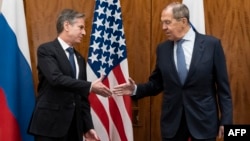
U.S. Secretary of State Antony Blinken (left) greets Russian Foreign Minister Sergei Lavrov before their meeting in Geneva on January 21.

No breakthrough has emerged after a new round of talks between the United States and Russia on tensions over Ukraine, though the January 21 meeting helped clear a path to understanding each other’s positions amid fears Moscow will invade its neighbor despite Western warnings of severe consequences.

U.S. Secretary of State Antony Blinken and Russian Foreign Minister Sergei Lavrov met for about 90 minutes in Geneva on January 21 as they try to avert a possible war in Europe amid Moscow’s demands for concessions from NATO over its ties with the former Soviet republic.

Following the U.S.-Russia talks in the Swiss city, the White House announced that President Joe Biden will meet with his national-security team over the weekend to discuss the situation in Ukraine.

Both Blinken and Lavrov said the talks were frank and gave hope for more diplomacy on the Ukraine crisis.

"We didn't expect any major breakthroughs to happen today, but I believe we are now on a clear path in terms of understanding each other's concerns and each other's positions," Blinken told reporters after the meeting.

Lavrov in turn said he hopes "emotions will decrease" after the talks, which follow a flurry of diplomacy in recent days that has failed to bridge deep divides.

In Photos: New Images Capture Russia Massing Weaponry Around Ukraine
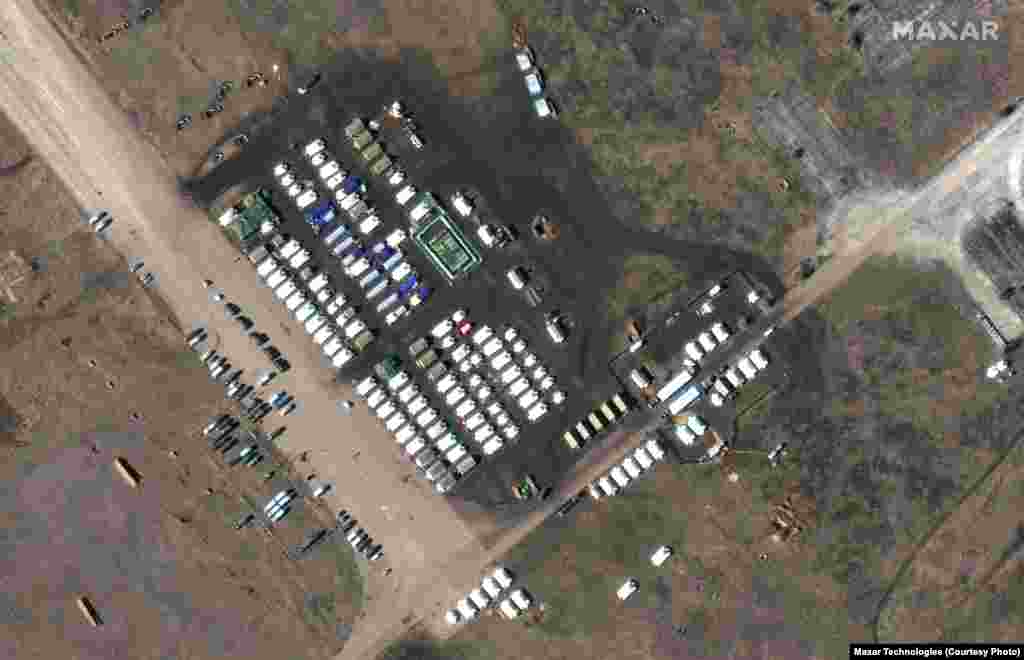
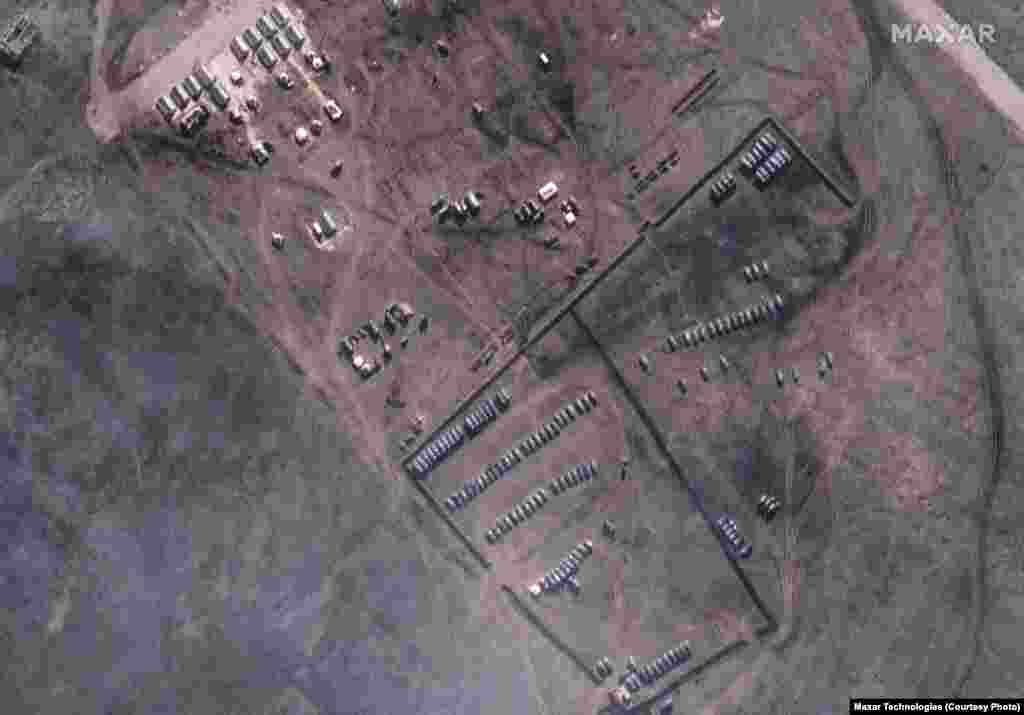
In Crimea, a new deployment of troops and equipment is visible at the Oktyabrskoye airfield north of Simferopol on February 10.
1/24 In Crimea, a new deployment of troops and equipment is visible at the Oktyabrskoye airfield north of Simferopol on February 10.
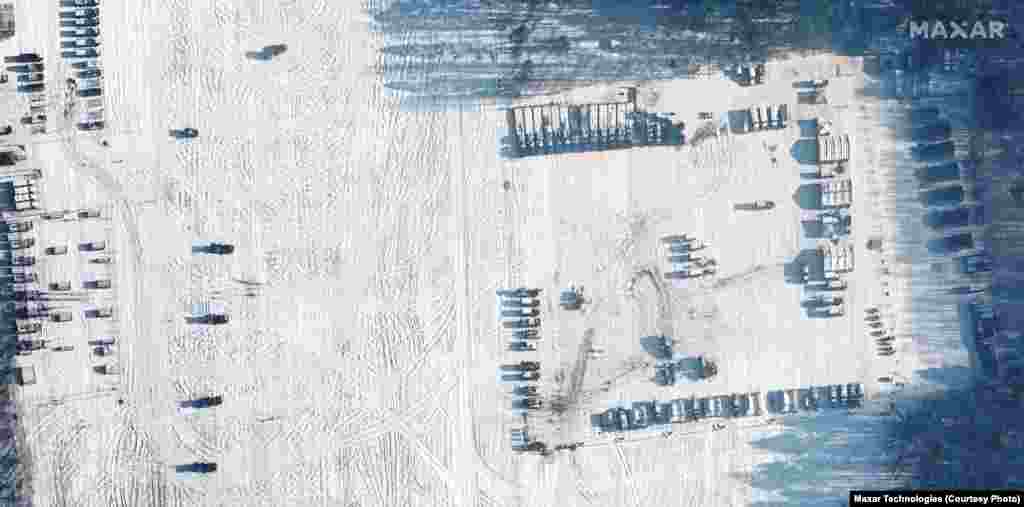
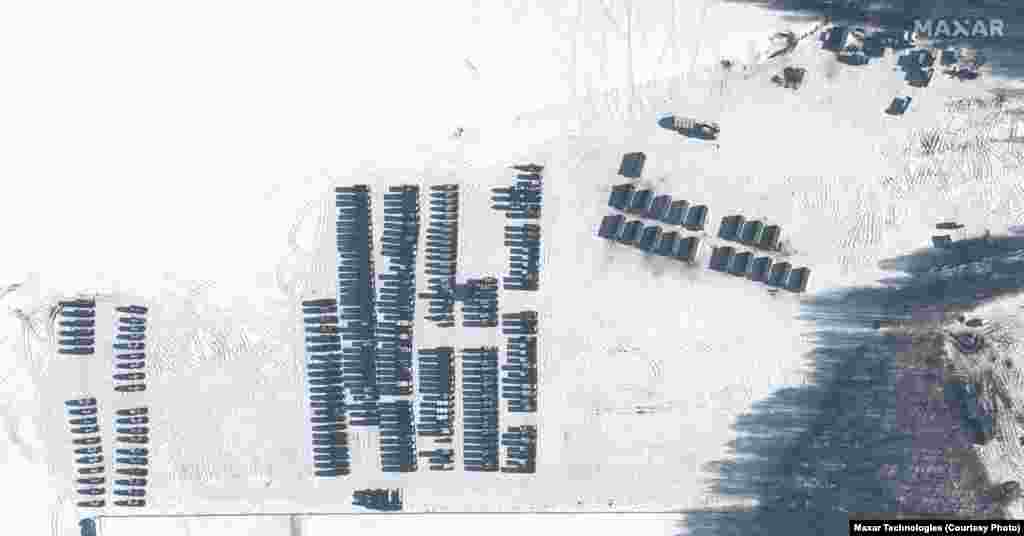
Satellite photos from February 10 and earlier show a massive Russian buildup of military hardware, reportedly including ballistic-missile systems. Some of the buildup is in Belarus, not far from the Ukrainian border.
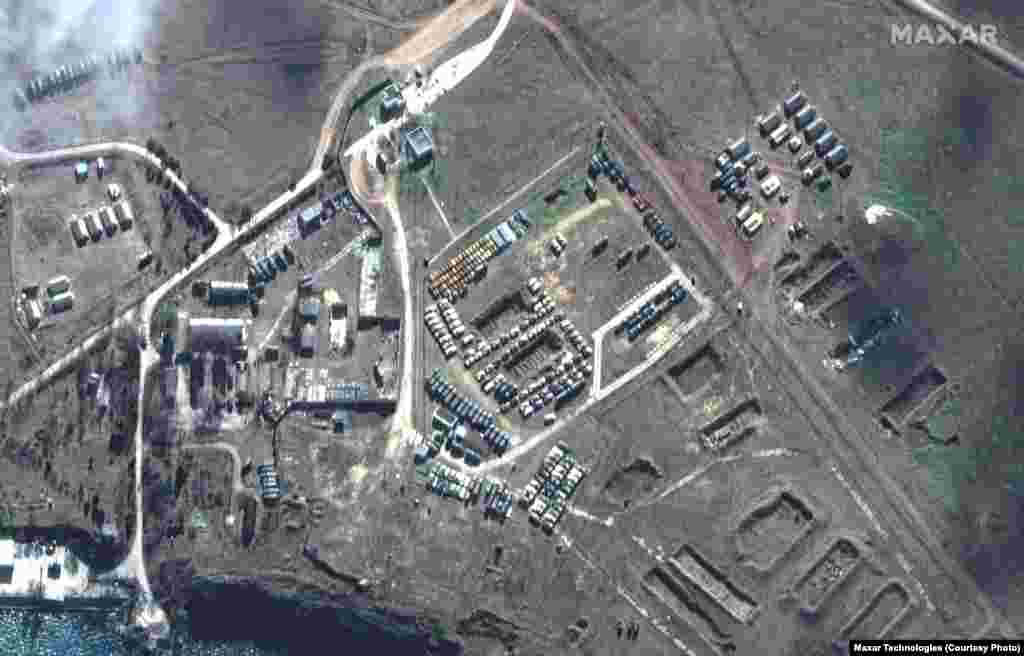
Armored vehicles of a new deployment are visible in Slavne on Crimea's northwest coast on February 9.
2/24 Armored vehicles of a new deployment are visible in Slavne on Crimea's northwest coast on February 9.
Satellite photos from February 10 and earlier show a massive Russian buildup of military hardware, reportedly including ballistic-missile systems. Some of the buildup is in Belarus, not far from the Ukrainian border.
Equipment and new deployments are visible in Novoozernoye, Crimea, on February 9.
3/24 Equipment and new deployments are visible in Novoozernoye, Crimea, on February 9.
Satellite photos from February 10 and earlier show a massive Russian buildup of military hardware, reportedly including ballistic-missile systems. Some of the buildup is in Belarus, not far from the Ukrainian border.
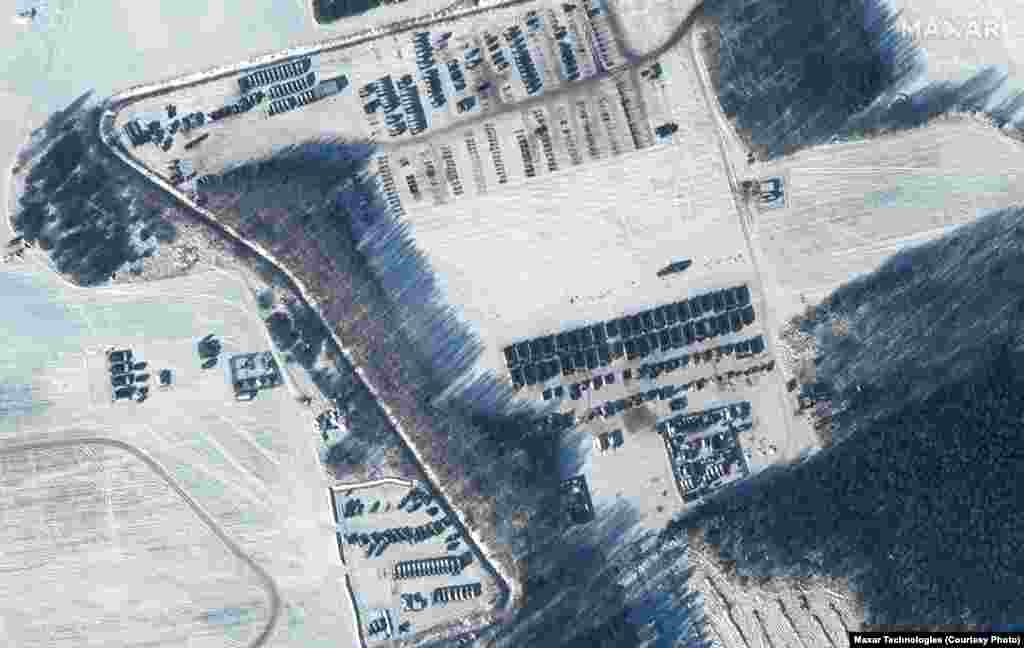
A new deployment of troops, vehicles, and helicopters was identified on February 10 at the Zyabrovka airfield near Homel, Belarus, less than 25 kilometers from the border with Ukraine.
4/24 A new deployment of troops, vehicles, and helicopters was identified on February 10 at the Zyabrovka airfield near Homel, Belarus, less than 25 kilometers from the border with Ukraine.
Satellite photos from February 10 and earlier show a massive Russian buildup of military hardware, reportedly including ballistic-missile systems. Some of the buildup is in Belarus, not far from the Ukrainian border.
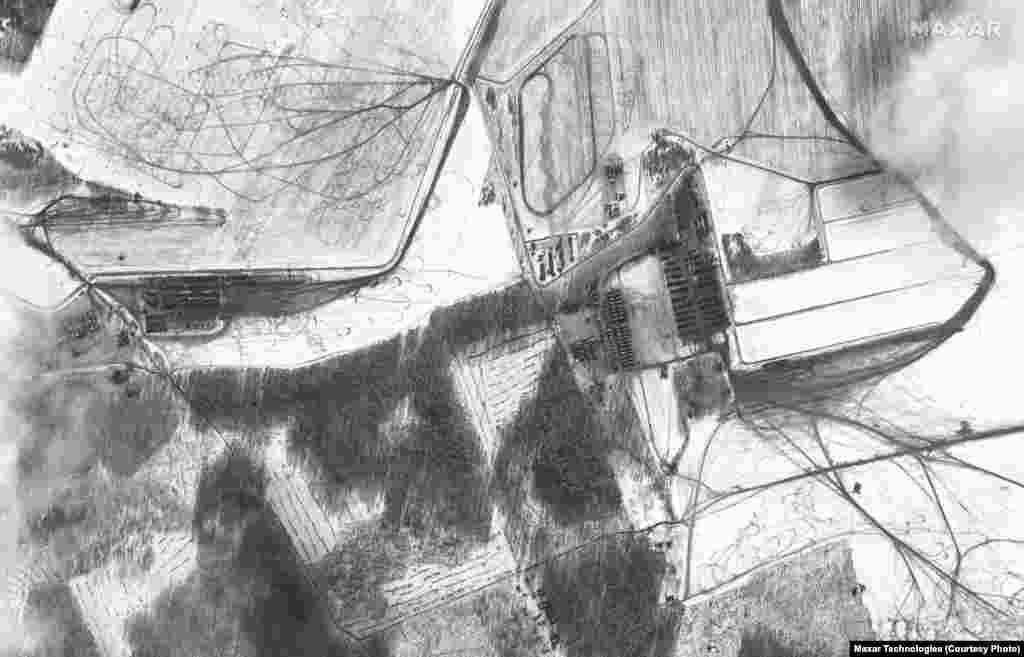
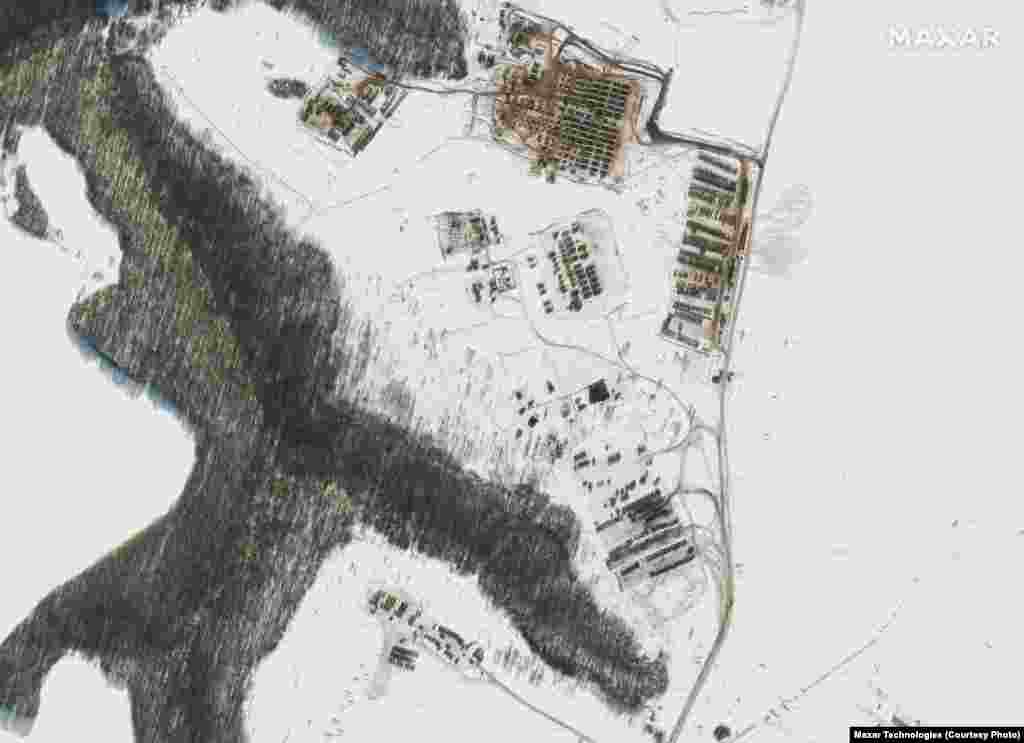
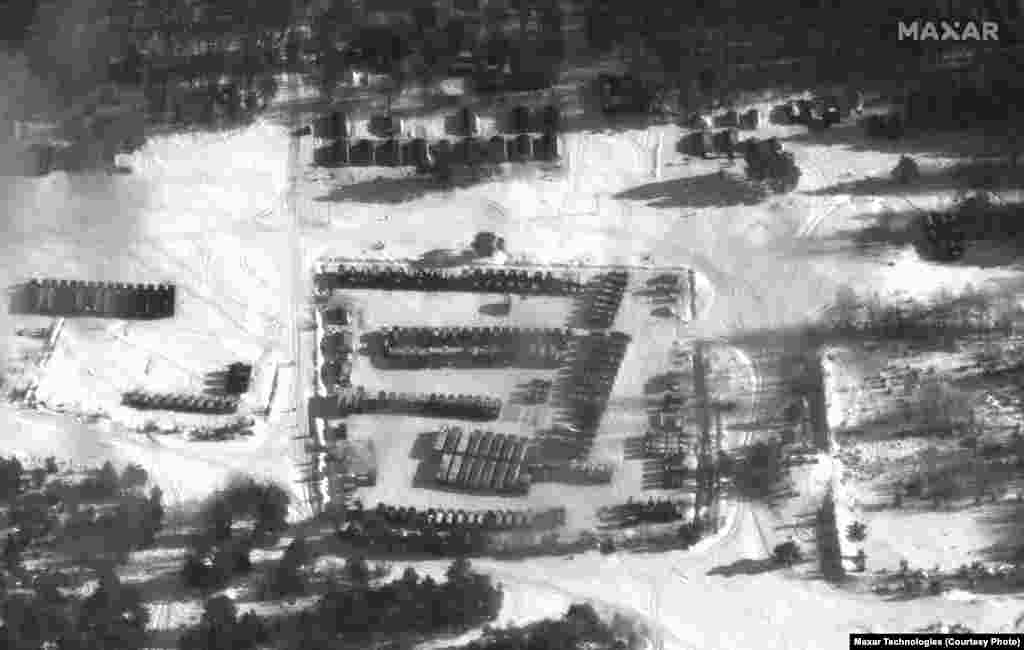
An overview of deployment areas near Rechytsa on February 9. Rechytsa is in Belarus's southeastern Homel region, some 55 kilometers from the Ukrainian border.
5/24 An overview of deployment areas near Rechytsa on February 9. Rechytsa is in Belarus's southeastern Homel region, some 55 kilometers from the Ukrainian border.
Satellite photos from February 10 and earlier show a massive Russian buildup of military hardware, reportedly including ballistic-missile systems. Some of the buildup is in Belarus, not far from the Ukrainian border.
Armored vehicles and transporters arrive at Russia's Kursk training area on February 9, about 100 kilometers east of Ukraine.
6/24 Armored vehicles and transporters arrive at Russia's Kursk training area on February 9, about 100 kilometers east of Ukraine.
Satellite photos from February 10 and earlier show a massive Russian buildup of military hardware, reportedly including ballistic-missile systems. Some of the buildup is in Belarus, not far from the Ukrainian border.
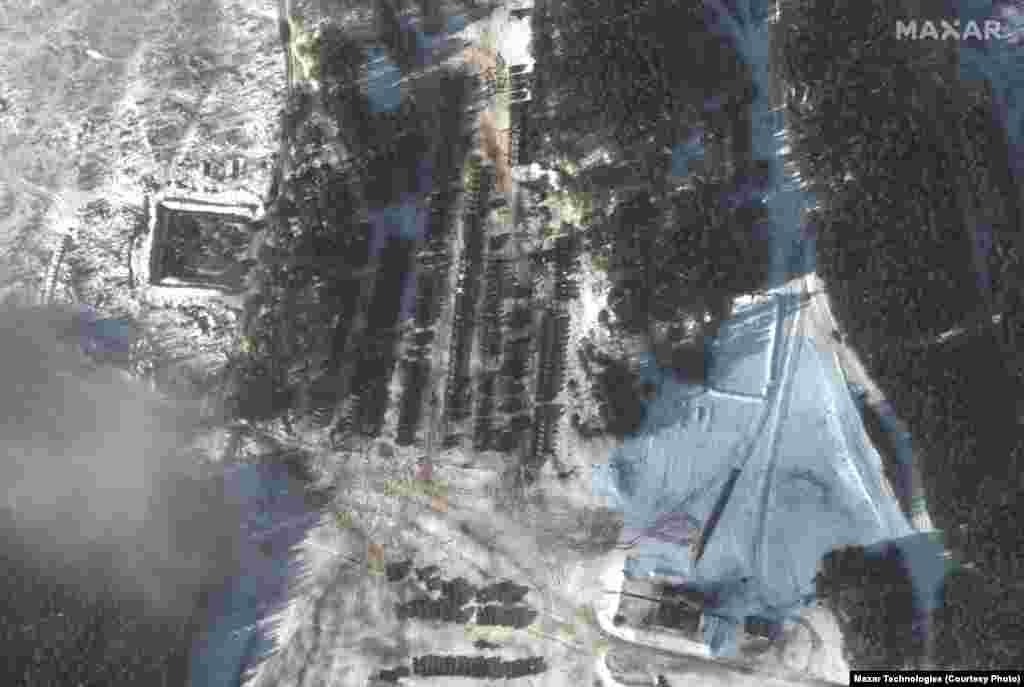
Multiple battle groups and troop housing areas are visible at the Kursk training area on February 9.
7/24 Multiple battle groups and troop housing areas are visible at the Kursk training area on February 9.
Satellite photos from February 10 and earlier show a massive Russian buildup of military hardware, reportedly including ballistic-missile systems. Some of the buildup is in Belarus, not far from the Ukrainian border.
Six SU-25 ground-attack aircraft are shown at Luninets airfield in Belarus. The image was taken on February 4. Luninets is in the southwestern Brest region, about 50 kilometers from the Ukrainian border.
8/24 Six SU-25 ground-attack aircraft are shown at Luninets airfield in Belarus. The image was taken on February 4. Luninets is in the southwestern Brest region, about 50 kilometers from the Ukrainian border.
Satellite photos from February 10 and earlier show a massive Russian buildup of military hardware, reportedly including ballistic-missile systems. Some of the buildup is in Belarus, not far from the Ukrainian border.
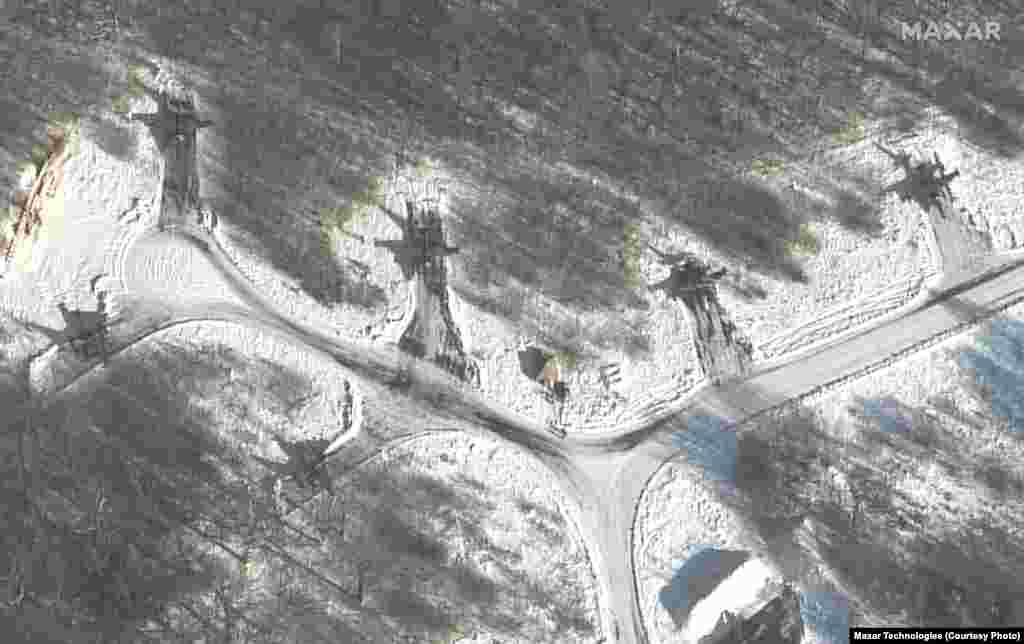
Probable S-400 air-defense deployments at the Luninets airfield on February 4.
9/24 Probable S-400 air-defense deployments at the Luninets airfield on February 4.
Satellite photos from February 10 and earlier show a massive Russian buildup of military hardware, reportedly including ballistic-missile systems. Some of the buildup is in Belarus, not far from the Ukrainian border.
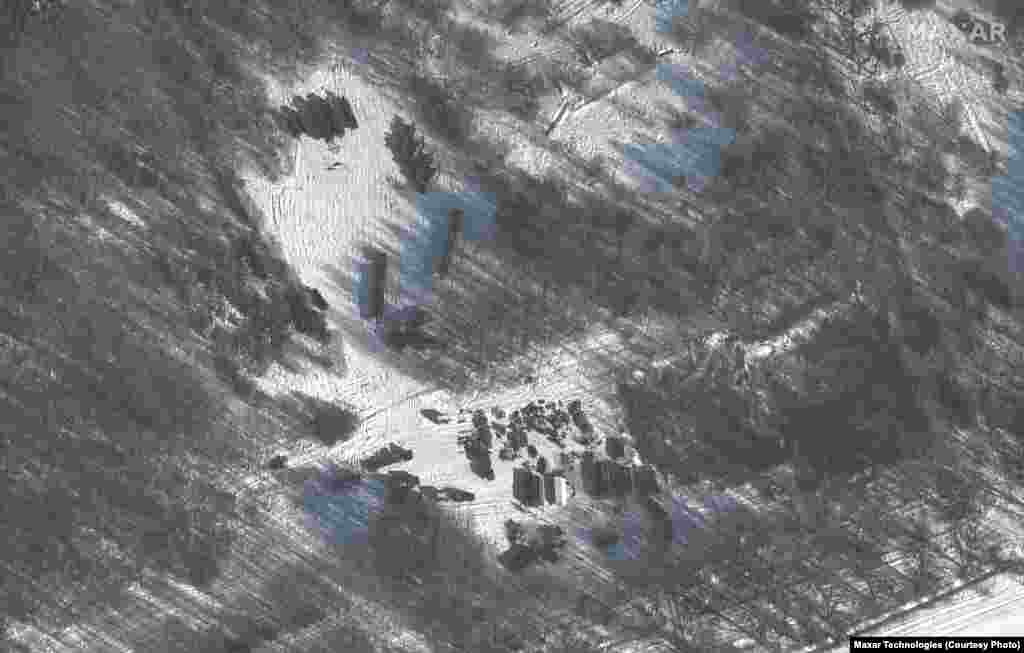
Probable SS-26 Iskander and multiple-rocket launchers deployed northwest of Yelsk on February 4. Yelsk is in Belarus's Homel region, about 20 kilometers from the Ukrainian border.
10/24 Probable SS-26 Iskander and multiple-rocket launchers deployed northwest of Yelsk on February 4. Yelsk is in Belarus's Homel region, about 20 kilometers from the Ukrainian border.
Satellite photos from February 10 and earlier show a massive Russian buildup of military hardware, reportedly including ballistic-missile systems. Some of the buildup is in Belarus, not far from the Ukrainian border.
Troops and logistics-material-support units northwest of Yelsk on February 4.
11/24 Troops and logistics-material-support units northwest of Yelsk on February 4.
Satellite photos from February 10 and earlier show a massive Russian buildup of military hardware, reportedly including ballistic-missile systems. Some of the buildup is in Belarus, not far from the Ukrainian border.
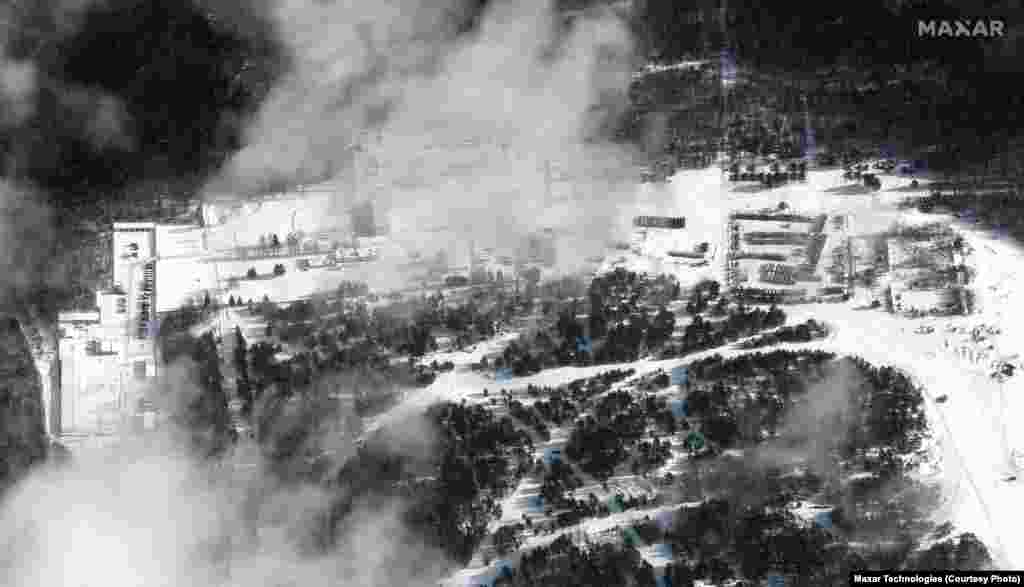
A troop-housing area and vehicle park in Rechytsa on February 4.
12/24 A troop-housing area and vehicle park in Rechytsa on February 4.
Satellite photos from February 10 and earlier show a massive Russian buildup of military hardware, reportedly including ballistic-missile systems. Some of the buildup is in Belarus, not far from the Ukrainian border.
A cluster of vehicles that reportedly includes truck-launched Iskander missile systems at the Osipovichi military training area, just south of Minsk. The image was taken on February 1. 
13/24 A cluster of vehicles that reportedly includes truck-launched Iskander missile systems at the Osipovichi military training area, just south of Minsk. The image was taken on February 1. 
Satellite photos from February 10 and earlier show a massive Russian buildup of military hardware, reportedly including ballistic-missile systems. Some of the buildup is in Belarus, not far from the Ukrainian border.
A wider view of the Osipovichi military facility on February 1. Russian-made Iskander missiles are capable of precise strikes on targets up to 500 kilometers away. 
14/24 A wider view of the Osipovichi military facility on February 1. Russian-made Iskander missiles are capable of precise strikes on targets up to 500 kilometers away. 
Satellite photos from February 10 and earlier show a massive Russian buildup of military hardware, reportedly including ballistic-missile systems. Some of the buildup is in Belarus, not far from the Ukrainian border.
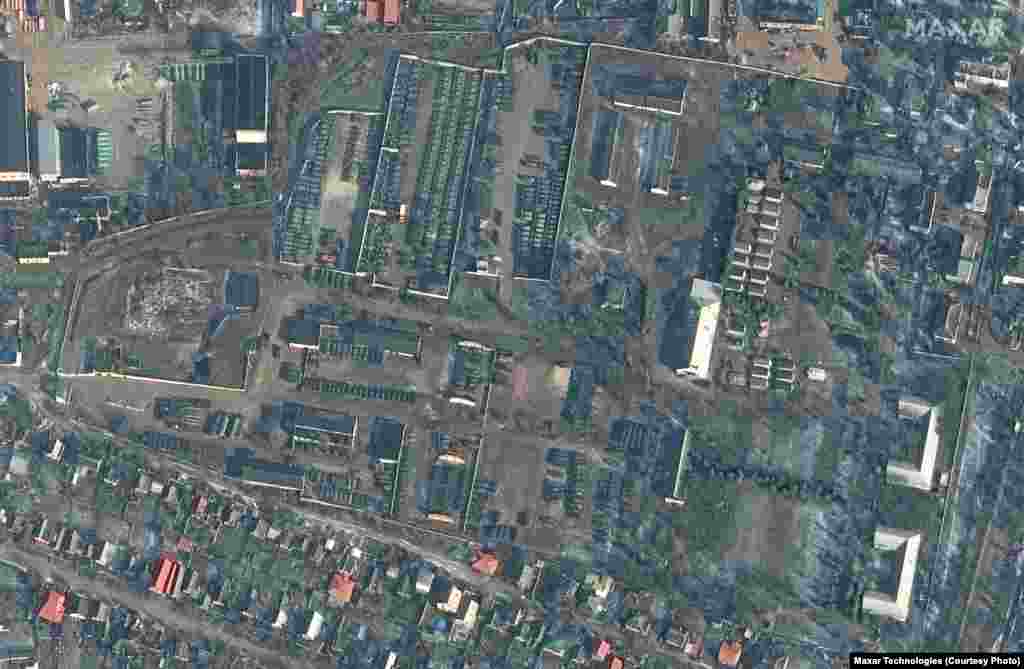
An overview of vehicles and housing for troops near Baranovichi, Belarus, on January 29. Russia has placed troops and equipment inside Belarus in recent days as the countries prepare to hold joint military exercises.
15/24 An overview of vehicles and housing for troops near Baranovichi, Belarus, on January 29. Russia has placed troops and equipment inside Belarus in recent days as the countries prepare to hold joint military exercises.
Satellite photos from February 10 and earlier show a massive Russian buildup of military hardware, reportedly including ballistic-missile systems. Some of the buildup is in Belarus, not far from the Ukrainian border.
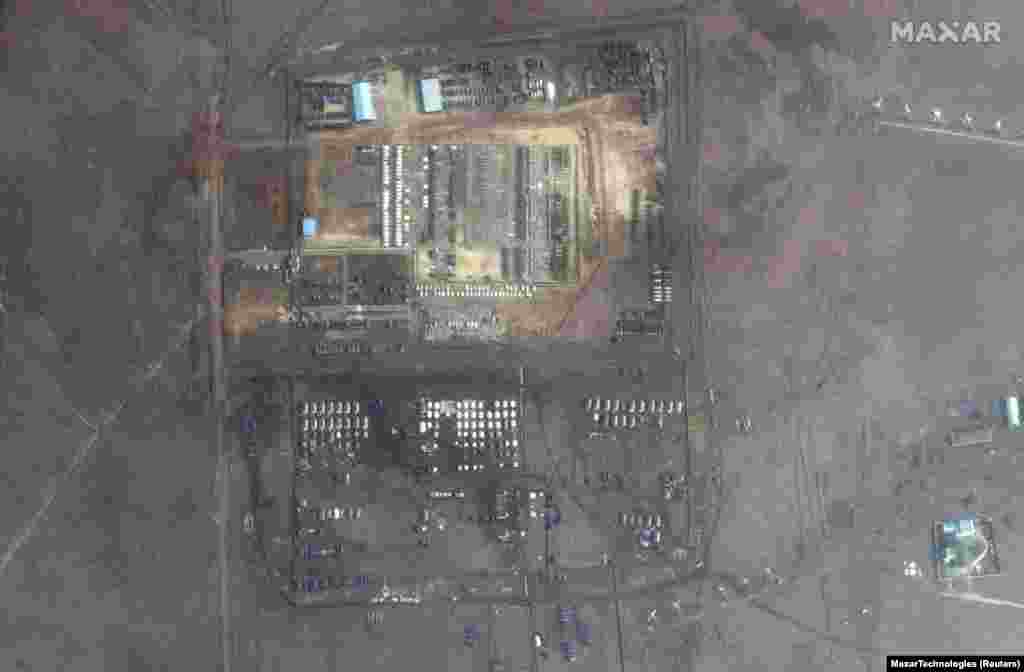
A crowded military base in Bakhchisaray on the Russian-occupied Crimean Peninsula on February 1. 
16/24 A crowded military base in Bakhchisaray on the Russian-occupied Crimean Peninsula on February 1. 
Satellite photos from February 10 and earlier show a massive Russian buildup of military hardware, reportedly including ballistic-missile systems. Some of the buildup is in Belarus, not far from the Ukrainian border.
Massed vehicles at a military base in Novoozernoye, Crimea, as photographed by satellite on February 1. 
17/24 Massed vehicles at a military base in Novoozernoye, Crimea, as photographed by satellite on February 1. 
Satellite photos from February 10 and earlier show a massive Russian buildup of military hardware, reportedly including ballistic-missile systems. Some of the buildup is in Belarus, not far from the Ukrainian border.
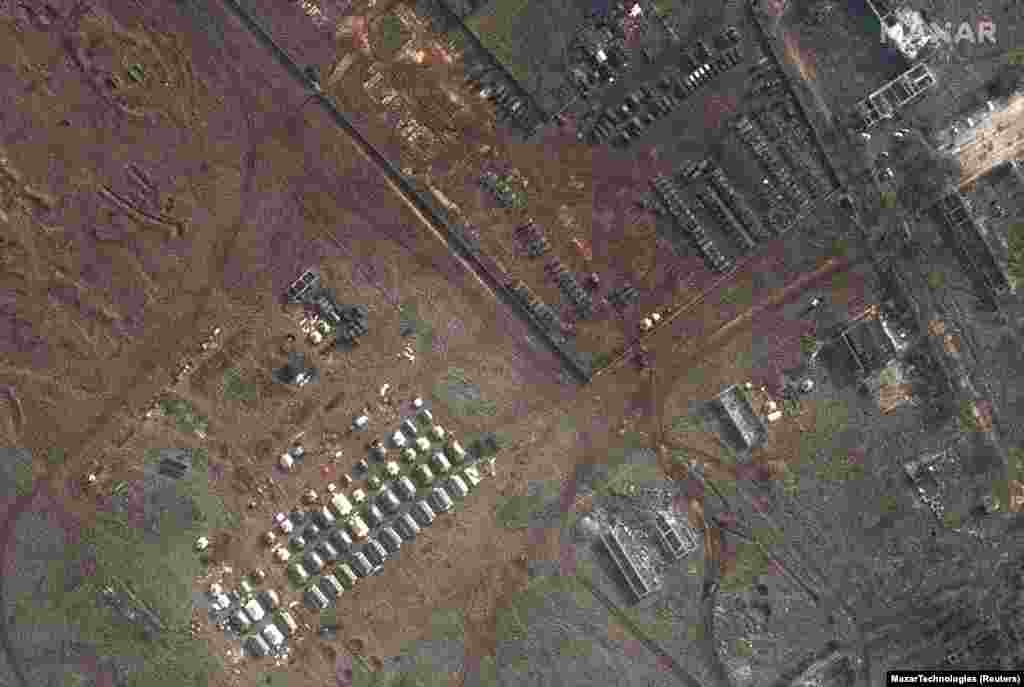
Military tents and armored vehicles in Yevpatoria, Crimea, on February 1.
18/24 Military tents and armored vehicles in Yevpatoria, Crimea, on February 1.
Satellite photos from February 10 and earlier show a massive Russian buildup of military hardware, reportedly including ballistic-missile systems. Some of the buildup is in Belarus, not far from the Ukrainian border.
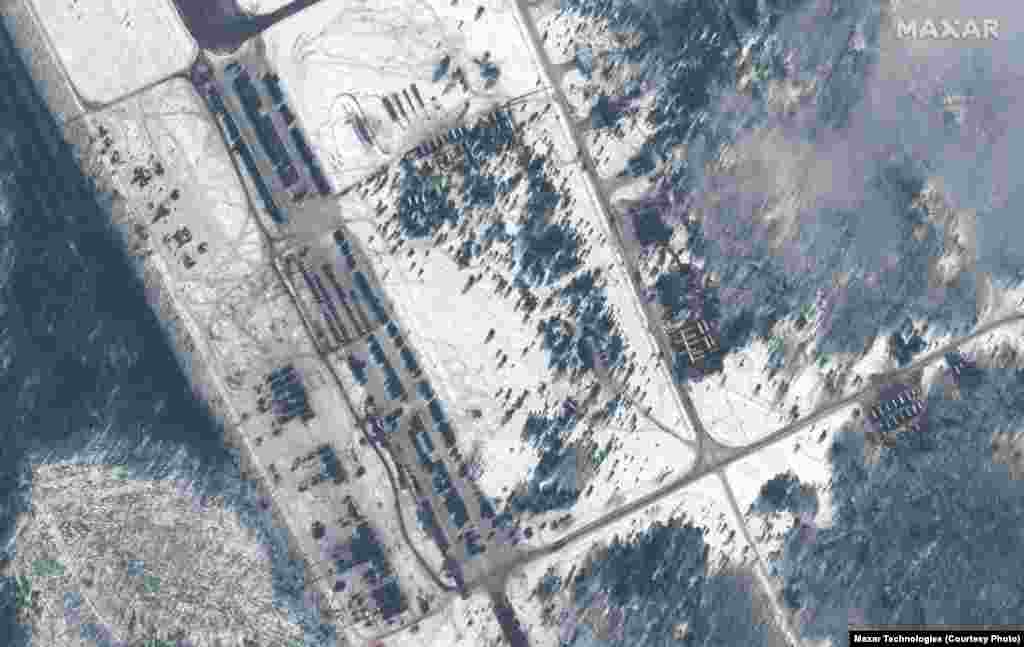
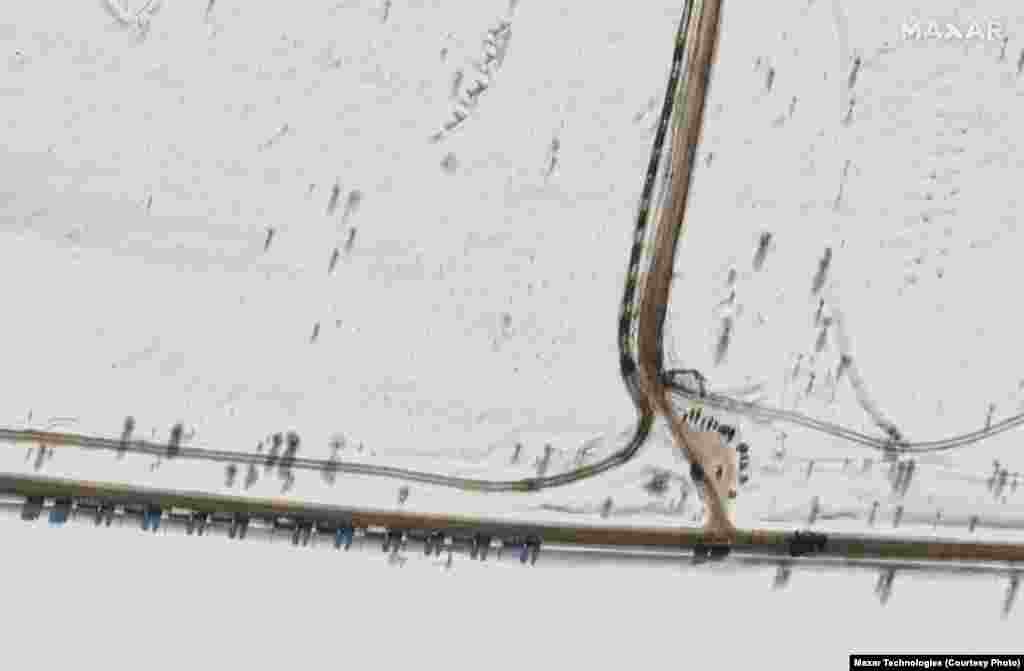
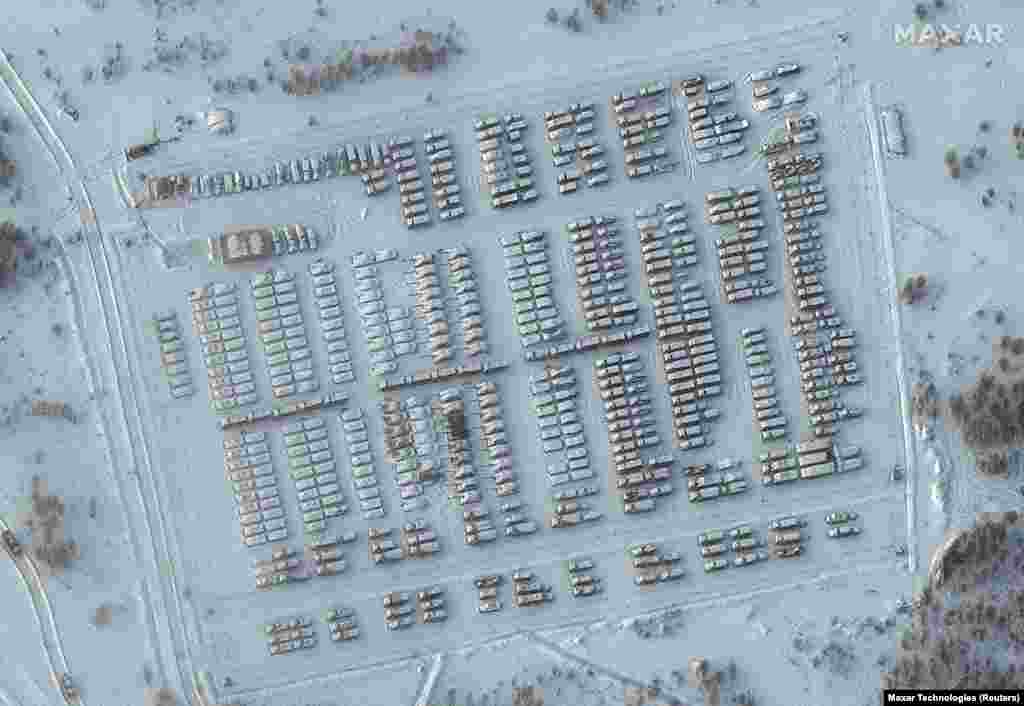
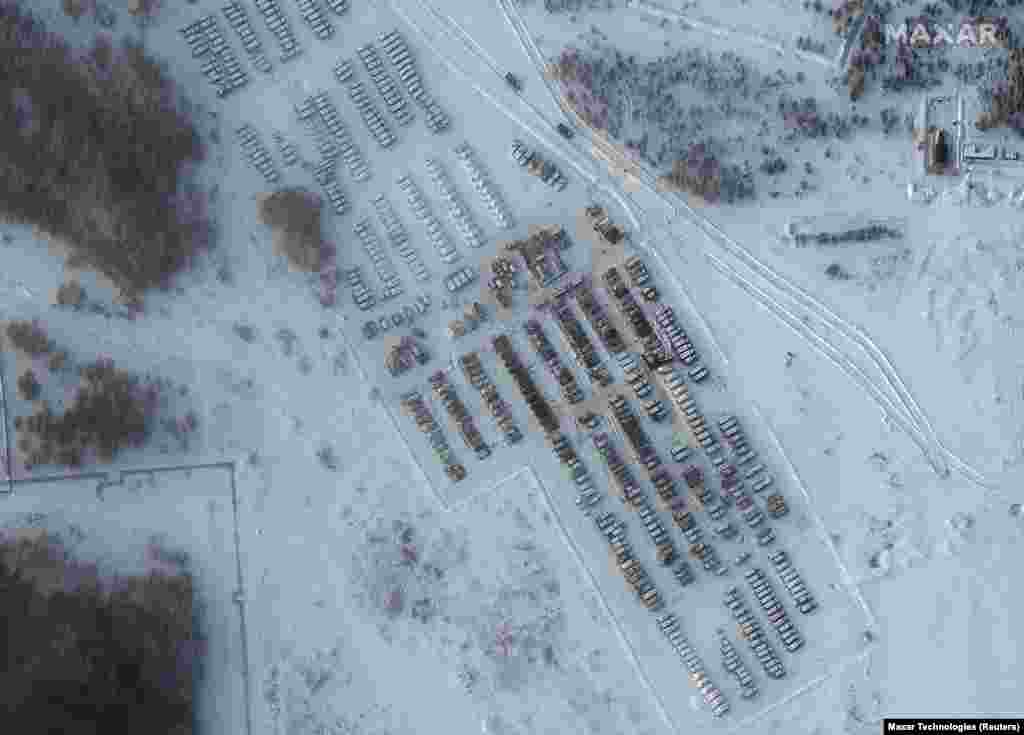
An older satellite image shows snow-dusted Russian military vehicles parked in Yelnya, Russia, on January 19. Yelnya is in Russia's northwestern Smolensk region, around 120 kilometers from the border with Belarus and 260 kilometers from Ukraine. 
19/24 An older satellite image shows snow-dusted Russian military vehicles parked in Yelnya, Russia, on January 19. Yelnya is in Russia's northwestern Smolensk region, around 120 kilometers from the border with Belarus and 260 kilometers from Ukraine. 
Satellite photos from February 10 and earlier show a massive Russian buildup of military hardware, reportedly including ballistic-missile systems. Some of the buildup is in Belarus, not far from the Ukrainian border.
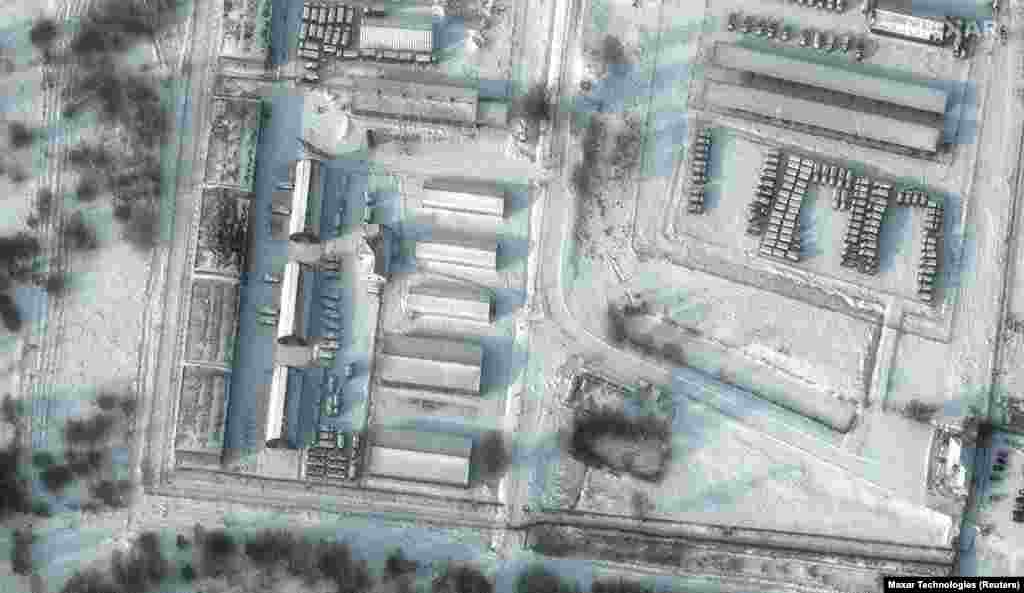
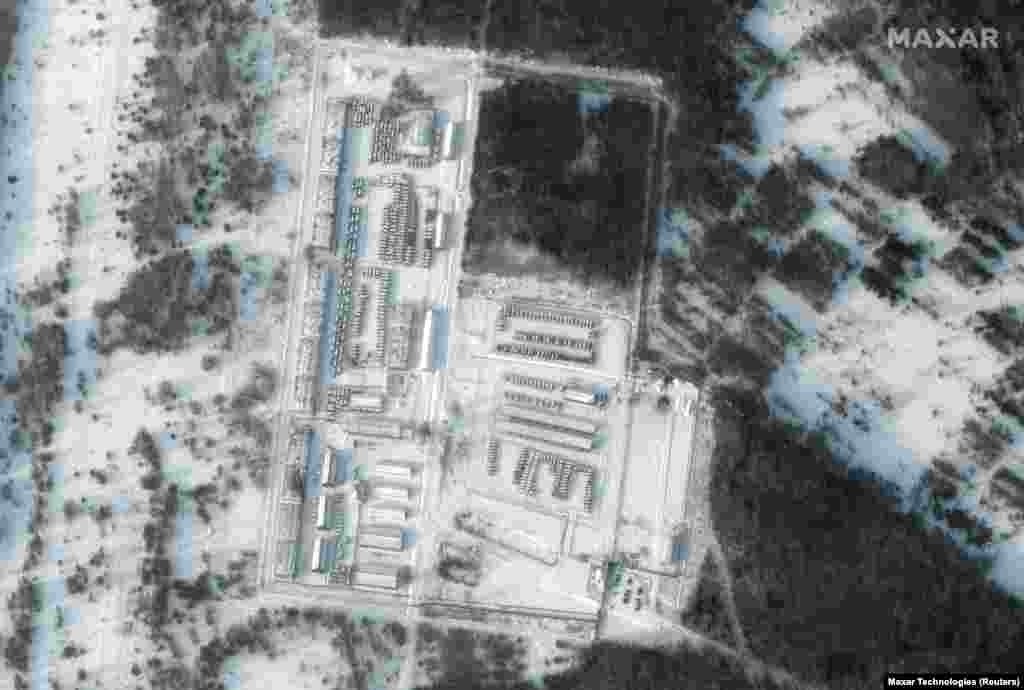
Armored personnel carriers and trucks at Klimovo on January 19. The Klimovo military storage facility is located just 35 kilometers from the Ukrainian border. 
20/24 Armored personnel carriers and trucks at Klimovo on January 19. The Klimovo military storage facility is located just 35 kilometers from the Ukrainian border. 
Satellite photos from February 10 and earlier show a massive Russian buildup of military hardware, reportedly including ballistic-missile systems. Some of the buildup is in Belarus, not far from the Ukrainian border.
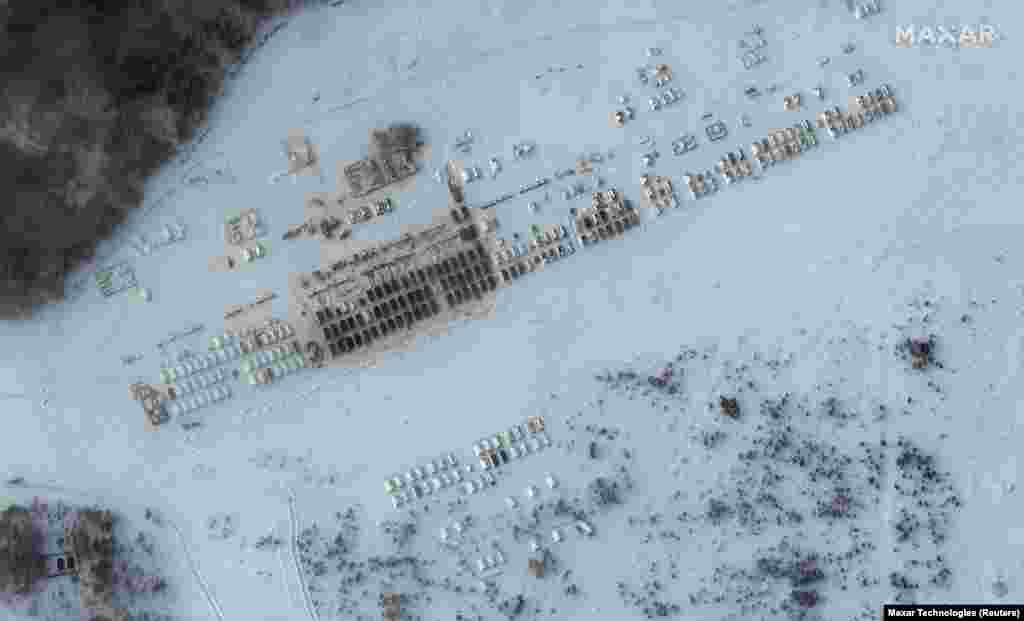
Tents and housing for Russian troops in Yelnya on January 19.
21/24 Tents and housing for Russian troops in Yelnya on January 19.
Satellite photos from February 10 and earlier show a massive Russian buildup of military hardware, reportedly including ballistic-missile systems. Some of the buildup is in Belarus, not far from the Ukrainian border.
Russian tanks and artillery-support equipment, some of which was apparently in use recently, parked in Yelnya on January 19.
22/24 Russian tanks and artillery-support equipment, some of which was apparently in use recently, parked in Yelnya on January 19.
Satellite photos from February 10 and earlier show a massive Russian buildup of military hardware, reportedly including ballistic-missile systems. Some of the buildup is in Belarus, not far from the Ukrainian border.
Military equipment massed at the Klimovo storage facility on January 19. Older imagery <a href="https://www.google.com/maps/place/Klimovo,+Bryansk+Oblast,+Russia/@52.346282,32.1680393,567m/data=!3m1!1e3!4m5!3m4!1s0x46d4a0d137ad6257:0x7ea4add83a2b92ac!8m2!3d52.3763189!4d32.2005574" target="_blank"><strong>from Google Maps of the same location</strong> </a>shows a fraction of the military vehicles present.&nbsp;
23/24 Military equipment massed at the Klimovo storage facility on January 19. Older imagery from Google Maps of the same location shows a fraction of the military vehicles present. 
Satellite photos from February 10 and earlier show a massive Russian buildup of military hardware, reportedly including ballistic-missile systems. Some of the buildup is in Belarus, not far from the Ukrainian border.
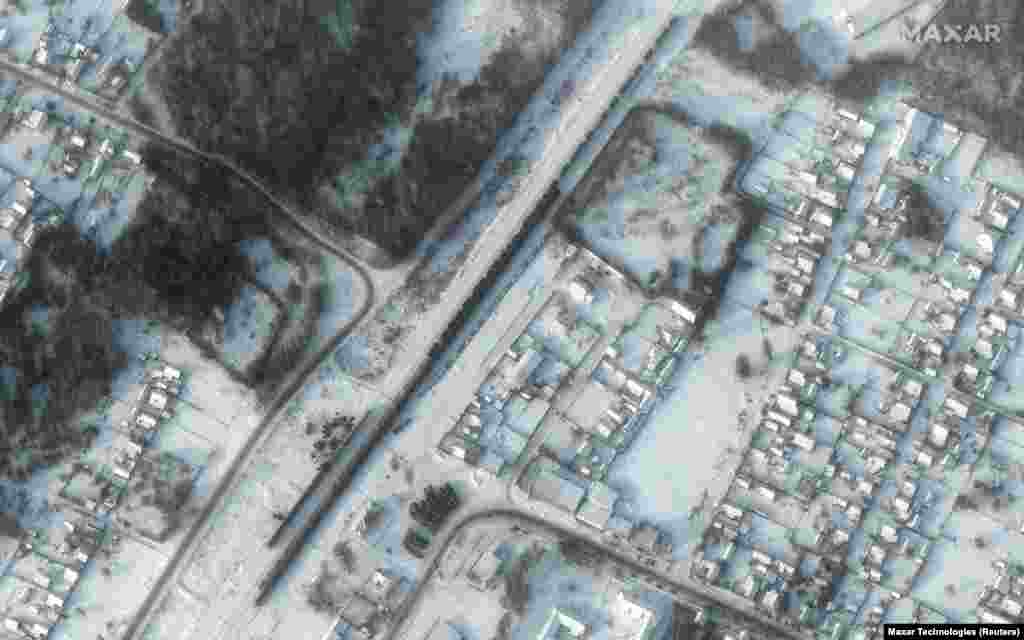
Military hardware at a railway yard in Klimovo on January 19. Recent videos have captured massive amounts of military hardware <strong><a href="https://twitter.com/RALee85/status/1483373599977259009" target="_blank">being transported by rail</a></strong> in western Russia.&nbsp;
24/24 Military hardware at a railway yard in Klimovo on January 19. Recent videos have captured massive amounts of military hardware being transported by rail in western Russia. 
Satellite photos from February 10 and earlier show a massive Russian buildup of military hardware, reportedly including ballistic-missile systems. Some of the buildup is in Belarus, not far from the Ukrainian border.
Previous slide
Next slide

Russia has amassed more than 125,000 troops in occupied Crimea and near Ukraine's borders, raising alarm bells in Western capitals that Moscow is preparing further military action against Ukraine.

Moscow is backing separatist fighters in an ongoing war in eastern Ukraine that has claimed more than 13,200 lives since 2014, the same year it illegally annexed Crimea.

Russia has ramped up its belligerent rhetoric recently as it presses for a list of security guarantees. The demands include a promise from NATO never to admit Ukraine and for a significant retreat of the alliance from Eastern Europe. Moscow is also angered over Western military support to Ukraine.

On January 21, Russia's Foreign Ministry published on its website answers to questions from journalists received at a press conference seven days earlier on Russian diplomacy last year.

One of the ministry's answers noted that Russia is looking for "steps aimed at restoring the 1997 configuration of those countries who weren’t NATO members at that time and that includes both Bulgaria and Romania."
NATO immediately rejected the Russian demand.

"NATO will not renounce our ability to protect and defend each other, including with the presence of troops in the eastern part of the alliance," alliance spokesperson Oana Lungescu said in a statement.

In Bucharest, Romania's Foreign Ministry said the Russian demand was "unacceptable and cannot be part of a negotiation," while Bulgarian Prime Minister Kiril Petkov said his country "made its choice long ago by becoming a NATO member."

Lavrov said that Blinken promised during the meeting to provide written responses to Russian demands on Ukraine and NATO next week, adding that Russia will better understand "whether we are on the right track" after Moscow receives the answers.

Blinken confirmed the United States would respond in writing and that he expects delegations from both sides to meet again after Moscow studies the responses.

“I believe we can carry forward work on developing understanding, but that’s contingent on Russia stopping its aggression toward Ukraine.,” Blinken said.

The West has repeated it wants diplomacy, but with positions entrenched on both sides, successive talks between Western and Russian officials in Geneva, Brussels, and Vienna last week have failed to produce any breakthrough.

Amid the rising tensions, the three Baltic members of NATO -- Estonia, Latvia, and Lithuania -- have announced that they will provide anti-armor and antiaircraft missiles to Ukraine to help the country in the event of a possible Russian invasion.

Ukrainian President Volodymyr Zelenskiy thanked Biden in a tweet for Washington's "unprecedented" diplomatic and military assistance.

Separately, in an interview with The Washington Post, Zelenskiy said that, in the event of an attack, Russia may try to occupy Kharkiv, an industrial city of some 1.4 million located at only 42 kilometers from the border, and this would signal the start of a "large-scale war."

If Russia invades, "of course they are going to do this on those territories where historically there are people who used to have family links to Russia," Zelenskiy said.

"Kharkiv, which is under Ukraine government control, could be occupied. Russia needs a pretext: They will say that they are protecting the Russian-speaking population."

Kharkiv is home to tank and tractor factories as well as electronics producers.

Washington and its allies have repeatedly warned Russia that it would pay a "high price" of economic and political sanctions should it invade Ukraine.

In Ottawa, Prime Minister Justin Trudeau announced that NATO member Canada will offer Ukraine a loan of up to $95.6 million and is looking at other ways to support Kyiv.

"Russia is aiming to destabilize Ukraine, including economically. This loan will help support Ukraine's economic resilience," Trudeau told a news conference on January 21.

In Kyiv, the SBU security service said Ukraine had been subjected to an intense campaign of fake bomb threats targeting society in recent days, blaming Russia for the hoaxes.

The SBU said it had recorded more than 300 anonymous phone calls and Internet messages since the beginning of the year, as opposed to some 1,100 such messages in all of last year.

With reporting by AFP, AP, dpa, and Reuters
  • 16x9 Image

    RFE/RL's Ukrainian Service

    RFE/RL's Ukrainian Service has seen its audience grow significantly since Russia's full-scale invasion in February 2022 and is among the most cited media outlets in the country. Its bold, in-depth reporting from the front lines has won many accolades and awards. Its comprehensive coverage also includes award-winning reporting by the Donbas.Realities and Crimea.Realities projects and the Schemes investigative unit.

This item is part of
XS
SM
MD
LG