Chechen strongman Ramzan Kadyrov and his family have been tied to an undeclared Moscow apartment in the same building where the head of a group of Chechen terrorists lived and planned the deadly "Nord-Ost" hostage-taking at a Moscow theater in October 2002, an opposition-backed media outlet has reported.
Open Media, an online investigative resource funded by Kremlin foe and former oil tycoon Mikhail Khodorkovsky, reported on June 29 that Moscow property records show the Kadyrov family owns a 153-square-meter apartment on Veyernaya Street, in a leafy section of Moscow, with an estimated market value of about 50 million rubles ($713,000).
Movsar Barayev, the leader of a Chechen militant group that seized some 850 hostages at Moscow's Dubrovka theater that was showing a production of the musical Nord-Ost in October 2002, lived in the same building in the days ahead of the attack, using a fake passport with the name Shamil Akhmatkhanov. All 40 of the attackers and around 200 of the hostages were killed when federal forces pumped a chemical anesthetic into the building and stormed it.
Four Days At Dubrovka
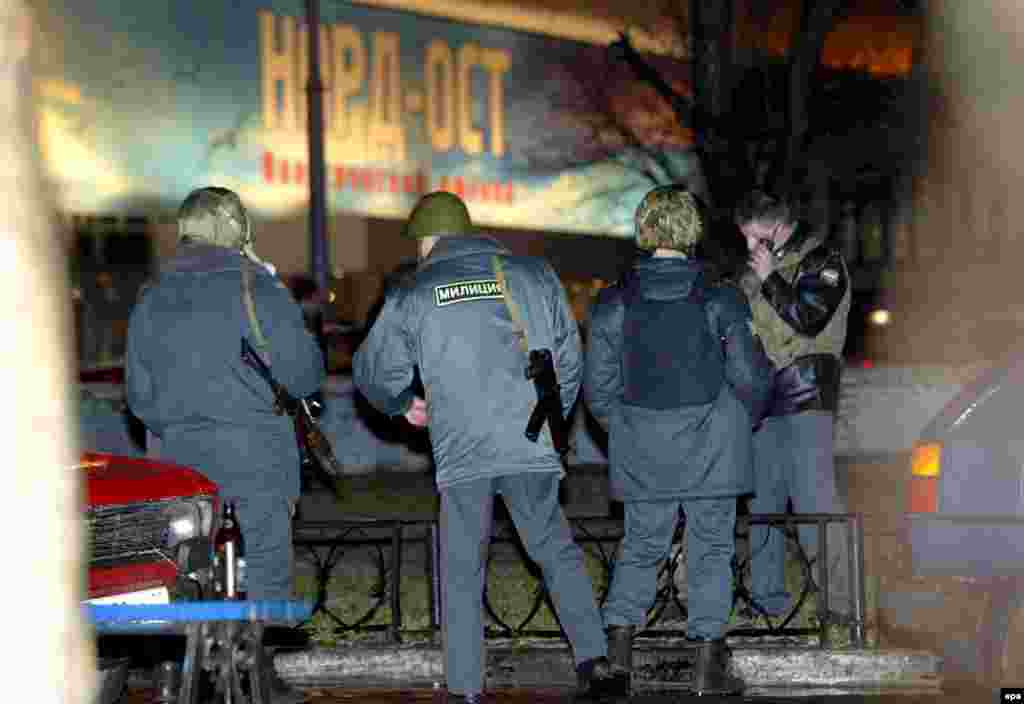
1/13Russian police stand outside the Dubrovka theater in Moscow after Chechen extremists stormed the building and took between 900 and 1,000 people hostage on the evening of October 23, 2002.
Ten years ago, on October 23, 2002, Chechen militants seized the Dubrovka theater in Moscow, taking some 900 people hostage. On October 26, Russian security forces launched a full-scale assault in which all the armed radicals and 130 hostages died. Most of the victims were killed by a narcotic gas pumped into the theater to subdue the hostage-takers. These photos show how the crisis unfolded over four agonizing days.
Show moreShow less
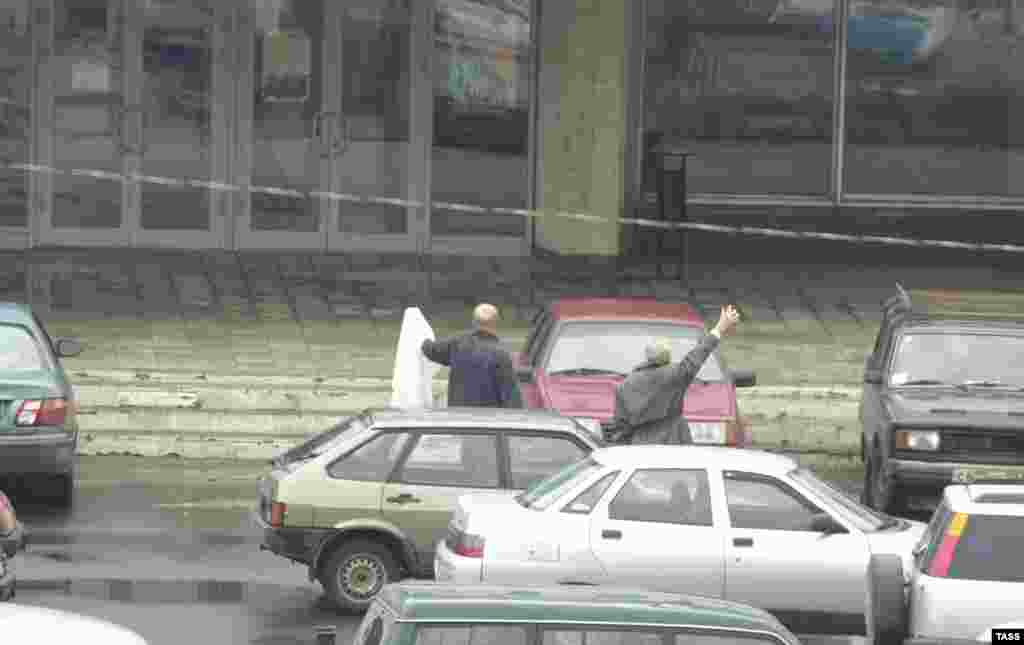
2/13Representatives of Doctors Without Borders (Medecins Sans Frontieres) wave a white flag in an effort to gain access to the hostages on the morning of October 24.
Ten years ago, on October 23, 2002, Chechen militants seized the Dubrovka theater in Moscow, taking some 900 people hostage. On October 26, Russian security forces launched a full-scale assault in which all the armed radicals and 130 hostages died. Most of the victims were killed by a narcotic gas pumped into the theater to subdue the hostage-takers. These photos show how the crisis unfolded over four agonizing days.
Show moreShow less
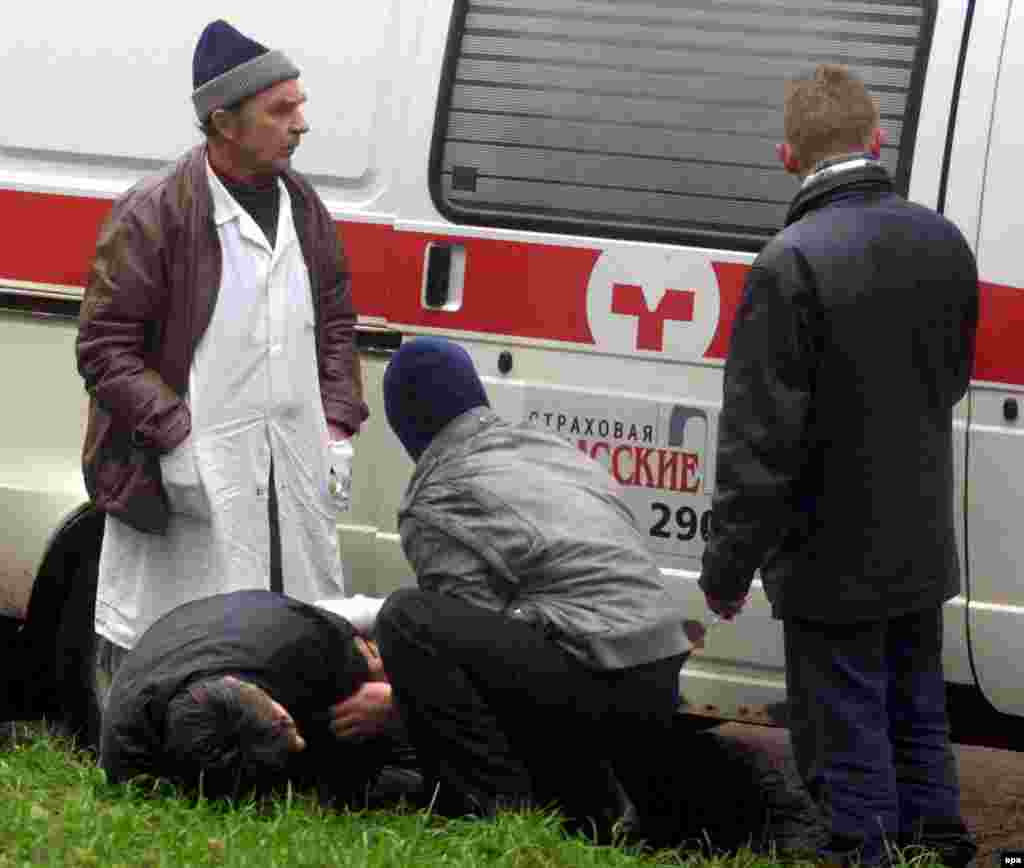
3/13Doctors remove a victim who had been shot by the militants.
Ten years ago, on October 23, 2002, Chechen militants seized the Dubrovka theater in Moscow, taking some 900 people hostage. On October 26, Russian security forces launched a full-scale assault in which all the armed radicals and 130 hostages died. Most of the victims were killed by a narcotic gas pumped into the theater to subdue the hostage-takers. These photos show how the crisis unfolded over four agonizing days.
Show moreShow less
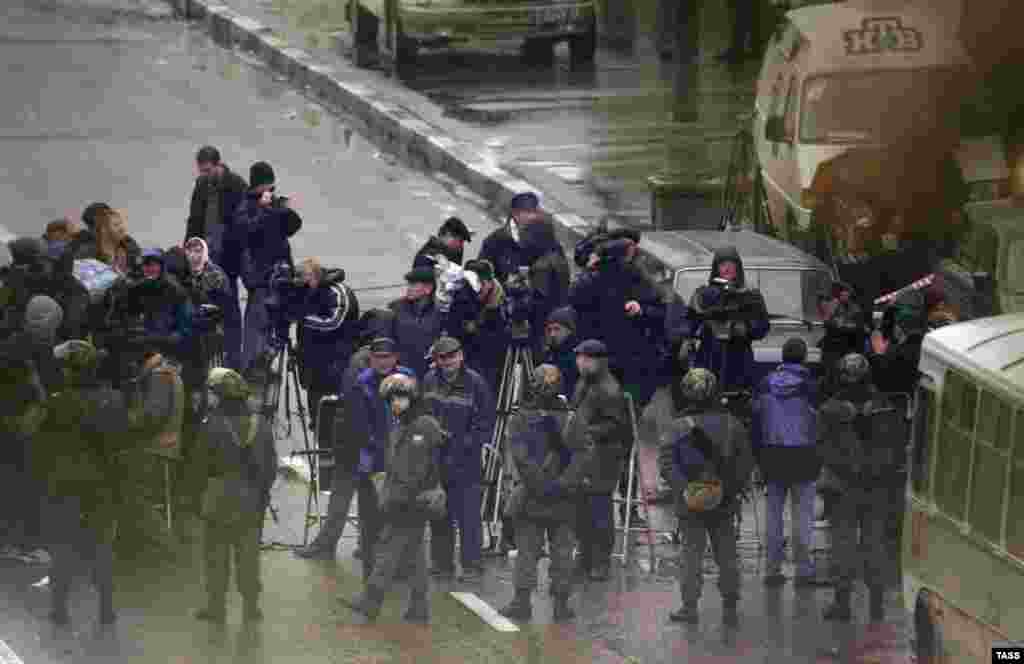
4/13Reporters gather at the police cordon to wait for news from inside the theater.
Ten years ago, on October 23, 2002, Chechen militants seized the Dubrovka theater in Moscow, taking some 900 people hostage. On October 26, Russian security forces launched a full-scale assault in which all the armed radicals and 130 hostages died. Most of the victims were killed by a narcotic gas pumped into the theater to subdue the hostage-takers. These photos show how the crisis unfolded over four agonizing days.
Show moreShow less
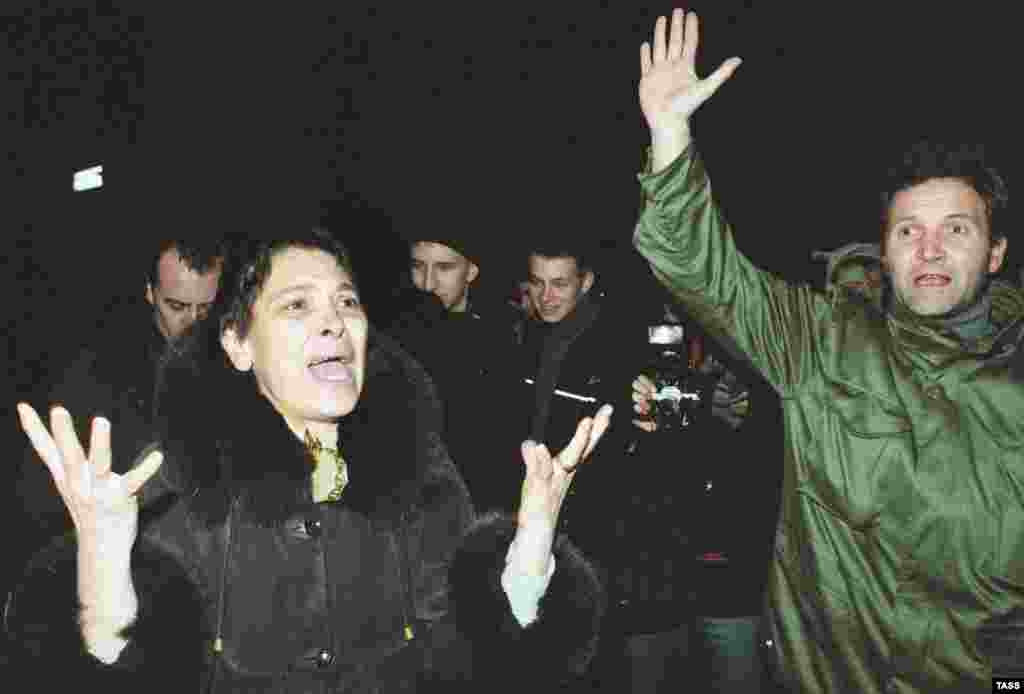
5/13Hostage Maria Shkolnikova leaves the theater with a letter in which the hostages urge Russian President Vladimir Putin to meet the militants' demands and withdraw Russian troops from Chechnya.
Ten years ago, on October 23, 2002, Chechen militants seized the Dubrovka theater in Moscow, taking some 900 people hostage. On October 26, Russian security forces launched a full-scale assault in which all the armed radicals and 130 hostages died. Most of the victims were killed by a narcotic gas pumped into the theater to subdue the hostage-takers. These photos show how the crisis unfolded over four agonizing days.
Show moreShow less
6/13People gathered outside volunteer to take the place of the hostages.
Ten years ago, on October 23, 2002, Chechen militants seized the Dubrovka theater in Moscow, taking some 900 people hostage. On October 26, Russian security forces launched a full-scale assault in which all the armed radicals and 130 hostages died. Most of the victims were killed by a narcotic gas pumped into the theater to subdue the hostage-takers. These photos show how the crisis unfolded over four agonizing days.
Show moreShow less
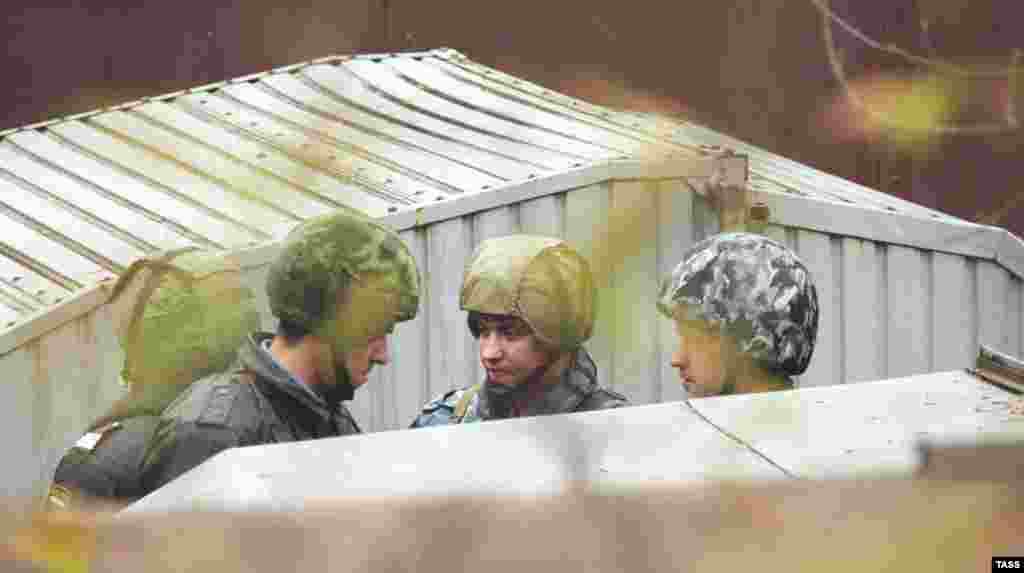
7/13Special task forces gather nearby on October 25.
Ten years ago, on October 23, 2002, Chechen militants seized the Dubrovka theater in Moscow, taking some 900 people hostage. On October 26, Russian security forces launched a full-scale assault in which all the armed radicals and 130 hostages died. Most of the victims were killed by a narcotic gas pumped into the theater to subdue the hostage-takers. These photos show how the crisis unfolded over four agonizing days.
Show moreShow less
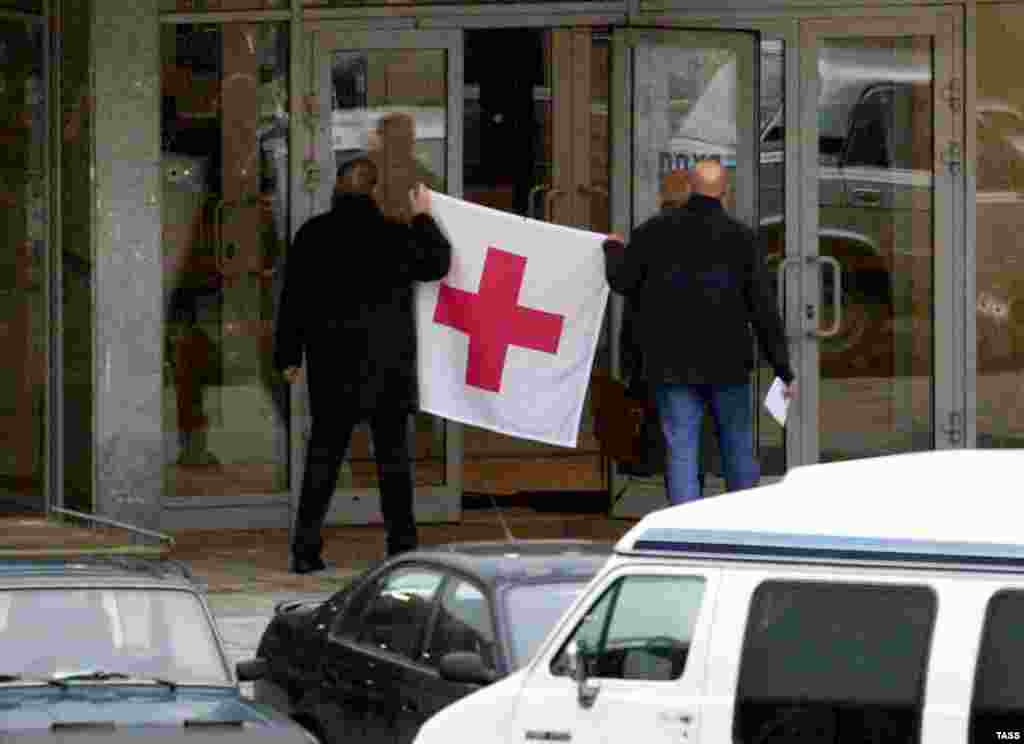
8/13Representatives of the Red Cross gain access to the theater on October 25.
Ten years ago, on October 23, 2002, Chechen militants seized the Dubrovka theater in Moscow, taking some 900 people hostage. On October 26, Russian security forces launched a full-scale assault in which all the armed radicals and 130 hostages died. Most of the victims were killed by a narcotic gas pumped into the theater to subdue the hostage-takers. These photos show how the crisis unfolded over four agonizing days.
Show moreShow less
9/13
Ten years ago, on October 23, 2002, Chechen militants seized the Dubrovka theater in Moscow, taking some 900 people hostage. On October 26, Russian security forces launched a full-scale assault in which all the armed radicals and 130 hostages died. Most of the victims were killed by a narcotic gas pumped into the theater to subdue the hostage-takers. These photos show how the crisis unfolded over four agonizing days.
Show moreShow less
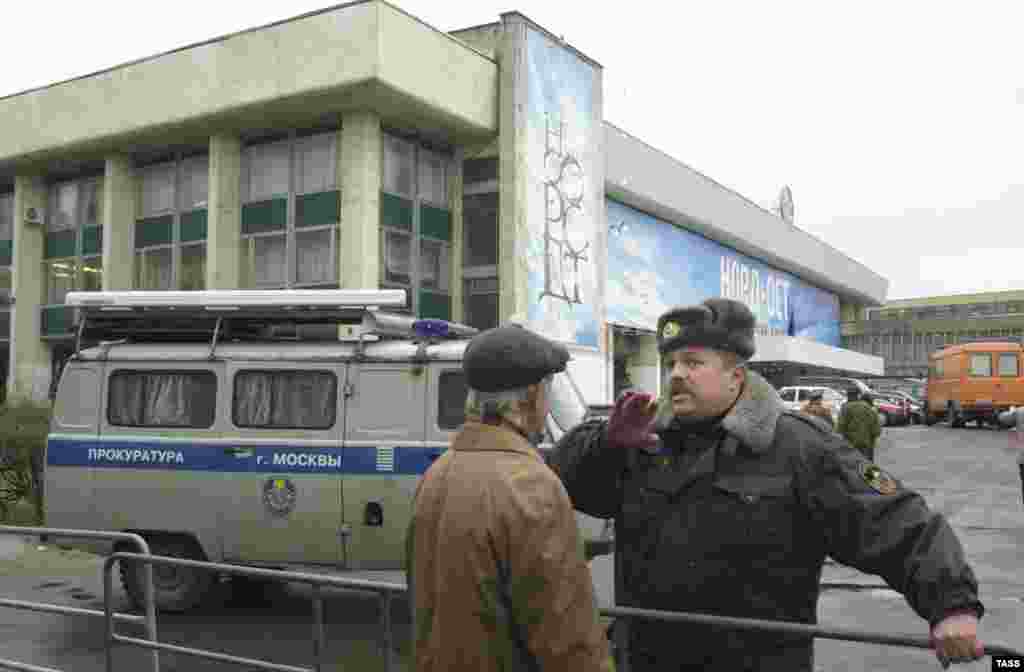
10/13Security officers keep the area cordoned off.
Ten years ago, on October 23, 2002, Chechen militants seized the Dubrovka theater in Moscow, taking some 900 people hostage. On October 26, Russian security forces launched a full-scale assault in which all the armed radicals and 130 hostages died. Most of the victims were killed by a narcotic gas pumped into the theater to subdue the hostage-takers. These photos show how the crisis unfolded over four agonizing days.
Show moreShow less
11/13On October 26, the fourth day of the hostage crisis, special forces stormed the theater. Here, doctors help a hostage wounded in the raid.
Ten years ago, on October 23, 2002, Chechen militants seized the Dubrovka theater in Moscow, taking some 900 people hostage. On October 26, Russian security forces launched a full-scale assault in which all the armed radicals and 130 hostages died. Most of the victims were killed by a narcotic gas pumped into the theater to subdue the hostage-takers. These photos show how the crisis unfolded over four agonizing days.
Show moreShow less
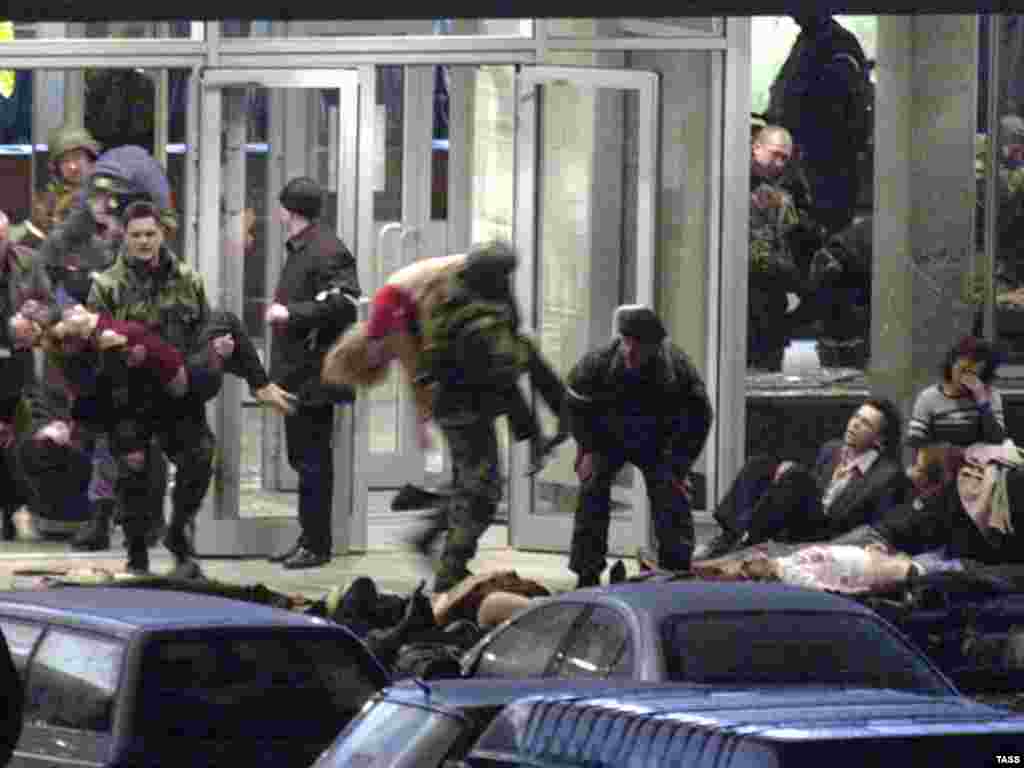
12/13Troops carry out hostages, many of whom were badly affected by the gas pumped into the theater to subdue the militants.
Ten years ago, on October 23, 2002, Chechen militants seized the Dubrovka theater in Moscow, taking some 900 people hostage. On October 26, Russian security forces launched a full-scale assault in which all the armed radicals and 130 hostages died. Most of the victims were killed by a narcotic gas pumped into the theater to subdue the hostage-takers. These photos show how the crisis unfolded over four agonizing days.
Show moreShow less
13/13The main explosive device planted by the militants, all of whom were killed in the raid
Ten years ago, on October 23, 2002, Chechen militants seized the Dubrovka theater in Moscow, taking some 900 people hostage. On October 26, Russian security forces launched a full-scale assault in which all the armed radicals and 130 hostages died. Most of the victims were killed by a narcotic gas pumped into the theater to subdue the hostage-takers. These photos show how the crisis unfolded over four agonizing days.
Show moreShow less
Previous slide
Next slide
In addition, Ruslan Geremeyev, who is a suspected organizer of the 2015 killing of opposition leader Boris Nemtsov, stayed in two other buildings that are part of the same complex. According to a statement by Nemtsov family lawyer Olga Mikhailova in 2016, when she asked a court to summon Geremeyev to testify in the trial of the five defendants who were ultimately convicted in his killing, "It was precisely in these apartments that the defendants regularly met, where they lived temporarily, contacted one another, planned, and carried out Nemtsov's murder."
One of the apartments was purchased by Geremeyev's relative, Artur Geremeyev, just two months before Nemtsov's killing.
Geremeyev was a unit commander in the Russian Interior Ministry's Chechnya-based Sever (North) battalion. He is a nephew of Suleiman Geremeyev, who represents the executive branch of Chechnya's government in the Federation Council, the upper chamber of the Russian legislature. He is also related to State Duma Deputy Adam Delimkhanov of the ruling United Russia party, who has been named by Kadyrov as his possible successor.
During the investigation into Nemtsov's slaying, Zaur Dadayev, who was later convicted and sentenced to 20 years in prison, reportedly confessed that a man identified as "Ruslik" paid him 5 million rubles and provided a car and a gun. Investigators have said they believe "Ruslik" was Ruslan Geremeyev, who commanded the Sever unit in which Dadayev served. Geremeyev disappeared and is believed to be in hiding in the United Arab Emirates or in Turkey. Dadayev later retracted his confession and said it was made under duress.
In an April 2015 report, the newspaper Kommersant cited unnamed investigators as saying Nemtsov's killers may have hid out in the apartment on Veyernaya Street immediately after the murder.
All three of the Moscow apartment buildings that figure in the Open Media investigation are part of a complex that was controlled by the Russian presidential administration.
In the early 2000s, the administration of President Vladimir Putin distributed apartments in the complex to politicians, officials, and military officers. In June 2000, one apartment was given to Kadyrov's father, Akhmed Kadyrov, a former Chechen rebel and mufti who was named by Putin to head the restive North Caucasus republic. Kadyrov and his family privatized the apartment in January 2002 and the entire family, including Ramzan, was officially registered there.
Akhmed Kadyrov was assassinated in Chechnya's capital, Grozny, in 2004, but the Kadyrov family retained the apartment. Nonetheless, the property never appeared in Ramzan Kadyrov's property declarations even after he became head of Chechnya in 2007. In 2010, the apartment was reregistered as the property of Kadyrov's mother, Aimani.
Kadyrov has long been accused of human rights abuses, including torture, disappearances, and extrajudicial killings. Many of his political rivals and critics, including investigative journalist Anna Politkovskaya and Nemtsov, have been killed and many believe that either Kadyrov himself or Russian security agencies were involved.
Written by Robert Coalson based on reporting by RFE/RL's Russian Service
RFE/RL's Russian Service is a multi-platform alternative to Russian state-controlled media, providing audiences in the Russian Federation with informed and accurate news, analysis, and opinion.