

Accessibility links

Breaking News

COVID-19: Iran Surpasses 1,000 Deaths With Highest 24-Hour Rise Yet; Hungary Eases Border Closure

Updated
An employee wearing a protective mask and a medical gown as preventive measures against the coronavirus waits for customers at an electronic store in central Kyiv on March 18.

The global coronavirus pandemic has infected more than 201,000 people worldwide, causing mass disruptions as governments continue to try to slow the spread of the new respiratory illness.

Here's a roundup of developments in RFE/RL's broadcast countries.

Iran

Iran's death toll from the coronavirus has reached 1,135, with 147 deaths over the past 24 hours -- the highest 24-hour rise yet -- state TV reported on March 18, as President Hassan Rohani defended his government's response to the outbreak.

Iran has been the hardest-hit country in the Middle East, with a total of 16,169 confirmed cases, roughly 90 percent of the region's cases.

Iran has been accused of acting too slowly and of even covering up initial cases.

But Rohani on March 18 rejected criticism of his government's response to the coronavirus outbreak, telling a government meeting that authorities have been “straightforward" with the nation, and that it had announced the outbreak as soon as it learned about it on February 19.

"We spoke to people in a honest way. We had no delay," Rohani said.

Five Things To Know About Masks And The Coronavirus Five Things To Know About Masks And The Coronavirus
please wait

No media source currently available

0:00 0:01:16 0:00


Government officials pleaded for weeks with clerics to completely close crowded holy shrines to slow the spread of the coronavirus. The government finally shut down the shrines this week.

"It was difficult of course to shut down mosques and holy sites, but we did it. It was a religious duty to do it," Rohani said.

The outbreak has cast a shadow over the Persian New Year, Norouz, that begins on March 20.

It was later announced that Supreme Leader Ayatollah Ali Khamenei will pardon 10,000 prisoners, including political ones, to mark Norouz.

"Those who will be pardoned will not return to jail," judiciary spokesman Gholamhossein Esmaili told state TV on March 18, adding that "almost half of those security-related prisoners will be pardoned as well."

Judicial officials had previously announced the temporary release of 85,000 inmates to prevent the spread of the novel coronavirus in Iran's prisons. They confirmed that those freed included political prisoners, which Iranian authorities describe as "security-related prisoners."

Pakistan

The Pakistani government has confirmed the country's first fatality from coronavirus in the northwest province of Khyber Pakhtunkhwa.

The South Asian country had a total of 260 confirmed cases of the infection as of late March 18, including 19 in Khyber Pakhtunkhwa.

"With deep regret I confirm the death of first Pakistani due to coronavirus. A 50-year-old male from Mardan city recently returned from Saudi Arabia. He developed fever, cough, and breathing difficulty and tested positive for the COVID-19," Health Minister Zafar Mirza tweeted.

A 36-year-old man from Hangu district also died of the respiratory disease after returning from Turkey to Islamabad via Dubai, according to a spokesperson for the Khyber Pakhtunkhwa provincial government.

Thousands of Pakistanis, mostly pilgrims, have been put in quarantine in recent weeks at the Taftan border crossing in Pakistan's southwestern province of Balochistan after returning from Iran, one of the world's worst-affected countries.

Amid the steep rise in known cases, Pakistani authorities have moved to discourage crowds and gatherings.

Islamabad on March 17 announced that all gyms, swimming pools, religious shrines, and children's parks would remain closed for three weeks.

Health officials in Punjab, Pakistan's largest province, urged the public to avoid unnecessary social contacts or traveling and to stay indoors.

Governments around the world continue to take sweeping measures to try to slow the spread of coronavirus, which has now infected more than 201,000 people and killed over 8,000.

Ukraine

The speaker of the Ukrainian parliament and other lawmakers will be tested for the novel coronavirus after one of their colleagues tested positive on March 18, local media has reported.

Authorities are trying to trace everyone who has been in contact with lawmaker Serhiy Shakhov of the Dovira (Faith) parliamentary group since he entered the legislature earlier in the week following a trip to an unspecified European Union member state.

Shakhov appeared on Ukrainian television on March 12-13, according to deputy Yaroslav Yurchyshyn, and participated in a meeting of the parliament’s Environment Committee on March 13.

President Volodymyr Zelenskiy said the infected lawmaker's voter card was registered in parliament on March 17 and was used to vote, although Shakhov was absent.

"Unfortunately, his colleagues are guilty of multiple voting," Zelenskiy said about the widespread phenomenon in parliament that is now punishable by law.

Ukraine, which has confirmed 16 cases of the respiratory illness and two deaths in four regions and the capital, Kyiv, closed its borders to foreigners for two weeks starting on March 16.

Authorities have also canceled air, rail, and bus connections between cities and regions, and shut down the subway in all three cities where they operate, including Kyiv.

Moldova

Moldova on March 18 reported its first death from coronavirus.

"A first Moldovan citizen died of the coronavirus infection last night. This is a 61-year-old woman," Health, Labor, and Social Protection Minister Viorica Dumbraveanu said.

The woman had recently returned from Italy and was suffering from several illnesses, Dumbraveanu said.

The manager of the Chisinau hospital where the woman died told the media that the woman's village has been placed under quarantine.

Moldova, a nation of 3.5 million sandwiched between EU member Romania and Ukraine, reported 30 confirmed coronavirus cases as of March 18.

Moldova's parliament on March 17 imposed a 60-day state of emergency in a bid to prevent the spread of the virus.

The country, one of the poorest in Europe, has already temporarily shut its borders and suspended all international flights from March 17.

Hundreds of thousands of Moldovans have been working abroad, many of them in Italy and Spain, two of the countries most affected by the coronavirus pandemic.

Face Masks And Empty Streets As Prague Lockdown Tightens

A subway car at 7:40 a.m. on March 17, the day after Prague City Council announced people would be required to wear face masks inside the city's transport network. 
1/15 A subway car at 7:40 a.m. on March 17, the day after Prague City Council announced people would be required to wear face masks inside the city's transport network. 
Commuters in the Czech capital have been instructed to wear face masks while using public transport as a nationwide quarantine aimed at containing the spread of coronavirus enters its second day.
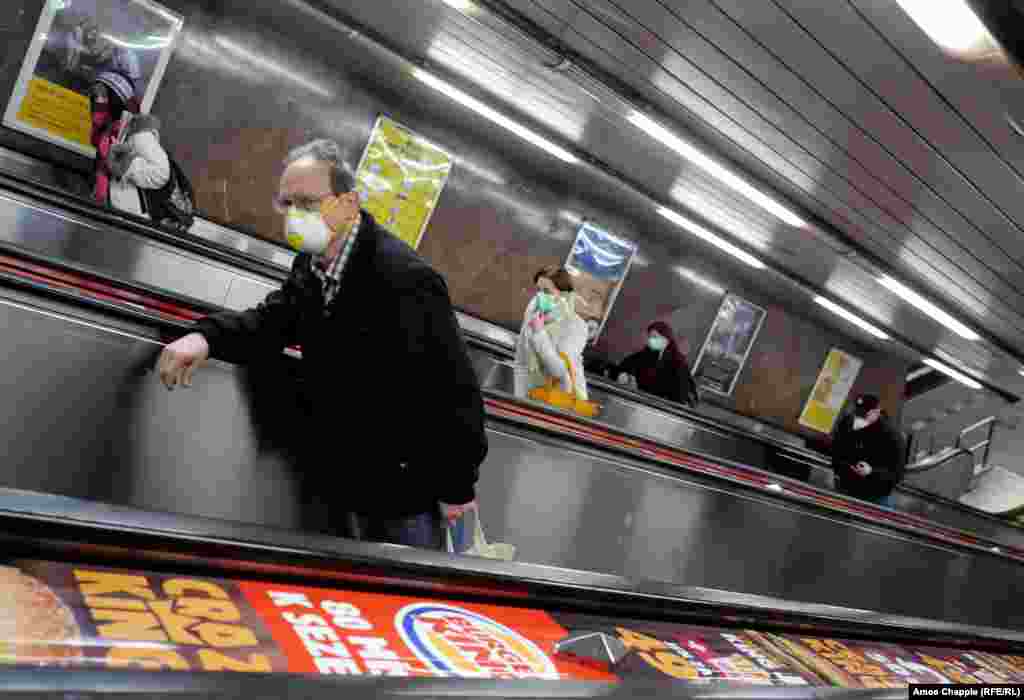
Commuters wearing masks ascend an escalator on March 17. 
2/15 Commuters wearing masks ascend an escalator on March 17. 
Commuters in the Czech capital have been instructed to wear face masks while using public transport as a nationwide quarantine aimed at containing the spread of coronavirus enters its second day.
A man exits a subway car wearing a Guy Fawkes mask on March 17. The day before, Prague&#39;s mayor <strong><a href="https://twitter.com/ZdenekHrib/status/1239529824772861955" target="_blank">said on Twitter:</a></strong>&nbsp;&ldquo;On Prague public transport, it is mandatory to have a covered mouth and nose! Whether you have medical masks, self-made masks, or use a scarf, anything is better than nothing.&rdquo;&nbsp;
3/15 A man exits a subway car wearing a Guy Fawkes mask on March 17. The day before, Prague's mayor said on Twitter: “On Prague public transport, it is mandatory to have a covered mouth and nose! Whether you have medical masks, self-made masks, or use a scarf, anything is better than nothing.” 
Commuters in the Czech capital have been instructed to wear face masks while using public transport as a nationwide quarantine aimed at containing the spread of coronavirus enters its second day.
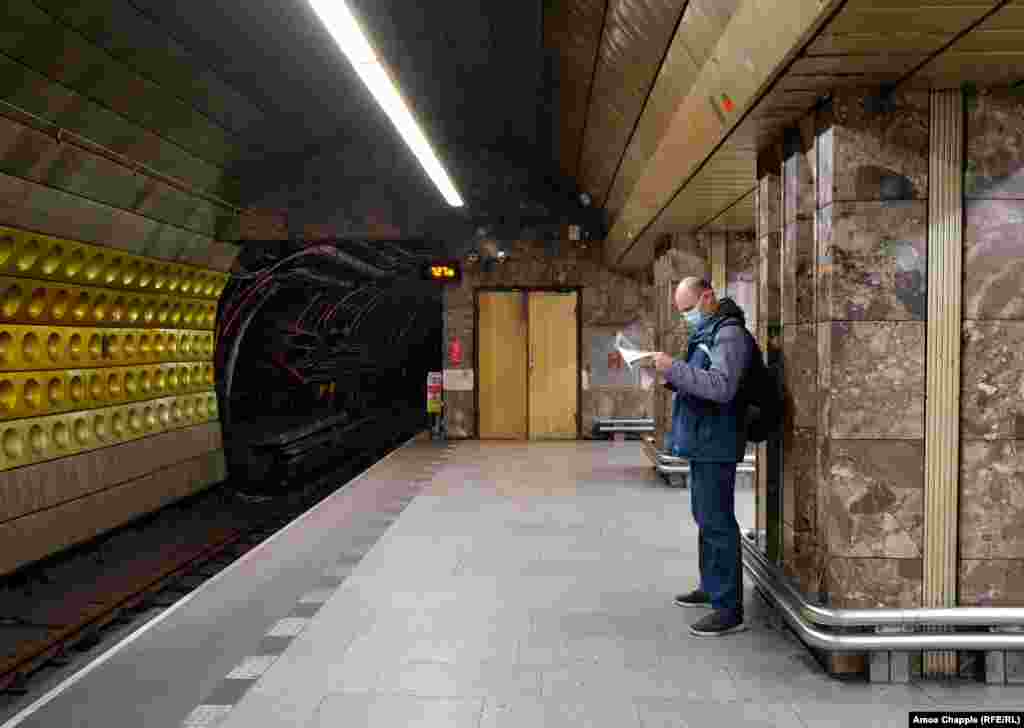
A man wearing a surgical mask inside a central Prague subway station.&nbsp;Medical experts say such face masks without a tight seal on the face&nbsp;<strong><a href="https://www.livescience.com/face-mask-new-coronavirus.html">will do little</a></strong> to protect the wearer from coronavirus. However, the masks -- originally designed to prevent surgeons&#39; spittle landing on vulnerable patients -- do limit the spread of viruses from people already infected. In a pandemic such as coronavirus, where some patients<strong> <a href="https://youtu.be/E3URhJx0NSw?t=370">are known to carry and spread the disease before showing any or only mild symptoms</a></strong>, such masks could help to limit the contagion.
4/15 A man wearing a surgical mask inside a central Prague subway station. Medical experts say such face masks without a tight seal on the face will do little to protect the wearer from coronavirus. However, the masks -- originally designed to prevent surgeons' spittle landing on vulnerable patients -- do limit the spread of viruses from people already infected. In a pandemic such as coronavirus, where some patients are known to carry and spread the disease before showing any or only mild symptoms, such masks could help to limit the contagion.
Commuters in the Czech capital have been instructed to wear face masks while using public transport as a nationwide quarantine aimed at containing the spread of coronavirus enters its second day.
A man covers his face inside the subway. The Czech government has banned most nonessential travel throughout the country.&nbsp;
5/15 A man covers his face inside the subway. The Czech government has banned most nonessential travel throughout the country. 
Commuters in the Czech capital have been instructed to wear face masks while using public transport as a nationwide quarantine aimed at containing the spread of coronavirus enters its second day.
Czechs have also been asked to keep their distance from other people and not to gather in groups.&nbsp;
6/15 Czechs have also been asked to keep their distance from other people and not to gather in groups. 
Commuters in the Czech capital have been instructed to wear face masks while using public transport as a nationwide quarantine aimed at containing the spread of coronavirus enters its second day.
An empty subway station entrance on March 17 at 7:36 a.m. -- what would usually be the peak of rush hour. Although transport links remain fully operational, only a fraction of the usual passengers were using public transport.&nbsp;
7/15 An empty subway station entrance on March 17 at 7:36 a.m. -- what would usually be the peak of rush hour. Although transport links remain fully operational, only a fraction of the usual passengers were using public transport. 
Commuters in the Czech capital have been instructed to wear face masks while using public transport as a nationwide quarantine aimed at containing the spread of coronavirus enters its second day.
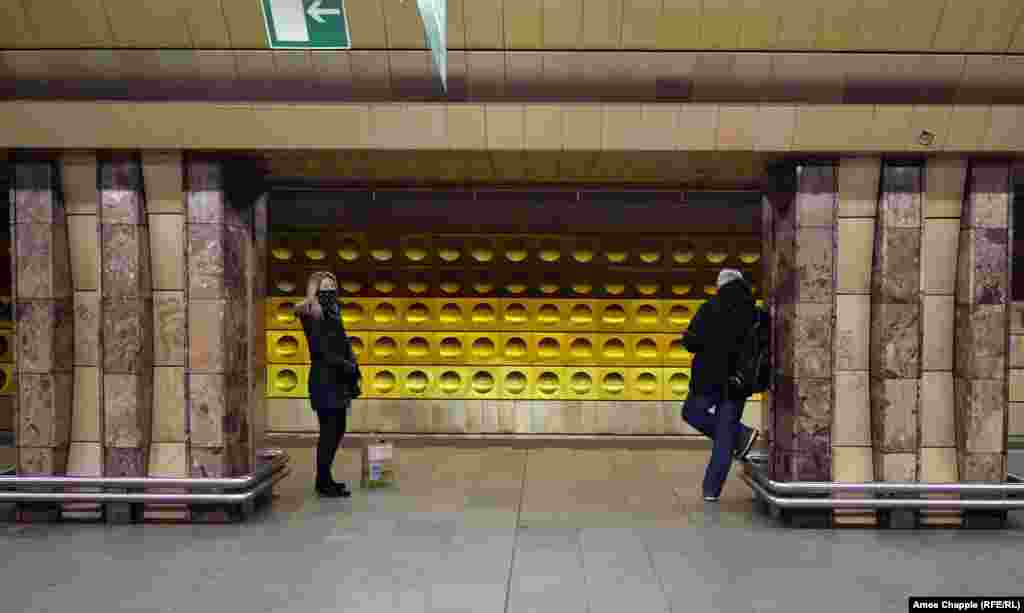
An empty platform shortly before 8 a.m. on March 17.&nbsp;
8/15 An empty platform shortly before 8 a.m. on March 17. 
Commuters in the Czech capital have been instructed to wear face masks while using public transport as a nationwide quarantine aimed at containing the spread of coronavirus enters its second day.
The requirement for face masks also applies to buses and trams.&nbsp;
9/15 The requirement for face masks also applies to buses and trams. 
Commuters in the Czech capital have been instructed to wear face masks while using public transport as a nationwide quarantine aimed at containing the spread of coronavirus enters its second day.
A man dozes in his face mask shortly before 8 a.m. on March 17.&nbsp;
10/15 A man dozes in his face mask shortly before 8 a.m. on March 17. 
Commuters in the Czech capital have been instructed to wear face masks while using public transport as a nationwide quarantine aimed at containing the spread of coronavirus enters its second day.
A man in a nearly empty subway car on March 17 in a station near Prague&#39;s tourist center.&nbsp;
11/15 A man in a nearly empty subway car on March 17 in a station near Prague's tourist center. 
Commuters in the Czech capital have been instructed to wear face masks while using public transport as a nationwide quarantine aimed at containing the spread of coronavirus enters its second day.
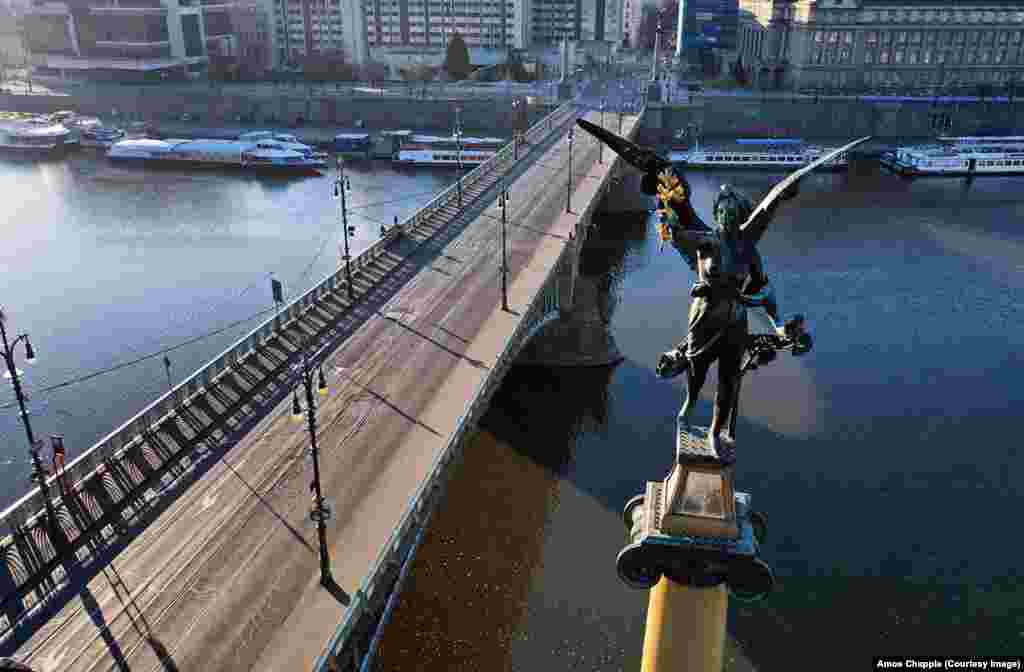
An empty bridge in central Prague photographed on March 15. Prague&#39;s tourist areas have been virtually empty after restaurants, bars, and most stores were closed on the day this photo was taken.&nbsp;
12/15 An empty bridge in central Prague photographed on March 15. Prague's tourist areas have been virtually empty after restaurants, bars, and most stores were closed on the day this photo was taken. 
Commuters in the Czech capital have been instructed to wear face masks while using public transport as a nationwide quarantine aimed at containing the spread of coronavirus enters its second day.
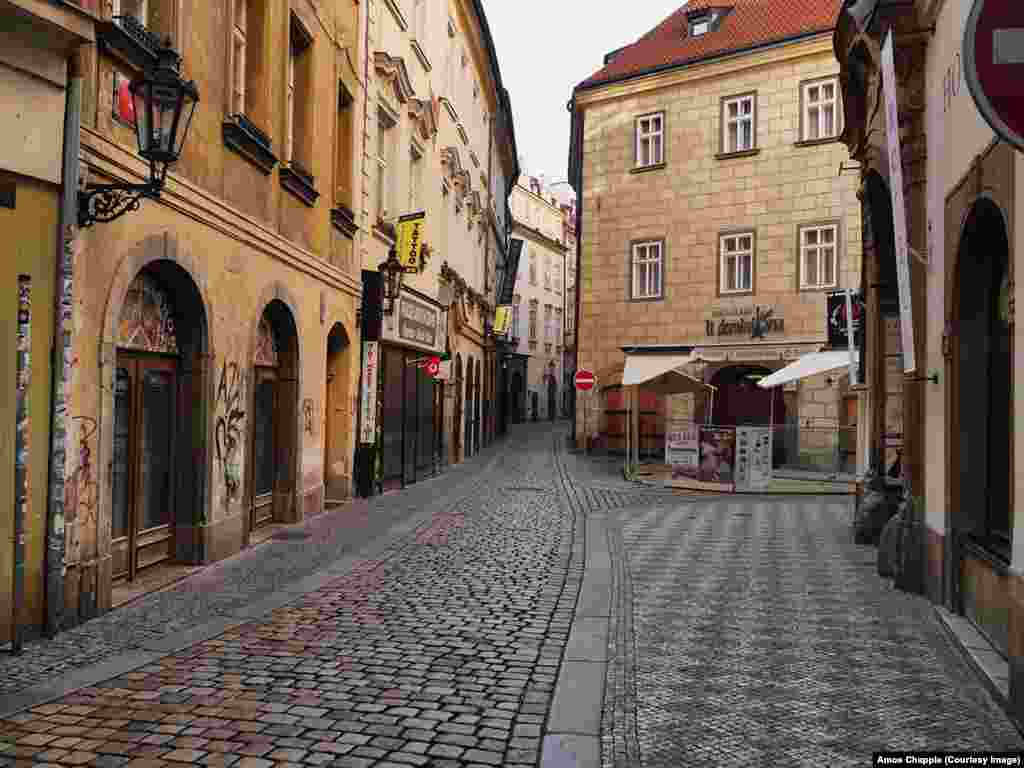
Empty lanes in the heart of Prague&#39;s historic tourist district.&nbsp;
13/15 Empty lanes in the heart of Prague's historic tourist district. 
Commuters in the Czech capital have been instructed to wear face masks while using public transport as a nationwide quarantine aimed at containing the spread of coronavirus enters its second day.
One of Prague&#39;s most famous sites, Old Town Square, stands nearly empty. This space is usually thronged with thousands of tourists.&nbsp;
14/15 One of Prague's most famous sites, Old Town Square, stands nearly empty. This space is usually thronged with thousands of tourists. 
Commuters in the Czech capital have been instructed to wear face masks while using public transport as a nationwide quarantine aimed at containing the spread of coronavirus enters its second day.
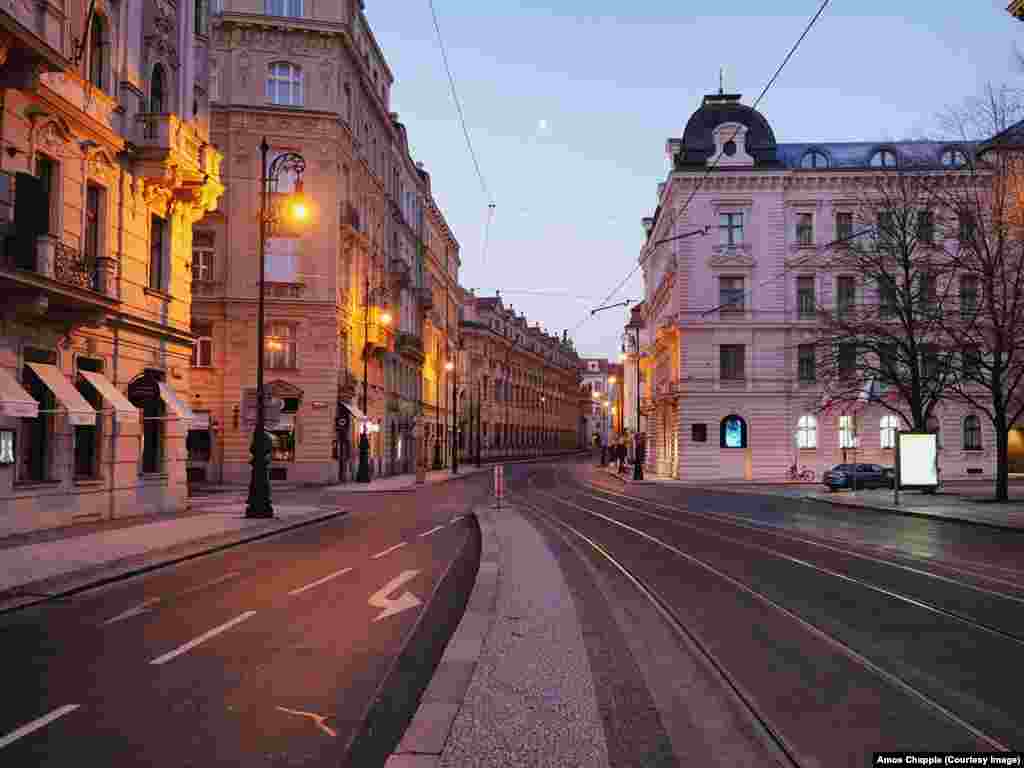
Empty streets in Prague&#39;s tourist area. The Czech Republic currently has reported 396 cases of coronavirus but no deaths from the disease.&nbsp;
15/15 Empty streets in Prague's tourist area. The Czech Republic currently has reported 396 cases of coronavirus but no deaths from the disease. 
Commuters in the Czech capital have been instructed to wear face masks while using public transport as a nationwide quarantine aimed at containing the spread of coronavirus enters its second day.
Previous slide
Next slide


Separately, Moldova's breakaway region of Transdniester declared a state of emergency until April 5 in the wake of the outbreak.

Transdniester declared independence in 1990 and fought a bloody war with Moldova two years later. It is unrecognized by the international community but is unofficially backed by Russia, which stations hundreds of troops in the region.​

Romania/Hungary

Hungary on March 18 moved to relax a sweeping border closure after thousands more travelers – many angry and lacking supplies -- clogged its crossings with Austria to the west and Romania to the east.

Hungarian Prime Minister Viktor Orban's right-wing government on March 17 closed its land crossings to foreigners as well as border crossings at airports to slow the spread of the coronavirus.

Thousands of travelers were massed on March 18 at the Nickelsdorf-Hegyeshalom border crossing between Austria and Hungary, after missing a window of several hours allowed by Budapest overnight for those who wanted to transit the country on their way to Romania and Bulgaria.
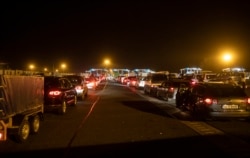
Romanian and Bulgarian cars line up to cross the border between Hungary and Romania at the border station of Nagylak, Hungary, on the morning of March 18.

Meanwhile, some 7,000 people who had reached the Romanian border to the east overnight were facing another hours-long bottleneck due to health checks imposed by Bucharest.

The two-pronged crisis prompted Budapest to reopen the border with Austria at noon on March 18 until the easing of the blockage to the west, and to allow daily passage for Romanians and Bulgarians from 9 p.m. until 5 a.m. on preapproved routes, according to a statement by Romania's Foreign Ministry.

Austrian authorities on March 18 advised drivers to keep away from the Hungarian border as the traffic jam there grew to 45 kilometers and protests broke out among stranded travelers.

"There is no use in coming to the border," said Astrid Eisenkopf, the deputy governor of Austria's Burgenland Province, which neighbors Hungary.

Most of the delayed Romanians are workers returning from Italy and Spain, the world's second- and fourth-most affected countries by the virus, but also from other Western countries.

Romania is the European Union’s second-poorest country, and at least 4 million Romanians work abroad, according to estimates.

On March 18, Romania reported 29 more confirmed cases, bringing the total to 246, as well as 19 recovered cases. There have been no coronavirus deaths inside the country.

But specialists warn that Romania has so far tested only some 3.000 people for the coronavirus, while in other countries the number of those tested was in the tens of thousands.

Hungary reported having 50 confirmed coronavirus infections on March 17, with one death.
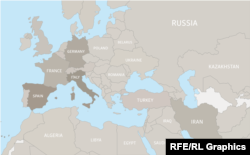
Live Map: The Spread Of The Coronavirus

Updated constantly with the latest figures

Bulgaria

Bulgaria announced it has entered into a fiscal deficit and Ukraine said it is seeking a bigger lending program from the International Monetary Fund beyond the $5.5 billion for which it was asking.

Confirmed cases in Bulgaria, the EU’s poorest but least indebted country, spiked by 30 percent on March 17 to 81. The government in Sofia banned all foreign and domestic holiday trips until April 13.

Kosovo

Kosovar Prime Minister Albin Kurti has fired Interior Minister Agim Veliu for purportedly spreading "panic" about coronavirus after he backed a presidential call for a state of emergency over the pandemic.

Kurti announced Veliu’s dismissal on March 18, just hours after Veliu said he supported a proposed state of emergency that has divided officials in the Balkan country.

President Hashim Thaci late on March 17 signed a decree declaring a state of emergency. It has been sent to Kosovo's parliament, which has 48 hours to either accept or reject the move.

But Kurti has rejected calls for a state of emergency. He said it would cause "unnecessary panic."

"At this time, when the entire public administration is making the utmost efforts to minimize the damage caused by the coronavirus, the heads of central institutions, including those in the government cabinet, need to prove maturity both in decision-making and in making statements," Kurti said in his announcement about firing Veliu.

The move may resonate far beyond the debate about how to react to the coronavirus pandemic.

It could cause a rift in the governing coalition that took power in Kosovo just over a month ago.

Veliu is from the Democratic League of Kosovo (LDK), which is in a fragile coalition with Kurti's Self-Determination party.

LDK leader Isa Mustafa gave Kurti until the end of the week to "annul the decision to dismiss Veliu and make a decision to abolish the tariffs" on Serbian imports.

Pristina is under huge pressure from the European Union and the United States to revoke the 100 percent import tariff it imposed on goods from Serbia in November 2018.

The tariff came in response to Belgrade's diplomatic campaign to encourage some of the 110-plus countries that have recognized Kosovo since it declared independence from Serbia in 2008 to reverse their position.

Kosovo says it has confirmed 19 cases of the coronavirus since the first infected person was discovered on March 13.

Most cases are people who had traveled to nearby Italy or had been in contact with others who'd been to Italy.

Russia Rushes To Build Hospital For COVID-19 Treatment

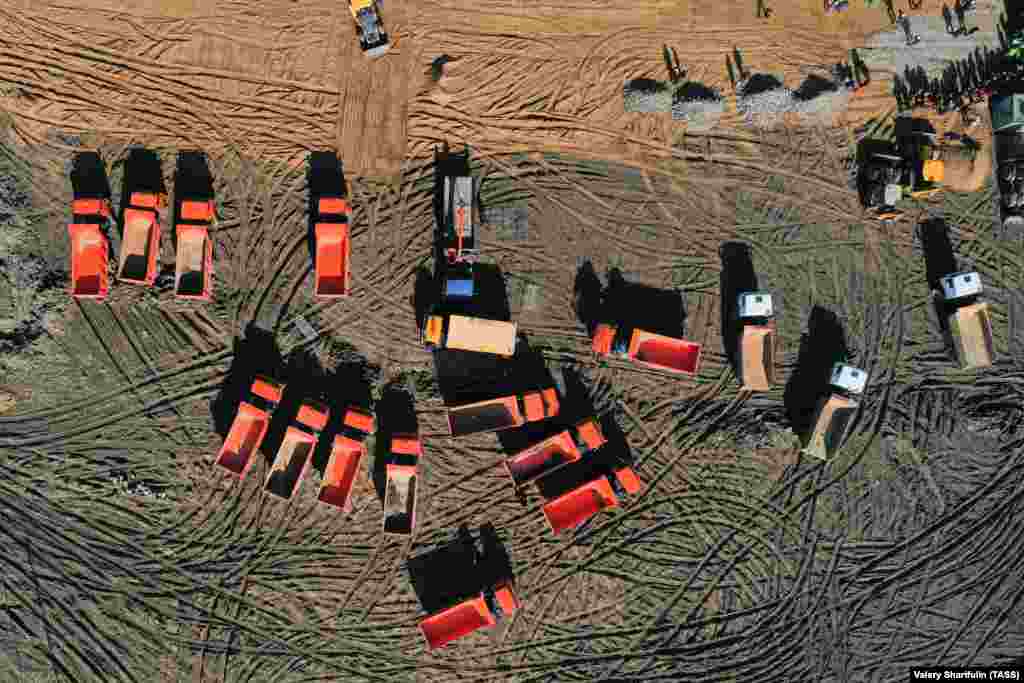
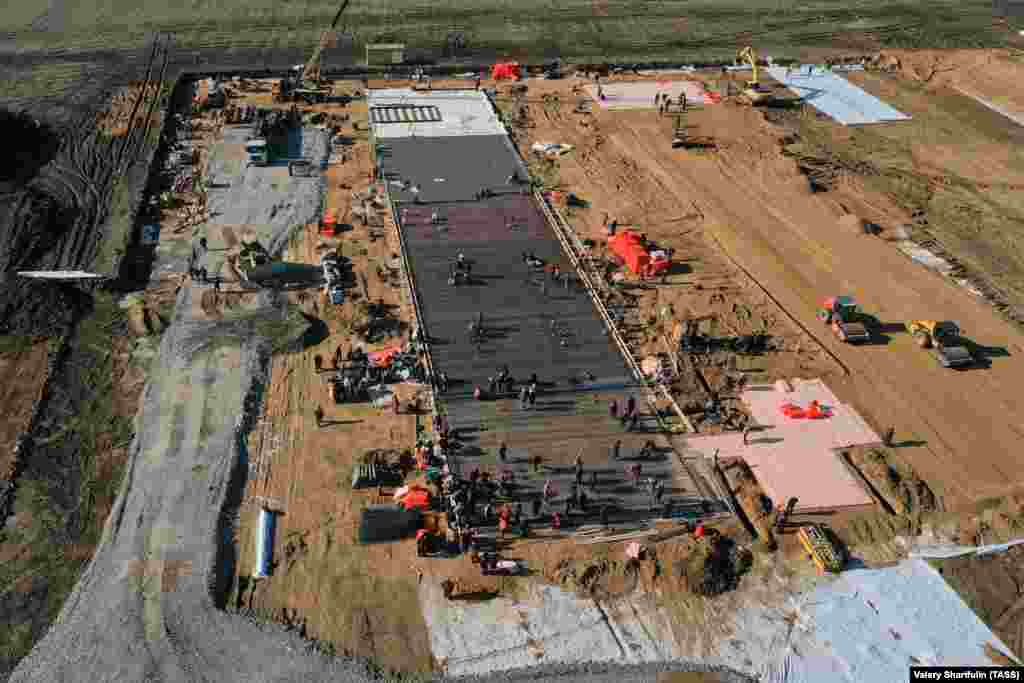
An aerial view of the construction site for a new infectious-diseases hospital for patients with a suspected novel coronavirus infection.
1/12 An aerial view of the construction site for a new infectious-diseases hospital for patients with a suspected novel coronavirus infection.
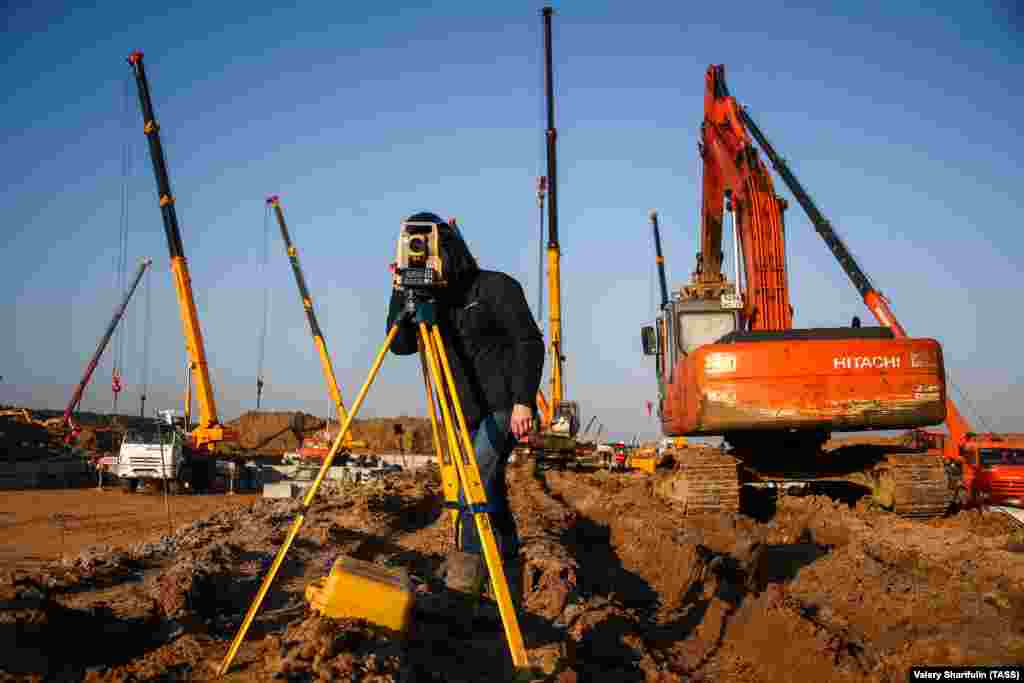
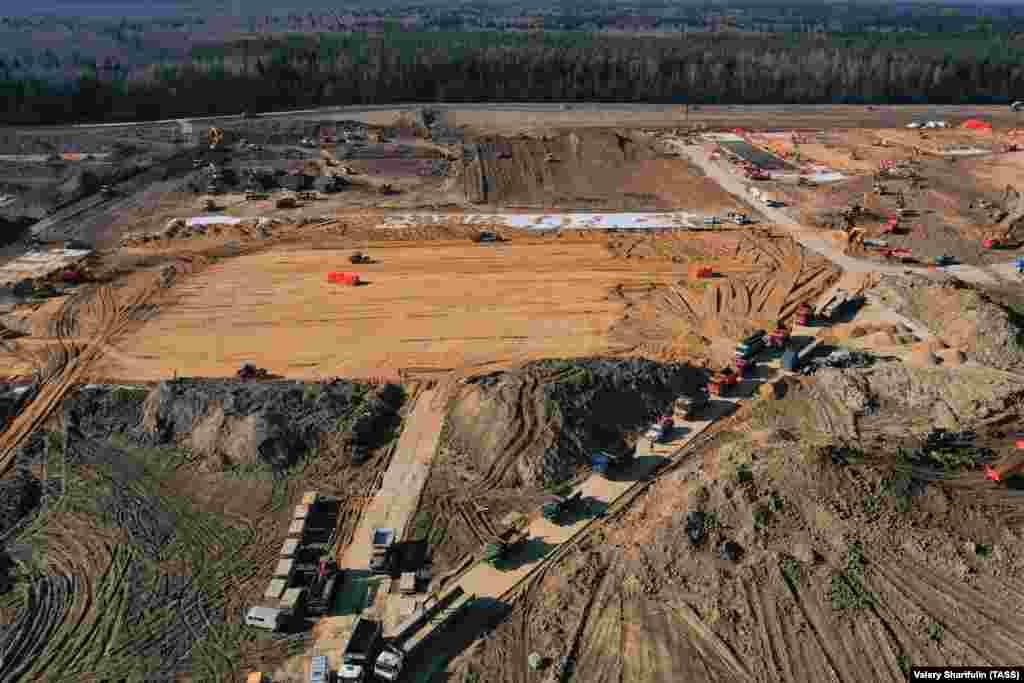
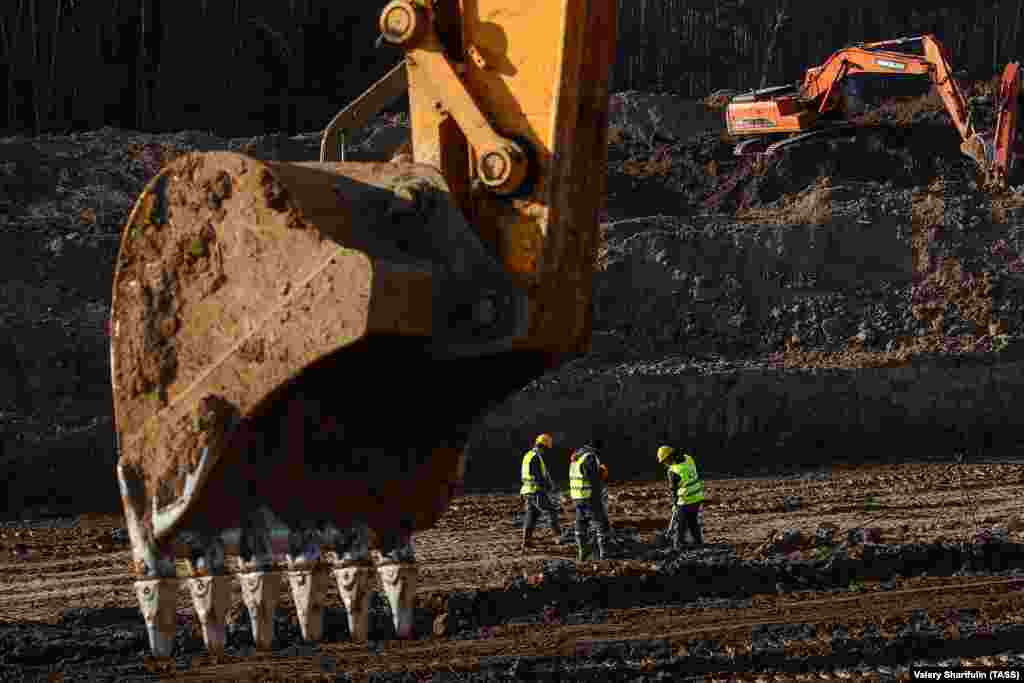
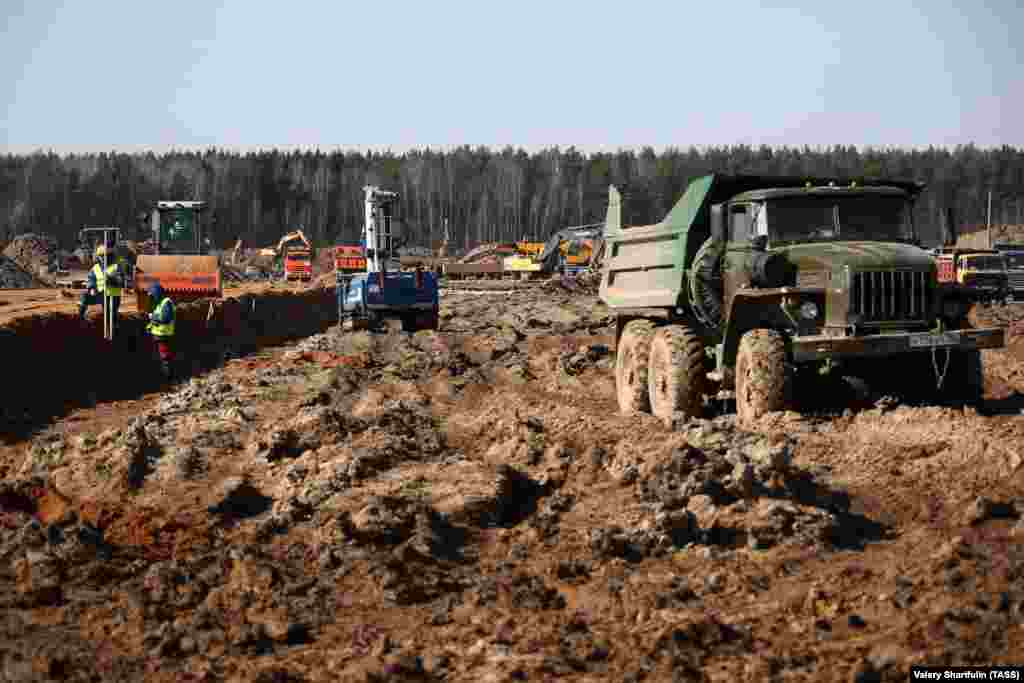
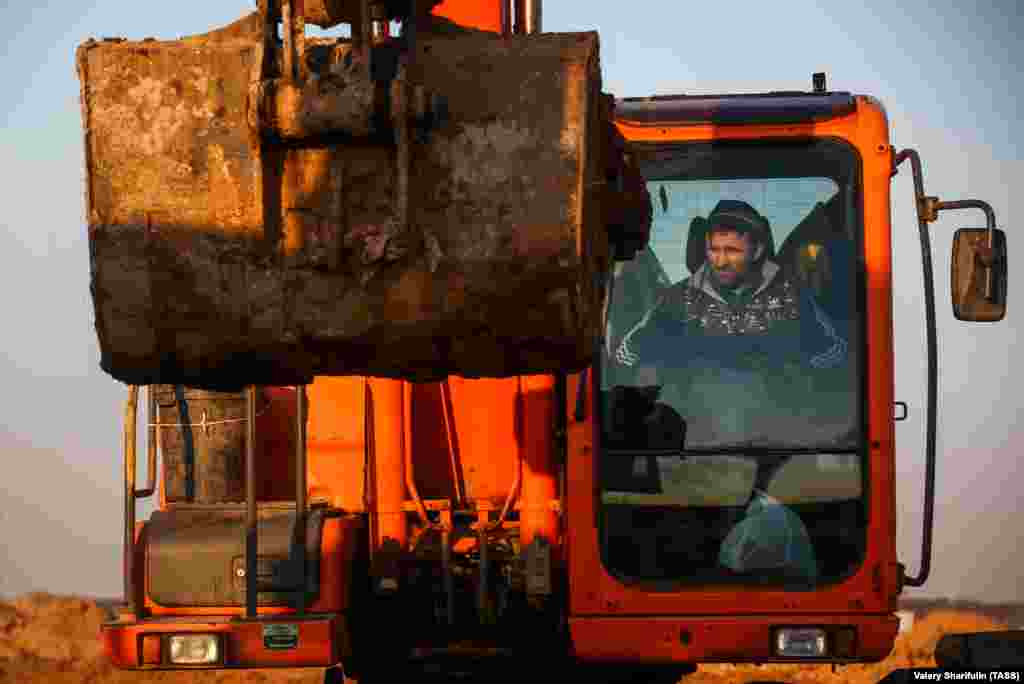
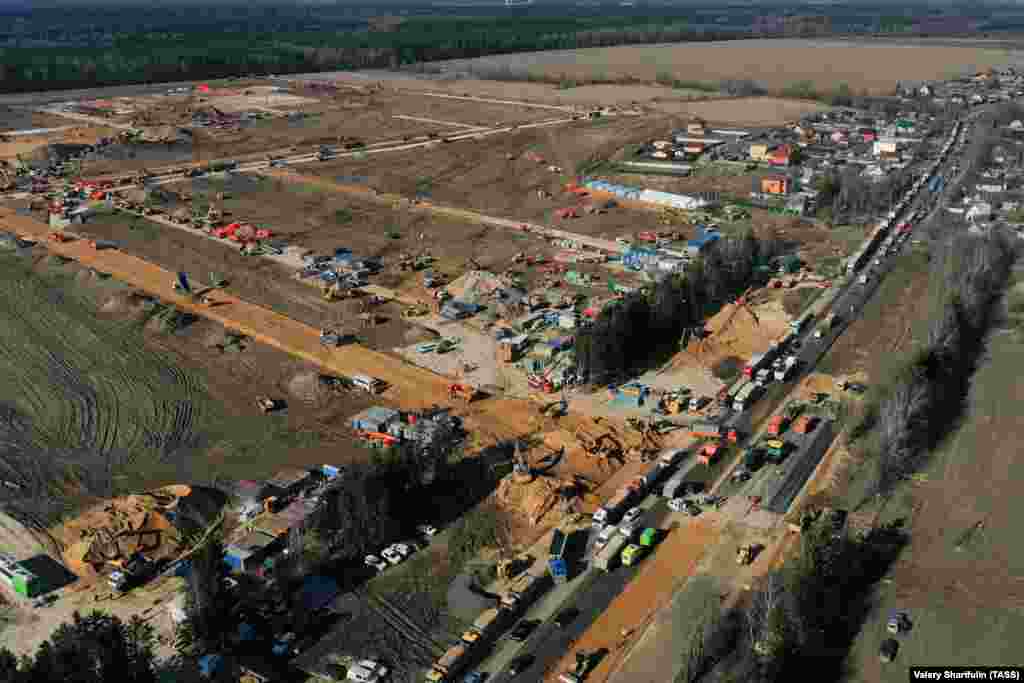
A new hospital is being quickly built outside of Moscow to treat COVID-19 patients. Scores of workers with heavy equipment are working quickly to assemble a prefabricated structure in Babenki, about 50 kilometers southwest of the Russian capital. City officials have said the 500-bed hospital would be ready in the "near future."
Excavators have been deployed at the construction site in Babenki, 50 kilometers southwest of Moscow.
2/12 Excavators have been deployed at the construction site in Babenki, 50 kilometers southwest of Moscow.
A new hospital is being quickly built outside of Moscow to treat COVID-19 patients. Scores of workers with heavy equipment are working quickly to assemble a prefabricated structure in Babenki, about 50 kilometers southwest of the Russian capital. City officials have said the 500-bed hospital would be ready in the "near future."
Another aerial view of the construction site.
3/12 Another aerial view of the construction site.
A new hospital is being quickly built outside of Moscow to treat COVID-19 patients. Scores of workers with heavy equipment are working quickly to assemble a prefabricated structure in Babenki, about 50 kilometers southwest of the Russian capital. City officials have said the 500-bed hospital would be ready in the "near future."
An existing Moscow hospital has already been turned into a treatment center and quarantine zone exclusively for coronavirus patients, but the city&#39;s mayor, Sergei Sobyanin, has said he wants more capacity, if needed.&nbsp;
4/12 An existing Moscow hospital has already been turned into a treatment center and quarantine zone exclusively for coronavirus patients, but the city's mayor, Sergei Sobyanin, has said he wants more capacity, if needed. 
A new hospital is being quickly built outside of Moscow to treat COVID-19 patients. Scores of workers with heavy equipment are working quickly to assemble a prefabricated structure in Babenki, about 50 kilometers southwest of the Russian capital. City officials have said the 500-bed hospital would be ready in the "near future."
Trucks at the construction site
5/12 Trucks at the construction site
A new hospital is being quickly built outside of Moscow to treat COVID-19 patients. Scores of workers with heavy equipment are working quickly to assemble a prefabricated structure in Babenki, about 50 kilometers southwest of the Russian capital. City officials have said the 500-bed hospital would be ready in the "near future."
6/12
A new hospital is being quickly built outside of Moscow to treat COVID-19 patients. Scores of workers with heavy equipment are working quickly to assemble a prefabricated structure in Babenki, about 50 kilometers southwest of the Russian capital. City officials have said the 500-bed hospital would be ready in the "near future."
Sobyanin says the new hospital is being built in an area without large apartment blocks and would not pose a danger to the local population.
7/12 Sobyanin says the new hospital is being built in an area without large apartment blocks and would not pose a danger to the local population.
A new hospital is being quickly built outside of Moscow to treat COVID-19 patients. Scores of workers with heavy equipment are working quickly to assemble a prefabricated structure in Babenki, about 50 kilometers southwest of the Russian capital. City officials have said the 500-bed hospital would be ready in the "near future."
Construction workers at the site
8/12 Construction workers at the site
A new hospital is being quickly built outside of Moscow to treat COVID-19 patients. Scores of workers with heavy equipment are working quickly to assemble a prefabricated structure in Babenki, about 50 kilometers southwest of the Russian capital. City officials have said the 500-bed hospital would be ready in the "near future."
From March 18 until May 1, Russia has banned the entry of foreign nationals in response to the coronavirus outbreak.<br />
&nbsp;
9/12 From March 18 until May 1, Russia has banned the entry of foreign nationals in response to the coronavirus outbreak.
 
A new hospital is being quickly built outside of Moscow to treat COVID-19 patients. Scores of workers with heavy equipment are working quickly to assemble a prefabricated structure in Babenki, about 50 kilometers southwest of the Russian capital. City officials have said the 500-bed hospital would be ready in the "near future."
Some Russian doctors have questioned the low number of officially reported cases so far, given what they say is the patchy nature of testing.
10/12 Some Russian doctors have questioned the low number of officially reported cases so far, given what they say is the patchy nature of testing.
A new hospital is being quickly built outside of Moscow to treat COVID-19 patients. Scores of workers with heavy equipment are working quickly to assemble a prefabricated structure in Babenki, about 50 kilometers southwest of the Russian capital. City officials have said the 500-bed hospital would be ready in the "near future."
The government maintains that it has been totally transparent about its handling of the crisis, and that its statistics are accurate.
11/12 The government maintains that it has been totally transparent about its handling of the crisis, and that its statistics are accurate.
A new hospital is being quickly built outside of Moscow to treat COVID-19 patients. Scores of workers with heavy equipment are working quickly to assemble a prefabricated structure in Babenki, about 50 kilometers southwest of the Russian capital. City officials have said the 500-bed hospital would be ready in the "near future."
The head of Russia&#39;s Bashkortostan region, about 1,200 kilometers east of Moscow, has said his region would also build a new hospital within the next few months to treat coronavirus patients.
12/12 The head of Russia's Bashkortostan region, about 1,200 kilometers east of Moscow, has said his region would also build a new hospital within the next few months to treat coronavirus patients.
A new hospital is being quickly built outside of Moscow to treat COVID-19 patients. Scores of workers with heavy equipment are working quickly to assemble a prefabricated structure in Babenki, about 50 kilometers southwest of the Russian capital. City officials have said the 500-bed hospital would be ready in the "near future."
Previous slide
Next slide

Bosnia-Herzegovina

Neighboring Bosnia-Herzegovina declared a state of emergency to enable coordination of activities between its two autonomous regions.

"We are focusing in all ways on how to alleviate the consequences of the coronavirus," Prime Minister Zoran Tegeltija told reporters.

Kyrgyzstan

Kyrgyzstan has confirmed its first three cases of the coronavirus in a group of travelers returning from Saudi Arabia.

Kyrgyz Health Minister Kosmosbek Cholponbaev said on March 18 that the three Kyrgyz citizens are from the southern Suzak district in the Jalal-Abad region.

The infected had returned to Kyrgyzstan on March 12, he said. They are 70, 62, and 43 years of age.


Iranians Storm Holy Shrines After Coronavirus Forces Closures Iranians Storm Holy Shrines After Coronavirus Forces Closures
please wait

No media source currently available

0:00 0:01:54 0:00

Authorities in the district have sealed off the villages of Blagoveshchenka, Boston, and Orta-Aziya. They've also set up 19 checkpoints nearby, regional officials said.

Deputy Foreign Minister Nurlan Abdrakhmanov said in a statement that as of March 18, all foreigners are banned from entering Kyrgyzstan.

Elsewhere In Central Asia

In neighboring Kazakhstan, the Health Ministry said on March 18 that the number of coronavirus cases had reached 36, after three more infections were confirmed in Almaty.

Kazakhstan has declared a state of emergency until April 15. As of March 19, the cities of Nur-Sultan and Almaty will be in lockdown.

Orthodox Priests Bless Tbilisi Streets In Bid To Halt Disease
please wait

No media source currently available

0:00 0:01:28 0:00

Uzbekistan announced on March 18 that its total number of confirmed cases had reached 15.

So far, no coronavirus cases have been officially announced in the Central Asian former Soviet republics of Tajikistan and Turkmenistan.

The new coronavirus has spread to more than 100 countries worldwide. It has infected more than 201,000 people and killed more than 8,000, with the number of people now recovered at more than 82,000, according to a tally kept by Johns Hopkins University.

With reporting by RFE/RL's Balkan, Romanian, Moldovan, Kazakh, Kyrgyz, Ukrainian, Uzbek services and Radio Mashaal, AP, Reuters, Interfax, TASS, AFP, Hromadske, Ukrayinska pravda, Hotnews.ro, Digi24.ro, and G4media.ro
  • 16x9 Image

    RFE/RL

    RFE/RL journalists report the news in 24 languages in 18 countries where a free press is banned by the government or not fully established. We provide what many people cannot get locally: uncensored news, responsible discussion, and open debate.

This item is part of
XS
SM
MD
LG