



News
- By RFE/RL
COVID-19: Russian Duma OKs State-Of-Emergency Bill; Armenia Extends Lockdown
The global death toll has surpassed 40,000 with over 825,000 infections confirmed, causing mass disruptions as governments continue to try to slow the spread of the new respiratory illness.
Here's a roundup of developments in RFE/RL's broadcast countries.
Russia
Russian lawmakers have given their initial approval for legislation that allows Prime Minister Mikhail Mishustin to declare a state of emergency as the country recorded a 27 percent jump in confirmed coronavirus cases, its biggest single-day increase so far.
The bill, approved by parliament's lower chamber, the State Duma, on March 31, allows the government to declare an emergency situation across the country and to establish mandatory rules of conduct during a state of emergency.
It also approved a penalty of up to five years in prison for those who "knowingly" disseminate false information during "natural and man-made emergencies" and up to seven years in prison for breaking hygienic and sanitation regulations such as quarantine.
The legislation comes as health officials released figures showing the number of coronavirus cases had jumped by 500 from the previous day to 2,337. It was the seventh consecutive day that the number has increased.
Russia's federal coronavirus task force said on March 31 that the death toll had risen overnight by eight to stand at 17. Critics and even ordinary Russians have voiced skepticism about the accuracy of official figures and have raised questions about the state's testing for the virus.
It emerged on March 31 that the chief physician of a Moscow hospital that has been dealing with coronavirus patients has tested positive.
"I have isolated myself in my office, where I have everything for online work, management, and televised medical consultations," Denis Protsenko wrote on Facebook.
Protsenko gave President Vladimir Putin a tour of the Kommunarka hospital last week, but Kremlin spokesman Dmitry Peskov said there was no need to worry as the president tested regularly and all the tests came back negative.
Moscow all but confined its 12 million residents to their homes on March 30, and Mishustin asked regional governors during an emergency meeting to mirror that move.
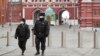
St. Petersburg, Russia's second-largest city, and more than 20 other regions from the westernmost exclave of Kaliningrad to the Arctic region of Murmansk and Tatarstan on the Volga River, have heeded the call and followed Moscow's example by introducing compulsory self-isolation regimes.
President Vladimir Putin has called Moscow's lockdown "necessary and justified." He had previously called for the week between March 28 and April 5 to be a nonworking week -- essentially a weeklong break from work to "prevent the threat of the quick spread of the illness."
The government also closed all of the country's borders as of March 30, allowing only Russian diplomats, freight, and other necessary vehicles and people to enter.
Meanwhile, authorities in Russia's Republic of Tatarstan plan to introduce an electronic code system to control the movements of residents during the region's coronavirus lockdown.
Presidential spokeswoman Lilia Galimova said on March 31 that the system will require residents of Tatarstan to register at a website, which will become functional in a couple of days.
Once registered, people will receive SMS messages with electronic codes that they will show police to prove that they left their houses or work for legitimate reasons.
For example, before leaving their homes, residents will have to text the word 'Exit' to the website to receive a code giving them permission to be outside for a maximum of one hour.
Each person will be eligible to receive two of such permission codes per day.
Authorities of the Russian capital, Moscow, said earlier that they plan to introduce a similar electronic code system to control residents' movements during the lockdown, but they have not given any further details.
There were 19 confirmed cases of the coronavirus as of March 31 in Tatarstan.
Iran
Britain, France and Germany have used a special trading mechanism for the first time to send medical supplies to Iran in a way that does not violate U.S. sanctions against Tehran.
The German Foreign Ministry said on March 31 that the three countries sent supplies via Instex, the mechanism set up more than a year ago to allow legitimate humanitarian trade with Iran to offset some effects of the U.S. sanctions.
"France, Germany, and the United Kingdom confirm that Instex has successfully concluded its first transaction, facilitating the export of medical goods from Europe to Iran. These goods are now in Iran," the German government said.
"Now that the first transaction is complete, Instex and its Iranian counterpart STFI will work on more transactions and enhancing the mechanism," it added.
Iranian authorities say Washington’s policies and sanctions have hampered its ability to cope with the coronavirus pandemic.
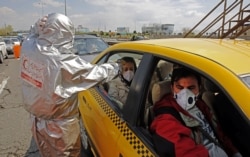
Health Ministry spokesman Kianoush Jahanpour said on March 31 that 3,111 new infections had been confirmed during the previous day, bringing the total to 44,606 cases in Iran.
Jahanpour said the death toll in Iran rose by 141 on March 31 to a total of 2,898.
Iran is among the countries worst hit by the virus. Experts have been skeptical about the accuracy of official figures released by the Iranian government, which keeps tight controls on local and foreign media.
The government banned intercity travel as it looked to slow the outbreak during the Persian New Year holiday that began on March 20. But Iran has not implemented a complete lockdown in cities -- a measure taken in many other countries worldwide.
Officials also have forbidden Iranians from gathering on April 1 for "Sizdah Bedar," an annual nature festival on the last day of Persian New Year celebrations, during which many Iranians spend time picnicking outdoors.
Armenia
Armenian Prime Minister Nikol Pashinian has extended emergency measures until April 10 as the coronavirus continues to spread in the South Caucasus nation.
Pashinian made the announcement during a live session on Facebook on March 31, saying he was “worried” about rising numbers of infections in the country of 3 million people.
The Health Ministry confirmed 50 more coronavirus cases on March 31, raising the total number to 532, the highest number in the South Caucasus region. Three fatalities have been attributed to the respiratory illness.
The initial month-long state of emergency was declared on March 16.
Restrictions on the free movement of people followed on March 24. Most businesses were ordered shut, with only grocery stores, pharmacies, and banks allowed to stay open.
People are allowed to exercise outdoors once a day near their places of residence, while personnel deemed critical are allowed to continue going to work, such as at hospitals.
Pashinian said that some Armenians remain complacent about the pandemic and ignore stay-at-home orders issued by the authorities.
“The situation is very risky and I want to call on all of us to take it very seriously,” the prime minister said, adding: “Dear compatriots, stay at home and protect your and your loved ones’ health.”
Meanwhile, lawmakers passed a government-drafted bill on its second and last reading to allow the authorities to access personal data from people’s mobile phones to track their movements, phone calls, and text messages.
The measures aim to make it easier for the authorities to track who has been exposed to infected individuals and improve isolation methods to stem the spread of the coronavirus, officials said.
Belarus
Belarus's president, Alyaksandr Lukashenka, has confirmed that the death of a theater actor in the eastern Belarusian city of Vitsebsk is the country's first coronavirus-related fatality.
Relatives told RFE/RL on March 31 that 75-year-old Viktar Dashkevich, an actor at the National Drama Theater in Vitsebsk, had tested positive for the virus and was in hospital for several days before passing away.
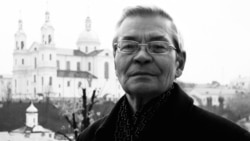
"[Dashkevich's] wife -- who was living together with her husband -- is well, and his daughter is also well. Because their immunity is strong. But the poor man has not survived. He had a severe case of pneumonia, was connected to a lung-ventilation system, and [doctors] were trying to save him," Lukashenko said at a meeting with Natallya Kachanava, the chairwoman of parliament's upper chamber, the Republic Council.
As of March 30, the total number of coronavirus cases in Belarus was 152 and Lukashenka said the country was at the peak of the pandemic.
"Looking at the figures of the illness, I feel we are now at the peak. I pray to God that the peak will have passed by [Orthodox] Easter [April 19]," Lukashenka said.
Lukashenka said there was no need so far to postpone a presidential election planned for later in 2020 because of the coronavirus pandemic.
On March 30, the Belarusian central bank said it would ask the International Monetary Fund for some $900 million of emergency funding to tackle the economic effects of the outbreak.
Meanwhile, Reporters Without Borders (RSF) called for the immediate release of a Belarusian news website editor who was arrested on March 25 on a charge of “receiving a bribe,” which carries a possible 10-year prison sentence.
The arrest of Syarhey Satsuk, director and editor in chief of the online newspaper ej.by, came three days after he published an editorial criticizing Lukashenka’s approach to the coronavirus epidemic and casting doubt on official infection figures.
Romania
The number of coronavirus infections and deaths in Romania has reached a new high as authorities locked down a northeastern city where more than a quarter of all cases were registered.
The government's crisis group dealing with the outbreak announced 26 more deaths on March 31 -- a more than 50 percent day-to-day increase -- bringing the total to 72 fatalities.
The total number of confirmed cases increased by 293 since the previous day, a new daily record that put the total infections at 2,245.
Live Map: The Spread Of The Coronavirus
Late on March 30, Interior Minister Marcel Vela announced that Suceava, a city of more than 100,000 people, and eight surrounding villages have been placed under lockdown.
With a population of just over 100,000, Suceava had almost 600 cases and one-third of all fatalities. More than half of the country's 285 infected doctors, nurses, and other medical staff were in Suceava, officials said.
All roads and highways into Suceava have been blocked by police and the army, with access allowed only for trucks carrying supplies.
Health Minister Nelu Tataru said the spread was caused by poor management at the local hospital, where infected medical personnel were allowed to mingle with healthy colleagues, and people not respecting self-isolation rules.
The quarantine will last until mid-April, when a 30-day nationwide state of emergency is set to end.
Movements in the rest of the country have been restricted for almost a week.
In a live address on March 31, President Klaus Iohannis reassured the inhabitants of Suceava and the surrounding villages that authorities will make sure they will receive food and medical supplies.
Iohannis also thanked all medical personnel for their efforts and promised they will be provided with everything they need to fight the outbreak.
Iohannis's message came after a growing number of medical personnel -- doctors, paramedics, nurses, and auxiliary personnel -- resigned from their jobs, either in frustration at the lack of medical supplies or because of fatigue or sheer panic.
Bulgaria
Bulgaria will have to raise 4.2 billion levs ($2.36 billion) in additional debt this year to bridge a fiscal gap caused by additional aid to be given to businesses and workers hit by the coronavirus pandemic, Finance Minister Vladislav Goranov said on March 31.
Goranov also slashed the 2020 outlook to a 3 percent contraction of the Bulgarian economy compared to previous estimates of 3.3 percent growth.
Prime Minister Boyko Borisov's center-right government revised its fiscal plans late on March 30 to run a deficit of 2.9 percent of economic output this year and raised the ceiling on new debt it can raise to 10 billion levs ($5.65 billion) due to the pandemic.
"All these measures have one and only goal: to guarantee that the state has enough liquidity and enough possibility to maintain its main functions," Goranov told reporters.
The changes are pending parliamentary approval.
Bulgaria is the poorest but also least indebted European Union member state.
Bulgaria has closed schools, restaurants and bars, restricted intercity travel and access to parks, and banned all domestic and foreign holidays and trips until April 13 to contain the spread of the outbreak that has infected 379 people and killed eight so far.
Kazakhstan, Kyrgyzstan, Uzbekistan
Kazakhstan has officially registered its second coronavirus-related death after a 50-year-old man died while in hospital.
Saule Qisyqova, the head of the Health Department in the capital, Nur-Sultan, told reporters that a 50-year-old man, who had been diagnosed with coronavirus and hospitalized 10 days earlier, died on March 31.
That follows the March 26 death of a 65-year-old woman in the central Aqmola region that surrounds Nur-Sultan.
According to Kazakhstan's health officials, as of March 31 the total number of confirmed coronavirus cases in the country is 325.
Why Numbers Don’t Tell The Full Story
A daily compilation of global coronavirus cases by Johns Hopkins University is currently the most comprehensive in the world, but it relies on information provided by governments.
In many countries, there are restrictions on releasing such information or reasons why the full story might not want to be told.
The methodology, immediacy, transparency, and quality of this data can vary dramatically country by country.
In neighboring Kyrgyzstan, visits to relatives and friends and gatherings of more than three people in one place, excluding family members, have been banned in Bishkek, which was already under a state of emergency due to the pandemic.
In addition, drivers of private vehicles must prove that they are heading to work or returning home from work with papers issued by their employees as all "unnecessary" use of vehicles in the capital has been banned.
The two southern cities of Osh and Jalal-Abad and several adjacent districts have also been under a state of emergency since last week.
The deputy chief of the coronavirus crisis center in Bishkek, Kasymbek Mambetov, said on March 31 that 13 more coronavirus cases were registered in the country, bringing the total number of cases to 107.
In another Central Asian nation, Uzbekistan, the number of officially confirmed coronavirus cases reached 158, including two deaths, as of March 31.
In two other Central Asian countries, Tajikistan and Turkmenistan, no coronavirus cases have been reported so far. Both are tightly controlled.
Tajikistan
Hundreds of Tajik migrant workers stranded at Moscow’s Domodedovo Airport because of emergency public health travel restrictions have been forced to leave the airport premises.
Galia Ibragimova, a Moscow-based journalist who has been following the migrants' ordeal for days, said in a Facebook post on March 31 that about 300 migrant workers had been forced out of the airport overnight.
The migrants were stranded at the airport for about two weeks after all flights to and from Tajikistan were canceled due to coronavirus restrictions imposed in Tajikistan and in Russia.
Ibragimova quoted one migrant named Farukh who said Russian law enforcement officials asked all migrants stuck at the airport to gather at one location.
After they did so, Farukh said, all of them were "kicked out" of the premises without any place to go. Farukh posted a video showing the situation on YouTube.
Kosovo
Kosovo's Constitutional Court has ruled that curfews ordered by Prime Minister Albin Kurti to curb the spread of the coronavirus in the country violated the constitution.
The court said on March 31 that imposing blanket nightly curfews affecting all citizens of Kosovo violates free movement guaranteed by the constitution, and ordered the government to repeal the measures within two weeks.
The court acted on a motion filed by President Hashim Thaci as part of political wrangling that drove Kosovo into a political crisis as it struggles to battle the coronavirus pandemic.
The Balkan country has confirmed 112 coronavirus cases and one virus-related death.
Acting Deputy Prime Minister Haki Abazi told RFE/RL that the Constitutional Court has not fully explained why the government’s March 23 decision is unconstitutional.
Abazi said the government will respect the ruling, but in the meantime will do its best to ensure that all measures will be taken to “protect people's lives.”
Last week, Thaci told citizens not to respect coronavirus-related curfews announced by Kurti’s government, saying such measures can only be declared under a state of emergency.

With reporting by Suren Musayelyan, RFE/RL's Romanian, Belarus, Balkan, Kazakh, Kyrgyz, Uzbek, and Bulgarian services, RFE/RL's Radio Farda, Reuters, dii24.ro, hotnews.ro, and BelTA
More News
- By RFE/RL
UN Agency Launches Effort To Aid Ethnic Armenians Fleeing Nagorno-Karabakh
The UN refugee agency and partners are seeking $97 million to provide “urgent humanitarian aid” for ethnic Armenians who have fled Nagorno-Karabakh after the breakaway region was retaken by Azerbaijan last month in a lightning military operation. The UN's office of the High Commissioner for Refugees (UNHCR) said the Armenia Emergency Refugee Response Plan (RRP), launched on October 7, brings together 60 partners, including 43 national nongovernmental organizations, and looks to cover aid efforts for the next six months through March 2024.
Iranian Activist Mohammadi Celebrates Her Nobel Peace Prize In Prison Cell, Family Says
Imprisoned Iranian women's rights activist Narges Mohammadi celebrated winning this year’s Nobel Peace Prize in her Iranian prison cell with fellow detainees, her family said on October 7.
"Narges learned she had been awarded the Nobel Peace Prize yesterday afternoon (October 6) from messages sent from the men's unit, where they have easier access to telephones on Fridays," family members told AFP. "Narges and her cellmates erupted in joy and celebrated this victory in their cell."
The Norwegian Nobel Committee in Oslo on October 6 said it was honoring the 51-year-old for “her fight against the oppression of women in Iran and her fight to promote human rights and freedom for all.”
In a statement released through The New York Times following the announcement, Mohammadi said the honor only strengthened her resolve to fight oppression, even if it means spending the rest of her life behind bars.
“I will never stop striving for the realization of democracy, freedom, and equality,” she said. “Standing alongside the brave mothers of Iran...I will continue to fight against the relentless discrimination, tyranny, and gender-based oppression by the oppressive religious government until the liberation of women.”
WATCH: The husband of jailed Iranian Nobel Peace Prize winner Narges Mohammadi has told RFE/RL the award is actually for the protest movement that swept the country in 2022. Speaking in Paris on October 6, Taghi Rahmani said: "Narges has received the prize as a symbol and as one of the activists of this movement."
The award was widely applauded by the international community, while Iran denounced it as a "biased and political" action.
French President Emmanuel Macron wrote on social media that Mohammadi's “fight against the oppression of women in Iran and for human rights is essential and universal.”
Malala Yousafzai of Pakistan, a rights advocate who won the 2014 Nobel Peace Prize, wrote that the Iranian activist is "a courageous defender of Iranian women.... I hope this award further invigorates her campaign and elevates the voices of all Iranian women protesting against a repressive regime."
Prominent Iranian activist Masih Alinejad wrote that recognition for "brave" Mohammadi was "very bittersweet for Iranians," noting that "every day in Iran women are being harassed and bullied by morality police."
Mohammadi's campaign for freedom of expression and women's rights has prompted the Islamic regime to arrest her 13 times, convict her five times, and sentence her to a total of 31 years in prison and 154 lashes.
She is serving multiple sentences in Tehran's Evin Prison amounting to about 12 years' imprisonment -- she has not seen her family in more than eight years -- on charges that include spreading propaganda against the state.
“Although the years of her absence can never be compensated for us, the reality is that the honor of recognizing Narges’s efforts for peace is a source of solace for our indescribable suffering,” a family statement said.
“For us, who know that the Nobel Peace Prize will aid her in achieving her goals, this day is a blessed day,” it added.
Mohammadi is the 19th woman to win the 122-year-old prize and the second Iranian woman, after human rights activist Shirin Ebadi won the award in 2003.
“This prize means that the world is paying attention to the activities that are being done in Iran [against] the rights of women. The world sees how the establishment represses women,” Ebadi told RFE/RL’s Radio Farda after the announcement. “As I have repeatedly said, democracy will enter Iran through the gate of women’s rights.”
Mohammadi's husband, Taghi Rahmani, told RFE/RL's Radio Farda that the Nobel announcement “opens a window for the fight for democracy, for human rights, civil equality.
“I think this is important. It’s not just a prize for Narges. It brings attention to resistance that is ongoing in Iran for freedom, democracy, and civil equality," he added.
First arrested 22 years ago, Mohammadi has spent much of the past two decades in and out of jail over her unstinting campaigning for human rights in Iran. She has most recently been incarcerated since November 2021.
With reporting by AFP, AP, and Reuters
- By dpa
Iranian Activist Tavakoli Starts Five-Year Prison Sentence
Iranian political activist Majid Tavakoli has begun his sentence in the notorious Evin maximum security prison in Tehran, the newspaper Emtedad reported on Telegram on October 7. According to the report, the political activist will have to serve five years in prison. The well-known student leader and activist has been arrested several times in the past, including during the nationwide protests in late 2022, according to human rights activists. Earlier this year, a court sentenced him to five years in prison. Numerous celebrities and activists have been targeted by the Iranian judiciary for critical statements or their activism and have been imprisoned or sentenced.
- By dpa
Kyiv Says 200 New Firms Developing Combat Drones
Ukraine has increased drone production a hundredfold in the past year following the full-scale invasion by Russia, according to Prime Minister Denys Shmyhal. Two hundred companies alone have started developing new combat drones, media reports quoted him as saying on October 7. "Now the progress of a drone from development to purchase is as short as possible," Shmyhal said. He added that Ukraine's defense industry had radically changed its approach and the state arms company Ukroboronprom had been modernized. While Ukraine initially dominated thanks to drones from the Turkish manufacturer Bayraktar, Russia later caused severe damage with the mass-produced Iranian Shahed drones.
Local Member Of Putin-Backed Political Party Killed In Blast In Occupied Ukrainian City
Vladimir Malov, a local official of the party backed by President Vladimir Putin, was killed in a vehicle explosion in the Russia-occupied city of Nova Kakhovka in Ukraine's southern Kherson region, the regional governor and Russian media reported on October 7. RIA Novosti initially reported that Malov, local secretary of the United Russia Party, had been seriously injured but later reported he had died in the hospital in the latest in a string of attacks against Russia-backed authorities in occupied regions of Ukraine. Volodymyr Saldo, the Kremlin-imposed governor, later confirmed the death in a Telegram post. To read the story by RFE/RL’s Russian Service, click here.
- By AP
UN Warns Pakistan That Forcibly Deporting Afghans Could Lead To Severe Rights Violations
Forcibly deporting Afghans from Pakistan could lead to severe human rights violations -- including the separation of families and deportation of minors, the UN warned on October 7. Pakistan announced a crackdown on migrants living in the country illegally, including 1.7 million Afghans, telling them to return home by October 31 to avoid mass arrest and expulsion. The government denies targeting Afghans and says the focus is on people who are in the country illegally, regardless of their nationality. It said it is setting up a hotline and offering rewards to people who tip off authorities about such migrants.
Hundreds Feared Dead In Powerful Earthquakes In Afghanistan's Herat Region
The death toll from a series of strong earthquakes in Afghanistan’s Herat region has soared to at least 320 people, with hundreds more injured, the United Nations said on October 7, as rescue crews continued to search for survivors through the ruins of the area, including in several remote towns and villages.
There were reports of collapsed buildings in Herat, Afghanistan’s third-largest city some 850 kilometers west of Kabul.
“We have information that people are buried under the rubble,” Herat Public Health Director Mohammad Taleb Shahid told the AFP news agency.
The epicenter of the first earthquake was some 40 kilometers northwest of Herat, a city of 700,000 people. It was followed by at least three major aftershocks.
The U.S. Geological Survey (USGS) recorded the largest of the temblors at a magnitude of 6.3, with the latest aftershock coming about 30 kilometers northeast of the city of Zindah Jan, which has a population of about 70,000 people.
“This earthquake was preceded by a 6.3 earthquake that occurred approximately 30 minutes before,” the USGS said.
Because of the remote nature of some of the earthquake-hit areas, authorities were uncertain as to the exact casualty toll.
A spokesman for Afghanistan’s National Disaster Management Authority told the German dpa news agency that "some villages had up to 1,000 or more people living in them. There were 300 houses. Only 100 people survived."
At least 600 people had been injured, officials said.
Musa Ashgari, head of the ruling Taliban agency in Herat, told RFE/RL’s Radio Azadi that at least 12 villages had been destroyed in the disaster and expressed concerns that the death toll could rise substantially.
Earthquakes are common in the Herat region of northwest Afghanistan and across the nearby border with Iran.
The World Health Organization (WHO) office in Afghanistan said it had sent 12 ambulances to Zindah Jan to evacuate casualties to hospitals.
“We have sent medicines and medical supplies to the hospitals to support treatment of those wounded. Our warehouse is ready to deploy for additional medicines as needed,” WHO Afghanistan said.
“As deaths and casualties from the earthquake continue to be reported, teams are in hospitals assisting treatment of wounded and assessing additional needs,” the UN agency said.
With reporting by AP, dpa, and AFP
Ukraine Reports Small Advances In East As Russian Air Strikes Continue
Russia carried out dozens of air strikes against Ukraine during the night of October 6-7, as Ukraine’s military reported continued slow progress in its ongoing counteroffensive.
Ukraine’s General Staff said during its daily briefing that its forces were making slow progress in the areas of Melitopol in the south and Bakhmut in the east.
Live Briefing: Russia's Invasion Of Ukraine
RFE/RL's Live Briefing gives you all of the latest developments on Russia's full-scale invasion, Kyiv's counteroffensive, Western military aid, global reaction, and the plight of civilians. For all of RFE/RL's coverage of the war in Ukraine, click here.
A spokesman for Ukraine’s eastern group of forces told RFE/RL on October 6 that Kyiv’s forces had gained “up to 400 meters” of territory in the greater Bakhmut area and was holding its new positions against heavy Russian assaults.
“I cannot give details because the enemy is using this information,” spokesman Ilya Yevlash said. “We have to get a foothold and only then can we talk about it more openly.”
Four civilians were reported injured in the Black Sea port city of Odesa as a result of an overnight missile attack that struck residential buildings and a granary. The missiles were launched from a coastal missile complex in the Russia-occupied Ukrainian region of Crimea, Ukraine’s military said.
Air-raid alerts were issued overnight in the Kharkiv, Poltava, Chernihiv, and Sumy regions.
Authorities in Moscow have been dismantling a spontaneous memorial to the dozens of civilian victims of a suspected Russian attack on October 5 a village in the northeastern Kharkiv region. Muscovites have been bringing yellow and blue flowers and ribbons to a monument to Ukrainian poet Lesya Ukrayinka, with communal workers removing them almost immediately.
There have been no reports of arrests.
The Russian Defense Ministry reported on October 7 that a Ukrainian drone had been shot down in an area of Moscow without causing any damage.
Later, Russia's Defense Ministry said late on October 7 that air-defense systems in Crimea had "detected and destroyed" two Ukrainian S-200 antiaircraft missiles that had been repurposed for ground attacks.
Ukrainian public broadcaster Suspilne quoted a resident as saying two explosions were heard near Yevtaporiya in western of Crimea.
The ministry also said a Ukrainian drone attack had been repulsed off the coast of occupied Crimea near the port city of Sevastopol.
RFE/RL is not able to independently verify reports from areas of heavy fighting.
With reporting by Reuters
Additional British Troops Arrive In Kosovo To Bolster NATO Forces
A contingent of 200 British troops began arriving in Kosovo late on October 6, NATO and Britain’s Defense Ministry reported. The troops will bolster the 400-strong British force already in the country as part of an annual NATO exercise there. The additional troops will be under NATO command and authorized to conduct operations under the KFOR mandate. The deployment comes amid high tensions triggered by an attack late last month by ethnic Serbian forces on Kosovar police officers in northern Kosovo. Germany said on October 6 that it would deploy an additional 155 troops to Kosovo beginning in April 2024. To read the original story by RFE/RL’s Balkan Service, click here.
Kadyrov's Teenage Son Awarded 'Hero Of Chechnya' Medal
The 15-year-old son of the strongman leader of Russia’s Chechen Republic has been awarded the Hero of Chechnya medal, State Duma Deputy Adam Delimkhanov reported on Telegram on October 6. Adam Kadyrov, the son of Chechen head Ramzan Kadyrov, made headlines last month when video was released showing him beating a detained man who was accused of burning a Koran. Ramzan Kadyrov responded by saying he was proud of his son. Hero of Chechnya is the region’s highest honor and is bestowed by decree from the head of the region. Ramzan Kadyrov awarded the first such honor to himself in February. To read the original story by RFE/RL's Russian Service, click here.
- By AP
Russia Demands Apology After Cyprus Arrests Russian Journalist
Authorities in Cyprus on October 6 said they had arrested a Russian journalist for “security reasons,” prompting the Russian Foreign Ministry to demand a formal apology. State broadcaster CyBC quoted diplomatic sources as saying that the journalist would be deported. Cypriot authorities also dismissed Russian allegations that police used excessive force during the arrest, according to CyBC. A Foreign Ministry spokesman told CyBC that Cypriot authorities are in touch with the Russian government to resolve the matter. Russian news agency RIA Novosti identified the journalist as Aleksandr Gasyuk of the Rossiyskaya Gazeta newspaper. He reportedly already flew back to Russia.
At Least 34,000 Russian Soldiers Killed In Ukraine, Investigation Finds
The number of Russian military personnel killed in Ukraine is nearly 34,000, according to a tally of names confirmed through open sources by the BBC and Mediazona. The names and burial sites of 33,904 Russian military personnel were known as of October 6, according to the two media outlets, whose journalists have kept the tally since the start of Russia’s full-scale invasion. They say the real number could be up to two times higher. Since the last update two weeks ago, the number of Russian military personnel killed in the war has increased by 1,248 people. To read the original story on RFE/RL’s Russian Service, click here.
Moldovan President Accuses Wagner Mercenary Group Of Plotting Coup In Chisinau Earlier This Year
Moldovan President Maia Sandu said in an interview published on October 6 that the Wagner mercenary group founded by the now-deceased Yevgeny Prigozhin had planned a coup in Moldova.
Sandu told the Financial Times that according to government information, the coup was planned this year by Prigozhin’s team.
She also said money had been smuggled from Russia into Moldova, partly by couriers and partly through bank accounts in Dubai, and said that pro-Russian forces in Moldova will continue to be financed by Moscow to destabilize the country.
"The situation is really dramatic, and we have to protect ourselves," Sandu said in the interview.
Sandu and Ukrainian President Volodymyr Zelenskiy first commented publicly in February about an alleged coup plot to topple the pro-Western government in Chisinau. Zelenskiy said then that the plan had been intercepted by his country's intelligence services.
The Kremlin subsequently urged Moldova to exercise caution in its statements about Russian forces stationed in the breakaway Transdniester region, where an estimated 1,100 Russian troops remain deployed.
Sandu's interview appeared as EU leaders met in Granada, Spain, to discuss the prospects for the accession of Moldova and other Eastern European countries. Sandu said that welcoming Moldova into the EU would be the best way to ensure Moldova's security.
Prigozhin, 62, and several of his associates died in an unexplained plane crash in late August. He was buried on August 29 in a discreet ceremony.
Two months before his death, on June 23-24, Prigozhin sent thousands of his fighters in a short-lived rebellion against the military command fighting in Ukraine, imposing one of the biggest challenges to President Vladimir Putin in his more than two decades in power.
The insurrection came on the heels of months of intense public infighting between Prigozhin and Russia’s military leadership over the war strategy in Ukraine and ammunition supplies.
Wagner troops moved to Belarus after the unsuccessful mutiny. Reports on Telegram channels linked to the mercenary group have indicated that some of the group's fighters left Belarus for Russia or for vacations, while some were transferred to operations in Africa.
With reporting by Financial Times and dpa
- By AFP
U.S. Expels Two Russian Diplomats In Reciprocal Step
The United States said on October 6 it was expelling two Russian diplomats in a retaliatory step after Moscow kicked out two Americans last month. "In response to the Russian Federation's specious expulsion of two U.S. Embassy Moscow diplomats, the State Department reciprocated by declaring persona non grata two Russian Embassy officials operating in the United States," a State Department spokesperson said. The State Department "will not tolerate the Russian government's pattern of harassment of our diplomats," the spokesperson said.
Bulgarian Parliament Debates Limiting Role Of President, Other Judicial Reforms
The Bulgarian Parliament has started a debate on constitutional amendments aiming to cut the power of the prosecutor-general and limit the role of the president in forming caretaker governments.
The draft amendments proposed by lawmakers from three parties on October 6 gathered 161 votes in favor -- not enough to be adopted by a fast procedure but enough to start a slower process. It envisions a new vote in two to five months in which 160 votes would be enough for adoption of the changes.
The amendments, proposed by We Continue The Change – Democratic Bulgaria (PP-DB), GERB, and Movement For Rights And Freedoms (DPS) -- which together support the government -- aim to curtail the power of the prosecutor-general to ensure the independence of judges.
“Key features of the rule of law are fair justice and an independent and fair court. These are the main objectives of the proposal for changes to the constitution,” Justice Minister Atanas Slavov, who defends the changes, told lawmakers.
But the opposition Bulgarian Socialist Party, There Is Such People, and the pro-Russian Vazrazhdane party criticized the amendments.
The draft amendments envisage the division of the Supreme Judicial Council, which appoints and dismisses judges and prosecutors, into two separate councils -- one for the judges, where members appointed by the judges themselves would have majority, and one for the prosecutors, where members nominated by the parliament would have a majority.
The aim is to ensure the independence of the judges while limiting the influence of the prosecutor-general, who is member of the prosecutors’ council.
The draft amendments also envisage changes to limit the prosecutor-general’s influence over prosecutors.
But the amendments have been met with criticism by the leadership of the prosecution, which expressed concern that they would allow political influence in the appointment of prosecutors.
Representatives of the judges have welcomed the idea for a majority of the judges on the Judicial Council but have criticized other provisions, including the idea to allow the heads of the two supreme courts and the prosecutor-general to be re-elected for a second five-year term instead of being in the post for only one seven-year term.
“Is this some kind of test? If they had fulfilled the necessary orders, they are elected again? And if they had not, they are not elected,” said Tatiana Zhilova, head of the biggest judges’ association, the Union Of The Judges In Bulgaria.
A majority of the members of the Supreme Judicial Council has also criticized the amendments, saying they show different treatment of judges on the one hand and prosecutors on the other.
The amendments also aim to limit the powers of the president in forming caretaker governments in the country that was governed by caretaker governments appointed by President Rumen Radev for most of the past two years.
Among the proposals is to limit the president’s choice for caretaker prime minister to the speaker of the parliament, the head of the Constitutional Court, and the head of the Bulgarian National Bank. The president currently can choose whomever he wants.
The proposition drew criticism from Radev and his advisers.
Bulgaria has long been considered one of the most corrupt European Union members, a dubious honor connected to the judiciary's lack of independence.
The prosecutor-general has long been viewed by both domestic and international critics as a blunt tool of the ruling elite to block investigations into their own members and target their opponents.
Washington and Brussels have for years been leaning on Bulgaria, which is also a NATO member, to reform the judiciary, including trimming the prosecutor-general's sweeping powers, and strengthening the judiciary’s independence.
Bulgaria's parliament in June adopted a mechanism for the independent investigation of the prosecutor-general, a move welcomed by international watchdogs. But it has not been put in practice, sparking debate over its effectiveness.
Jailed Azerbaijani Activist Starts New Hunger Strike As Pretrial Detention Prolonged
Jailed Azerbaijani activist Baxtiyar Haciyev’s has launched a new hunger strike to protest against the extension of his pretrial detention over charges of hooliganism and contempt of court.
Haciyev's lawyer, Elcin Sadyqov, said on October 6 that his client started the hunger strike four days earlier after a Baku court ruled in favor of prolonging his pretrial detention for at least three months.
On October 6, a court of appeals in Baku rejected Haciyev's appeal against the extension.
Haciyev held a 50-day hunger strike earlier this year to protest against his arrest and his lawyers said in February that his health had seriously deteriorated as he had lost 20 kilograms.
Haciyev, who was born in 1982, was arrested in early December last year. He rejects the charges.
In June, investigators added charges of illegal entrepreneurship, false entrepreneurship, forgery, use of forged documents, and smuggling. Haciyev has rejected these charges as well.
He previously was convicted on slander charges and had been detained during human rights protests in recent years.
In 2011, Haciyev was given a two-year prison sentence on charges of evading military duty but was released nine months early on the eve of U.S. Secretary of State Hillary Clinton scheduled visit to Baku.
He has consistently denied any wrongdoing.
In February, the U.S. State Department expressed concerns over Haciyev's arrest and his state of health, stressing that the charges against him are "understood as politically motivated."
Critics of Azerbaijani President Ilham Aliyev's government say authorities in the oil-rich Caspian Sea state frequently seek to silence dissent by jailing opposition activists, journalists, and civil society advocates on trumped-up charges.
Aliyev has ruled Azerbaijan with an iron fist since 2003, taking over for his father, Heydar Aliyev, who served as president for a decade.
With reporting by Turan
Russian-Installed Crimea Court Sentences Ukrainian To 13 Years In Prison On Espionage Charge
The Russian-installed Supreme Court in Moscow-annexed Crimea said on October 6 that it sentenced Ukrainian national Serhiy Tsyhypa to 13 years in prison on a charge of spying for Ukraine's Security Service. The details of the case are not clear, and it is unknown how Tsyhypa pleaded as the trial was held behind closed doors. Tsyhypa, a journalist and activist from the Ukrainian city of Nova Kakhovka in the Kherson region, went missing in March 2022, less than three weeks after Russia launched its ongoing invasion of Ukraine in February. To read the original story by RFE/RL's Russian Service, click here.
Explosion At Rail Line Used By Russian Soldiers Near Minsk, Belarusian Opposition Group Says
An opposition group called the Community of Railway Workers of Belarus said on October 6 that an explosion damaged a segment of a rail link close to the Azyaryshcha station -- a main hub for Russian military personnel, ammunition, and equipment. It remains unclear what caused the blast. Belarusian authorities have yet to confirm the group's statement. The authoritarian ruler of Belarus, Alyaksandr Lukashenka, has allowed Moscow to use Belarusian territory as a staging area for its invasion of Ukraine. Minsk also agreed to station Russian tactical nuclear weapons in the country. To read the original story by RFE/RL's Belarus Service, click here.
- By Reuters
Germany Plans To Send 150 Soldiers To Kosovo In 2024
Germany will send around 150 soldiers to Kosovo in April 2024, a spokesperson for the Defense Ministry said in Berlin on October 6, confirming a report by news magazine Der Spiegel. The planned Bundeswehr deployment comes after a deadly gun battle between Kosovo forces and armed Serbs last month fueled fears of an escalation in the ethnic Serbian-majority region 15 years after Pristina declared independence. The office of Chancellor Olaf Scholz agreed this week to plans by the military to deploy a reinforced Bundeswehr company of around 150 soldiers to Pristina to support the NATO mission KFOR, Der Spiegel reported citing unnamed sources.
Azerbaijani Opposition Leader's Bodyguard Jailed On 'Politically Motivated' Charge
A court in Baku on October 5 sentenced Kenan Zeynalov, a bodyguard of opposition Azerbaijan Popular Front Party (AXCP) leader Ali Karimli, to 25 days in jail after finding him guilty of "disobeying police orders." The AXCP called Zeynalov's arrest and sentencing politically motivated. In October 2021, another of Karimli's bodyguards, Niyamaddin Ahmadov, was sentenced to 13 years in prison on terrorism charges that Ahmadov and AXCP also called politically motivated. Critics of President Ilham Aliyev say Azerbaijan frequently jails opposition activists without grounds to silence dissent. To read the original story by RFE/RL's Azerbaijani Service, click here.
Ukraine Repatriates Bodies Of 64 Fallen Combatants
The bodies of 64 Ukrainian personnel killed in the war have been returned in an exchange with Russia, Ukraine's Coordinating Agency for the Treatment of Prisoners of War reported on October 6. "Today, the Ukrainian side managed to bring back the bodies of 64 fallen defenders of Ukraine to the territory under the control of the government," the agency said in a message on Telegram. Ukraine handed over an unspecified number of bodies of dead Russian soldiers, it said. Last month, the bodies of 51 Ukrainian soldiers were returned. Since the beginning of the war, the agency says the bodies of almost 1,900 Ukrainian soldiers have been repatriated. To read the original story by RFE/RL's Ukrainian Service, click here.
Russian Anti-War Activist In Kazakh Custody To Reportedly Be Extradited
The Sota Telegram channel said on October 5 that Russian anti-war activist Natalya Narskaya, arrested in Kazakhstan in July at Moscow's request, will reportedly be extradited to Russia soon. It added that Narskaya has developed mental problems, as she has been held in solitary confinement for weeks. Russian journalist Yevgenia Baltatarova cited sources as saying that Narskaya will be extradited by October 25. Narskaya, who fled Moscow last year, is wanted for criticizing Russia for its aggression against Ukraine on YouTube. Kazakh rights defender Denis Zhivago told RFE/RL that the Kazakh Bureau for Human Rights is following Narskaya's case. To read the original story by RFE/RL's Kazakh Service, click here.
- By RFE/RL
Russia Plans To Reverse Ratification Of Nuclear Test Ban Pact, Envoy Confirms
Russia's envoy to the Comprehensive Nuclear Test Ban Treaty Organization (CTBTO) said that Moscow plans to revoke its ratification of the pact, known as the CTBT, prompting immediate criticism from the United States.
Mikhail Ulyanov said on October 6 on X, formerly known as Twitter, that Russia "plans to revoke ratification" of the CTBT, a multilateral treaty to ban nuclear weapons tests for civilian and military purposes.
"The aim is to be on equal footing with the #US who signed the Treaty, but didn't ratify it. Revocation doesn't mean the intention to resume nuclear tests," he said.
Ulyanov's statement came after the chairman of the State Duma, Vyacheslav Volodin, said the Russian parliament's lower chamber at its "nearest" session will discuss revoking Moscow's ratification of the 1996 treaty.
The CTBT has been signed by 187 countries and ratified by 178 but cannot go into force until eight holdouts -- China, Egypt, Iran, Israel, North Korea, India, Pakistan, and the United States -- have signed and ratified it.
Though the United States has not ratified the treaty, it has observed a moratorium on nuclear weapon test explosions since 1992 and says it has no plans to abandon the treaty.
The U.S. State Department said it was "disturbed" by Ulyanov's comments.
"A move like this by any state party needlessly endangers the global norm against nuclear explosive testing," a spokesman said.
Russia should reach an "equal footing" with the United States "by not wielding arms control and irresponsible nuclear rhetoric in a failing attempt to coerce other states," the spokesman added.
Since the beginning of Russia's large-scale invasion of Ukraine, various pro-Kremlin politicians and public figures, including government officials, have spoken about the possibility of Russia using nuclear weapons or at least resuming nuclear testing.
Asked if rescinding the CTBT could pave the way for a resumption of tests, Kremlin spokesman Dmitry Peskov told reporters that “it doesn't mean a statement about the intention to resume nuclear tests.”
He noted that a possible move to revoke Russia's ratification of the ban would "bring the situation to a common denominator” with the United States.
Volodin repeated Moscow’s claim that Western military support for Ukraine means the United States and its allies are engaged in the conflict, adding that this requires "new decisions" that conform with Russia's national interests.
Speaking on October 5 at a forum with foreign affairs experts, Russian President Vladimir Putin said it would be up to the Duma whether Russia revokes the ratification.
In the wake of these statements, UN Secretary-General Antonio Guterres urged “all nuclear weapon states to publicly reaffirm their moratoriums against nuclear testing and their commitment to the CTBT,” UN deputy spokesman Farhan Haq said.
With reporting by AP and Reuters
Armenia Not Taking Part In Russian-Led CSTO's Military Maneuvers In Kyrgyzstan
Armenian troops are not taking part in the Russian-led Collective Security Treaty Organization's (CSTO) one-week military maneuvers that kicked off near Kyrgyzstan's northern town of Balykchy on October 6. The Kazakh Defense Ministry said troops from other CSTO members -- Belarus, Kazakhstan, Kyrgyzstan, Russia, and Tajikistan -- are participating in the Indestructible Brotherhood drills. Armenian Prime Minister Nikol Pashinian said last month before joint Armenian-U.S. military exercises that Yerevan's "full reliance on Moscow on security matters was a mistake." He also said in September that Yerevan's involvement in the CSTO was "not effective" for Armenia's interests. To read the original story by RFE/RL's Kazakh Service, click here.
- By AP
EU Summit To Look At Changes Needed To Welcome Ukraine, Others As New Members
A day after pledging Ukrainian President Volodymyr Zelenskiy their unwavering support, EU leaders on October 6 will face one of their worst political headaches on a key commitment -- how and when to welcome debt-laden and battered Ukraine into the bloc. The bloc has said since Russia's invasion that at the end of the war it would work steadfastly on "lasting unity" that would eventually translate into Ukraine's EU membership. The leaders will assess "enlargement" at their informal summit in southern Spain's Granada. Beyond Ukraine, several Western Balkan countries and Moldova are also knocking with increasing impatience at the door.
Editors' Picks
Top Trending
'Reach Your Target And Cease To Exist': What I Learned In Wagner's Combat Drone Course
2Chinese Drones Flow To Training Centers Linked To Russian War In Ukraine
3Russian Ruble Weakens Past 100 To The Dollar
4Russia Plans To Block VPN In March 2024, Member Of Federation Council Says
5Ukrainian Unit Recounts Up-Close Fighting To Liberate Eastern Town Of Klishchiyivka
6Iranian Girl's Hospitalization After Subway Incident Draws Parallels With Mahsa Amini's Case
7Jailed Iranian Activist Mohammadi Says Nobel Prize Only Strengthens Her Resolve
8As Crimea Increasingly Becomes A War Zone, Russian-Installed Authorities Clamp Down On Social Media Posts
9Teenager In Coma After Morality Police Apprehend Her In Tehran, Rights Group Says
10Despite Warning Signals From Moscow, Armenian Lawmakers Ratify ICC's Rome Statute
Subscribe