Accessibility links

Breaking News

Zelenskiy Says Kherson Critical Infrastructure Destroyed Intentionally By Withdrawing Russian Forces

Updated
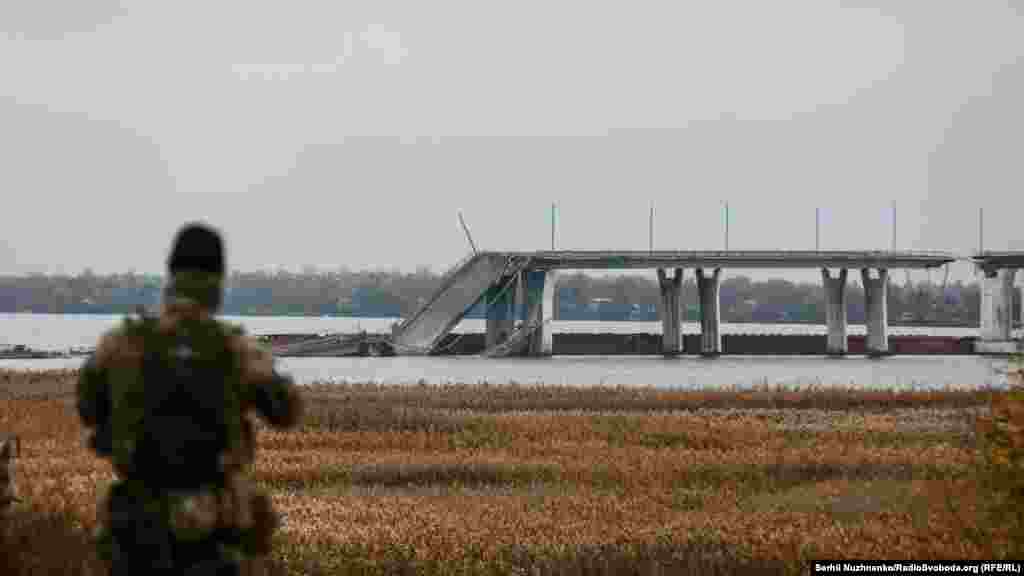
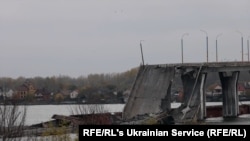
Several spans of the main Kherson bridge across the Dnieper River are completely destroyed.

Ukrainian President Volodymyr Zelenskiy says Russia destroyed "all critical infrastructure" in the parts of Kherson recaptured by Ukrainian forces over the past week.

Zelenskiy said there was no electricity, no communications, and no television in Kherson, adding that withdrawing Russian troops destroyed everything intentionally.

"This is what the Russian flag means -- complete devastation," Zelenskiy said in his nightly video address after visiting liberated Kherson on November 14, adding that all-important facilities in the city and the region were mined.

Earlier on November 14, Ukrainian national energy company Ukrenerho said Russia had destroyed key energy infrastructure supplying the entire right bank of the Kherson region and a significant part of the Mykolayiv region.

"Most of the liberated Kherson region has been without electricity since November 6," Ukrenerho chief Volodymyr Kudrytskiy said. "We are doing our best to supply people with electricity as soon as possible."

The liberation of Kherson at the weekend was one of Ukraine’s biggest successes in nearly nine months since the start of the Russian invasion.

During his visit to Kherson, Zelenskiy said the liberation of the city was "the beginning of the end of the war."

Ukrainian army chief Valeriy Zaluzhniy said he spoke with U.S. General Mark Milley, chairman of the Joint Chiefs of Staff, on November 14 and told him that the Ukrainian military will not accept any negotiations, agreements, or compromise decisions regarding the end of the war.

"I assured [him] that we will fight as long as we have the strength. Our goal is to liberate all Ukrainian land from Russian occupation,” Zaluzhniy said on Facebook. "There is only one condition for the negotiations: Russia must leave all captured territories," he said.

Zaluzhniy said he also informed Milley about the operational situation and the priority needs of the defense forces.

"The situation at the front is stable and under control. We are closely monitoring the enemy's actions on the border with Belarus and are building a reliable shield to protect Ukraine from the north," Zaluzhniy said. "The defense forces, despite the fierce resistance of the occupation forces, continue their offensive in the Kharkiv direction."

He said Russian forces were actively attacking areas in the east, including Bakhmut and Avdiyivka, but they were not succeeding.

"We hold the defense thanks to the resilience of our advanced units and combat-ready reserves. In the Kherson direction, we are conducting stabilization actions and strengthening the defense lines," Zaluzhniy added.

As fierce fighting continues in eastern and southern Ukraine, the Kremlin refused to comment on Zelenskiy's visit to the city, but spokesman Dmitry Peskov said, "You know that it is the territory of the Russian Federation."

Russia, which still controls about 70 percent of the wider Kherson region, illegally annexed it and three other Ukrainian regions in September following referendums that Kyiv and the West have labeled as a sham.

In Kherson, wary Ukrainian officials maintained a curfew in the liberated region amid fears that mines and booby traps could still maim and kill civilians.

The governor of Kherson region, Yaroslav Yanushevych, said the authorities had decided to maintain a curfew from 5 p.m. to 8 a.m. and ban people from leaving or entering the city as a security measure.

"The enemy mined all critical infrastructure," Yanushevych told Ukrainian TV. "We are trying to meet within a few days and (then) open the city," he said.

WATCH: The airport is in ruins, littered with the twisted hulks of destroyed tanks and aircraft. On the edge of town, there is a mass burial site with unidentified human remains. On the main square, people are asking soldiers for autographs and posing with them for photos.
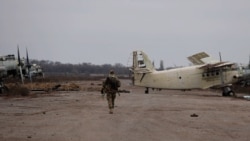
Destruction, Joy, And Mass Burial: One Day In Liberated Kherson
please wait

No media source currently available

0:00 0:03:14 0:00

Zelenskiy's visit to the region came a day after fresh evidence of war crimes was being uncovered in Kherson following the departure of Russian troops.

Zelenskiy earlier said Ukrainian investigators had uncovered hundreds of war crimes in areas freed from Russian occupation.

"Investigators have already documented more than 400 Russian war crimes," Zelenskiy said in his nightly video address on November 13. "The bodies of dead civilians and servicemen have been found."

"The Russian Army left behind the same savagery it did in other regions of the country it entered," he said.

The allegations could not be independently verified. Russia denies its troops intentionally target civilians.

Zelenskiy said "stabilization and the restoration of law" has been established in 226 settlements in the region, while the Defense Ministry said it had recaptured 179 settlements and 4,500 square kilometers along the Dnieper River over the past week.
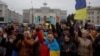
The Ukrainian military's General Staff reported continued fierce fighting along the eastern front in the Donetsk and Luhansk regions.

The Ukrainian armed forces' southern command said on November 14 that Russian forces continued to "inflict fire damage on our troops and de-occupied settlements along the right bank of the Dnieper" even after the liberation of Kherson city, which Zelenskiy described as "a historic day."

The Ukrainian General Staff's report on November 14 said that in the Luhansk region in southeastern Ukraine, occupying Russian forces plan to carry out a complete evacuation of the civilian population from three settlements.

The Russian Army is also trying to hold captured territories and continues to equip defensive lines on the left bank of the Dnieper River in the Kherson region. It said five settlements in the Kherson direction had been struck by artillery fire.

The evening message also reported on the destruction of a command post of one of the Russian units in Horlivka in the Donetsk region and on 17 strikes on Russian military facilities.

It was not possible to verify the information.

Yanushevych warned people in an online message about reports of humanitarian aid arriving in downtown Kherson's Liberty Square and urged people to steer clear of the city center as demining operations were due to proceed there.

Zelenskiy also warned Kherson residents about the presence of Russian mines. "I am asking you please not to forget that the situation in the Kherson region remains very dangerous," he said.

Amid Celebration, Photos Show Destruction In Parts Of Kherson

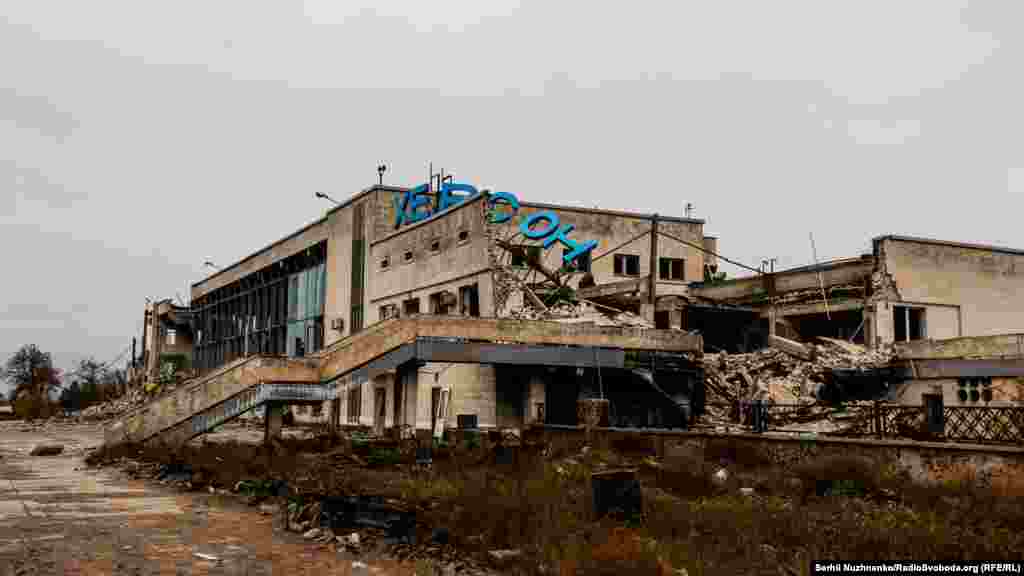
This is the remains of Kherson International Airport, photographed on November 13.<br />
<br />
The airport was captured by Russian troops less than a week after the invasion began on February 24 and served as a base for the invading forces. When the Russian advance stalled, the airport remained within easy reach of Ukrainian artillery and rockets.
1/11 This is the remains of Kherson International Airport, photographed on November 13.

The airport was captured by Russian troops less than a week after the invasion began on February 24 and served as a base for the invading forces. When the Russian advance stalled, the airport remained within easy reach of Ukrainian artillery and rockets.
Along with the joy of Ukraine’s recapture of Kherson, scenes of devastation were captured by RFE/RL photographer Serhii Nuzhnenko on November 13, indicating a long cleanup ahead before life can return to normal.
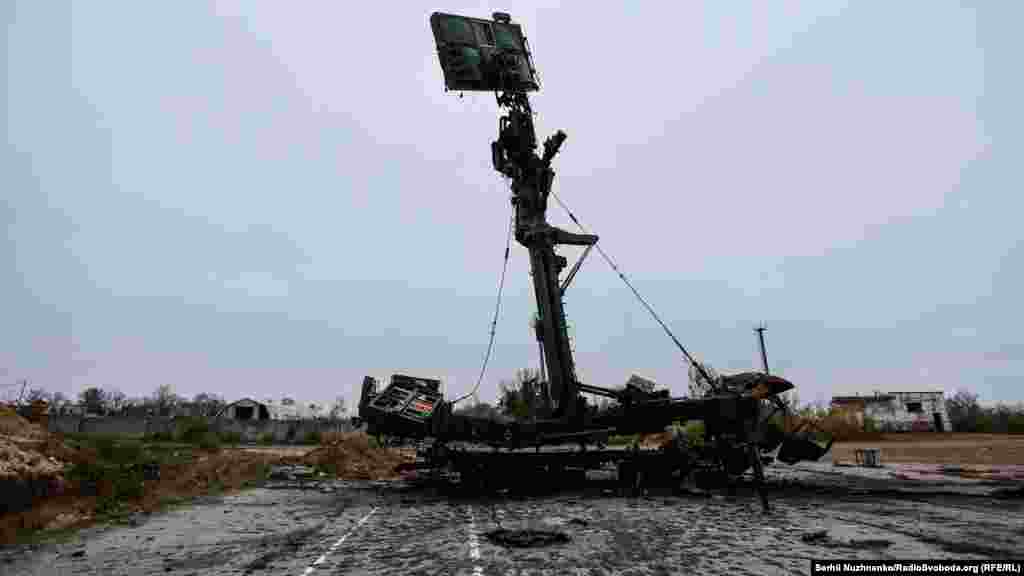
A destroyed <strong><a href="http://foto-i-mir.ru/podlet-rls/">Podlet radar system</a></strong>, one of Russia&rsquo;s most modern radars, next to the crater of a large explosion at the airport in Kherson on November 13.&nbsp;<br />
<br />
Kherson&#39;s airport was described as a &ldquo;shooting gallery&rdquo; for much of the Russian occupation, with massive losses in helicopters and armor stationed on its tarmacs. Kyiv claimed to have killed two Russian generals there.&nbsp;<br />
&nbsp;
2/11 A destroyed Podlet radar system, one of Russia’s most modern radars, next to the crater of a large explosion at the airport in Kherson on November 13. 

Kherson's airport was described as a “shooting gallery” for much of the Russian occupation, with massive losses in helicopters and armor stationed on its tarmacs. Kyiv claimed to have killed two Russian generals there. 
 
Along with the joy of Ukraine’s recapture of Kherson, scenes of devastation were captured by RFE/RL photographer Serhii Nuzhnenko on November 13, indicating a long cleanup ahead before life can return to normal.
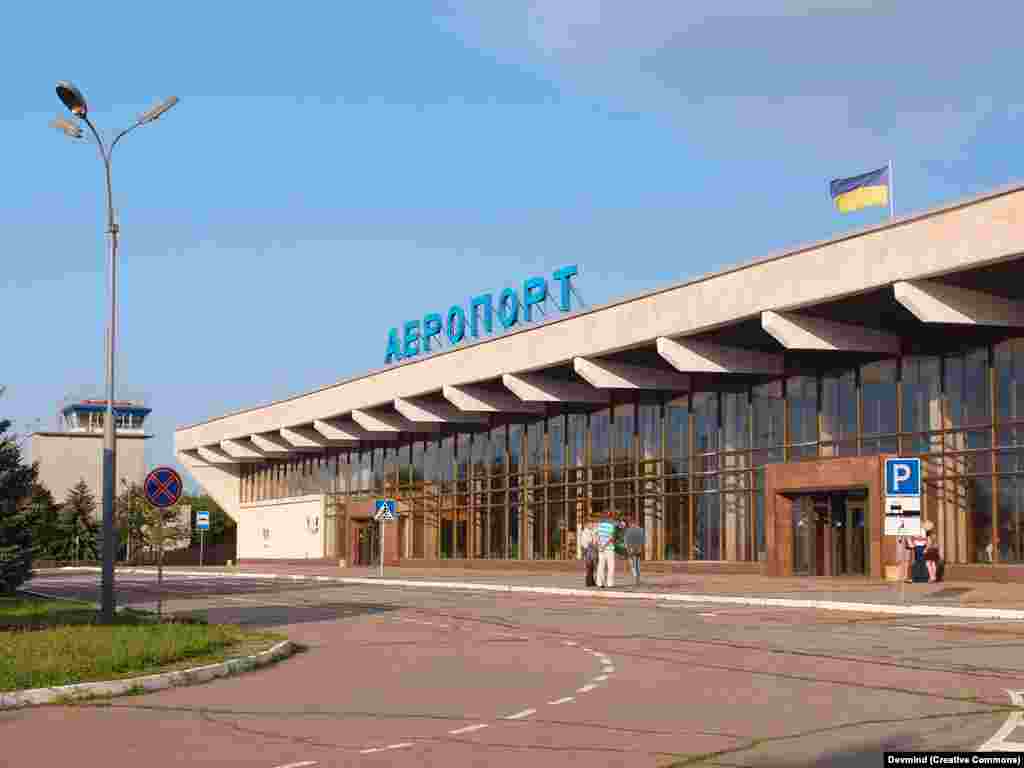
A 2012 file photo of Kherson airport&rsquo;s passenger terminal.<br />
<br />
In 2019, before the pandemic hobbled tourism and the Russian invasion stopped it completely, the airport served 154,000 passengers who flew direct to Turkey and Kyiv.<br />
<br />
&nbsp;
3/11 A 2012 file photo of Kherson airport’s passenger terminal.

In 2019, before the pandemic hobbled tourism and the Russian invasion stopped it completely, the airport served 154,000 passengers who flew direct to Turkey and Kyiv.

 
Along with the joy of Ukraine’s recapture of Kherson, scenes of devastation were captured by RFE/RL photographer Serhii Nuzhnenko on November 13, indicating a long cleanup ahead before life can return to normal.
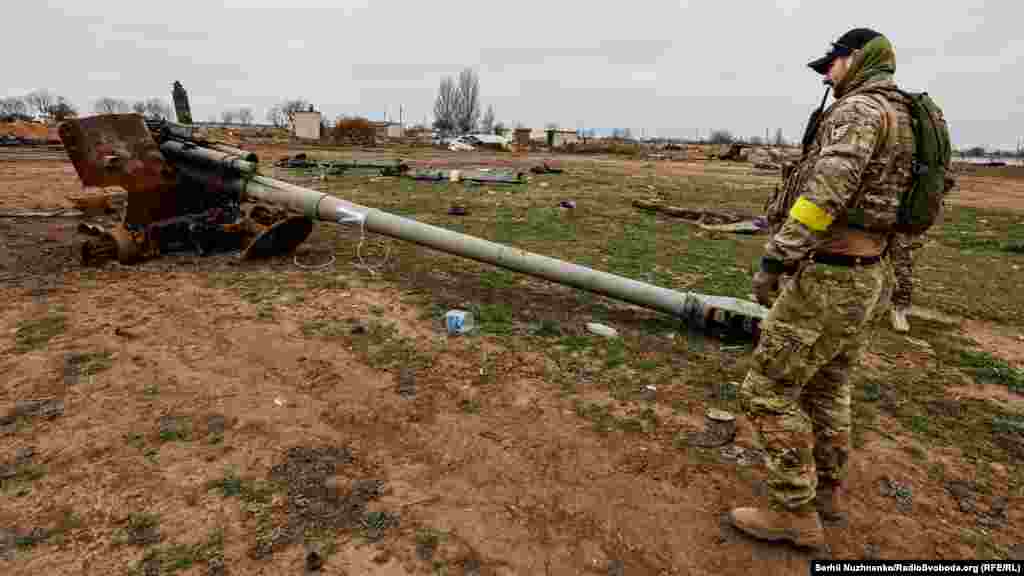
The turret of a destroyed howitzer at Kherson&#39;s airport.&nbsp;<br />
<br />
The airport is located in Chornobaivka, at the northwestern corner of Kherson city.&nbsp;
4/11 The turret of a destroyed howitzer at Kherson's airport. 

The airport is located in Chornobaivka, at the northwestern corner of Kherson city. 
Along with the joy of Ukraine’s recapture of Kherson, scenes of devastation were captured by RFE/RL photographer Serhii Nuzhnenko on November 13, indicating a long cleanup ahead before life can return to normal.
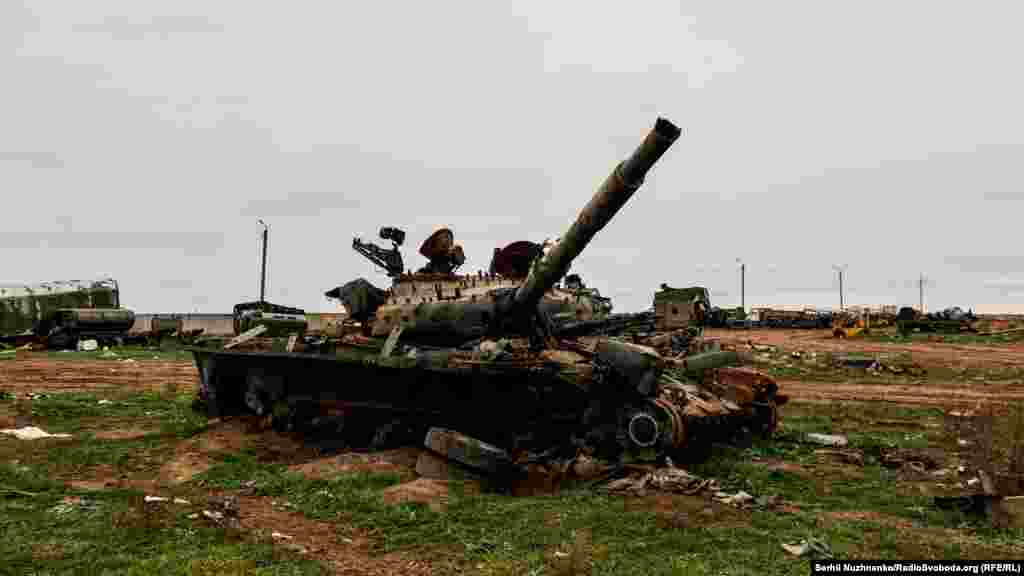
A destroyed tank in the territory of the airport.&nbsp;
5/11 A destroyed tank in the territory of the airport. 
Along with the joy of Ukraine’s recapture of Kherson, scenes of devastation were captured by RFE/RL photographer Serhii Nuzhnenko on November 13, indicating a long cleanup ahead before life can return to normal.
A section of the airport in Kherson.&nbsp;<br />
<br />
Serhii Nuzhnenko, a photographer with RFE/RL&rsquo;s Ukrainian Service who shot the photos in this gallery, entered the Kherson region on November 13.<br />
<br />
<br />
&nbsp;
6/11 A section of the airport in Kherson. 

Serhii Nuzhnenko, a photographer with RFE/RL’s Ukrainian Service who shot the photos in this gallery, entered the Kherson region on November 13.


Along with the joy of Ukraine’s recapture of Kherson, scenes of devastation were captured by RFE/RL photographer Serhii Nuzhnenko on November 13, indicating a long cleanup ahead before life can return to normal.
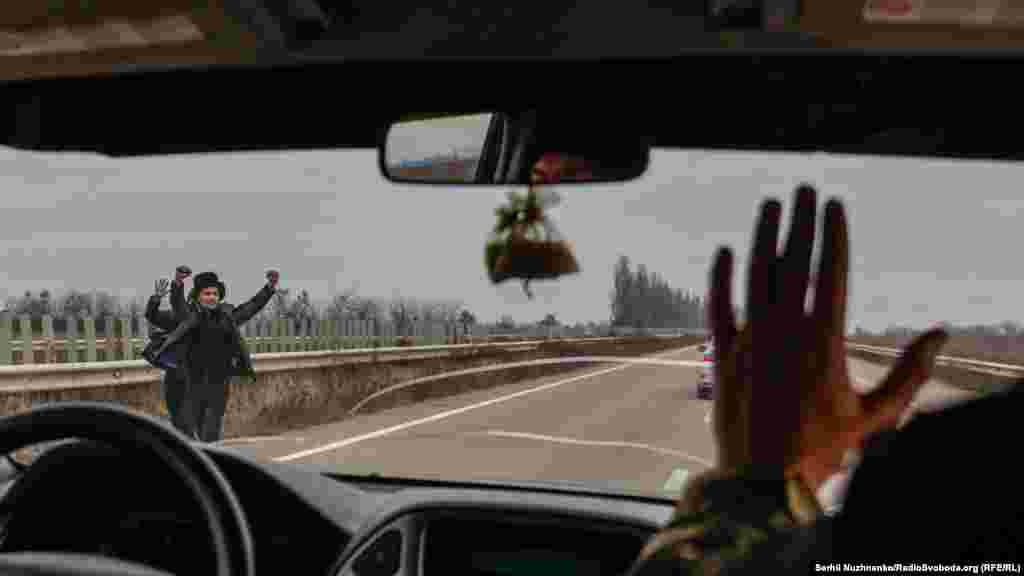
People cheer Ukrainian soldiers as they arrive in the Kherson region.<br />
<br />
Nuzhnenko says access to Kherson has been tightly restricted, with journalists needing to rely on personal contacts within the military to get into the newly recaptured areas. Only locals with proof of residency have been allowed to freely enter the territory.
7/11 People cheer Ukrainian soldiers as they arrive in the Kherson region.

Nuzhnenko says access to Kherson has been tightly restricted, with journalists needing to rely on personal contacts within the military to get into the newly recaptured areas. Only locals with proof of residency have been allowed to freely enter the territory.
Along with the joy of Ukraine’s recapture of Kherson, scenes of devastation were captured by RFE/RL photographer Serhii Nuzhnenko on November 13, indicating a long cleanup ahead before life can return to normal.
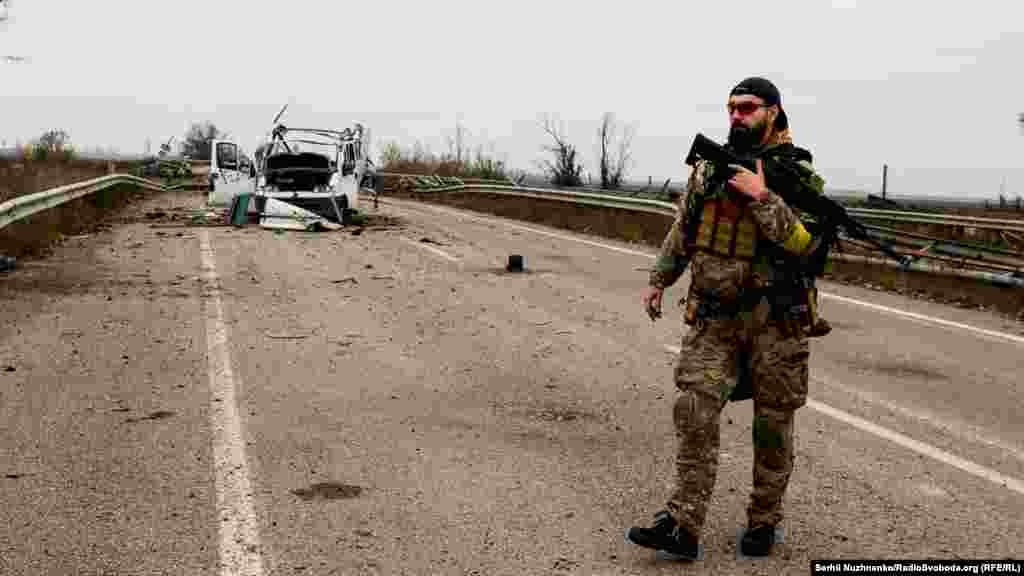
A destroyed vehicle on a road in the Kherson region.
8/11 A destroyed vehicle on a road in the Kherson region.
Along with the joy of Ukraine’s recapture of Kherson, scenes of devastation were captured by RFE/RL photographer Serhii Nuzhnenko on November 13, indicating a long cleanup ahead before life can return to normal.
A Ukrainian soldier looks at the destroyed Antonivskiy Bridge, in the east of Kherson.&nbsp;<br />
<br />
The crucial bridge had been out of action for much of the Russian occupation as Ukraine targeted one end of the span with repeated rocket strikes -- reportedly using U.S.-made HIMARS systems. As Russian forces retreated on November 11, a large explosion led to the collapse of the bridge.
9/11 A Ukrainian soldier looks at the destroyed Antonivskiy Bridge, in the east of Kherson. 

The crucial bridge had been out of action for much of the Russian occupation as Ukraine targeted one end of the span with repeated rocket strikes -- reportedly using U.S.-made HIMARS systems. As Russian forces retreated on November 11, a large explosion led to the collapse of the bridge.
Along with the joy of Ukraine’s recapture of Kherson, scenes of devastation were captured by RFE/RL photographer Serhii Nuzhnenko on November 13, indicating a long cleanup ahead before life can return to normal.
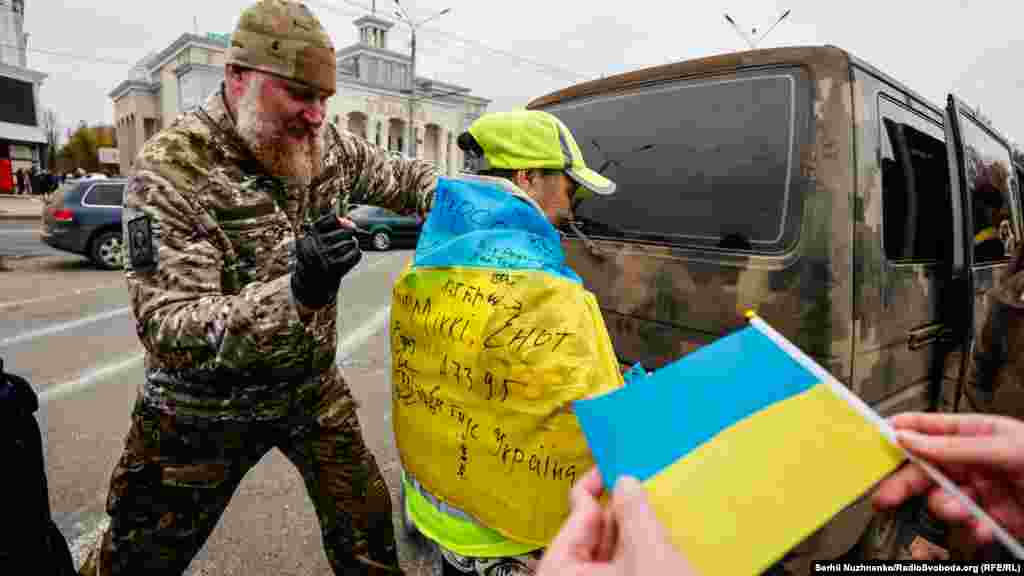
A soldier signs a Ukrainian flag in the center of Kherson.&nbsp;<br />
<br />
&quot;Young people are waving flags to the rhythm of Ukrainian music,&quot; Nuzhenenko says of the atmosphere in the center of the newly recaptured city, adding, &quot;locals are saying &#39;we&#39;ve returned home, under the Russians we were forbidden to to anything, and now we are free again.&#39;&quot;&nbsp;
10/11 A soldier signs a Ukrainian flag in the center of Kherson. 

"Young people are waving flags to the rhythm of Ukrainian music," Nuzhenenko says of the atmosphere in the center of the newly recaptured city, adding, "locals are saying 'we've returned home, under the Russians we were forbidden to to anything, and now we are free again.'" 
Along with the joy of Ukraine’s recapture of Kherson, scenes of devastation were captured by RFE/RL photographer Serhii Nuzhnenko on November 13, indicating a long cleanup ahead before life can return to normal.
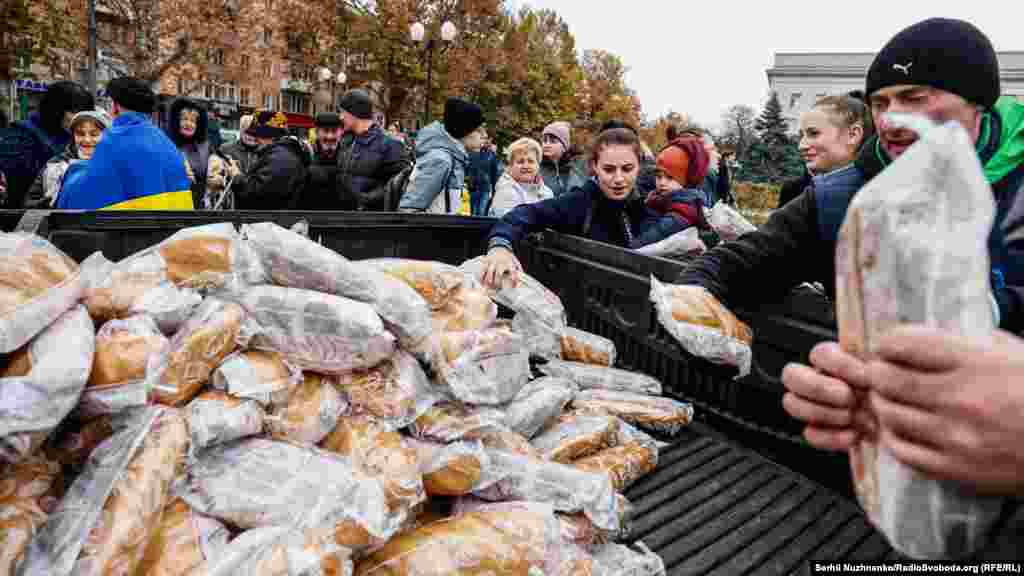
Residents of Kherson receive bread.&nbsp;<br />
<br />
&quot;These are historic moments in the life of your country&quot; Nuzhnenko says of the scenes in Kherson, &quot;and it hurts a little that you are involved in this and see and record this history.&quot;&nbsp;<br />
<br />
<br />
<br />
&nbsp;
11/11 Residents of Kherson receive bread. 

"These are historic moments in the life of your country" Nuzhnenko says of the scenes in Kherson, "and it hurts a little that you are involved in this and see and record this history." 


Along with the joy of Ukraine’s recapture of Kherson, scenes of devastation were captured by RFE/RL photographer Serhii Nuzhnenko on November 13, indicating a long cleanup ahead before life can return to normal.
Previous slide
Next slide

Russian officials' announcement that their forces were withdrawing across the Dnieper, which bisects the Kherson region and Ukraine, followed a seemingly hugely successful Ukrainian counteroffensive in the country's south in recent months.

U.S. President Joe Biden hailed the retaking of Kherson as a "significant victory," raising confidence that Moscow will not occupy its neighbor as intended when it invaded in late February.

"I can do nothing but applaud the courage, determination, and capacity of the Ukrainian people," Biden told a press conference after meeting with Chinese President Xi Xinjping on November 14.

"I think you are going to see things slow down a bit because of the winter months...I think it remains to be seen exactly what the outcome will be."

NATO Secretary-General Jens Stoltenberg warned on November 14 that Ukraine should brace for a difficult winter.

"The coming months will be difficult. Putin's aim is to leave Ukraine cold and dark this winter," he told a press conference in The Hague after meeting the Dutch foreign and defense ministers.

Stoltenberg urged continued international support for Kyiv and said Russia's military capability should not be taken lightly.

"We should not make the mistake of underestimating Russia. They still control large parts of Ukraine. What we should do is strengthen Ukraine's hand."

With reporting by Reuters and AP
  • 16x9 Image

    RFE/RL's Ukrainian Service

    RFE/RL's Ukrainian Service has seen its audience grow significantly since Russia's full-scale invasion in February 2022 and is among the most cited media outlets in the country. Its bold, in-depth reporting from the front lines has won many accolades and awards. Its comprehensive coverage also includes award-winning reporting by the Donbas.Realities and Crimea.Realities projects and the Schemes investigative unit.

This item is part of
XS
SM
MD
LG