


Accessibility links

Breaking News

Rights Groups Condemn Deadly Crackdown As Iranians Continue Protests

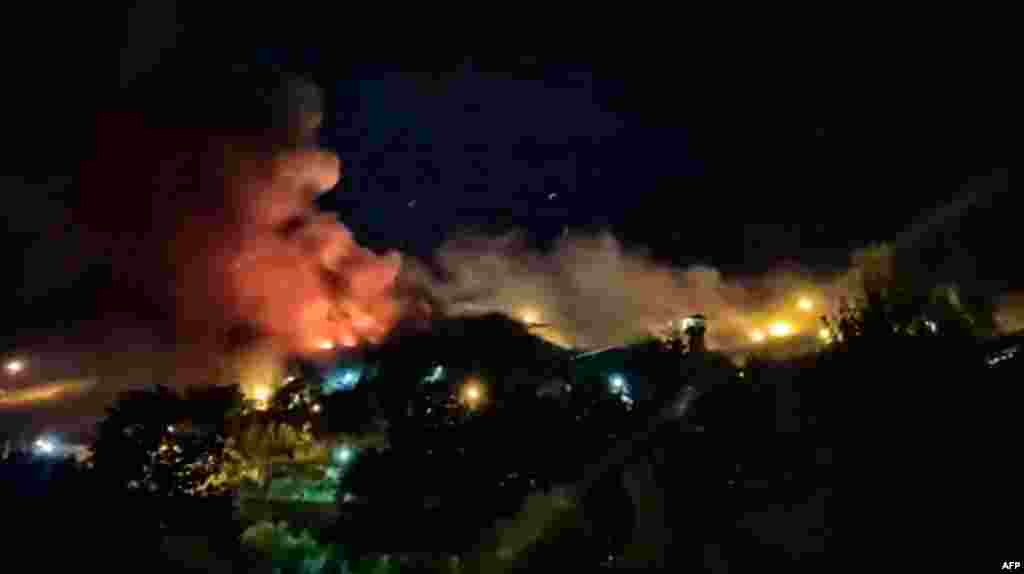
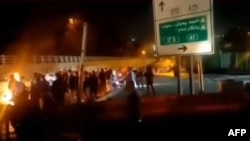
A video posted on social media on October 15 purportedly shows Iranian protesters gathered on a road leading to Evin prison, northwest of Tehran, where a fire broke out over the weekend amid reports of an uprising.

More than three dozen human rights groups have condemned Tehran's deadly crackdown on protests over the death of a young women while in custody for "improperly" wearing a head scarf as Iranians showed no signs of backing down in unrest that has shaken the entire country.

Amnesty International, Human Rights Watch, and other groups voiced their "deep concern" about Iran's "mobilization of their well-honed machinery of repression to ruthlessly crack down" on the nationwide protests.

The Oslo-based group Iran Human Rights said on October 17 that at least 215 people, including 27 children, had been killed in the crackdown, which the European Union imposed new sanctions on Iran's information minister, the country's "morality police," and other senior officials.
The rights groups said evidence they had gathered showed "a harrowing pattern of Iranian security forces deliberately and unlawfully firing live ammunition and metal pellets, including birdshot, at protesters and bystanders including children."

"The United Nations Human Rights Council should act as a matter of urgency by holding a special session and -- given the gravity of crimes under international law and other serious human rights violations committed in Iran and the prevailing systemic impunity -- establish an independent, investigative, reporting and accountability mechanism," the groups said in the statement on October 17.

Inside Tehran's Notorious Evin Prison After Blaze
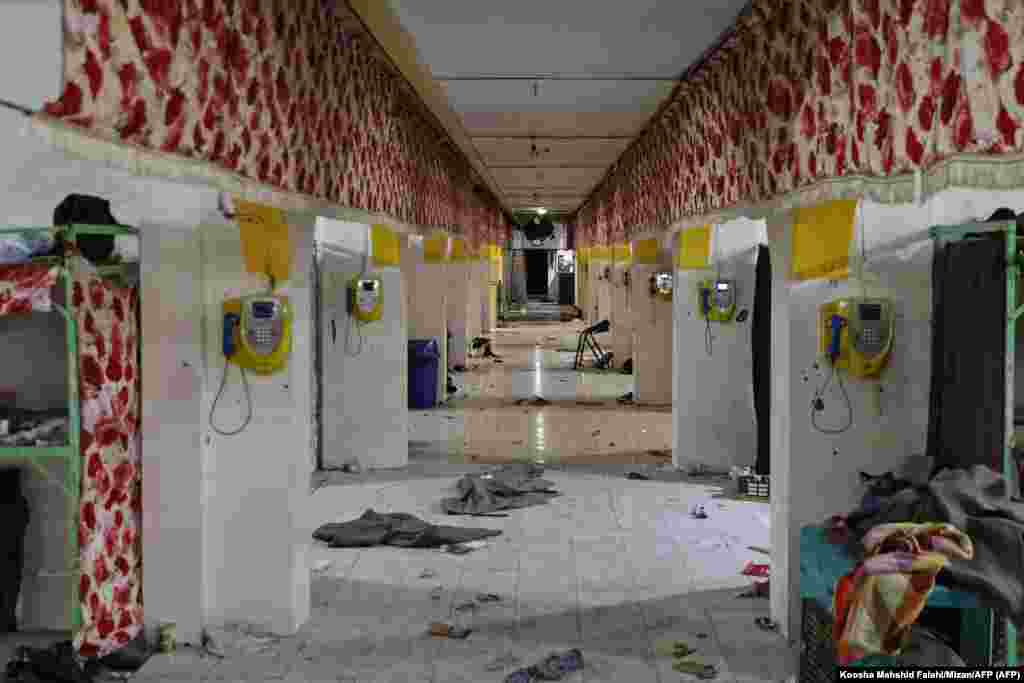
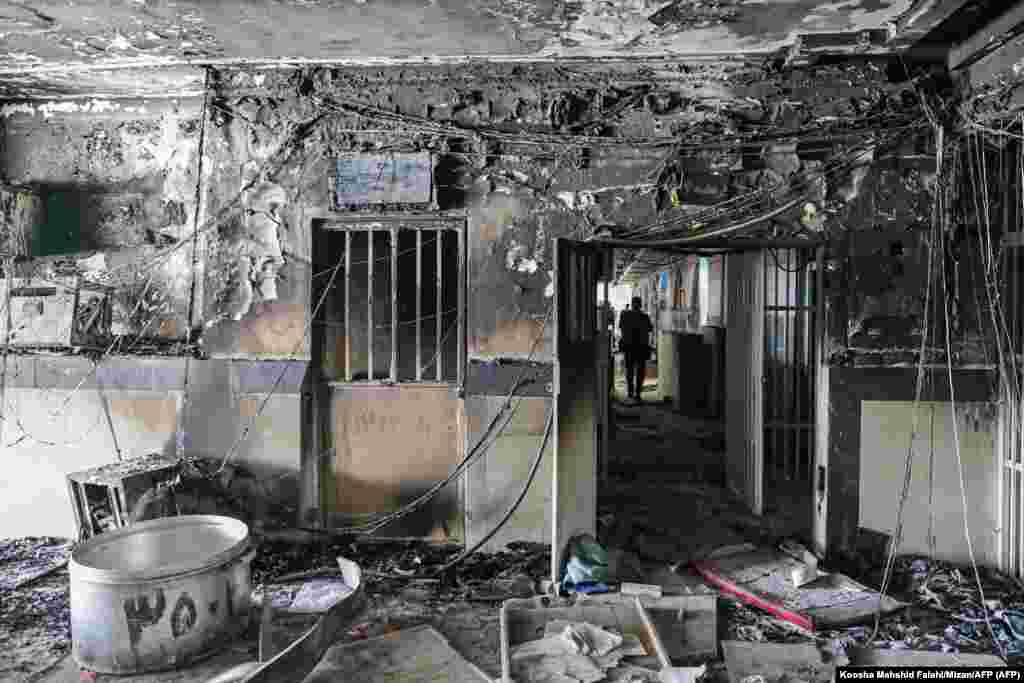
A photo released on October 16  by the Iranian Mizan News Agency shows a corridor inside Tehran's Evin prison after deadly violence at the facility. 
1/9 A photo released on October 16  by the Iranian Mizan News Agency shows a corridor inside Tehran's Evin prison after deadly violence at the facility. 
Amid mass unrest across Iran following the death of Mahsa Amini in police custody, photos have emerged showing the fire-damaged interior of the Iranian regime's most infamous prison.
On October 15, several videos emerged showing flames billowing above the prison, in the northwest of Tehran. Apparent gunfire and explosions can be heard<strong> <a href="https://www.youtube.com/watch?v=YDoPfsx7coQ">in some of the amateur footage.&nbsp;</a></strong><br />
<br />
The blaze came amid deadly unrest across Iran following the death of Mahsa Amini in September. Amini, 22, died after being detained by Iran&#39;s morality police for allegedly not wearing her Islamic head scarf, or hijab, properly.&nbsp; &nbsp;
2/9 On October 15, several videos emerged showing flames billowing above the prison, in the northwest of Tehran. Apparent gunfire and explosions can be heard in some of the amateur footage. 

The blaze came amid deadly unrest across Iran following the death of Mahsa Amini in September. Amini, 22, died after being detained by Iran's morality police for allegedly not wearing her Islamic head scarf, or hijab, properly.   
Amid mass unrest across Iran following the death of Mahsa Amini in police custody, photos have emerged showing the fire-damaged interior of the Iranian regime's most infamous prison.
A fire-damaged room inside Evin prison seen on October 16.<br />
<br />
At least eight people reportedly died during violence at the facility. It is unclear if the prison blaze is linked to the unrest sparked by the death of Amini.&nbsp;
3/9 A fire-damaged room inside Evin prison seen on October 16.

At least eight people reportedly died during violence at the facility. It is unclear if the prison blaze is linked to the unrest sparked by the death of Amini. 
Amid mass unrest across Iran following the death of Mahsa Amini in police custody, photos have emerged showing the fire-damaged interior of the Iranian regime's most infamous prison.
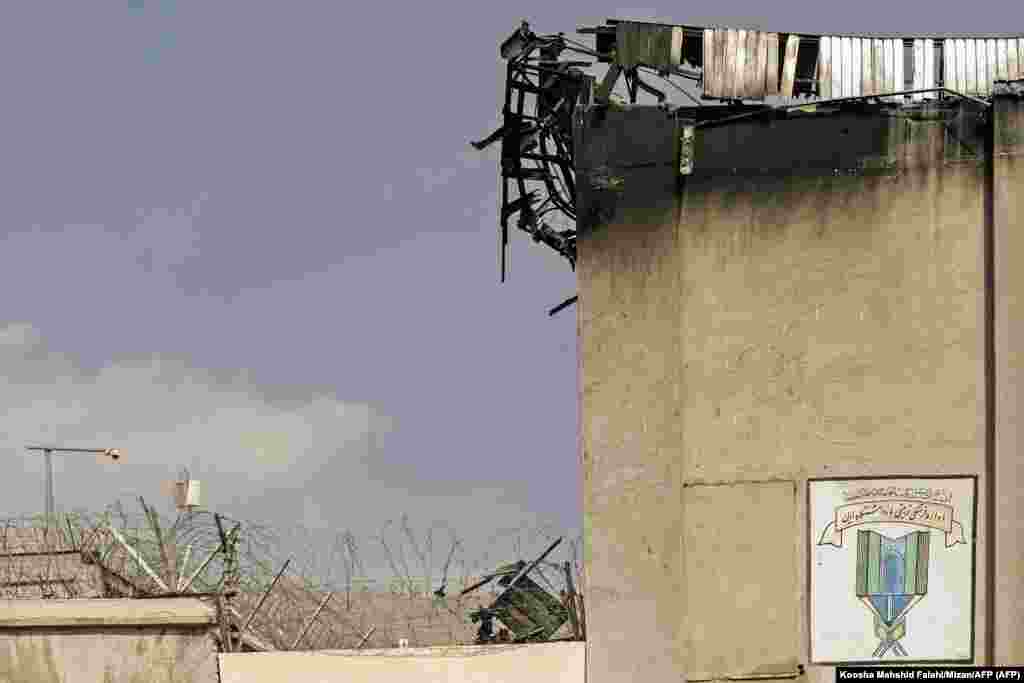
Fire damage to the exterior of the prison.&nbsp;<br />
<br />
An RFE/RL reporter was told that a riot began in a ward of the prison where political prisoners are held. Hundreds of people arrested for taking part in the anti-government protests sweeping the country had been sent to the prison before the blaze broke out.
4/9 Fire damage to the exterior of the prison. 

An RFE/RL reporter was told that a riot began in a ward of the prison where political prisoners are held. Hundreds of people arrested for taking part in the anti-government protests sweeping the country had been sent to the prison before the blaze broke out.
Amid mass unrest across Iran following the death of Mahsa Amini in police custody, photos have emerged showing the fire-damaged interior of the Iranian regime's most infamous prison.
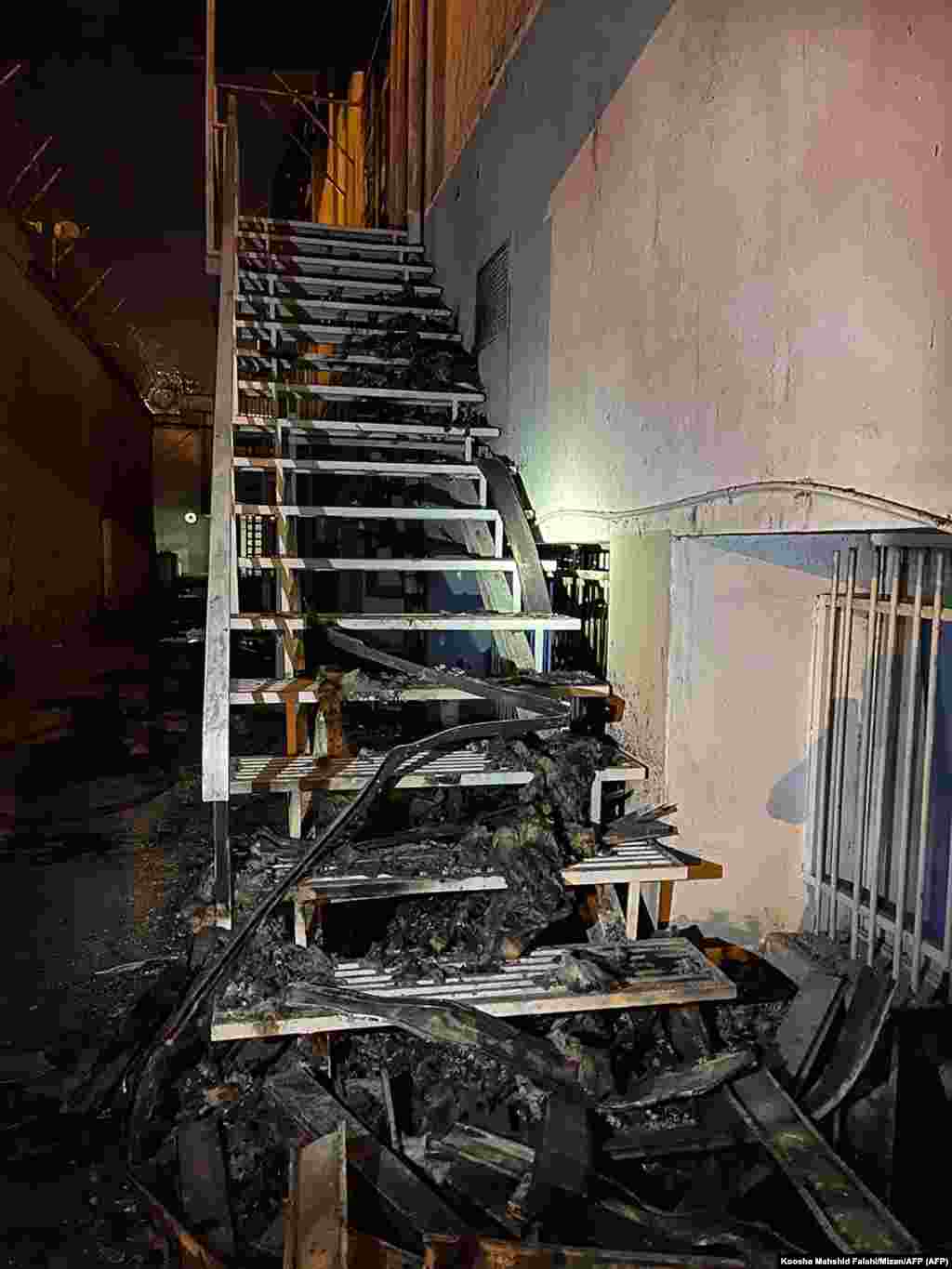
Damage on a stairwell, apparently near the outer wall of Evin prison. The facility is notorious for well-documented abuses, and on-site executions.&nbsp;
5/9 Damage on a stairwell, apparently near the outer wall of Evin prison. The facility is notorious for well-documented abuses, and on-site executions. 
Amid mass unrest across Iran following the death of Mahsa Amini in police custody, photos have emerged showing the fire-damaged interior of the Iranian regime's most infamous prison.
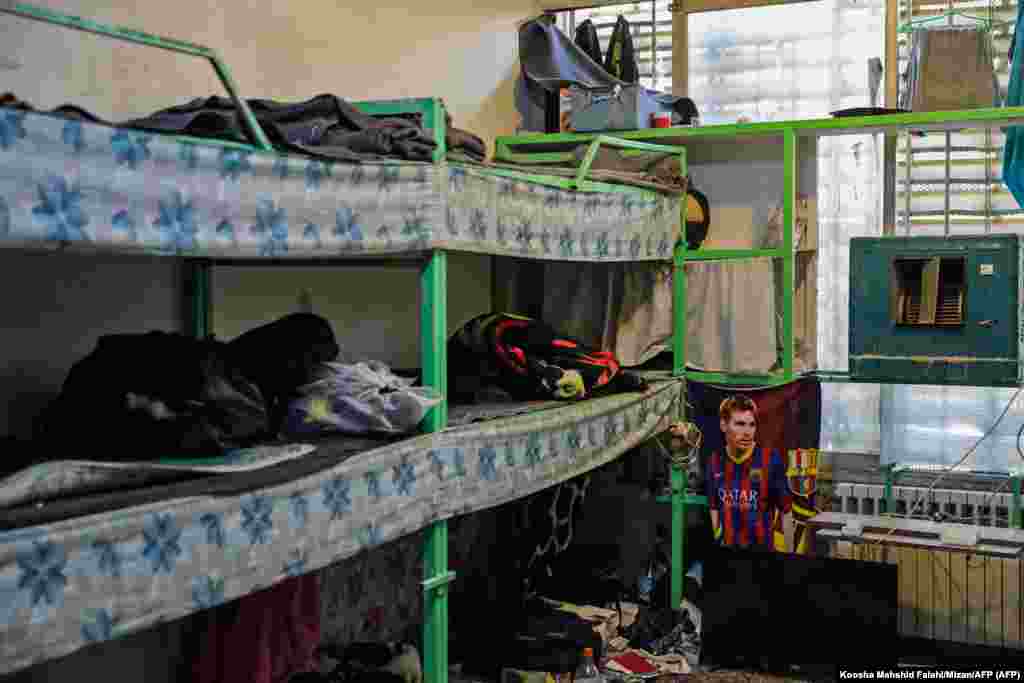
Bunk beds and a poster of Argentinian soccer star Lionel Messi seen inside Evin prison on October 16.<br />
<br />
This photo and most others in this gallery were released by the Mizan News Agency, which is aligned with Iran&#39;s hard-line judiciary.&nbsp;
6/9 Bunk beds and a poster of Argentinian soccer star Lionel Messi seen inside Evin prison on October 16.

This photo and most others in this gallery were released by the Mizan News Agency, which is aligned with Iran's hard-line judiciary. 
Amid mass unrest across Iran following the death of Mahsa Amini in police custody, photos have emerged showing the fire-damaged interior of the Iranian regime's most infamous prison.
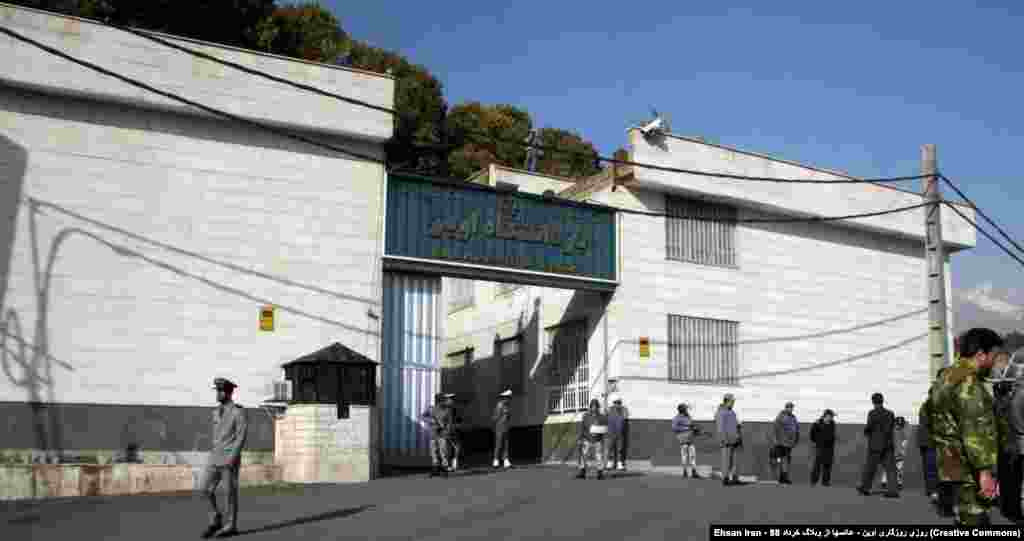
A 2009 file photo of the entrance to Evin prison.<br />
<br />
Images from inside the prison are rare, and photography is banned in the area around the site. In 2003 photojournalist Zahra Kazemi was arrested for taking pictures in front of the prison. The Iranian-Canadian later died in custody.&nbsp;
7/9 A 2009 file photo of the entrance to Evin prison.

Images from inside the prison are rare, and photography is banned in the area around the site. In 2003 photojournalist Zahra Kazemi was arrested for taking pictures in front of the prison. The Iranian-Canadian later died in custody. 
Amid mass unrest across Iran following the death of Mahsa Amini in police custody, photos have emerged showing the fire-damaged interior of the Iranian regime's most infamous prison.
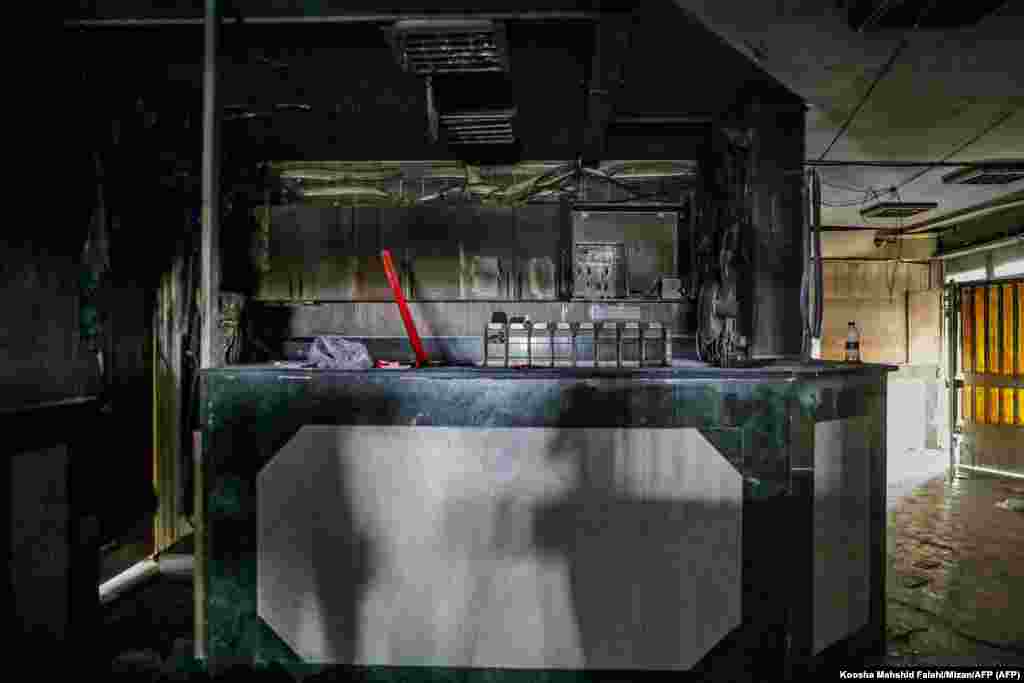
Fire damage seen inside Evin prison on October 16.<br />
<br />
Tehran Governor Mohsen Mansuri claimed the blaze was caused by &quot;a fight between some prisoners&quot; in a sewing workshop. That claim was widely disputed on Iranian social media but amid restrictions on Internet and communications, much about the deadly violence remains unclear.&nbsp;
8/9 Fire damage seen inside Evin prison on October 16.

Tehran Governor Mohsen Mansuri claimed the blaze was caused by "a fight between some prisoners" in a sewing workshop. That claim was widely disputed on Iranian social media but amid restrictions on Internet and communications, much about the deadly violence remains unclear. 
Amid mass unrest across Iran following the death of Mahsa Amini in police custody, photos have emerged showing the fire-damaged interior of the Iranian regime's most infamous prison.
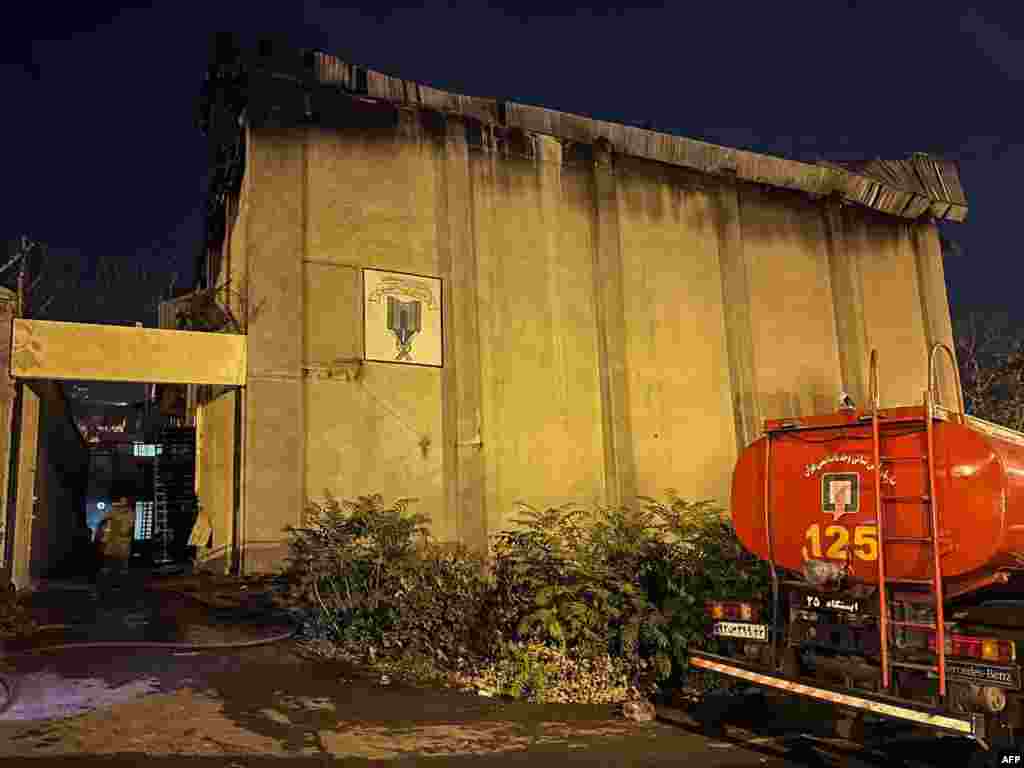
A fire truck photographed outside an entrance to Evin prison on October 16.&nbsp;
9/9 A fire truck photographed outside an entrance to Evin prison on October 16. 
Amid mass unrest across Iran following the death of Mahsa Amini in police custody, photos have emerged showing the fire-damaged interior of the Iranian regime's most infamous prison.
Previous slide
Next slide

Mahsa Amini died on September 16 in Tehran, three days after she was seen being taken into custody by the morality police for allegedly wearing a hijab, or head scarf, improperly. Eyewitnesses say they could see her being beaten by security agents.

As word spread of the Amini's death, so too did anger, sparking protests in cities across the country in one of the deepest challenges to the Islamic regime since the revolution in 1979.

In the northwestern Iranian city of Ardabil, protesters continued to take to the streets after security forces raided a girls' high school on October 13.

Videos published on social media showed people chanting "Freedom, freedom" and also "Death to the dictator," a reference to Supreme Leader Ayatollah Ali Khamenei.

WATCH: In an interview with RFE/RL’s Radio Farda, Jarrett Blanc, the deputy U.S. special envoy for Iran, brushed aside Tehran’s accusations that weeks-long mass protests in the country are orchestrated by the United States or Israel.
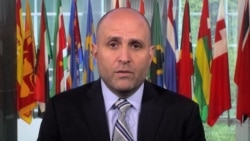
Allegations Of U.S. Involvement In Iran Protests Are 'Nonsense,' U.S. Envoy Says
please wait

No media source currently available

0:00 0:01:12 0:00


Reports indicate that following the raid on the school, 10 students were taken to an unknown place by security agents and seven were injured.

Meanwhile, the Hengaw Organization for Human Rights, a group that monitors Kurdish-inhabited areas of western Iran where Amini was from, announced on October 16 the arrest of five students by security forces in the western Iranian city of Sarvabad.

The situation at the notorious Evin prison, where many of those detained during the protests in Tehran are being held, remained unclear after a fire broke out over the weekend amid reports of an uprising.
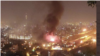
Iran's judiciary raised the death toll to eight people who had been held on theft charges.

The judiciary's Mizan news agency described the incident as a "fight between inmates and a fire," though it offered no evidence to support the claim. Activists outside of Iran say they remain skeptical of the government's claims.

Prominent filmmaker Jafar Panahi managed to call his wife from Evin on October 16 to let her know that he and his fellow filmmaker Mohammad Rasoulof are fine and that authorities had used tear gas during the unrest in Evin prison.

Panahi and Rasoulof were arrested in July because they had signed an open letter that called out corruption, theft, inefficiency, and repression in the Islamic republic.


The government has blocked the Internet to slow the flow of information between protesters. Tehran-based technology news website Digiato said that accessing virtual personal networks (VPNs) to circumvent the Internet restrictions had become almost impossible.

An online petition asking G7 countries to expel the Islamic republic's diplomats has so far collected nearly 220,000 signatures.

Written by Ardeshir Tayebi based on an original story in Persian by RFE/RL's Radio Farda
  • 16x9 Image

    RFE/RL's Radio Farda

    RFE/RL's Radio Farda breaks through government censorship to deliver accurate news and provide a platform for informed discussion and debate to audiences in Iran.

This item is part of
XS
SM
MD
LG