


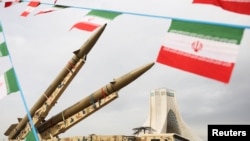
As the latest nuclear talks ended in Geneva on February 17, the United States is looking at tightening pressure on Iran’s discounted crude exports to China, seen as central to Tehran’s economic survival.
More than 80 percent of Iranian oil exports go to China. According to a report from Axios citing American officials, US President Donald Trump and Israeli Prime Minister Benjamin Netanyahu agreed that Washington would work to reduce Iranian oil sales to China, which could significantly increase pressure on Tehran.
Asked about the report, China's Foreign Ministry said on February 16 that "normal cooperation between countries conducted within the framework of international law is reasonable and legitimate, and should be respected and protected."

The dispute underscores how China has become central to Iran's ability to withstand Western pressure. Beijing is Tehran's largest trading partner and an increasingly important source of technology and security cooperation, making Chinese oil purchases an attractive target to reshape the negotiating landscape.
But growing US pressure and China's muted response highlight Beijing's complicated role. As Iran faces a US military buildup in the region and renewed diplomatic pressure following a deadly crackdown on nationwide protests, China has maintained a cautious public posture, calling for stability while avoiding direct confrontation with Washington.
At the same time, years of deepening ties -- from police training to advanced surveillance -- have helped Tehran suppress dissent and weather one of the most serious challenges to its clerical rule in years.
"It's a blueprint that China excels at and has refined at home," Michael Caster, head of the British human rights group Article 19's global China program, told RFE/RL. "States like Iran don't need encouragement to be authoritarian, but they can certainly look to the more effective and capable authoritarian influence deployed by China."
Exporting A Playbook
Oil has formed the bedrock of China-Iran ties in recent years. US sanctions designed to curb Tehran's nuclear ambitions have been partly offset by Beijing's purchases of discounted crude.
Much of that trade operates through barter arrangements, with discounted Iranian oil exchanged for Chinese goods, technology, and infrastructure. The system has flooded Iranian markets with Chinese manufactured products while helping sustain government revenue.
Trump signed an executive order on February 6 that will allow Washington to increase economic pressure on Iran and potential target Chinese oil purchases.
Such steps could also affect the flow of Chinese hardware that underpins Iran's expanding censorship system, which enabled authorities to disconnect much of the country during January's protests.
"The digital domain is where civil society finds gaps in the infrastructure of control to convene, express, and document," said Caster, who is the co-author of a recent report for Article 19 detailing how China has helped Tehran expand digital repression inside the country. "By gaining that total control over the digital domain through new technologies and tactics from China, Iran is able to exert a new level of control."
That cooperation was evident as Iranians took to the streets over the country's worsening economic crisis. Authorities shut down Internet access with unprecedented speed, isolating citizens from the outside world and limiting the spread of information.

Eyewitnesses said drones were used to corral protesters and, in some cases, fire on crowds. Others reported the technology was used to identify demonstrators on the streets and in their homes after chanting anti-government slogans.
Article 19's report says surveillance technologies first implemented in China's Xinjiang region against the Uyghur population are now being used in Iran, which Caster says showcases how Tehran borrows from Beijing's "digital authoritarian playbook."
"We have seen documentation going back a decade and a half for technology transfers between China and Iran," Caster said. " But one of the crucial parts of the story that is often overlooked are the terms of the normative framework -- or the strategy of deploying these technologies for really sophisticated digital authoritarian purposes."
A Deeper Security Partnership
The partnership has developed gradually, with Chinese tech giants like Huawei, ZTE, Tiandy, and Hikvision signing agreements to supply Tehran with equipment and know-how.
Those transfers have continued despite US sanctions and helped advance Iran's National Information Network (NIN), a state-controlled and heavily monitored domestic Internet that is nearing completion.
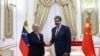
Iranian security forces began receiving training from Chinese counterparts in crowd-control tactics and monitoring technologies as early as 2005, cooperation that has deepened through decades of exchanges and agreements.
Iran joined the Shanghai Cooperation Organization (SCO), a regional security and trade bloc, in 2023 with China's backing. It hosted troops from China, Russia, and seven other countries for counterterrorism drills organized under the SCO in December.
A few weeks later, on December 25, just days before Iran's protests erupted, Iran's ambassador to China visited the People's Public Security University in Beijing, where he pledged to continue "pragmatic cooperation in law enforcement and security."
In 2021, Iran and China announced a 25-year economic cooperation agreement to boost technical cooperation and build expansive infrastructure like new highways and high-speed railways.

Soheil Azadi, a member of the editorial board of the Canada-based Persian fact-checking website FactNameh, told RFE/RL that leaked versions of the deal show clauses specifically designed for security cooperation and technological transfers.
He says some of these areas overlap with Iran adopting Chinese surveillance equipment and with consultations on building the NIN.
That deal has so far led to limited results, with Chinese investment largely limited inside heavily sanctioned Iran.
A late January study of China-Iran ties by the Washington-based Brookings Institution called the agreement "an effort to keep Iran's economy afloat in the face of American sanctions" that aligns with Beijing's pragmatic approach toward Iran as it continues to grapple with US pressure and instability at home.
"China is much more important to Iran than vice versa," the report said. "For China, its interests in Iran will be focused on protecting stability, ensuring continuing access to Iranian oil exports, and seeking to prevent the emergence of a pro-American regime in Tehran."