

Human Rights
'Do Not Execute': Iranian Writers And Artists Join Outcry After Public Hangings In Isfahan
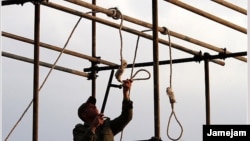
Iranian writers, filmmakers, and other cultural figures have joined the local and international outcry against a surge of executions in the country, using the hashtag "Do Not Execute" to criticize the continued use of the death penalty in a crackdown on political dissent from mass protests that shook the country in January.
Following two executions on July 28 that marked the first public hangings to take place in a year, writer and novelist Hossein Sanapour condemned the actions, criticizing what he described as opaque judicial proceedings and arguing that the authorities were attempting to suppress public anger following the January protests.
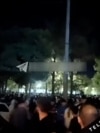

Iran's judicial authorities executed Abolfazl Sepahi Badjani and Amirhossein Safari Hosseinabadi on July 28 in the city of Isfahan. The two men had been sentenced to death in connection with unrest during the January protests.
Since the start of the war with the United States and Israel on February 28, Iran has witnessed a surge in executions of people human rights groups consider political prisoners -- from demonstrators to alleged members of banned groups and those convicted of spying.
In a statement shared online on July 29, Sanapour voiced similar concerns, saying that the executions were being carried out despite widespread anxiety and hardship caused by the country's current conditions.
"With all the despair that our words will be heard or have an effect, and only so that they know how strongly we oppose this type of proceedings, trials, and executions, we say: Do not execute," Sanapour wrote.
Actor and director Homayoun Ghanizadeh also criticized the continued use of executions during a period of crisis, writing sarcastically on social media that if war, poverty, deprivation, imprisonment, and other pressures had failed to affect society, then "the news of an execution -- especially a public one" -- would supposedly bring hope and joy.
Ghanizadeh said the executions represented the culmination of a system already marked by war, economic hardship, sanctions, restrictions, and social pressure.
Hassan Nayeb Hashem, an Iranian human rights activist based in Europe, also criticized the executions and the authorities' handling of the cases.
Commenting on reports that people gathered near the execution site in Malekshahr, Isfahan, he told RFE/RL's Radio Farda that he believes the presence of protesters limited the authorities' ability to control the public narrative surrounding the executions.
"Public executions have been abolished in almost every country in the world, including many that still retain the death penalty," Hashem said. "The Islamic republic carries them out in order to create greater fear and intimidation [in society]. At the same time, it hopes to mobilize its own supporters by staging these public spectacles."

"But the protests against executions today were large," he added. "You could say the government failed to achieve its objective of attracting supporters to this display."
Other cultural figures, including Mostafa Al-Ahmad, Reza Darmishian and Ali Ahmadzadeh, also joined criticism of the July 28 executions by sharing messages associated with the Do Not Execute campaign.
Iranian media were quick to brand the artists as "traitors of the homeland" for speaking out against the authorities.
The Tasnim news agency, which is closely affiliated with Iran's Islamic Revolutionary Guards Corps (IRGC), wrote on July 29 that "we must once and for all put aside flattery, confrontation, and expediency" when dealing with celebrities.
The article accused them of harboring "sympathy for terrorists" and wrote that the judiciary and security authorities should "summon, try, and imprison several of them" and "show the people the celebrities' defenses of their rotten and empty thoughts so that their dishonor falls to the ground and they have no more honor left."
The Do Not Execute campaign first emerged online in 2020 as a grassroots anti-death-penalty movement following death sentences against protesters and has repeatedly resurfaced during periods of heightened executions in Iran.
The Iran Human Rights group (IHRNGO) also condemned the executions, with its director Mahmood Amiry-Moghaddam saying that the authorities were using public hangings "to instill fear throughout society and deter future protests."
IHRNGO said a large number of people gathered near the execution site in Isfahan in an attempt to stop the killings and reported that authorities responded with force.
Videos and messages circulated on social media following the public hangings in Isfahan appeared to show people gathering in protest and mourning, although the scale of the demonstrations could not be independently verified.
Rights groups say dozens of people are facing charges connected to protests in the Iranian city of Isfahan in January, during which a colonel of Iran's Revolutionary Guards Corps (IRGC) was killed.
According to the latest data, 428 people have been executed in Iran so far this year, many of whom were sentenced to death in connection with the January protests.
Rights groups and international observers have raised concerns over the fairness of the proceedings, including allegations of coerced confessions and limited access to due process.
More News
Iranian Twin Sisters Reportedly Tortured Over January Protests; One Sentenced To Death, Other Gets 25 Years
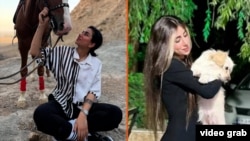
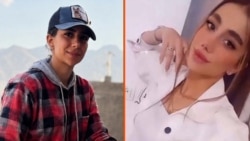
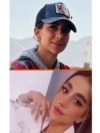
Iranian twin sisters Taraneh and Romina Rahimi turned 20 behind bars this year, awaiting the outcome of a case that has drawn scrutiny over allegations of torture, forced confessions, and severe mistreatment of the defendants.
The sisters are among 16 people tried in Isfahan, in central Iran, in connection with demonstrations in the city during mass nationwide protests in January.
"These children have been and are still under enormous pressure, both psychologically and physically," their cousin, Masud Nurmohammadi, told RFE/RL's Radio Farda.
The sisters have been convicted of moharebeh, or "waging war against God," aiding and abetting moharebeh, destruction of public property amounting to moharebeh, assembly and collusion, and propaganda against the Islamic republic.
Taraneh has been sentenced to death, while Romina has been given 25 years in prison, according to their family.
Torture Allegations
Nurmohammadi, who lives in the United States, said Taraneh had undergone surgery on her leg and had screws and plates inserted before she was detained. He said her condition deteriorated significantly in prison following what he described as repeated torture.
"We don't know whether her leg was broken, whether the screws and plates were displaced, or what happened," he said.
According to Nurmohammadi, a prison doctor ordered that Taraneh be urgently taken to a hospital for treatment, but prison authorities prevented her from receiving the care.
"They repeatedly told Taraneh, 'You're going to be executed. Whether you have a broken leg or a healthy leg, you're going to be executed. It doesn't matter whether you have a leg or not.'"
Nurmohammadi said Taraneh eventually told relatives during a phone call from prison that she could no longer walk.
"A 20-year-old girl who should now be standing on her own feet, riding her horse, and playing sports," he said.
The Rahimi sisters were arrested a week after the peak of the protests on January 8-9. Nurmohammadi said masked security forces raided the home where Taraneh was staying and tied her hands and feet before taking her away. Romina was later arrested in a similar raid on their mother's home.
The family say they believe the sisters' close relationship was used against them during interrogations.
"My guess has always been that they took Romina because of the pressure they put on her and the torture they inflicted on her, to force Taraneh to confess," Nurmohammadi said, "because they are twins and are very close to each other."
The defendants were accused of making Molotov cocktails at a shoe store near Shahada Square in Isfahan. Prosecutors have also alleged the defendants were responsible for the deaths of two people during the unrest, but no murder charges were brought.
Thousands were killed in the unrest that swept Iran in January, as the authorities shut down the Internet and cracked down on protesters. The 16 people in Isfahan were charged following the death of an Islamic Revolutionary Guards Corps (IRGC) commander in the city during violent demonstrations on January 8.
Nurmohammadi rejected the allegations against the sisters, saying their lawyers had found no evidence linking them to the charges.

"The lawyer says there is nothing in this case against these children," he said. "No evidence has been presented. There is no evidence."
He also alleged that Taraneh was subjected to severe physical abuse during interrogation, saying her face and body were swollen and bruised when her aunt finally saw the sisters after months in detention.
"They had pulled them by their hair from one cell to another, from one room to another, to the point that all their hair had been pulled out," he said.
Rape Threat
Nurmohammadi said interrogators threatened to sexually assault Romina in front of Taraneh if she refused to confess.
"They told her, 'If you don't sign this paper we're giving you, if you don't say the things we want, we'll rape your sister in front of you,'" he said.
He said Taraneh was then forced to listen to the sounds of her sister screaming during alleged torture.
"Anyone would break under these circumstances," he said.
The family has also raised allegations of sexual assault against Taraneh in prison. Nurmohammadi said lawyers have filed complaints over the alleged sexual abuse and torture, but that the complaints have not progressed in Isfahan's courts.
The sisters' lawyers have now been allowed to review the case file -- after their conviction -- and are preparing an appeal, he said.
Rights groups have for years raised concerns about Iran's treatment of protesters. In January, Amnesty International warned that thousands of people "arbitrarily detained" in relation to the protests were "at risk of torture and other ill-treatment, including sexual violence, and grossly unfair trials leading to prolonged imprisonment and the death penalty."
Meanwhile, the twins' family say their condition remains dire.
"The situation of the children in prison is terrible," Nurmohammadi said. "I never thought an Iranian could treat another Iranian this way...depriving them of water or seeing a doctor. The conditions are horrific."
Nurmohammadi described Taraneh as a kind and compassionate young woman who loved animals and was an equestrian. Romina, he said, was representative of a younger generation of Iranians: "bold, brave, and fearless."
NOTE: This article has been amended to clarify that one of the twins has received the death sentence while the other was sentenced to 25 years in prison.
US-Iranian Kamran Hekmati Released From Tehran Prison But Can't Leave Country
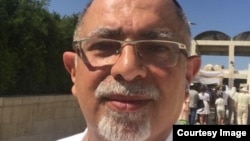
An Iranian-American citizen, Kamran Hekmati, has been released from Tehran's notorious Evin Prison, sources told RFE/RL's Radio Farda, but he is unable to leave the country due to a travel ban.
The release has not yet been officially confirmed by Iranian authorities but was welcomed by US authorities on September 8.
“We welcome Mr. Hekmati’s release from detention and continue to call on the Iranian regime to lift the exit ban so that he may return home," the State Department told Radio Farda.
Hekmati, who was designated as a wrongfully detained person by US Secretary of State Marco Rubio in March, is believed to have been released on September 5.
The 71-year-old traveled to Iran to visit relatives on his Iranian passport in May 2025 and was detained by the authorities two months later. Tehran's Revolutionary Court subsequently sentenced him to four years in prison for having traveled to Israel for a religious ceremony over a decade earlier. Holders of Iranian passports are barred from traveling to Israel.
His sentence was later reduced to two years after a change in the law governing such travel.
Hekmati's family has repeatedly raised concerns over his health, saying he suffers from aggressive bladder cancer and has been denied access to proper specialized treatment in detention.
The case is one of several involving Iranian-American dual nationals caught up in Iran's use of arbitrary detention as diplomatic leverage against the West, a practice critics have called "hostage diplomacy."
Dena Karari, another Iranian-American, was briefly detained in Shiraz in 2024 and released on bail but was barred from leaving Iran for about 19 months. She faced accusations including "collaboration with a hostile government" and espionage but was eventually allowed to leave the country in July this year. Shortly after her departure, a Zahedan court convicted her in absentia and sentenced her to five years in prison.
Reza Valizadeh, a former Radio Farda correspondent, remains imprisoned at Evin.
"The regime should immediately release Reza Valizadeh and all Americans unjustly detained in Iran,” the State Department said.
In a recorded phone call from inside the prison this past June, he appealed to the US government to secure medical assistance for himself and other detained Americans, saying four US citizens held at Evin were suffering from various illnesses without access to real medical care.
Valizadeh resigned from RFE/RL in November 2022, returned to Iran in March 2024 to see his family, and was arrested that September. He was convicted of "collaborating with the hostile American government" and sentenced to 10 years in prison, along with a ban on residing in Tehran and neighboring provinces, a travel ban, and a two-year prohibition on joining political parties or groups. His appeal was rejected.
Blinded By Iranian Security Forces, A Protester Now Faces The Death Sentence
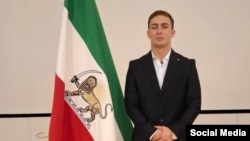
An Iranian man who left the country after being injured during the 2022 Women, Life, Freedom protests has been sentenced to death after returning to Iran from Germany, his friends and rights groups say.
Ali Zarei, who is being held at Qezel Hesar Prison in Karaj, was sentenced to death by a Tehran Revolutionary Court for "corruption on Earth," according to the US-based Iranian rights group HRANA.
The ruling, which was delivered to Zarei on August 23, accuses him of "extensive political activities, creating fabricated reports of damage, producing false news, propaganda against the regime, disturbing security, and illegally entering and leaving the country."
Zarei was arrested by agents of Iran's Intelligence Ministry on April 28 after returning to Iran.
Zarei's decision to return has puzzled those who knew him in Germany given his experience during the 2022 protests and the risks he faced upon returning.
Parviz Yari, an Iranian journalist and activist who lived with Zarei in Germany for about a month, told RFE/RL's Radio Farda that Zarei had previously decided to return but changed his mind after Yari warned him of the risks.
"He told me about it as a friend and adviser. Naturally, I explained the circumstances to him," Yari said. "I was also a little more forceful in my response, and that caused him to change his mind."
Yari said Zarei eventually decided to return without informing him.
He attributed the decision partly to the atmosphere among some Iranian opposition supporters following the deadly protests in January this year, saying exile monarchist circles had created an impression that political change in Iran was imminent.
"My impression is that the image that this movement had created of those days in Iran in the minds of political activists outside the country was that the Islamic republic was seemingly on the verge of collapse, that a train had left the station and people simply needed to get on board," Yari said.
Zarei had been blinded in his right eye during the state's brutal crackdown on the 2022 protests and subsequently left Iran for Germany. He was just one of many protesters who were shot in the eye in what appeared to be a deliberate tactic.
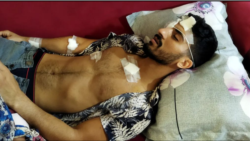
Yari said Zarei identified himself as a monarchist but stressed he was not formally affiliated with any particular political party or organization.
"He didn't receive financial support from anywhere, nor was he an organizer of any demonstrations," Yari added.
Zarei did, however, participate in gatherings of Iranian opposition supporters, including events backing exiled former Crown Prince Reza Pahlavi. In February this year he addressed a protest in Munich attended by 250,000 people, according to German police figures.
"The 1979 revolution is over!" Zarei shouted in an impassioned speech to the crowd, referring to the events in which Iran's current clerical establishment seized power.
Yari said that after arriving in Germany, Zarei found a job at a restaurant, joined a gym, and was trying to learn German. But the violence surrounding the protests in Iran this year remained a powerful influence on him.

Rights groups have documented more than 6,000 deaths during the crackdown by security forces, but many say the real toll is much higher. Some estimates put the figure in the tens of thousands.
"What I think was a turning point for Zarei's presence in Germany was the protests in January and the unprecedented violence that the Islamic republic used to suppress the people," Yari said. "This created a collective trauma for all of us, and in exile, I think it's somewhat harder to bear that kind of trauma."
Yari said the flow of information about Zarei's current case has been limited because of his restricted contact with his family and lawyer, as well as the family's limited knowledge of political cases.
"Since Zarei's arrest, unfortunately, he has faced restrictions on meeting with his family and making telephone calls to them, and even on communicating with his lawyer," Yari said.
He said the information available to those outside Iran suggests the current case involves charges a controversial law enacted recently concerning espionage and cooperation with hostile states. The death sentence is subject to appeal.
Rights groups have documented some 50 politically motivated executions this year.
With reporting by Mohammad Zarghami of RFE/RL's Radio Farda
- By RFE/RL's Radio Farda and
- Will Tizard
Partially Blinded Protester Sentenced To Death After Returning To Iran
An Iranian court has sentenced a partially blinded protester to death after he returned to Iran. Ali Zarei was blinded in one eye when he was shot by security forces during the 2022 Women, Life, Freedom protests. Branch 23 of the Tehran Revolutionary Court charged him with "corruption on Earth" for extensive political activities, according to US-based rights outlet HRANA.
Iranians Say SIM Card Cutoffs Have Become A Tool To Punish Critics
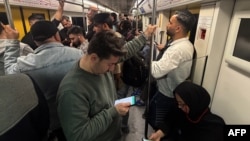
Cutting off SIM cards has emerged as one of the more effective tools available to Iranian authorities seeking to punish critics and civil society activists, with consequences that go well beyond losing mobile phone service.
Because access to banking, government, insurance, judicial, and even educational services in Iran is now tied to a verified mobile number and one-time SMS codes, cutting off a person's SIM effectively locks them out of a wide range of essential services and civil rights.
One woman, Donya Rad, said she recently discovered she could not renew her car insurance because a new mandatory rule requires registering one's address through a state housing portal -- a process that requires an SMS verification code she could not receive.
She wrote on X that SIM cutoffs have become so routine over the past two or three years that people talk about them the "way they complain about traffic or the weather." She described it as "a punishment that arrives before any legal charges are filed."
Mahsa Safaei, a car mechanic who posts content on Instagram, said her SIM was cut off three years ago because she appeared in videos without a head scarf and in short sleeves.
"You asked what I did wrong? What I did was earn an honest living," she said in a video. "It's been three years."
Ali Akbar Gorji, a professor of constitutional law, and journalist Saeideh Shafiei both had their SIM cards blocked without warning; both said that when they sought to have the blocks lifted, they were told to delete certain critical social media posts and write 20 posts defending the Islamic republic.
The Precedent
The tactic emerged following the 2022 nationwide protests that gave rise to the Women, Life, Freedom movement and intensified further following the 12-day war with Israel in June 2025.
A mobile number in Iran's digital infrastructure now functions as a form of identification used to receive one-time codes, meaning a cutoff can trigger a chain reaction across other services.
Filterbaan, an Iranian digital rights organization, has described SIM cutoffs as an extralegal tool designed to identify individuals, restrict them, and disrupt activists' ability to communicate with each other, institutions, and the media -- including by cutting people off from the judiciary's electronic notification system and blocking delivery of court summonses.
That is what happened to Yalda Moayeri, a well-known Iranian photojournalist, who said she only learned by chance during an unrelated court visit that a trial date had been set for her and that officials had tried to reach her using the very line they cut off before issuing a verdict against her in absentia.
The Legal Excuse
Authorities have in some cases cited Article 247 of Iran's Code of Criminal Procedure, which allows an investigating judge -- who oversees the preliminary investigation of criminal cases -- to impose supervisory measures such as travel or driving bans on a suspect.
But activists and lawyers say the central legal question is whether that provision can be stretched to justify severing a person's access to their phone number and by extension an entire set of essential services, particularly when ordinary citizens say they received no advance notice.
Hossein Ahmadiniaz, an Iranian lawyer based in the Netherlands, told RFE/RL's Radio Farda that Iran's judiciary has "no legitimate legal basis for the practice," calling it a pretext to restrict people's freedoms in violation of basic legal principles, including the principle that punishments must be defined by law and consistent with constitutional protections.
He said the practice leaves no right to a fair hearing and no judicial independence.
"The law can have no real meaning in the Islamic republic of Iran," he said.
Defiant Iranian Film Spotlights Crackdown On Female Singers
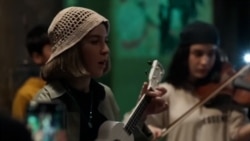

An unauthorized Iranian film released for free on YouTube is stirring debate by openly challenging restrictions on women singing and Iran’s compulsory hijab rules. Bidad, or Outcry, directed by Soheil Beiraghi, was made without government approval and features the voice of Parastoo Ahmadi, a singer who was sentenced to 74 lashes after performing publicly without a head scarf. Parisa Sohbati from RFE/RL's Negah-e-Farda (Iran Tomorrow) program explains.
Friends Of Arrested Designers In Iran Demand Full Disclosure Of Charges
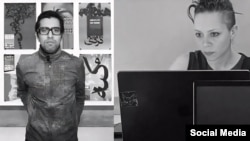
Almost a month after two prominent Iranian graphic designers were detained by security forces, friends and associates of the pair have issued a statement demanding public disclosure of the charges against them and immediate access to independent legal counsel.
Aria Kasaei, 46, a well-known graphic designer and founder of the Kargah design studio, and Elaheh "Elly" Naghilou, a 36-year-old graphic designer and colleague of Kasaei, were detained after a meeting with people linked to the French Embassy in Tehran on July 19.
The day after the arrests, French Foreign Minister Jean-Noel Barrot publicly revealed that two French Embassy officials had been subjected to an "extremely serious act of intimidation" by Iranian security services during the incident.
According to Barrot, the diplomats were detained and interrogated for hours, with one subjected to physical abuse before both were safely repatriated to France. There was no mention of the Iranian artists in his statement.
Hambood Collective, an independent guild of artists and activists, reported that security forces arrested the Iranian pair at the same time.
Judicial and security officials have provided no formal explanation for the arrests, the charges, or where the two are being held.
In a statement provided to RFE/RL's Radio Farda, friends of the pair vowed "not to allow the silence imposed on them to be the only narrative of this story."
"Given that two French representatives witnessed part of this event, we call on French authorities to clarify all aspects of this illegal arrest, obtain accurate information about the status of Aria and Elly, and take serious action to guarantee their rights, safety, and freedom," the statement reads.
The statement also accused the Intelligence Ministry of publishing a "false narrative regarding the arrest and the nature of their activity, aimed at incriminating them without giving them an opportunity to respond."
The accusation refers to an August 15 statement by the ministry alleging that the French government was orchestrating a "foreign infiltration and interference" project in Iran. While the ministry warned that French diplomats involved in "illegal interventionist behavior" would face direct confrontation, it omitted any explicit mention of the two artists' detention.
According to the statement, the arrests took place on July 19 during a professional meeting at Kasaei's home in Tehran.
The meeting, which the statement said had been requested by the cultural section of the French Embassy in Iran, was attended by the French cultural attache and another staff member to discuss the Villa Zadig initiative, described in its official Instagram profile as an artistic cultural space intended to foster dialogue between traditional Iranian crafts and French art, language, and education.
Iranian authorities routinely treat contact with Western diplomats and foreign media as a national security threat, frequently imprisoning citizens on allegations of espionage or state subversion for participating in foreign-backed cultural or civic programs.
On August 17, Iran’s hard-line-dominated parliament approved the framework of a bill that criminalizes interactions with "hostile" foreign media and other institutions with ties abroad.
- By RFE/RL
Jailed Iranian Activist Tajzadeh Calls For Immediate End To Executions
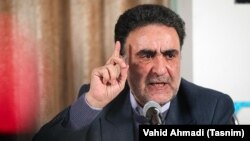
Prominent imprisoned political activist Mostafa Tajzadeh has issued a statement from inside Iran's notorious Evin Prison calling on Iranian authorities to "immediately end the execution of young people," warning that the accelerated pace of hangings risks pushing the country toward internal conflict.
The statement, dated August 3 and published on his Telegram account, comes amid a sharp escalation in executions since the war between Iran, the United States, and Israel began on February 28.
Tajzadeh, a former deputy interior minister who has spent years in and out of Iranian prisons for criticizing the Islamic republic and its leadership, argued that authorities are sending "mostly young people" to the gallows "hastily and faster than normal procedure," based on rulings from courts he said suffer from "serious flaws and ambiguities" and lack transparency.
He drew a direct line between the crackdown that followed nationwide protests in January and the current wave of executions, warning that the state risks repeating the same mistakes that fueled that unrest.
"The people are still mourning the blood unjustly shed" during the January protests, he said, calling for an independent, national fact-finding committee to investigate the events of January 8 and 9 -- the deadliest days of the upheaval -- and for detainees to be given access to independent lawyers, public trials, and a genuine right to defense.
Rights groups have documented more than 6,000 deaths during the crackdown, but many say the real toll is much higher. Some estimates put the figure in the tens of thousands.
Tajzadeh, who has previously called for national reconciliation, said his opposition to capital punishment was not a denial of the underlying crimes or a dismissal of victims' suffering, but that "restorative justice" needed to balance the rights of defendants against those of victims and the country's broader interests.
Executions, he argued, "cure none of Iran's pain," build no lasting legitimacy, and instead deepen the divide between the state and the public.
Some rights groups say more than 50 people hit with security and political charges have been executed since the beginning of the war, though others put the number much higher.
According to the latest verified data, 448 people have been executed in Iran so far this year, many of whom were sentenced to death in connection with the January protests where thousands were killed by security forces and tens of thousands more detained.
Tajzadeh closed his statement by calling on "all who care for this land, across every political and ideological persuasion," to declare their opposition to executions through legal and civic means and to find a way to halt them.
Iran Hangs 2 It Claims 'Spied' For Israel As Execution Surge Continues
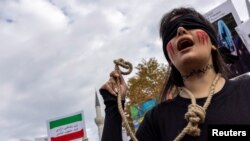
Iran has hanged two men it accused of spying for Israel as the Islamic republic’s execution spree -- often based on vague national security charges -- since the start of the war with the United States and Israel shows few signs of slowing down.
The judiciary-run Mizan news agency said Omid Behzad and Puria Safvat were executed in the early hours of August 3.
The news agency claimed that the two men had "provided significant assistance" to Israel’s intelligence service, Mossad, in achieving its objectives during the June 2025 conflict -- which Iran dubs the 12-Day War -- and the ongoing conflict that started on February 28, by "sending coordinates, images, and information on military and security facilities to Mossad officers and communication channels affiliated with the spy agency."
Iran's judiciary claims that the intelligence organization of the Islamic Revolutionary Guards Corps (IRGC) identified the two men by "monitoring the behavior" of foreign-based media outlets, certain news channels, and the pattern of videos they had sent.
The Islamic republic's judiciary alleges that "technical examinations" of Behzad's mobile phone revealed this activity, and that he confessed to it "during the investigation." It remains unclear, however, under what conditions the prisoner may have been compelled to confess. Rights group have long accused Iranian authorities of extracting forced confessions.
Mizan alleged that Behzad had “explicitly confessed” to using “location-finding apps like Google Maps” to find and mark coordinates of various sites.
The report also accuses Safvat of "direct cooperation with Mossad," without providing any evidence.
Since the start of the war with the United States and Israel on February 28, Iran has witnessed a surge in executions of people human rights groups consider political prisoners -- from demonstrators to alleged members of banned groups and those convicted of spying.
Some rights groups say more than 50 people hit with security and political charges have been executed since the beginning of the war, though others put the number much higher.
Broadly speaking, the charges Iran has used for executions since the beginning of the war include spying for hostile states, cooperation with Israel and the United States, Moharebeh (enmity against God), and armed rebellion through membership of the exiled opposition Mojahedin-e Khalq Organization.
In a statement on July 27, UN experts accused the Islamic republic of trying to “instill fear across society, deter future demonstrations, and silence dissent” through executions. “Yet repression only breeds further dissent.”
According to the latest verified data, 448 people have been executed in Iran so far this year, many of whom were sentenced to death in connection with the January protests where thousands were killed by security forces and tens of thousands more detained.
Rights groups and international observers have raised concerns over the fairness of the proceedings, including allegations of coerced confessions and limited access to due process.
- By RFE/RL
Iran Executes 19-Year-Old Arrested During January Protests, Rights Group Says
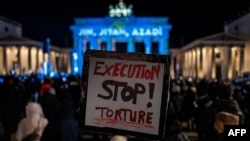
Iranian authorities have executed a 19-year-old man who was arrested during nationwide protests that began in late December and spread across the country in January, according to a US-based rights group.
Arvin Kheirkhahan was executed at about 4 a.m. on August 1 at Shahrud Prison in Iran's Semnan Province, the Human Rights Activists News Agency (HRANA) reported, citing a source close to his family.
Kheirkhahan had been sentenced to death by Branch 1 of the Shahrud Revolutionary Court on a charge of "enmity against God," according to HRANA. The sentence was upheld during the appeals process and by Iran’s Supreme Court, the group said.
Kheirkhahan was transferred to solitary confinement on July 29 ahead of his execution, according to Iran International.
His family gathered outside the prison on July 31 in an attempt to prevent the sentence from being carried out.
In a final conversation with his family, Kheirkhahan reportedly said: "Don't let them forget me. We stood up for the liberation of our homeland. Don't let the path we chose be silenced."
Don't let them forget me. We stood up for the liberation of our homeland.Arvin Kheirkhahan's final words to his family
HRANA said prison officials had not handed Kheirkhahan's body over to his relatives. His family was reportedly told to collect the body at 3 a.m. on August 2 and hold a burial ceremony at 5 a.m.
Kheirkhahan was 19 years old when he was executed, according to HRANA.
The group said there was no detailed information available about the circumstances of his arrest, the alleged acts cited as the basis for the charges, his interrogation, whether he had access to a lawyer of his own choosing, or the evidence used by the court to issue the death sentence.
Iran's judiciary has not officially commented on the reports of the execution.
Outcry Over Wave Of Executions
Kheirkhahan's execution comes amid a wider campaign of capital punishment against people arrested in connection with the protests, which began with demonstrations by shopkeepers and bazaar merchants in Tehran on December 28 and quickly spread to other parts of the country.
Students and other groups joined the protests, which became one of the largest challenges to Iran's clerical establishment in recent years.
Iranian authorities responded with a sweeping crackdown. The precise death toll from the unrest remains disputed, while rights groups have reported thousands of arrests.
The UN-backed Independent International Fact-Finding Mission on Iran said on July 23 that Iranian authorities had carried out multiple executions in cases linked to the protests.
It said the judiciary had reported that 23 men had already been executed in relation to the protests since March. The mission also said that more than 60 people had been sentenced to death since December, based on credible reports.
The UN statement followed the July 19 executions of Erfan Esfandiari, reportedly 18 years old, and Gol Mohammad Mohammadi, a 23-year-old Afghan national, in a case involving protests in Isfahan.
The mission urged Iran to halt the executions of 10 others sentenced to death in the same case, saying the cases appeared to have been fast-tracked.
Amnesty International said on July 28 that at least 26 people have been "arbitrarily executed" for "offences in connection with the January 2026 protests, following torture-tainted grossly unfair trials by Revolutionary Courts.
"The Iranian authorities are unleashing a horrifying wave of executions and death sentences to punish and suppress dissent and project an image of strength and absolute control in the wake of the January popular uprising and amid ongoing attacks by US and Israeli forces," said Heba Morayef, regional director for the Middle East and North Africa at Amnesty International.
"Given that thousands were arrested in the context of the January 2026 protests and relatives often refrain from publicly reporting death sentences fearing reprisals, Amnesty International believes that many more protesters may be at risk of the death penalty," Amnesty said in its statement.
More than 430 people, including at least 12 women have been executed in Iran so far in 2026.
Prison Hunger Strike Ends After Iran Agrees To Temporary Halt In Drug Executions
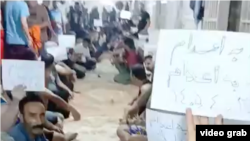
A hunger strike by hundreds of death-row prisoners at Ghezel Hesar Prison has ended after Iranian authorities met with the striking inmates and promised a temporary halt to drug-related executions at the facility, according to the Iran Human Rights organization (IHRNGO).
IHRNGO announced on July 29 that six prisoners sentenced to death in drug-related cases were transferred back from solitary confinement to the prison's general wards following the meeting. The authorities also pledged to suspend executions related to drug offenses at Ghezel Hesar for the time being.
The hunger strike began on July 12 after six death-row prisoners were transferred to solitary confinement in Unit 2 of Ghezel Hesar Prison, a section that houses around 1,500 prisoners sentenced to death in drug-related cases. The protest became a rare instance of collective action by prisoners facing execution and drew attention from rights groups and international observers.
IHRNGO Director Mahmood Amiry-Moghaddam welcomed the temporary halt, saying it demonstrated that authorities were capable of stopping executions when the political cost of carrying them out increased.
"The halt to executions related to drug crimes in this prison, even if temporary, shows that the government can stop carrying out these executions whenever the political cost of these executions increases," he said.
However, Amiry-Moghaddam warned that the decision did not resolve the broader issue of executions in Iran. He said hundreds of other prisoners sentenced to death for drug-related offenses remained at imminent risk in other prisons and called for the measure to be extended nationwide as a first step toward ending executions for drug-related crimes.
Mai Sato, the UN special rapporteur on Iran, also welcomed the development, describing the outcome of the strike as "encouraging."
Writing on X, she said prisoners under government control had "spoken truth to power" and that their voices had been heard both inside Iran and abroad.
Sato called on Iranian judicial authorities to extend the Ghezel Hesar measure across the country, arguing that if officials were serious about reducing drug-related executions, the temporary suspension should become a nationwide policy until the punishment is abolished.
"An amendment to Iran’s Narcotics Law, which could reduce the number executed for drug offences -- estimated at around half of all executions carried out in Iran -- has been in the pipeline since last year and remains on the State's agenda," she wrote.
"If there is genuine will among the authorities to reduce drug-related executions, pending abolition, there is no reason this development in [Ghezel Hesar] prison cannot be extended nationwide."
IHRNGO said, citing an informed source, that the suspension of executions at Ghezel Hesar was initially planned to last only three months.
Iran's Surge In Executions
The decision comes amid growing concern over Iran's use of the death penalty. Drug-related executions make up the largest share of annual executions in the country.
IHRNGO recorded 795 drug-related executions in 2025, a 58 percent increase compared with 503 in 2024. Since the beginning of 2026, at least 136 people have reportedly been executed for drug-related offenses.
According to the latest data, 433 people in total have been executed in Iran this year, including many for their participation in the mass protests that swept the country in January.
The end of the Ghezel Hesar hunger strike also coincided with a wave of public outcry over the executions of two protesters in Isfahan.
On July 28, the death sentences of Abolfazl Sepahi Badjani and Amir Hossein Safari Hosseinabadi were carried out in connection with the January protests in the city of Isfahan.
Following the executions, videos and messages circulated on social media showing people gathering at night to protest the killings.
Political activists, prisoners, and cultural figures inside Iran condemned the executions and accused authorities of using capital punishment to increase fear and suppress dissent.
Three political prisoners held at Tehran's notorious Evin Prison -- Abolfazl Ghadiani, Reza Valizadeh, and Mohammad Najafi -- issued a statement saying the government was attempting to restore its authority through increased executions and repression.
The hunger strike's conclusion brought a temporary reprieve for prisoners at Ghezel Hesar, but rights advocates emphasized that the broader system of capital punishment in Iran remains unchanged.
They maintain the strike’s significance lies not only in the immediate suspension of executions at one prison but also in demonstrating the ability of prisoners' collective action to draw domestic and international attention to Iran's death penalty practices.
- By RFE/RL's Radio Farda and
- Will Tizard
Iranian Demonstrators Protest State Executions In Isfahan
Videos posted on social media appeared to show crowds of protesters gathering in the Iranian city of Isfahan on July 28 to demonstrate as state executions of two men took place. With more executions feared, the videos show groups of people chanting "Without honor!" amid a heavy security presence. Iran has been ramping up the numbers of death sentences carried out.
An Iranian Colonel Was Killed In January Protests. Now 16 People Face The Death Penalty.
On the night of January 8, a colonel in Iran’s Islamic Revolutionary Guards Corps (IRGC) was killed in the central city of Isfahan as mass anti-government protests raged across the country.
Months later, 16 people have been charged with moharebeh, or “enmity against God,” and could be hanged over the death of Colonel Abbas Kamrani and the violent demonstrations that night in Isfahan.
The case comes as Iran has witnessed a surge in executions of what human rights groups consider political prisoners -- from demonstrators to alleged members of banned groups and those convicted of spying -- since the start of the war with the United States and Israel on February 28.
Activists say the rise in executions is an attempt by the authorities to create fear among Iranians and prevent a repeat of the nationwide demonstrations that rattled the country’s clerical rulers earlier this year.
Rights organizations have condemned the trials of those executed, saying many of them were marked by torture, forced confessions, and the absence of due process.
The January protests posed the most serious threat to the authorities since the Islamic Revolution in 1979. Thousands of people were killed in an unprecedented state crackdown. Dozens have been executed for their alleged involvement in the demonstrations, and scores more are awaiting execution, according to rights groups.
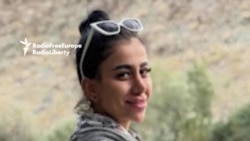
Shahada Square Case
One of the most closely watched cases related to the nationwide protests is the trial of 16 defendants in Isfahan.
Charged with moharebeh, aiding and abetting moharebeh, destruction of public property amounting to moharebeh, assembly and collusion, and propaganda against the Islamic republic, they are awaiting their verdict.
Sources in Iran told RFE/RL’s Radio Farda that the authorities used torture to extract confessions from the defendants, and there are concerns that they might face the death penalty.
Although prosecutors allege the defendants were responsible for the deaths of Kamrani and another man described as homeless, they have not been charged with murder. Instead, they face charges of moharebeh for allegedly making Molotov cocktails in a shoe store near Shahada Square in Isfahan.
The case is also being heard by a revolutionary, not criminal, court. Revolutionary courts mainly deal with prominent political cases and are seen to be less regulated and more hard-line in their judgments than ordinary courts.
The accused include Milad Boueiri, the 29-year-old owner of the shoe store. The others are employees of the shoe store or nearby retail shops and their relatives. Many of the defendants are under the age of 23, including 20-year-old twins Taraneh and Romina Rahimi.
Allegations Of Torture And Forced Confessions
According to Radio Farda's sources, prosecutors presented no independent evidence linking the defendants to the deaths. Instead, the prosecution relied primarily on the defendants’ confessions.
During court hearings, the defendants testified that their confessions were extracted through torture, including severe beatings, electric shocks, and the threat of rape.
“In light of the absence of any specific murder charges in the indictment, and the available information indicating that no evidence was presented linking the defendants to the deaths of these two individuals, attributing legal responsibility for those deaths to the defendants would be without legal basis,” US-based rights group HRANA said in a July 21 statement.
Held in solitary confinement in the Dastgerd and Dovlatabad prisons in Isfahan, the 16 defendants have legal representation, but their lawyers were denied access to case files. Sources told Radio Farda that two of the defense lawyers made statements against their own clients during the trial.
“The Isfahan Shahada Square case is a clear example of the instrumentalization of the judiciary to suppress civil protests and instill fear in society,” Iran Human Rights Monitor, a foreign-based group that documents human rights abuses, said in a statement on July 23.

“Holding in-camera trials within prison facilities, denying defense attorneys access to case documentation, ignoring brutal torture (including the use of tasers) to extract confessions, and bringing severe charges such as ‘moharebeh’ without supporting evidence demonstrate a flagrant violation” of the Universal Declaration of Human Rights regarding the right to a fair trial, it added.
The case is being overseen by judges Morteza Barati and Mohammad Reza Tavakoli, who is notorious for harsh sentencing and caused a global uproar with a 2024 death sentence against a popular rap artist.
Tavakoli recently sentenced 12 men to death for their alleged role in killing special forces officers during protests in Isfahan on January 8.
Barati presided over a case connected to nationwide protests that rocked Iran in 2022. He sentenced the three defendants in that case to death, and all were subsequently executed.
- By RFE/RL
US State Department Calls For Halt To Executions Of Protesters In Iran
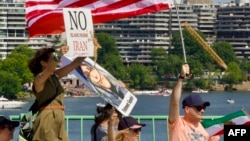
The US State Department sharply criticized the execution of Iranians by authorities and called for Tehran to release political prisoners amid signs it has ramped up its use of the death penalty in recent months to sow fear and quell dissent.
Iran is one of the world's leading executioners, according to human rights groups, who say Tehran is using the cover of the current war with the United States to justify increased usage of capital punishment and spread fear among Iranians.
According to the latest data, 424 people have been put to death so far in Iran in 2026.
In a post on July 26, Riley Barnes, US assistant secretary of state for democracy, human rights, and labor, called for a halt to the execution of individuals "for peacefully exercising human rights and fundamental freedoms."
"We condemn the Iranian regime's action in executing its own citizens, brave young Iranians who dared to speak out," Barnes wrote on X.
"We join the people of Iran in calling on the regime to release all political prisoners and stop executing individuals for peacefully exercising human rights and fundamental freedoms. The world is watching," he added.
The latest execution to date was that of 26-year-old law graduate Mehdi Khaneki, whom the Iranian judiciary hanged on July 22 for alleged weapons offenses and actions that "benefited" Israel, the United States, and "hostile groups."
The Paris-based National Council of Resistance of Iran, the political arm of Mojahedin-e Khalq (MEK), disputed the charges, saying Khaneki was hanged because of his membership in the group and participating in protests in the city of Karaj.
US officials, including US President Donald Trump, have repeatedly condemned Iran for executing protesters.
After Iran's judiciary announced on July 19 that two men had been executed over their alleged involvement in violence linked to antigovernment protests that began in December and intensified in January amid widespread economic discontent, Trump called Iran leaders "savages."
Trump reposted several messages on his Truth Social platform about the executions of Erfan Esfandiari and Gol Mohammad Mohammadi, including one where he reposted a message about Mohammadi's execution while adding: "The latest one of 52,000, plus, innocent protesters. Savages!!!"
Trump's claim that 52,000 protesters were killed by authorities in the uprising early this year, has not been independently verified.
According to human rights groups, at least 7,000 people were killed during the nationwide protests, although the real death toll is believed to be significantly higher.
Most of the killings occurred from January 8 to 10, the peak of the crackdown. Tens of thousands of others were arrested nationwide.
Esfandiari and Mohammadi were convicted for allegedly being connected to the killing of four police officers in Isfahan during the January protests.
Rights groups say the charges were fabricated and that their trials were held without access to independent legal counsel.
Politically Motivated Executions
Amnesty International said Iranian authorities have sharply escalated politically motivated executions since the US and Israeli attacks on Iran began in late February, including the execution of people arrested in connection with the January protests and individuals accused of spying for Israel.
“The international community's failure to pursue justice is emboldening the Iranian authorities to continue committing atrocity crimes,” Amnesty Secretary-General Agnes Callamard said on July 8, the six-month anniversary of the deadliest day of the crackdown on protesters.
The Norway-based Iran Human Rights Group (IHRNGO) has warned that authorities could use the broader conflict to accelerate executions of political prisoners.
"With the breakdown of the cease-fire and the resumption of the war, we are deeply concerned that the authorities will exploit the situation to intensify the execution of political prisoners," IHRNGO Director Mahmood Amiry-Moghaddam said in a statement on July 16 following the execution of Mohammad Amini Dehaghani, another protester.
"Hundreds of political prisoners and protesters are currently facing capital charges, and we estimate that around 100 have already been sentenced to death."
Watchdogs have urged action to prevent the execution of 10 men currently sentenced to death over the January protests in Isfahan.
In a statement on July 23, the Independent International Fact-Finding Mission on the Islamic Republic of Iran "urged Iranian authorities to immediately halt the executions of 10 young men sentenced to death after taking part in a protest in Isfahan earlier this year," adding that the UN body "strongly condemned the execution on 19 July of two other men in the same case."
"The Mission is gravely concerned by Iranian authorities fast-tracking capital punishment cases that are related to the protests and national security issues," it said.
The scale of the repression, which began with security forces killing thousands of protesters in January, has drawn widespread condemnation, including through a hunger strike by hundreds of death row prisoners at the Ghezel Hesar prison where Khaneki was executed.
The protest, which began on July 12, spread outside the prison, with over 500 family members demonstrating in solidarity, facing violent crackdowns from security forces, while inmates endure severe health deterioration and communication blackouts.
Amnesty International reported in May that Iran carried out at least 2,159 executions in 2025, describing the figure as unprecedented and the highest annual total recorded since 1981.