




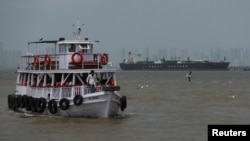
When an Indian tanker carrying liquefied petroleum gas (LPG) passed through the Strait of Hormuz recently, its progress was followed by excited live TV news coverage.
“Its position was received eight minutes ago. It’s currently at 12.5 knots and is moving at 154 degrees. It’s reported ETA in India is at 9.30 p.m. tomorrow,” reported one journalist, providing running commentary while following a tracker app.
Later, videos showed the ship with a military escort from the Indian Navy in the Gulf of Oman.
The attention was not unwarranted. The war in Iran, and Tehran’s decision to largely close the Strait of Hormuz, have not only stopped supplies of crude oil and liquefied natural gas (LNG). Shipments of a whole range of other vital commodities have also almost completely ground to a halt.
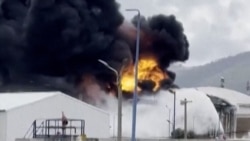
Even if the war ends, markets may not return to normal quickly. Iranian attacks have caused untold damage to industrial infrastructure in the region. Iran is also insisting that it has a “sovereign right” over the strait, though Washington says reopening the waterway is a condition for a cease-fire.
LPG
LPG is the refined product most affected by the Hormuz blockade, according to the latest monthly report by the International Energy Agency (IEA). It’s a mix of propane, butane, and other gases used in heating appliances, cooking devices, automobile fuel, and refrigerators.
A shortage of the product in India has made international headlines, forcing people to cook on alternatives, including coal, firewood, and cow dung. India gets about 90 percent of its LPG imports from the Middle East, and the shortages have affected hundreds of millions of people.
But the damage goes beyond India.
“China was the second largest importer of LPG via the Strait of Hormuz in 2025, second only to India, as it looked to diversify supply sources away from the US in light of trade tensions between the pair last year,” Peter Wilton, an analyst at Argus, a commodity market intelligence company, told RFE/RL.

Wilton noted that domestic LPG prices in China were at a 12-year high as of April 1. China gets much of its LPG from Iran, for both household consumption and its petrochemical industry. It is “vulnerable” to the global LPG crunch according to Argus analysis.
Aside from the United States and Persian Gulf countries, other exporters include Canada, Argentina, and Russia -- which has diverted sales to Central Asian countries following European Union sanctions imposed on it due to Moscow’s full-scale invasion of Ukraine.
Fertilizer
While some wrestle with the shortage of cooking fuel, there may also be a lack of food to heat up.
The Persian Gulf region is also a major supplier of fertilizers, and the UN World Food Program is sounding the alarm.
“Countries that rely heavily on imported food, fuel, and fertilizers are especially exposed to global price shocks. In parts of sub-Saharan Africa, farmers entering planting season risk being unable to treat their crops, resulting in lower yields and higher food prices in the months ahead,” it said in a March 19 report.
“Even small increases in costs can push vulnerable families into crisis,” it added, warning of “record levels of hunger.”
The UN says some 30 percent of global fertilizer trade passes through the Strait of Hormuz.
Data from Windward, a maritime intelligence company, reinforced the concern. It noted that 86 percent of ships carrying fertilizers from the Persian Gulf to East Africa had ceased operations.
An analysis by ING said “surging fertilizer prices” would lead to reduced global wheat and corn production.
“Although most Northern Hemisphere producers remain adequately supplied ahead of spring planting, a prolonged crisis could influence planting decisions later in the year. Fertilizer-dependent regions in Asia and Africa are particularly vulnerable,” it added.
Critically, 50 percent of all global sulfur shipments also pass through the Strait of Hormuz. As a byproduct of oil and gas processing, sulfur is an essential ingredient in phosphate fertilizer production.
Another key ingredient is potash. Russia is the world’s second-largest producer of the product, claiming one-fifth of global exports and is looking to exploit the market opportunity presented by the Strait of Hormuz closure.
Belarus is the third-largest producer, and Washington has just lifted sanctions on its potash. But this is not expected to impact global markets.
Aluminum
Iranian attacks on massive aluminum smelters in the United Arab Emirates (UAE) and Bahrain have added to global supply headaches already caused by the Hormuz blockade.
The extent of the damage is not clear, but it raises the prospect of ongoing supply risks even if shipping through the strait returns to prewar levels.
“Any prolonged outage would further tighten an already constrained market, where restarting smelters is costly, complex, and time-consuming,” an ING analysis noted on March 31.
Aluminum is a vital commodity used in cars and packaging. The United States imports more than a fifth of its aluminum from the Persian Gulf. The Gulf countries account for nearly 10 percent of global supply.
“I would not say that loss can be easily absorbed at all. What you have to take into account is that more than half of global production is in China and all of that material is consumed in China. By contrast over 80 percent of Gulf aluminum is exported, so it is a hugely critical supplier,” Ronan Murphy, editor of Argus Non-Ferrous Markets, told RFE/RL.
Aluminum prices have risen by about 11 percent since US and Israeli air strikes on Iran began on February 28, he added, "to the highest level since March 2022, immediately after the Ukraine war broke out."

Helium
Roughly a third of the world’s helium supply comes from Qatar and is vital as a coolant for products such as semiconductors and MRI scanners.
While prices may have risen, key Asian producers have so far said they have enough stocks for the near term. South Korean Energy Minister Kim Jung-Kwan said on March 31 that disruptions in supplies were not expected for the next two months. Taiwan has made a similar statement.
But the issue with Helium may be long term. Damage from an Iranian attack on Qatar’s LNG facilities, which are also used for helium production, could take up to five years to fully repair, according to the Qatari authorities.
Other helium producers include the United States, the world’s biggest, plus Algeria and Russia, whose exports have been hit by US and EU sanctions.
These are some but not all of the items shipped from the Persian Gulf to markets around the world. Others include naphta, a refined petroleum product used in the petrochemical industry, jet fuels, and iron ore pellet supply.

