


Araqchi: Khamenei’s Death Will Neither Be Forgiven Nor Forgotten
Vowing to avenge Ayatollah Ali Khamemei’s death, Iranian Foreign Minister Abbas Araqchi says Iran would neither “forgive nor forget the assassination.”
Araqchi told a conference in Tehran that Khamenei’s death had opened a new phase of resistance for the country, Iran’s official IRNA news agency reported on August 29.
Iran’s then-supreme leader was killed in US-Israeli strikes on the first day of the war with Iran on February 28.
He was succeeded by his son, Mojtaba Khamenei, who is also believed to have been wounded in the strikes and has not appeared in public since assuming the top position.
The movement to avenge the death of the elder Khamenei would continue, IRNA quoted the Iranian foreign minister as telling the guests at the 40th International Islamic Unity Conference in Tehran.
Araqchi said Iran’s political system remained intact despite attempts to undermine the country’s social cohesion and force it into submission.
Defending Iran’s missile and drone strikes on neighboring states since the start of the conflict, Araqchi said US bases in the region could not guarantee their security. He said Iran had targeted US positions as an act of legitimate self-defense.
Iranian Authorities Stress 'Defense And Diplomacy' Amid Rising Discontent Over Inflation
Amid reports of fuel shortages and rising prices of food and beverages, Iranian authorities say they are pursuing both diplomacy and defense simultaneously to overcome the situation.
In a statement on August 28 carried by state media, the Iranian government termed the fresh tougher sanctions by the United States as US-Israeli “conspiracies.”
The statement said diplomacy and defense are “complementary, coordinated, and inseparable” tools for protecting the country’s national interests, security, and territorial integrity.
To curb inflation and create jobs, the statement said, the regime would pursue both tracks of diplomacy and defense and would work to gradually reduce dependence on the dollar.
The statement comes hot on the heels of reports about increasing discontent among the people about fuel shortages and increasing prices of daily commodities.
On August 27, the intelligence wing of Iran's Islamic Revolutionary Guards Corps (IRGC) issued a statement warning of growing social discontent and the possibility of renewed street protests in Iran.
Protests in January, sparked by the falling value of the Iranian currency and soaring food prices, shook the regime, which responded with a tough security crackdown, shooting and jailing thousands.
Quoting Iran’s Statistical Center, state media reported on August 28 that average price of food and beverages rose more than 127 percent compared with August 2025.
Reports suggest the high food prices and shortage of fuel, caused by tougher US sanctions and Iranian economic mismanagement, is causing discontent among people.
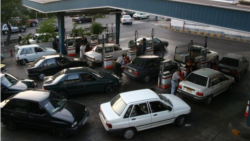
On August 28, Iran International posted a video on X showing hundreds of cars lined up on a roadside in what the television described as motorists waiting to receive their 15-liter gasoline allocation. RFERL cannot independently verify authenticity of the video.
Earlier, office of Iran’s Supreme Leader Mojtaba Khamenei released a statement banning any “expression of weakness” that would “harm social cohesion” and be a “great help to the enemy.”
The statement was attributed to the reclusive Khamenei, who has not appeared in public since assuming the position of the supreme leader following the death of his father, Ayatollah Ali Khamenei, on the first day of the US-Israeli war on February 28.
In recent weeks, Iranian government figures have been speaking more openly about economic and "societal" hardships related to the war and US blockades.
In New Statement Attributed To Iranian Supreme Leader, 'Expressions Of Weakness' Banned
A written statement attributed to Iranian Supreme Leader Mojtaba Khamenei has banned any “expressions of weakness” that would "harm social cohesion" and be a "great help to the enemy."
The statement, released on August 28 by Khamenei's office, also urged government officials to tackle the economic hardships being suffered by citizens since the start of the US-Israeli war with Iran and amid a US blockade of the country's ports.
"Every self-sacrificing person....should not turn differences into conflict and division, whether these divisions are unjustified or even justified, but rather, by avoiding empty political disputes and the magnification of social differences, they should embody in word and deed the cohesion and unity of the nation," the statement read.
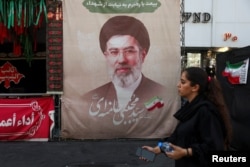
Khamenei has not made any public appearances since assuming the supreme leader position following the death of his father and predecessor, Ayatollah Ali Khamenei, who was killed in air strikes along with other family members on the first day of the US-Israeli war on February 28.
There have been no audio or video comments from him released during that period, raising questions about his physical condition, with many reports saying he was badly disfigured in those initial air strikes.
On August 27, Trump said he believed Khamenei was still alive but “very seriously wounded.” When discussing reports that he might be dead, Trump said: “If he is, they’re putting on a pretty good show.”
In recent weeks, Iranian government figures have been speaking more openly about economic and "societal" hardships related to the war and US blockades.
Iranian media, citing the Statistical Center of Iran, on August 28 reported that the country's headline inflation rate reached 89 percent in August, while the average price of food and beverages rose more than 127 percent compared with August 2025.
Meanwhile, the intelligence wing of Iran's Islamic Revolutionary Guards Corps (IRGC) issued a statement on August 27 warning of growing social discontent and the possibility of renewed street protests in Iran.
As Iran Threatens Radio Farda And Other Media, US Points To Tehran's Record Of Targeting Journalists
WASHINGTON -- The United States said it was aware of threats by Iran's armed forces to put Persian-language media outlets including RFE/RL's Radio Farda on a list of potential military targets, and pointed to what it said was Tehran's record of harassment and attempted attacks against journalists and dissidents abroad.
In an August 28 response to a query from RFE/RL, a State Department spokesperson said, "We are aware of these reports."
"The Iranian regime has repeatedly harassed and attempted to kidnap and kill journalists and Iranian dissidents worldwide simply for exercising their freedoms. This is longstanding, despicable behavior from a regime that has propagated terror globally for decades," the spokesperson said.
In a televised interview earlier this week, Iranian armed forces spokesman Brigadier General Abolfazl Shekarchi named Radio Farda, Iran International, BBC Persian, and Manoto, and said their employees could be included in Iran's "bank of military targets." He called them "soldiers of Zionism and criminal America" and claimed, without providing evidence, that the outlets were connected variously to the CIA, Mossad, and other foreign intelligence services.
To read the full report, click here.
Iranian Prices Of Food, Beverages More Than Doubled In A Year
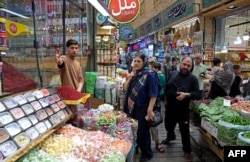
Iranian media reported on August 28, citing the Statistical Center of Iran, that the country's headline inflation rate reached 89 percent in August, while the average price of food and beverages rose more than 127 percent compared with August 2025.
A headline inflation rate of 89 percent means Iranian households spent on average 89 percent more this August than a year ago to purchase the same selection of goods and services.
According to the published data, the highest year-on-year inflation rate was recorded in the tobacco category, where prices increased nearly 161 percent.
Food and beverages ranked second, with prices rising 127.5 percent over the same period. According to the Statistical Center of Iran, prices in the hotels and restaurants category were more than 107 percent higher, while transportation costs were up nearly 105 percent.
The center also reported that the average consumer inflation rate over the 12 months ending in August stood at 69.9 percent, compared with the corresponding 12-month period a year earlier.
Meanwhile, the monthly inflation rate for August was reported at 3.4 percent.
On August 14, Iranian President Masud Pezeshkian, responding to criticism over the sharp rise in prices and its impact on citizens' livelihoods, described the situation as "natural" and said the economic blockade and US oil sanctions were among the contributing factors.
US Targets UAE Bank Over Billions In Suspected Iran-Linked Transactions
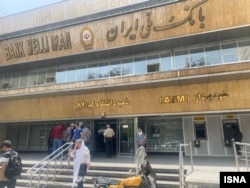
WASHINGTON -- The United States on August 28 moved to further restrict Iran's access to the global financial system, targeting a bank in the United Arab Emirates (UAE) over alleged ties to Iranian shadow banking networks and sanctioning a Bank Melli executive and a Hong Kong-based company.
The Treasury Department's Financial Crimes Enforcement Network (FinCEN) proposed barring US financial institutions from maintaining correspondent accounts for Banque Misr UAE, which Washington described as a key channel for Iran's access to US dollars.
The Treasury said the bank processed about $1.8 billion between January 2024 and June 2026 for 103 companies potentially linked to Iranian shadow banking networks. It said some customers were apparent front companies for Iran's Defense Ministry and the Islamic Revolutionary Guards Corps (IRGC) and alleged the bank's network was used to launder money and evade US sanctions.
Separately, the Treasury's Office of Foreign Assets Control sanctioned Reza Mohammad Taeedi, manager of Bank Melli's Dubai branch, accusing the bank of facilitating billions of dollars in transactions for the IRGC's Quds Force and helping fund Iran-aligned groups.
OFAC also sanctioned Hong Kong-based Kameng Trading Limited, which the Treasury said helped a sanctioned Iranian exchange house launder money and access the international financial system.
"Today's action intensifies our pressure campaign against Iran," State Department spokesman Tommy Pigott said, adding that Washington would target individuals and entities involved in illicit financial activity on behalf of Tehran.
Treasury Secretary Scott Bessent said the action against Banque Misr UAE was the "first step" in holding the bank accountable.
The measures are part of Operation Economic Outcast, launched by the Trump administration on August 24 to intensify pressure on Iran's financial networks and expand sanctions risks for institutions doing business with the Iranian regime.
Iran Urges Countries to Reject New US Sanctions
Iran's Foreign Ministry has called on countries around the world to refrain from implementing new US sanctions against Tehran, describing Washington's economic measures as illegal and condemning them as "state terrorism" and a "crime against humanity."
In a statement published on X on August 28, the ministry said that taking part in implementing US sanctions amounted to complicity in imposing the unlawful will of one state on independent countries and disrupting their legitimate economic and trade relations.
The ministry called on the international community to uphold the rule of law and said Iran would use all available means to defend itself against what it described as a combined US-Israeli military and economic assault.
The statement came days after US Treasury Secretary Scott Bessent announced Operation Economic Outcast, an expanded US campaign aimed at increasing economic pressure on Iran and its international financial and commercial connections.
Bessent announced the initiative on August 24, describing it as an unprecedented campaign against Iran and its enablers. The measures expand the potential use of secondary sanctions against countries and entities that continue doing business with Tehran, including in sectors such as digital assets, gold, technology, aviation, and shipping.
Iran-Linked Tanker Hijacked By Somali Pirates 'Not Registered In Eritrea'
An Eritrean official said on August 28 that a US-sanctioned oil tanker which was diverted by pirates from the coast of Yemen to Somalia last week was not registered in Eritrea, despite flying the country's flag.
Information Minister Yemane Gebremeskel said the oil tanker Sibu 1, which was sanctioned by the US Treasury Department last December on suspicion of being affiliated with Iran's "shadow fleet," has no connection to Eritrea.
The vessel is listed on ship-tracking websites as being Eritrean-flagged, but the UN International Maritime Organization database shows its current flag status as "Eritrea False," indicating its registration is not recognized.
According to ship-tracking data, the tanker was last seen on August 24, about 6 kilometers off the northeastern coast of Somalia.
With reporting by Reuters
IRGC Warns Against Possible New Protests In Iran
The intelligence wing of Iran's Islamic Revolutionary Guards Corps (IRGC) issued a statement on August 27 warning of growing social discontent and the possibility of renewed street protests in Iran.
It claimed that Iran's opponents, including the United States and Israel, were shifting toward exerting pressure from within after failing, in its view, to achieve regime change through military strikes.
The IRGC said its perceived adversaries were using tactics including the activation of crisis centers, psychological warfare, turmoil in monetary and financial markets, and anti-security operations. It also accused them of exploiting domestic weaknesses and shortages and encouraging public dissatisfaction to spread into the streets.
The statement said the IRGC was prioritizing efforts to confront actions it considered disruptive to public order, national solidarity, and cohesion. In recent days, concerns about possible renewed protests have grown amid a rising dollar exchange rate and gasoline shortages.
Iranians Say SIM Card Cutoffs Have Become A Tool To Punish Critics
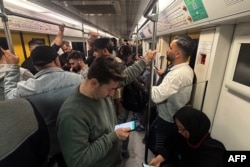
Cutting off SIM cards has emerged as one of the more effective tools available to Iranian authorities seeking to punish critics and civil society activists, with consequences that go well beyond losing mobile phone service.
Because access to banking, government, insurance, judicial, and even educational services in Iran is now tied to a verified mobile number and one-time SMS codes, cutting off a person's SIM effectively locks them out of a wide range of essential services and civil rights.
One woman, Donya Rad, said she recently discovered she could not renew her car insurance because a new mandatory rule requires registering one's address through a state housing portal -- a process that requires an SMS verification code she could not receive.
She wrote on X that SIM cutoffs have become so routine over the past two or three years that people talk about them the "way they complain about traffic or the weather." She described it as "a punishment that arrives before any legal charges are filed."
To read the full report, click here.