


6 Months Into The Iran War, These 4 Issues Could Shape What's Next
WASHINGTON -- Six months since US and Israeli air strikes against Iran launched a conflict that has shaken energy markets and disrupted global shipping, there is still no clear end to the confrontation. While Iran's military capabilities have suffered major damage, it retains leverage in the Strait of Hormuz.
Experts interviewed by RFE/RL from across Washington's policy spectrum see the next phase being shaped by four questions: how long Iran can withstand economic pressure, can diplomacy turn military gains into a durable settlement, what happens to Hormuz, and whether Russia and China help Tehran rebuild.
Retired Vice Admiral Robert Harward, a former deputy commander of US Central Command, describes the situation as a "steady state." But he argues that the clock is ticking for Tehran.
"Time is their biggest problem," HThis is how Washington is now presenting the conflict, with Treasury Secretary Scott Bessent announcing what he called an " economic onslaught" of measures to further isolate Iran on August 24. Bessent will press G20 finance ministers on this during meetings in Asheville, North Carolina, on August 31-September 1.
arward told RFE/RL, saying sustained economic pressure could eventually become an internal threat to the Iranian government.
Bread-and-butter issues sparked the mass demonstrations in December-January that were put only down with brutal force involving the killing of thousands of protesters.
To read the full report, click here.
Iran's Araqchi Says 'Creative Discussions' Held With Qatar's Prime Minister
Iranian Foreign Minister Abbas Araqchi said he held “creative discussions” with Qatar’s Prime Minister and Foreign Minister Sheikh Mohammed bin Abdulrahman Al Thani amid a stalled diplomatic process.
“Putting diplomacy back on track isn’t impossible,” Araqchi wrote on his X page on August 28, but added that diplomatic efforts “hinged on US understanding of one simple fact: pressure doesn’t work.”
He also said Tehran wanted Washington to “build trust, speak respectfully, acknowledge our rights, and uphold commitments.”
Araqchi’s comments come as negotiations between the United States and Iran have been effectively paused in recent months, with the two countries remaining far apart on key issues related to the conflict.
Just a day earlier, Iran again insisted that it would not allow inspectors from the UN’s atomic watchdog to visit nuclear facilities damaged in military attacks since the beginning of the war until new inspection procedures are established.
Strait Of Hormuz Traffic Falls Below Recent Average
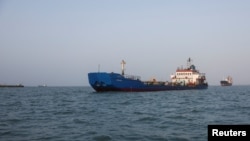
Only five commodity vessels transited the Strait of Hormuz on August 27, a figure three times below the recent daily average.
According to data published on August 28 by ship-tracking service Kpler, the five vessels that transited the waterway included two medium-range tankers and one very large gas carrier. Over the past 10 days, an average of 15 ships per day transited the strait.
The figures shown by monitoring sources could change, as some ships typically switch off their transponders during voyages.
The safe passage of ships through the Strait of Hormuz, which once accounted for one-fifth of global oil trade, has become one of the central issues in the Middle East since the start of the war between the United States and Iran.
The matter has also been a major obstacle to a negotiated settlement of the conflict, with Tehran and Washington remaining far apart over the terms of control of the strait.
With reporting by Reuters.
US Treasury To Press G20 Members To Cut Iran’s Illicit Revenue Flows
WASHINGTON -- US Treasury Secretary Scott Bessent will later this month press counterparts to sever financial and economic channels that Washington says help sustain Iran’s government and the Islamic Revolutionary Guards Corps (IRGC), US officials said.
Bessent will press the issue at the G20 finance ministers’ and central bank governors’ meeting in Asheville, North Carolina, on August 31-September 1.
That summit will follow a gathering of G20 finance and central bank deputies in Asheville on August 29-30.
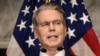
A Treasury official on August 27 told reporters on a call that Iran-related sanctions and illicit finance would be raised in every bilateral meeting Bessent holds with G20 counterparts.
The secretary will discuss Iran-related activity that the Treasury has identified in specific countries and make clear that Washington will be “uncompromising” in targeting sources of what it describes as illicit Iranian revenue.
The official said the US was seeking greater consistency among G20 members as part of its campaign against Iran, known as Operation Economic Outcast. Washington wants countries to comply with US sanctions and help disrupt what the official called Iran’s “financial criminal network.”
Asked about the message to Middle Eastern countries, including Saudi Arabia, the official said the US had held extensive discussions with countries across the region in recent days and had received what he described as receptive responses.
Treasury officials cited Bahrain, Japan, and Britain as countries that had issued statements supporting the administration’s position on Operation Economic Outcast. Washington, they said, would continue discussions within the G20 and beyond to build international solidarity against Iran’s illicit financial networks.
The official did not say whether the G20’s final communique would contain specific language endorsing the Iran campaign. Instead, they said the communique was expected to center on five themes: economic growth, public-private partnerships, global imbalances, sovereign debt, and financial literacy.
Pakistan Signs Defense Pact With Kuwait, Hiking Involvement In Middle East
Pakistan increased its security involvement in the tense Middle East, signing a defense cooperation protocol with Kuwait to "significantly" expand military cooperation, the Defense Ministry in Islamabad said on August 27.
The ministry said that under the agreement, Pakistan's military will support long-time US ally Kuwait in training, capacity building, border management, and other areas.
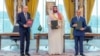
Pakistan and fellow Sunni Muslim nations Saudi Arabia and Turkey on August 7 signed what was labeled the Mecca Defense Agreement in order to "strengthen collective deterrence against any act of aggression."
The members stressed that the pact was not aimed at Shi'ite-led Iran, which has vied with Saudi Arabia for decades for military, political, and religious influence in the region.
Pakistan has said that other nations could join the mutual defense agreement, including Egypt and Bangladesh.
The signees pledged that an armed attack on one member would be treated as an attack on all.
US President Donald Trump has said he was pleased by the signing of the Mecca defense pact, although some experts pointed out it could reduce those countries' reliance on Washington in security matters.
With reporting by Reuters
Trump Downplays Issue Of Russia's Trade With Iran
US President Donald Trump played down the need to punish Moscow for trading with Iran following his government's declaration of an "economic D-Day" targeting Tehran if it refuses to open the Strait of Hormuz.
"So far, I think Russia's behaved quite well, having to do with the Strait of Hormuz," Trump told reporters on August 27 at the White House. He did not specify Russia's actions regarding the strait.
Trump has moved to punish US allies over what he has said was a failure to help Washington in its efforts to open the crucial waterway. Most recently, he ordered military maneuvers with South Korea be reduced in scope because Seoul did not offer to assist US efforts in restoring safe navigation.
On August 24, US Treasury Secretary Scott Bessent announced a new effort to ramp up pressure on Tehran, saying the United States is "launching an economic onslaught against Iran's financial connections around the globe."
Bessent said Trump was making phone calls to world leaders with specific requests and that ever country would be given a defined timeline to "shut down...Iran-related activity we have identified."
He declined to specify timelines but said "we do not have infinite patience here."
Any country supporting Iran must be prepared to face US sanctions, he said, while "the Iranian regime faces a clear choice: severe global isolation or a path to reintegration with the global economy."
Russia has extensive military and commercial ties with Iran, as does China, although no specific measures have been announced targeting Tehran's two major allies.
Iran: Strait Of Hormuz Won't Open Until Our Conditions Are Met
An Iranian official said that Tehran will not allow the Strait of Hormuz to open until the United States takes meaningful steps toward fulfilling Iran's conditions.
Mohsen Rezaei, secretary of Iran's Supreme National Security Council, made the comments during a meeting with Qatari Prime Minister Muhammed bin Abdulrahman Al-Thani in Tehran on August 27.
Rezaei warned that if the United States tries to "commit evil" against Iran, Tehran will target Washington's military and economic interests.
He also cited Iran's "distrust in America," saying the country repeatedly betrayed Tehran in diplomacy and negotiations.
Al Thani, who traveled to Tehran with the aim of mediating between Iran and the United States, also met with Muhammad Baqer Qalibaf, speaker of the Parliament and Iran's chief negotiator.
White House: No Talks Under Way As US Seeks To 'Destroy' Iran Economy
Washington and Tehran are not currently in talks to end the war, White House Press Secretary Karoline Leavitt said on August 27, as the United States focuses on efforts to "destroy" Iran's economy.
Leavitt added, though, that all options remain "on the table" in the drive to prevent Iran from becoming a nuclear power.
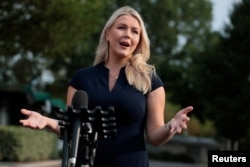
"What President [Donald] Trump's No. 1 goal has been and will always be is to ensure that Iran can never obtain a nuclear weapon. Period," Leavitt said in an interview with Fox News.
"We've had Operation Epic Fury to destroy their military. Now we have Operation Economic Outcast to destroy their economy."
She said that "no negotiations are happening right now, and this will continue until the president feels that maybe they come to the table in a meaningful way. We have not seen that yet."
Trump "of course" retains all options on the table, she said, adding that the naval blockade on Iranian ports remains in effect.
Trump and US Treasury Secretary Scott Bessent have declared what they labeled an "economic D-Day" against Iran and warned countries to cut financial ties with Tehran or face secondary sanctions, although few details were released.
Meanwhile, Qatari Prime Minister Mohammed bin Abdulrahman Al Thani visited Tehran on August 27 for a meeting with his Iranian counterpart, Abbas Araqchi, the Iranian Foreign Ministry said, although details were not immediately disclosed.
Qatar, along with Pakistan, has acted as a mediator for talks between Washington and Tehran. Qatar has also been a target of Iranian missile and drone attacks that have hit US Gulf Arab states since the start of the war.
(UPDATE: Trump later made similar remarks to reporters at the White House. "We don't want to speak to them. We're not looking to meet or anything," Trump said.)
Iran Says It Will Block UN Watchdog's Access To Bombed Nuclear Sites

Iran will not allow inspectors from the UN’s atomic watchdog to visit nuclear facilities damaged in military attacks until new inspection procedures are established, the head of the country's Atomic Energy Organization (AEOI) said.
Iran has denied the International Atomic Energy Agency (IAEA) access to nuclear sites damaged in US and Israeli strikes in June 2025, though inspectors have been allowed to visit some unaffected facilities.
AEOI chief Mohammad Eslami told the IRNA state news agency on August 26 that the IAEA could not inspect the damaged facilities until rules and protocols governing access to them had been drafted, approved, and formally issued.
As a party to the Nuclear Non-Proliferation Treaty, Iran is required under a safeguards agreement with the IAEA to allow the agency to verify the country’s declared nuclear material.
Eslami said the attacked facilities “are all registered with the agency and had been continuously inspected by the agency,” adding that the IAEA's failure to protest against or condemn the strikes called its competence and independence into question.
IAEA Director General Rafael Grossi has said nuclear facilities should never be attacked and has repeatedly warned of the risks that military strikes pose to nuclear safety, security, and safeguards.
Before the US and Israeli strikes on Iranian nuclear facilities in June 2025, the IAEA estimated that Iran had about 440 kilograms of uranium enriched to 60 percent. The agency has since been unable to verify the status and whereabouts of that material.
Uranium enriched to 60 percent is a short technical step from the roughly 90 percent purity considered weapons grade. Iran claims its nuclear program is peaceful, while the United States and Israel have long accused Tehran of pursuing an atomic weapons capability.
Iran Mulls Fuel Price Increase As Gasoline Shortage Deepens
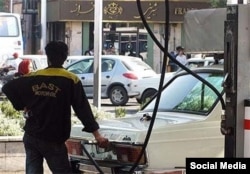
Iran is unable to import gasoline to cover a growing domestic supply shortfall because of the US naval blockade, Iranian Vice President Mohammad Jafar Qaempanah said, as authorities consider changes to heavily subsidized fuel prices.
Qaempanah said changes to gasoline and diesel pricing were necessary but that the scale and timing had not been decided.
“The distribution of gasoline is not equitable and continuing on this path is impossible,” Qaempanah was quoted as saying by the IRNA state news agency. “Moreover, gasoline production is insufficient, and because of the US naval blockade, we cannot import gasoline.”
Reports of fuel-station closures and long lines have emerged in Iran in recent days as concerns over shortages mount.
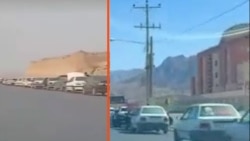

Iran, a major crude oil producer, has for decades heavily subsidized gasoline, leaving pump prices among the world's lowest and encouraging high domestic consumption. Demand now exceeds domestic production, forcing Tehran to rely on imports and withdrawals from reserves to cover the shortfall.
Iran currently produces about 115 million liters of gasoline a day against consumption of roughly 129 million liters, leaving a daily deficit of about 14 million liters, according to recent official estimates.
Import options have also narrowed as Russia has restricted gasoline exports amid its own supply constraints due to Ukrainian attacks on its refineries.