



US Testing Giant Suspends TOEFL, GRE Exams In Iran After Sanctions
The Educational Testing Service (ETS) has confirmed in a written statement to RFE/RL’s Radio Farda that it has suspended the Test of English as a Foreign Language (TOEFL) in Iran in line with the latest US sanctions on the country.
The ETS is a US-based nonprofit that designs and runs standardized tests.
The move comes days after the language-learning company Duolingo said its English test was unavailable in Iran and to users with Iranian identification.
ETS said that “following OFAC's (Office of Foreign Assets Control) suspension of General License G, ETS has paused administration of the TOEFL and GRE (Graduate Record Examination) tests in Iran effective immediately. This step reflects our full compliance with US sanctions law. Test takers affected by this pause will be contacted directly.”
Both the TOEFL and the GRE, a standardized test used for admission to many graduate programs, are often required of international students applying to universities in Western countries.
General License G, in place since 2014, had authorized US universities and other educational providers to offer a range of academic services to Iranians.
ETS said it was reviewing the scope and duration of the pause but could not provide a timeline.
The testing halt followed a broader package of measures announced on August 24 by the US Treasury Department called Operation Economic Outcast, which Washington said was intended to increase pressure on the Iranian government.
Khamenei Calls On Muslim States To Unite Against US, Israel
A written message attributed to Iran’s supreme leader, Mojtaba Khamenei, was posted on his Telegram channel on August 30 calling on Muslim countries to unite against what he described as their “real enemy,” the United States and Israel.
The message was published as part of the Islamic Unity Week, which marks the birthday of the Prophet Muhammad.
It urged Gulf rulers to unite against the United States and Israel. Many Gulf Arab monarchies view Tehran as a threat and host US forces. During the war, Iran struck US military sites and other infrastructure in several of those countries.
Khamenei has not been seen in public since being reportedly injured in US-Israeli air strikes half a year ago that killed his father and previous supreme leader, Ayatollah Ali Khamenei.
No audio or video comments from him have been released since the war started in late February, raising questions about his physical condition.
Many unverified reports state that he was badly disfigured with US President Donald Trump saying on August 27 that he believed Khamenei was still alive but “very seriously wounded.”
The latest message comes only days after another message attributed to Khamenei was issued that called to ban any “expressions of weakness” that would "harm social cohesion" in Iran and be a "great help to the enemy" as US sanctions continue to hit the country.
Hundreds Of Ships Still Stranded In Persian Gulf Waters, UN Agency Says
The UN shipping safety organization said some 400 ships remain stranded in the Persian Gulf, with many others in the region still exposed to higher-than-usual risks.
“Six months since the conflict in the Middle East began, the situation in the Strait of Hormuz is unresolved," said Arsenio Dominguez, head of the International Maritime Organization (IMO).
"While some ships and their crews have been able to leave [the Gulf], up to 400 ships carrying around 6,000 seafarers have been unable to depart safely since the conflict began," he added.
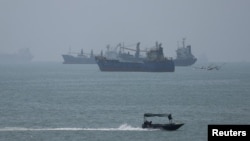
The INO has verified 70 attacks on international ships in the Gulf region, including in and around the Strait of Hormuz, since the start of the US-Israeli war with Iran at the end of February.
It has recorded at least 19 deaths of seafarers during the attacks.
The Strait of Hormuz, through which 20 percent of the world's crude oil and natural gas supplies transited prewar, is a key point of contention in the dispute Washington and Tehran.
It has been effectively closed by Iran, which has been demanding the right to control shipping traffic through the waterway. US officials insist their forces control the crucial passage.
Iranian President Says Sanctions Hurting Iran’s Economy
Despite bravado from various civilian and military officials, Iranian President Masud Pezeshkian has said that sanctions imposed on his country are hurting the economy.
In an interview with Iranian state television on August 28, the Iranian president said “I really don’t know what to say” when asked about the impact of the US-imposed sanctions on Iran.
He said that Iran is in a war situation and “we must accept these wartime conditions.”
Various senior Iranian military and civilian officials came out with bombast soon after the United States announced fresh sanctions against Iran last week.
US Treasury Secretary Scott Bessen, while announcing the sanctions on August 24, warned of consequences for countries that do not join the American campaign.
Pezeshkian told Iranian TV that the country’s exports and imports had fallen by 25 to 35 percent in recent months as the US maintains its naval blockade of Iranian ports, according to AFP.
The Iranian president also said that gas prices should be increased to account for the fall in trade.
Araqchi: Khamenei’s Death Will Neither Be Forgiven Nor Forgotten
Vowing to avenge Ayatollah Ali Khamemei’s death, Iranian Foreign Minister Abbas Araqchi says Iran would neither “forgive nor forget the assassination.”
Araqchi told a conference in Tehran that Khamenei’s death had opened a new phase of resistance for the country, Iran’s official IRNA news agency reported on August 29.
Iran’s then-supreme leader was killed in US-Israeli strikes on the first day of the war with Iran on February 28.
He was succeeded by his son, Mojtaba Khamenei, who is also believed to have been wounded in the strikes and has not appeared in public since assuming the top position.
The movement to avenge the death of the elder Khamenei would continue, IRNA quoted the Iranian foreign minister as telling the guests at the 40th International Islamic Unity Conference in Tehran.
Araqchi said Iran’s political system remained intact despite attempts to undermine the country’s social cohesion and force it into submission.
Defending Iran’s missile and drone strikes on neighboring states since the start of the conflict, Araqchi said US bases in the region could not guarantee their security. He said Iran had targeted US positions as an act of legitimate self-defense.
Iranian Authorities Stress 'Defense And Diplomacy' Amid Rising Discontent Over Inflation
Amid reports of fuel shortages and rising prices of food and beverages, Iranian authorities say they are pursuing both diplomacy and defense simultaneously to overcome the situation.
In a statement on August 28 carried by state media, the Iranian government termed the fresh tougher sanctions by the United States as US-Israeli “conspiracies.”
The statement said diplomacy and defense are “complementary, coordinated, and inseparable” tools for protecting the country’s national interests, security, and territorial integrity.
To curb inflation and create jobs, the statement said, the regime would pursue both tracks of diplomacy and defense and would work to gradually reduce dependence on the dollar.
The statement comes hot on the heels of reports about increasing discontent among the people about fuel shortages and increasing prices of daily commodities.
On August 27, the intelligence wing of Iran's Islamic Revolutionary Guards Corps (IRGC) issued a statement warning of growing social discontent and the possibility of renewed street protests in Iran.
Protests in January, sparked by the falling value of the Iranian currency and soaring food prices, shook the regime, which responded with a tough security crackdown, shooting and jailing thousands.
Quoting Iran’s Statistical Center, state media reported on August 28 that average price of food and beverages rose more than 127 percent compared with August 2025.
Reports suggest the high food prices and shortage of fuel, caused by tougher US sanctions and Iranian economic mismanagement, is causing discontent among people.
On August 28, Iran International posted a video on X showing hundreds of cars lined up on a roadside in what the television described as motorists waiting to receive their 15-liter gasoline allocation. RFERL cannot independently verify authenticity of the video.
Earlier, office of Iran’s Supreme Leader Mojtaba Khamenei released a statement banning any “expression of weakness” that would “harm social cohesion” and be a “great help to the enemy.”
The statement was attributed to the reclusive Khamenei, who has not appeared in public since assuming the position of the supreme leader following the death of his father, Ayatollah Ali Khamenei, on the first day of the US-Israeli war on February 28.
In recent weeks, Iranian government figures have been speaking more openly about economic and "societal" hardships related to the war and US blockades.
In New Statement Attributed To Iranian Supreme Leader, 'Expressions Of Weakness' Banned
A written statement attributed to Iranian Supreme Leader Mojtaba Khamenei has banned any “expressions of weakness” that would "harm social cohesion" and be a "great help to the enemy."
The statement, released on August 28 by Khamenei's office, also urged government officials to tackle the economic hardships being suffered by citizens since the start of the US-Israeli war with Iran and amid a US blockade of the country's ports.
"Every self-sacrificing person....should not turn differences into conflict and division, whether these divisions are unjustified or even justified, but rather, by avoiding empty political disputes and the magnification of social differences, they should embody in word and deed the cohesion and unity of the nation," the statement read.
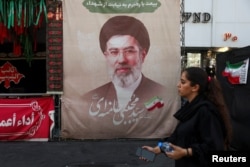
Khamenei has not made any public appearances since assuming the supreme leader position following the death of his father and predecessor, Ayatollah Ali Khamenei, who was killed in air strikes along with other family members on the first day of the US-Israeli war on February 28.
There have been no audio or video comments from him released during that period, raising questions about his physical condition, with many reports saying he was badly disfigured in those initial air strikes.
On August 27, Trump said he believed Khamenei was still alive but “very seriously wounded.” When discussing reports that he might be dead, Trump said: “If he is, they’re putting on a pretty good show.”
In recent weeks, Iranian government figures have been speaking more openly about economic and "societal" hardships related to the war and US blockades.
Iranian media, citing the Statistical Center of Iran, on August 28 reported that the country's headline inflation rate reached 89 percent in August, while the average price of food and beverages rose more than 127 percent compared with August 2025.
Meanwhile, the intelligence wing of Iran's Islamic Revolutionary Guards Corps (IRGC) issued a statement on August 27 warning of growing social discontent and the possibility of renewed street protests in Iran.
As Iran Threatens Radio Farda And Other Media, US Points To Tehran's Record Of Targeting Journalists
WASHINGTON -- The United States said it was aware of threats by Iran's armed forces to put Persian-language media outlets including RFE/RL's Radio Farda on a list of potential military targets, and pointed to what it said was Tehran's record of harassment and attempted attacks against journalists and dissidents abroad.
In an August 28 response to a query from RFE/RL, a State Department spokesperson said, "We are aware of these reports."
"The Iranian regime has repeatedly harassed and attempted to kidnap and kill journalists and Iranian dissidents worldwide simply for exercising their freedoms. This is longstanding, despicable behavior from a regime that has propagated terror globally for decades," the spokesperson said.
In a televised interview earlier this week, Iranian armed forces spokesman Brigadier General Abolfazl Shekarchi named Radio Farda, Iran International, BBC Persian, and Manoto, and said their employees could be included in Iran's "bank of military targets." He called them "soldiers of Zionism and criminal America" and claimed, without providing evidence, that the outlets were connected variously to the CIA, Mossad, and other foreign intelligence services.
To read the full report, click here.
Iranian Prices Of Food, Beverages More Than Doubled In A Year
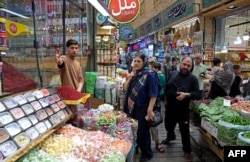
Iranian media reported on August 28, citing the Statistical Center of Iran, that the country's headline inflation rate reached 89 percent in August, while the average price of food and beverages rose more than 127 percent compared with August 2025.
A headline inflation rate of 89 percent means Iranian households spent on average 89 percent more this August than a year ago to purchase the same selection of goods and services.
According to the published data, the highest year-on-year inflation rate was recorded in the tobacco category, where prices increased nearly 161 percent.
Food and beverages ranked second, with prices rising 127.5 percent over the same period. According to the Statistical Center of Iran, prices in the hotels and restaurants category were more than 107 percent higher, while transportation costs were up nearly 105 percent.
The center also reported that the average consumer inflation rate over the 12 months ending in August stood at 69.9 percent, compared with the corresponding 12-month period a year earlier.
Meanwhile, the monthly inflation rate for August was reported at 3.4 percent.
On August 14, Iranian President Masud Pezeshkian, responding to criticism over the sharp rise in prices and its impact on citizens' livelihoods, described the situation as "natural" and said the economic blockade and US oil sanctions were among the contributing factors.
US Targets UAE Bank Over Billions In Suspected Iran-Linked Transactions
WASHINGTON -- The United States on August 28 moved to further restrict Iran's access to the global financial system, targeting a bank in the United Arab Emirates (UAE) over alleged ties to Iranian shadow banking networks and sanctioning a Bank Melli executive and a Hong Kong-based company.
The Treasury Department's Financial Crimes Enforcement Network (FinCEN) proposed barring US financial institutions from maintaining correspondent accounts for Banque Misr UAE, which Washington described as a key channel for Iran's access to US dollars.
The Treasury said the bank processed about $1.8 billion between January 2024 and June 2026 for 103 companies potentially linked to Iranian shadow banking networks. It said some customers were apparent front companies for Iran's Defense Ministry and the Islamic Revolutionary Guards Corps (IRGC) and alleged the bank's network was used to launder money and evade US sanctions.
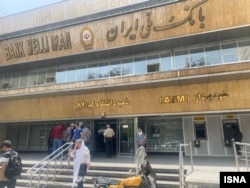
Separately, the Treasury's Office of Foreign Assets Control sanctioned Reza Mohammad Taeedi, manager of Bank Melli's Dubai branch, accusing the bank of facilitating billions of dollars in transactions for the IRGC's Quds Force and helping fund Iran-aligned groups.
OFAC also sanctioned Hong Kong-based Kameng Trading Limited, which the Treasury said helped a sanctioned Iranian exchange house launder money and access the international financial system.
"Today's action intensifies our pressure campaign against Iran," State Department spokesman Tommy Pigott said, adding that Washington would target individuals and entities involved in illicit financial activity on behalf of Tehran.
Treasury Secretary Scott Bessent said the action against Banque Misr UAE was the "first step" in holding the bank accountable.
The measures are part of Operation Economic Outcast, launched by the Trump administration on August 24 to intensify pressure on Iran's financial networks and expand sanctions risks for institutions doing business with the Iranian regime.