




We are now closing the live blog for the day. We'll be back at 7:30 a.m. Central European time to cover the latest events across the Middle East.
Rubio: Iran Will 'Lose Tankers' for Every Attempt to Hit US Ships
The United States has struck additional Iranian oil tankers linked to the Islamic Revolutionary Guard Corps (IRGC), US officials told reporters on September 8, as tensions between Washington and Tehran escalated following further attempted Iranian missile attacks on US Navy ships.
One US official said American forces struck targets near Iran's strategic Kharg island oil terminal and the port of Jask, including Iranian oil tankers. The strikes are part of a broader US effort to put economic pressure on Tehran by targeting oil revenues linked to the IRGC.
Iranian media, meanwhile, reported explosions near Kharg island and Jask. Iran's Tasnim news agency said a US missile struck an Iranian tanker near Kharg island, while Iranian state media reported a second tanker was attacked near Jask. The reports could not be immediately independently verified.
The latest strikes follow US attacks on several Iranian crude tankers. US Central Command said on September 8 it disabled five Iranian vessels after "IRGC targeted a US Navy warship with ballistic missiles twice over the past two days." In the statement, CENTCOM said no American servicemen have been harmed and no damage has been sustained.
The strikes came after Iran launched ballistic missiles toward US Navy ships, according to the US military.

Speaking to reporters in Colombia on September 8, Secretary of State Marco Rubio was asked about the back-and-forth between the two sides over the past 24 hours and the US strikes on Iranian tankers.
“The back and forth is pretty straightforward,” Rubio said. “Iran continues to try to hit US naval ships, and for every time they do that or try to do that, they're going to lose tankers, and I think you'll see that again today.”
Rubio's remarks came as Washington intensified its campaign to restrict Iran's oil revenues. The US also announced new sanctions on September 8 targeting Iran's aviation sector and companies accused of helping Tehran obtain aircraft and sensitive technology.
Separately, a US official said an American military underwater drone malfunctioned more than a day earlier in the Middle East. The official said the drone was not carrying classified sonar or radar equipment, after Iran claimed to have seized a US underwater drone.
Iranian Media Report US Strike On Tanker
Iranian media reported that a US strike hit a tanker near Kharg Island, the country’s main oil export hub.
The Tasnim news agency, which is affiliated with Iran’s Islamic Revolutionary Guards Corps, said a “small” tanker was targeted by a US “projectile” on September 8.
Tasnim added that there were no casualties and the crew of the tanker was being evacuated.
Iranian media also reported explosions in the southern port city of Jask near the Strait of Hormuz.
There was no immediate comment from the United States.
On September 7, Iran threatened to retaliate against any new US attacks on its oil tankers, warning that American oil and gas interests in the Persian Gulf could be targeted.
US forces hit three Iranian oil tankers on September 5, including one near Kharg Island, according to US Central Command. The strikes came after Iran attacked US warships operating in the region.
Basij Commander Killed In Southeastern Iran
Iranian media have reported the killing of a local commander of the Basij militia in the southeastern province of Sistan-Baluchistan, which borders Afghanistan and Pakistan.
Abdolrauf Eshaqi, a commander in the Parud district, was “martyred” in a “terrorist attack,” the Tasnim news agency reported on September 8, without providing details.
It was not clear who was behind the attack.
The volunteer Basij paramilitary force, which is estimated to have around 1 million members, is commanded by the Islamic Revolutionary Guards Corps (IRGC).
One of Iran’s poorest provinces, Sistan-Baluchistan has been the scene of a decades-long insurgency.
It is home to Baluch, an ethnic minority that has long faced discrimination and violence at the hands of the authorities.
On September 7, Iran's official news agency, IRNA, reported that two Iranian security personnel were killed in an armed attack near the city of Zahedan in Sistan-Baluchistan.
IRNA reported that the men came under attack on September 6 while carrying food and equipment for the Basij.
No group has yet claimed responsibility for the attack.
US Says Underwater Drone 'Malfunctioned' After Iran Claims Seizure Of Device
The US military's Central Command (CENTCOM) said on September 8 that one of its underwater drones had “malfunctioned” while surveying regional waters, after Iran claimed that it had seized the device in the Strait of Hormuz.
“An underwater drone operated by US forces malfunctioned more than a day ago. It was surveying regional waters in support of ongoing operations,” CENTCOM spokesman Captain Tim Hawkins said.
The Iranian claim was made by the Islamic Revolutionary Guards Corps (IRGC), which said its naval forces had captured the US submarine drone near the entrance to the Strait of Hormuz around dawn on September 8.
Iranian media said the submarine drone’s capabilities include "subsurface reconnaissance and surveillance, seabed mapping, mine detection, and inspection of submarine cables and pipelines."
CENTCOM, however, played down the capabilities of the submersible.
“The defective drone was an older model that neither collected sensitive data nor carried any classified sonar or radar equipment,” Hawkins said.
Iran has effectively closed the Strait of Hormuz, a key artery for global oil and gas supplies, since the start of the war with the United States in February.
The United States has imposed its own blockade on Iranian vessels and ports.
This blog entry has been updated.
Rubio Says Houthis Acting With ‘Iranian Hand’ As Saudi Arabia Faces Fresh Attacks
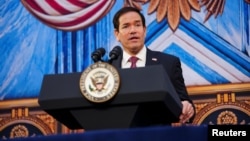
US Secretary of State Marco Rubio has accused Yemen’s Iran-aligned Houthi movement of acting as a proxy for Tehran, after the group launched a wave of attacks on civilian and energy facilities in southern Saudi Arabia.
“The Houthis, in many ways, are agents and proxies of the Iranians,” Rubio told reporters on September 8, adding that Washington believes “behind some of this is clearly the Iranian hand.” He said the United States was closely monitoring developments and emphasized its “very strong defensive military relationship” with Saudi Arabia.
The September 8 attacks hit areas including Abha, Najran, Jizan, and Khamis Mushait, injuring at least 73 people and disrupting operations at several energy facilities. Saudi authorities said fires broke out at energy sites, while the Houthis claimed the attacks were retaliation for Saudi military operations in Yemen.
Rubio declined to say whether Washington was considering additional military action, referring questions about possible defense announcements to the Pentagon.
Separately, Rubio said the United States would not follow Britain in imposing the same restrictions on trade linked to Israeli settlements in the occupied West Bank. Britain and several other countries announced measures on September 8 targeting settlement goods, citing concerns over settlement expansion and rising violence.
Rubio said Washington does not want to see “an uptick in violence” or tensions in the West Bank, describing the situation as particularly fragile at a time of wider regional instability.
Britain Tightens Sanctions On Iran
Britain on September 8 published legislation introducing tougher sanctions on Iran, expanding trade restrictions and powers to target ships as part of a wider effort to curb Tehran's nuclear program and other activities the United Kingdom considers hostile.
The British government said the measures will further restrict Iran's access to the UK financial system, extend trade bans to additional goods, technology, and services, and prohibit Iranian aircraft from landing in Britain unless exemptions apply.
The new legislation also expands Britain's ability to impose measures targeting shipping connected to Iran. The existing UK Iran sanctions regime already includes financial, trade, and transport restrictions, including powers concerning designated vessels.
Minister of State Stephen Doughty said in a written statement that the legislation "doubles down on our action to constrain Iran's nuclear ambitions" and would help ensure that Iran could never acquire a nuclear weapon.
The measures come amid heightened tensions between Iran and Western countries over Tehran's nuclear program and its broader regional activities.
Iran's Oil Stockpiles Could Run Out by Mid-October
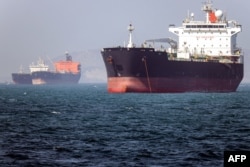
Iranian crude stored aboard tankers outside the US blockade zone has fallen from about 90 million barrels in mid-July to roughly 29 million barrels, according to data from shipping-analytics firm Kpler featured in a Wall Street Journal report published on September 7.
Kpler estimates that at the current rate of deliveries these floating stockpiles could be exhausted by mid-October.
The figures reflect the impact of the US naval blockade, which Washington announced on July 13 and reinstated on July 14. No Iranian crude cargo has successfully crossed the blockade since then, according to Kpler.
Reuters, citing Kpler, Vortexa, and TankerTrackers.com, has similarly reported that Iranian crude exports through the Strait of Hormuz have effectively stalled.
Iran is still loading some oil onto tankers inside the Persian Gulf, but those shipments remain unable to reach international buyers. Kpler estimates that Iran loaded approximately 255,000 barrels per day in August, about 85 percent below its average from February through April. Reuters puts August loading at roughly 220,000–255,000 barrels per day, compared with around 2 million barrels per day in March.
Kpler estimates that roughly 1 million barrels per day are still being delivered from Iranian crude already held outside the blockade, mostly to China. At that rate, the remaining floating stockpile could run out by mid-October.
Payments for oil already delivered could continue somewhat longer but, according to the Wall Street Journal, may largely dry up by mid-December.
Houthi Attacks On Saudi Arabia Injure 73 As Yemen Fighting Intensifies
Iran-backed Houthi forces in Yemen launched a new wave of attacks on Saudi Arabia on September 8, injuring 73 civilians, including women and children, according to Saudi authorities. The escalation comes amid renewed fighting between the Houthis and Saudi-backed Yemeni government forces.
Saudi-led coalition spokesman Major General Turki al-Maliki said the Houthi attacks targeted civilian and economic sites in Abha, Khamis, Mushait, Jizan, and Najran. Saudi authorities vowed to take measures to deter further attacks and protect the country's territory and infrastructure.
The Saudi Energy Ministry separately reported that attacks struck energy facilities in the southern region, starting fires and temporarily disrupting some operations. Emergency teams were deployed to contain the fires and assess damage. The Financial Times also reported that Saudi Aramco's oil infrastructure in Jizan had been hit.
The Houthis have claimed responsibility for attacks on Saudi targets, describing them as retaliation for Saudi-backed military operations in Yemen. Not all of the militants' groups claims can be independently verified.
The attacks come amid the sharpest escalation in Yemen in years. Fighting between Houthi forces and Saudi-backed, internationally recognised government forces has intensified along the western coast, particularly around Taiz, Hodeidah, and the strategic Bab al-Mandab area. More than 300 people have reportedly been killed or wounded in recent fighting, although casualty figures remain fluid.
The current escalation follows the collapse in July of a fragile truce that had substantially reduced fighting since 2022. Government forces have launched counterattacks and say they intend to regain territory, while the Houthis have sought to expand their positions toward the Red Sea corridor.
US-Iranian Kamran Hekmati Released From Tehran Prison But Can't Leave Country
An Iranian-American citizen, Kamran Hekmati, has been released from Tehran's notorious Evin Prison, sources have told RFE/RL's Radio Farda, but he is unable to leave the country due to a travel ban.
The release has not yet been officially confirmed by Iranian authorities.
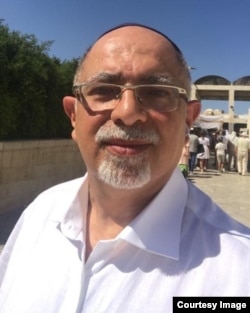
Hekmati, who was designated as a wrongfully detained person by US Secretary of State Marco Rubio in March, is believed to have been released on September 5.
His release was also reported by The Jerusalem Post, an Israeli media outlet which cited Iranian sources.
The 71-year-old traveled to Iran to visit relatives on his Iranian passport in May 2025 and was detained by the authorities two months later. Tehran's Revolutionary Court subsequently sentenced him to four years in prison for having traveled to Israel for a religious ceremony over a decade earlier. Holders of Iranian passports are barred from traveling to Israel.
His sentence was later reduced to two years after a change in the law governing such travel.
To read the full report, click here.