


The United States and Israel are bombing Iran's critical energy and civilian infrastructure, marking an escalation in the military campaign against the Islamic republic, experts say.
Israel has struck at least four oil depots around Tehran, Iran's sprawling capital, since the joint US-Israeli air campaign began on February 28. Other civilian infrastructure, including a commercial airport and a water treatment plant, has also been hit.
"The aim of the US-Israeli attacks on Iran's economic and energy infrastructure is not primarily economic," said Steve H. Hanke, a professor of applied economics at Johns Hopkins University in Baltimore. "It is strategic. The objective is to weaken Iran to the point of regime collapse or state fragmentation."
Iran has also targeted critical energy facilities and civilian infrastructure in the Persian Gulf, which has wreaked havoc and sent global energy prices soaring. Tehran's strategy, experts say, is to raise the economic costs of the war for the United States and its allies in the region.
The United States has rejected Tehran's accusation that it is deliberately targeting Iran's civilian infrastructure. Washington has attempted to distance itself from the Israeli attacks on Iran's petroleum facilities. But experts warn that the attacks could trigger a costly tit-for-tat cycle of retaliation.
"The most likely consequence is escalation," said Hanke, a former economic adviser to the administration of US President Ronald Reagan. "Iran's strategy is deterrence. It cannot match US-Israeli firepower, but it can raise the cost of the war. That means retaliatory strikes on energy infrastructure and other economic targets across the region are certain."
Iranian parliament speaker Mohammad Baqer Qalibaf warned on March 10 that Iran will take "an eye for an eye" approach. If Iranian infrastructure is targeted, he said, Tehran will respond in kind, with experts suggesting the infrastructure war could expand.
'Economic Warfare'
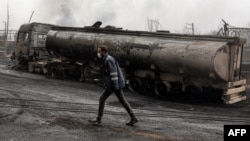
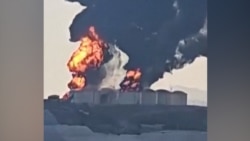
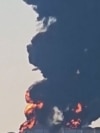
Israeli warplanes hit four oil storage facilities and a fuel logistics site in and around Tehran on March 8. The installations served the approximately 10 million people living in the city.
Tehran was draped in toxic black smoke for days as the oil facilities burned. The authorities issued urgent health warnings and experts warned of an environmental disaster.
The attacks triggered outrage among some Iranians. Axios reported on March 10 that the Trump administration asked Israel not to carry out further strikes on energy facilities in Iran, particularly oil infrastructure.

The repercussions of Israel's attacks are "potential shortages for fuel and gasoline, which could have ripple effects by causing food shortages, inflation, and power blackouts" in Iran, said Sina Azodi, an expert of Iran's military and history and an assistant professor of Middle East politics at George Washington University.
The heavy US-Israel bombardment has also damaged or destroyed seaports and commercial airports, including Tehran's Mehrabad International Airport, one of two that serve the capital. Israeli air strikes on March 7 set the Tehran airport on fire.
On the same day, Iran accused the United States of attacking a desalination plant on the island of Qeshm in the Persian Gulf. CENTCOM spokesperson US Navy Captain Tim Hawkins rejected the accusation and said, "US forces do not target civilians -- period."
Tehran hit a water treatment plant in Bahrain the following day.
On March 10, US-Israeli air strikes struck Tehran's Resalat highway, one of the biggest in the city. The attack "resulted in the killing and injury of a large number of civilians," according to US-based rights group HRANA .
Over 1,200 civilians have been killed in Iran since the war began, according to HRANA. Homes, public buildings, and cultural sites have been damaged or destroyed in the aerial bombardment, angering some Iranians.
Azadi said Iran, the United States, and Israel were engaged in "economic warfare." The US-Israeli aim, he said, was to "break the morale of the Iranian population by punishing them and making their lives harder."
"They also aim to weaken and diminish Iran's economic output to stop it from being able to reinvest in its defense infrastructure," he said.

As part of that aim, experts said, the United States could attempt to seize or target the oil terminals in Iran's Kharg Island , which handles around 90 percent of all Iranian oil exports, in a move that could cut off the revenues that sustain Tehran's sanctions-hit economy.
US media reports say the Trump administration has discussed capturing the tiny island in the Persian Gulf.
Azodi said Iran will try to intensify the infrastructure war "as much as it can, given its vulnerabilities and military weakness compared to the US and Israel."
"Both sides will continue to escalate with the aim of forcing the other side to ‘say uncle' first," he added.

