

New Zealand Temporarily Shuts Embassy In Tehran
New Zealand says it has temporarily closed its embassy in Tehran because of the "deteriorating security situation" in Iran.
The country's Foreign Ministry said on January 16 that diplomatic staff had left Iran safely on commercial flights overnight, and that the Tehran embassy's operations had been moved to Ankara in neighboring Turkey.
"We continue to advise against all travel to Iran. Any New Zealanders currently in the country should leave now," a spokesperson said.
On January 15, New Zealand Foreign Minister Winston Peters said his country was "appalled" by Tehran's violent clampdown on widespread anti-government protests.
"We condemn the brutal crackdown being carried out by Iran's security forces, including the killing of protesters," he said in a statement. "Iranians have the right to peaceful protest, freedom of expression, and access to information -- and that right is currently being brutally repressed."
He added that Wellington had expressed its "serious concerns" directly to the Iranian Embassy in New Zealand, and would continue to do so.
With reporting by Reuters
Masih Alinejad, an Iranian journalist and women’s rights activist living in exile, was among those speaking at the UN yesterday.
The HRANA right organizations says its confirmed death toll in the Iran protests is now 2,677 and that the "latest statistical data indicates a continued upward trend in fatalities, arrests, and forced confessions."
Good morning. We'll start the live blog with the news that Iran's Internet blackout has now lasted 7 1/2 days, according to the digital rights watchdog NetBlocks. That's longer than the digital shutdown that occurred during the protests of 2019.
We are now closing the live blog for today. We'll be back again tomorrow morning to follow all the ongoing developments in Iran at 7:30 a.m. Central European time.
Iranian Authorities Are 'Afraid Of Their Own People,' US Ambassador To The UN Says
The United States stands by protesters in Iran, and President Donald Trump "has made it clear all options are on the table to stop the slaughter," US Ambassador to the United Nations Mike Waltz said.
"President Trump is a man of action, not endless talk like we see at the United Nations. He has made it clear all options are on the table to stop the slaughter," Waltz said at the Security Council meeting, which was held at Washington's request on January 15.
Responding to allegations by Iranian authorities that the nationwide protests were a plot by foreign states, Waltz said the hard-line regime in Tehran is "putting forward these lies because of the power of the Iranian people in the streets."
"Everyone in the world needs to know that the regime is weaker than ever before... They are afraid. They’re afraid of their own people," he added.
European Union Is 'Looking To Deepen' Sanctions Against Iran
European Commission President Ursula von der Leyen said the European Union is considering strengthening sanctions against Iran, including targeting authorities who "are responsible for the atrocities" committed during a brutal crackdown on protesters.
"The sanctions are biting... They are weakening the regime and the sanctions help to push forward that this regime comes to an end and that there is change," von der Leyen said at a press conference in Cyprus on January 15.
"The people of Iran, who are bravely fighting for change, they have our full support," she added.
Iranians Mourn A 16-Year-Old Victim Of Violent Crackdown
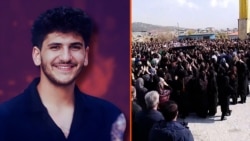
A newly released video shows a huge crowd attending the funeral in Abdanan of Alireza Seydi, a teenager who was killed during anti-government protests in Tehran. Seydi is one of thousands of victims of Iranian authorities' crackdown on the protest movement. Fresh details of the protests and the casualties have been severely restricted by an ongoing Internet blackout throughout the country.


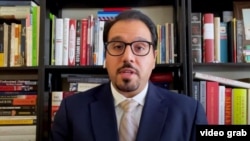
Behnam Ben Taleblu: Iran's Mass Protests Are A 'Social Revolution' Against Clerical Rulers
Iran has witnessed the biggest protests against the country’s clerical rulers since the Islamic Revolution in 1979.
In response, the authorities have waged their deadliest-ever crackdown on street protests, killing thousands of people, according to human rights groups.
The widespread killing of protesters has led to the United States threatening possible military action against the Islamic republic.
RFE/RL’s Kian Sharifi interviewed Behnam Ben Taleblu, senior director of the Iran program at the Washington-based Foundation for Defense of Democracies, about whether Iran’s clerical rulers will survive this latest round of protests and Washington’s possible response to the unrest.
RFE/RL: You’ve said these protests are different. What makes them stand out?
Behnam Ben Taleblu: It’s the latest incarnation of anti-regime protests that are trying to push past the paradigm of the Islamic republic in its entirety, but very acutely different: The nationalism in them has grown significantly, with crowds calling for exiled Crown Prince Reza Pahlavi by name; these are the first multiday, multicity nationwide uprisings months after the [Israel-Iran] 12-day war, when external observers predicted [that Iranians would] rally around the flag. Instead, you see regime flags taken down and even burned, alongside other symbols.
Protester resiliency persists despite violent crackdowns after the [2022] Woman, Life, Freedom movement and the inability of the diaspora to organize. Many thought this combination would have a chilling effect on the will of Iranian protesters to risk coming out onto the streets again for years to come.
I think the level of discontent coupled with the failures of the government on the economic front and on the environment front across 2025 plus the military defeat in the 12-day war really was a cocktail of forces that made the current round of protests qualitatively different. And I think we can analytically say [this is] the most potent challenge from the street against the state in the past four decades [since] the Islamic Revolution.
RFE/RL: This round of protests has seen the deadliest crackdown yet on street protesters. Do you see the Islamic republic surviving this, or is this it?
Taleblu: No doubt there's been boom-and-bust cycles of protests in years past, but it's still too soon to tell. The situation on the ground is very fluid, and much rides on the nature, if any, of external intervention and how it's read as dampening or driving future rounds.
But make no mistake. The social revolution has already happened against the Islamic republic. All that Iranians are waiting for is commensurate political change in Tehran. When and how [that happens] remains unclear. What is clear is the bravery of the Iranian people and their willingness to bear high levels of violence from this state, including at rates never before seen in four-plus decades of protests against this regime.
Read the rest of the interview here.
800 Executions 'Halted' Yesterday, Says Trump Spokeswoman
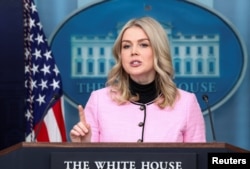
Up to 800 executions scheduled by Iranian authorities on January 14 were halted, a White House spokeswoman said, as she declined to rule out US intervention.
Karoline Leavitt told reporters on January 15 that Donald Trump “understands today that 800 executions that were scheduled and supposed to take place yesterday were halted”, adding that the Trump administration was “closely monitoring the situation”.
She said the US president had warned the Iranian regime there would be "grave consequences" if the killing of protesters continued.
“All options remain open,” she added.