

Trump Says He Hopes There Won't Be A Need For 'Further Action' On Iran
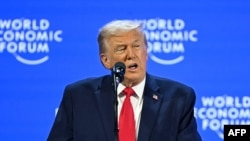
In an interview with CNBC after his speech to the World Economic Forum in Davos on January 21, US President Donald Trump addressed the situation in Iran, saying he hoped further action by the United States would not be necessary following the recent protests.
“We hope there’s not going to be further action,” he said. “But you know they are shooting people indiscriminately on the streets…”
Trump went on to reiterate that he had intervened to prevent the execution of hundreds of protesters.
“They were going to hang 837 people on Thursday [January 15],” he said. “I told them you can’t do that. If you do that, it’s going to be bad. I don’t want to go with exactly what I said, but nasty… and they canceled it, hopefully permanently.”
Turning to economic pressure, Trump reaffirmed that he would still be "going forward" with plans to impose a 25 percent tariff as well as sanctions on countries doing business with Iran.
He then returned to the question of Iran’s nuclear program.
Referring to US strikes on Iranian nuclear sites in June, Trump suggested Washington would be prepared to take similar action again if he believed Iran was continuing to pursue a nuclear weapon.
“They’ve got to stop with the nuclear,” he said. “They keep experimenting with nuclear and at some point they’re going to get the idea that they can’t do that. They’re just not going to be able to do that. Can’t let them have it.”
800 International Filmmakers Condemn Iranian Government’s ‘Crimes Against Humanity’
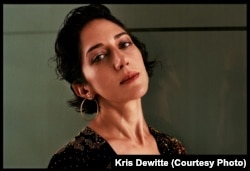
Eight hundred filmmakers from various countries -- including well-known figures such as French actresses Juliette Binoche and Marion Cotillard, Greek director Yorgos Lanthimos, and French writer and filmmaker Florian Zeller -- have issued a statement condemning the Islamic republic’s harsh crackdown during recent anti-government demonstrations.
Instead of “listening to the people’s voices” after “widespread and peaceful protests…against repression, poverty, discrimination, and structural injustice,” the filmmakers said, the Islamic republic “has chosen to respond with live ammunition, mass killings, widespread arrests, torture, enforced disappearances, and a nationwide internet shutdown.”
The statement also said Tehran’s actions “represent a blatant and systematic violation of all fundamental human rights, including the right to life, liberty, human dignity, and security, and constitute a clear case of crimes against humanity.”
Internationally recognized Iranian filmmakers who signed the statement include Zar Amir Ebrahimi, Goldshifteh Farahani, Sepideh Farsi, and Shirin Neshat.
Former Iranian Empress Calls 'National Day Of Mourning'
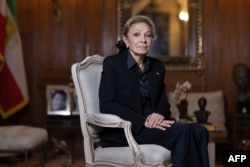
Iran's former empress, Farah Pahlavi, says she is declaring a "National Day of Mourning " on January 23 "to be observed by all freedom loving Iranians throughout the world, and request that we all join in one minute of silence at 12:00 noon, local time, to honor our fallen children."
"The blood that has been shed by thousands of our compatriots in Iran cannot be ignored nor be trampled on," the widow of Iran's last shah said, referencing the recent wave of protests that was brutally suppressed by Iranian authorities. "The brave children of Iran have sacrificed their lives and poured their blood at the roots of the saplings of freedom."
Pahlavi, 87, added that "light will prevail over darkness" and urged Iranians not to rest until their "homeland regains its freedom."
Witkoff: US Not Currently Negotiating With Iran
US special envoy Steve Witkoff, speaking on behalf of the Trump administration, said the US isn't negotiating with Iran now, although "we’ve had contact with them.”
Speaking in an interview with CNBC on the sidelines of the World Economic Forum in Davos, Switzerland, Witkoff said that "Iran is a deal that ought to happen." When pressed on details, he avoided specifics but reiterated the potential for a deal.
Protests in Iran began on December 28, 2025, in markets in the capital, Tehran, by shopkeepers angry over dismal economic conditions, including spiraling inflation and a freefall of the currency.
The unrest rapidly escalated, transforming into widespread demonstrations against the authorities over worsening living standards and the suppression of basic freedoms.
US-Iran Tensions
Long-simmering tensions between Washington and Tehran have neared boiling point during the crisis.
US President Donald Trump initially warned that the United States was "locked and loaded" and prepared to act if Iranian security forces killed protesters. He later vowed "very strong action" if Iran proceeded with any executions.
Trump later said he personally chose not to order military strikes against Iran, attributing his decision to Tehran's reported cancellation of hundreds of planned executions.
In another Davos interview, Witkoff told Arab News that Iran must come and sit at the diplomatic table.
That has to happen [Iran negotiating]," he said. "It’s important. If Iran goes, so the region goes, and so we have to get that straight.”
Witkoff insisted that the Middle East was moving in the right direction.
“I think it’s amazing what’s happening. Everybody is, I think, working together towards peace," the envoy said. "Everyone’s bought into President Trump’s ideas about border peace, and I think I’m very hopeful.”
Gutted Mosques, Eerie Calm In Tehran After Uprising
- By RFE/RL
Photos released on January 19 and 20 show the aftermath in Tehran of massive protests that swept Iran over recent weeks before being crushed by the country's security apparatus.
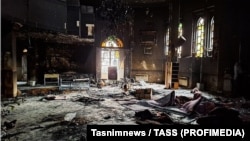
Gutted Mosques, Eerie Calm In Tehran After Unrest
US State Department: Protests Are Result Of Mismanagement, Not Foreign Influence
The US State Department's Persian-language website called the Islamic republic's attempt to accuse foreign governments of involvement in the Iranian protests "a ridiculous attempt to rewrite reality."
In a post published on X, USAbehFarsi wrote: "These protests are an inevitable uprising of the Iranian people after years of repression and mismanagement, not the product of foreign influence."
"Denial and blaming others only serve the political propaganda of the Islamic Republic regime and do not convince anyone else."
Iranian officials, including President Masud Pezeshkian, have repeatedly labeled the protesters "terrorists" and "rioters" and attribute the high number of deaths, the official statistics of which have not yet been released, to Israeli operatives.
Human Rights Group Reports Sexual Abuse Of Detained Protesters
A spokesperson for the Kurdistan Human Rights Network confirmed to RFE/RL's Radio Farda that the group has received reports of sexual abuse of protesters detained by the security forces.
Kaveh Kermanshahi spoke to Radio Farda from Germany, where he resides. In an interview published on January 19, he said that in addition to the use of excessive force and violence against detainees -- some of which resulted in the death of protesters -- they had received accounts of sexual abuse.
"We heard from two separate sources, people who hadn't been arrested together but picked up at different spots around Kermanshah city. After they were released, they told us that on top of the beatings by security forces, their detention included sexual insults," he said, adding that one of the victims was a 17-year-old boy.
Kermanshahi said that a number of residents of Kurdish regions had travel to border areas in order to make contact during the communications blackout inside the country.
"Proximity to the border has enabled some contacts -- people reaching border areas or even crossing into Iraq. One person from Ilam Province trekked out just to inform relatives about their situation. Meanwhile, some Iranians residing in Iraqi Kurdistan come to the border to use Iranian SIMs and call home. These connections are extremely difficult."
"Keep in mind: Even regular calls to Iran are monitored, so people can't discuss details openly; often it's just basic hellos," he added. "Still, we've found limited ways to gather information on the crackdown in Kurdish cities, especially on those killed, arrested, or wounded."
He told Radio Farda that the Kurdistan Human Rights Network has received credible reports of the deadly suppression of protesters in Iran.
"Since the protests began, we've had multiple reports of detainees getting severely beaten. And in one recent case, we published the name of a citizen from Saqqez who was arrested during the Bijar protests in Kurdistan Province: Soran Fazizadeh," he said. "His death was announced to the family after detention, and there's strong suspicion he died under torture."
"Two sources from a Kermanshah hospital told us that on the night of [January 7], at least 70 bodies from protest killings were brought in. We've documented 53 of those 70: three women among them, mostly men, mostly young, with the highest numbers from Ilam and Kermanshah provinces."
More Videos Emerge Of Iranian Protesters Met With Deadly Force
Iranians who protested their country's brutal regime earlier in January encountered security forces who wounded and killed many, they say. One group filmed a friend who had been badly wounded in the leg while a family of three were shot to death in their car, a relative told RFE/RL's Radio Farda.

Narges Mohammadi Foundation Calls For Iran To Halt Repression, Killings
The Narges Mohammadi Foundation, associated with the human rights activist and Nobel Peace Prize laureate, has called on the international community to exert pressure on the Islamic republic to halt the ongoing repression and killings.
The foundation described what it called "a clear picture of the rule of the Islamic republic" marked by "mass killings, Internet blackouts, prisons overflowing with detainees, and the 40th day of detention of a Nobel Peace Prize laureate."
In a post on X published on January 20, the foundation also demanded the annulment of all death sentences, the restoration of Internet access, the release of political and prisoners of conscience, and the establishment of an international fact-finding committee.
While citing the "extraordinary courage and bravery" of the Iranian people in the new wave of protests and their "resistance to the dictatorial regime of the Islamic republic," it said the government's response to popular protest was "widespread and systematic violence."
The foundation wrote that "even senior officials of the Islamic republic -- who have always reported their crimes at figures far lower than reality -- have officially confirmed the killing of thousands of people."
Referring to reports by media outlets and human rights organizations, the statement notes the arrest of more than 26,000 people, the severe injury of thousands, and the continued broadcast of forced confessions of detained protesters on state television. It emphasizes that concerns over the issuance and implementation of death sentences for protesters have intensified.
The statement adds that the Internet blackout in Iran has "directly led to censorship, intensified repression, and the concealment of widespread human rights violations."
The foundation has called for "access for independent journalists, international media, and human rights organizations to Iran, and for independent, impartial, and transparent investigations into the killings, torture, enforced disappearances, and the lethal use of weapons against protesters, along with full accountability under international law."
US State Department Reiterates US Support For Iranians' Access To Internet
The US State Department stressed its support for Iranians' access to the Internet in a post on X on January 20.
The US government agency stressed that Washington's maximum-pressure campaign on the Islamic republic targets "the Iranian government, not its people."
"That is why General License D-2 provides sanctions exemptions for the internet, communications, and tech that help Iranians stay connected," the department wrote.
"Internet access enables freedom of expression and exposes the truth. The Iranian regime tries to shut it down because it's afraid. We will keep supporting access."
The post was published nearly 300 hours after an almost total blackout of the Internet in Iran, a move that began after a new round of protests in Iran escalated.