



UAE Closes Embassy In Tehran
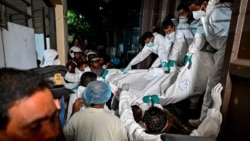
The United Arab Emirates Foreign Ministry has announced that it has closed its embassy in Tehran and withdrawn its ambassador and all members of its diplomatic staff from Iran in response to Tehran's attacks on its territory.
A statement released by the ministry described the Islamic republic's "aggressive actions" against civilian targets, including residential areas, airports, ports, and service facilities, which endangered the lives of civilians, as a "dangerous and irresponsible escalation of tension" and a violation of international law.
Abu Dhabi has also warned that Iranian attacks are "pushing the region down very dangerous paths."
In response to US and Israeli attacks, Iran targeted the UAE and other Persian Gulf countries with missile and drone attacks on February 28 and March 1.
Zelenskyy: Kyiv 'Ready' To Share Experience In Countering Iran's Missiles And Drones
- By RFE/RL
Ukrainian President Volodymyr Zelenskyy said his country is ready to share its experience in countering Iranian ballistic missiles and Shahed drones with countries that helped Kyiv to repel Russia's invasion, as Tehran continued to attack countries in the Gulf region.
"The situation in the Middle East shows how difficult it is to provide 100 percent protection against missiles and Shahed drones," he said in a video statement on March 1, as Iran has launched air attacks on Israel, United Arab Emirates, and other countries throughout the day.
"Everyone can now see that our experience in defense is, in many respects, irreplaceable. We are ready to share this experience and help those nations that helped Ukraine," Zelenskyy added.
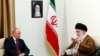
Tehran has long been an ally of Russia, supplying it with military equipment and technology and fueling Moscow's war effort against Ukraine. Zelenskyy said earlier that Russia's military had used at least 57,000 Shahed drones in attacks on his country, including against its civilian and energy infrastructure.
Now, the Iranian authorities should blame themselves for the consequences, including for killing "tens of thousands of their own citizens just in recent months" and "fueling" wars in the region, Zelenskyy said.
"The Iranian people have long effectively been alone against violence -- against the Iranian regime.... It is important that American determination -- the determination of everyone in the world -- truly works."
How The Middle East Conflict Could Affect The War In Ukraine

Attacks by the United States and Israel on Iran and the death of Ayatollah Ali Khamenei will likely have little effect on the battlefield in Ukraine, but it may make Russian President Vladimir Putin “even more adamant that he has to come out on top” in the full-scale war he launched four years ago, Hanna Notte, an expert on Russian-Iran ties, told Radio Free Europe/Radio Liberty.
Read the interview here.
Israel And Iran Exchange New Strikes After Khamenei Death
- By RFE/RL
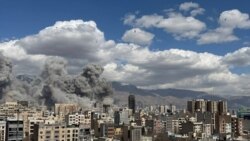
Footage shows smoke rising across Tehran as Israel reportedly targeted central locations of the capital with strikes. Iran retaliated with missile strikes against US and Israeli targets.

Before And After Strikes On Iranian Missile Base
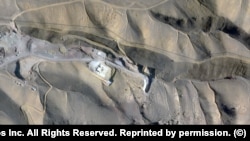
Satellite Images Show Iranian Missile Base Before And After Strikes
Satellite images taken by Planet Labs PBC reveal the damage inflicted on an Iranian missile base in northwestern Tabriz. The base was hit on February 28 as the United States and Israel launched attacks against Iran, killing the country's supreme leader and top military figures.
Check out the before and after satellite images.
Iran's Naval Headquarters 'Largely Destroyed,' Trump Says
US President Donald Trump said the United States "largely destroyed" Iran's naval headquarters and sank nine of Tehran's navy ships.
Iran Wants To Talk, Trump Tells Atlantic In Interview
US President Donald Trump has told The Atlantic magazine in an interview that the Iranian leaders who have emerged after air strikes killed several senior officials want to hold talks.
"They want to talk, and I have agreed to talk, so I will be talking to them. They should have done it sooner. They should have given what was very practical and easy to do sooner. They waited too long," Trump said in the interview from his Florida residence.
He gave no details on who he had been in touch with or when such talks would take place.
Trump Says That 48 Iranian Leaders Have Been Killed
US President Donald Trump said that 48 Iranian leaders have been killed.
"Nobody can believe the success we're having, 48 leaders are gone in one shot. And it's moving along rapidly," Trump said in an interview with Fox News.
Officials from US Central Command, which oversees operations in the Middle East, announced that three US military personnel have been killed in action and five seriously wounded. The announcement gave no details where and how the personnel were targeted saying only that several other troops “sustained minor shrapnel injuries and concussions and are in the process of being returned to duty.”
From our latest news wrap.
Retired General Jack Keane Says US-Israeli Operation Aims to Dismantle Iranian Leadership

Jack Keane, a retired four-star general and former Vice Chief of Staff of the U.S. Army, says the US-Israeli military campaign launched against Iran on February 28 is a calculated effort to dismantle the Islamic Republic’s political and military architecture.
Keane, who now serves as chairman of the Institute for the Study of War, told RFE/RL in an interview the strikes, and reports that Supreme Leader Ayatollah Ali Khamenei was killed in the operation made for a “historic day of tremendous significance.”


Keane said the first phase of the operation has exceeded expectations, pointing to strikes that targeted senior leadership, missile systems, drone infrastructure, and key elements of Iran’s military command structure.
The campaign was designed to “strip away the entire political leadership and the structures that support it,” including the Islamic Revolutionary Guards Corps, and to continue for “two to three weeks if necessary,” depending on how the regime responds, he added.
RFE/RL: General, first, what are your thoughts on this extremely busy day, including President Trump's confirmation that Khamenei has been killed?
Jack Keane: Well, I think it's an historic day of tremendous significance because President Trump and [Israeli] Prime Minister Netanyahu have made a decision that they're not going to permit the Iranian regime to continue to destabilize the Middle East, to continue to conduct proxy wars, to continue the ballistic missile development program and their nuclear program.
They have decided that they want to put the Iranian regime on a pathway to its collapse and return to a democratic form of government at some point. That is the decision that has been made and it's being reflected in this brilliant military operation that is being executed today.
So we're stopping the Iranians from having the capability to impose their will in the region, number one, and number two, setting the conditions so that the regime will collapse and eventually the people of Iran will take their country back.
Read more here
Iran's Supreme Leader Is Dead. Who Will Succeed Him? It's Complicated.
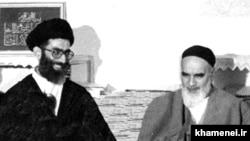
The death of Iran’s supreme leader -- Ayatollah Ali Khamenei -- sent shock waves across the Middle East. Now the question has turned to who will replace him.
The rubble of the Tehran building where Khamenei and other top Iranian officials were killed continued to smolder on March 1, a day after an Israeli air strike flattened the structure.
Since the 1979 Islamic Revolution, Iran’s supreme leader has played a singular role in the country’s stewardship, also serving as head of state. A vacuum at the top risks destabilizing the entire regime.
Iran’s leadership is now scrambling to ensure the power structures that govern the country remain functional, a process that includes quickly finding a successor to Khamenei.
That man -- who will become the country’s third supreme leader -- will take the helm at a time when US officials have openly called for toppling the theocratic government that has ruled the country since 1979.
Read more here