



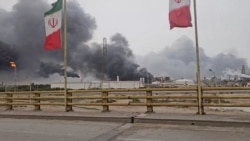
Azerbaijan Accuses Iran Of Plotting Attack On Major Pipeline, Jewish Sites
Azerbaijan said it uncovered an Iranian plot to sabotage several high-profile targets, including a major oil pipeline that carries crude from the Caspian Sea to Turkey and onward to global markets.
Azerbaijani authorities said the plan was organized by operatives linked to Iran's Islamic Revolutionary Guards Corps and described the alleged scheme as a series of "terrorist" attacks aimed at critical infrastructure and Jewish sites across the South Caucasus country of 10 million.
According to a statement from Azerbaijan's State Security Service, which was cited by the state news agency Azertag late on March 6, the intended targets included the Baku-Tbilisi-Ceyhan pipeline, the Israeli Embassy in Azerbaijan, an Ashkenazi synagogue, and a prominent member of the country's Mountain Jewish community.
To read the full report, click here.
Israeli NGO Head Ksenia Svetlova: Iran Still 'Firing Like Crazy'
TEL AVIV -- Israel has made an impressive start to military operations against Iran, but may be not much closer to its goals than a week ago, former Knesset member Ksenia Svetlova told RFE/RL in an interview at her home in Tel Aviv on March 6.

Svetlova, who is now executive director of an NGO called ROPES (Regional Organization for Peace, Economics, and Security), said there were few examples of "regimes that fall just as a result of air strikes" and was skeptical of the idea that Iraqi Kurdish militia would want to get involved in the fight.
To read the full interview, click here.
After A Week Of War, Israel Sees Progress But Long Road Ahead
TEL AVIV -- Hidden away on a small street in a central district of town, the ruins of war come as something of a surprise. On nearby streets, hipsters fill outdoor cafes, Lime scooters clutter the sidewalks, and children play in parks. But turn a corner and you'll see blackened walls, smashed windows, and rubble-strewn cars.
This is almost the only site in Tel Aviv that bears the scars of war, following an Iranian strike on the first night of the conflict. As such, it bears witness to the destructive power of Tehran's ballistic missiles. But the lack of other such sites underlines Israel's ability to shoot them down.
It's an aspect of the war so far that is having a profound impact on how Israel approaches what comes next.
For the full report from Tel Aviv by RFE/RL Senior International Correspondent Ray Furlong, click here.

Israel Accuses Iran Of Using Cluster Bombs
The Israeli military announced that Iran has used cluster munitions several times since the start of the war.
Israeli Army spokesman Nadav Shoshani said in a press conference on March 6 that Iran has used this type of munitions "several times" and that if these attacks target civilians, they could be considered a "war crime."
Videos released by AFP show a series of fiery projectiles landing over central Israel on the evening of March 5; the Israeli military says the images are from cluster bombs.
Cluster munitions explode in the air, scattering large numbers of small bombs. Some of these bombs also fail to function and can cause casualties, especially among children, long after they have been dropped.
Neither Iran nor Israel is party to the 2008 Convention on the Prohibition of Cluster Munitions, which prohibits the use, production, transfer and stockpiling of these weapons.
Both countries have been accused of using cluster munitions in the past. Amnesty International said Iran used cluster munitions at least three times during the 12-day war with Israel in June 2025.
Israel Bombs Tehran With 80 Fighter Jets
The Israeli Army announced that it continued its bombardment of Tehran, using 80 fighter jets on the morning of March 7.
In a statement released the night before the strikes, the Israeli Army announced its targets as "Iranian military sites, missile launch pads, and other targets in Tehran and central Iran."
Earlier, news had come from Iran that heavy air strikes were carried out on near the town of Ekbatan and Mehrabad Airport in Tehran, and that the municipality of District 16 in Naziabad was also targeted by an air strike.
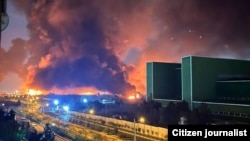
We are now closing the live blog for the day. We'll be back tomorrow at 9 a.m. Central European time to cover the latest events across the Middle East.
US Officials Confirm Russia Providing Targeting Intelligence To Iran
US officials on March 6 told RFE/RL that Russia is providing Iran with targeting information to attack US troops and military assets in the Middle East, confirming a Washington Post report that suggested Moscow is playing a substantial if indirect part in the widening regional conflict.
The alleged cooperation comes at a very delicate time for US-Russian relations, with the nuclear-armed rivals at odds over Moscow's invasion of Ukraine and Washington's efforts to end that war running up against the Kremlin's refusal, so far, to make concessions on territory and other issues.
Read the full article by Alex Raufoglu here.
The United States struck more than 3,000 targets during the first week of the Iran war, the US Central Command said on March 6.
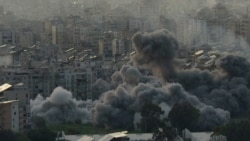
Israeli Air Defense Dominance Shapes War Strategy
- By Ray Furlong
TEL AVIV -- A lone ruin in the center of the city bears witness to the power of Iranian ballistic missiles. But the lack of other such sites underlines Israel's ability to shoot them down.

Ukraine Offers Its Expertise In Countering Iranian Drones
Ukraine is ready to share its battlefield experience in countering Iranian-made Shahed drones, as Washington and its partners confront similar threats in the Middle East, Ukraine's Embassy in the United States says.
"Ukraine knows how to defend against Shahed drone attacks because our cities have faced them almost every night. When our partners are in need, we always ready to help," Ukrainian Ambassador Olha Stefanishyna told RFE/RL on March 6.
"It's not about statements, we propose concrete, practical assistance, our experience, and solutions. This will help to protect human lives," she said.
Stefanishyna's comments come a day after President Volodymyr Zelenskyy said that Kyiv had received a request from the United States for "specific support" and ordered officials to provide the necessary means and expertise to assist air defense in the Gulf.
Throughout the week, Zelenskyy also discussed potential Ukrainian assistance in countering Iranian strikes with the leaders of the United Arab Emirates, Qatar, Jordan, Bahrain, and Kuwait.
As Tehran has long been an ally of Moscow, supplying it with military equipment and technology and fueling the Kremlin's war effort, Russia often launches around a hundred Shahed‑type drones at Ukraine at a time.
In response to the attacks, Ukraine developed cost-effective interception technologies. The country's interceptor drones offer an efficient way to stop large waves of drones that would otherwise require far more expensive missile systems.
Kyiv says it is able to intercept about 90 percent of Shahed drones launched toward its territory and estimates that Russia's military has used at least 57,000 such drones against its civilian and energy infrastructure.
As Ukraine continues to stress the need for coordinated international efforts and stronger cooperation in air defense to better protect civilians, the wars in the Middle East and in Ukraine show that the threat posed by Tehran's continued use and spread of Shahed drones is global, not regional.