



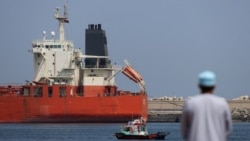
Iranians Continue To Cross Into Armenia Amid Air Attacks
Iranians cross the border into Armenia as air strikes pound Tehran and other parts of the country. After entering Armenia, one woman said Iranians had "lost everything" amid the destruction and dwindling resources.



Netanyahu: Israel Has A Plan 'To Eradicate Iranian Regime'
Israeli Prime Minister Benjamin Netanyahu said his country would continue the war against Iran "with all our force," and that, together with the United States, it now has almost total control of the skies over Iran after a full week of the military campaign.
"We have a systematic plan to eradicate the Iranian regime and achieve many other objectives," Netanyahu said in a televised address on March 7, minutes after Iranian state media reported that joint US-Israeli air strikes hit an oil depot in Tehran.
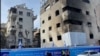
Netanyahu's comments came amid a heated exchange between Tehran and Washington, with President Donald Trump announcing that the United States is considering expanding the range of targets inside Iran after its President Masud Pezeshkian rejected his demand for complete surrender.
In earlier comments on March 6, White House press secretary Karoline Leavitt said the United States expected to complete its achievable objectives in Iran in "four to six weeks."
Human Rights Watch Urges Investigation For Deadly Strike On Minab School In Iran
Human Rights Watch (HRW) says an attack on a girls' elementary school in Iran's southern city of Minab, which Tehran said killed scores, including schoolgirls and teachers, "should be investigated as a war crime."
The attack on the school in Minab occurred during the first waves of US and Israeli air strikes on February 28. As it may be the deadliest single incident in the war so far, the United States and Israel -- accused by Tehran of carrying out the attack -- have not publicly taken responsibility for it.
In a statement published on March 7, HRW urged the both countries to account for the air strikes and called on Iranian authorities to ensure the security of schools and other civilian infrastructure.
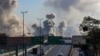
HRW added that its analysis showed that while the school was on the "interior border" of an Iranian military forces compound, it had a "separate entrance to the street from the rest of the compound," and was targeted by "highly accurate, guided munitions, rather than errant weapons."
"A prompt and thorough investigation is needed into this attack, including if those responsible should have known that a school was there and that it would be full of children and their teachers before midday," Sophia Jones, a researcher at the HRW said.
"Allies of the US and Israel should insist on accountability for the Shajareh Tayyebeh school attack and for an end to attacks on civilian infrastructure in all of their operations across the region," she added.
Earlier in the week, US Secretary of State Marco Rubio said the United States "would not deliberately target a school," adding that its military would have "no interest" in targeting civilian infrastructure.
In a separate statement, US Central Command spokesman Tim Hawkins said the country's military has taken the reports about the incident "seriously."
US Condemns Iranian Drone Strikes On Azerbaijan
The United States condemned Iranian drone strikes on Azerbaijan that targeted an airport and a school in its Nakhchivan autonomous region on March 5, describing the attack as a "needless escalation" of aggression by Tehran.
"These strikes are a flagrant violation of Azerbaijan's sovereignty and a needless escalation of Iran's aggression. The United States stands in full solidarity with Azerbaijan against these threats," the statement published by the State Department on March 7 said.
"Attacks on the territory of our partners in the region are unacceptable and will be met with resolute US support for those partners," it added.
A day earlier, Baku had accused Iran-linked operatives of plotting sabotage targeting a major oil pipeline and Jewish sites. Iran hasn't publicly responded to the accusations but said earlier this week, after a drone incident, that it is not seeking to target Azerbaijan.
Iran's Assembly Of Experts Expected To Convene To Pick New Leader
Iran's Assembly of Experts is set to meet to select a new supreme leader, one of its members said on March 7, as the White House said it was looking for an "acceptable" candidate to lead the country.
With Supreme Leader Ayatollah Ali Khamenei killed on the first day of a joint US-Israeli military campaign against Iran on February 28, it is the first time in 36 years that Tehran finds itself having to pick a new supreme leader.
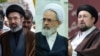
According to Fars, a semiofficial news agency that is close to Iran's Islamic Revolutionary Guards Corps, Hossein Mozafari, a member of the 88‑seat Assembly of Experts, said he had "strong hope" that a decision would be made within the next 24 hours.
Earlier, the United States has voiced its interest in being involved in the selection, with President Donald Trump saying the next leader should be "GREAT & ACCEPTABLE."
To read the full report, click here.
Zelenskyy, Macron Discuss Middle East In Phone Call
Ukrainian President Volodymyr Zelenskyy said he discussed the situation in the Middle East with his French counterpart, Emmanuel Macron, during a phone call on March 7.
Zelenskyy added that Macron supported Ukraine's efforts to assist the region with its expertise in countering Iranian-made drones.
"Emmanuel supported our work toward greater security in the region -- Ukraine has the most experience in defending against Shahed drones," Zelenskyy said.
Earlier in the week, Zelenskyy announced it had received a request from the United States for "specific support" and ordered officials to provide the necessary means and specialists to assist air defense in the region.
The idea was voiced by country's leadership since very first retaliatory attacks by Tehran that struck number of countries across the Gulf.
Iran has long been an ally of Russia, supplying it with military equipment and technology and fueling the Kremlin's war effort against Ukraine.
Rights Groups Warn About Danger To Writers, Political Prisoners In Iran
The American and Sydney PEN societies issued a joint statement expressing concern about the safety of writers, journalists, and other political prisoners in Iran following the escalation of military clashes and reports of air strikes near some prisons.
The two organizations -- which advocate for the right to free speech -- said on March 6 that reports of air strikes near detention centers and disruptions in communications had raised concerns about the conditions of detainees, many of whom were imprisoned simply for exercising their right to freedom of expression.
The PEN societies have expressed particular concern about the situation at Evin Prison in Tehran, saying that prisoners in Ward 209, which is run by the Intelligence Ministry, have been transferred to an unknown location. The possibility of political prisoners in Ward 7 being transferred has also been raised. Among those transferred is the name of Ali Asadollahi, a writer and translator who was arrested on February 25.
The statement also raised concerns about the conditions of prisoners in Tehran Greater Prison (Fashafoyeh) and Zanjan Prison, where Nobel Peace Prize laureate Narges Mohammadi is being held.
The American and Sydney PEN societies called on Iranian authorities to guarantee the security of all prisoners and to release those imprisoned solely for peacefully exercising their right to freedom of expression.
IRGC Announces Attack On Oil Tanker In Persian Gulf
Iran's Islamic Revolutionary Guards Corps (IRGC) announced on March 7 that it had attacked a Maltese-flagged oil tanker using an "explosive drone."
A tanker with the trade name Prima was the target of this attack, which took place near the Strait of Hormuz.
No information has yet been released on the extent of the damage to the vessel.
The IRGC-affiliated Tasnim News Agency wrote that the Prima ignored "repeated warnings" from the IRGC Navy about "prohibition of passage through the Strait of Hormuz."
In response to the joint US-Israeli attacks on Iranian territory, the IRGC announced it would close the Strait of Hormuz in the Persian Gulf and would not allow any oil tanker to pass through.
What Does War In Iran Mean For China?
China buys nearly 90 percent of Iranian oil and is a close partner of Tehran. But what happens now as war upends the Middle East and chokes off the Strait of Hormuz, a key global oil route?
Saudi Arabia Intercepts Ballistic Missile, Warns Iran Of 'Miscalculation'
Saudi Arabia said on March 7 that it intercepted two ballistic missiles fired toward an air base hosting US forces.
The Saudi Defense Ministry said in a post on X that "two ballistic missiles fired toward Prince Sultan Air Base, southeast of Riyadh, was intercepted and destroyed."
In a separate incident, the state-run Saudi Press Agency cited a Defense Ministry spokesman saying that Saudi air defenses also thwarted a drone attack on a major oil field near the United Arab Emirates border.
According to the agency, "an attempt to attack the Shaybah oil field was thwarted after six drones were intercepted and destroyed." The Saudi Defense Ministry said the drones were shot down in the Empty Quarter, a vast desert region in the south of the country.
Saudi Arabia, the world's largest oil exporter, reported earlier this week that multiple drone attacks targeting the Ras Tanura oil refinery in the eastern part of the country.
Authorities in neighboring Bahrain also urged residents on March 7 to seek shelter as regional tensions intensified.
The escalating conflict has also rattled energy markets. Global oil prices surged, with Brent crude rising 8.5 percent in a single day to $92.69 a barrel and climbing nearly 30 percent over the past week.
Meanwhile, Saudi Defense Minister Khalid bin Salman warned Iran against what he called further "miscalculations" following the missile and drone attacks.
After meeting Pakistan's army chief, bin Salman said in a post on X on March 7 that the two sides had discussed "Iran’s attacks on Saudi Arabia and the necessary measures to stop them."
Saudi Arabia and Pakistan signed a strategic defense agreement in September 2025 under which an attack on one country would be treated as an attack on both, according to Saudi officials.
The Saudi defense minister added that such actions threaten regional security and stability, expressing hope that Iran would "show wisdom and avoid miscalculations."