



Trump Repeats Call For Naval Help In Hormuz
US President Donald Trump repeated his calls for US allies to send naval forces to help unblock shipping in the Strait of Hormuz and criticized nations that are not doing so.
"Some countries have already started to get there. It takes a little while to travel an ocean, but we have some that are really enthusiastic," he said at a White House event, without naming any specific country. "Some are less than enthusiastic, and I assume some will not do it."
Iran has responded to the US-Israeli air strike campaign by using weapons to threaten shipping in the strait, virtually halting passage out of the Persian Gulf on the route that normally handles about one-fifth of global oil and liquefied natural gas volume. Blockage of the strait has crimped supplies, sending oil process higher and compounding concerns about the war's effects on the global economy and people's pocketbooks.
Trump said he had spoken with French President Emmanuel Macron about forming a coalition to secure the strait, describing Macron’s response as "an eight on a scale of zero to 10" and expressing confidence that France would assist.
He also criticized Britain's reluctance to provide support despite being "our oldest ally." Trump said he was "not happy" with Prime Minister Keir Starmer, who had said he wanted a "viable" option to reopen the strait, but also said he believes the United Kingdom will participate.
Trump Questions Whether Mojtaba Khamenei Is Alive
US President Donald Trump said the United States does not know whether Iran's new supreme leader, Ayatollah Mojtaba Khamenei, is still alive.
"We don't know...if he's dead or not. I will say that nobody has seen him, which is unusual," Trump said during an event at the White House on March 16.

Iranian clerical leaders announced on March 9 that Mojtaba Khamenei, 56, was replacing his father, Ayatollah Ali Khaemenei, who was killed on the first day of US-Israeli air strikes on Iran on February 28.
The younger Khamenei has not appeared in public, and US defense chief Pete Hegseth said last week that he was believed to have been wounded.
"A lot of people are saying that he's badly disfigured. They're saying that he lost his leg...and he's been hurt very badly. Other people are saying he's dead," Trump said.
Trump said Iran had expressed interest in negotiations but suggested the country’s leadership remains disorganized after the US strikes.
"They are a country based on disinformation, and now they're using disinformation plus AI," he said. "We have no idea who we are negotiating with."
"We don't know who their leader is,” Trump said. "We have people wanting to negotiate. We have no idea who they are."
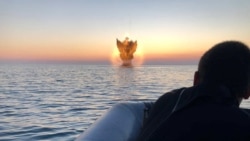
Will Iran Mine The Strait Of Hormuz?
This tiny stretch of water carries about 20 percent of the world's oil. And Iran is trying to close it by mining it. US President Donald Trump has put pressure on European allies to help protect the Strait of Hormuz, warning that NATO faces a "very bad" future if its members fail to come to Washington's aid.

Coalition To Protect Shipping In Allies' Own Interest, GOP Strategist Says
WASHINGTON -- US President Donald Trump has called on allies to help secure the strategically vital Strait of Hormuz, urging partners to send naval forces to keep global energy shipments flowing through the waterway amid the Iran conflict.
The appeal has drawn mixed reactions from capitals in Europe and Asia, exposing uncertainty about whether a visible multinational coalition will form to ensure the critical shipping lane remains open.

Republican strategist Matthew Bartlett, a former political appointee in the first Trump administration and co-founder of the lobby group Darby Field Advisors, told RFE/RL that despite the hesitation, keeping the strait open is in every country's economic interest.
"I believe it is largely in everyone's interest to get this open, and irrespective of what people or other nations think of President Trump or even the war with Iran, it is certainly in their interest to have the strait open. Much of the oil that goes through the strait goes to other nations," he said.
"So we will see if countries heed President Trump's call for a coalition and whether that means diplomatic pressure, military engagement, or some sort of on-the-ground assistance in escorting ships and ensuring the strait remains open."
To read the full interview, click here.
Next Flashpoint In Iran War? The Bab Al-Mandab Strait Off Yemen's Coast
Iran's effective closure of the Strait of Hormuz in response to a massive US-Israel bombing campaign has wreaked havoc on world energy markets and sent oil prices soaring.
Things could get even worse, experts say, if passage through the Bab al-Mandab Strait -- another crucial shipping route in the Middle East -- is also disrupted.
A choke point off Iran's coast, the Strait of Hormuz connects the Persian Gulf to the open ocean and global markets via the Gulf of Oman and the Arabian Sea. Likewise, Bab al-Mandab is a narrow passage for ships entering or exiting the Red Sea, whose Yemeni coastline is largely controlled by the Houthi rebels, an armed group backed by Iran.
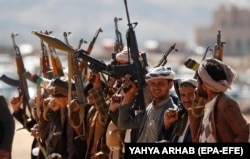
A US-designated terrorist organization that has previously attacked international ships in the Bab al-Mandab Strait and the Red Sea, the Houthis -- one of Tehran's most potent allies -- have so far stayed out of the US-Israeli war on Iran. If they do enter the fray, there will be even more shock waves across energy markets, experts say.
To read the full report, click here.
Mixed Reactions As Allies Consider Trump's Call For Support In Strait Of Hormuz
US President Donald Trump's call for help securing shipping lanes through the Strait of Hormuz, which Iran has effectively shut down with attacks on vessels and threats of more, appeared to receive mixed reactions as allies consider their options.
Trump said in a social media post on March 15 that "many countries" will be sending war ships in conjunction with the United States "to keep the Strait open and safe."
The US leader, who commented as air strikes against Iran entered their third week, didn't say which countries he was referring to, though "hopefully" China, France, Japan, South Korea, the United Kingdom, and "others" will join.
The response on March 16, however, was somewhat muted.
Britain and Denmark appeared open to helping aid shipping in the Middle East, though with caveats on not being drawn into the broader conflict the United States and Israel are waging against Tehran.
To read the full report, click here.
UN Expert Warns Of Widespread Rights Abuses In Iran

A United Nations human rights expert has urged Iranian authorities to end the use of excessive force against civilians, release detainees held for exercising fundamental freedoms, and restore unrestricted Internet access amid escalating military tensions in the region.
Presenting a report to the UN Human Rights Council on March 16, Special Rapporteur Mai Sato detailed widespread abuses during nationwide protests that began on December 28 last year, such as shootings of protesters, arbitrary detentions, forced confessions, and reports that some detainees, including children, face the death penalty.
The report also describes raids on hospitals and the intimidation of victims’ families.
Sato said the situation has worsened following recent US and Israeli strikes on Iran, which have reportedly killed more than 1,000 civilians and displaced hundreds of thousands.
Internet shutdowns and deteriorating prison conditions have further isolated detainees and the wider population, raising concerns about accountability and civilian protection.
First Non-Iranian Tanker Crosses Hormuz With Tracking Signal On
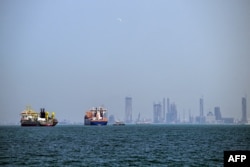
The oil tanker Karachi, sailing under the Pakistani flag and carrying crude loaded in the United Arab Emirates, has become the first non-Iranian vessel to pass through the Strait of Hormuz while broadcasting its AIS tracking signal since shipping through the chokepoint sharply declined.
Data from MarineTraffic, a vessel-tracking platform, shows the 237-meter tanker entered Iran’s exclusive economic zone on March 15 at 11:33 UTC and crossed the strait about three hours later before continuing into the Gulf of Oman.
The successful transit suggests some commercial shipments may be receiving negotiated safe passage through the strategic waterway, which normally carries about a fifth of global oil supplies.
Traffic through the strait has dropped sharply in recent weeks as tankers avoid the route.
Oil prices eased slightly on March 16 amid hopes that limited shipping could resume through the waterway.
Iranian Foreign Minister Abbas Araqchi said in a March 15 interview with CBS that Tehran was unwilling to negotiate with Washington but was open to talks with other countries about safe passage through the Strait of Hormuz, adding that several countries had already been in contact.
Iran has previously signaled it may allow certain vessels through the strait while restricting ships linked to the United States or Israel.
Flames and smoke shut down Dubai International Airport in the United Emirates on March 16 after an Iranian drone strike hit a nearby fuel tank. One of the world's busiest airports, Dubai has been repeatedly hit since Iran launched strikes on Gulf nations after it was attacked in February. No injuries were reported and Dubai Airports said flights were gradually resuming. Video by RFE/RL's Radio Farda and Will Tizard.


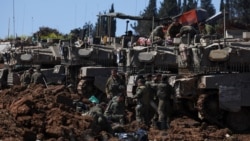
Israel Confirms Ground Operations in Southern Lebanon
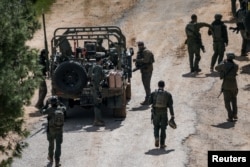
Israel’s military said it has begun “limited and targeted ground operations” in southern Lebanon, aimed at Hezbollah fighters and infrastructure near the border.
The Israel Defense Forces said the moves are "part of broader defensive measures to protect residents in northern Israel" and they follow artillery and air strikes intended to reduce threats before troops advanced.
The move means that the Israeli army is now active in areas where it had not previously operated, though officials said it remains unclear whether troops will hold the new positions.
The fighting comes after a cease-fire between Israel and Hezbollah collapsed following the February 28 US-Israeli attack on Iran.
Lebanese authorities say hundreds of civilians have been killed in Israeli strikes and nearly one million displaced as concerns grow that Israel could expand the offensive and occupy territory in southern Lebanon.