



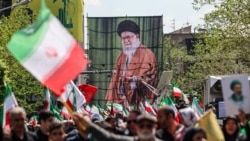
Ex-White House Adviser Sees Rising Risks As Trump's Iran Deadline Looms

WASHINGTON -- With a US ultimatum set to expire, President Donald Trump has warned Iran that its infrastructure could be struck within hours if it does not comply with his demands, particularly reopening the Strait of Hormuz.
Tehran has rejected short-term cease-fire proposals, demanding a permanent end to hostilities and guarantees against future attacks.
RFE/RL spoke with Nate Swanson, former Iran director at the White House National Security Council who is now at the Atlantic Council, about the escalating crisis and prospects for diplomacy as Trump's 8 p.m. Eastern Time deadline on April 7 looms.
RFE/RL: The US president has issued a stark ultimatum, warning that Iran’s infrastructure could face massive strikes within hours if key demands are not met. From your experience, how realistic is such a rapid, large-scale disruption of Iran’s decentralized systems -- and how much of this is strategic signaling rather than operational capability?
Nate Swanson: My assessment is that this is primarily being done for psychological reasons -- to extract concessions from Iran and force some form of agreement. I can’t speak definitively on whether the US could hit all those targets in such a short time frame, but Iran’s infrastructure is highly decentralized. There are dozens of separate power systems, transportation nodes, and other critical networks. The idea of neutralizing every bridge or key node within a matter of hours seems implausible.
This fits a broader pattern: threatening maximum consequences to generate leverage.
So far, “maximum pressure” has not fundamentally altered Iranian decision-making or forced capitulation. I don’t see clear evidence that even this level of escalation would change their calculus -- but ultimately, that’s a decision for Iran’s leadership.
Read more here
2 Killed In Iraq As Missile And Drone Strikes Reported Across Gulf Region
A drone strike “coming from Iran” hit a residential home in Iraq’s Kurdistan region, killing two people, local authorities said as missile and drone attacks were reported across the Persian Gulf region.
Saudi Arabia said it intercepted seven ballistic missiles, while the United Arab Emirates also reported incoming attacks while warning sirens were activated in Bahrain.
Kuwait said it detected dozens of missiles and drones within 24 hours, with minor injuries from falling debris.
The strikes comes as the UN Security Council is set to vote on a draft resolution to protect shipping in the Strait of Hormuz, though it has been softened after Chinese objections to authorizing force to keep it open.
Meanwhile, Iran’s UN envoy urged Saudi Arabia and the UAE to respect “good neighborliness” and not allow their territory to be used against Iran.
Adviser To Iran's Parliament Speaker Signals Hard Line On Cease-Fire
A senior adviser to Iran’s parliament speaker, Mohammad Baqer Qalibaf, has signaled Tehran’s hardening stance on ending the war, saying any cease-fire must reshape regional security arrangements.
Writing on X on April 7, Mehdi Mohammadi framed the conflict as already decided in Iran’s favor and set out stark conditions for its conclusion.
“Iran has clearly and openly won the war and will only accept an outcome that consolidates its gains and creates a new security order in the region," he wrote. "The correct framing is this: It is Trump who has around 20 hours to surrender to Iran or his allies will be sent back to the Stone Age. We will not back down!"
Last week, US President Donald Trump threatened to send Iran “back to the stone ages” with sweeping strikes on Iranian infrastructure if Tehran fails to meet a deadline tied to reopening the Strait of Hormuz.
Mahdi's remarks come as Iran has proposed a 10-point plan rejecting a temporary cease-fire, instead seeking a permanent end to hostilities, security guarantees, and sanctions relief.
Israel Warns Iranians To Stay Away From Trains; Mashaad Rail Services Suspended
Israel’s military has warned Iranians to avoid train travel nationwide, signaling possible strikes on the Iran’s rail network.
In a Persian-language message on X on April 7, the Israel Defense Forces told Iranians that staying on trains "endangers your lives," and urged people to "refrain from using trains or travelling by train throughout the country" until 9 p.m. Iran time (5:30 p.m. UTC).
Hours after the Israeli warning, the governor of Mashhad announced that all train services from the city’s railway station have been suspended until further notice.
Hassan Hosseini described the Israeli warning as “unethical” and said the decision had been taken “as a precaution.”
Russia Aiding Iran With Satellite Intelligence And Cyber Support, Ukraine Says
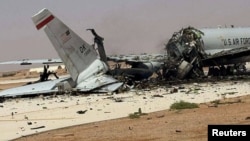
A Ukrainian intelligence assessment reviewed by Reuters alleges that Russia has provided covert support to Iran by supplying satellite imagery and assisting cyber operations during the current conflict.
The report says Russian satellites conducted at least 24 surveys across 11 Middle Eastern countries in late March, mapping 46 sites including US military bases, airports, and oil fields.
It describes a pattern in which Iranian missile and drone strikes followed shortly after these surveys.
A Western military source and a regional security source told Reuters that they had also observed heightened Russian satellite activity and intelligence sharing.
The assessment further claims that Moscow and Tehran maintain a “permanent communications channel” to exchange data, potentially involving Russian military spies in Tehran.
It also details growing cyber cooperation, with Russian and Iranian hacking groups coordinating attacks on regional infrastructure.
The allegations come amid deepening military ties between Russia and Iran since the start of Russia's full-scale invasion of Ukraine, including cooperation on drones and intelligence-sharing agreements.
Reuters said it could not independently verify the claims, while a US spokeswoman said no external support has affected the operational success of the United States.
Russia and Iran had no immediate comment.
Air And Missile Strikes Hit Cities Across Iran
Iranian official and media reports say multiple cities, including Tehran, Isfahan, and Ahvaz, were hit by widespread air and missile strikes on the night of April 6–7.
Airports, military sites, and infrastructure were among the targets, with Israel claiming it struck several Tehran airports, destroying aircraft and facilities.
Footage shared on social media appeared to show columns of flame and smoke near the Iranian capital's Mehrabad airport.
Explosions and fighter jet activity were also recorded across the country, including in Mashhad and Tabriz.
Reported casualties include at least 15 people killed in Tehran Province, four soldiers in Isfahan, and two civilians in Hormozgan, with others injured.
Significant damage was reported in Qom and other areas.
Israel said it had completed a “wave” of strikes, while also detecting Iranian missile launches in response, signaling a continued escalation of hostilities.
New Iranian Supreme Leader 'Incapacitated,' Intelligence Memo Says
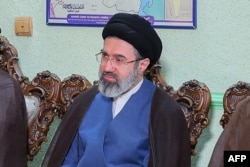
An intelligence memo seen by The Times of London claims Iran’s new supreme leader, Mojtaba Khamenei, is incapacitated and receiving treatment in Qom, leaving him unable to govern.
Based on US and Israeli intelligence shared with Persian Gulf allies, the memo says he is unconscious with a severe condition after being wounded in the same strike that killed his father, Ayatollah Ali Khamenei.
The younger Khamenei's absence from public view and reliance on written statements and AI-generated footage have fueled doubts about his leadership.
The memo also reveals preparations in Qom for the elder Khamenei’s burial, including plans for a large mausoleum possibly accommodating multiple family members.
The situation raises questions about who holds real power in Iran, with speculation that the Islamic Revolutionary Guards Corps may be exercising de facto control of the county.
We are now closing the live blog for the day. We'll be back tomorrow at 7:30 a.m. Central European time to cover the latest events across the Middle East.
Trump Issues Stark 'One Night' Warning to Iran, Touts Daring Rescue
WASHINGTON -- US President Donald Trump renewed his threat to wipe out Iran's power plants and bridges if it doesn't reach an agreement to end the war and open the Strait of Hormuz, warning the country could be “taken out in one night.”
Speaking on April 6 at a White House news conference alongside Defense Secretary Pete Hegseth, Joint Chiefs Chairman Dan Caine, and CIA Director John Ratcliffe, Trump framed the moment as a defining point in a rapidly escalating confrontation.
“The entire country could be taken out in one night -- and that night might be tomorrow night,” Trump said, underscoring an April 7 deadline for Iran to comply with the US demands.
"This is a critical period. They have a period of, well, till tomorrow, at eight o'clock.
To read the full story, click here.
Iran Rejects Cease-Fire, Demands Permanent End To War As Trump Deadline Looms

Iran has conveyed a 10-point response to US proposals for ending the war to Pakistan, rejecting a temporary cease-fire and demanding a permanent end to hostilities, Iran's official IRNA news agency reported on April 6, as US President Donald Trump's deadline for massive strikes on Iranian energy infrastructure draws closer.
The response, described by IRNA as the product of two weeks of reviews at the highest levels of the Iranian establishment, rules out a cease-fire while laying out a set of conditions including a permanent end to hostilities across the region, a safe passage protocol for the Strait of Hormuz, reconstruction commitments, and the lifting of sanctions.
The report carried by IRNA did not offer further details.

Iranian Foreign Ministry spokesman Esmail Baqaei had signaled Tehran's position earlier in the day.
"A cease-fire means creating a pause to regroup and commit crimes again," he said at his weekly press conference. "No rational person would do that." Iranian officials have made clear they do not want to be caught in a situation similar to Gaza or Lebanon, where a cease-fire on paper left them vulnerable to renewed attack.
The response lands as Trump's self-imposed deadline -- Tuesday, April 7, at 8pm US Eastern Time -- closes in.
Trump has threatened to unleash a sweeping bombing campaign against Iranian power plants and bridges if Tehran does not reopen the Strait of Hormuz. "Tuesday [April 7] will be Power Plant Day, and Bridge Day, all wrapped up in one, in Iran. There will be nothing like it!!! Open the F****** Strait, you crazy bastards, or you'll be living in Hell - JUST WATCH!" he wrote on Truth Social.
Read more here.