

Iran's Internet Blackout Shows No Signs Of Ending
Nearly 50 days after Iran imposed a near-total nationwide Internet shutdown, two members of Iran's parliament have offered a glimpse of the authorities’ thinking on the restrictions.
Fazlollah Ranjbar, a member of the parliament's Social Affairs Commission, said on April 17 in an interview with the semiofficial ILNA news agency that "it may not be advisable for the Internet to be available under such circumstances."
Deputies in parliament still have unfiltered access to the Internet.
The Internet is one of the "bridges through which the enemy can gain entry and create cohesion between hostile forces," Ranjbar said. "The enemy was able to create problems for the country at times with the tools and weapons of the Internet."
The deputy also alluded to compensation worth billions of dollars for businesses damaged by the Internet outage, saying: "This is a decision that must be made after the war...[although] it is not possible to announce right now that compensation will be paid immediately."
Ahmad Bakhshish Ardestani, a deputy and member of parliament's National Security Commission, was also skeptical about lifting the restrictions, saying that the West was working hard to bring the Internet back to Iran.
Ardestani said that the restrictions would be lifted "quickly after the agreement," an apparent reference to a possible future peace deal stemming from current negotiations.
Following the start of the US-Israeli war with Iran on February 28, the Iranian authorities cut off ordinary people's access to the Internet. In January, there was another near-total shutdown as the country was engulfed by nationwide protests. That cut-off lasted around 20 days.
In April, Iran set a world record with 36 days for the longest time that a previously connected society had been cut off from the Internet. According to web access monitor Netblocks on April 17, ordinary Iranians have not had access to the web for 49 days or 1,152 hours.
Iran Cancels Army Day Parade
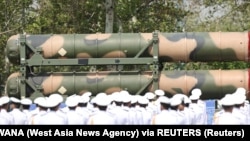
The spokesman for Iran's army, Brigadier General Mohammad Akraminia, has announced that it is not possible to hold the Army Day parade this year, saying that "the current cease-fire is no different to war conditions."
The first Army Day, marked annually on April 18, was held in 1979 shortly after the Islamic Revolution. It was established by Ayatollah Ruhollah Khomeini to demonstrate the Iranian army’s loyalty to the new Islamic republic. It was first held in Tehran and later expanded to other cities during the 1980–88 Iran-Iraq war.
The parade was cancelled in 2020 due to the coronavirus pandemic and the following year it was held in a closed format because of continued restrictions.
Instead of a parade, Akraminia said, cultural programs will be held in the barracks and officers and soldiers will also attend Friday Prayers.
France Says European Countries Could Ensure Safe Passage Through Strait Of Hormuz
French Defense Minister Catherine Vautrin said on April 17 that European countries such as Belgium, the Netherlands, and France possess mine-clearance capabilities that could help secure safe passage through the Strait of Hormuz.
In an interview with TF1 television, Vautrin said there are "possibilities to provide fully supported escorts for ships -- escorts that are in no way aggressive and are aimed at ensuring safe passage through the strait. This will be discussed today in Paris."
France and the United Kingdom are cohosting a meeting on April 17 in Paris involving around 40 countries. The meeting is focusing on planning a multilateral, defensive mission to restore freedom of navigation in the Strait of Hormuz.
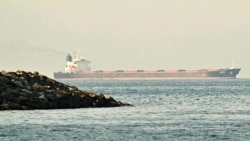
Iran has effectively blocked or severely restricted shipping through the strait since the war began on February 28, causing a major disruption to global energy markets.
Since April 13, the United States has blockaded Iranian ports and coastal areas, targeting all maritime traffic entering or exiting Iran, while allowing transit through the strait to non-Iranian destinations.
Two Iranian Women Soccer Players Thank Australia For 'Safe Haven'
Two Iranian women's soccer players thanked the Australian government on April 17 for offering a "safe haven" and said they wanted to resume their sporting careers
Fatemeh Pasandideh and Atefeh Ramezanisadeh, in their first public comments since being granted humanitarian visas, said in a statement that the support shown to them had given them hope for a future in which they could live and compete in safety.
"We wish to express our deepest gratitude to the Australian government, and particularly Home Affairs Minister Tony Burke, for granting us humanitarian protection and a safe haven in this beautiful country," they said.



Seven members of the Iranian women's soccer team sought asylum in Australia in March after they declined to sing Iran's national anthem ahead of an Asian Cup game, sparking a backlash on Iranian state media.
But five of them later withdrew their asylum claims and joined the rest of the team as they traveled through Malaysia en route to Iran.
Pasandideh and Ramezanisadeh remained behind in Australia as rights advocates raised fresh concerns that some team members were returning home under intense government pressure.
Pasandideh and Ramezanisadeh have been pictured training with A-League Women's team Brisbane Roar.
The women's action came against the background of the war in their home country that broke out when US and Israeli air strikes hit Iran on 28 February.
Israel-Lebanon Cease-Fire Officially Takes Effect, Trump Urges Hezbollah To Act 'Nicely'
A 10-day cease-fire agreed by Lebanon and Israel went into effect at midnight local time, with journalists reporting "heavy gunfire" and rocket launches that may have been celebratory firings as the truce began.
Lebanese state media reported continued Israeli artillery fire in southern Lebanon, but the reports could not immediately be verified. The Lebanese Army early on April 17 claimed several Israeli "cease-fire violations" and advised citizens to delay returning to southern villages.
The cease-fire was announced on April 16 by US President Donald Trump and confirmed by Israeli and Lebanese leaders.
Trump made the announcement of the cease-fire after speaking to Israeli Prime Minister Benjamin Netanyahu and Lebanese President Joseph Aoun. The US president said he expects to host the two leaders within a week or two.

In a video statement, Netanyahu said he agreed to the 10-day cease-fire and that there was a chance to make a historic deal with Lebanon after decades of conflict.
Trump said the cease-fire incudes Hezbollah, a militant group and political party that controls much of southern Lebanon. Hezbollah is considered a terrorist organization by the United States, while the European Union has blacklisted its only armed wing.
In a social media post after the cease-fire took effect, Trump wrote: "I hope Hezbollah acts nicely and well during this important period of time. It will be an GREAT moment for them if they do. No more killing. Must finally have PEACE!"
Lebanon has insisted on a cease-fire before it would enter into further talks, but it has vowed to disarm Hezbollah militants.
AFPTV video showed people returning to Hezbollah's stronghold in the city's southern suburbs, some waving the Iran-backed movement's yellow flag or carrying portraits of its slain leader, Hassan Nasrallah, who was killed by Israel in 2024.
Hezbollah had earlier warned residents to refrain from returning to the area until it was clear that the cease-fire would hold.
Hezbollah urged people to refrain from firing weapons in celebration.
"These bullets should be directed at the enemy, not fired into the air in celebration," it said in a statement.
Israel has been launching strikes targeting Iran-backed Hezbollah militants in neighboring Lebanon since March 2, two days after the start of the US-Israeli war with Iran, when Hezbollah forces opened fire in support of Tehran. An ongoing two-week cease-fire in the Iran war has not applied to Lebanon.
The Israeli military said its forces would remain deployed in southern Lebanon after the cease-fire and it urged Lebanese residents not to move south of the Litani River, about 20-30 kilometers north of the Israeli border.
UN chief Antonio Guterres hailed the cease-fire announcement and urged "all actors" to fully respect the truce, his spokesman said.
"The secretary-general welcomes the announcement of a 10-day cease-fire between Israel and Lebanon and commends the role of the United States in facilitating" it, Guterres spokesman Stephane Dujarric said in a statement.
With reporting by AFP
Trump Says US-Iran Deal ‘Very Close,’ Next Meeting Could Come This Weekend
US President Donald Trump said it’s “looking very good” that the United States and Iran will reach a deal to end the war, and that US and Iranian negotiators could meet this coming weekend.
“I think we’re very close to making a deal with Iran,” Trump told reporters outside the White House on April 16.
He said that he wasn’t sure a two-week cease-fire that expires April 22 will need to be extended, and that “if there’s no deal…fighting resumes,” though he didn’t specify a timeline.
Trump also reiterated his announcement of an Israel-Lebanon cease-fire, starting on April 16, and said it includes Hezbollah.
Hezbollah is both a militant group and political party that controls much of southern Lebanon. It is considered a terrorist organization by the United States, while the European Union has only blacklisted its armed wing.
Trump said he hopes to soon host Israeli Prime Minister Benjamin Netanyahu and Lebanese President Jospeh Aoun at the White House.
UPDATE: Netanyahu confirmed that the 10-day cease-fire has been agreed, but he said Israeli troops will remain in southern Lebanon.
"I agreed to a timeout, or more accurately, a temporary 10-day cease-fire," Netanyahu said in a video message, adding that troops would remain in a "reinforced security buffer zone" to protect Israeli towns from attack.
Netanyahu stressed that Israel has two central demands -- the disarming of Hezbollah and an accord of lasting peace between the Israel and Lebanon.
Israel, Lebanon Agree To 10-Day Cease-Fire, Says Trump
US President Donald Trump announced that Israel and Lebanon have agreed to a 10-day cease-fire starting on April 16. He made the statement after speaking to Israeli Prime Minister Benjamin Netanyahu and Lebanese President Joseph Aoun.
Writing on his social media platform, Truth Social, Trump said: "These two Leaders have agreed that in order to achieve PEACE between their Countries, they will formally begin a 10 Day CEASEFIRE at 5 P.M. EST."
He made no mention of Lebanon's Hezbollah movement, which is both a militant group and political party that controls much of southern Lebanon. It is considered a terrorist organization by the United States, although the European Union has only blacklisted its armed wing.
A regional proxy group for Iran, Tehran has repeatedly said that a cease-fire between Hezbollah and Israel was a requirement for its own peace negotiations with the United States, which are ongoing.
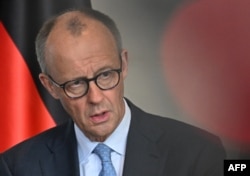
Merz: Germany Ready To Help Secure Strait Of Hormuz After Peace Deal
German Chancellor Friedrich Merz said Germany is prepared in principle to contribute to securing maritime routes in the region around the Strait of Hormuz, but only under clear legal and political conditions, including a formal international mandate -- preferably from the United Nations -- and approval by the German Bundestag.
He told reporters on April 16 that such conditions are "still far from being met," emphasizing that any potential mission remains hypothetical at this stage.
Discussions involving European partners are expected in Paris, where possible frameworks for maritime security cooperation may be reviewed. German officials have also indicated any multinational effort could, in theory, include coordination with US forces, though no operational plan has been confirmed.
The Strait of Hormuz -- one of the world's most crucial energy shipping routes -- remains highly sensitive due to ongoing regional tensions. Before the current crisis, roughly one-fifth of global oil and liquefied natural gas shipments transited the waterway.
A government source said Germany could potentially contribute naval capabilities such as mine countermeasure vessels or maritime surveillance assets. German access to logistical support facilities in the region, including including the east African country of Djibouti, has also been discussed in the context of broader NATO and EU maritime operations.
Merz did not confirm specific military contributions when asked about media reports suggesting Germany might provide mine-clearing expertise and surveillance capabilities. The German Defense Ministry has also not publicly confirmed such plans.
He stressed that any deployment would require at minimum a stabilized security environment and a ceasefire framework before consideration of operational involvement.
Qalibaf: Cease-Fire In Lebanon Just As Important As Truce In Iran
Mohammad Baqer Qalibaf, Iran's parliamentary speaker, spoke by phone with his Lebanese counterpart, Nabih Berri, on April 16, according to Iranian media, and said he was "continuously following the situation in Lebanon and establishing a cease-fire in the country."
He considered this issue "very important" for Iran and said, "For us, a cease-fire in Lebanon is as important as a cease-fire in Iran."
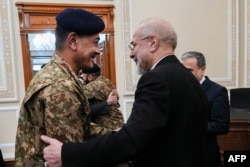
Qalibaf headed the Iranian delegation negotiating with the United States in the Islamabad talks last weekend and yesterday met with Asim Munir, the commander of the Pakistani Army, who traveled to Iran as a mediator.
Berri, for his part, said he also considered any relationship with Israel to be against the interests of the Lebanese people. The speaker of the Lebanese parliament is an ally of Hezbollah and close to the Iranian government.
Hezbollah is both a militant group and political party that controls much of southern Lebanon. It is considered a terrorist organization by the United States, although the European Union has only blacklisted its armed wing.
The telephone conversation between the two took place at the same time as US efforts to continue negotiations between Lebanese and Israeli officials and establish a cease-fire in the country.
Iran has made a cease-fire in Lebanon one of its conditions for any agreement with the United States. However, Israel's prime minister announced on April 15 that the country's military would continue its attacks on Hezbollah.
Iran Thinks It's Winning. That View Is Guiding Its War And Diplomacy.
- By Frud Bezhan
The United States and Israel's bombing campaign has devastated Iran's military, decapitated much of its leadership, and destroyed critical infrastructure.
Yet Tehran still believes it is winning the weekslong confrontation. That Iran's theocracy has survived at all has been touted in the Islamic republic as a victory. The country has also obtained a new and powerful card: control of the Strait of Hormuz.
Since the war began on February 28, Iran has effectively closed one of the world's key arteries for global oil and gas supplies, a move that has rattled energy markets, upended the global economy, and handed Tehran new leverage.
Iran's perception of victory has shaped the country's conduct in the conflict, where it has refused to capitulate despite suffering enormous material losses. The Islamic republic's confidence has extended to the negotiating table, where it is aiming to end the war on its own terms.
To read the full report, click here.