




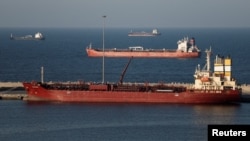
Iran must continue to keep a key Gulf shipping lane closed, Supreme Leader Mojtaba Khamenei said in his first public comments since being named to succeed his late father, hours after several vessels were targeted in strikes as Tehran looks to choke off oil supplies from leaving the Middle East.
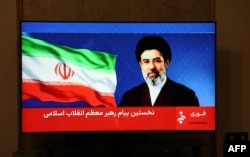
In the statement, which was read out on Iranian state TV by a female presenter on March 12, Khamenei said Iran will continue to seek to strike targets where "the enemy has little experience and will be severely vulnerable."
In response, Israeli Prime Minister Benjamin Netanyahu vowed the continuation of the US-Israeli military campaign against Tehran and threatened the newly appointed Iranian leader.
"I wouldn't issue life insurance policies on any of the leaders of the terrorist organization," Netanyahu said in his first news conference since the beginning of the war, adding that he wouldn't provide any details on Tel Aviv's military plans.
However, he confirmed that, besides the main military goals -- to stop Iran from moving its nuclear and ballistic weapons projects underground -- Israel was also aimed at "creating, for the Iranian people, the conditions to bring down this regime."

Iran has been launching air and water strikes at targets across the Middle East in retaliation for US and Israeli attacks that started on February 28, the day his father, Ayatollah Ali Khamenei, was killed in one such bombardment.
The younger Khamenei was reportedly injured in that attack and had not been seen or heard from since. He was appointed as supreme leader on March 8.
In targeting the Strait of Hormuz, Iran has tied up shipping on a waterway that accounts for around a fifth of all oil and gas transportation in the world.
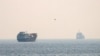
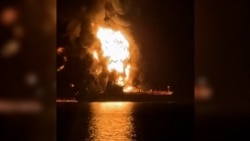
Two tankers were ablaze in a port in the Persian Gulf on March 12 after they were hit by what are suspected to have been Iranian explosive-laden vessels, an escalation in attacks that have choked much of the oil leaving the Middle East and defying US President Donald Trump's claim a day earlier that the United States has "won" the war, which he said now just needs finishing.
Oil prices surged more than 9 percent to above $100 a barrel after the reports of further attacks on ships in the Persian Gulf, in what the International Energy Agency has called the biggest disruption to global energy supplies in history.
Khamenei said Iran would "extract reparations" from those states that attack it, and if that is not possible, "We will destroy an equivalent amount of their assets."
In a bid to quell market jitters, Trump has said the surge in oil prices will be short-lived, but he has yet to explain how the war will end or present a plan to reopen the blockaded strait.
"You never like to say too early you won. We won," Trump told a campaign-style rally in Hebron, Kentucky, on March 11. "In the first hour it was over."
While the US and Israeli air attacks had "virtually destroyed Iran," he added that "we got to finish the job."
Trump has said the US Navy may be brought in to help escort ships through the Strait of Hormuz, but US Energy Secretary Chris Wright told CNBC in an interview on March 12 that it may take several more weeks before that is possible.
"It'll happen relatively soon, but it can't happen now," Wright said in the March 12 interview. "We're simply not ready. All of our military assets right now are focused on destroying Iran's offensive capabilities and the manufacturing industry that supplies their offensive capabilities."
In comments to Sky News the same day, US Treasury Secretary Scott Bessent said it was always his belief "that as soon as it is militarily possible, the US Navy, perhaps with an international coalition, will be escorting vessels through" the strait.