


Iranian Authorities Report 30 Executions Since Start of the War
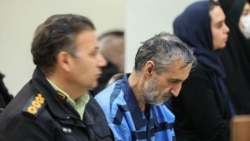
Iranian authorities reported that 30 people have been executed on political grounds since the beginning of the country's conflict with the United States and Israel on February 28.
The report released on May 16 by Iran's judicial system said that those executed were found guilty of “espionage” and “terrorism” in cases related to large-scale anti-government protests that took place across the country earlier in the year.
According to the report, 36 more people were sentenced to long prison terms, property belonging to 400 journalists was confiscated, and the bank accounts of dozens of bloggers and activists were frozen.
On May 14, Iran Human Rights (IHRNGO) said that hard-line rulers in Tehran have executed at least 14 participants in the protests in recent weeks, while six more were hanged after being charged with spying for Israel.
Last month, UN Human Rights Chief Volker Turk called on Iran to "establish a moratorium on the use of capital punishment" and release prisoners "arbitrarily detained."
"I am appalled that -- on top of the already severe impacts of the conflict -- the rights of the Iranian people continue to be stripped from them by the authorities, in harsh and brutal ways," he said.
Iran is one of the world's biggest executioners, hanging hundreds of people per year, many for drug-related offenses and homicide.
Two of the latest executions came on May 13 when Ehsan Afrashteh, a cybersecurity and network specialist, was hanged on charges of espionage for Israel, followed hours later by the execution of Mohammad Abbasi, who took part in mass protests in January, on charges of killing a security officer.



We are now closing the live blog for the day. We'll be back at 7:30 a.m. Central European time to cover the latest events across the Middle East.
Massive US Aircraft Carrier Returns Home After Middle East Deployment
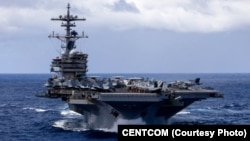
A US aircraft carrier that was deployed to the Middle East before the outbreak of war in Iran has returned to the US after a 326-day mission, the Pentagon said on May 16.
Defense chief Pete Hegseth was in Norfolk, Virginia, to greet the return of the USS Gerald R. Ford, the largest aircraft carrier in the world, the US military said.
It was the longest deployment for a US carrier strike group since the Vietnam War.
The carrier was sent to the Middle East to participate in combat operations against Iran after it took part in US operations in the Caribbean, where US forces have carried out strikes on alleged drug-smuggling boats, intercepted tankers, and captured Venezuelan leader Nicolas Maduro.
Iran Soccer Team Set To Travel To Turkey For World Cup Preparations
Iran's soccer team is scheduled to travel to Antalya, Turkey, on May 18 to begin its training camp, compete in friendlies, and to finalize formalities ahead of its planned journey to the US for the 2026 World Cup.
A squad of 30 players is traveling for the training camp, but the number will be reduced to a maximum of 26 for the World Cup.
Iran is looking to play two friendlies -- exhibition matches -- in Antalya. A match against Gambia is set for May 29.

Visa formalities will be one of the challenges faced by the Iranian squad. Tehran and Washington cut diplomatic relations in 1980.
"No visas have been issued yet," Mehdi Taj, the Iranian football federation head, told Iranian media on May 14.
The US-Israeli war with Iran has led to uncertainty around the team's participation in the World Cup. FIFA President Gianni Infantino said at the soccer governing body's annual congress in Vancouver last month that: "of course, Iran will play in the United States of America."
Iran's Taj was refused entry into Canada for the conference because of his links to the Iran's Islamic Revolutionary Guards Corps (IRGC).
Iran had requested that its matches scheduled for US sites be moved to Mexico, which is co-hosting the event along with the US and Canada. The request was denied.
The squad is scheduled to begin its World Cup play against New Zealand in Los Angeles on June 15 June, then face Belgium on June 21, also in Los Angeles, and then Egypt in Seattle on June 26.
Iran Plans To Reopen Its Stock Market After Wartime Suspension
Iran plans to reopen its stock market on May 19 after being suspended during the active phase war with the US and Israel, Iran's IRNA news agency reported, cited a senior official.
"The suspension of stock market activities from the start of the war was aimed at protecting shareholders' assets, preventing panic-driven trading and allowing for more transparent pricing conditions," Hamid Yari of Iran's Securities and Exchange Organization said on May 16.
"Now, with the reopening of the stock market, we will see the full resumption of all capital market sectors," he added.
Iranian Authorities Report 30 Executions Since Start of the War
Iranian authorities reported that 30 people have been executed on political grounds since the beginning of the country's conflict with the United States and Israel on February 28.
The report released on May 16 by Iran's judicial system said that those executed were found guilty of “espionage” and “terrorism” in cases related to large-scale anti-government protests that took place across the country earlier in the year.
According to the report, 36 more people were sentenced to long prison terms, property belonging to 400 journalists was confiscated, and the bank accounts of dozens of bloggers and activists were frozen.
On May 14, Iran Human Rights (IHRNGO) said that hard-line rulers in Tehran have executed at least 14 participants in the protests in recent weeks, while six more were hanged after being charged with spying for Israel.
Last month, UN Human Rights Chief Volker Turk called on Iran to "establish a moratorium on the use of capital punishment" and release prisoners "arbitrarily detained."
"I am appalled that -- on top of the already severe impacts of the conflict -- the rights of the Iranian people continue to be stripped from them by the authorities, in harsh and brutal ways," he said.
Iran is one of the world's biggest executioners, hanging hundreds of people per year, many for drug-related offenses and homicide.
Two of the latest executions came on May 13 when Ehsan Afrashteh, a cybersecurity and network specialist, was hanged on charges of espionage for Israel, followed hours later by the execution of Mohammad Abbasi, who took part in mass protests in January, on charges of killing a security officer.
Putin Discusses Middle East Conflict With UAE Counterpart
The Kremlin said Russian President Vladimir Putin discussed the Middle East conflict with his United Arab Emirates counterpart, Sheikh Mohammed bin Zayed Al Nahyan.
“Both sides emphasized the importance of continuing the political and diplomatic process aimed at reaching compromise-based peace agreements,” a statement published on May 16 said.
The discussion follows a heated exchange between Tehran, Moscow’s longtime military ally, and Abu Dhabi.

On May 15, the UAE’s Minister of State, Khalifa bin Shaheen Al Marar, rejected what he called Iran’s “attempts to justify” its attacks on Gulf countries, after Iranian Foreign Minister Abbas Araqchi wrote on Telegram that the UAE had been “an active partner” in what he called “US aggression.”
“The UAE reserves all its sovereign, legal, diplomatic, and military rights to confront any threat, claim, or hostile act,” Marar said. “It reserves its full and legitimate right to defend its sovereignty and territorial integrity to ensure the protection of its citizens, residents, and visitors.”
His statement added that the UAE said it has been subjected to about 3,000 missile and drone attacks since the beginning of the joint US-Israeli war with Iran on February 28.
New Israeli Strikes Reported In Lebanon
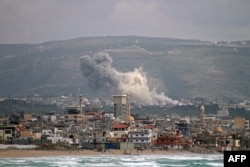
Lebanon's state news agency NNA reported that Israel struck more than 20 villages on May 16, while Tel Aviv said it targeted Hezbollah militants and issued an evacuation warning to civilians in nine villages.
The development comes a day after the United States said Israel and Lebanon have agreed to a 45-day extension of a cease-fire to "enable further progress" and announced US-mediated follow-up talks later this month and in June.
"We hope these discussions will advance lasting peace between the two countries, full recognition of each other’s sovereignty and territorial integrity, and establishing genuine security along their shared border," State Department spokesperson Tommy Pigott wrote on X on May 15.
Israel has been launching strikes targeting Hezbollah militant group in Lebanon since March 2, two days after the start of the US-Israeli war with Iran, when Hezbollah forces opened fire in support of Tehran.
Hezbollah controls much of southern Lebanon. It is considered a terrorist organization by the United States, while the European Union has only blacklisted its armed wing.
A truce in place since April 17 has reduced fighting between Israel and Hezbollah but has not stopped it; hundreds of people have been killed in strikes since then and each side has accused the other of numerous violations.
Authorities in Lebanon say some 2,900 people have been killed since fighting resumed in early March, including about 200 children. RFE/RL cannot independently verify the claim.
CENTCOM Says 78 Ships Forced To Change Course During Iran Naval Blockade
The US Central Command (CENTCOM) announced that 78 commercial ships have been forced to change course as part of the Iranian naval blockade.
Posting a video of a US military helicopter flying over the waters near the Strait of Hormuz on X on May 16, CENTCOM also announced that four vessels have been "disabled ensure compliance."
The command had previously said 15 ships carrying humanitarian aid had been allowed to pass, and in some cases, US forces had forced the ships to change course by radio contact and firing warning shots.
The United States began a naval blockade of Iranian ports after direct talks with Iran failed, while Iran has blocked the Strait of Hormuz since the beginning of US-Israeli strikes on Iran on February 28.
Pakistani Interior Minister Travels To Tehran To 'Resume' Iran-US Talks
Iranian media reported on May 16 that Pakistani Interior Minister Mohsin Naqvi had discussed the "resumption of negotiations" between Iran and the United States with his Iranian counterpart during a visit to Tehran.
Naqvi, who traveled to Iran for a two-day visit, met with Eskandar Momeni, according to media outlets close to the Iranian government, and "detailed discussions were held about Iran-Pakistan relations and the prospects for resuming peace talks."
Pakistan has acted as a mediator since the cease-fire between Iran and the United States took effect in early April. A round of talks between senior officials from Washington and Tehran was held in Islamabad but did not yield any results.
In recent weeks, Pakistan has been tasked with conveying US and Iranian proposals for an end to the war. US President Donald Trump has called the proposals put forward by Iran unacceptable.
This comes while Iranian Foreign Minister Abbas Araqchi claimed on May 15 that Tehran has received messages from the United States indicating that the Trump administration is ready to continue negotiations aimed at ending the Middle East war.
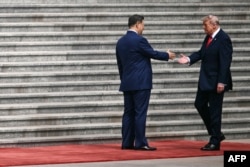
Trump-Xi Summit Reveals China's Careful Balancing Act On Iran
WASHINGTON -- The Trump-Xi summit offered fresh clues about how Beijing is positioning itself on Iran amid growing tensions over sanctions, regional security, and the future of energy flows through the Strait of Hormuz.
While US President Donald Trump said both sides agreed Iran should never obtain a nuclear weapon and supported reopening the Strait of Hormuz, analysts noted that China avoided making concrete public commitments on sanctions enforcement, reducing Iranian oil purchases, or pressuring Tehran directly.
Instead, experts say, Beijing appears focused on protecting its strategic and economic interests while avoiding deeper entanglement in the conflict.
To read the full news analysis, click here.