



Iran Moves 2026 World Cup Camp From US To Mexico

Iran's national soccer team will be based in the Mexican border city of Tijuana during 2026 World Cup, which will will be co-hosted by the United States, Canada, and Mexico, country's soccer federation president announced.
"We will be based in the Tijuana camp, which is near the Pacific Ocean and on the border between Mexico and the United States," Mehdi Taj said in Telegram post on May 23.

"The total distance between us and the venue of our games in Los Angeles is 55 minutes by flight," he added, noting that the new camp location is closer to the team's match venues than its previously planned camp in the United States.
Taj's said the decision was made after the world soccer governing body, FIFA, approved a request to move the training camp from Arizona. There was no immediate comment by FIFA.
Iranian soccer fans have for months faced uncertainty over whether they will see their national team compete in the sport’s most important event of the year, amid the conflict between the United States and Iran.
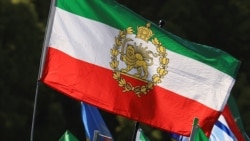


Earlier in the week, FIFA has reportedly planned to again prohibit fans from displaying Iran’s pre-revolutionary flag at the World Cup, renewing a controversy that shadowed the tournament in Qatar four years ago and drawing immediate backlash from the Iranian diaspora and opposition figures.
The ban was reported by The Athletic on May 19 after FIFA pointed to its stadium code of conduct, which bars "banners, flags, apparel, and other paraphernalia that are of a political, offensive, and/or discriminatory nature" from venues.
Read full story by Radio Farda here.
With reporting by Reuters.
Trump Says Even Odds Of 'Good' Iran Deal Or Renewed Strikes

US President Donald Trump said on May 23 there were even odds that Washington would secure a "good" deal with Iran or renew its bombing campaign targeting the country.
"I think one of two things will happen: either I hit them harder than they have ever been hit, or we are going to sign a deal that is good," Trump said, according to Axios, adding that he might decide by May 24 whether to resume the war.
Separately, Reuters reported that Trump was expected to hold a phone call later in the day with the leaders of Saudi Arabia, Qatar, the United Arab Emirates, Egypt, Turkey, and Pakistan.

Trump's latest comments come hours after US Secretary of State Marco Rubio said that "some progress" has been made in mediation efforts between Washington and Tehran.
"There's been some progress done, some progress made, even as I speak to you now, there’s some work being done," Rubio told reporters on May 23 while visiting India. "There is a chance that, whether it’s later today, tomorrow, in a couple days, we may have something to say," he added.
Speaking to RFE/RL on May 22, Anwar Gargash, a senior official in the United Arab Emirates, said that a resumption of hostilities in the Iran war would be "catastrophic" for the Middle East.
"I don't think either the United States or Iran wants a resumption of hostilities. The region and the UAE do not want a resumption of hostilities," Gargash said.
Although he warned that there was "a regional issue and a global issue with Iran's nuclear program."
"The requirements for a deal are known," he said. "Right now, Iran wants to also bring about a change in the use of the Strait of [Hormuz]. That change will actually [cause] serious issues. And we worry [the strait] might be weaponized [again] in a future conflict."
With reporting by Axios and Reuters.
Pakistani Army Chief Wraps Tehran Talks
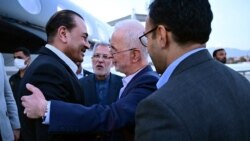
Pakistan's army chief, Field Marshal Asim Munir, held a fresh round of meetings with senior Iranian officials in Tehran on May 23 as part of a widening diplomatic push involving Pakistan, Qatar, Gulf states, and Western countries amid growing fears that the conflict in Iran could reignite.
Iranian state media reported that Munir met separately with Iranian President Masud Pezeshkian and parliament speaker Mohammad Bagher Qalibaf, following earlier talks with Foreign Minister Abbas Araqchi that continued late into the night on May 22.

The discussions reportedly focused on diplomatic proposals and messages exchanged between Tehran and Washington, including a 14-point framework document Iran considers central to future negotiations.
“The history and experience of negotiations with Americans dictate that we exercise the utmost caution,” Pezeshkian told Munir during their meeting, according to Iranian state media.
Read full story here.
Two Women Given Long Sentences For Working With 'Hostile Networks'
Two women in Iran's Semnan Province have been given prison sentences for "working in line with the goals of American-Zionist spy services."
Leila Ramezani and Fatemeh Malek-Ahmadi were sentenced to 26 years and 27 years in prison, respectively, as well as "dismissal from all government services" and banned from leaving the country.
The ages and occupations of the two women were not publicly released.
According to the state-run ISNA news agency, citing a judicial official, the two women were accused of "establishing contact with hostile networks and sending visual content and information needed by the enemy."
The province's chief justice referred to the two women as "mercenaries."
When the US and Israel were bombing Iran, Iranian television often broadcast footage of government agents raiding the homes of people who were said to have taken videos of bomb sites and sent them to media outlets abroad.
The women's sentences come as Iran has intensified its crackdown on alleged espionage since the war began in late February. The authorities have arrested thousands of people for collaborating with "hostile networks," with rights groups criticizing judicial proceedings for their lack of due process.
Report: Iranian President To Open Up Internet Access
Iran’s Etemad daily reported on May 23 that President Masud Pezeshkian is working to expand public access to the Internet “through legal channels.”
According to the report, the government has created a “Cyberspace Steering and Organization Headquarters” and appointed Mohammad Reza Aref as its head.
Etemad suggested that "the issue of unblocking the Internet will most likely be approved this week."
Earlier this week, however, Ali Yazdikhah, deputy chairman of the cultural commission in Iran's parliament, said that there is currently no need to open up the Internet because of what he called "security risks and threats to personalities and the country."
The Iranian government cut off the Internet on February 28 at the start of the US-Israeli war with Iran. According to Netblocks, the global Internet monitoring organization, the Internet outage in Iran has now exceeded 2,000 hours.
Iran War Triggers Emergency Funding Push At World Bank
An internal World Bank document seen by Reuters shows that since the Iran war began in late February, 27 countries have taken steps to activate emergency financial instruments so they can quickly access resources available in World Bank programs if needed.
The document did not identify the countries or the total amount of potential funding, and the World Bank declined to comment. According to the document, three countries have approved new financial instruments since the start of the conflict, while others are still completing the process.
The Iran war and disruptions in the global energy market have led to rising fuel prices, straining supply chains, and difficulties shipping chemical fertilizers to developing countries.
Iraqi and Kenyan officials have confirmed that they are seeking urgent assistance from the World Bank to deal with the consequences of the war, including a drop in Iraq's oil revenues and rising fuel prices in Kenya.
World Bank President Ajay Banga said last month that the institution's crisis tools could provide countries with around $20-25 billion in resources in the first phase, and, by restructuring part of the bank's financial portfolio, this figure could rise to $60 billion in six months and around $100 billion in the long term.
Airspace Closed Over Western Iran
Iran’s Civil Aviation Organization has announced temporary restrictions on the western part of the country’s airspace.
The move comes amid heightened tensions, with reports that the US is considering renewed military action against Iran while diplomatic efforts continue.
According to the latest Notice to Air Missions (NOTAM), all passenger flights over western Iran face severe restrictions.
Currently, only eight airports are permitted to operate, including Tehran’s Mehrabad and Imam Khomeini airports, as well as Isfahan and Yazd airports in central Iran.
At these operational airports, flights are restricted to daylight hours (sunrise to sunset), and airlines must obtain a new permit from the Civil Aviation Organization for each individual flight.
We are now closing the live blog for the day. We'll be back at 9:30 a.m. Central European time to cover the latest events across the Middle East.
Republican Senator Urges Trump To Let Military 'Finish The Job' In Iran
US Republican Senator Roger Wicker, who has backed President Donald Trump’s decision to go to war with Iran, urged Trump to allow the US military to finish what it started with its air campaign against the Islamic republic.
“We are at a moment that will define President Trump’s legacy,” Wicker said in a statement issued on May 22.
Trump’s “instincts have been to finish the job he started in Iran, but he is being ill-advised to pursue a deal that would not be worth the paper it is written on.”

“Our commander-in-chief needs to allow America's skilled armed forces to finish the destruction of Iran's conventional military capabilities and then reopen the strait [of Hormuz],” he said.
“Further pursuit of an agreement with Iran's Islamist regime risks a perception of weakness. We must finish what we started. It is past time for action,” the Mississippi Republican added.
In a speech on the Senate floor in March, Wicker argued that critics were unfairly second-guessing Trump’s decision to strike Iran beginning on February 28 and setting arbitrary limits on the military campaign.
“Apparently, if this war lasts as long as five weeks, we should agree that we will fold our tents, come home, and leave the job undone,” Wicker said.
It wasn’t immediately clear what prompted the latest statement, but the US Senate – including four Republicans – voted on May 19 for the first time to move forward with a measure to force Trump to end the war.
However, Republican leaders of the House of Representatives on May 21 canceled a resolution a similar resolution after it appeared likely to pass, also with several Republican defectors.
Any bills passed by Congress would still be subject to a likely veto by Trump.
Iranian Officials Meet With Qataris, But Stress Pakistan Remains Main Mediator
Iranian Foreign Ministry spokesman Esmaeil Baqaei on May 22 said a Qatari delegation was holding talks with Iran’s foreign minister, but he added that Pakistan remains the main mediator in the negotiations between Washington and Tehran.
"In recent days, many countries -- both regional and non-regional -- have been trying to help bring the war to an end... However, Pakistan remains the official mediator," he said.
Pakistan has been the public face of mediation efforts to end the war in the Middle East, although many observers have said Qatar has worked behind the scenes in efforts to also facilitate peace efforts.
Pakistan last month hosted the only direct negotiations between US and Iranian officials since the war began at the end of February.
Pakistan's powerful army chief, Field Marshal Asim Munir, arrived in Tehran on May 22 to meet with Iranian officials as part of mediation efforts.